An encyclopedia with a memory
Atlas of Polymers
A history-narrated encyclopedia of the polymers that made the modern world. Every mark on the dial is an entry, set in its own era; point to one to read it.
From the Atlas · a page to begin with
Plate I
The Post-War Boom
1956
Polyacetal (POM)
Revolutionizing Precision
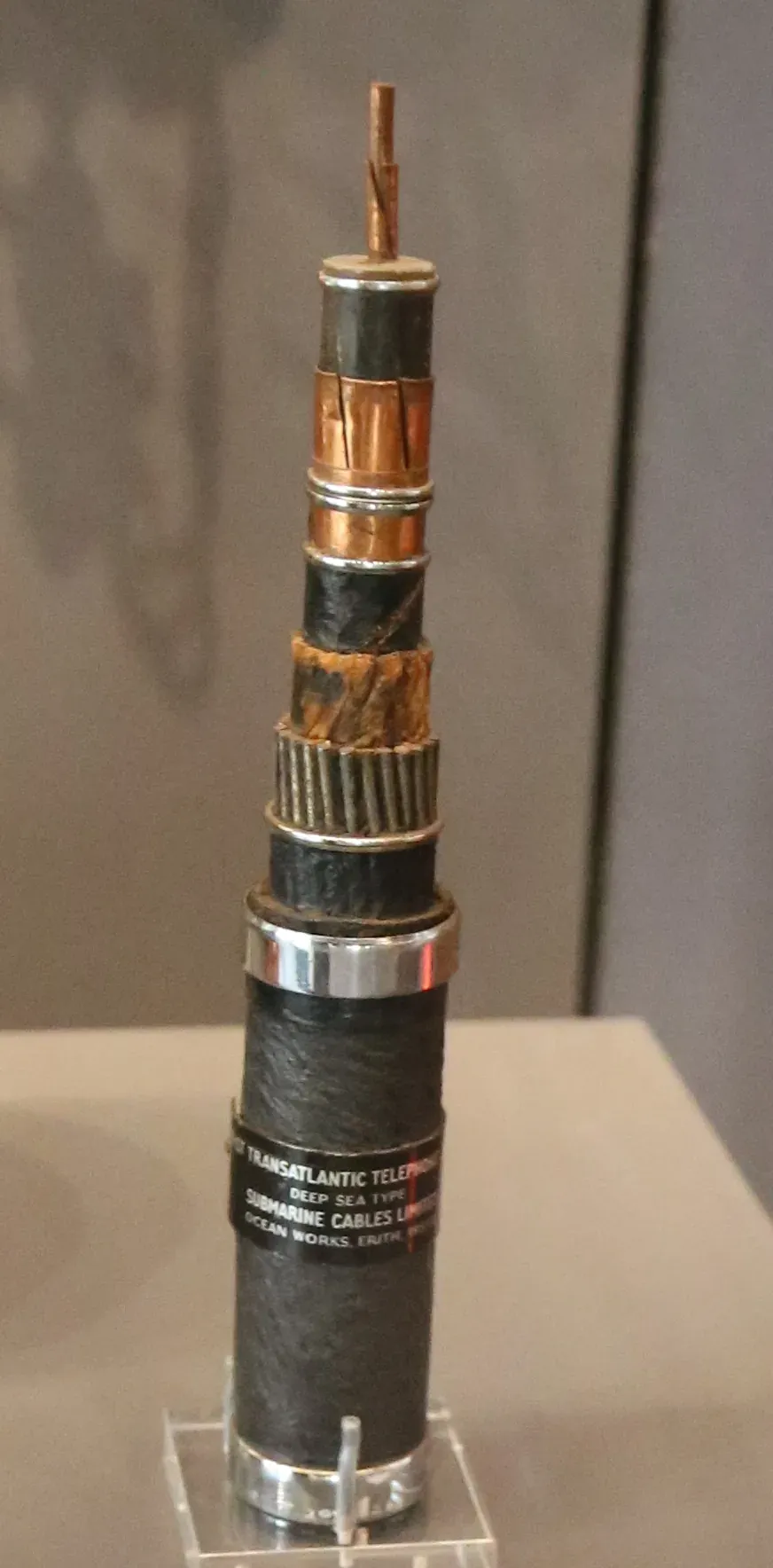
At four o'clock on the afternoon of 25 September 1956, the Postmaster General in London lifted a telephone in Lancaster House and spoke to the chairman of AT&T in New York. The words travelled through TAT-1, the first telephone cable ever laid across the Atlantic seabed, and the connection held. The cable itself was unremarkable copper and gutta-percha-descended insulation, but the achievement that mattered was buried three miles down in its 102 signal repeaters: valves engineered so precisely, and so far beyond any hope of repair once submerged, that they were built to run without failure for twenty years. They ran for twenty-two, and never once failed.
Read the entry →