Decoding Nature's Legacy (1833-1902)
Nitrocellulose (CN)
An Explosive Photo
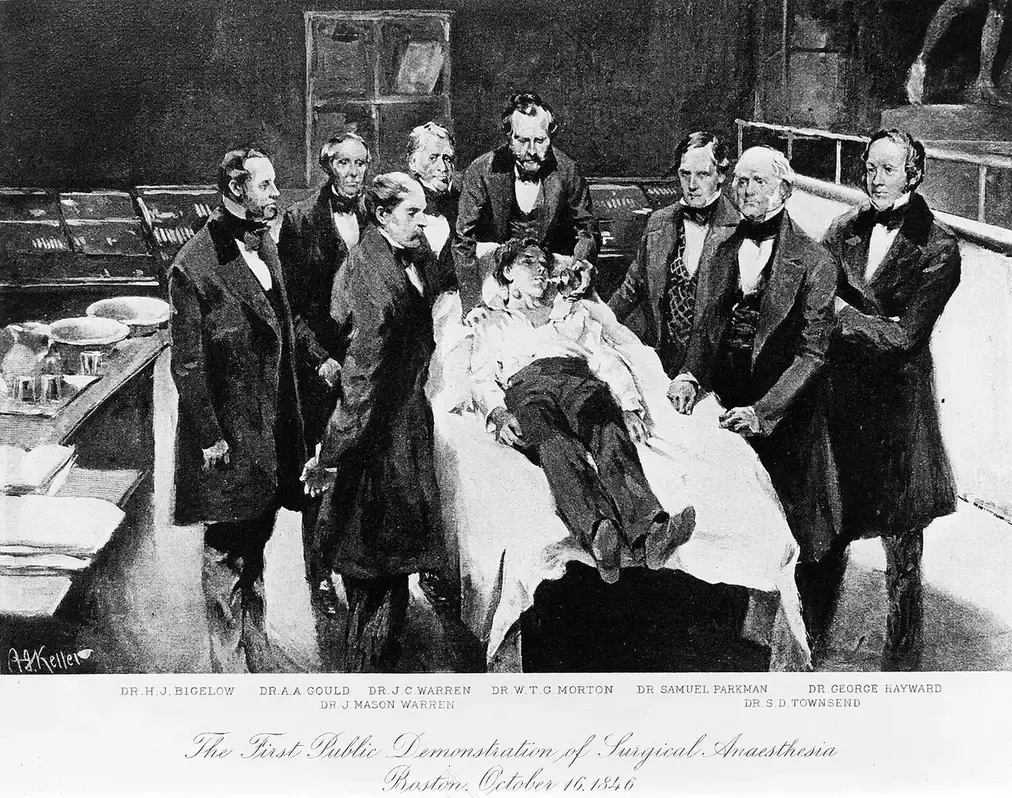
On the sixteenth of October, 1846, a Boston dentist named William Morton stood in front of a crowded surgical amphitheatre and put a patient to sleep with ether, then watched a surgeon cut into the man’s neck without a sound from him. It was the first public proof that pain itself could be switched off by a carefully measured dose of chemistry, and the doctors who watched it understood at once that medicine had just changed forever.
Plate I

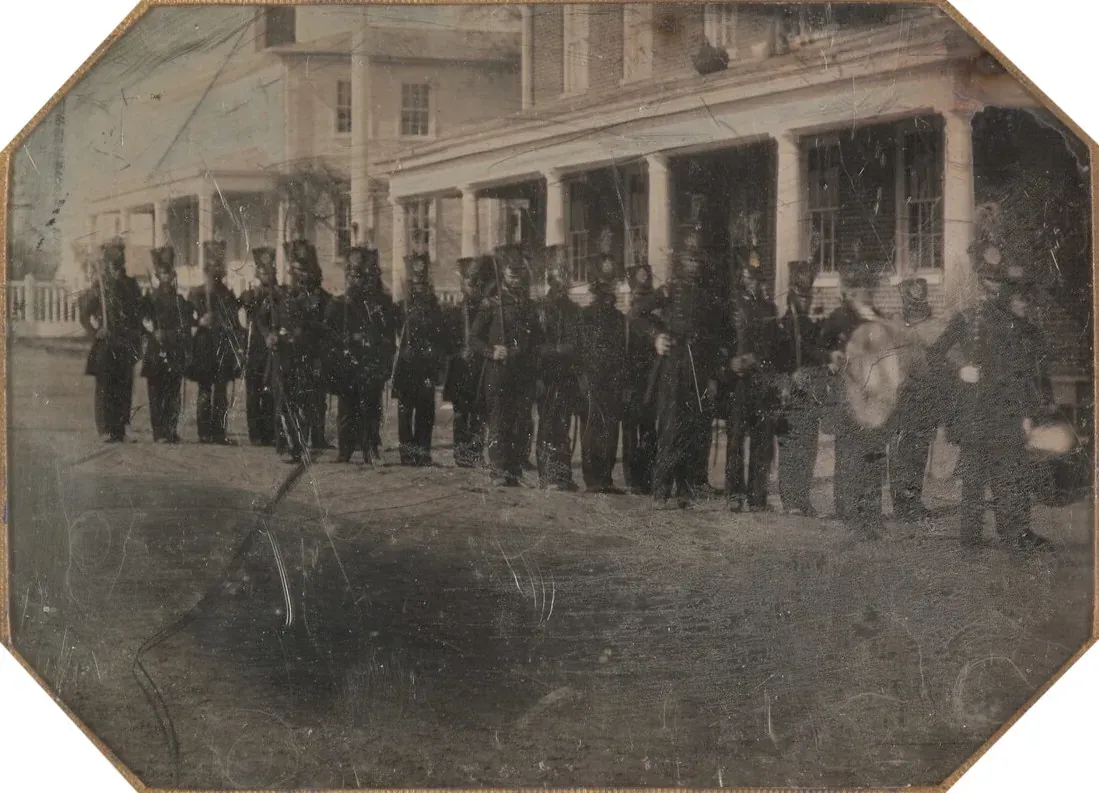
That same year, further south, young men were mustering with muskets and powder horns for a war the United States had just declared on Mexico. They would fight it, like every war before it, with flintlocks and black powder that fouled the barrel, produced a fist of smoke with every shot, and gave a soldier’s position away the instant he pulled the trigger. It was, in its own way, exactly the same technology Napoleon’s armies had used forty years earlier.
Plate II

1846 was a year for taming the uncontrollable: pain answered to a vapor, a war still ran on the same smoky powder it always had. And in Basel, a chemistry professor was about to discover a material that refused to be tamed at all.
An Apron, an Accident, and a Flash
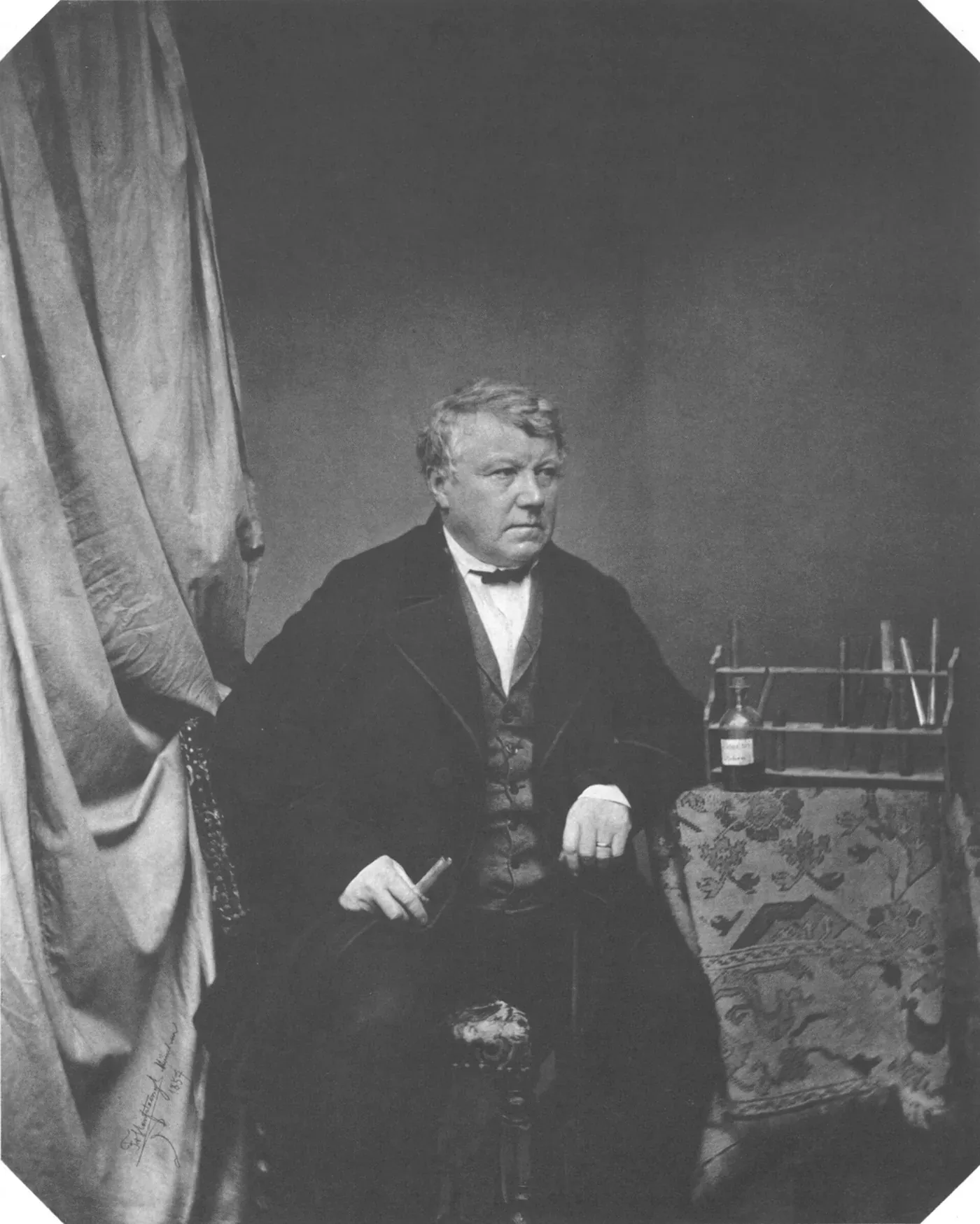
Christian Friedrich Schönbein’s wife had forbidden him from experimenting in her kitchen, which is exactly where he was working the day he knocked over a bottle of nitric acid mixed with sulfuric. He grabbed the nearest cloth to mop it up (her cotton apron) and, once it was clean, hung it over the stove to dry. It did not dry. It vanished, in an instant, with a flash and a whoosh and no smoke to speak of. Schönbein, who understood immediately what he was looking at, had converted the cellulose of the apron into something that supplied its own oxygen, so that when it finally ignited it consumed itself completely and almost instantaneously.
Plate III

He called the result guncotton and moved fast: within months he had arranged for it to be manufactured under license, and a plant went up that same year at Faversham, in Kent, to make it commercially. The following July, a batch of it exploded there, levelling two buildings and killing twenty-one people. It was the first demonstration of a lesson the material would keep teaching for the rest of the century: whatever guncotton was, it was not something anyone yet knew how to control.
A Matter of Degree
What Schönbein had actually done was replace some of the hydroxyl groups on cellulose’s own backbone with nitrate esters. This is the same glucose-ring chemistry that gives wood and cotton their structure, now carrying its own built-in supply of oxygen. How much of the swap took place turned out to be everything. Nitrate only a fraction of the hydroxyls and the product is a mild, film-forming lacquer, soluble in the same solvents used to cast it. This is the collodion of nineteenth-century photography, and later the plasticized film base that gave the movie industry its first flexible stock. Push the substitution further and the same fiber becomes guncotton: unstable, self-oxidizing, and capable of detonating rather than merely burning. The formula shown above reflects that range rather than a single fixed compound; real nitrocellulose is defined as much by its degree of substitution as by its atoms.
Taming an Explosive
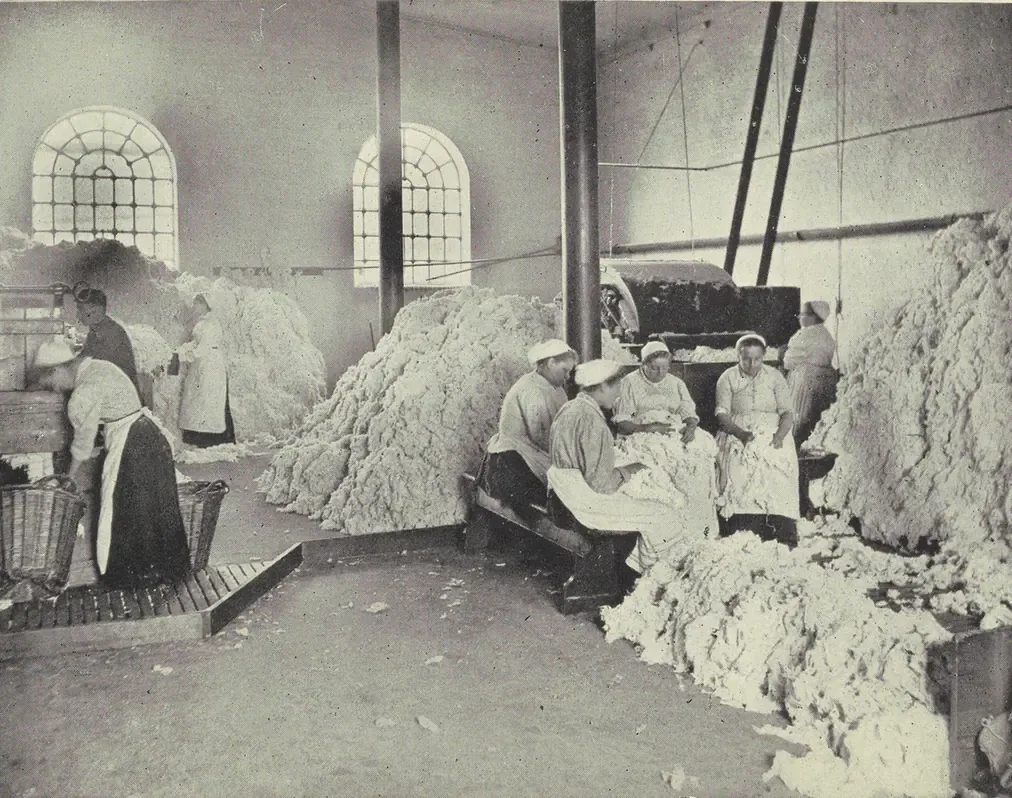
Faversham was not the last accident. A far larger explosion at a guncotton works in Stowmarket in 1871 killed twenty-eight more people, and both disasters traced back to the same cause: acid residue left behind in the fiber after nitration, which went on decomposing slowly and unpredictably until it didn’t. The British War Office chemist Frederick Abel spent the 1860s solving exactly this problem, pulping the nitrated cotton to a fine slurry so that residual acid could be washed out completely before the material was pressed into stable blocks. Abel’s process is the reason guncotton became a practical military explosive rather than a standing invitation to disaster.
Plates IV & V
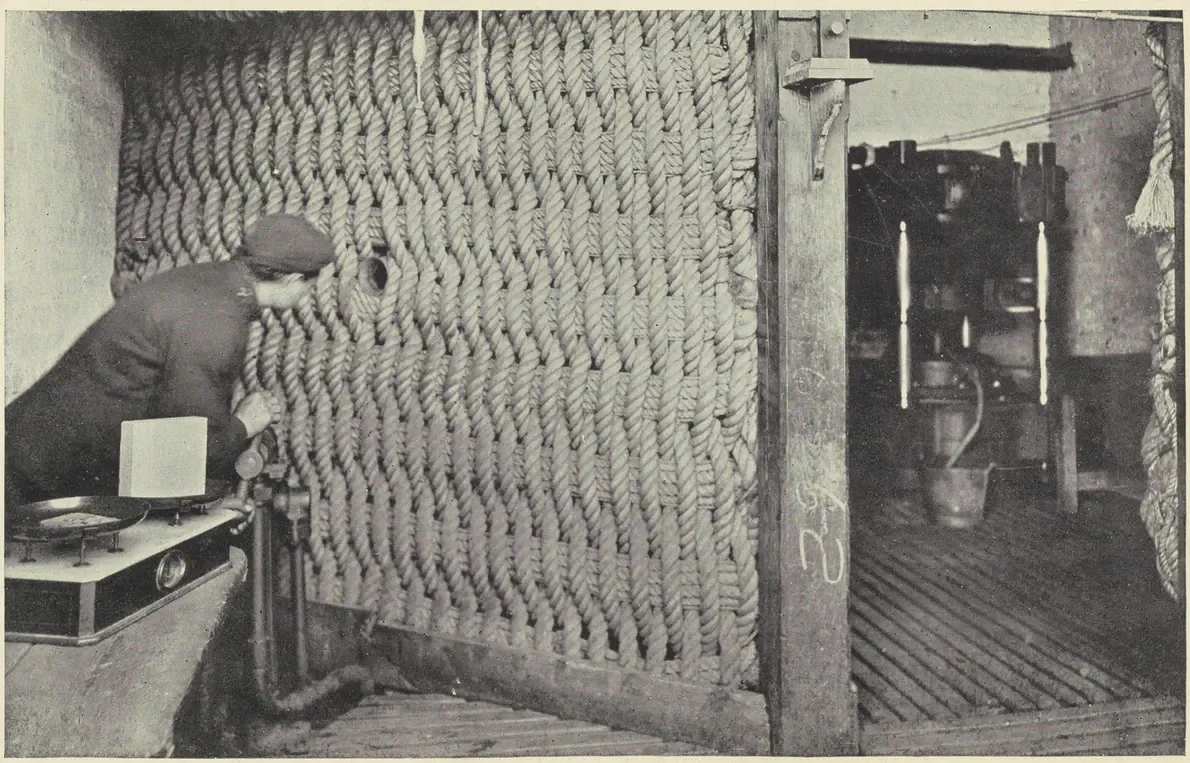
Once the material could be trusted, it went straight into weapons. The French chemist Paul Vieille gelatinized nitrocellulose into a smokeless propellant he called Poudre B in 1884, adopted almost immediately by the French army; Alfred Nobel followed in 1887 with ballistite, a similar nitrocellulose-nitroglycerine blend. Both burned to gas rather than to the thick white cloud that had marked every battlefield since gunpowder was invented, and by the First World War every major army had switched over.
Properties, Read Honestly
Nitrocellulose is denser than water and about as optically clear as ordinary window glass, which is exactly why it made a usable photographic film base once camphor learned to plasticize it. It has no real melting point: heated past a certain threshold it decomposes and chars rather than flowing, so anything moulded from it has to be shaped by casting or pressing, never by melting it into a die. Mechanically it behaves like a stiff, brittle solid, closer to a hard resin than to a flexible film, with no real give before it fractures outright. It barely takes up water, which is part of why it holds a photographic image or a coat of lacquer without swelling. Its chemistry is defined by what dissolves it: acetone and related solvents strip it apart instantly, which is precisely how it is cast into film and lacquer, while it resists alcohols reasonably well and shrugs off nothing when exposed to strong acid. None of that is surprising for a material whose defining trait, at every degree of substitution, is a readiness to react.
From Battlefield to Vanity Case
The lower-nitrogen forms of nitrocellulose went everywhere that guncotton could not. Dissolved and cast as a thin film, it became the varnish on a violin, the glossy coat on a fingernail, and, plasticized with camphor, the celluloid that gave the world its first flexible photographic and motion-picture film, a story substantial enough to belong on its own page in this atlas. In the laboratory it found a second life entirely removed from either war or entertainment: cast as a porous membrane, it binds proteins tightly enough to have become the standard surface for Western blotting, a technique used daily in biology labs that have never once thought of it as an explosive.
A Double-Edged Legacy
Nitrocellulose is still around, from nail polish to wood finish to the fine flash paper conjurors buy by the sheet. It is the same molecule that took twenty-one lives at Faversham, tamed by Abel’s process and diluted to a degree of substitution that makes it merely flammable rather than genuinely dangerous. Every application depends on the same trick Schönbein stumbled onto in his wife’s kitchen: cellulose modified just enough to carry its own oxygen, ready to let go of it the moment something asks.
values with [n] cite the numbered references·estimates are flagged·“not yet available” and “N/A” are honest states, not gaps
fetching the model…
Nitrocellulose repeat unit
- Abbreviation
- CN
- Type
- polymer family (hub)
- CAS number
- 9004-70-0
- Resin ID code
- none assigned
- Formula
- (C6H7N3O11)n[C6H7O2(OH)3-x(ONO2)x]nFully nitrated cellulose is shown, three nitrate groups per glucose unit. Real material is rarely fully nitrated: the degree of substitution, typically between 1.8 and 2.8, is what separates lacquer-grade collodion from guncotton.
- Repeat unit (BigSMILES)
{[][>]O[C@H]1[C@H](O[N+](=O)[O-])[C@@H](O[N+](=O)[O-])[C@H]([<])O[C@@H]1CO[N+](=O)[O-][]}- IUPAC name
- Cellulose nitrate
- Synonyms
- guncotton; cellulose nitrate; flash paper (thin form)
- Also known as
- guncottoncellulose nitrate
- Chemical family
- cellulosic
- Backbone class
- heterochain
- Polymerization mechanism
- natural-biosynthesis
- Constitutional monomer
- D-glucose (as the cellulose precursor, subsequently nitrated)
- Polymer class
- thermoplastic
- Year of origin
- 1846
- Era
- Decoding Nature's Legacy (1833-1902)
- Key figures
- Christian Friedrich Schönbein
- Polymerization type
- not yet available
- Common monomers (feedstocks)
- not yet available
- Catalysts
- sulfuric acid (as nitrating co-agent)
Cellulose is nitrated with a mixture of nitric and sulfuric acid, yielding roughly 85% product (losses from over-oxidation to oxalic acid). Christian Friedrich Schönbein discovered the reaction in 1846 after cleaning up a nitric acid spill with a cotton apron, which ignited on drying.
- Tacticity
- not yet available
- Crystal structure
- Orthorhombic unit cell, a:b:c ≈ 1.22:2.54:0.90 nm (Wypych). For fully nitrated cellulose trinitrate, Mark Polymer Data Handbook reports two distinct orthorhombic polymorphs plus a monoclinic form (CTN-II).
- Typical crystallinity
- not yet available
Molecular weight
- Number average (Mn)
- not yet available
- Mass average (Mw)
- 20000–312000 g/mol[2]non-explosive (lacquer/collodion) grade; higher-nitrogen dynamite/explosive grade reported separately at 750,000–875,000 g/mol; further literature ranges of 125,000–150,000 and 69,000–200,000 g/mol also reported
- Dispersity (Mw/Mn)
- not yet available
| Solvent | T | M range | K | a |
|---|---|---|---|---|
| acetone[3] | 298 K | — | 0.011 mL/g | 0.91 |
| ethyl acetate[3] | 298 K | — | 0.0038 mL/g | 1.03 |
| butyl acetate[3] | 298 K | — | 0.00568 mL/g | 0.969 |
| cyclohexanone[3] | 298 K | — | 0.00224 mL/g | 0.81 |
| methyl acetate[3] | 298 K | — | 0.0183 mL/g | 0.835 |
Can form a lyotropic liquid-crystalline mesophase in concentrated solution.
- Density
- 1.375 (1.35–1.4) g/cm³[2]20°C; Mark Polymer Data Handbook separately reports specific gravity 1.58–1.65 for DS 2.20–2.32
- Melt flow index
- Not applicable
- Refractive index
- 1.5 (1.49–1.51)[2]20°C; matches Mark Polymer Data Handbook value of 1.51
- Transmittance
- not yet available
- Haze
- not yet available
- Gloss
- not yet available
- Water absorption
- 1.3 (0.6–2) %[2]23°C, equilibrium in water; Mark Polymer Data Handbook separately reports 1.0% at 294 K, 24 h, 80% RH
- Dielectric constant
- 6–7[2]100 Hz (7) to 1 MHz (6); Mark Polymer Data Handbook separately reports 7–7.5 (60 Hz), 7 (1000 Hz), 6 (10^6 Hz)
- Dielectric strength
- not yet available
- Electrical conductivity
- not yet available
- Glass transition (Tg)
- 59.5 (53–66) °C[2]Mark Polymer Data Handbook separately reports 326 K and 329 K (52.85°C, 55.85°C), consistent with this range
- Melting temperature (Tm)
- 142–170 °C[2]DSC; the material ignites within this range rather than showing a clean melt endotherm; a narrower literature value of 169–170°C is also reported. Overwrites an earlier not_applicable judgement; the handbook reports a real measured transition here.
- Crystallization (Tc)
- Not applicable
- Heat deflection (HDT)
- 65.5 (60–71) °C[2]1.8 MPa; matches Mark Polymer Data Handbook value at 1,820 kPa
- Decomposition onset
- 170 °C[2]>170°C
- Thermal conductivity
- 0.23 W/(m·K)[3]matches the value Wypych Handbook of Polymers reports under a melt thermal-conductivity row
- Tensile modulus
- 1415 (1310–1520) MPa[3]Wypych Handbook of Polymers separately reports flexural modulus 1,300–1,500 MPa
- Yield strength
- not yet available
- Tensile strength at break
- 52.5 (35–70) MPa[2]no distinct yield point (brittle failure); Mark Polymer Data Handbook separately reports 48.3–110 MPa at 296 K, 50% RH, depending on source
- Elongation at break
- 25 (10–40) %[2]Mark Polymer Data Handbook separately reports 13–14% and 40–45% maximum extensibility at 296 K, 50% RH, depending on source
- Impact strength (Izod)
- 320 (270–370) J/m[2]notched, 23°C; matches Mark Polymer Data Handbook value (267–374 J/m, ASTM D256)
- Impact strength (Charpy)
- not yet available
- Hardness
- 95–115 Rockwell R[2]matches Mark Polymer Data Handbook (Rockwell R scale, 95–115)
- Flexural modulus
- 1400 (1300–1500) MPa[2]
- Poisson's ratio
- not yet available
- Coefficient of friction
- not yet available
- Solvent: acetone
- Soluble[1]
- Solvent: ethyl_acetate
- Soluble[1]
- Solvent: dilute acids
- poor[2]
- Solvent: concentrated acids
- poor[2]
- Solvent: alcohols
- good[2]
- Solvent: aromatic hydrocarbons
- fair[2]
- Solvent: esters
- poor[2]
- Solvent: halogenated hydrocarbons
- poor[2]
- Solvent: ketones
- poor[2]
- Weathering / UV
- not yet available
- Hydrolysis resistance
- not yet available
- Flammability (UL94)
- Highly flammable / self-igniting[2]Flash point 12.8°C; ignition/autoignition temperature 140°C; not a standard UL94 rating context (not typically molded/tested per UL94 given its use profile).
- Limiting oxygen index
- not yet available
- Solubility parameter (δ)
- 22.45 (21.4–23.5) MPa^0.5[2]Mark Polymer Data Handbook separately reports 21.4–23.5 depending on degree of substitution (one outlier value of 30.39 MPa^0.5 also reported for a different substitution level)
Gas permeability
- N₂
- 8.7 × 10⁻¹⁵ cm³(STP)·cm/(cm²·s·Pa)[2]25°C
- O₂
- 1.46 × 10⁻¹³ cm³(STP)·cm/(cm²·s·Pa)[2]25°C; matches Mark Polymer Data Handbook value converted from its m-form table
- water vapor
- 4.72 × 10⁻¹⁰ cm³(STP)·cm/(cm²·s·Pa)[2]25°C
- H₂
- 1.5 × 10⁻¹³ cm³(STP)·cm/(cm²·s·Pa)[3]293 K; converted from Mark's m-form permeability table (x10^-17 m³·m·m⁻²·s⁻¹·Pa⁻¹)
- He
- 5.18 × 10⁻¹³ cm³(STP)·cm/(cm²·s·Pa)[3]298 K; converted from Mark's m-form permeability table
- Ar
- 8.25 × 10⁻¹⁵ cm³(STP)·cm/(cm²·s·Pa)[3]298 K; converted from Mark's m-form permeability table
- CO₂
- 1.59 × 10⁻¹³ cm³(STP)·cm/(cm²·s·Pa)[3]298 K; converted from Mark's m-form permeability table
- NH₃
- 4.28 × 10⁻¹² cm³(STP)·cm/(cm²·s·Pa)[3]298 K; converted from Mark's m-form permeability table
- SO₂
- 1.32 × 10⁻¹³ cm³(STP)·cm/(cm²·s·Pa)[3]298 K; converted from Mark's m-form permeability table
- C₂H₆
- 4.73 × 10⁻¹⁵ cm³(STP)·cm/(cm²·s·Pa)[3]298 K; converted from Mark's m-form permeability table
- C₃H₈
- 6.3 × 10⁻¹⁶ cm³(STP)·cm/(cm²·s·Pa)[3]298 K; converted from Mark's m-form permeability table
Polymer-solvent interaction parameter (χ)
- acetone
- 0.27[3]cellulose nitrate DS 2.4, 298 K, dilute limit (phi -> 0); chi increases with concentration for good solvents per handbook table
- amyl acetate
- 0.02[3]cellulose nitrate DS 2.4, 298 K, dilute limit (phi -> 0)
- 2-butanone
- 0.21[3]cellulose nitrate DS 2.4, 298 K, dilute limit (phi -> 0)
- butyl acetate
- 0.015[3]cellulose nitrate DS 2.4, 298 K, dilute limit (phi -> 0)
- ethyl acetate
- 0.02[3]cellulose nitrate DS 2.4, 298 K, dilute limit (phi -> 0)
- 2-heptanone
- 0.02[3]cellulose nitrate DS 2.4, 298 K, dilute limit (phi -> 0)
- 2-hexanone
- 0.15[3]cellulose nitrate DS 2.4, 298 K, dilute limit (phi -> 0)
- methyl acetate
- 0.3[3]cellulose nitrate DS 2.4, 298 K, dilute limit (phi -> 0)
- 2-octanone
- 0.16[3]cellulose nitrate DS 2.4, 298 K, dilute limit (phi -> 0)
- propyl acetate
- 0.13[3]cellulose nitrate DS 2.4, 298 K, dilute limit (phi -> 0)
- Processing methods
- solvent casting (lacquers/film)plasticized molding (see celluloid)
- Drying required
- not yet determined
- Processing temperature
- 89 (85–93) °C[2]compression molding
- Shrinkage rate
- not yet available
- Filmhistorical photographic and motion-picture film base
- Coatingsautomobile finishes · furniture and musical-instrument lacquers · nail polish
- Explosives & propellantsguncotton · smokeless powder propellants
- Othermagicians' flash paper
- Recyclable
- No
- Biodegradable
- No
- Degradation pathway
- not yet available
Historical nitrate film stock is notoriously unstable and flammable, motivating its replacement by safety (acetate) and later polyester film bases.
- LD50 (oral, rat)
- 5000 mg/kg[2]reported as >5,000 mg/kg; a no-observable-adverse-effect range of 8,798–10,373 mg/kg is also reported
- NFPA health
- 2[2]
- NFPA flammability
- 3[2]
- NFPA reactivity
- 3[2]
- Carcinogenic classification
- not listed by ACGIH, NIOSH, NTP[2]
TLV (ACGIH), NIOSH, MAK/TRK, and OSHA exposure limits are not established for cellulose nitrate (reported as n/a). Aquatic toxicity (algae) LC50, 48 h = 579 mg/L.
- [1]NitrocelluloseWikipediaAccessed 2026-07-14https://en.wikipedia.org/wiki/Nitrocellulose[wiki-nitrocellulose]
- [2]Handbook of PolymersChemTec Publishinghttps://www.worldcat.org/isbn/9781895198928[handbook-wypych-2016]
- [3]Polymer Data HandbookOxford University Presshttps://search.worldcat.org/search?q=Polymer+Data+Handbook+Mark+1999[handbook-mark-1999]
Illustrations
- Plate IBoston, 16 October 1846: the moment chemistry proved it could switch off pain on command. Named for the surgeons present, the print was made decades after the event it commemorates.Wikimedia Commons
- Plate IIVolunteers mustering for the Mexican-American War, 1846: an army still fighting with muzzle-loaded muskets and black powder, the technology this chemistry would eventually replace.Wikimedia Commons
- Plate IIIChristian Friedrich Schönbein, photographed in 1857, a decade after the apron incident made his name.Wikimedia Commons
- Plate IVSorting cotton waste ahead of nitration, photographed for a 1909 popular-science book on modern chemistry.Wikimedia Commons
- Plate VA guncotton press shielded by a rope screen: the operator protected in case of accident, decades after Abel's stabilization made the material merely dangerous instead of unpredictable.Wikimedia Commons