The Birth of Synthetic Polymers (1907-1938): The Bakelite Revolution
The Revolution of Macromolecular Theory.
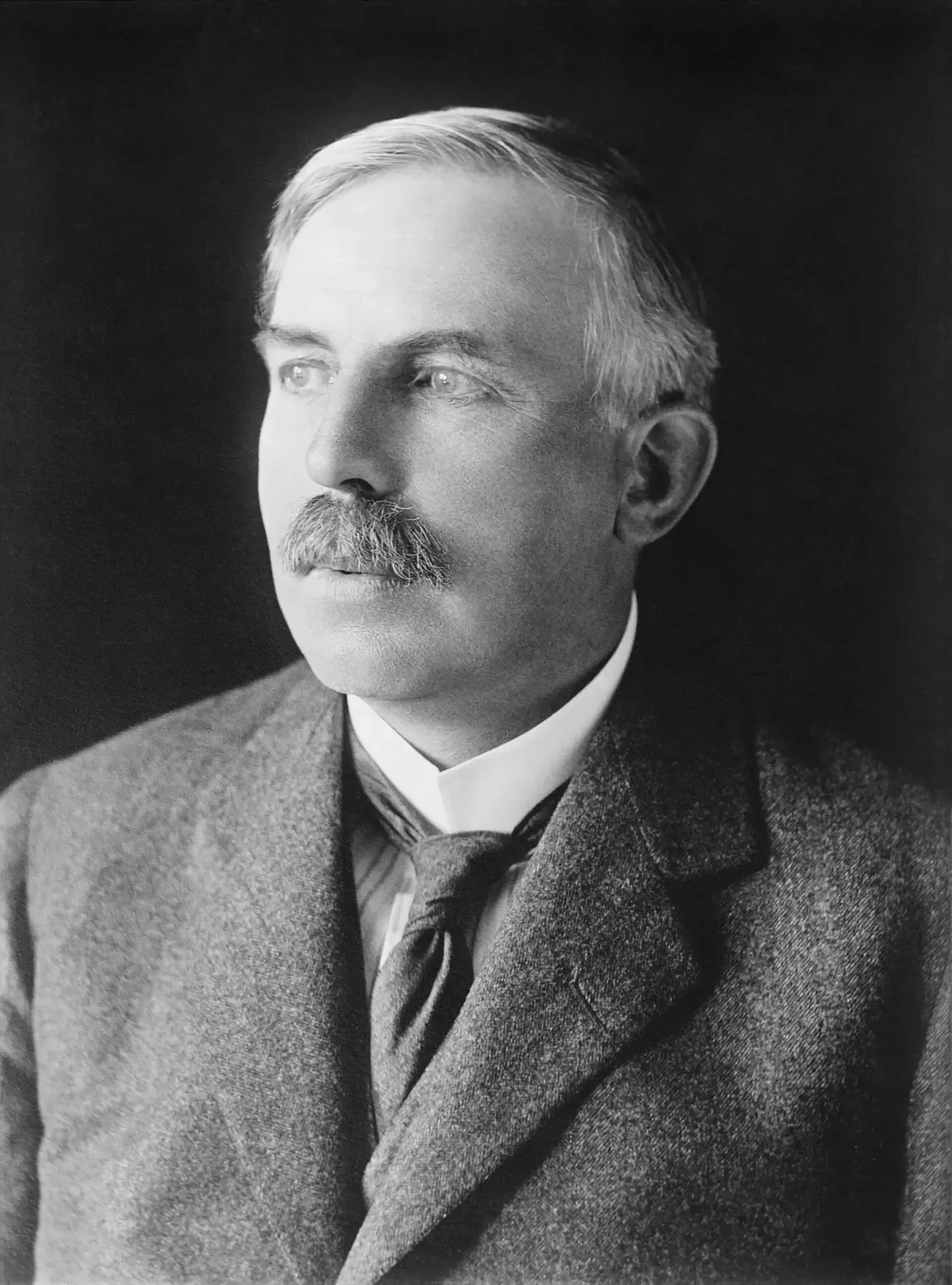
Nineteen-twenty was a year in which very small and very large things were both being taken more seriously than before. That June, Ernest Rutherford stood before the Royal Society in London and gave a name to the positively charged particle at the heart of the hydrogen atom: the proton. It was a small, almost administrative act (a name for something physicists already suspected was there), but it mattered, because it committed physics to the idea that matter at its smallest scale was built from real, countable, individual pieces, rather than some vaguer kind of stuff.
Plate I

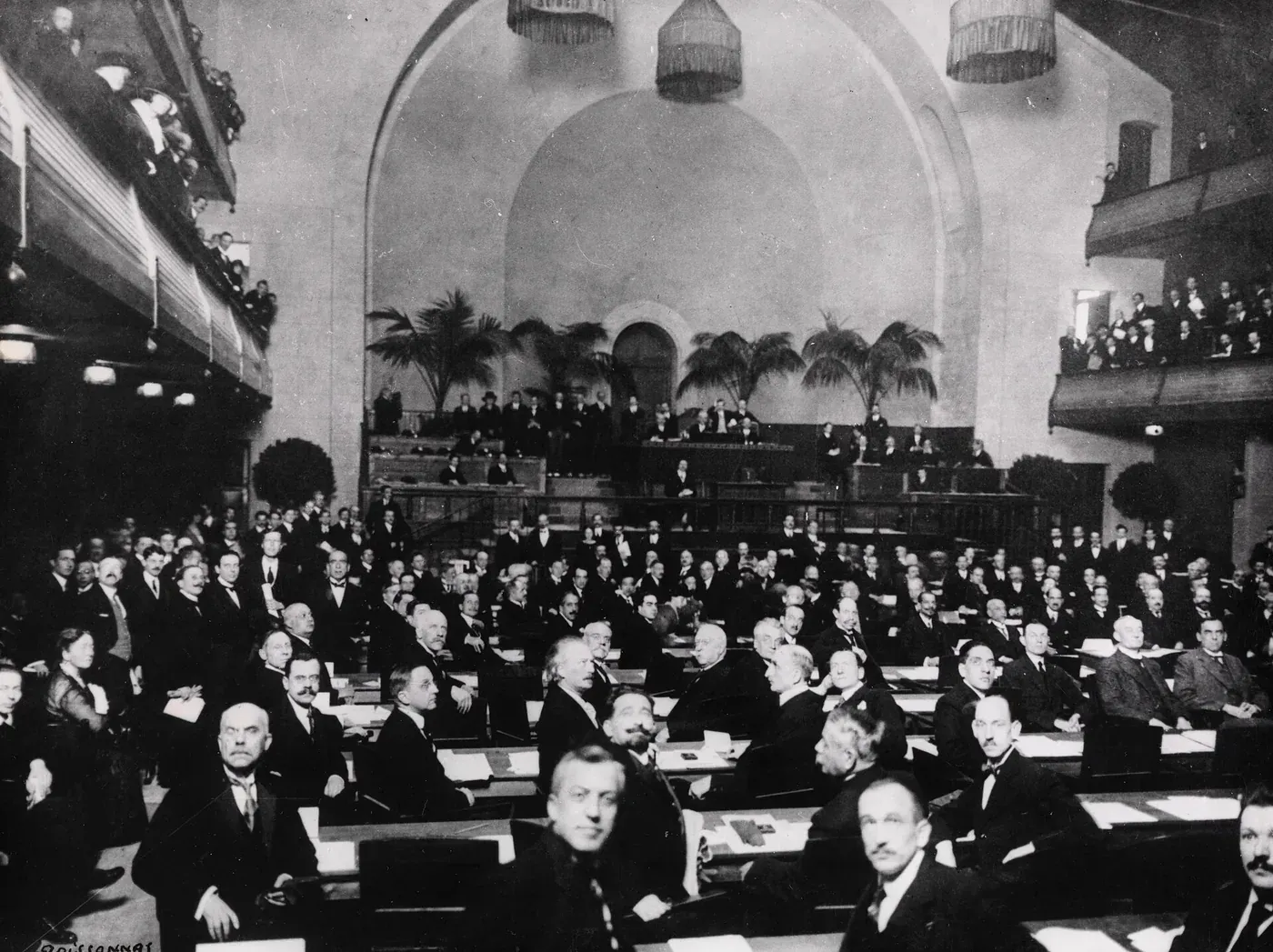
That November, in Geneva, the world tried something structurally similar at the opposite end of the size scale. Delegates from more than forty nations opened the first Assembly of the League of Nations, each sovereign country pledging to bind itself into a single covenant with the others; this was an attempt to make separate, self-interested parts function as one larger whole, only five years after those same parts had spent a war demonstrating how completely they could tear each other apart.
Plate II

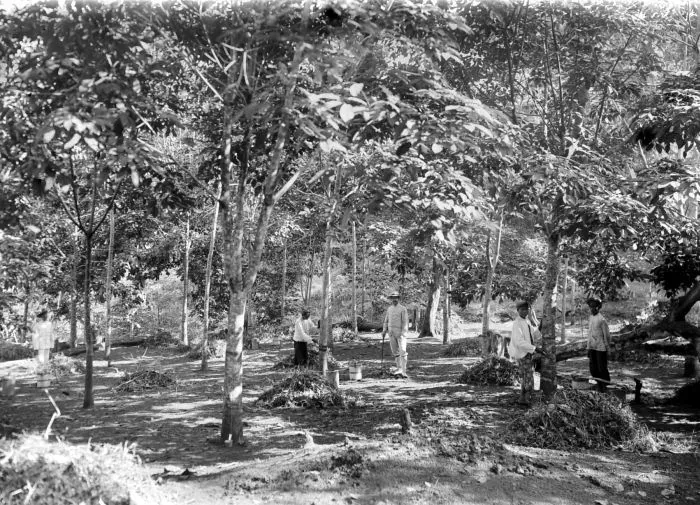
Chemistry, that same year, would accept neither kind of union. Rubber, starch, cellulose and the proteins in every living cell behaved as though they were made of something enormous: they formed fibres, swelled in solvents instead of dissolving cleanly, and refused to boil or crystallise the way a normal compound should. The chemistry establishment, Heinrich Wieland and Emil Fischer prominent among them, had a tidy explanation: these were not single molecules at all, but colloidal aggregates, clouds of perfectly ordinary small molecules clumped together by weak, ill-defined “partial valences.” An organic molecule, by the working assumption of the day, simply could not exceed a molecular weight of a few thousand. Anything that behaved as though it were larger had to be a crowd of small things in disguise.
Plate III

One Paper Against the Establishment
Hermann Staudinger disagreed. A professor at ETH Zürich already respected for unrelated work on ketenes, he published a paper that June in the Berichte der deutschen chemischen Gesellschaft titled, with deceptive plainness, “Über Polymerisation” (“On Polymerisation”). Its claim was that rubber, cellulose and their relatives really were single molecules, thousands of atoms long, held together by nothing more exotic than the ordinary covalent bonds that join any two carbon atoms. Small molecules (monomers) joined end to end to build chains of a length nobody else in organic chemistry had thought to imagine.
Plate IV
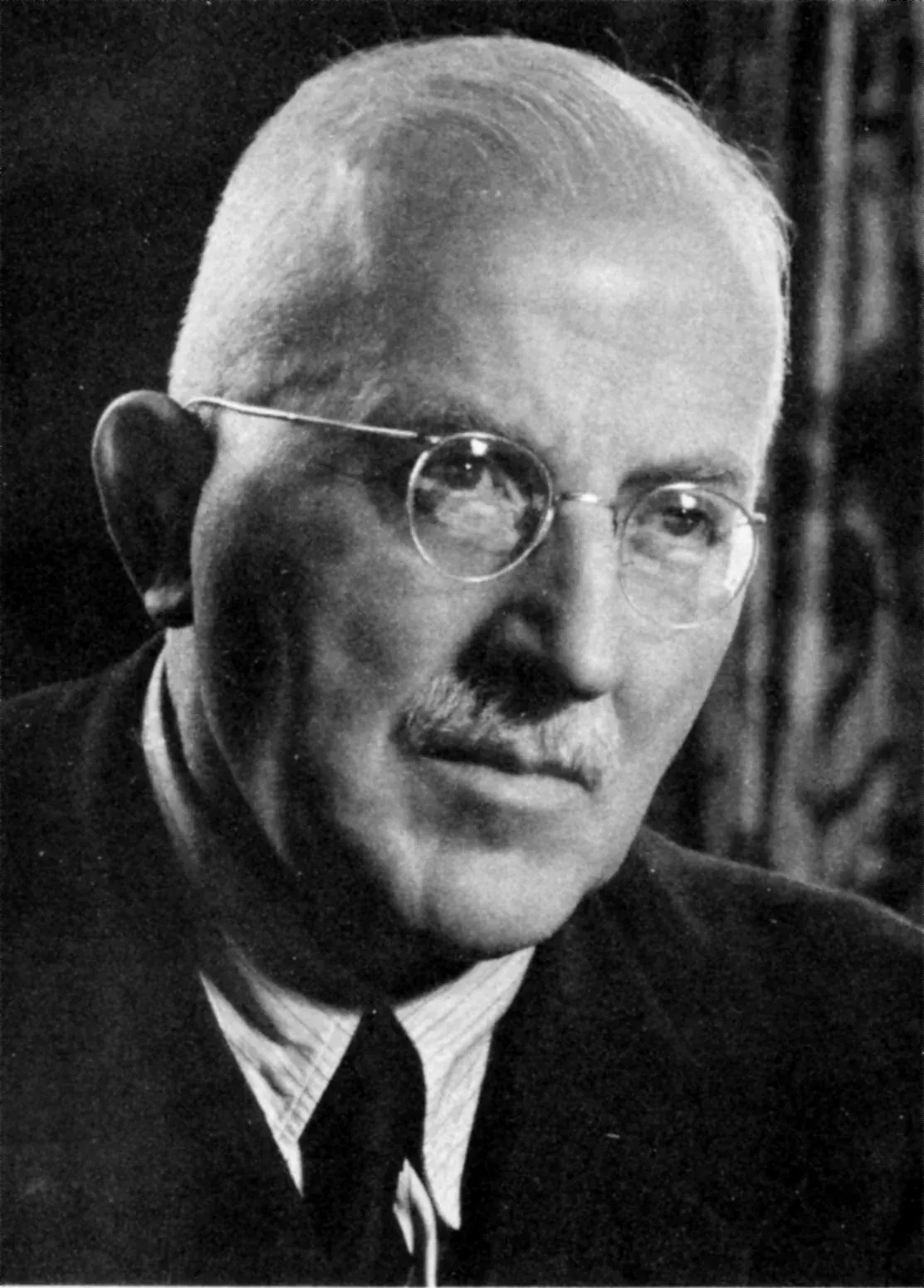

The response was not polite disagreement. By 1926, after Staudinger had moved to Freiburg and kept pressing the case, Wieland, who would win his own Nobel Prize in Chemistry the following year, told him plainly: “Dear colleague, abandon your idea of large molecules; organic molecules with molecular weights exceeding 5,000 do not exist. Purify your products, such as rubber, and they will crystallise and reveal themselves as low-molecular-weight compounds.” Staudinger did not purify his way to a retraction. In 1922, with his colleague J. Fritschi, he had already published what he considered direct evidence of long chains in natural rubber, and that year he gave his giants a name of their own: Makromoleküle.
Weighing the Invisible
Vindication arrived slowly, and it arrived as numbers rather than arguments. Through the 1930s, Staudinger’s own viscosity measurements showed that a dissolved polymer’s thickening power tracks its molecular weight in a regular, predictable way, meaning a giant molecule could be weighed with nothing more exotic than glassware and a stopwatch. Herman Mark and Kurt Meyer, both early skeptics, produced X-ray diffraction patterns that showed real, ordered, long-chain structures in cellulose and rubber rather than a jumble of small crystals. And at DuPont in the 1930s, Wallace Carothers supplied the proof no measurement alone could offer: he built polyamides and polyesters to order, link by link, using ordinary, well-understood reactions, and got exactly the giant molecules Staudinger’s theory predicted. A hypothesis that could be used to manufacture nylon was no longer a hypothesis.
Staudinger received the 1953 Nobel Prize in Chemistry, thirty-three years after the paper that started the argument, “for his discoveries in the field of macromolecular chemistry.” His wife and long-term collaborator, the Latvian biologist Magda Woit, co-authored much of the work that carried his theory into biology, and he acknowledged her contribution when he accepted the prize. Every polymer in this Atlas (every chain deliberately built rather than found) rests on the argument he refused to lose in 1920.
In 1920, Hermann Staudinger proposed that rubber and other polymers (starch, cellulose, proteins) are long chains of repeating molecular units joined by ordinary covalent bonds, not, as the prevailing view held, colloidal aggregates of small molecules held together by weaker physical association. Leading chemists including Emil Fischer and Heinrich Wieland initially rejected the idea. Through the 1930s, membrane osmometry and viscosity measurements confirmed genuinely high molecular weights, Hermann Mark's X-ray diffraction work demonstrated real long-chain structures, and Wallace Carothers' deliberate synthesis of nylon and polyesters from well-understood organic reactions provided further proof the theory was right. Staudinger received the 1953 Nobel Prize in Chemistry for founding macromolecular chemistry; the hypothesis is the theoretical foundation the entire modern polymer/plastics industry rests on.
No governing equations recorded. This concept is treated qualitatively.
- Year of origin
- 1920
- Era
- The Birth of Synthetic Polymers (1907-1938): The Bakelite Revolution
- Key figures
- Hermann Staudinger
- Events referenced
- Rutherford's Bakerian Lecture proposing the name 'proton' (3 June 1920) · First Assembly of the League of Nations, Geneva (15 November 1920)
- [1]Hermann StaudingerWikipediaAccessed 2026-07-14https://en.wikipedia.org/wiki/Hermann_Staudinger[wiki-staudinger]
Illustrations
- Plate IErnest Rutherford, photographed in the 1920s. That June he told the Royal Society the hydrogen nucleus deserved a name of its own: the proton.Wikimedia Commons
- Plate IIThe first Assembly of the League of Nations, Geneva, November 1920 (an attempt to bind separate, sovereign parts into one working whole).Wikimedia Commons
- Plate IIIRubber being tapped on a Sumatran plantation, around 1910 (one of the puzzling materials chemists insisted was really a colloidal crowd of small molecules).Wikimedia Commons
- Plate IVHermann Staudinger, photographed not long after the 1953 Nobel Prize that closed out thirty years of argument.Wikimedia Commons