The Post-War Boom (1946-1960)
Ethylene-Vinyl Acetate (EVA)
The Polymer That Cushioned the World
From the Sole of a Shoe to the Skin of a Solar Panel
On 29 June 1956, Dwight Eisenhower signed the Federal-Aid Highway Act, committing the United States to forty-one thousand miles of new interstate road. This was the largest public-works program the country had ever attempted, built for a population that had decided, in the space of a decade, to move by car. Three months later, on 9 September, that same restless country watched Elvis Presley on The Ed Sullivan Show and watched itself argue over what it was becoming. Both were symptoms of a nation in motion: more cars, more feet, more bodies moving faster and further than the materials on hand were really built for.
Plates I & II
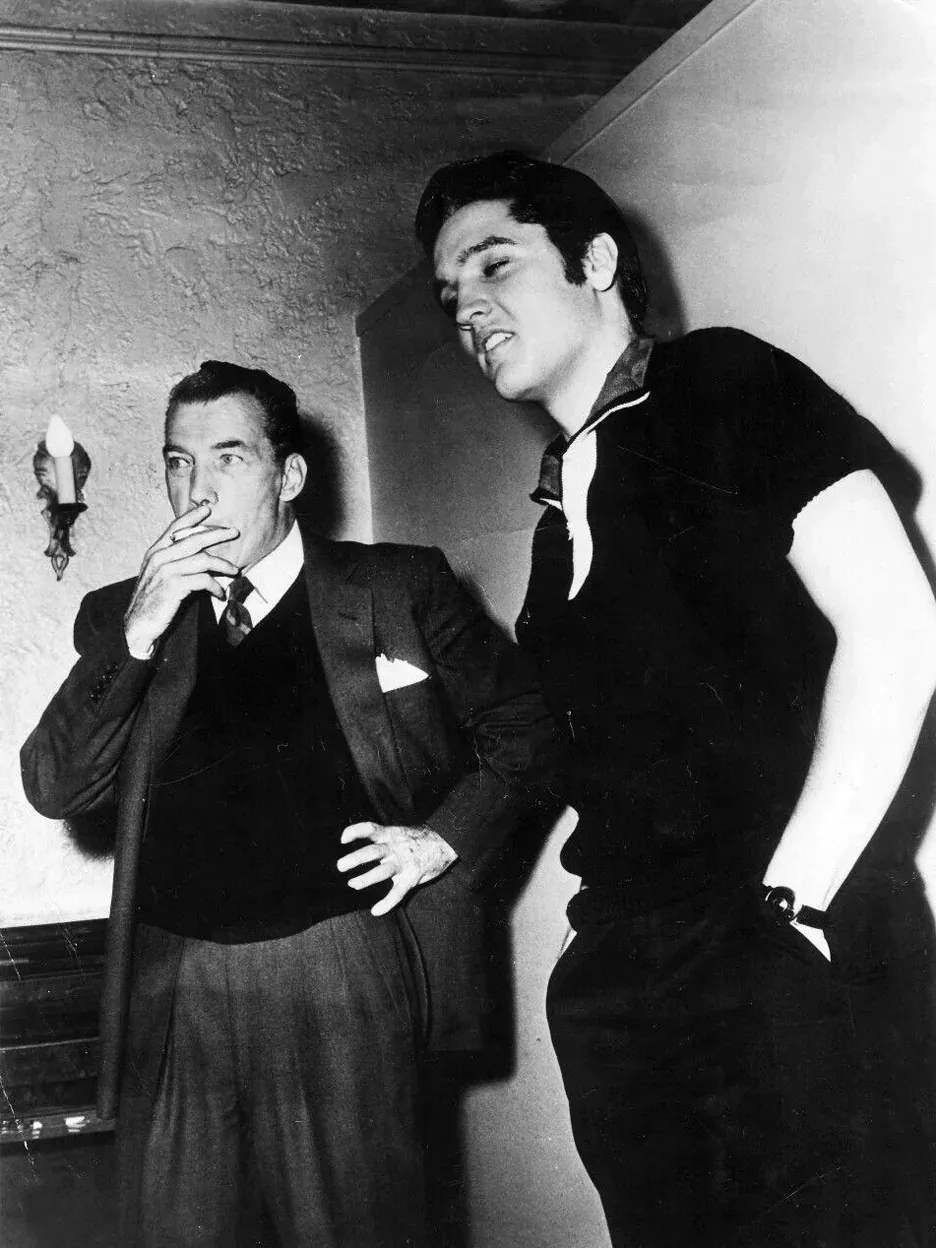

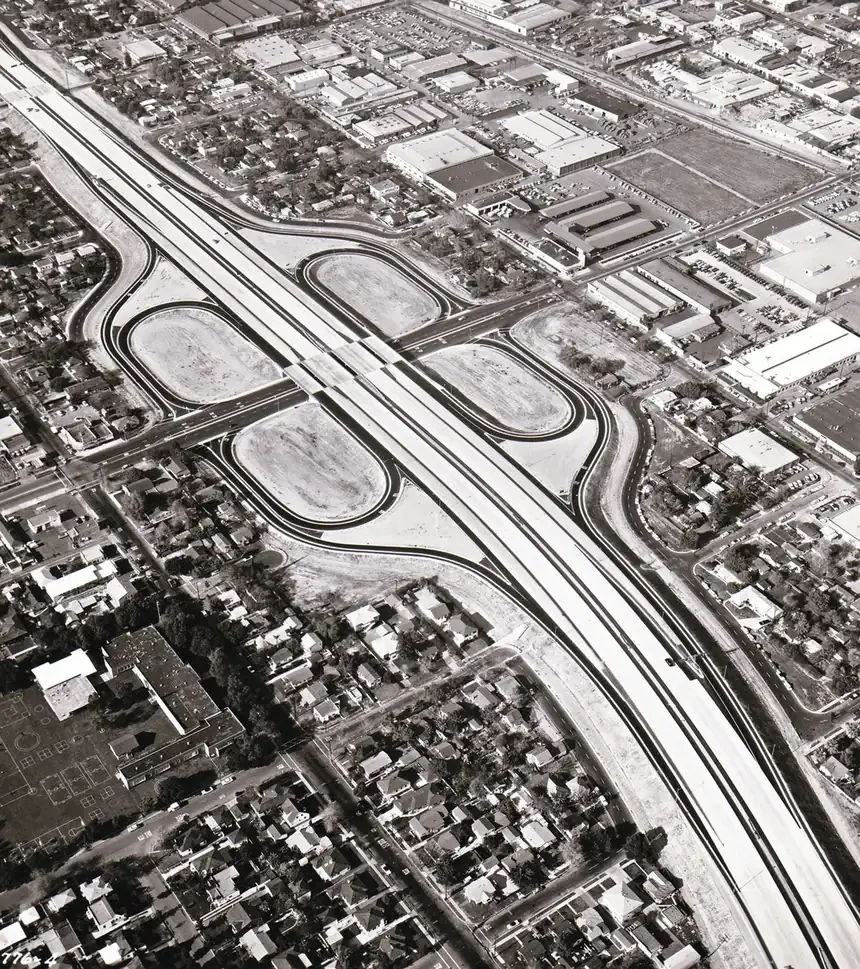

It was in this same year that chemists at DuPont, working with the high-pressure ethylene polymerization technology developed for polyethylene two decades earlier, filed a patent for copolymerizing ethylene with vinyl acetate, a molecule that, unlike ethylene alone, refuses to pack neatly into a crystal. The result was a new kind of plastic that could be dialed, by adjusting how much vinyl acetate went in, anywhere between a stiff film and a soft, rubbery foam. DuPont would spend the next several years turning that patent into a commercial product line, launched at the start of the 1960s under the name Elvax. Nobody in 1956 was thinking about running shoes or solar panels (those uses were decades away), but the copolymer that would eventually cushion both was already on paper.
Molecular Architecture: A Tunable Partnership
EVA is a random copolymer: a chain in which ethylene and vinyl acetate units follow one another in no fixed order. The ethylene stretches want to crystallize, giving the material strength and structure, while the vinyl acetate units (each carrying a bulky acetate group off the backbone) interrupt that packing, introducing flexibility and softness in proportion to how much of it is there. Vinyl acetate content can run from a few percent of the chain to nearly half, and that single variable governs almost everything about how a given grade of EVA behaves. A low-vinyl-acetate grade acts like a tougher, clearer version of polyethylene; a high-vinyl-acetate grade turns soft, tacky and rubbery, suited to foams and adhesives. Unlike a polymer whose properties are fixed by its chemistry alone, EVA is a spectrum that chemists select from by recipe.
Manufacturing Journey: Pressure, Partnership and Precision
EVA is made under real pressure. Ethylene and vinyl acetate are fed together into a reactor and driven to copolymerize by free-radical initiators, in essentially the same high-pressure process that produces low-density polyethylene. The ratio of the two monomers, along with reaction temperature and pressure, sets the vinyl acetate content, and therefore the personality, of the finished resin. By the time DuPont’s Elvax line was established at the start of the 1960s, the laboratory chemistry of 1956 had become an industrial workhorse, sorted by grade: films and packaging at the low end of vinyl acetate content, hot-melt adhesives in the middle, and the foamed, cross-linked grades that cushion footwear at the high end.
Applications and Impact: The Unsung Cushion of Modern Life
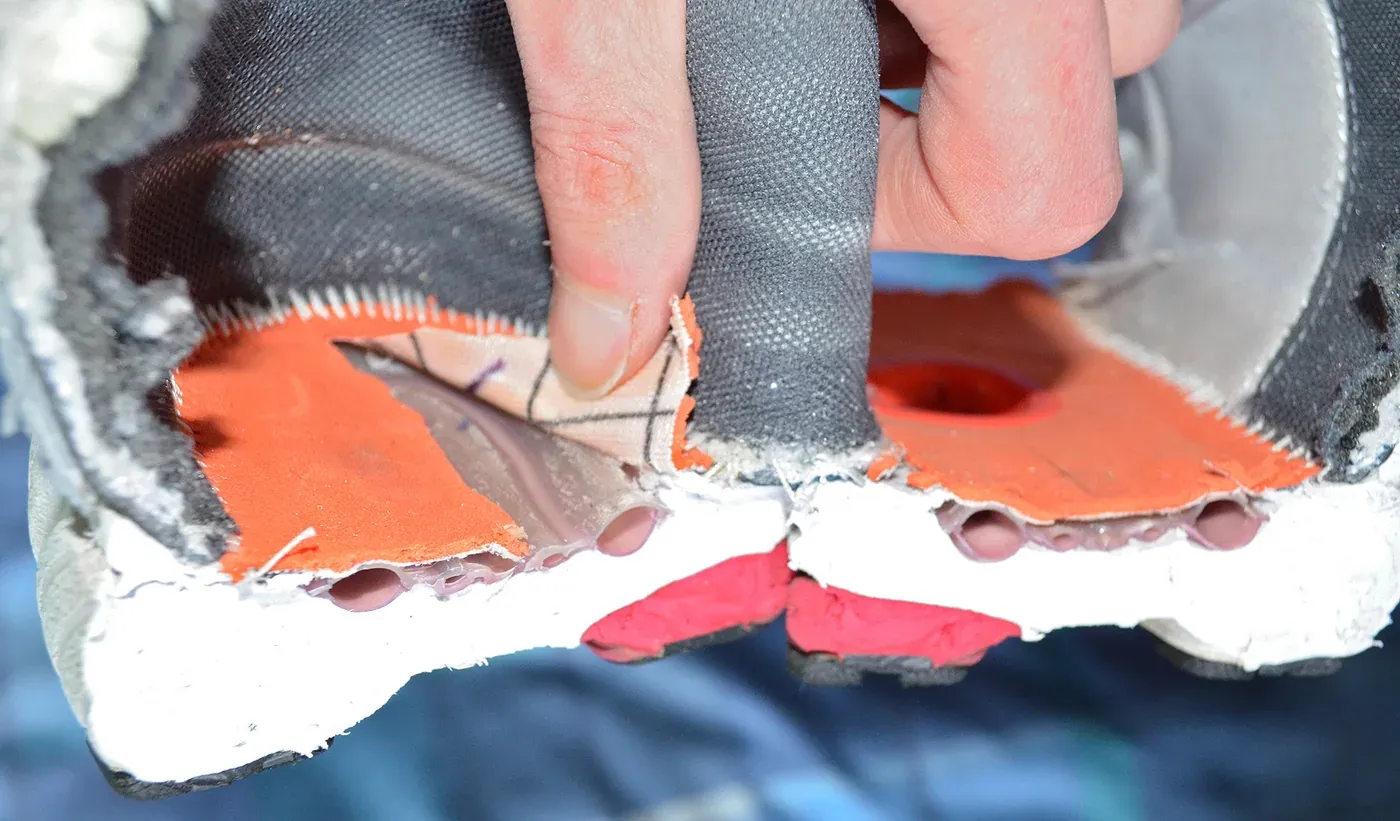
Chances are good that EVA is within arm’s reach right now. It is the foam midsole that absorbs the shock of a runner’s stride, the hot-melt adhesive holding a book’s spine or a shipping box’s flaps together, the clinging film wrapped around fresh food, and the soft foam of a yoga mat or a piece of playground padding.
Plate III

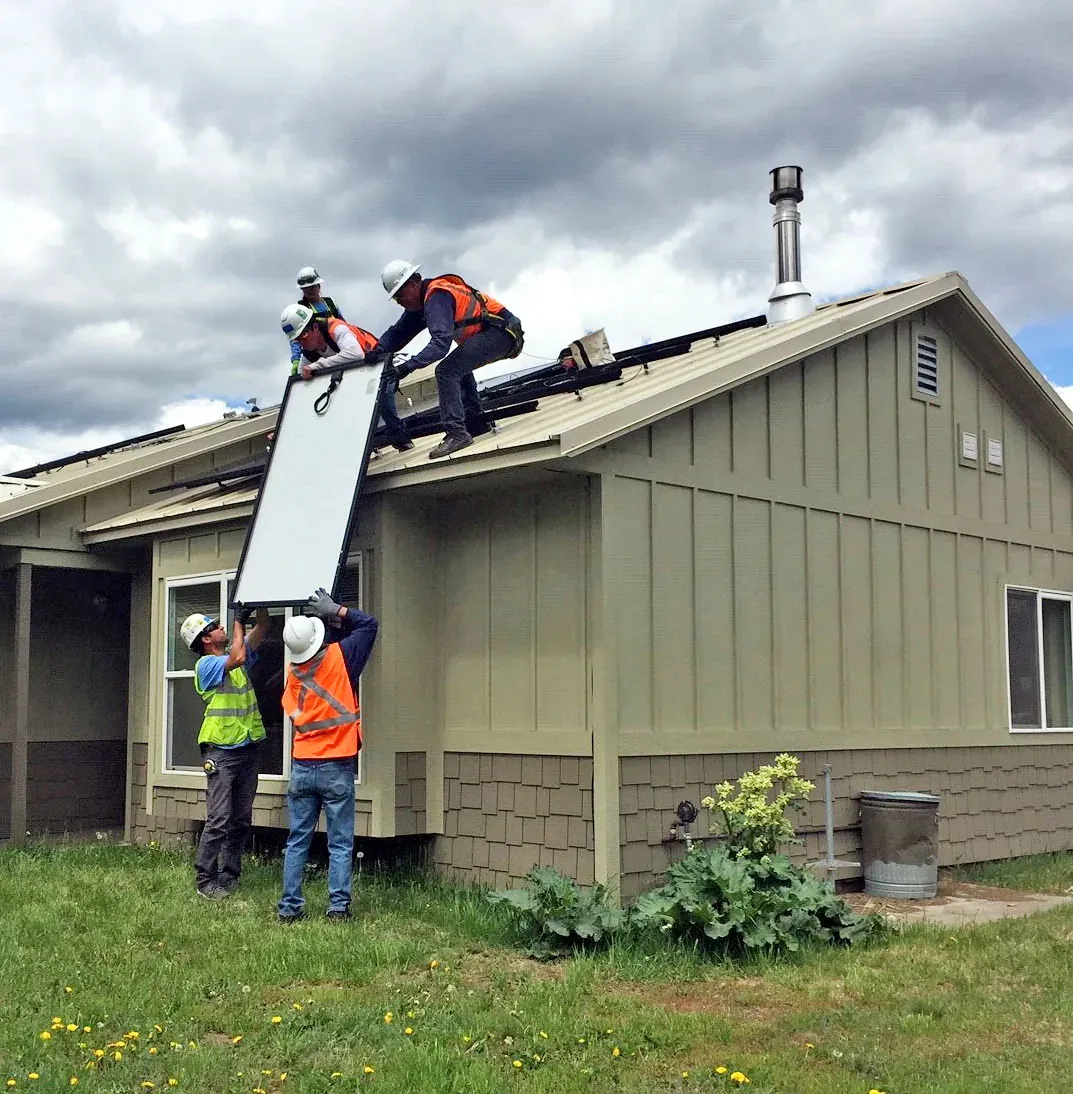
EVA’s most consequential role today may be its quietest. As the transparent encapsulant laminated over and under the silicon cells inside a solar panel, EVA protects photovoltaic modules from moisture and weather across decades of sun exposure. A copolymer first prized for cushioning shoes now helps shield the modules generating an increasing share of the world’s electricity.
Plate IV
.jpg)
The Flexible Future
Nearly seventy years after that 1956 patent, EVA remains indispensable precisely because it refuses to be just one thing. Researchers are developing bio-based versions that draw ethylene from renewable ethanol rather than petroleum, and engineering new encapsulant grades to squeeze more life and efficiency out of solar modules. Its role in cushioning footwear and in clean energy has given an old, unglamorous copolymer a genuinely forward-looking second act.
From the sole of a sneaker to the surface of a solar panel, EVA has proven that some of the most useful materials are the ones nobody notices. It asks for no attention and gets none, yet it cushions, seals and protects the modern world in a thousand invisible ways.
values with [n] cite the numbered references·estimates are flagged·“not yet available” and “N/A” are honest states, not gaps
fetching the model…
Ethylene-Vinyl Acetate repeat unit
- Abbreviation
- EVA
- Type
- polymer family (hub)
- CAS number
- 24937-78-8
- Resin ID code
- none assigned
- Formula
- (C2H4)x·(C4H6O2)y[-CH2-CH2-]x[-CH2-CH(OCOCH3)-]yA statistical copolymer whose vinyl acetate content, anywhere from a few percent to about 40%, decides whether the material behaves like a tough polyethylene or like a soft elastomer.
- Repeat unit (BigSMILES)
{[][$]CC[$],[$]CC(OC(C)=O)[$][]}- IUPAC name
- Poly(ethylene-vinyl acetate)
- Synonyms
- PEVA
- Also known as
- PEVA
- Chemical family
- vinyl-polymerpolyolefin
- Backbone class
- carbon-chain
- Polymerization mechanism
- free-radical
- Constitutional monomer
- EthyleneVinyl acetate
- Polymer class
- elastomer
- Year of origin
- 1956
- Era
- The Post-War Boom (1946-1960)
- Key figures
- DuPont
- Events referenced
- Federal-Aid Highway Act signed, creating the U.S. Interstate Highway System (29 June 1956) · Elvis Presley appears on The Ed Sullivan Show (September 1956)
- Polymerization type
- free-radical chain-growth copolymerization
- Common monomers (feedstocks)
- ethylene, vinyl acetate
- Catalysts
- not yet available
Made via high-pressure bulk (chain-growth) copolymerization of ethylene and vinyl acetate in tubular or autoclave reactors, typically at 40–80°C.
- Tacticity
- not yet available
- Crystal structure
- not yet available
- Typical crystallinity
- 5.9–60 %[2]Low-VA grades are semi-crystalline (LLDPE-like); high-VA grades (>40 wt%) are amorphous/elastomeric.
Molecular weight
- Number average (Mn)
- 16000–42000 g/mol[2]Range across commercial grades
- Mass average (Mw)
- 35200–210000 g/mol[2]Range across commercial grades
- Dispersity (Mw/Mn)
- 2.03–6[2]
Mark-Houwink constants
not yet available
Vinyl acetate content is the master variable: higher VA gives more amorphous, polar, adhesive, elastomeric behavior; lower VA gives more crystalline, LLDPE-like behavior.
Tg stays roughly constant around -25 to -30°C across most formulations despite the large property swing driven by VA content.
- Density
- 0.95 (0.92–0.98) g/cm³[2]20 °C; decreases with increasing VA content, tracking reduced crystallinity.
- Melt flow index
- 0.35–800 g/10min[2]190 °C/2.16 kg
- Refractive index
- 1.4825 (1.467–1.498)[2]20 °C
- Transmittance
- not yet available
- Haze
- 0.7–20 %[2]
- Gloss
- 34–100 %[2]60°, ASTM D523
- Water absorption
- 0.005–0.13 %[2]Equilibrium, 23 °C
- Dielectric constant
- not yet available
- Dielectric strength
- 24.4–29.9 kV/mm[3]0.31 cm thick specimen, ASTM D149
- Electrical conductivity
- 1.075 × 10⁻¹⁴ S/m[2]Reciprocal of reported volume resistivity, 9.3×10¹³ Ω·m
- Glass transition (Tg)
- -40 (-42–-38) °C[2]Mark reports 231 K (-42 °C) at 30% VA and 235 K (-38 °C) at 40% VA.
- Melting temperature (Tm)
- 85 (58–112) °C[2]Decreases with increasing VA content; spans low-VA (~112°C) to high-VA elastomeric grades (~58°C).
- Crystallization (Tc)
- 64 (52–76) °C[2]Reported as "rapid crystallization temperature"
- Heat deflection (HDT)
- Not applicable
- Decomposition onset
- 230.5 (221–240) °C[2]
- Thermal conductivity
- not yet available
- Tensile modulus
- 10 MPa[2]
- Yield strength
- 6 (4.6–7.4) MPa[2]
- Tensile strength at break
- 2–41 MPa[2]
- Elongation at break
- 580 (300–860) %[2]
- Impact strength (Izod)
- [2]Notched, 23 °C; no break
- Impact strength (Charpy)
- [2]Unnotched, 23 °C; no break
- Hardness
- 80.5 (65–96) Shore A[2]Softer grades; harder grades read 15–43 on Shore D.
- Flexural modulus
- 53.1 MPa[3]ASTM D790
- Poisson's ratio
- not yet available
- Coefficient of friction
- not yet available
- Solvent: acids
- poor[2]
- Solvent: alcohols
- good[2]
- Solvent: alkalis
- poor[2]
- Solvent: aliphatic hydrocarbons
- poor[2]
- Solvent: aromatic hydrocarbons
- poor[2]
- Solvent: halogenated hydrocarbons
- poor[2]
- Solvent: ketones
- poor[2]
- Weathering / UV
- Good UV radiation resistance[1]
- Hydrolysis resistance
- not yet available
- Flammability (UL94)
- not yet available
- Limiting oxygen index
- 23 %[2]
- Solubility parameter (δ)
- 17–19.2 MPa^0.5[2]
Gas permeability
not yet available
Polymer-solvent interaction parameter (χ)
- acetaldehyde
- 0.16[3]29% vinyl acetate, 150 °C, inverse GC, infinite dilution
- acetic acid
- 1.12[3]29% vinyl acetate, 150 °C, inverse GC, infinite dilution
- benzene
- -0.02[3]29% vinyl acetate, 150 °C, inverse GC, infinite dilution
- 1-butanol
- 0.65[3]29% vinyl acetate, 150 °C, inverse GC, infinite dilution
- 2-butanol
- 0.51[3]29% vinyl acetate, 150 °C, inverse GC, infinite dilution
- cyclohexane
- 0.07[3]29% vinyl acetate, 150 °C, inverse GC, infinite dilution
- 1,4-dioxane
- 0.45[3]29% vinyl acetate, 150 °C, inverse GC, infinite dilution
- ethanol
- 1.28[3]29% vinyl acetate, 150 °C, inverse GC, infinite dilution
- hexane
- 0.25[3]29% vinyl acetate, 150 °C, inverse GC, infinite dilution
- methanol
- 1.69[3]29% vinyl acetate, 150 °C, inverse GC, infinite dilution
- octane
- 0.23[3]29% vinyl acetate, 150 °C, inverse GC, infinite dilution
- 2-propanol
- 0.93[3]29% vinyl acetate, 150 °C, inverse GC, infinite dilution
- tetrahydrofuran
- 0.25[3]29% vinyl acetate, 150 °C, inverse GC, infinite dilution
- m-xylene
- -0.02[3]29% vinyl acetate, 150 °C, inverse GC, infinite dilution
- Processing methods
- foam expansion (midsoles)extrusionhot-melt adhesive applicationfilm lamination (solar encapsulant)
- Drying required
- not yet determined
- Processing temperature
- 190 (150–230) °C[2]
- Shrinkage rate
- not yet available
- Footwearshoe soles, midsoles, insoles
- Adhesiveshot-melt adhesives
- Energysolar panel encapsulant film (~26-28 wt% VA grades)
- Sports & medicalfoam padding for sports equipment · biomedical drug delivery
- Recyclable
- No
- Biodegradable
- No
- Degradation pathway
- UV/thermal degradation produces hydroperoxides, hydroxyl groups, polyene sequences, aldehydes, and acetic acid.
Generally considered non-toxic and non-carcinogenic; biocompatible, FDA-approved grades exist for pharmaceutical use.
- LD50 (oral, rat)
- 3080 mg/kg[2]
- NFPA health
- 0[2]HMIS rating, 0–4 scale
- NFPA flammability
- 1[2]HMIS rating, 0–4 scale
- NFPA reactivity
- 0[2]HMIS rating, 0–4 scale
- Carcinogenic classification
- not listed by ACGIH, NIOSH, NTP[2]
Reproductive toxicity not expected. OSHA PEL 5 mg/m³ (respirable), 15 mg/m³ (total). Skin (rabbit) LD50 7,940 mg/kg.
- [1]Ethylene-vinyl acetateWikipediaAccessed 2026-07-14https://en.wikipedia.org/wiki/Ethylene-vinyl_acetate[wiki-eva]
- [2]Handbook of PolymersChemTec Publishinghttps://www.worldcat.org/isbn/9781895198928[handbook-wypych-2016]
- [3]Polymer Data HandbookOxford University Presshttps://search.worldcat.org/search?q=Polymer+Data+Handbook+Mark+1999[handbook-mark-1999]
Illustrations
- Plate IElvis Presley with Ed Sullivan, October 1956: the year America's restlessness was as visible on television as it was on its new highways.Wikimedia Commons
- Plate IIA new cloverleaf interchange on the Golden State Freeway, 1957: the interstate system authorized the year DuPont filed its ethylene-vinyl acetate patent.Wikimedia Commons
- Plate IIIA dissected running-shoe sole, its white midsole foam and internal air pockets built from an EVA compound chosen for exactly this kind of cushioning.Wikimedia Commons
- Plate IVInstalling rooftop solar panels. A thin EVA layer, laminated over the silicon cells inside each panel, is what keeps moisture and weather out for decades.Wikimedia Commons