The Engineering Polymers Era (1961-1979)
Liquid Crystal Polymers (LCPs)
Dance
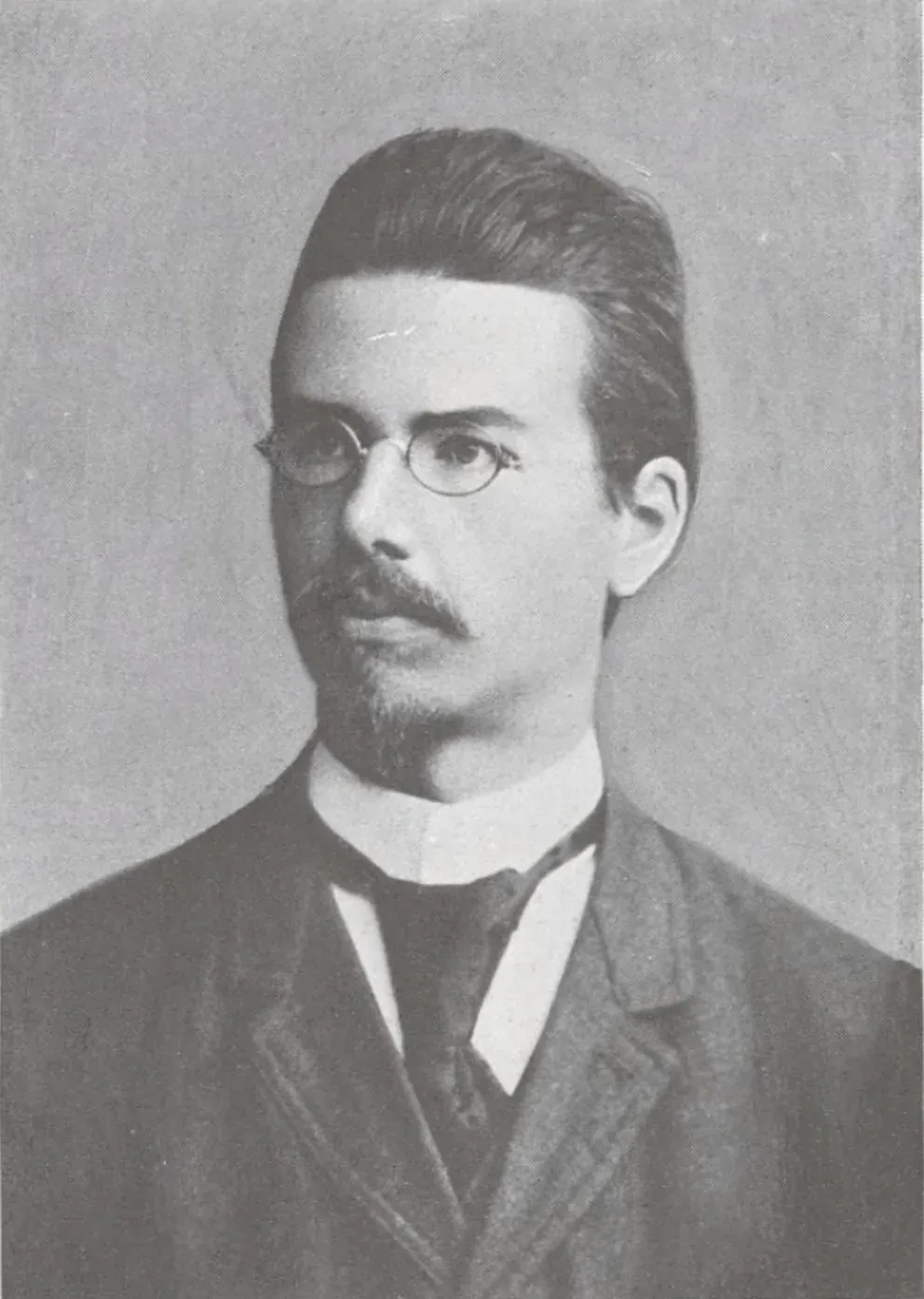
In 1888, the Austrian chemist Friedrich Reinitzer was studying cholesterol extracted from carrots when he noticed something a chemistry textbook of the day had no room for: a derivative called cholesteryl benzoate seemed to melt twice. At one temperature it turned from a solid into a cloudy, milky fluid; only at a second, higher temperature did that cloudy fluid finally clear into an ordinary transparent liquid. Reinitzer sent samples to the physicist Otto Lehmann, whose polarizing microscope showed why: in that cloudy in-between state, the rod-shaped molecules were still lined up in formation even though the substance had stopped being a solid. Lehmann called it a liquid crystal, a name that sounded like a contradiction and was one of the reasons the discovery was treated as a curiosity for decades rather than the foundation of anything.
Plate I

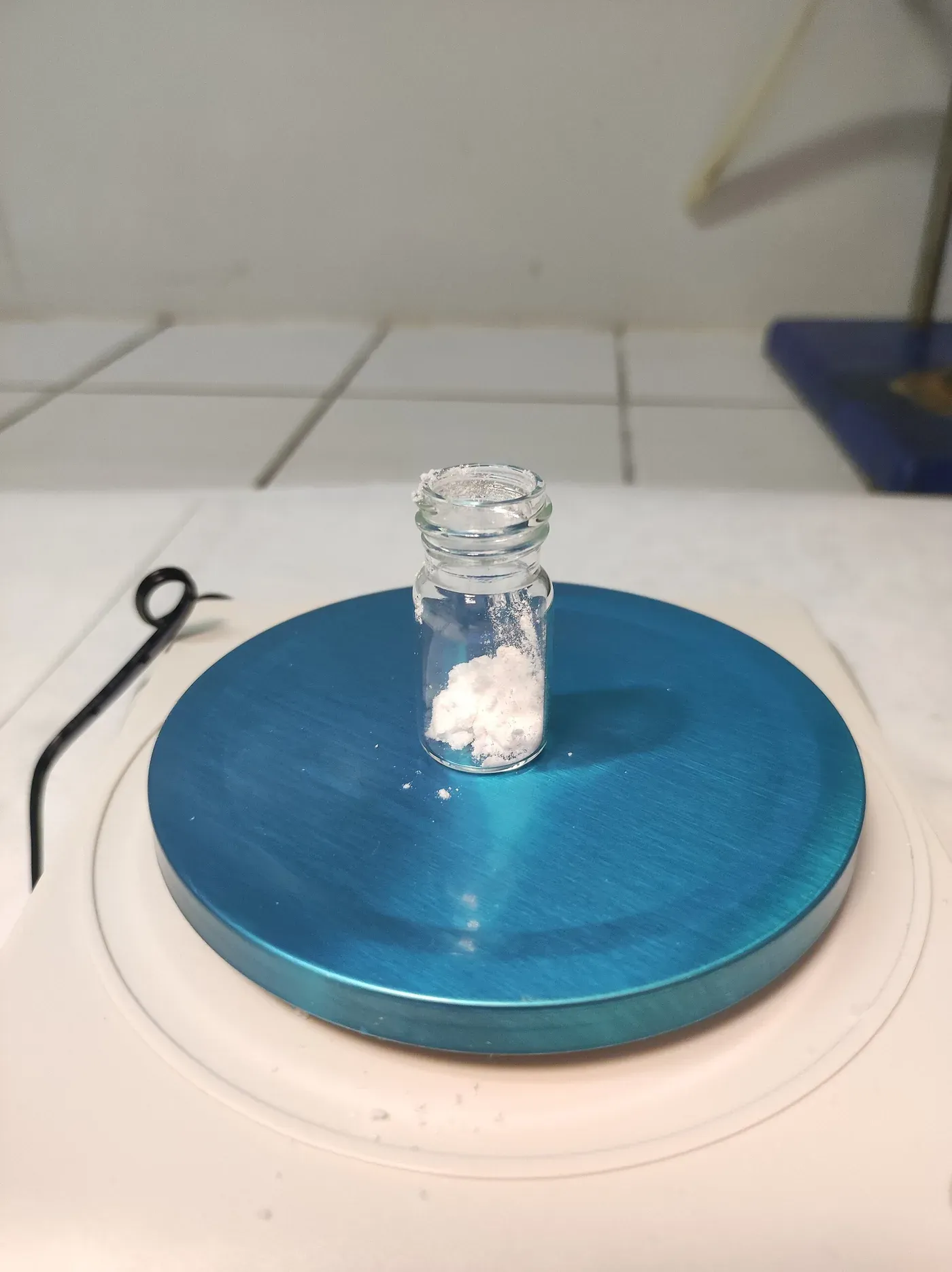
The compound itself is unremarkable to look at (a fine white powder, sold today in any chemical supply catalogue mostly so students can repeat Reinitzer’s observation for themselves), and for eight decades after 1888 that was more or less what liquid crystals were: a demonstration, not a material.
Plate II

That changed in 1974, when two industrial laboratories, working independently and within months of each other, showed that a wholly synthetic polymer chain could be engineered to do what cholesteryl benzoate did by accident. At Eastman Kodak, researchers reported that a copolyester built from PET and para-hydroxybenzoic acid formed a liquid-crystalline melt. That copolyester was the first thermotropic polymer anyone had actually injection-molded or melt-spun. At the Carborundum Company’s laboratory in Niagara Falls, a team led by James Economy reported an all-aromatic copolyester, built from terephthalic acid, biphenol and the same hydroxybenzoic acid unit, that could be injection molded outright; its liquid-crystalline nature was confirmed shortly afterward. Where Reinitzer had found rigid, rod-shaped molecules lining up by chance, these chemists had built the rigid rods directly into a polymer backbone, on purpose.
Rigid Rods in a Flowing Melt
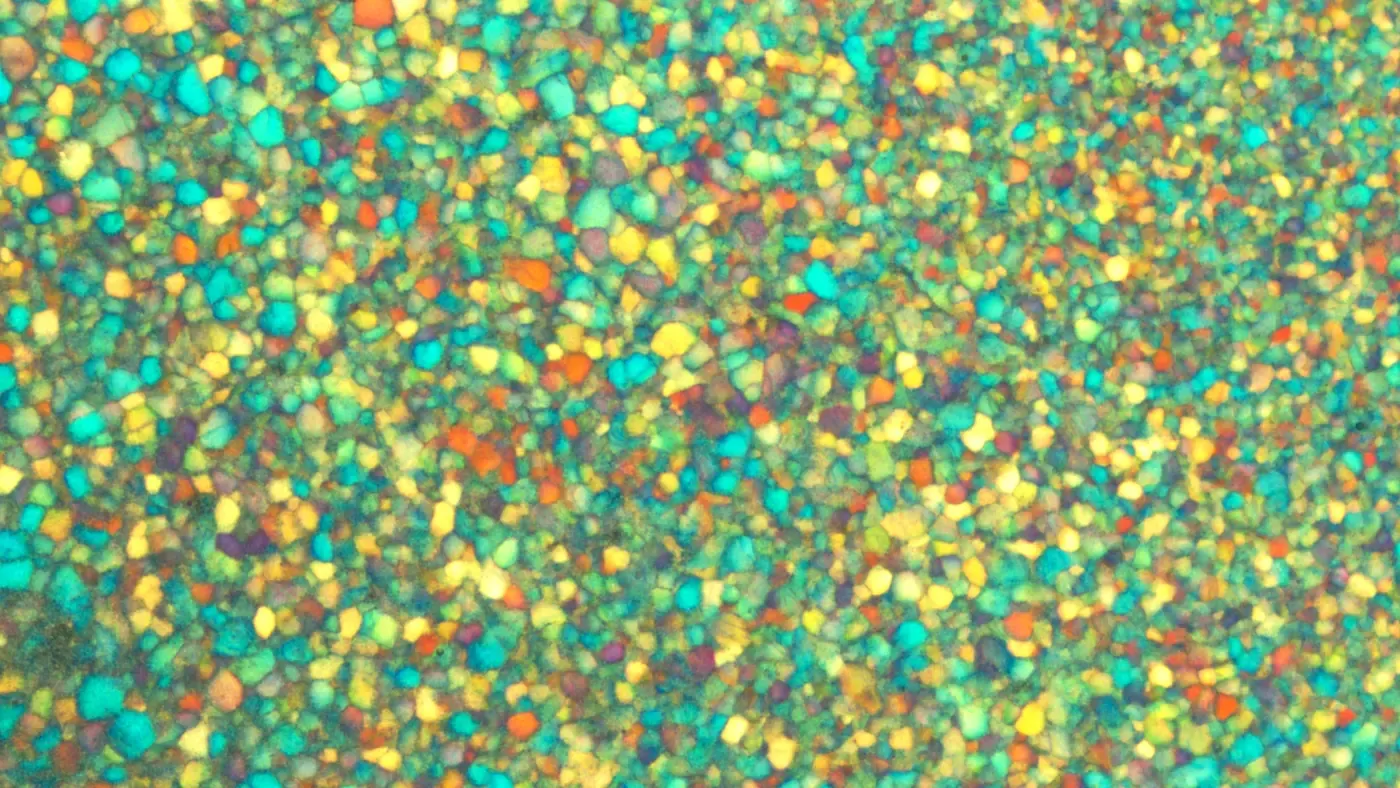
An LCP chain is built from stiff, flat, rod-like segments (usually aromatic rings linked end to end) strung together with just enough flexibility at the joints to let the whole thing flow. In an ordinary polymer melt the chains tangle into a formless mass, the way cooked spaghetti has no memory of which way any one strand is pointing. An LCP melt does not fully surrender that memory: its rigid segments keep a degree of common alignment even while the material is flowing, pouring, or being sheared through a mold. Chemists distinguish a few flavors of that retained order (nematic, where the rods merely point the same way; smectic, where they also stack into layers; cholesteric, where the alignment twists gradually from layer to layer like a spiral staircase), but the underlying trick is the same one in every case: order that survives being a liquid.
Plate III

What the Order Buys
Because the rigid segments align with the direction of flow as a part is molded, an LCP part ends up dimensionally stubborn along that direction (it barely expands or contracts with temperature the way an ordinary plastic does), though that discipline does not carry through the thickness of the part, where the chains never had a flow direction to align with in the first place; a molded LCP piece is genuinely a different material lengthwise than it is through its cross-section. That same alignment makes the material stiff and strong along the grain, closer to a metal than to a conventional plastic in outright rigidity, though it pays for that stiffness with brittleness: an LCP part takes almost no stretching before it lets go, the same trade every rigid-rod material makes. It resists heat well into the range that softens ordinary engineering plastics, shrugs off most everyday solvents and oils, and, despite being built almost entirely from carbon, hydrogen and oxygen, barely takes on water at all, which matters enormously in the applications that made it famous: a connector or a membrane that will not swell, however humid the room, holds a tolerance that a thirstier plastic simply cannot.
From the Lab to Orbit and to Mars
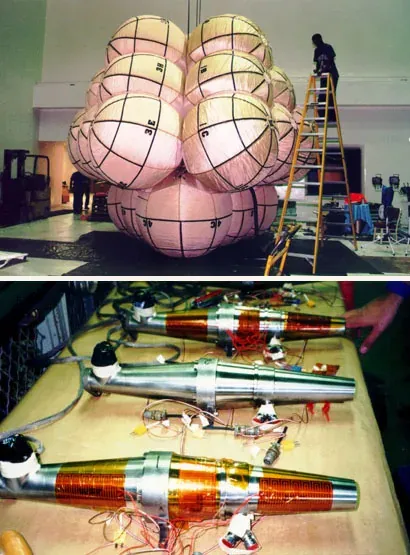
The commercial LCPs that grew out of that 1974 work carry names like Vectra, from Celanese, and Xydar, descended directly from Economy’s Carborundum chemistry. They are sold today as connectors, coil forms and other small, exactingly dimensioned electronic parts that need to survive the heat of lead-free soldering without warping. A melt-spun fiber version, Vectran, took the same rigid-rod backbone in a different direction entirely: woven into fabric, it became the material of the airbags that cushioned the Mars Pathfinder lander’s touchdown in 1997, and the Spirit and Opportunity rovers’ landings in 2004, chosen over Kevlar specifically because it did not crack after repeated folding the way Kevlar’s fabric had in testing.
Plate IV

A Curiosity, Finally Put to Work
Reinitzer never intended to found an industry; he was trying to understand cholesterol. It took most of a century for chemists to turn his accidental in-between state into a class of materials engineered from the start to hold that order, and once they did, the same molecular trick that puzzled a nineteenth-century botanical chemist ended up cushioning a spacecraft’s fall onto another planet.
values with [n] cite the numbered references·estimates are flagged·“not yet available” and “N/A” are honest states, not gaps
fetching the model…
Liquid Crystal Polymers repeat unit
- Abbreviation
- LCPs
- Type
- polymer family (hub)
- CAS number
- None (heterogeneous class or not assigned)
- Resin ID code
- none assigned
- Formula
- (C7H4O2)x·(C11H6O2)y[-O-C6H4-CO-]x[-O-C10H6-CO-]yOne widely used aromatic copolyester (a Vectra-type hydroxybenzoic acid / hydroxynaphthoic acid copolymer) is shown, x and y in the same order as the empirical formula. The rigid rod-like rings are the point: they line up in the melt, which is what gives this family its extraordinary flow into thin sections. Other LCP chemistries use different rigid monomers.
- Repeat unit (BigSMILES)
{[][>]Oc1ccc(cc1)C(=O)[<],[>]Oc1ccc2cc(ccc2c1)C(=O)[<][]}- IUPAC name
- —
- Synonyms
- —
- Also known as
- VectraXydarVectran
- Chemical family
- liquid-crystal-polymer
- Backbone class
- heterochain
- Polymerization mechanism
- step-growth-condensation
- Constitutional monomer
- Aromatic diol/diacid mesogenic units (formulation-dependent)
- Polymer class
- thermoplastic
- Year of origin
- 1974
- Era
- The Engineering Polymers Era (1961-1979)
- Key figures
- James Economy · Eastman Kodak
- Events referenced
- Reinitzer's discovery of liquid-crystalline behaviour (1888) · Eastman Kodak and Carborundum's reports of thermotropic liquid-crystal copolyesters (1974) · Vectran airbags at the Mars Pathfinder and Mars Exploration Rover landings (1997, 2004)
- Polymerization type
- step-growth condensation
- Common monomers (feedstocks)
- not yet available
- Catalysts
- not yet available
Rigid, rod-like aromatic mesogenic units (main-chain or side-chain) give LCPs their name: the polymer chains self-organize into liquid-crystalline order both in the melt and in solid form. Commercial production expanded significantly in the 1980s under trade names including Vectra, Xydar, Zenite, Laperos, and Vectran. Kevlar (see aramid-fibers) is the most historically significant lyotropic (solution-processed) example.
- Tacticity
- not yet available
- Crystal structure
- Rigid rod-like mesogenic units self-align into liquid-crystalline order in the melt, which is retained (frozen in) on solidification, giving highly oriented, anisotropic mechanical and thermal expansion properties (notably a high Z-axis, i.e. through-thickness, coefficient of thermal expansion).
- Typical crystallinity
- 28 (18–38) %[2]
Molecular weight
- Number average (Mn)
- 17400 (10600–24200) g/mol[2]
- Mass average (Mw)
- 29700 (12000–47400) g/mol[2]
- Dispersity (Mw/Mn)
- 1.9 (1.8–2)[2]
Mark-Houwink constants
not yet available
- Density
- 1.37 (1.34–1.4) g/cm³[2]At 20°C, unfilled resin; glass-fiber-reinforced grades (15–50% GF) 1.5–1.81 g/cm³.
- Melt flow index
- 2 g/10min[2]230°C/3.8 kg
- Refractive index
- not yet available
- Transmittance
- not yet available
- Haze
- not yet available
- Gloss
- not yet available
- Water absorption
- 0.01 %[2]Equilibrium, immersion in water at 23°C; equilibrium at 23°C/50% RH: 0.03–0.04%.
- Dielectric constant
- 4.45 (3.9–5)[2]1 MHz; at 60 Hz: 4.2.
- Dielectric strength
- 43 (39–47) kV/mm[2]Film, d = 0.6–0.8 mm
- Electrical conductivity
- 1 × 10⁻¹⁴–1 × 10⁻¹³ S/m[2]Reciprocal of reported volume resistivity range (1×10¹³–1×10¹⁴ Ω·m).
- Glass transition (Tg)
- 115.5 (95–136) °C[2]Uncrosslinked; crosslinked grades 164–181°C. Wide range reflects the diversity of commercial LCP formulations.
- Melting temperature (Tm)
- 221–370 °C[2]DSC. Very wide range reflects the diversity of commercial LCP formulations (Type I/II/III); glass-fiber-reinforced grades 280–350°C.
- Crystallization (Tc)
- not yet available
- Heat deflection (HDT)
- 147.5 (108–187) °C[2]1.8 MPa, unfilled resin; glass-fiber-reinforced grades 230–340°C.
- Decomposition onset
- 375 (350–400) °C[2]
- Thermal conductivity
- 0.125 (0.05–0.2) W/(m·K)[2]Reported as 'melt' in source; may not exactly represent solid-state conductivity.
- Tensile modulus
- 10350 (7500–13200) MPa[2]Unfilled, unoriented resin. Highly oriented (fiber) forms reach 41,000 MPa; glass-fiber-reinforced grades 12,000–17,500 MPa.
- Yield strength
- 176 MPa[2]Tensile stress at yield, unfilled resin; glass-fiber-reinforced grades 140–155 MPa.
- Tensile strength at break
- 158.5 (117–200) MPa[2]Unqualified 'tensile strength' row, distinct from reported yield stress (176 MPa). Oriented fiber forms reach 430 MPa.
- Elongation at break
- 2.85 (1.3–4.4) %[2]
- Impact strength (Izod)
- 78 (60–96) J/m[2]23°C, notched. Replaces an earlier figure recorded with a mismatched unit (kJ/m²).
- Impact strength (Charpy)
- 70.5 (46–95) kJ/m²[2]23°C, notched
- Hardness
- not yet available
- Flexural modulus
- 11250 (9100–13400) MPa[2]
- Poisson's ratio
- not yet available
- Coefficient of friction
- not yet available
- Solvent: alcohols
- resistant[2]
- Solvent: aromatic hydrocarbons
- resistant[2]
- Solvent: esters
- resistant[2]
- Solvent: greases & oils
- resistant[2]
- Solvent: halogenated hydrocarbons
- resistant[2]
- Weathering / UV
- Good weatherability[1]
- Hydrolysis resistance
- not yet available
- Flammability (UL94)
- V-2 to V-0[2]
- Limiting oxygen index
- not yet available
- Solubility parameter (δ)
- not yet available
Gas permeability
not yet available
Polymer-solvent interaction parameter (χ)
not yet available
- Electronicsconnectors · microwave components · MEMS packaging · coil forms
- Automotiveignition components · heater plugs · transmission parts · sensors
- Display technologyoptical retarders for 3D glasses and LCDs
- Generalfood containers · medical devices
- Recyclable
- Yes
- Biodegradable
- No
- Degradation pathway
- not yet available
- [1]Liquid-crystal polymerWikipediaAccessed 2026-07-14https://en.wikipedia.org/wiki/Liquid_crystal_polymer[wiki-lcp]
- [2]Handbook of PolymersChemTec Publishinghttps://www.worldcat.org/isbn/9781895198928[handbook-wypych-2016]
Illustrations
- Plate IFriedrich Reinitzer, whose 1888 observation of cholesteryl benzoate's two melting points was the first recorded liquid-crystalline behaviour.Wikimedia Commons
- Plate IICholesteryl benzoate, the compound Reinitzer studied in 1888, still sold today, mostly as a teaching demonstration.Wikimedia Commons
- Plate IIIThe liquid-crystalline order inside these polymers isn't visible to the naked eye, but under a polarizing microscope it resolves into vividly colored, sharply defined domains like this one.Wikimedia Commons
- Plate IVThe Mars Pathfinder airbag system under test: woven from Vectran, a liquid-crystal polymer fiber, and inflated by the gas generators shown below.Wikimedia Commons