The Specialty Polymers Age (1980-1999)
Polybutylene Adipate Terephthalate (PBAT)
Against Pollution
In June 1992, delegates from more than 170 countries gathered in Rio de Janeiro for the Earth Summit, the largest environmental conference the world had yet held, to try to agree on how industrial economies could keep growing without the planet paying the whole bill. Greenpeace’s verdict on how that negotiation was going hung, literally, over the city: activists scaled Sugarloaf Mountain and unfurled a banner reading “SOLD — VENDIDO” across its granite face, accusing the summit of trading real commitments for diplomatic language everyone could sign.
Plate I


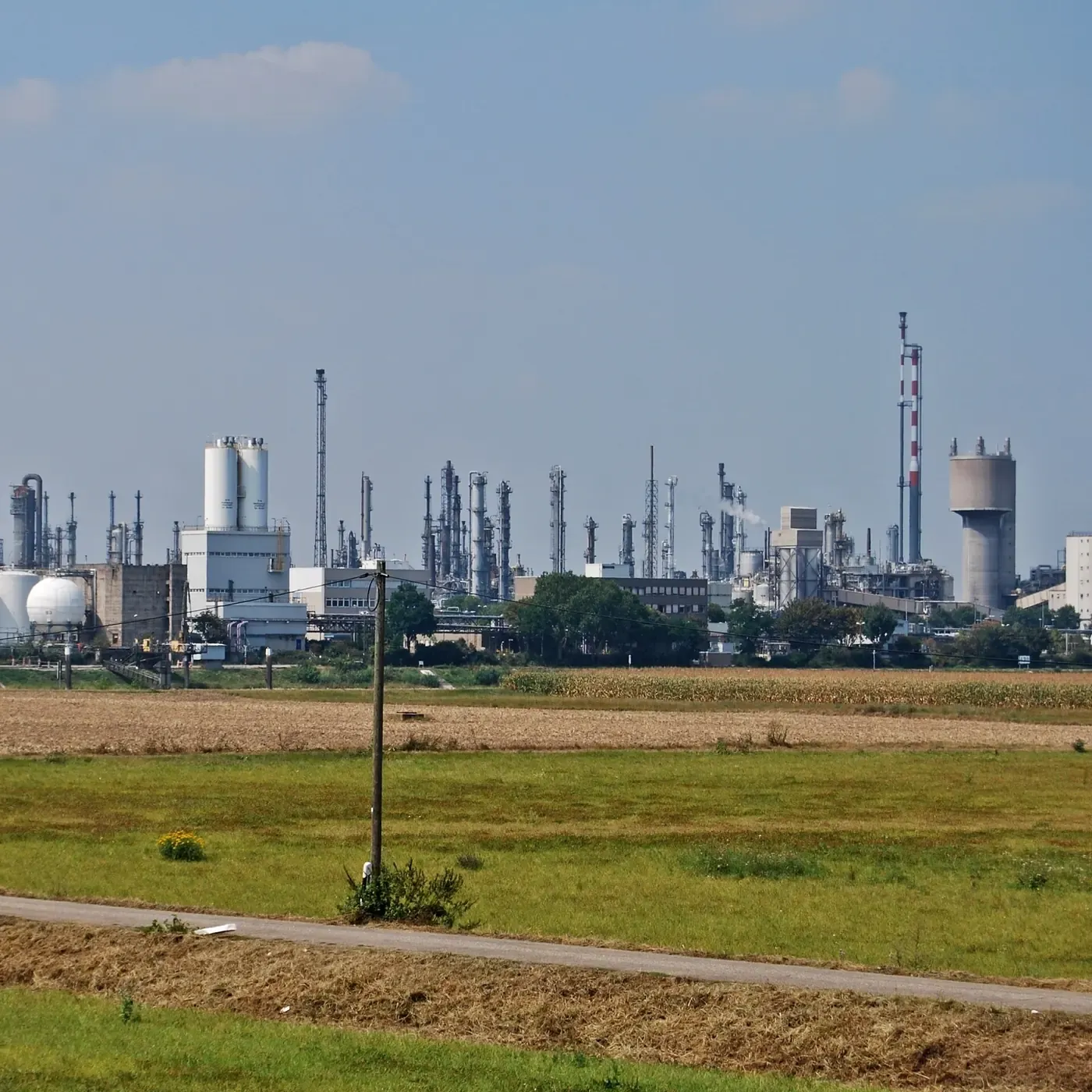
Whatever the summit itself delivered, “compromise” is not always a dirty word, and in materials chemistry that same year it was producing something genuinely useful. Every biodegradable polyester before it had come with a trade-off attached: flexible aliphatic polyesters broke down readily but were mechanically too weak to replace an everyday film, while aromatic polyesters like PET were tough enough to use but essentially permanent. Chemists at BASF’s Ludwigshafen site, working through the early 1990s, set out to build a single chain that carried both halves of that trade-off at once (flexible, microbially vulnerable segments alternating with rigid, load-bearing ones) rather than picking a side. The result, refined through the decade and launched commercially in 1998 as ecoflex, was the first PBAT to reach the market, and it remains the benchmark the rest of the category is measured against.
Plate II

Two Molecules, Stitched Together
PBAT is not one repeating unit but two, joined into a single random chain. One stretch of the polymer is built from adipic acid and 1,4-butanediol: an entirely aliphatic sequence, flexible and, crucially, exactly the kind of ester linkage that soil bacteria already know how to attack. Threaded between those stretches are units built from terephthalic acid instead, the same rigid, ring-bearing acid that gives PET its strength and heat resistance. Neither segment alone would make a useful film: the aliphatic portion is too soft and the aromatic portion, used alone, is the barely-degrading plastic PBAT exists to avoid. Blended randomly into one chain, the aromatic segments hold the material together with real mechanical strength while the aliphatic segments give microorganisms a foothold to start taking it apart.
Properties: A Deliberate Middle Ground
PBAT is not a stiff, glassy plastic like PLA or PGA; it behaves, mechanically, much closer to ordinary polyethylene film, low in stiffness but genuinely tough, able to stretch and flex without tearing, which is exactly the profile a bag or a mulch film needs and the profile a more rigid bioplastic cannot offer on its own. That resemblance to conventional film is not an accident; it is the entire design goal, since a compostable film that behaved like brittle packaging tape would never survive being made into anything.
From Laboratory to Landfill Alternative
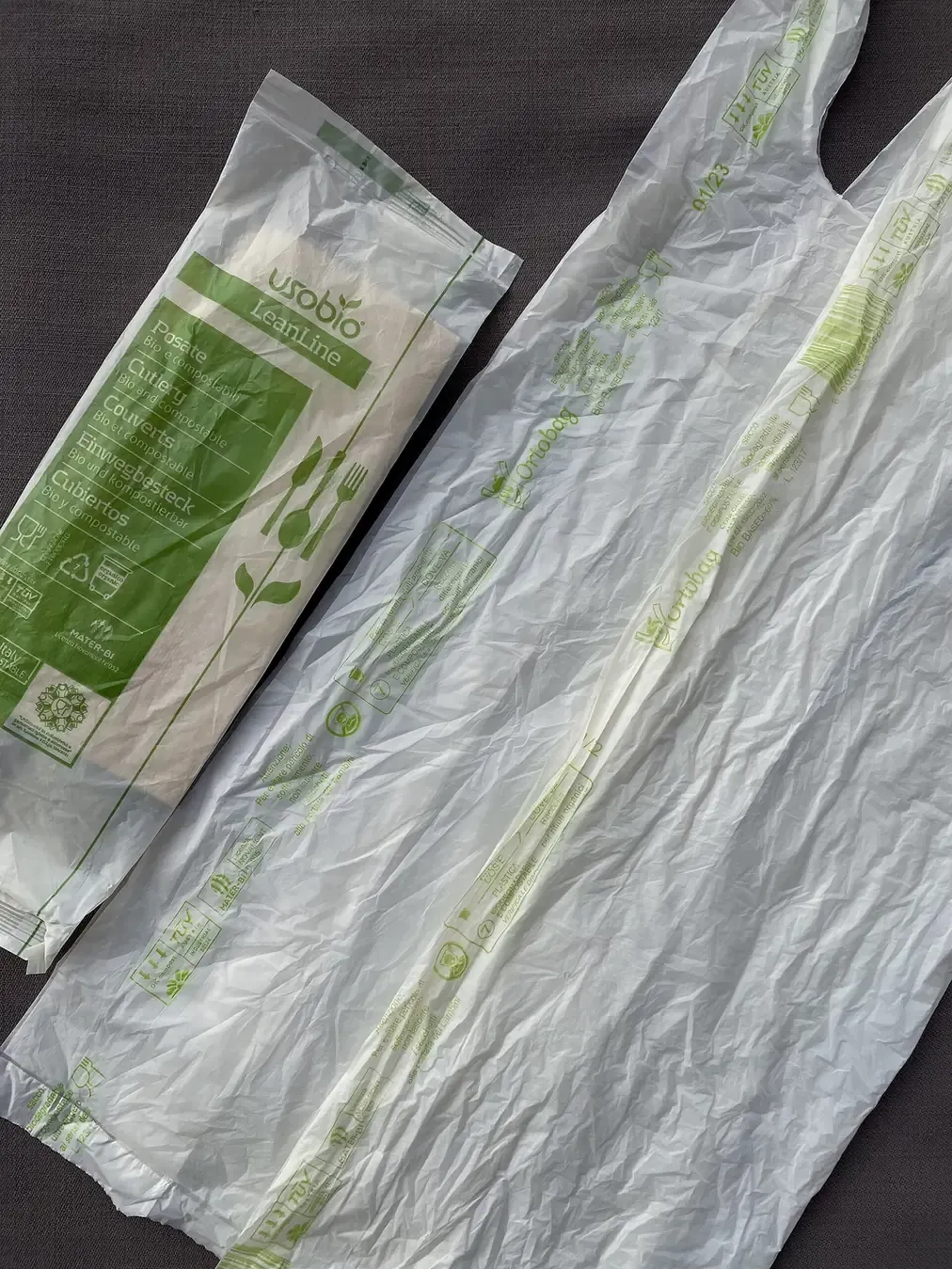
PBAT rarely appears alone. Because pure PBAT is soft rather than sturdy, it is typically blended with a stiffer, more brittle biodegradable partner, most often PLA, so that each covers the other’s weakness: PLA supplies rigidity and heat resistance, PBAT supplies the flexibility and tear resistance PLA lacks on its own. That combination, along with straight PBAT film and PBAT blended with starch, has become the material behind most compostable shopping bags, produce bags and mulch films sold today, alongside coatings that make paper cups resist a hot drink without a plastic lining that outlives the cup by centuries.
Plate III

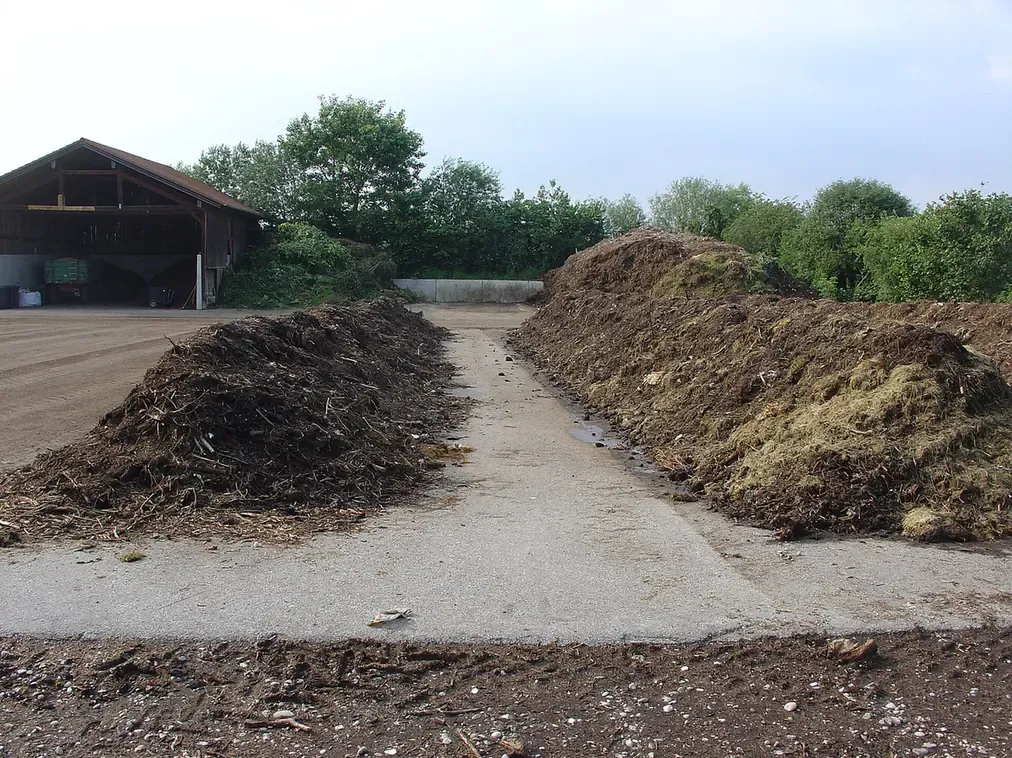
Under industrial composting conditions, testing on BASF’s own ecoflex has shown it breaking down almost completely within about three months, fast enough to qualify under the standards that let a product carry a genuine compostability certification. What it will not do is disappear in the ocean or a river: left in fresh or salt water, PBAT does not meaningfully biodegrade, an important limit on the “disappears harmlessly” story and one PBAT shares with PLA. It is a material built to solve composting, not littering, and the difference between those two problems is exactly the gap its critics (not unlike the ones hanging banners in Rio in 1992) are right to keep pointing at.
Plate IV

values with [n] cite the numbered references·estimates are flagged·“not yet available” and “N/A” are honest states, not gaps
fetching the model…
Polybutylene Adipate Terephthalate repeat unit
- Abbreviation
- PBAT
- Type
- polymer family (hub)
- CAS number
- 130479-65-1
- Resin ID code
- none assigned
- Formula
- (C10H16O4)x·(C12H12O4)y[-O-(CH2)4-O-CO-(CH2)4-CO-]x[-O-(CH2)4-O-CO-C6H4-CO-]yA random copolyester. The flexible aliphatic adipate segments are what bacteria can attack; the rigid aromatic terephthalate segments are what make it strong enough to use.
- Repeat unit (BigSMILES)
{[][>]OCCCCOC(=O)CCCCC(=O)[<],[>]OCCCCOC(=O)c1ccc(cc1)C(=O)[<][]}- IUPAC name
- —
- Synonyms
- ecoflex; Origo-Bi; Eastar Bio
- Also known as
- ecoflex
- Chemical family
- biodegradable-polyesterpolyester
- Backbone class
- heterochain
- Polymerization mechanism
- step-growth-condensation
- Constitutional monomer
- Adipic acid1,4-ButanediolTerephthalic acid
- Polymer class
- thermoplastic
- Year of origin
- 1992
- Era
- The Specialty Polymers Age (1980-1999)
- Key figures
- BASF
- Events referenced
- United Nations Earth Summit, Rio de Janeiro, June 1992
- Polymerization type
- step-growth condensation
- Common monomers (feedstocks)
- adipic acid, 1,4-butanediol, terephthalic acid
- Catalysts
- not yet available
Developed to address environmental concerns about PET plastic persistence: roughly 30% of global PET production becomes bottles, of which only 15–35% is recycled. Major manufacturers: BASF (ecoflex), Novamont (Origo-Bi), Eastman Chemical (Eastar Bio), and numerous Chinese suppliers.
- Tacticity
- not yet available
- Crystal structure
- not yet available
- Typical crystallinity
- not yet availableRandom copolymer structure prevents significant crystallization, giving a wide melting range rather than a sharp Tm.
Molecular weight
- Number average (Mn)
- not yet available
- Mass average (Mw)
- not yet available
- Dispersity (Mw/Mn)
- not yet available
Mark-Houwink constants
not yet available
Low elastic modulus and stiffness, but high flexibility and toughness, properties comparable to LDPE, which is what makes it a practical drop-in replacement for LDPE film in compostable applications.
- Density
- not yet available
- Melt flow index
- not yet available
- Refractive index
- not yet available
- Transmittance
- not yet available
- Haze
- not yet available
- Gloss
- not yet available
- Water absorption
- not yet available
- Dielectric constant
- not yet available
- Dielectric strength
- not yet available
- Electrical conductivity
- not yet available
- Glass transition (Tg)
- not yet available
- Melting temperature (Tm)
- not yet availableRandom copolymer gives a wide melting range rather than a single sharp value; no specific range sourced.
- Crystallization (Tc)
- not yet available
- Heat deflection (HDT)
- not yet available
- Decomposition onset
- not yet available
- Thermal conductivity
- not yet available
- Tensile modulus
- not yet availableQualitatively 'low elastic modulus'; no specific number sourced.
- Yield strength
- not yet available
- Tensile strength at break
- not yet available
- Elongation at break
- not yet available
- Impact strength (Izod)
- not yet available
- Impact strength (Charpy)
- not yet available
- Hardness
- not yet available
- Flexural modulus
- not yet available
- Poisson's ratio
- not yet available
- Coefficient of friction
- not yet available
- Weathering / UV
- not yet available
- Hydrolysis resistance
- Fully biodegradable when composted; ~90% degradation after 80 days (BASF ecoflex test)[1]
- Flammability (UL94)
- not yet available
- Limiting oxygen index
- not yet available
- Solubility parameter (δ)
- not yet available
Gas permeability
not yet available
Polymer-solvent interaction parameter (χ)
not yet available
- Processing methods
- film blowing/extrusioncompostable bag manufacturingextrusion coating (paper cups)
- Drying required
- not yet determined
- Processing temperature
- not yet available
- Shrinkage rate
- not yet available
- Packagingcling wrap for food packaging · compostable plastic bags
- Agricultureagricultural mulch film
- Food servicewater-resistant coatings for paper cups
- Emergingantimicrobial films
- Recyclable
- No
- Biodegradable
- Yes
- Degradation pathway
- Butylene adipate groups enable biodegradation under composting conditions (~90% degradation after 80 days per BASF ecoflex testing).
Does not degrade in marine and fresh water. This is an important caveat similar to PLA's marine-litter limitation.
- LD50 (oral, rat)
- not yet available
- NFPA health
- not yet available
- NFPA flammability
- not yet available
- NFPA reactivity
- not yet available
- Carcinogenic classification
- not yet available
- [1]Polybutylene adipate terephthalateWikipediaAccessed 2026-07-14https://en.wikipedia.org/wiki/Polybutylene_adipate_terephthalate[wiki-pbat]
Illustrations
- Plate IA Greenpeace banner on Sugarloaf Mountain during the June 1992 Earth Summit, protesting what activists saw as a conference trading firm commitments for compromise.Wikimedia Commons
- Plate IIPart of BASF's Ludwigshafen site, where PBAT was developed through the early 1990s and first sold, as ecoflex, in 1998.Wikimedia Commons
- Plate IIICompostable bags and cutlery made with Mater-Bi, Novamont's brand for starch blended with an aliphatic-aromatic copolyester in the same family as PBAT.Wikimedia Commons
- Plate IVA central composting site in Germany, the kind of industrial-scale facility where a certified compostable film has to prove it breaks down on schedule.Wikimedia Commons