The Wartime Innovation Period (1939-1945)
From Random Walks to Universal Laws in Polymer Science
Nineteen forty was the year statistics went to war against chaos and won. That August, with German bombers over the Channel coast and an invasion widely expected, the physicist Patrick Blackett assembled a small team of scientists (physiologists, astronomers, mathematicians, hardly an anti-aircraft gunner among them) inside Anti-Aircraft Command. Their brief was absurdly specific: work out, statistically, how to get more enemy aircraft down per shell fired. “Blackett’s Circus,” as the other officers called it, treated each burst of flak not as an act of aim but as a problem in probability, and by the following year had cut the number of rounds needed to bring down one raider by roughly a factor of five.
Plate I
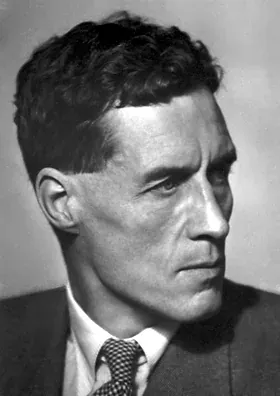

It was, in miniature, the argument this page is about: that something which looks like pure disorder (a shell fired into open sky, a molecule writhing in solution) can still obey an exact, usable law, provided you ask a statistical question of it instead of a deterministic one.
Plate II
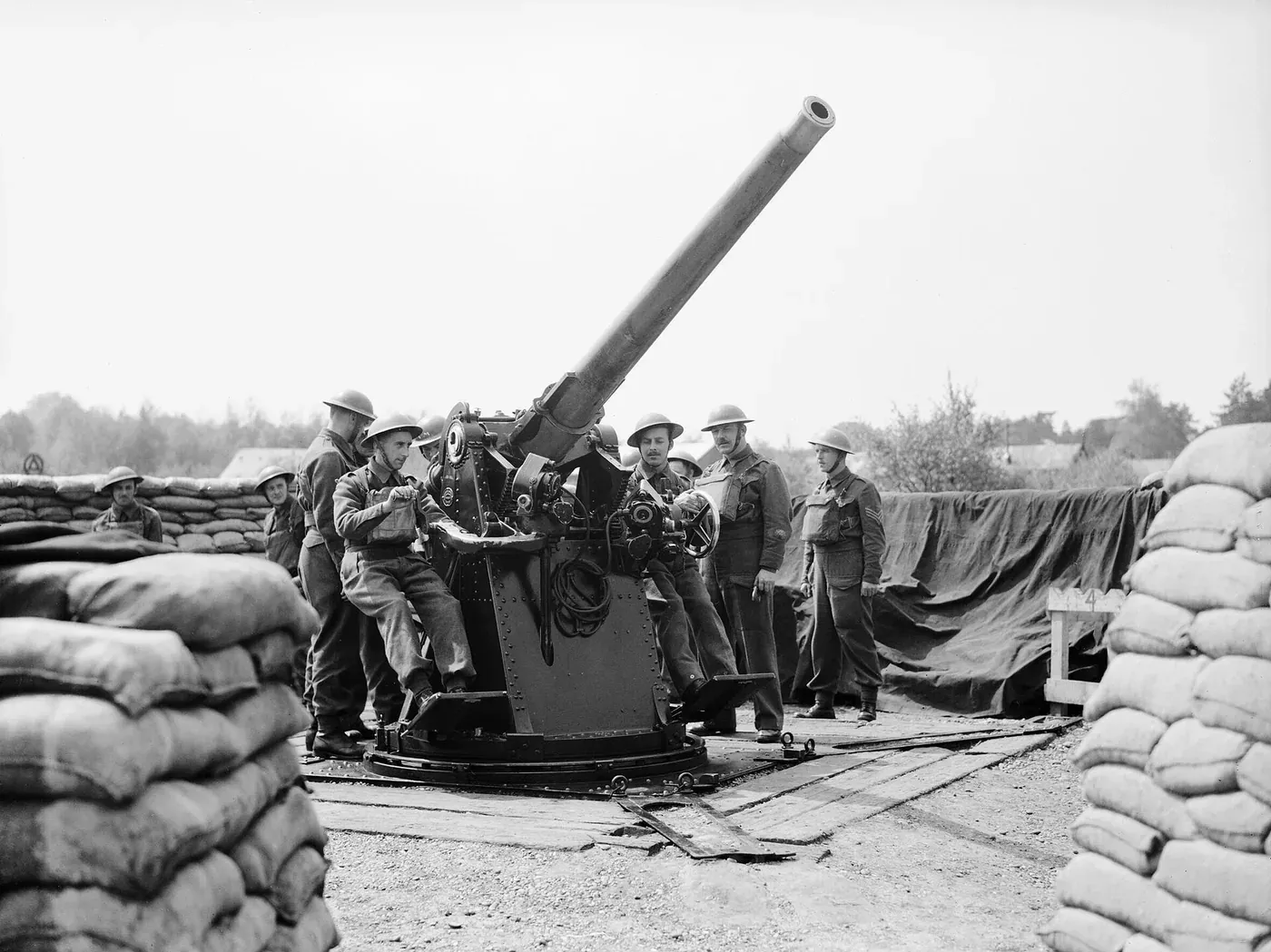

The idea that a polymer was even a single, absurdly long molecule at all (Hermann Staudinger’s fight, argued out over the previous two decades) is a story told elsewhere in this Atlas. This one picks up once nobody serious doubted the chain was real, and asks the next question: given that it is real, and constantly writhing in solution like nothing else chemistry had dealt with before, what shape does it actually take? By 1940, chemists already had a startling answer, and it had arrived by exactly the same trick Blackett was using on flak: stop trying to predict any one chain, and ask instead what the whole population of chains does on average.
A Drunkard’s Walk Through the Molecule
Picture a pedestrian in a grid-laid city, on a night with no landmarks, taking a step in a random direction at every corner: forward, back, left or right, with equal likelihood each time. Mathematicians had studied this “random walk” for decades before anyone thought to apply it to chemistry. In 1934 the Swiss physical chemist Werner Kuhn did exactly that: he treated a polymer chain as a sequence of independently oriented segments, each free to point in any direction regardless of where the last one pointed, and showed that the statistics of that simple picture were already enough to predict the chain’s overall size.
The result is elegant. For an ideal chain of N segments, each of length l, the mean square end-to-end distance works out to ⟨R²⟩ = Nl²: the chain’s size grows only with the square root of its length, not in proportion to it, because a chain wandering at random tends to curl back on itself far more often than it manages to travel in any one direction. The probability of finding the far end of the chain at any particular point in space follows a Gaussian distribution, the same bell curve that describes measurement error or human height. A second measure, the radius of gyration (Rg, the root-mean-square distance of every segment from the chain’s own centre of mass), turned the same statistics into a number that could actually be measured, by scattering light or X-rays off a polymer in solution and reading off how it spread.
Real Chains Take Up Space
The ideal random walk has one obvious flaw: it lets the chain pass through itself, which no real molecule can do. Once a segment already occupies a point in space, no other segment can sit there too; this is an effect chemists call excluded volume. Building this in turns the ideal random walk into a self-avoiding walk, and the chain swells: its size now scales as ⟨R²⟩ ∝ N^(2ν), where ν is the Flory exponent. Flory’s own estimate, arrived at in the 1940s from a simple mean-field argument, gave exactly ν = 3/5; the value modern renormalization-group methods actually favour is closer to 0.588, remarkably close for a shortcut derived on paper. That a single exponent could describe chains built from utterly different chemistry (polystyrene, DNA, a polysaccharide) was the first hint that polymer physics ran on universal rules rather than one recipe per material.
Solutions, Mixing, and a Single Greek Letter
Flory, and independently Maurice Huggins, spent the early 1940s working out what happens when a polymer is dissolved rather than left to writhe in a vacuum. Their Flory-Huggins theory treats the solution as a lattice, polymer segments and solvent molecules each occupying a cell, and reduces the whole messy question of whether a given polymer will dissolve in a given liquid to a single free-energy expression:
ΔG(mix)/RT = (φ1/N1)ln(φ1) + (φ2/N2)ln(φ2) + χφ1φ2
Here φ1 and φ2 are the volume fractions of solvent and polymer, N1 and N2 their degrees of polymerization, and χ (chi) is the interaction parameter, a single number standing in for how favourably, or unfavourably, a polymer segment and a solvent molecule sit next to one another. The first two terms are simple mixing entropy; the last is where all the chemistry lives. Get χ low enough and the polymer dissolves happily; push it high enough and the two phases would rather separate than mix at all. That same balance, made sensitive to temperature, is what produces the upper and lower critical solution behaviour explored elsewhere in this Atlas; that is a different concept page’s story, but this equation is where it starts.
A String of Beads, and a Snake in a Tube
Statics (the size and shape of a chain sitting still) was one problem. Motion was a harder one: how does a polymer chain actually move through a crowd of its neighbours? In 1953, at the General Electric Research Laboratory, Prince E. Rouse Jr. modelled a flexible polymer as a string of beads connected by springs, each bead dragged through the surrounding fluid by friction. The result, the Rouse model, gives a relaxation time τR = ζN²b²/(3π²kBT): the time a chain takes to forget its own shape grows with the square of its length. It worked well for a dilute solution, where one chain rarely feels another.
It worked far less well for a concentrated melt, where every chain is hopelessly tangled with its neighbours, and by the 1960s it was clear the Rouse picture was missing something. Sam Edwards, a British theoretical physicist at Manchester better known for his work on the statistical mechanics of disordered systems, supplied it in 1967: he proposed that a chain in a melt is not free to wander in any direction at all, but is effectively confined to a tube traced out by the obstacles its tangled neighbours present.
Plate III
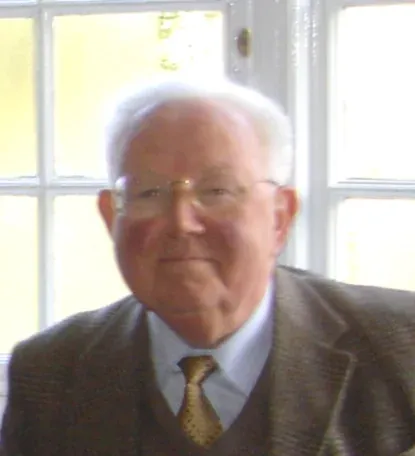

Pierre-Gilles de Gennes, a French physicist who had already made his reputation working on liquid crystals and magnetism, saw what the tube implied about motion and, in 1971, gave that motion a name: reptation. A chain cannot cross the tube walls built by its neighbours, so the only way it can move at all is to slither along its own length, like a snake, until it has wriggled entirely clear of its old tube and traced a new one. The theory predicts that the time a chain needs to escape its tube (and so the time a melt takes to stop behaving like an elastic solid and start flowing like a liquid) scales as roughly the cube of the chain length, τd ∝ N³. That single exponent is why a moderately long polymer melt can be dozens of times more resistant to flow than a chain only a little shorter, and why processing a high-molecular-weight plastic takes so much more energy than processing a low one.
Plate IV


De Gennes went further still, and showed that reptation was one instance of a much broader pattern: polymer chains near a critical point (the moment of dissolving, the moment of gelling, the onset of entanglement) obey scaling laws that do not care about the chemistry underneath them. A rubber band, a strand of DNA, and a plastic bag are, statistically, telling the same story at different scales. Reptation and that broader scaling framework were central to the 1991 Nobel Prize in Physics awarded to de Gennes; the earlier chain and solution statistics had already won Flory the 1974 Nobel Prize in Chemistry.
When Chains Can Break
One further wrinkle came from Cambridge in the 1980s. Michael Cates, who had completed his doctorate there under Sam Edwards himself, was working on wormlike micelles: long, flexible, polymer-like assemblies of surfactant molecules that, unlike an ordinary polymer, can spontaneously break in the middle and recombine with a different partner. Cates showed that reptation still governs how these “living polymers” move, but their relaxation is now shared between how long it takes a chain to reptate out of its tube and how long it takes one to break in the first place: τeff ≈ (τd·τb)^(1/2). It is the reason a shampoo or a drilling fluid thickened with wormlike micelles can behave so differently from one thickened with an ordinary, unbreakable polymer.
The Lineage
From Kuhn’s freely jointed chain to Flory’s exponent to Edwards’ tube to de Gennes’ reptating snake, each step kept the same wager: that a system far too complicated to track molecule by molecule would still obey a simple, testable law once someone asked the right statistical question of it. It is the same wager Blackett’s Circus made about anti-aircraft fire in the same decade this story begins, and it has gone on paying off in every direction the field has pointed it since.
This concept page traces the statistical-physics side of polymer science, distinct from the synthetic-chemistry side covered by Staudinger and Carothers. Werner Kuhn coined the term 'excluded volume' in 1934 (the idea that two chain segments cannot occupy the same space), which Paul Flory later built into a full theory: Flory-Huggins solution theory (a lattice model for polymer-solvent mixing thermodynamics), the Flory-Stockmayer theory of gelation, and the Flory exponent describing how a real chain's size scales with length once excluded volume is accounted for. That work was recognized with the 1974 Nobel Prize in Chemistry. In 1971, Sam Edwards' earlier 'tube' model (in which one chain's motion is constrained by the surrounding entangled chains) was extended by Pierre-Gilles de Gennes into reptation theory, which describes the snake-like sliding motion by which an entangled polymer chain diffuses through a melt. Reptation gave a quantitative account of entangled polymer dynamics, both linear viscoelasticity and various non-linear flow phenomena, and was part of the work recognized by de Gennes' 1991 Nobel Prize in Physics. Together, this lineage (Kuhn to Flory to Edwards to de Gennes) turned polymer behavior from a collection of empirical observations into a predictive statistical-physics framework.
No governing equations recorded. This concept is treated qualitatively.
- Year of origin
- 1940
- Era
- The Wartime Innovation Period (1939-1945)
- Key figures
- Werner Kuhn · Paul Flory · Sam Edwards · Pierre-Gilles de Gennes
- Events referenced
- Patrick Blackett forms 'Blackett's Circus' within RAF Anti-Aircraft Command (August 1940) · The Battle of Britain (July–October 1940)
- [1]Paul FloryWikipediaAccessed 2026-07-14https://en.wikipedia.org/wiki/Paul_Flory[wiki-paul-flory]
- [2]Pierre-Gilles de Gennes, reptation theory, and the Edwards tube modelWeb search summary (Royal Society biographical memoir, Nobel Prize press release, PMC)Accessed 2026-07-14https://www.nobelprize.org/prizes/physics/1991/press-release/[search-de-gennes-reptation]
Illustrations
- Plate IPatrick Blackett, who in August 1940 put a team of physicists and mathematicians to work treating anti-aircraft fire as a problem in statistics rather than marksmanship.Wikimedia Commons
- Plate IIAn anti-aircraft gun crew in Kent, May 1940 (the kind of battery Blackett's Circus was assigned to make more effective, one probability calculation at a time).Wikimedia Commons
- Plate IIISam Edwards, whose 1967 tube model gave entangled polymer chains a name for the invisible cage their neighbours build around them.Wikimedia Commons
- Plate IVPierre-Gilles de Gennes in his office at ESPCI Paris. The Nobel citation that later called him 'the Newton of our time' was one he waved off as, in his words, Scandinavian generosity.Wikimedia Commons