The Specialty Polymers Age (1980-1999)
Polycaprolactone (PCL)
The Healing Helper
On 8 August 1984, an engineer named Chuck Hull filed a patent for a machine that built solid objects one thin layer at a time, curing liquid resin with a UV laser wherever the next cross-section needed to exist. He called the process stereolithography. The patent was granted in March 1986, and in the interval between filing and grant (1985, squarely), the idea that a plastic object could be grown rather than carved, moulded or machined went from one inventor’s workshop project to the founding premise of an entire industry: Hull’s company, 3D Systems, would ship the first commercial 3D printer within two years of the grant.
None of that machinery had anything to do with polycaprolactone, and it would be a full generation before it did. But 1985 is the year the two halves of PCL’s eventual story were both quietly in motion without yet touching: a technology being invented that would one day need a plastic patient enough to be melted and re-melted at almost no risk of scorching a hobbyist’s hands, and a plastic (already thirty years old by then, and already commercially unglamorous) that happened to have exactly that property, for reasons that had nothing to do with printing anything at all.
A Plastic Nobody Was in a Hurry For
PCL was first made in 1934, in Wallace Carothers’ research group at DuPont, the same laboratory, working the same year, that was chasing the lactone chemistry that also produced early polylactic acid. It went nowhere for a quarter of a century.
Plate I
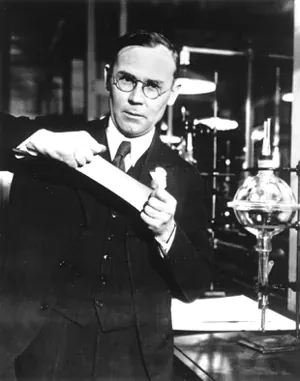

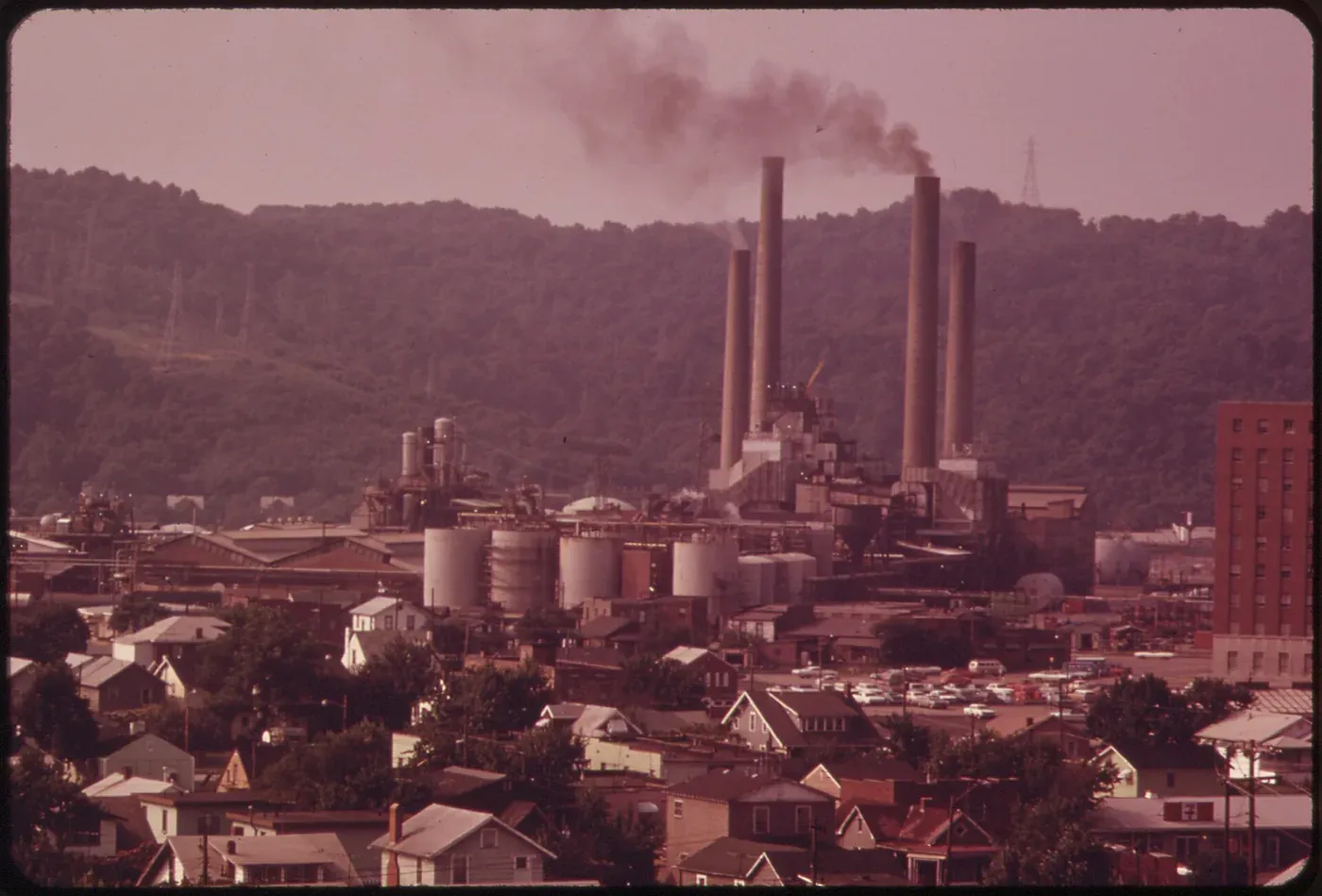
What finally made it a commercial material was not medicine or sustainability but polyurethane chemistry: Union Carbide chemists Fritz Hostettler and Eugene Cox patented practical routes to it around 1960 and sold the polymer and its shorter-chain relatives as TONE, an ingredient for coatings, adhesives and polyurethane precursors. This was industrial chemistry aimed at industrial customers, with no ambition to dissolve inside anyone.
Plate II

What changed its fortunes was the same property industrial chemists had treated as an inconvenience: PCL melts at a temperature barely above what comes out of a hot tap, and once inside a warm body it takes years rather than weeks to break back down. Researchers such as Colin Pitt, working through the 1980s, recognised that a polymer too slow to interest the disposable-plastics trade was exactly what a long-acting drug implant needed. Pitt’s group developed Capronor, an experimental contraceptive capsule that used PCL’s stubbornly slow hydrolysis to release a hormone steadily over more than a year from a single subdermal rod. This was patience, in a material, finally being treated as a feature.
The Slow One
Almost everything distinctive about PCL follows from that same patience. Its glass transition sits deep below freezing, so at any temperature a person is likely to encounter it, the amorphous fraction of the polymer stays soft and rubbery rather than glassy, which is part of why PCL stretches remarkably far before it breaks, more than any other biodegradable polyester on this Atlas, and shrugs off sharp impacts that would crack a stiffer plastic outright. Despite that low glass transition, PCL crystallises readily and often highly, which is what gives it enough body to hold a shape once it cools. It melts at a genuinely low temperature (comfortably below the boiling point of water, in the range of a hot beverage rather than a kitchen oven), and it decomposes chemically at a correspondingly low ceiling too, which means it must always be processed gently, never pushed toward the temperatures its stiffer, higher-melting cousins tolerate without complaint.
Plate III

It resists alcohols reasonably well, but aromatic and halogenated solvents and ketones will attack it, and, true to form, it needs no exotic chemistry to break down at the end of its life: hydrolysis of its ester linkages does the initial work, and a broad range of soil and gut microorganisms, from common bacteria to moulds such as Aspergillus and Penicillium, finish the job over a timescale measured in years rather than the months typical of PLA or PGA.
From Contraceptive Implant to Kitchen-Table Plastic
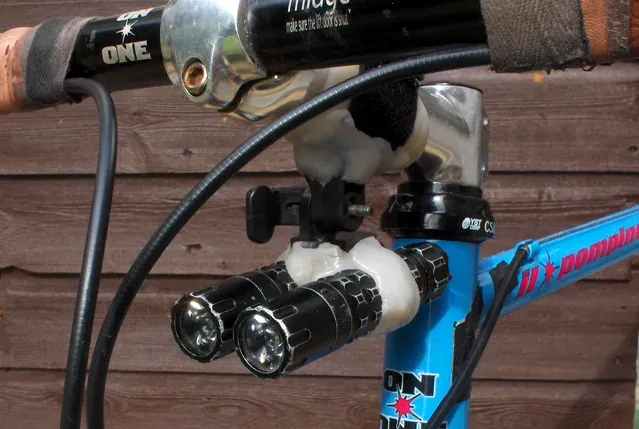
That same low melting point has, decades later, made PCL something its industrial inventors never imagined: a plastic ordinary people mould with their hands. Sold as pellets or sheet under hobbyist names, it softens completely in a bowl of hot tap water (no oven, no injection moulder, nothing hotter than a cup of tea) and can then be kneaded, shaped and pressed into a mount, a bracket, a repair, or a splint, before it re-hardens on cooling. It is the closest thing on this Atlas to a plastic anyone can work by hand, and it draws on precisely the property Union Carbide’s chemists once considered a limitation.
Plate IV

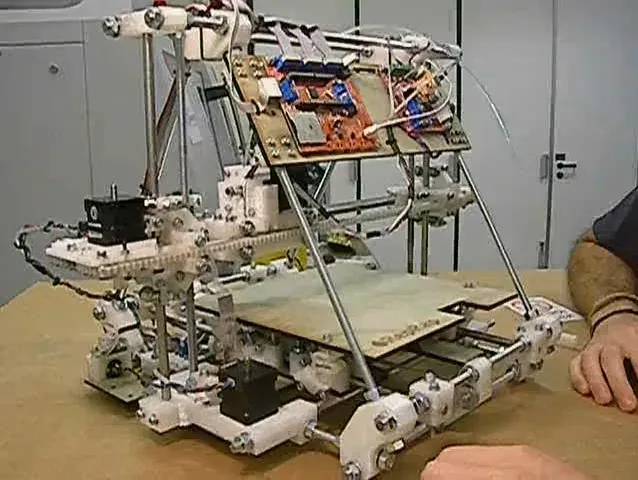
The medical applications that made PCL’s name have grown alongside that hobbyist life rather than being replaced by it: resorbable sutures, dental splints, and, since the 2000s, scaffolds for tissue engineering, where PCL’s slow, predictable disappearance gives regenerating tissue far longer to establish itself than faster-degrading polyesters allow. Its low melting point has also made it a favourite low-temperature filament for desktop 3D printers, the one place where Chuck Hull’s 1985 idea and PCL’s own 1985 moment in the story finally, belatedly, meet.
Plate V

values with [n] cite the numbered references·estimates are flagged·“not yet available” and “N/A” are honest states, not gaps
fetching the model…
Polycaprolactone repeat unit
- Abbreviation
- PCL
- Type
- polymer family (hub)
- CAS number
- 24980-41-4
- Resin ID code
- none assigned
- Formula
- (C6H10O2)n[-O-(CH2)5-CO-]nepsilon-Caprolactone has no stereocentre, so the ring-opened chain repeat shown is unambiguous.
- Repeat unit (BigSMILES)
{[][>]OCCCCCC(=O)[<][]}- IUPAC name
- Poly(epsilon-caprolactone)
- Synonyms
- —
- Also known as
- —
- Chemical family
- biodegradable-polyesterpolyester
- Backbone class
- heterochain
- Polymerization mechanism
- ring-opening-polymerization
- Constitutional monomer
- epsilon-Caprolactone
- Polymer class
- thermoplastic
- Year of origin
- 1985
- Era
- The Specialty Polymers Age (1980-1999)
- Key figures
- Fritz Hostettler · Colin Pitt
- Events referenced
- Chuck Hull's stereolithography (3D printing) patent, filed August 1984 and granted March 1986
- Polymerization type
- ring-opening polymerization
- Common monomers (feedstocks)
- epsilon-caprolactone
- Catalysts
- stannous octoate
First synthesized in the early 1930s by Wallace Carothers' research group at DuPont's Experimental Station. Commercial interest surged during the 1970s-1980s polymer boom, declined through the 1990s, then resurged in the 1990s-2000s with tissue engineering and 3D printing applications. Made via ring-opening polymerization of epsilon-caprolactone using stannous octoate catalyst; low-molecular-weight alcohols regulate final molecular weight.
- Tacticity
- not yet available
- Crystal structure
- Orthorhombic, a:b:c = 0.745:0.498:1.705 nm, 4 chains per unit cell.
- Typical crystallinity
- 57–76 %[2]
Molecular weight
- Number average (Mn)
- 530–630000 g/mol[2]Spans low-MW diol-terminated grades through high-MW homopolymer.
- Mass average (Mw)
- 10000–200000 g/mol[2]
- Dispersity (Mw/Mn)
- 1.08–1.53[2]
Mark-Houwink constants
not yet available
Very low Tg (~-60°C) keeps PCL flexible and rubbery well below room temperature.
- Density
- 1.135 (1.07–1.2) g/cm³[2]20 °C
- Melt flow index
- not yet available
- Refractive index
- not yet available
- Transmittance
- not yet available
- Haze
- not yet available
- Gloss
- not yet available
- Water absorption
- not yet available
- Dielectric constant
- not yet available
- Dielectric strength
- not yet available
- Electrical conductivity
- not yet available
- Tensile modulus
- 790 (200–1380) MPa[2]A narrower 210–440 MPa is also reported under 'Young's modulus' in the same source.
- Yield strength
- not yet available
- Tensile strength at break
- 32.8 (7.6–58) MPa[2]Source reports a single unqualified 'tensile strength'; genuinely ambiguous whether yield or break given PCL's high elongation.
- Elongation at break
- 450 (300–600) %[2]
- Impact strength (Izod)
- 247.5 (120–375) J/m[2]notched, 23 °C
- Impact strength (Charpy)
- not yet available
- Hardness
- not yet available
- Flexural modulus
- 350 (200–500) MPa[2]
- Poisson's ratio
- not yet available
- Coefficient of friction
- not yet available
- Solvent: alcohols
- good[2]
- Solvent: aromatic hydrocarbons
- poor[2]
- Solvent: halogenated hydrocarbons
- poor[2]
- Solvent: ketones
- poor[2]
- Weathering / UV
- not yet available
- Hydrolysis resistance
- Degrades via hydrolysis of ester linkages under physiological conditions[1]
- Flammability (UL94)
- not yet available
- Limiting oxygen index
- not yet available
- Solubility parameter (δ)
- not yet available
Gas permeability
not yet available
Polymer-solvent interaction parameter (χ)
not yet available
- Processing methods
- FDM 3D printing (low melting point makes it an easy, low-temperature filament)injection moldingelectrospinning (tissue scaffolds)
- Drying required
- not yet determined
- Processing temperature
- 60 °C[1]Approximate melting/processing threshold.
- Shrinkage rate
- not yet available
- Medicaldrug delivery devices · surgical sutures · adhesion barriers · dermal fillers · tissue engineering scaffolds
- Dentalroot canal fillings · night guards
- Manufacturinglow-temperature 3D printer feedstock · hand-moldable hobbyist plastic
- Recyclable
- No
- Biodegradable
- Yes
- Degradation pathway
- Hydrolysis of ester linkages; further biodegraded by microorganisms including Bacillota, Pseudomonadota, Penicillium, Aspergillus, and Clostridium species.
- [1]PolycaprolactoneWikipediaAccessed 2026-07-14https://en.wikipedia.org/wiki/Polycaprolactone[wiki-pcl]
- [2]Handbook of PolymersChemTec Publishinghttps://www.worldcat.org/isbn/9781895198928[handbook-wypych-2016]
- [3]Polymer Data HandbookOxford University Presshttps://search.worldcat.org/search?q=Polymer+Data+Handbook+Mark+1999[handbook-mark-1999]
Illustrations
- Plate IWallace Carothers in his DuPont laboratory. His research group made PCL for the first time in 1934, the same year it was chasing the lactone chemistry behind early polylactic acid.Wikimedia Commons
- Plate IIA Union Carbide chemical complex in West Virginia, photographed in 1973. Union Carbide's chemists commercialised PCL around 1960 for coatings and adhesives, long before anyone thought to put it in the body.Wikimedia Commons
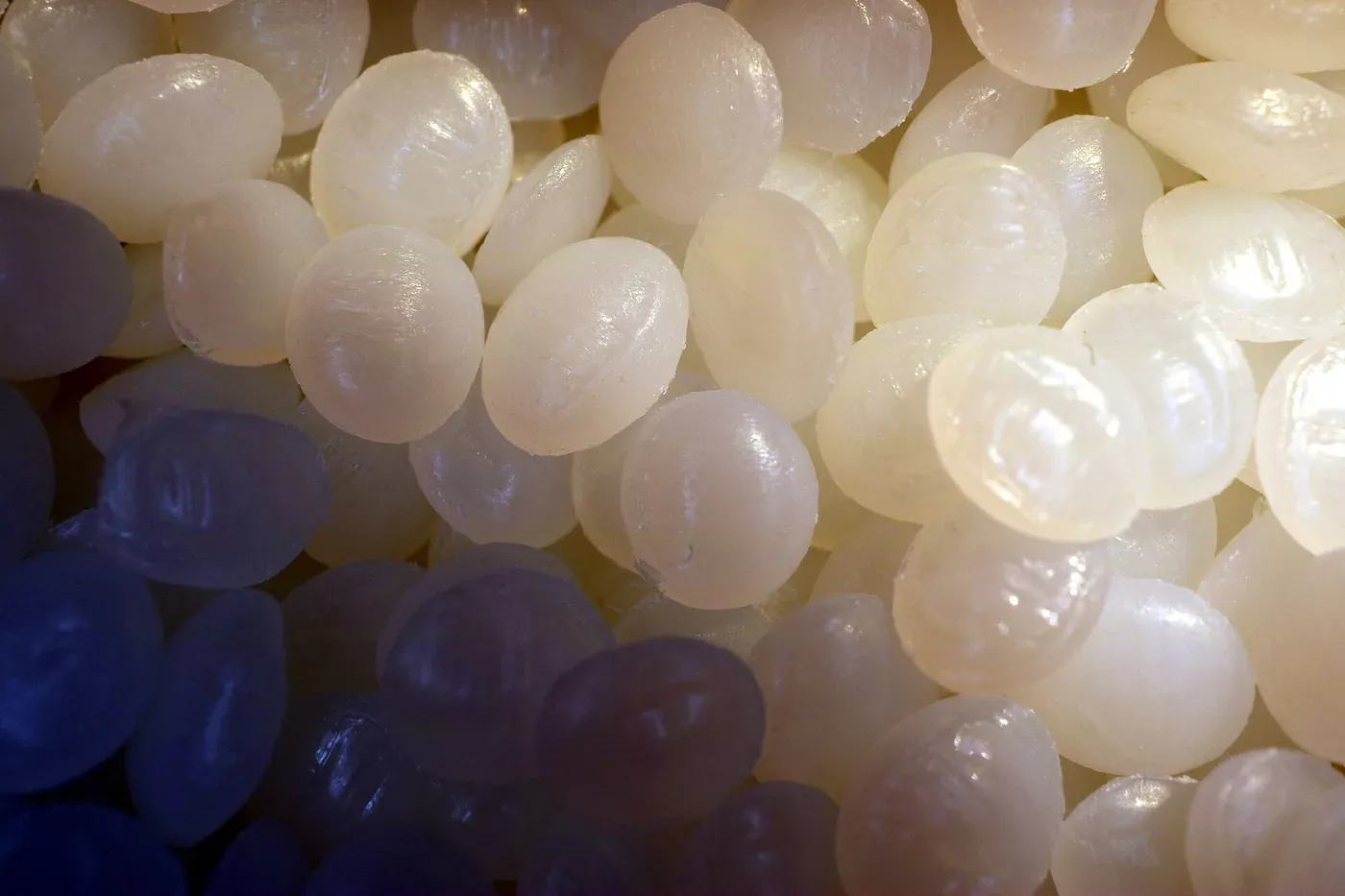
- Plate IIIPolycaprolactone resin pellets, the raw form in which the polymer is sold before it is melted into filament, coatings, or medical devices.Wikimedia Commons
- Plate IVA bicycle light mount, hand-moulded from softened PCL pellets. The same low melting point that made it a slow-release drug implant also makes it workable with nothing hotter than tap water.Wikimedia Commons
- Plate VAn early open-source RepRap 'Mendel' desktop printer, of the fused-filament kind PCL's low melting point has made a favourite low-temperature filament for.Wikimedia Commons