The Engineering Polymers Era (1961-1979)
Polyphenylene Oxide (PPO)
The Heat-Defying Polymer
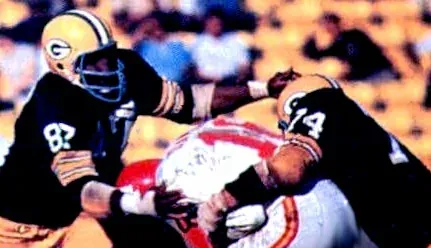
In June 1966, the National Football League and the American Football League announced they would merge, ending nearly seven years of rival play, escalating player bidding wars, and, by that point, mutual exhaustion. Neither league had solved professional football’s underlying problem on its own: the NFL had the prestige and the television audience, the AFL had the money and the aggression, and neither had worked out how to be both at once. The merger did what neither side could manage alone, and the first meeting between the combined leagues’ champions (retroactively renamed Super Bowl I) was played the following January.
Plate I
.jpg)
General Electric’s plastics division was working through an almost identical problem that same year, with a material instead of a sport. A decade earlier, one of its chemists had made an aromatic polymer with genuinely extraordinary heat resistance, and had then spent most of the years since discovering that heat resistance alone does not make a sellable plastic. What finally reached the market in 1966, under the trade name Noryl, was not that original polymer on its own. It was that polymer combined with something ordinary enough that almost nobody had thought to take the idea seriously.
An Accident in a Stockroom
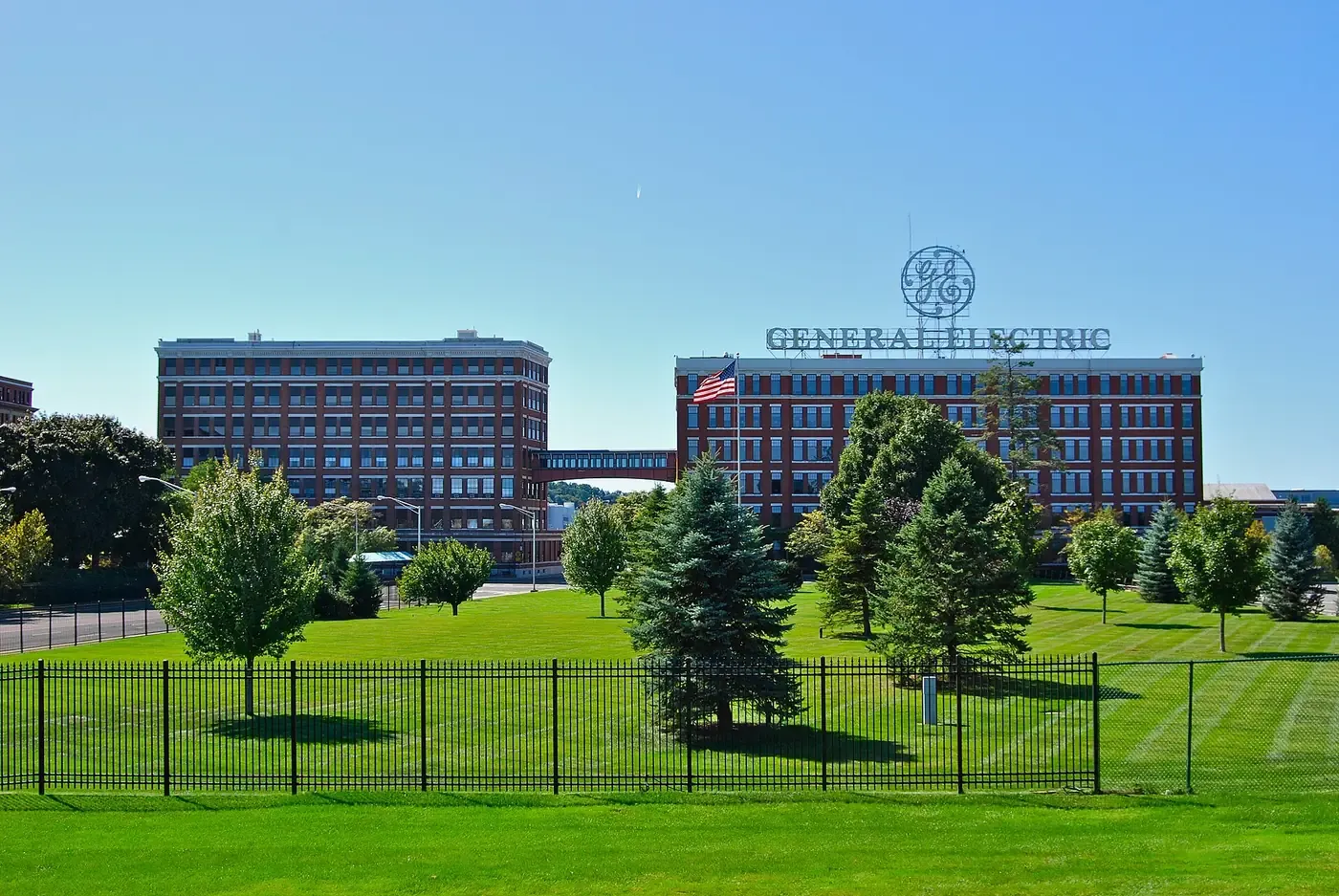
Allan Hay had been at General Electric’s research laboratory in Schenectady, New York, for a little over a year when, one morning in August 1956, he tried a reaction he had largely stopped expecting anything from. He had been testing whether phenols could be coupled together with oxygen and a copper catalyst, with unpromising results, when he found a bottle of 2,6-dimethylphenol sitting in the stockroom and decided to try that too. He dissolved it in pyridine, added cuprous chloride, and bubbled oxygen through the solution at room temperature. Within minutes the mixture, which should have stayed thin, began to thicken; inside twenty minutes he had a high-molecular-weight polymer, made at room temperature with no solvent removal and no applied heat. This was a kind of polymerization nobody had described before. He precipitated it in methanol, redissolved it in chloroform, and cast it into a clear film. It was polyphenylene oxide.
Hay published the reaction in 1959, and for several years afterward it remained a laboratory curiosity: 2,6-dimethylphenol was, at the time, an expensive, impure byproduct of Shell’s coal-tar operations, not something anyone could buy by the barrel. That changed around 1962, when GE chemist Stephen B. Hamilton worked out a cheap synthesis of the monomer straight from phenol and methanol over a magnesium oxide catalyst. With the raw material suddenly inexpensive, GE committed hard: by 1965 the company had built a ten-million-pound-a-year production plant at Selkirk, New York, betting an enormous sum on PPO’s properties alone.
Plate II

Ten Million Pounds Nobody Could Mold
The bet nearly failed. Pure PPO’s melt viscosity was so high, and its processing window so narrow, that ordinary molders (without the careful, patient handling GE’s own lab could give it) routinely produced parts riddled with internal stress from oxidative degradation during molding. Some cracked in the mold. Others simply sat on a shelf for a few weeks and cracked there instead. A material with better heat resistance than almost anything else on the market was turning out to be, in practice, unsellable.
The Blend That Saved It
The fix came from an unrelated project in the same Schenectady laboratory. Chemist Edith Boldebuck had been developing thermoplastic materials for electron-beam recording tape, work that required precise control over how a polymer softened, when she found that PPO and ordinary polystyrene were completely miscible: they would mix at the molecular level in any ratio, rather than separating the way most polymer pairs do. She tried to interest colleagues in the finding for some time without much success; it took PPO’s field failures to make anyone treat a PPO–polystyrene blend as more than a curiosity.
Blending solved more than one problem at once. Polystyrene lowered the processing temperature enough to keep the oxidative degradation in check, made the melt far easier to mold, and cost a fraction of what pure PPO did. The one thing it did not solve was toughness (the raw blend was brittle), and that fell to GE’s Plastics Application Center in Louisville, Kentucky, which added rubber-toughened polystyrene to bring the impact resistance up to something usable. Vary the ratio of PPO to polystyrene and the same chemistry stretched across an entire product line, from grades biased toward maximum heat resistance to grades biased toward cheap, easy flow. GE launched the result as Noryl in 1966. Allan Hay himself later said the rescue involved “so many different inputs” from across the company that crediting a single inventor was impossible, though the patent, for reasons of administrative convenience rather than sole authorship, was issued under one name alone.
A Rigid, Bulky Backbone
PPO’s chain is simple to describe and unusual in its effect: aromatic rings linked end to end through oxygen atoms, each ring carrying a methyl group on either side of the linkage. Those two methyl groups do double duty. During synthesis they block the ring positions the oxidative coupling would otherwise attack, which is what lets the reaction build a long, linear chain instead of a tangled, crosslinked mess. Once the chain exists, the same methyl groups get in every neighboring chain’s way, preventing the rings from packing closely or crystallizing the way a plainer aromatic backbone would. The result is a rigid chain that mostly refuses to organize itself into an ordered solid: amorphous, glassy, and, because rotation around each aryl-ether linkage is restricted, remarkably resistant to softening under heat.
That structure explains nearly everything the material does. Its glass transition sits far above the boiling point of water, high enough that Hay’s earliest samples held their shape at temperatures that would have already deformed almost anything else on the market in the 1950s, and in ordinary use it never reaches a true melting point: heated further, it just keeps softening until it degrades rather than flowing cleanly, which was precisely the processing headache that nearly killed it commercially. It is also lighter than most engineering plastics, barely denser than water, and while it takes up a noticeable amount of moisture from the air over time, that same amorphous, tightly packed-yet-disordered structure makes it an unusually good barrier to nitrogen and oxygen gas, distinctive enough that PPO shows up today in membranes built to separate gases rather than simply contain them. Mechanically it is stiff and genuinely tough in bulk (an unnotched sample shrugs off impact remarkably well), though a sharp notch or crack finds its weak point quickly, the usual signature of a rigid amorphous thermoplastic. Its resistance to acids and bases is excellent, part of why it survives repeated autoclave sterilization in medical instruments, but organic solvents remain its real weakness: aromatic and chlorinated hydrocarbons, esters and ketones will soften or dissolve it outright, a vulnerability the polystyrene in Noryl does nothing to cure.
From Terminal Blocks to Hospital Trays
Plate III
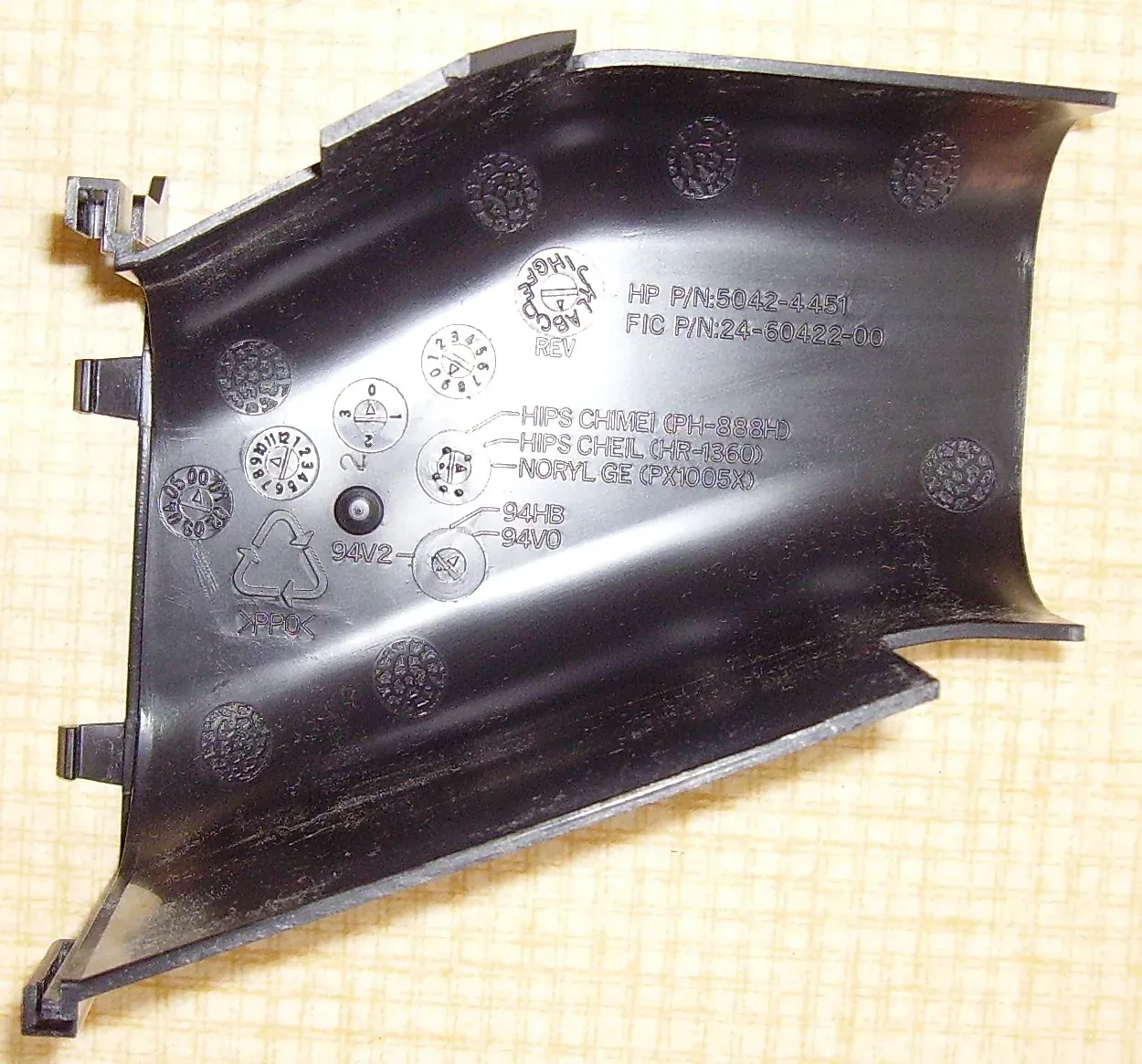

Noryl’s first market, in 1966, was unglamorous by design: terminal housings, cable connectors and bulb sockets, wherever an electrical part needed to hold its shape near a warm component and insulate reliably while doing it. From there it moved into business equipment and appliance housings, and later into automotive parts under the hood, where dimensional stability near an engine mattered more than outright cost. Today it also does quieter, more specialized work: sterilizable trays and instrument components that pass through hospital autoclaves without warping, and membranes that separate nitrogen from air using nothing but PPO’s own resistance to letting larger, more soluble gas molecules through.
Noryl’s descendants are still sold across the same range Boldebuck’s accidental finding first opened: dial the ratio of PPO to polystyrene, or blend in a third polymer such as nylon or polyester for grades tuned to specific chemical or mechanical demands, and the underlying trick (an excellent, unmoldable polymer rescued by an ordinary one) is still doing the work, sixty years after a crisis in a Schenectady laboratory nearly ended it before it began.
Plate IV

values with [n] cite the numbered references·estimates are flagged·“not yet available” and “N/A” are honest states, not gaps
fetching the model…
Polyphenylene Oxide repeat unit
- Abbreviation
- PPO
- Type
- polymer family (hub)
- CAS number
- 25134-01-4
- Resin ID code
- none assigned
- Formula
- (C8H8O)n[-O-C6H2(CH3)2-]nThis is the repeat unit of PPO on its own. The commercial material, sold as Noryl, is almost always a miscible blend of this polymer with polystyrene, at ratios chosen for each grade; a blend cannot be captured in a single repeat-unit formula.
- Repeat unit (BigSMILES)
{[][>]Oc1c(C)cc(cc1C)[<][]}- IUPAC name
- —
- Synonyms
- polyphenylene ether; PPE; Noryl (blended trade name)
- Also known as
- PPENoryl
- Chemical family
- polyketone
- Backbone class
- heterochain
- Polymerization mechanism
- oxidative-coupling
- Constitutional monomer
- 2,6-Dimethylphenol
- Polymer class
- thermoplastic
- Year of origin
- 1966
- Era
- The Engineering Polymers Era (1961-1979)
- Key figures
- Allan Hay · Edith Boldebuck
- Events referenced
- NFL-AFL merger announced (June 1966) · Super Bowl I, the merged leagues' first meeting on the field (January 1967)
- Polymerization type
- oxidative coupling polymerization
- Common monomers (feedstocks)
- 2,6-dimethylphenol
- Catalysts
- not yet available
Discovered in 1959 by Allan Hay and commercialized by General Electric in 1960 via oxidative coupling of 2,6-dimethylphenol. Rarely used in pure form due to processing difficulty; General Electric's blended 'Noryl' formulation (PPO/PPE + polystyrene) reached market in the 1960s and remains the dominant commercial form.
- Tacticity
- not yet available
- Crystal structure
- not yet available
- Typical crystallinity
- 0–58 %[2]As commercially processed (melt-quenched), PPO is effectively amorphous (0% crystallinity, handbook-mark-1999); slow-cooled or annealed samples develop crystallinity up to 40–58% depending on thermal history and measurement method (handbook-wypych-2016, handbook-mark-1999).
Molecular weight
- Number average (Mn)
- 15000–164000 g/mol[2]
- Mass average (Mw)
- 35000–320000 g/mol[2]
- Dispersity (Mw/Mn)
- 1.3–2.4[2]
| Solvent | T | M range | K | a |
|---|---|---|---|---|
| toluene[3] | 298 K | 26.5–415 kg/mol | 0.0285 mL/g | 0.68 |
| chlorobenzene[3] | 298 K | 26.5–415 kg/mol | 0.0378 mL/g | 0.66 |
| chloroform[3] | 298 K | 26.5–415 kg/mol | 0.0483 mL/g | 0.64 |
| benzene[3] | 298 K | 39.7–164 kg/mol | 0.026 mL/g | 0.69 |
| carbon tetrachloride[3] | 298 K | 39.7–164 kg/mol | 0.0744 mL/g | 0.58 |
Miscible with polystyrene in all proportions, which is exploited to tune Tg/processability in Noryl-type blends.
Tg of 215°C is unusually high for a commodity-adjacent thermoplastic; blending with polystyrene lowers it to improve processability.
- Density
- 1.06 (1.04–1.06) g/cm³[2]25 °C, amorphous; matches handbook-mark-1999 (296 K). Crystalline phase 1.16 g/cm³, melt 0.958–0.96 g/cm³.
- Melt flow index
- not yet available
- Refractive index
- 1.64[2]20 °C, experimental; calculated range is 1.608–1.6209
- Transmittance
- not yet available
- Haze
- not yet available
- Gloss
- not yet available
- Water absorption
- not yet available
- Dielectric constant
- 4.6–4.7[2]100 Hz; at 1 MHz, 4.5–4.8
- Dielectric strength
- not yet available
- Electrical conductivity
- not yet available
- Glass transition (Tg)
- 215 (205–215) °C[2]experimental (DSC); a calculated estimate of 85–115 °C is also reported but is much lower and less reliable. Mark reports 206.85–224.85 °C depending on DSC heating rate (handbook-mark-1999).
- Melting temperature (Tm)
- 240–267 °C[2]Applies only to partially crystalline (slow-cooled/annealed) PPO; melt-quenched or as-normally-processed material is amorphous with no distinct melting point. Mark reports 261.85 °C (DSC) for a similarly crystallized sample (handbook-mark-1999).
- Crystallization (Tc)
- not yet available
- Heat deflection (HDT)
- 106 °C[2]0.45 MPa; Mark reports 178.85 °C under unspecified load conditions (handbook-mark-1999)
- Decomposition onset
- 300 °C[2]under vacuum and N2
- Thermal conductivity
- not yet available
- Tensile modulus
- 2700 MPa[2]matches 2690 MPa at 296 K reported in handbook-mark-1999; drops to 2480 MPa at 366 K
- Yield strength
- 98 MPa[2]
- Tensile strength at break
- 80 MPa[3]ASTM D638296 K; falls to 55 MPa at 366 K. Wypych reports a tensile yield stress of 98 MPa (handbook-wypych-2016), higher than this break value.
- Elongation at break
- 20–40 %[2]matches 20–40% at 296 K reported in handbook-mark-1999; rises to 30–70% at 366 K
- Impact strength (Izod)
- 69 J/m[2]notched, 23 °C; close to 64 J/m at 296 K (ASTM D256, handbook-mark-1999). Unnotched Izod is very high, >2000 J/m.
- Impact strength (Charpy)
- not yet available
- Hardness
- 78 Rockwell M[3]
- Flexural modulus
- 2590 MPa[3]ASTM D790296 K; 2650 MPa at 256 K, 2480 MPa at 366 K. Wypych separately reports a much higher 5880–10,000 MPa, likely reflecting a different (possibly reinforced) grade.
- Poisson's ratio
- 0.451 (0.41–0.492)[2]
- Coefficient of friction
- not yet available
- Solvent: dilute acids
- very good[2]
- Solvent: concentrated acids
- very good[2]
- Solvent: alcohols
- good[2]
- Solvent: alkalis
- very good[2]
- Solvent: aliphatic hydrocarbons
- poor[2]
- Solvent: aromatic hydrocarbons
- poor[2]
- Solvent: esters
- poor[2]
- Solvent: greases & oils
- good[2]
- Solvent: halogenated hydrocarbons
- poor[2]
- Solvent: ketones
- poor[2]
- Weathering / UV
- not yet available
- Hydrolysis resistance
- not yet available
- Flammability (UL94)
- not yet available
- Limiting oxygen index
- not yet available
- Solubility parameter (δ)
- 19.3 MPa^0.5[2]Mark reports a notably lower figure of 9.5–10.21 MPa^0.5 from the same underlying literature (handbook-mark-1999); possible unit inconsistency between sources
Gas permeability
- N₂
- 2.86 × 10⁻¹³ cm³(STP)·cm/(cm²·s·Pa)[2]25 °C
- O₂
- 1.19 × 10⁻¹³ cm³(STP)·cm/(cm²·s·Pa)[2]25 °C
- water vapor
- 3.045 × 10⁻¹⁰ cm³(STP)·cm/(cm²·s·Pa)[2]25 °C
Polymer-solvent interaction parameter (χ)
not yet available
- Processing methods
- injection molding (typically as PPO/PS blends, e.g. Noryl)extrusion
- Drying required
- not yet determined
- Processing temperature
- not yet available
- Shrinkage rate
- 0.25–0.35 %[2]
- Electronics & automotivestructural parts requiring heat resistance and dimensional stability
- Medicalsterilizable instruments
- Industrialnitrogen separation membranes
- Recyclable
- Yes
- Biodegradable
- No
- Degradation pathway
- not yet available
- LD50 (oral, rat)
- not yet available
- NFPA health
- not yet available
- NFPA flammability
- not yet available
- NFPA reactivity
- not yet available
- Carcinogenic classification
- not yet available
- [1]Polyphenylene oxideWikipediaAccessed 2026-07-14https://en.wikipedia.org/wiki/Polyphenylene_oxide[wiki-ppo]
- [2]Handbook of PolymersChemTec Publishinghttps://www.worldcat.org/isbn/9781895198928[handbook-wypych-2016]
- [3]Polymer Data HandbookOxford University Presshttps://search.worldcat.org/search?q=Polymer+Data+Handbook+Mark+1999[handbook-mark-1999]
Illustrations
- Plate ISuper Bowl I, January 1967. It was the first game between the merged leagues, the on-field result of the merger the two sides had announced the previous June.Wikimedia Commons
- Plate IIThe General Electric Research Laboratory in Schenectady, New York, where Hay made his accidental discovery in 1956 and where, a few years later, a colleague in the same building found the fix for its biggest flaw.Wikimedia Commons
- Plate IIIA Noryl PPO/polystyrene duct cover from inside a desktop computer, its resin code molded directly into the part. This is the ordinary, everyday form the material actually took.Wikimedia Commons
- Plate IVJack Welch, photographed decades later in 2012. In 1966 he was a young GE chemical engineer helping push the toughened Noryl blend through its development crisis, long before he became the company's chairman.Wikimedia Commons