The Smart Materials Era (2000-2015)
AI-Designed Polymers
When Machines Learned to Build Molecules
In the last week of November 2020, at a videoconference few outside structural biology had ever heard of, a piece of software did something chemists and biologists had chased for half a century: given nothing but a protein’s amino-acid sequence, it predicted the three-dimensional shape the chain would fold into, at an accuracy indistinguishable from an experimental crystal structure. The event was CASP14, the fourteenth round of a blind test that had run every two years since 1994 specifically to keep computational predictions honest against the real thing, and the program was DeepMind’s AlphaFold2. Where every rival method’s typical error still ran to several ångströms, AlphaFold2’s fell to a fraction of one. Structural biology had spent fifty years building ever more powerful instruments (X-ray crystallography, then cryo-electron microscopy) to answer a question a trained neural network had just answered from data alone.
Plate I
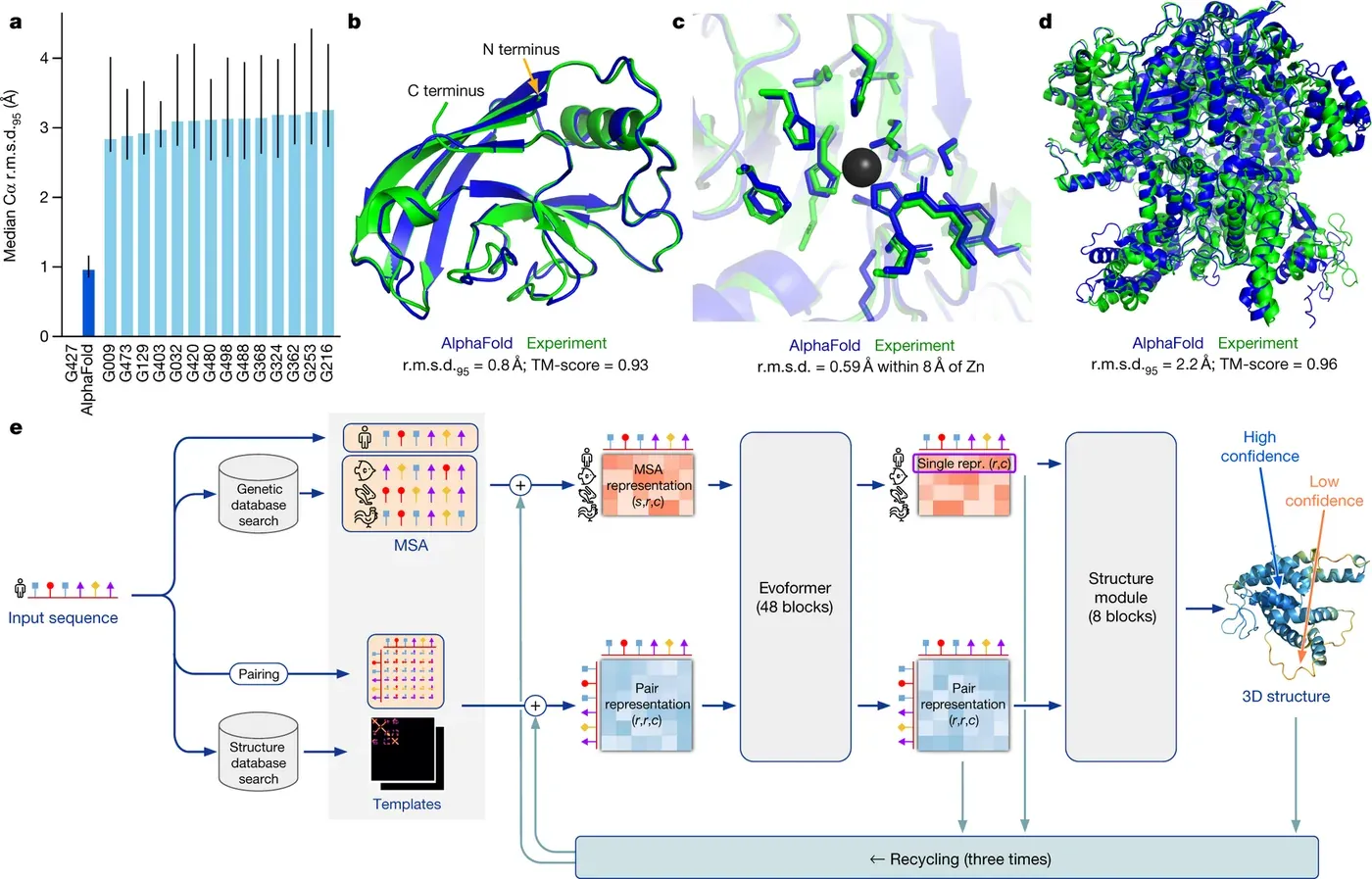

That same year, in a far smaller and less publicized corner of materials science, a related bet was being placed on polymers. At Georgia Tech, Rampi Ramprasad’s group published Polymer Genome, a web platform that returned near-instant machine-learning predictions of a polymer’s properties from its structure alone, trained on years of accumulated quantum-mechanical calculations and experimental measurements rather than run one new calculation at a time. In the same months the same group described a generative model (a variational autoencoder trained to write valid polymer structures the way a language model writes sentences) aimed specifically at proposing new candidates able to survive high temperature and high electric field, published as “Polymers for Extreme Conditions.” Neither result claimed anything like AlphaFold2’s precision, and neither pretended to replace the chemist. But both were built on the premise CASP14 had just made impossible to dismiss: that a large enough, carefully curated dataset, fed through the right kind of neural network, could shortcut a search a laboratory could previously only run one careful experiment at a time.
A Method, Not a Material
Every other page in this Atlas is built around a chemistry: a monomer, a repeat unit, a real jar of material somewhere with a melting point and a density. This one is not. “AI-designed polymers” names a practice (using machine learning to predict a candidate polymer’s properties before it is made, or to propose new candidates outright) that is applied to conventional polymer chemistries, old and new alike. The polymer that eventually gets synthesised is exactly as real as any other entry here; the method used to shortlist it is what this page is about. That is also why this page carries no chemical formula, no density, no glass transition temperature of its own: those numbers belong to whichever specific polymer a given model happens to recommend, and the Atlas’s standing rule is that a predicted number is not the same thing as a measured one. None of the property fields on this page are filled in, and that is deliberate rather than an oversight.
Plate II


How the Practice Actually Works
Two broad approaches sit underneath most of what gets called “AI polymer design.” The first is prediction: a model (often a graph neural network, which represents a molecule as atoms connected by bonds rather than as a flat formula) is trained on a database of known polymers and their measured or calculated properties, and learns to estimate a property for a structure it has never seen. Polymer Genome is exactly this kind of tool. The second is generation: instead of only scoring candidates a chemist already thought of, a generative model (a variational autoencoder or a genetic algorithm) proposes new candidate structures itself, optimising toward a target property across many rounds the way breeding selects for a trait across many generations. Batra and colleagues’ 2020 work on polymers for extreme conditions used exactly this approach, screening generated candidates against target thermal and electrical stability before any of them were made.
Plate III
.jpg)
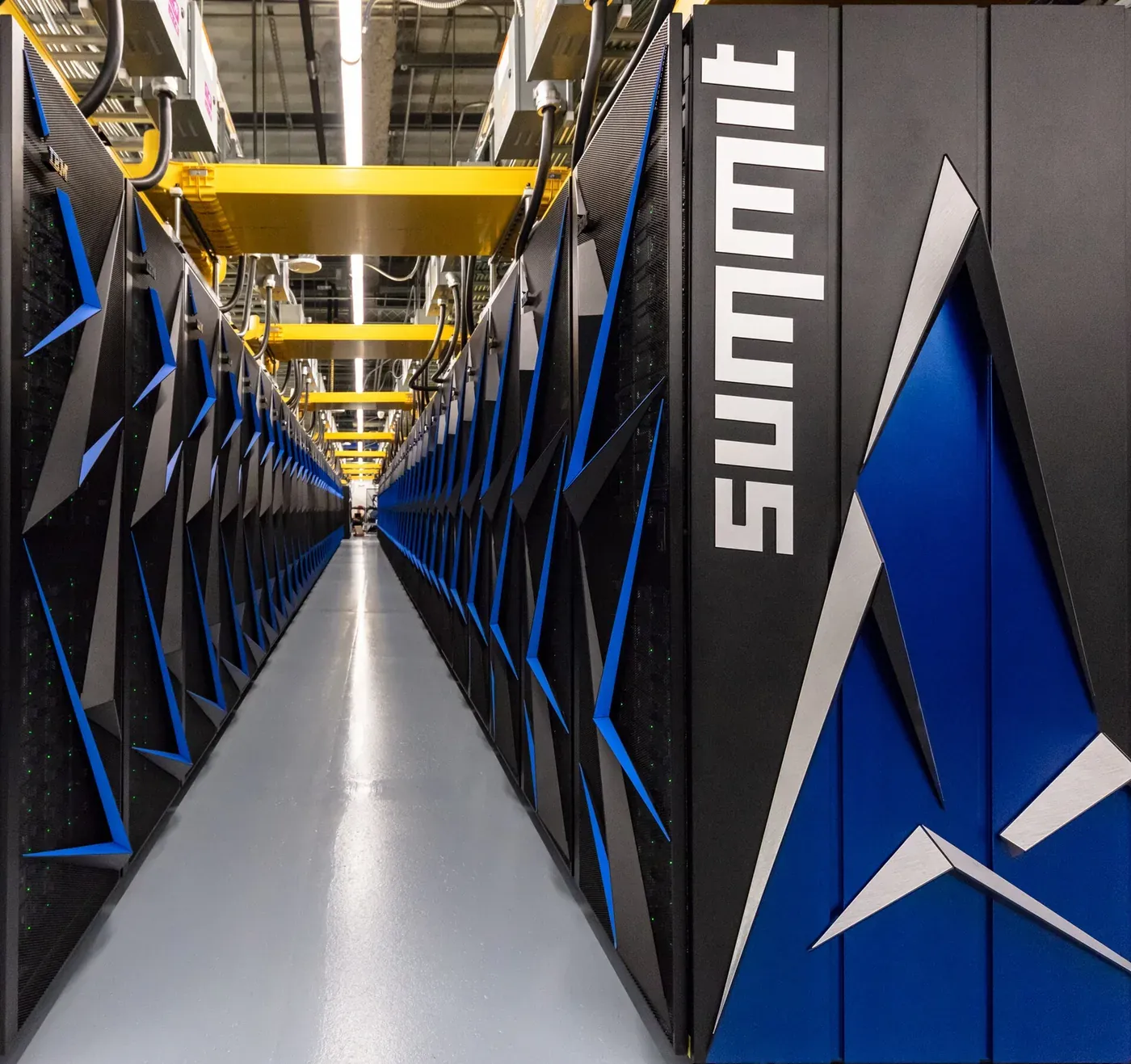
Both approaches depend on a supply of training data that has to come from somewhere, and in polymer science that somewhere is usually density functional theory: quantum-mechanical calculations, run on exactly this scale of machine, that estimate a property computationally before any material is synthesised. A model trained on thousands of these calculations, alongside whatever experimental measurements exist, can return a prediction for a new structure in a fraction of a second, which is the whole point of Polymer Genome’s name. What it returns is an estimate, not a measurement, and the difference matters more than marketing language around “AI-discovered materials” usually admits.
Plate IV


What This Does Not Mean
It is worth being plain about the limits, because the field’s own popular coverage often is not. A machine-learning model trained on existing polymers extrapolates poorly to chemistries very different from what it has seen; a generative model can write a structure that is chemically nonsensical, or synthetically impossible, alongside every plausible one; and no property prediction, however confident the number looks, substitutes for actually making the polymer and measuring it. The genuine achievements of 2020 (Polymer Genome’s speed, the extreme-conditions VAE’s candidate list) were both explicitly framed by their authors as screening tools meant to narrow a search, not as a replacement for synthesis and testing. That is also why this encyclopedia does not print machine-predicted property values on any polymer’s page: a number a model outputs is a hypothesis about a material, not yet a fact about one.
Where the Practice Is Actually Used
The clearest present-day use of these methods is triage: given a huge space of chemically possible polymers, rank the ones worth a laboratory’s limited time first. Ramprasad’s group has applied this to polymers for capacitors and battery electrolytes, where a property like dielectric breakdown strength is expensive to measure directly across many candidates but comparatively cheap to estimate computationally. Generative approaches like Batra et al.’s extreme-conditions work exist for the same reason: not to hand a factory a finished material, but to hand a chemist a shorter, better-informed list of things worth actually trying to make.
The Scientist’s Role
What has changed since 2020 is not that human judgement became unnecessary; it is that it moved earlier in the process. A polymer chemist using these tools spends less time running a calculation on a single candidate structure and more time deciding which thousand candidates are worth calculating at all, and more time still on the step no model performs: actually synthesising the winner and finding out whether the prediction held up. The practice described on this page is a genuinely new tool in that older job, not a new kind of scientist doing it.
values with [n] cite the numbered references·estimates are flagged·“not yet available” and “N/A” are honest states, not gaps
- Abbreviation
- —
- Type
- polymer family (hub)
- CAS number
- None (heterogeneous class or not assigned)
- Resin ID code
- none assigned
- Formula
- A design methodology (machine-learning-guided property prediction and generative molecular design applied to polymers) rather than a single chemistry. The polymers ultimately produced/recommended by these methods are conventional polymer chemistries (existing or novel), so there is no repeat unit for the methodology itself.
- Repeat unit (BigSMILES)
- A design methodology (machine-learning-guided property prediction and generative molecular design applied to polymers) rather than a single chemistry. The polymers ultimately produced/recommended by these methods are conventional polymer chemistries (existing or novel), so there is no repeat unit for the methodology itself.
- IUPAC name
- —
- Synonyms
- —
- Also known as
- —
- Chemical family
- —
- Backbone class
- —
- Polymerization mechanism
- —
- Constitutional monomer
- None (no single constitutional monomer)
- Polymer class
- —
- Year of origin
- 2020
- Era
- The Smart Materials Era (2000-2015)
- Key figures
- Rampi Ramprasad
- Events referenced
- DeepMind's AlphaFold2 wins the CASP14 protein-structure-prediction competition (November-December 2020) · 2024 Nobel Prize in Chemistry awarded to Demis Hassabis and John Jumper for AlphaFold, and to David Baker for computational protein design
- Polymerization type
- not yet available
- Common monomers (feedstocks)
- not yet available
- Catalysts
- not yet available
Not a synthesis route but a design layer sitting on top of conventional polymer chemistry. Machine-learning approaches include: graph neural networks and transformer-style language models trained on polymer structure-property datasets (e.g. Polymer Genome, published 2020, offering near-instantaneous ML property prediction); generative models (e.g. variational autoencoders) that propose novel candidate structures for target properties (e.g. polymers for extreme conditions, Batra et al. 2020); and high-throughput DFT/simulation pipelines used to generate training data and validate candidates before real synthesis.
- Tacticity
- not yet available
- Crystal structure
- not yet available
- Typical crystallinity
- Not applicable
Molecular weight
- Number average (Mn)
- not yet available
- Mass average (Mw)
- not yet available
- Dispersity (Mw/Mn)
- not yet available
Mark-Houwink constants
not yet available
- Density
- Not applicableA methodology, not a material; properties belong to whichever specific polymer a given model designs or predicts.
- Melt flow index
- Not applicable
- Refractive index
- Not applicable
- Transmittance
- not yet available
- Haze
- not yet available
- Gloss
- not yet available
- Water absorption
- not yet available
- Dielectric constant
- Not applicable
- Dielectric strength
- not yet available
- Electrical conductivity
- Not applicable
- Glass transition (Tg)
- Not applicable
- Melting temperature (Tm)
- Not applicable
- Crystallization (Tc)
- Not applicable
- Heat deflection (HDT)
- Not applicable
- Decomposition onset
- Not applicable
- Thermal conductivity
- Not applicable
- Tensile modulus
- Not applicable
- Yield strength
- Not applicable
- Tensile strength at break
- Not applicable
- Elongation at break
- Not applicable
- Impact strength (Izod)
- Not applicable
- Impact strength (Charpy)
- Not applicable
- Hardness
- Not applicable
- Flexural modulus
- Not applicable
- Poisson's ratio
- not yet available
- Coefficient of friction
- not yet available
- Weathering / UV
- Not applicable
- Hydrolysis resistance
- Not applicable
- Flammability (UL94)
- Not applicable
- Limiting oxygen index
- not yet available
- Solubility parameter (δ)
- not yet available
Gas permeability
not yet available
Polymer-solvent interaction parameter (χ)
not yet available
- Processing methods
- machine-learning property prediction (graph neural networks, transformer language models)generative molecular design (variational autoencoders)high-throughput DFT/simulation screening
- Drying required
- not yet determined
- Processing temperature
- Not applicable
- Shrinkage rate
- Not applicable
- Materials discoveryaccelerated screening of candidate polymers for extreme-environment applications
- Property predictionnear-instantaneous prediction of Tg, dielectric constant, and other properties from structure alone (e.g. Polymer Genome)
- Recyclable
- not yet determined
- Biodegradable
- not yet determined
- Degradation pathway
- not yet available
By deliberate editorial policy, no ML-predicted property values are shown on any polymer page of this atlas; this entry documents the methodology as a historical/technical topic, not as a source of predicted numbers for other entries.
- LD50 (oral, rat)
- not yet available
- NFPA health
- not yet available
- NFPA flammability
- not yet available
- NFPA reactivity
- not yet available
- Carcinogenic classification
- not yet available
- [1]Machine learning / AI-guided polymer property prediction and design (e.g. Polymer Genome, 2020)Web search summary (AIP Journal of Applied Physics, arXiv)Accessed 2026-07-14https://pubs.aip.org/aip/jap/article/128/17/171104/1062836/Machine-learning-predictions-of-polymer-properties[search-ai-designed-polymers]
Illustrations
- Plate IThe figure from AlphaFold2's own paper: at CASP14 in November 2020, its predictions (blue) matched experimentally solved structures (green) closely enough that the two are hard to tell apart, while its median error sat far below every competing method's.Wikimedia Commons
- Plate IIDemis Hassabis at the 2024 Nobel Prize week in Stockholm. He and John Jumper shared that year's Chemistry Prize for AlphaFold, four years after CASP14. That was the clearest sign yet that data-driven structure prediction had become a recognised branch of chemistry rather than a curiosity.Wikimedia Commons
- Plate IIIOak Ridge National Laboratory's Summit, unveiled in 2018 as the world's most powerful scientific supercomputer. It is the scale of machine that the quantum-mechanical calculations behind polymer property databases, and the neural networks trained on them, actually require.Wikimedia Commons
- Plate IVA graphics processing unit of the kind that, adapted from video games to matrix arithmetic, made training a network on hundreds of thousands of molecular structures a practical afternoon's work rather than a practical impossibility.Wikimedia Commons