The Specialty Polymers Age (1980-1999)
Polyether Block Amide (PEBA)
The Flexible Friend
On 2 December 1984, a tank of methyl isocyanate ruptured at a Union Carbide pesticide plant in Bhopal, India, and the gas that escaped killed thousands of people within days and sickened hundreds of thousands more. It remains the worst industrial disaster in history, and it happened at the hands of the same discipline (industrial organic chemistry) that, a world away and on a far smaller scale, was having a much quieter and much better year.
Three months earlier, in January, Apple had introduced the Macintosh: a personal computer small enough to sit on a desk, built from a few hundred parts rather than thousands, wrapped in a case that had to be light, precisely molded and durable enough to survive years of handling. Machines like it, and the expanding world of consumer electronics growing up around them, needed a category of material that barely existed yet: not a rigid engineering plastic and not a soft rubber, but something that could be dialed anywhere between the two, in a cable jacket, a connector housing or a device casing, without changing the underlying chemistry.
A French chemical company was already three years into selling exactly that. Ato Chimie (soon folded, along with two other Elf Aquitaine chemical subsidiaries, into the newly formed conglomerate Atochem) had patented and launched a polymer called Pebax at the start of the decade, and by 1984 it was growing from a specialty curiosity into a genuine material family, sold across a hardness range wide enough to run from something close to a soft rubber to something close to a stiff engineering plastic, all from the same basic chemistry.
Plate I


Two Chemists, One Backbone
The chemistry behind Pebax had been worked out a few years earlier by Ato Chimie researchers Gérard Deleens and Paul Foy, who patented a way to join two very different kinds of polymer segment into a single chain instead of simply blending them as separate molecules. One segment was a polyamide, a form of nylon, built for strength, heat resistance and chemical toughness. The other was a polyether, built for flexibility and cold-weather performance. Linking rigid polyamide and flexible polyether blocks directly had been tried before and had mostly failed to reach a useful molecular weight; Deleens and Foy’s breakthrough was a titanium-based catalyst system that let the reaction build long enough chains, with the two block types joined end to end through ester linkages, to behave as a practical, processable resin rather than a laboratory curiosity.
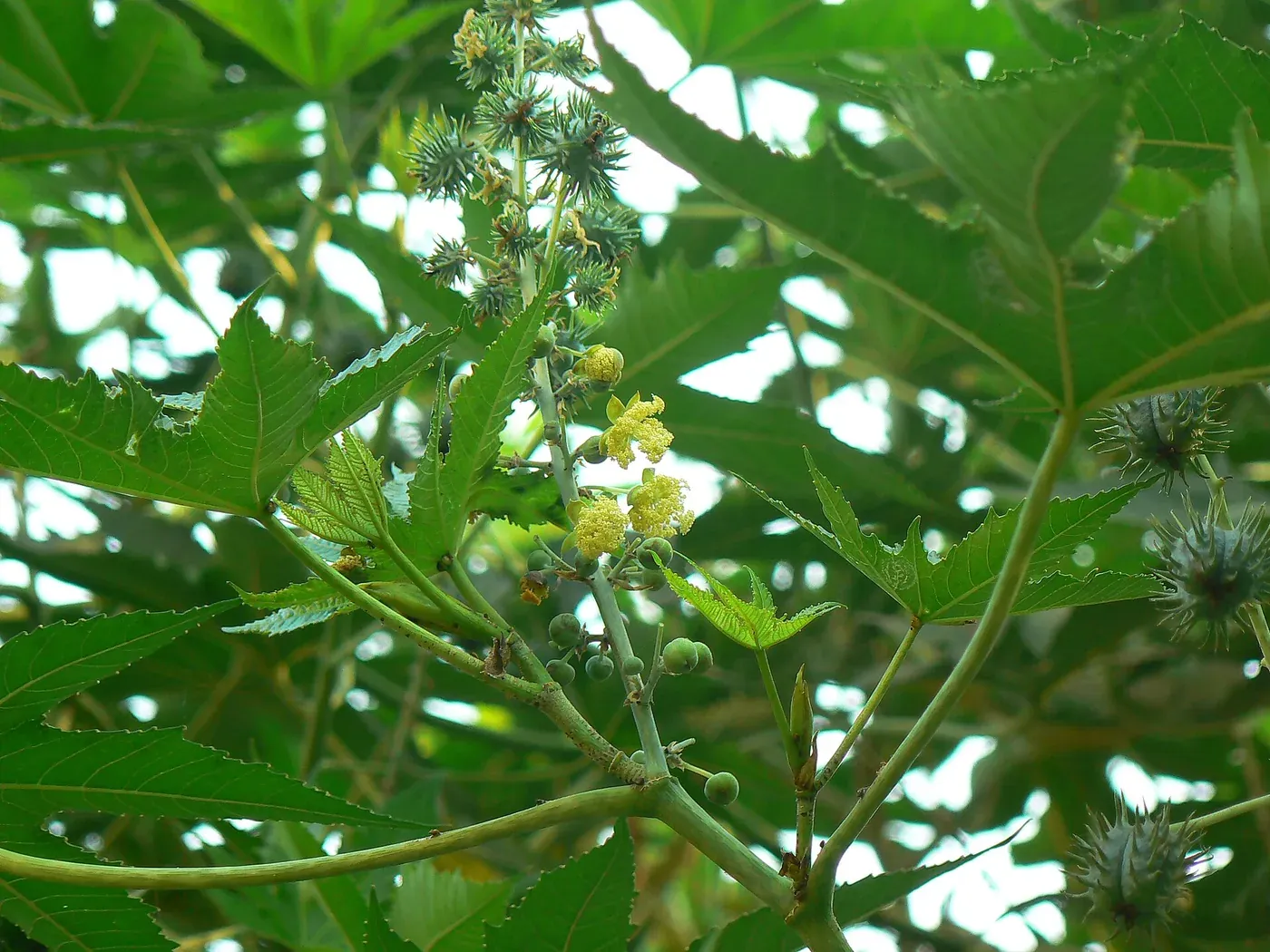
Part of that chemistry had a much older French pedigree. Several Pebax grades build their hard block from nylon 11, a polyamide made not from petroleum but from castor oil, via a process French chemists had worked out in the 1940s and put into full industrial production at a plant in Marseille in 1955, three decades before Pebax itself reached the market.
Plate II
.jpg)
Blocks, Not a Blend
Unlike a physical blend such as Noryl, where two separate kinds of polymer molecule are mixed together, Pebax is one molecule. Long runs of polyamide alternate with long runs of polyether within the same chain, each run many repeat units deep before it switches to the other kind. This is a block copolymer, not a random scattering of amide and ether units through the backbone. That structure is what lets the material behave the way it does. The polyamide blocks crystallize and cluster into small, hard domains that act like a network of physical anchor points, holding the material’s shape and giving it strength without any of the permanent chemical crosslinks a true vulcanized rubber needs. The polyether blocks stay amorphous and mobile in between, providing the stretch and the low-temperature flexibility. Heat the material past the point where those hard domains melt and the anchors let go; the whole polymer flows like an ordinary thermoplastic, ready to be injection molded or extruded, then cools back into the same network of anchors once it sets. It behaves like a crosslinked rubber in service and like a plain thermoplastic in the mold, which is the entire commercial point of building it this way.
One Family, a Wide Range
The practical range that architecture buys is unusually broad for a single material family. Depending on how much polyamide is built into the chain, a given Pebax grade can come out closer to a soft rubber or closer to a stiff engineering plastic, spanning one of the widest hardness ranges sold under a single trade name. Every grade across that range shares certain habits: real elasticity, taking a large stretch and springing back rather than staying deformed, and a working temperature range that reaches well below the freezing point of water without turning brittle, a trait most ordinary rubbers cannot match. It resists fatigue well, tolerating the kind of repeated flexing that would eventually crack a stiffer plastic or degrade a lower-grade rubber, which is exactly why it ends up in springy soles, flexible tubing and cable jackets bent thousands of times over their working life. It takes up very little water, which keeps its properties stable in humid conditions, though like most polyamide-based materials its real weakness is sustained ultraviolet exposure, which degrades it without some form of protective additive or coating.
From Cable Jackets to Ski Boots
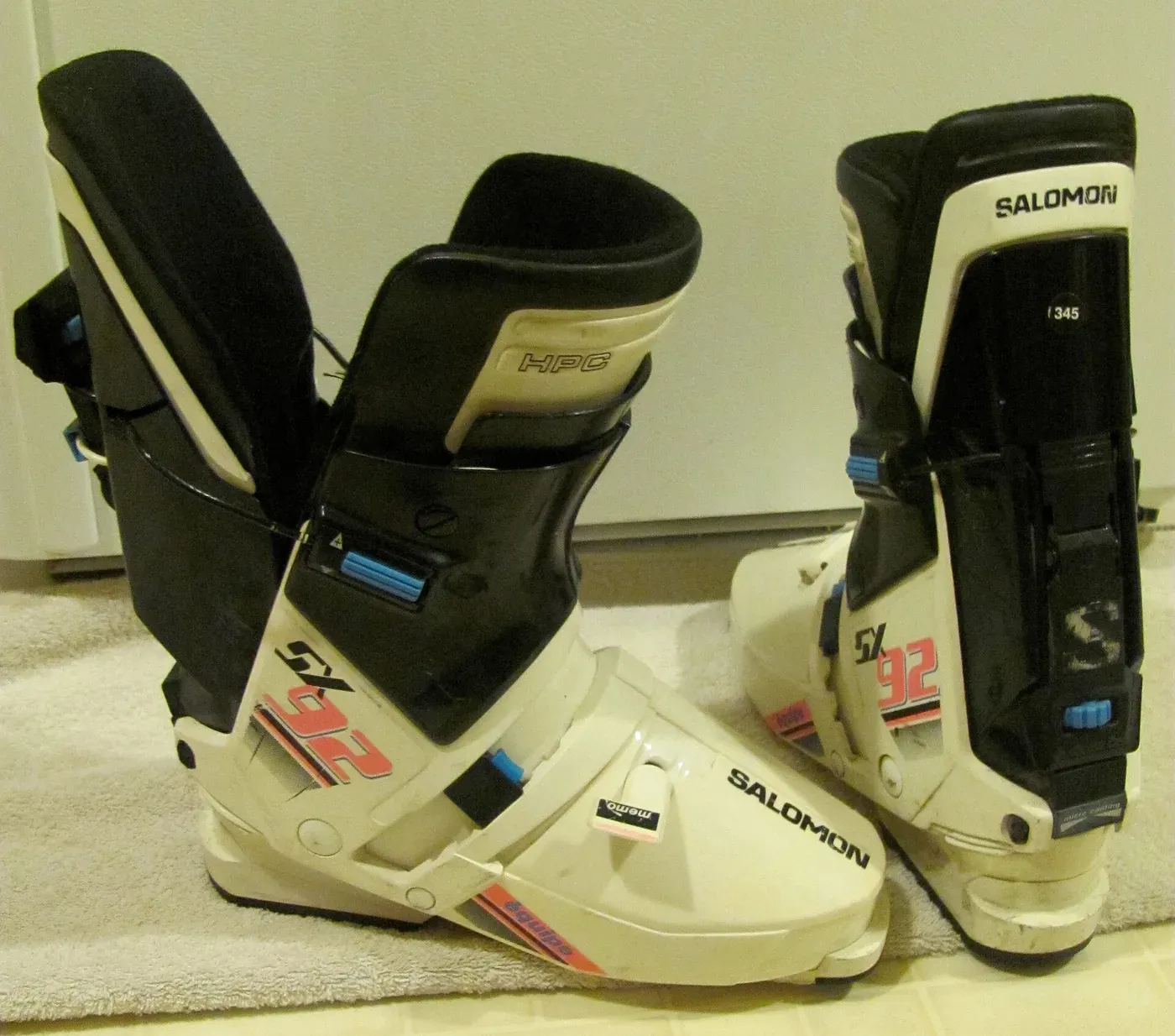
As Pebax matured into a full product line through the 1980s, it found homes across a wide spread of industries. In electronics, it became cable jacketing and device casings tough enough to survive constant flexing and handling without cracking, exactly the kind of part the new wave of personal computers and consumer electronics needed in growing quantities. In medicine, its combination of flexibility, strength and biocompatibility made it a standard material for catheter tubing that could be guided through blood vessels without kinking or damaging tissue. In sports, harder Pebax grades went into ski boot shells and cuffs built to flex predictably in one direction while staying rigid in others, and softer grades turned up in athletic midsoles and damping systems chasing the same springy, fatigue-resistant give.
Plate III

Both of 1984’s chemistry stories are still being felt. Bhopal reshaped, permanently and for good reason, how the world regulates hazardous industrial chemical plants. Pebax, quietly, kept doing what a block copolymer does best: solving the narrow, specific problem of needing a material to be two contradictory things (rigid and flexible, tough and soft) at once, in a single uninterrupted molecular chain.
Plate IV


values with [n] cite the numbered references·estimates are flagged·“not yet available” and “N/A” are honest states, not gaps
fetching the model…
Polyether Block Amide repeat unit
- Abbreviation
- PEBA
- Type
- polymer family (hub)
- CAS number
- None (heterogeneous class or not assigned)
- Resin ID code
- none assigned
- Formula
- (C12H23NO)x·(C4H8O)y[-NH-(CH2)11-CO-]x[-O-(CH2)4-]yThe polyamide block shown is nylon 12; the polyether block is polytetramethylene glycol. Both vary by grade, and the ratio between them sets the hardness across the whole range the family is sold in.
- Repeat unit (BigSMILES)
{[][>]NCCCCCCCCCCCC(=O)[<],[>]OCCCC[<][]}- IUPAC name
- —
- Synonyms
- Pebax
- Also known as
- PebaxVestamid E
- Chemical family
- polyamidethermoplastic-elastomer
- Backbone class
- heterochain
- Polymerization mechanism
- step-growth-condensation
- Constitutional monomer
- Polyamide 11 or 12 (hard block precursor)Polytetramethylene glycol or polyethylene glycol (soft block)
- Polymer class
- elastomer
- Year of origin
- 1984
- Era
- The Specialty Polymers Age (1980-1999)
- Key figures
- Gérard Deleens · Paul Foy
- Events referenced
- Apple introduces the Macintosh computer (January 1984) · Bhopal gas disaster, Union Carbide pesticide plant (2 December 1984)
- Polymerization type
- step-growth condensation (block copolymerization)
- Common monomers (feedstocks)
- polyamide 6, 11, or 12 (hard segment), PTMG or PEG (soft segment)
- Catalysts
- not yet available
Made via polycondensation joining preformed polyamide hard blocks with polyether soft blocks. Arkema produces the dominant commercial form under the trademark Pebax; Evonik offers a competing grade as Vestamid E.
- Tacticity
- not yet available
- Crystal structure
- not yet available
- Typical crystallinity
- not yet available
Molecular weight
- Number average (Mn)
- not yet available
- Mass average (Mw)
- not yet available
- Dispersity (Mw/Mn)
- not yet available
Mark-Houwink constants
not yet available
Hard polyamide blocks provide strength and chemical resistance; soft polyether blocks give flexibility and low-temperature performance (functional below -40°C); ratio between the two is tuned across a wide hardness range (25–72 Shore D).
- Density
- 1.015 (1–1.03) g/cm³[1]
- Melt flow index
- not yet available
- Refractive index
- not yet available
- Transmittance
- not yet available
- Haze
- not yet available
- Gloss
- not yet available
- Water absorption
- not yet available
- Dielectric constant
- not yet available
- Dielectric strength
- not yet available
- Electrical conductivity
- not yet available
- Glass transition (Tg)
- not yet available
- Melting temperature (Tm)
- 154 (134–174) °C[1]
- Crystallization (Tc)
- not yet available
- Heat deflection (HDT)
- not yet available
- Decomposition onset
- not yet available
- Thermal conductivity
- not yet available
- Tensile modulus
- not yet available
- Yield strength
- Not applicableElastomer; typically no distinct yield region.
- Tensile strength at break
- 44 (32–56) MPa[1]
- Elongation at break
- 525 (300–750) %[1]
- Impact strength (Izod)
- not yet available
- Impact strength (Charpy)
- not yet available
- Hardness
- 48.5 (25–72) Shore D[1]
- Flexural modulus
- 262.5 (12–513) MPa[1]
- Poisson's ratio
- not yet available
- Coefficient of friction
- not yet available
- Solvent: water
- Low absorption, 0.4–0.7% under standard conditions[1]
- Weathering / UV
- Sensitive to UV degradation; requires protective measures outdoors[1]
- Hydrolysis resistance
- not yet available
- Flammability (UL94)
- not yet available
- Limiting oxygen index
- not yet available
- Solubility parameter (δ)
- not yet available
Gas permeability
not yet available
Polymer-solvent interaction parameter (χ)
not yet available
- Processing methods
- injection moldingextrusionblow molding
- Drying required
- Yes
- Processing temperature
- not yet available
- Shrinkage rate
- not yet available
- Sportsrunning shoe midsoles · ski boots · athletic damping systems
- Medicalcatheters
- Electronicscable coatings · device casings · wire insulation
- Textilesbreathable films · non-woven fabrics
- Recyclable
- Yes
- Biodegradable
- No
- Degradation pathway
- not yet available
- LD50 (oral, rat)
- not yet available
- NFPA health
- not yet available
- NFPA flammability
- not yet available
- NFPA reactivity
- not yet available
- Carcinogenic classification
- not yet available
- [1]Polyether block amideWikipediaAccessed 2026-07-14https://en.wikipedia.org/wiki/Polyether_block_amide[wiki-peba]
Illustrations
- Plate ISteve Jobs with the newly launched Macintosh, January 1984, one of a wave of compact electronic products whose cables, connectors and housings needed a plastic that could flex without cracking.Wikimedia Commons
- Plate IIThe castor bean plant, Ricinus communis. Castor oil is the raw material for nylon 11, the polyamide used as the hard block in many Pebax grades.Wikimedia Commons
- Plate IIISki boots of the rigid-shell, hinged-cuff kind harder Pebax grades were molded into during the 1980s: stiff where a skier needs support, hinged where the ankle needs to bend.Wikimedia Commons
- Plate IVA memorial in Bhopal to the victims of the December 1984 Union Carbide gas disaster, the catastrophe that framed the same year Pebax was maturing into a commercial product line.Wikimedia Commons