The Smart Materials Era (2000-2015)
Polythiophene (PT)
Plastic that eats sunlight for breakfast
On the twenty-sixth of June, 2000, Bill Clinton stood at a podium in the White House, flanked by Francis Collins of the public Human Genome Project and Craig Venter of the private one, and announced that a working draft of the human genome was complete. The screens behind them called it a milestone for humanity, and for once the label was not much of an exaggeration: the world’s most famous polymer, DNA, had just given up the broad strokes of its own sequence after a decade of coordinated work.
Plate I


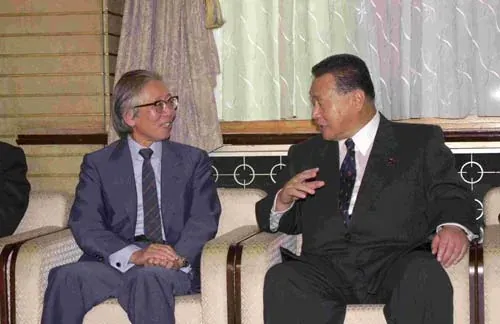
Three and a half months later, a much smaller polymer story made its own headlines. On the tenth of October the Royal Swedish Academy of Sciences announced that the Nobel Prize in Chemistry for 2000 would go to Alan Heeger, Alan MacDiarmid and Hideki Shirakawa, “for the discovery and development of conductive polymers.” Their prize-winning work, done in 1977, had shown that doping a polymer called polyacetylene with iodine vapor could raise its conductivity roughly a billionfold, turning an ordinary insulating plastic into something that carried current almost like a metal. Polythiophene, a sturdier and easier-to-handle cousin of that original polymer, was one of the direct beneficiaries: chemists had already been building and doping thiophene-based polymers for two decades by the time the prize was announced, and the recognition turned what had been a specialist’s material into the obvious place to look for the next generation of conducting plastics.
Plate II

Two different kinds of polymer, then, made global news in the same year: one carrying genetic information, the other carrying an electric current. Polythiophene itself is older than either of these headlines (chemists first built a well-defined version of it in 1980), but 2000 is the year its whole field was handed a permanent place in the textbooks, and the year most of what is now built from it started to look inevitable.
The Real History: From Two Labs in 1980 to a Nobel Prize
Polythiophene’s actual origin has nothing to do with a laboratory accident or a dot-com-era discovery in a Santa Barbara laboratory; no such find is recorded anywhere, and the polymer itself long predates the year once claimed for it. In 1980, two research groups working independently (Takakazu Yamamoto’s in Japan, and J. W. P. Lin and L. P. Dudek’s in the United States) each reported a reliable way to link thiophene rings into a long, regular chain, using nickel- or palladium-catalyzed coupling reactions related to the Kumada coupling. Both groups noticed the same thing once the chains were made: treating the resulting polymer with iodine vapor increased its conductivity by a factor of roughly ten million, the same halogen-doping trick that had just made polyacetylene famous a few years earlier.
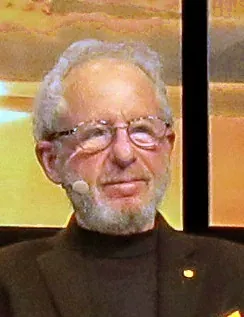
Unlike polyacetylene, which degrades within hours in ordinary air, polythiophene’s ring structure made it stable enough to handle, store and actually use. This is the reason it, rather than polyacetylene itself, became the working material behind most of what conducting polymers are used for today. Alan Heeger’s own research, alongside Shirakawa’s and MacDiarmid’s, helped establish the doping chemistry that made sense of what both 1980 groups had observed, and it is that shared body of work the Nobel committee recognized twenty years later.
Plate III
.jpg)
What Makes It Different
Polythiophene’s backbone is a chain of five-membered rings, each built from four carbons and a sulfur atom, joined end to end. What makes that chain worth building is its conjugation: a continuous alternation of single and double bonds along the backbone, which lets electrons delocalize across many rings at once rather than staying put on any single one. Doping the chain (adding or removing electrons chemically, with an oxidant or a reductant) creates mobile charge carriers along that conjugated path, and it is this doped state, not the undoped polymer, that actually conducts.
Properties and Characteristics
Polythiophene is denser than water, comfortably inside the range of many everyday engineering plastics, and, like the rest of this family, its most interesting property is how much its conductivity can be pushed around. Depending on which dopant is used, and how much of it, a sample’s conductivity can sit anywhere from barely better than an ordinary insulator to a level high enough to be genuinely useful as a conductor, though still well short of a true metal. Structurally, plain polythiophene is essentially amorphous (its chains pack together rather chaotically rather than forming the ordered stacks a semi-crystalline plastic would), though some of its substituted relatives, used more widely in devices than the parent polymer itself, manage a little more order.
Thermally it is unusually resilient in an inert atmosphere, tolerating enormous heat without breaking down chemically; in ordinary air, oxidation sets in earlier, though still well past the point where most household plastics would already have failed. Its widely used derivative PEDOT, which behaves similarly, is also fairly stiff and strong as organic conductors go (stiffer, in fact, than a lot of everyday plastic), though blending it with a second polymer to make it easier to process from water trades away some of that stiffness and strength in exchange for processability.
Chemically the whole family is quite robust: common solvents, from alcohols and oils to aromatic and halogenated hydrocarbons, esters and ketones, have very little effect on it, which is part of why it survives as a thin electrode or coating without dissolving back into whatever touches it. Its most notable weakness is the ultraviolet end of sunlight. It is not considered a fire hazard, and no major health authority lists it as a carcinogen.
How It Is Made
The simplest route to polythiophene is oxidative polymerization: thiophene monomers are linked together in solution (typically chloroform or acetonitrile, at temperatures from just above freezing up to room temperature) using iron(III) chloride as the oxidant, with oxygen carefully excluded to avoid side reactions. This gives a usable polymer, but not a highly ordered one.
Getting real control over the material’s properties means controlling regioregularity: making sure that when a substituted thiophene ring joins the chain, it does so the same way every time relative to its neighbors, head-to-tail rather than head-to-head. The modern way to do this is Grignard metathesis (GRIM) polymerization, which uses a Grignard reagent (the organomagnesium compounds named for the French chemist Victor Grignard) under a nickel catalyst to add one ring to the chain at a time in a controlled sequence. Done well, GRIM polymerization routinely exceeds 98 percent regioregularity, giving chains markedly more conductive than the disordered material the simple iron(III)-chloride route produces, because a regioregular backbone lets the conjugated system extend further before it is interrupted by a misaligned ring.
Applications
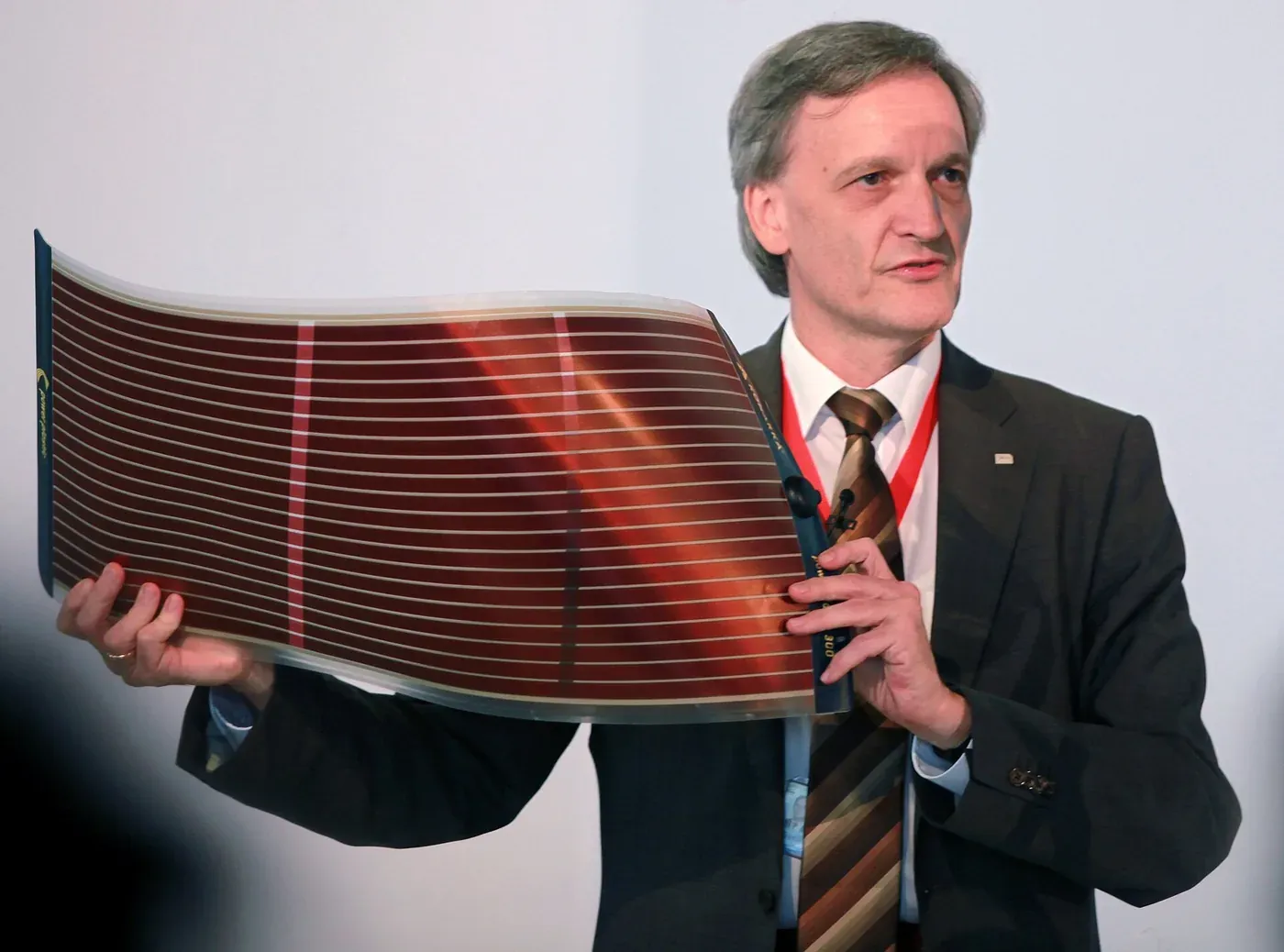
Polythiophene’s best-known application is the organic solar cell: printed or coated as a thin active layer, it absorbs light and helps convert it into an electric current, in a device that, unlike a rigid silicon panel, can be flexible enough to roll up, laminate onto a curved surface, or eventually be built into fabric.
Plate IV

Its derivatives show up throughout organic electronics more broadly. PEDOT, doped and blended with a second polymer to make it processable from water, is the antistatic coating used on photographic film and the transparent conductive layer inside many OLED displays and organic transistors; the same tunable, moderate conductivity that makes plain polythiophene interesting is what lets PEDOT do this job without blocking light the way a metal electrode would. Because its color shifts with its oxidation state, much as polyaniline’s does, it also serves as the active layer in electrochromic windows that darken or clear on demand. And beyond displays and solar cells, thiophene-based polymers are used as the sensing layer in chemical and biological sensors, where a target molecule binding to the polymer changes its conductivity in a way that can be measured directly.
Looking Forward
Most of the open work on polythiophene now is about manufacturing rather than discovery: getting regioregular, dopant-stable material to come off a production line at the volume and cost that solar cells and printed electronics actually need. The Nobel Prize made the underlying chemistry respectable in 2000; the harder, less celebrated task since has been turning a laboratory-scale reaction into an industrial one.
values with [n] cite the numbered references·estimates are flagged·“not yet available” and “N/A” are honest states, not gaps
fetching the model…
Polythiophene repeat unit
- Abbreviation
- PT
- Type
- polymer family (hub)
- CAS number
- None (heterogeneous class or not assigned)
- Resin ID code
- none assigned
- Formula
- (C4H2S)n[-C4H2S-]nRegioregularity (head-to-tail vs. random coupling in substituted derivatives such as P3HT) strongly affects conductivity and is not captured by a single repeat-unit notation.
- Repeat unit (BigSMILES)
{[][$]c1ccc([$])s1[]}- IUPAC name
- —
- Synonyms
- PEDOT (as the 3,4-ethylenedioxythiophene derivative)
- Also known as
- PEDOT
- Chemical family
- conducting-polymer
- Backbone class
- heterochain
- Polymerization mechanism
- oxidative-coupling
- Constitutional monomer
- Thiophene
- Polymer class
- thermoplastic
- Year of origin
- 2000
- Era
- The Smart Materials Era (2000-2015)
- Key figures
- Alan Heeger · Alan MacDiarmid · Hideki Shirakawa
- Polymerization type
- oxidative coupling polymerization
- Common monomers (feedstocks)
- thiophene
- Catalysts
- ferric chloride
The 2000 Nobel Prize in Chemistry, awarded to Alan Heeger, Alan MacDiarmid, and Hideki Shirakawa, recognized the broader discovery and development of conductive polymers (a field polythiophene belongs to). Sugimoto et al. reported oxidative polymerization using ferric chloride at room temperature in 1986; electrochemical synthesis and Kumada coupling are alternative routes.
- Tacticity
- not yet available
- Crystal structure
- Predominantly amorphous; ordered/doped domains reported as hexagonal (a ≈ 0.95 nm, c ≈ 1.22 nm). Thin films show a fibrillar ("noodle-like") TEM morphology, with fibril diameter increasing with doping level.
- Typical crystallinity
- 0 %[3]unsubstituted PT appears completely amorphous by XRD; substituted derivatives show partial crystallinity (<5%)
Molecular weight
- Number average (Mn)
- 6000–82300 g/mol[2]PEDOT (a substituted polythiophene)
- Mass average (Mw)
- not yet available
- Dispersity (Mw/Mn)
- 1.27–9.1[2]PEDOT (a substituted polythiophene)
Mark-Houwink constants
not yet available
Conjugated backbone (alternating single/double bonds along the thiophene rings) is what enables electrical conductivity upon doping, unlike a conventional saturated-backbone polymer.
- Density
- 1.4–1.6 g/cm³[3]unsubstituted PT; PEDOT (a substituted polythiophene) reported in the same range
- Melt flow index
- Not applicable
- Refractive index
- 1.5–1.55[2]PEDOT (a substituted polythiophene), 20°C; parent PT refractive index not stated in source
- Transmittance
- not yet available
- Haze
- not yet available
- Gloss
- not yet available
- Water absorption
- 1.15 %[2]PEDOT (a substituted polythiophene), equilibrium in water at 23°C
- Dielectric constant
- not yet available
- Dielectric strength
- not yet available
- Electrical conductivity
- 0.002–10000 S/m[3]Strongly dopant-dependent: iodine-doped 6–8 S/cm, FeCl3-doped 0.5 S/cm, NOSbF6-doped 9×10⁻⁵ S/cm, NOPF6-doped 2×10⁻⁵ S/cm, triflate (SO3CF3⁻)-doped 50–100 S/cm.
- Glass transition (Tg)
- 210 °C[2]PEDOT (a substituted polythiophene); parent PT Tg not stated in source
- Melting temperature (Tm)
- 350 °C[2]PEDOT (a substituted polythiophene), DSC, reported as >350°C
- Crystallization (Tc)
- Not applicable
- Heat deflection (HDT)
- Not applicable
- Decomposition onset
- 250 °C[3]unsubstituted PT, in air; stable to ~900°C in inert atmosphere/vacuum. PEDOT (a substituted polythiophene) reported separately at 325°C in air, 375°C in N2.
- Thermal conductivity
- not yet available
- Tensile modulus
- 3200–6800 MPa[2]PEDOT (a substituted polythiophene), unblended; PEDOT/PSS blend 1100–2800 MPa, PEDOT/PSS microfiber 2500–4000 MPa
- Yield strength
- not yet available
- Tensile strength at break
- 84–178 MPa[2]PEDOT (a substituted polythiophene), unblended; no distinct yield point reported. PEDOT/PSS blend 17.2–53.2 MPa, PEDOT/PSS microfiber 94–130 MPa.
- Elongation at break
- not yet available
- Impact strength (Izod)
- not yet available
- Impact strength (Charpy)
- not yet available
- Hardness
- not yet available
- Flexural modulus
- not yet available
- Poisson's ratio
- not yet available
- Coefficient of friction
- not yet available
- Solvent: alcohols
- very good[2]PEDOT (substituted polythiophene)
- Solvent: aliphatic hydrocarbons
- very good[2]PEDOT (substituted polythiophene)
- Solvent: aromatic hydrocarbons
- very good[2]PEDOT (substituted polythiophene)
- Solvent: esters
- very good[2]PEDOT (substituted polythiophene)
- Solvent: greases & oils
- very good[2]PEDOT (substituted polythiophene)
- Solvent: halogenated hydrocarbons
- very good[2]PEDOT (substituted polythiophene)
- Solvent: ketones
- very good[2]PEDOT (substituted polythiophene)
- Weathering / UV
- UV-sensitive below ~320 nm (PEDOT:PSS)[2]
- Hydrolysis resistance
- not yet available
- Flammability (UL94)
- not yet available
- Limiting oxygen index
- not yet available
- Solubility parameter (δ)
- not yet available
Gas permeability
not yet available
Polymer-solvent interaction parameter (χ)
not yet available
- Processing methods
- chemical oxidative polymerizationelectrochemical depositionsolution processing (spin coating, printing)
- Drying required
- not yet determined
- Processing temperature
- Not applicable
- Shrinkage rate
- Not applicable
- Establishedantistatic coatings (PEDOT-PSS on photographic film)
- Energyorganic solar cells/photovoltaics
- ElectronicsOLEDs · organic field-effect transistors · electrochromic windows
- Sensingchemical and biosensors
- Recyclable
- No
- Biodegradable
- No
- Degradation pathway
- not yet available
- LD50 (oral, rat)
- 2000 mg/kg[2]PEDOT (substituted polythiophene); no mortality observed at highest tested dose (reported as >2,000 mg/kg)
- NFPA health
- 1[2]PEDOT (substituted polythiophene); HMIS rating, 0–4 scale
- NFPA flammability
- 0[2]PEDOT (substituted polythiophene); HMIS rating, 0–4 scale
- NFPA reactivity
- 0[2]PEDOT (substituted polythiophene); HMIS rating, 0–4 scale
- Carcinogenic classification
- not listed by ACGIH, NIOSH, NTP[2]PEDOT (substituted polythiophene)
- [1]PolythiopheneWikipediaAccessed 2026-07-14https://en.wikipedia.org/wiki/Polythiophene[wiki-polythiophene]
- [2]Handbook of PolymersChemTec Publishinghttps://www.worldcat.org/isbn/9781895198928[handbook-wypych-2016]
- [3]Polymer Data HandbookOxford University Presshttps://search.worldcat.org/search?q=Polymer+Data+Handbook+Mark+1999[handbook-mark-1999]
Illustrations
- Plate IPresident Clinton announces the completed working draft of the human genome, 26 June 2000: one kind of polymer making headlines the same year a very different one made the Nobel Prize.Wikimedia Commons
- Plate IIHideki Shirakawa meets Japan's prime minister, Yoshirō Mori, eight days after the Nobel committee named him one of the 2000 laureates in Chemistry.Wikimedia Commons
- Plate IIIAlan Heeger, who with Shirakawa and MacDiarmid shared the prize the Nobel committee awarded not to polythiophene specifically, but to the broader discovery that made it a useful material.Wikimedia Commons
- Plate IVA commercially made polymer solar cell, flexible enough to bend by hand. This is the kind of application that turned thiophene chemistry from a specialist's material into an industrial one.Wikimedia Commons