Decoding Nature's Legacy (1833-1902)
Celluloid
The Artificial Ivory
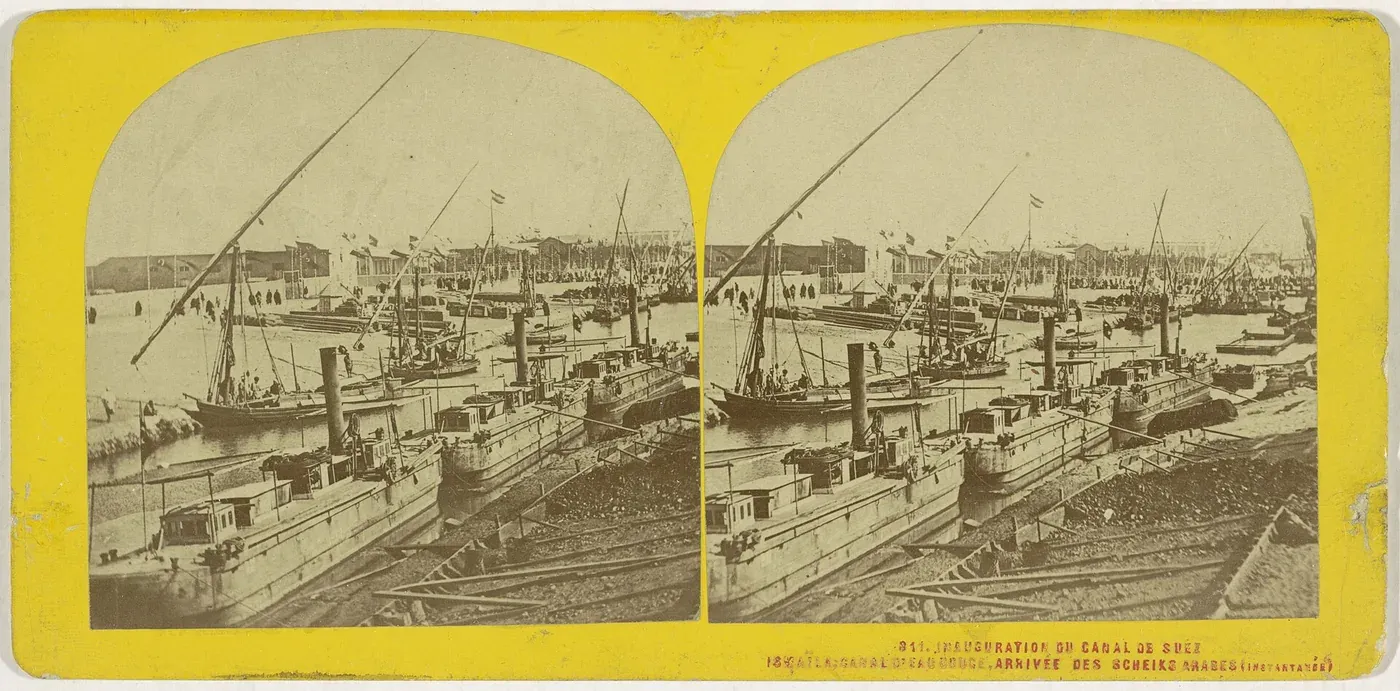
In May of 1869, a golden spike was driven into a railbed at Promontory Summit, Utah, joining two railroads built from opposite oceans into one line across the continent. Six months later, on the other side of the world, a channel of seawater opened at Ismailia and let ships sail from the Mediterranean straight into the Red Sea without rounding Africa. Between them, the two projects did the same thing to two different maps: they shortened the distance between a raw material and the people who wanted it.
Plate I
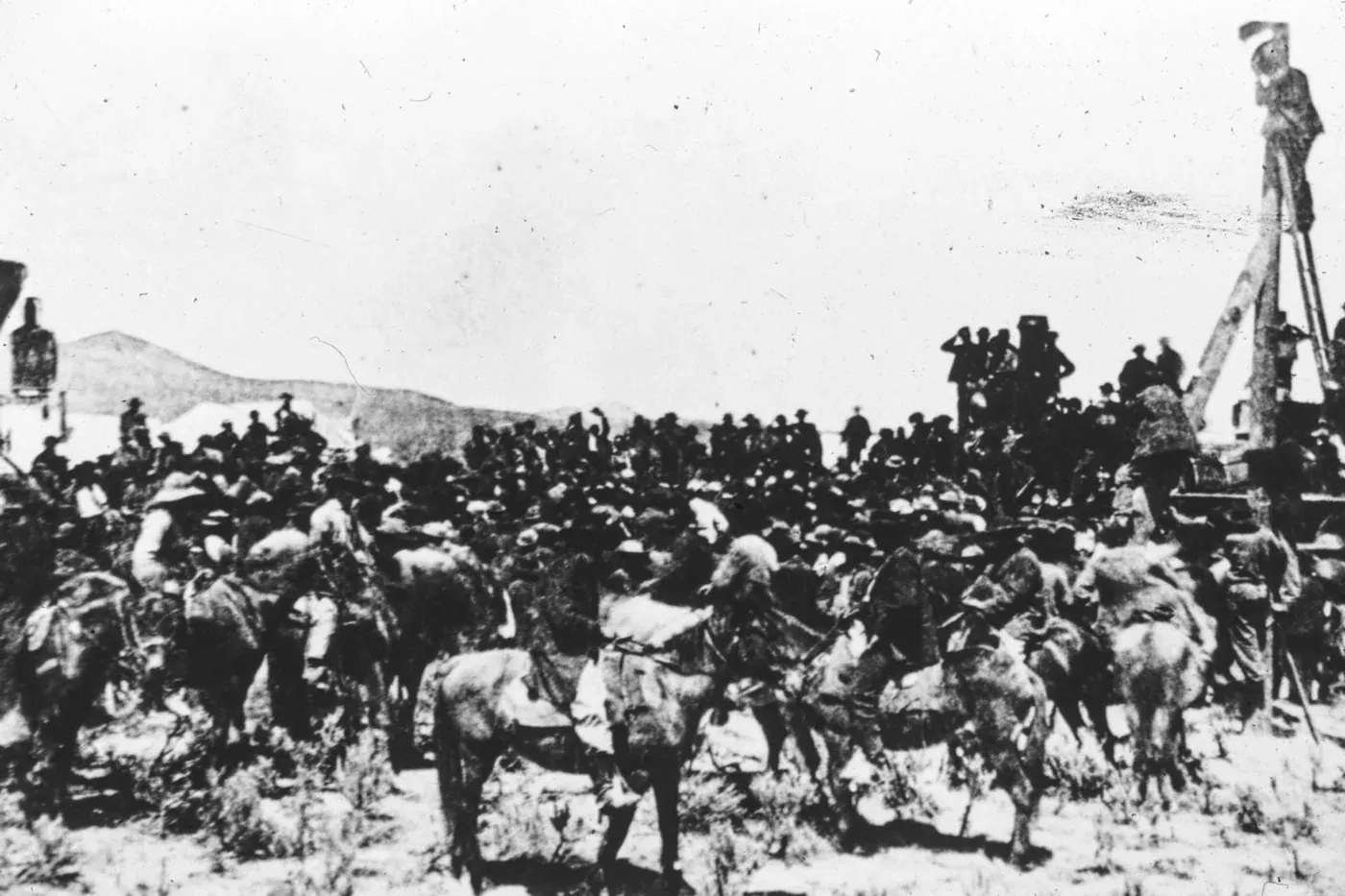

One of the raw materials moving faster along those shortened routes was ivory, and demand for it had never been higher. A newly comfortable middle class on both sides of the Atlantic had taken up billiards as a fashionable pastime, and every table needed a set of balls, each one cut from the densest part of an elephant tusk. Tusks were becoming harder to find and more expensive by the year, and the game’s suppliers knew it.
Plate II
_(titel_op_object),_RP-F-F12908.jpg)
Celluloid’s whole career, from that year forward, would be about standing in for something else: ivory first, then tortoiseshell, then glass, then eventually a supporting role in almost every material it touched. 1869 is the year that career began.
A Prize, and a Printer Who Took It Seriously
As early as 1863 the billiard-supply firm Phelan & Collender had put up ten thousand dollars for anyone who could produce a workable substitute for ivory balls. Several inventors took a run at it and failed; the material that finally worked was not entirely new even then. In England, Alexander Parkes had already patented a nitrocellulose-based moulding compound called Parkesine in 1862 and shown combs, buttons and plaques made from it at the London International Exhibition that year. This was an impressive premiere, undone by a material that was too expensive to produce, prone to cracking, and, being largely unplasticized nitrocellulose, unnervingly easy to set alight. Parkes’s associate Daniel Spill kept trying after Parkes gave up, refining the formula into what he sold as Xylonite.
It was an American printer named John Wesley Hyatt, working without any formal training in chemistry, who pushed the idea to something that actually held up on a billiard table. In 1869 he patented his first attempt at a substitute (a moulding compound of fibrous material bound with shellac, dipped and finished in colored collodion) and kept refining the formula from there. The following year he and his brother Isaiah patented the version that mattered: nitrocellulose plasticized with camphor, kneaded to a workable dough and pressed into blocks under heat. Isaiah gave the material its name, celluloid, in 1872. There is no record that the Hyatts ever submitted a set of balls for the Phelan & Collender money, and no evidence anyone ever collected it, but the prize had done its job. It put a price on solving the ivory shortage, and by the early 1870s Hyatt had actually solved it.
Plate III
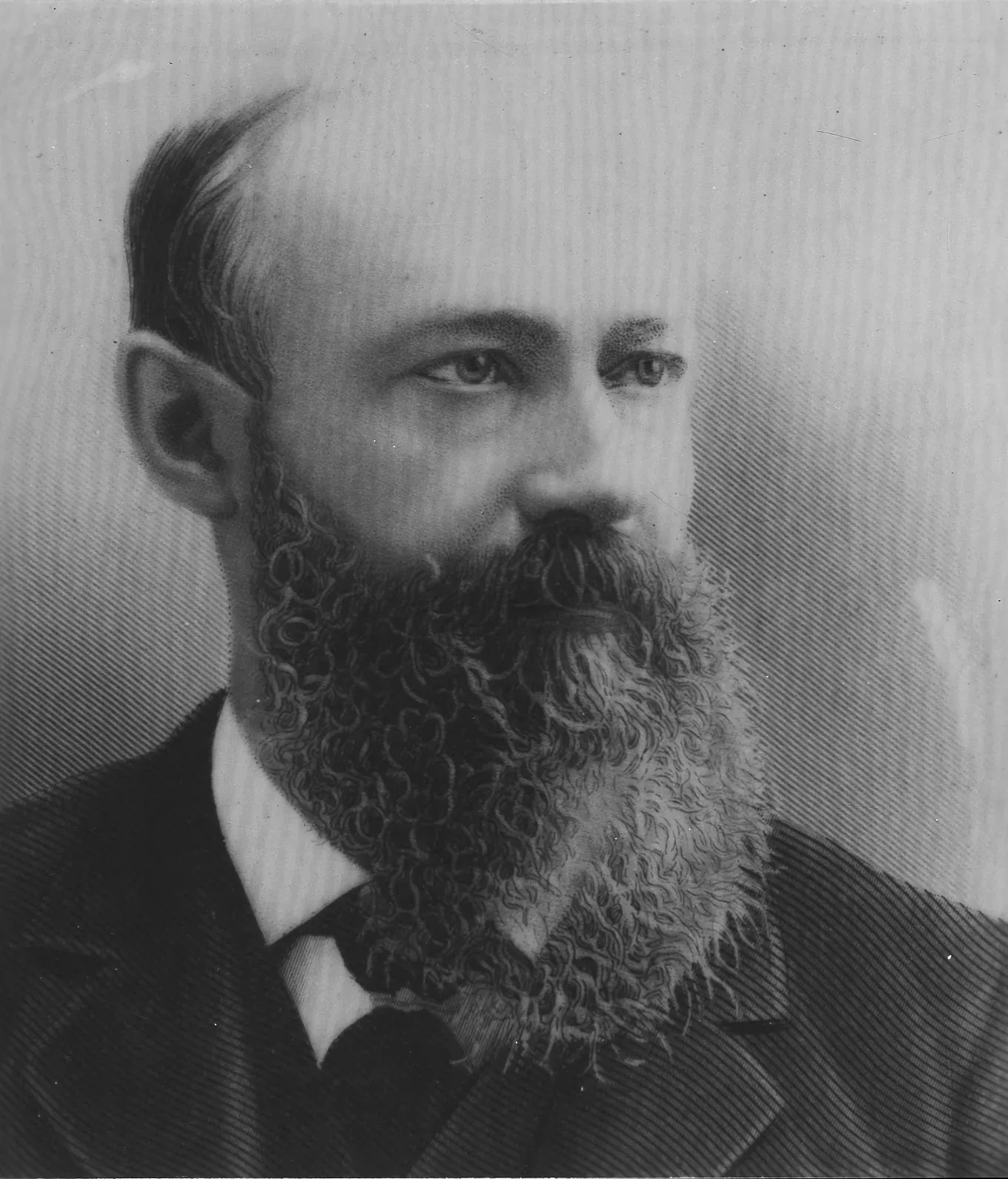

Years later, when Spill sued the Hyatts over the patents, the courts sided with neither man outright: Parkes, they found, had described camphor as a plasticizer first, which makes him the true originator of the chemistry. What Hyatt owned was something almost as valuable: the version of it that could actually be manufactured, sold, and trusted not to fall apart.
Standing In for the Real Thing
Celluloid is nitrocellulose worked into a genuine thermoplastic by camphor, which wedges itself between the polymer chains and lets the whole mass soften under heat and hold a new shape on cooling. That was the trick Parkes never quite managed reliably and Hyatt did. Cast into rods, sheets and blocks and cut like a semi-precious stone, it could be dyed, veined and polished to imitate ivory, tortoiseshell or coral closely enough to fool anyone but an expert, and it did so at a fraction of the cost. Billiard balls were the proving ground, but combs, hairbrush backs, dresser sets, dental plates, shirt collars, and eyeglass frames all followed within a decade, because celluloid could be made to look like whatever material it was replacing.
Plate IV
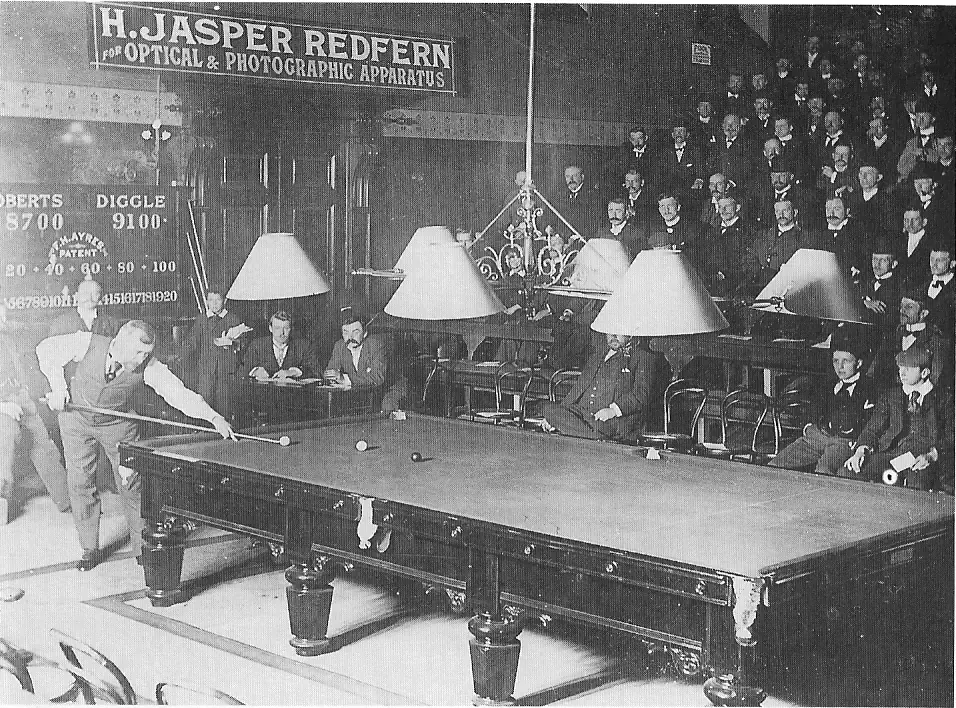

Plate V
_p568_NEWARK,_THE_CELLULOID_COMPANY.jpg)
What the Numbers Actually Say
Celluloid sits close to ivory in density (heavier than water but nowhere near as heavy as the metals and minerals it so often stood in for), and camphor’s plasticizing effect shows up immediately in how it behaves under heat: it softens at a temperature you could hold in your hand, well below where unplasticized nitrocellulose would still be a hard solid, which is exactly what let it be moulded at all. Like its parent material it has no true melting point, decomposing rather than flowing if pushed too far. Mechanically it is a genuinely flexible thermoplastic rather than a brittle one: strong enough for a shirt collar that has to bend all day, forgiving enough to survive being dropped, a real departure from the unplasticized nitrocellulose Parkes had struggled with. That same plasticized structure is also why it stayed exactly as flammable as its parent: camphor makes nitrocellulose workable, not safe, and celluloid self-ignites readily once it gets hot enough.
A Star Is Born, and a Peril With It
Celluloid’s most consequential substitution turned out to be for glass. Photography before the late 1880s meant fragile, heavy plates; what a camera or a projector needed instead was something flexible enough to wind onto a spool. Hannibal Goodwin, an Episcopal clergyman in Newark who wanted better lantern slides for his Sunday-school lessons, filed a patent for a celluloid roll film in 1887. George Eastman’s laboratory arrived at a strikingly similar formula, plasticized with camphor, two years later, and began selling it before Goodwin’s own patent had even been granted; it took until 1898, and Goodwin did not live to see the money, but his estate eventually won a large settlement from Eastman Kodak over the priority dispute. Whoever deserves the credit, the material that resulted gave the young motion-picture industry its stock: virtually every film shot from the 1890s into the 1950s ran through a projector as celluloid.
The same chemistry that made that possible made it dangerous. Nitrocellulose film burns fast, needs no external oxygen once alight, and is very hard to extinguish once it catches; the fire that swept through the Bazar de la Charité in Paris in 1897, killing well over a hundred people, was one of several tragedies blamed on projection-booth nitrate fires. Studios and archives spent decades building fireproof vaults and sealed projection booths around a material nobody could quite replace, until Kodak’s acetate “safety film” of 1948 finally offered a way out: imperfect in its own right, prone to a slow decay archivists call vinegar syndrome, but no longer capable of burning a cinema down.
The Legacy
Celluloid was the first material to prove that something built in a factory could pass for something grown in nature closely enough to matter commercially, and cheaply enough that imitation ivory, imitation tortoiseshell and imitation coral became ordinary possessions rather than luxuries. It could not last as a load-bearing technology once safer thermoplastics arrived, but it bought the elephants and the tortoises a reprieve, gave photography a flexible stock decades before anything safer existed, and taught every plastic that followed it the same lesson: a substitute good enough to fool the eye can change an entire industry.
values with [n] cite the numbered references·estimates are flagged·“not yet available” and “N/A” are honest states, not gaps
- Abbreviation
- —
- Type
- variantpart of the nitrocellulose family
- CAS number
- None (heterogeneous class or not assigned)
- Resin ID code
- none assigned
- Formula
- Nitrocellulose plasticized with camphor (plus dyes/other agents); a plasticized blend rather than a single-substance repeat unit.
- Repeat unit (BigSMILES)
- Nitrocellulose plasticized with camphor (plus dyes/other agents); a plasticized blend rather than a single-substance repeat unit.
- IUPAC name
- —
- Synonyms
- artificial ivory
- Also known as
- artificial ivory
- Chemical family
- cellulosic
- Backbone class
- heterochain
- Polymerization mechanism
- natural-biosynthesis
- Constitutional monomer
- D-glucose (as the cellulose precursor, subsequently nitrated)
- Polymer class
- thermoplastic
- Year of origin
- 1869
- Era
- Decoding Nature's Legacy (1833-1902)
- Key figures
- John Wesley Hyatt · George Eastman
- Polymerization type
- not yet available
- Common monomers (feedstocks)
- not yet available
- Catalysts
- not yet available
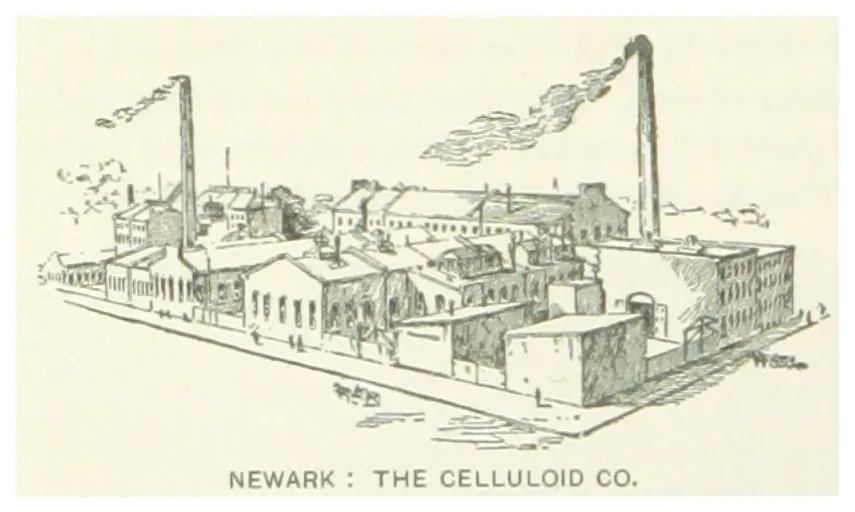
Cellulose is nitrated with nitric/sulfuric acid, then kneaded with a roughly 50% camphor-alcohol solution into a homogeneous gel, which is pressed under high pressure into blocks for fabrication. John Wesley Hyatt patented the cellulose-nitrate/camphor composition in 1870 and named it 'celluloid' in 1872, building on Alexander Parkes' earlier 1855 'Parkesine'; commercial production began at the Celluloid Manufacturing Company (Newark, NJ). The manufacturing process was notoriously hazardous, prone to factory explosions.
- Tacticity
- not yet available
- Crystal structure
- not yet available
- Typical crystallinity
- not yet available
Molecular weight
- Number average (Mn)
- not yet available
- Mass average (Mw)
- not yet available
- Dispersity (Mw/Mn)
- not yet available
Mark-Houwink constants
not yet available
Camphor plasticizes the nitrocellulose matrix, giving celluloid its moldability relative to unplasticized nitrocellulose.
- Density
- not yet available
- Melt flow index
- not yet available
- Refractive index
- not yet available
- Transmittance
- not yet available
- Haze
- not yet available
- Gloss
- not yet available
- Water absorption
- not yet available
- Dielectric constant
- not yet available
- Dielectric strength
- not yet available
- Electrical conductivity
- not yet available
- Glass transition (Tg)
- not yet available
- Melting temperature (Tm)
- Not applicableHighly flammable; self-ignites rather than exhibiting a conventional melt transition.
- Crystallization (Tc)
- Not applicable
- Heat deflection (HDT)
- not yet available
- Decomposition onset
- 150 °C[1]Self-ignition above this temperature.
- Thermal conductivity
- not yet available
- Tensile modulus
- not yet available
- Yield strength
- not yet available
- Tensile strength at break
- not yet available
- Elongation at break
- not yet available
- Impact strength (Izod)
- not yet available
- Impact strength (Charpy)
- not yet available
- Hardness
- not yet available
- Flexural modulus
- not yet available
- Poisson's ratio
- not yet available
- Coefficient of friction
- not yet available
- Weathering / UV
- not yet available
- Hydrolysis resistance
- not yet available
- Flammability (UL94)
- Highly flammable, self-ignites above 150°C[1]Not a standard UL94-tested material given its historical use profile.
- Limiting oxygen index
- not yet available
- Solubility parameter (δ)
- not yet available
Gas permeability
not yet available
Polymer-solvent interaction parameter (χ)
not yet available
- Processing methods
- camphor plasticization + high-pressure block pressingmachining/cutting from blocks
- Drying required
- not yet determined
- Processing temperature
- not yet available
- Shrinkage rate
- not yet available
- Filmphotographic and motion-picture film base (pre-1950s standard)
- Consumer goodsbilliard balls · table tennis balls · combs · fountain pens · guitar picks
- Musical instrumentsaccordion and guitar bindings/finishes
- Recyclable
- No
- Biodegradable
- No
- Degradation pathway
- not yet available
Historical celluloid film and objects are notoriously unstable/flammable and degrade over decades (nitrate film decay), motivating replacement by safer polymers.
- LD50 (oral, rat)
- not yet available
- NFPA health
- not yet available
- NFPA flammability
- not yet available
- NFPA reactivity
- not yet available
- Carcinogenic classification
- not yet available
- [1]CelluloidWikipediaAccessed 2026-07-14https://en.wikipedia.org/wiki/Celluloid[wiki-celluloid]
Illustrations
- Plate IPromontory Summit, Utah, May 1869. It was the moment two railroads became one, and a continent got easier to supply.Wikimedia Commons
- Plate IIThe Suez Canal at its inauguration, November 1869, which shortened the sea route between the ivory markets of Africa and Asia and the workshops of Europe and America.Wikimedia Commons
- Plate IIIJohn Wesley Hyatt, whose 1869 and 1870 patents turned a fragile experimental curiosity into a material that could survive a billiard table.Wikimedia Commons
- Plate IVA billiards match in Sheffield, England, in the 1890s. Billiards was the game whose appetite for ivory balls had gone unmet a generation earlier.Wikimedia Commons
- Plate VThe Celluloid Manufacturing Company's works in Newark, New Jersey, drawn in 1891. This was the scale of production that made an ivory substitute an everyday material.Wikimedia Commons