The Birth of Synthetic Polymers (1907-1938): The Bakelite Revolution
Polyvinyl Chloride (PVC)
The Accidental Revolution
Nineteen thirty-two was the worst year of the Great Depression. American unemployment was closing in on a quarter of the workforce, and in July some twenty thousand unemployed World War I veterans (the self-styled Bonus Army) camped on the Anacostia Flats in Washington, D.C., demanding early payment of a bonus Congress had promised them for their service. President Hoover ordered the camp cleared. Troops under General Douglas MacArthur, with Majors Dwight Eisenhower and George Patton among the officers carrying out the order, advanced with cavalry, tanks and bayonets and burned the shacks to the ground.
Plate I
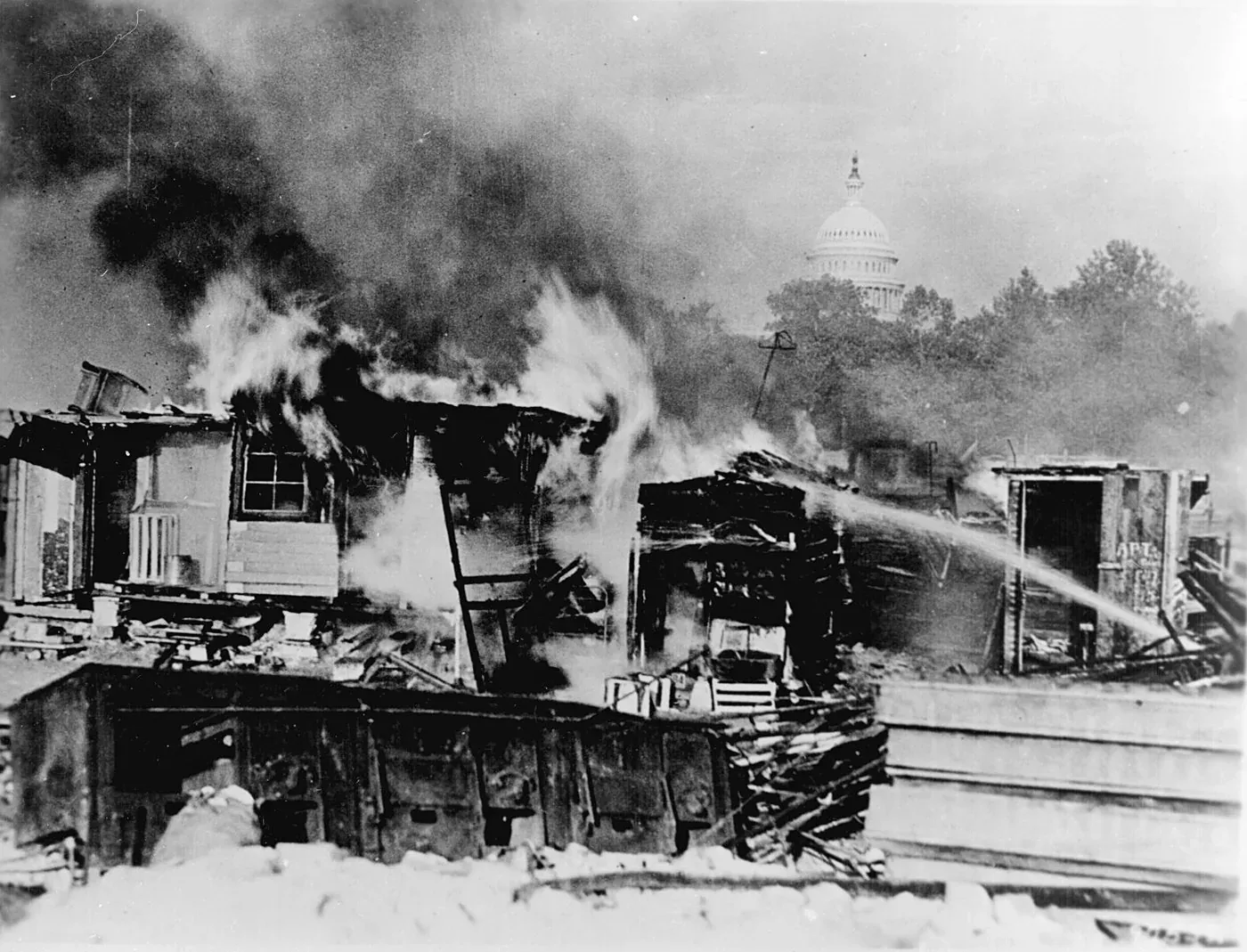

It was not, on the face of it, a year for research budgets. And yet in Akron, Ohio, a B.F. Goodrich chemist named Waldo Semon kept quietly refining an idea nobody at the company had wanted six years earlier. In September 1932 he filed a renewed patent application for it. That patent (granted the following October as U.S. 1,929,453) is as good a birthdate as polyvinyl chloride has, even though the polymer itself was decades older and the idea behind the patent went back further still.
An Old Compound Nobody Could Use
Polyvinyl chloride had first been made, and abandoned, twice before Semon ever touched it. The German-French physicist Eugen Baumann noticed polymerizing in a sealed flask left in sunlight as early as 1872 and set the resulting white solid aside as a laboratory curiosity. Four decades later, the German chemist Fritz Klatte, working the same acetylene chemistry that gave him vinyl acetate, patented a production route to vinyl chloride and its polymer in 1913. Klatte’s PVC was, like his PVAc, essentially unusable: rigid, thermally unstable, and impossible to shape into anything, and his patents lapsed without any product to show for them.
Semon came to the material from an unrelated direction. Hired to find an adhesive that would bond rubber to metal, he was instead trying to strip chlorine out of PVC to make a rubbery substitute when he noticed that certain high-boiling solvents, worked into the powder by heat, turned the intractable plastic into something soft, stretchy and waterproof. Goodrich saw no use for it and shelved the discovery. Semon kept at it in whatever time he could claim, and, as one of his most-repeated stories has it, eventually made his case in the most domestic way imaginable: he coated his wife’s shower curtains with the plasticized compound, then demonstrated its waterproofing to a company sales executive by pouring a pitcher of water over a stack of incoming mail laid beneath a sheet of it. The executive, an enthusiastic outdoorsman, understood immediately what a waterproof, mouldable fabric coating was worth. Goodrich began marketing the material as Koroseal in the early 1930s.
Germany was moving in parallel. By 1931, German manufacturers were producing PVC industrially by emulsion polymerization, and in the United States that same year Union Carbide brought out its own resin, Vinylite, alongside Goodrich’s work. These were three independent efforts converging on the same unglamorous compound within a few years of each other, each having to solve the same problem Klatte never could: not how to make PVC, but how to make it usable.
The Science Behind the Success
PVC’s backbone is the same simple carbon chain as polyethylene, but on every other carbon a hydrogen is replaced by a chlorine atom: a small substitution that changes everything about how the chains behave. Those chlorine atoms are large, polar and heavy enough to make up well over half the polymer’s weight, and they pull neighboring chains together into a stiff, close-packed arrangement that resists heat, flame and most chemicals far better than an all-hydrocarbon plastic would. Left to itself, that packing is so tight that the material is genuinely rigid: the polymer chemistry of plumbing pipe and window frame. Semon’s discovery was that the right small molecules, worked in as plasticizers, could wedge between the chains like a lubricant, letting them slide past one another and turning the same polymer into the flexible material of a garden hose or a blood bag. Rigid and flexible PVC are, at the molecular level, the identical chain; the difference is entirely in what else has been mixed in.
Plate II

Properties That Changed Industries
Rigid PVC is among the denser thermoplastics in everyday use, a direct consequence of all that chlorine, and it stays stiff and dimensionally stable well past room temperature before it begins to soften, comfortably hotter than a parked car in summer, which is part of why it holds its shape as pipe and siding. It does not have a clean melting point so much as a temperature above which it starts to break down, releasing the hydrogen chloride that gives burning PVC its sharp, acrid smell; that same chlorine content, though, makes the unplasticized polymer reluctant to sustain a flame at all. Mechanically, rigid PVC is strong and stiff enough to compete with some structural metals in the applications it has actually taken over, such as pressure pipe, while barely stretching before it breaks. Its chemistry is where it truly earns its keep: excellent resistance to acids, alkalis and everyday weathering, workable resistance to oils, and enough general inertness that it will happily carry drinking water or blood without leaching much into either, though it remains vulnerable to aromatic and chlorinated solvents, and to ketones, which dissolve it outright. None of this changes with plasticizer content nearly as much as the mechanical behavior does; a flexible hose and a rigid pipe are chemically close cousins wearing very different clothes.
Manufacturing Magic: From Salt to Sophistication
PVC begins with two of the most abundant raw materials in industrial chemistry: petroleum-derived ethylene and chlorine split from ordinary salt by electrolysis. Combined and processed through a series of controlled reactions, these yield vinyl chloride monomer, which is then strung into long chains almost entirely by suspension polymerization: countless tiny monomer droplets suspended in water, each one polymerizing as its own miniature reactor, agitated and held within tight temperature and pressure bands until they settle out as a fine white powder.
The Tale of Two PVCs
Unplasticized PVC (uPVC) is the rigid, structural form: window frames, water pipe, siding, extruded at high temperature and pressure through a die, cooled quickly to hold its shape, and stabilized against heat degradation during the process. Plasticized PVC (pPVC) carries a substantial fraction of its weight as plasticizer, processed at gentler temperatures with different tooling and its own stabilizer packages to keep that plasticizer from migrating back out over years of use. Both start as the same resin; compounding, the stage where PVC powder meets its additives in high-speed mixers, is where the two personalities are actually made.
Plate III
.jpg)
Impact and Applications
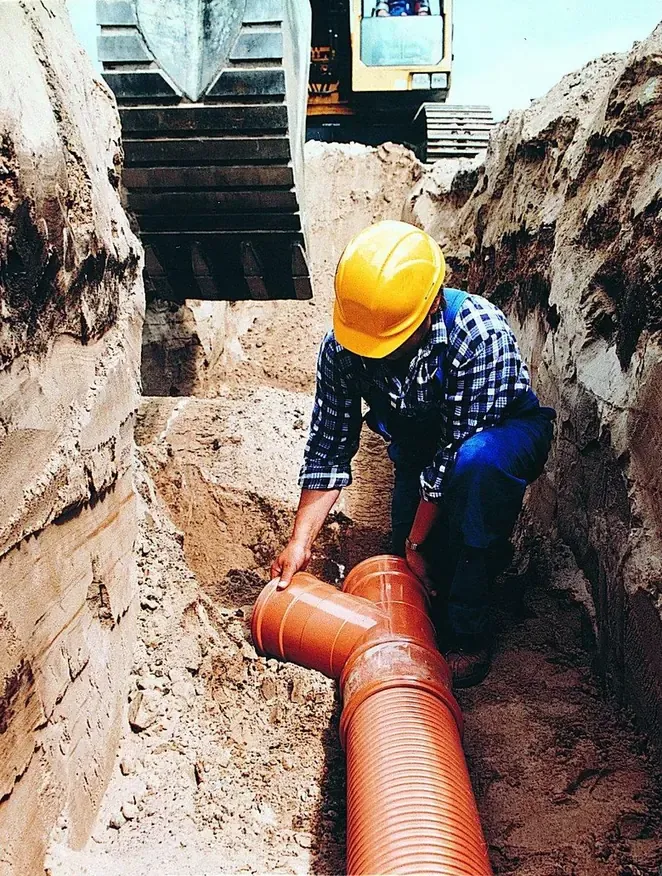
PVC’s versatility has made it ubiquitous. It replaced lead and cast iron in the pipes that carry drinking water and waste, and it shows up in credit cards, cable insulation, medical tubing and blood bags, vinyl flooring and weatherproof clothing. In building and construction specifically (where roughly two of every five plastics used are some form of PVC), its low cost and low maintenance have made it the default choice for pipe, window profile and siding.
Music gave PVC one of its most culturally durable roles. Vinylite, the copolymer resin Union Carbide introduced in the early 1930s, turned out to press a far quieter, more durable phonograph groove than the shellac discs it replaced, and by the postwar years “vinyl” had become the everyday name for the record itself. Plasticized PVC’s fine, stable groove is still what a turntable stylus rides today.
Plate IV


The Future of PVC
PVC’s chlorine content, the very thing that gives it fire resistance and durability, has also made it the subject of sustained environmental scrutiny, from the persistence of the resin itself to the additives (some plasticizers among them) that can migrate out of it over time. Recycling programs increasingly reclaim PVC from pipe and window profile at the end of their service life, and manufacturers have spent decades developing alternative stabilizers and plasticizers to address the concerns raised about the older ones. Waldo Semon could not have anticipated any of that in 1932; what he could see was that a rigid, unusable industrial byproduct had a second, flexible identity hidden inside it, waiting for someone with the patience to look for it in the middle of the worst year anyone in Akron could remember.
values with [n] cite the numbered references·estimates are flagged·“not yet available” and “N/A” are honest states, not gaps
fetching the model…
Polyvinyl Chloride repeat unit
- Abbreviation
- PVC
- Type
- polymer family (hub)
- CAS number
- 9002-86-2
- Resin ID code
- 3
- Formula
- (C2H3Cl)n[-CH2-CHCl-]n
- Repeat unit (BigSMILES)
{[][$]CC(Cl)[$][]}- IUPAC name
- Poly(1-chloroethylene)
- Synonyms
- vinyl
- Also known as
- vinyl
- Chemical family
- vinyl-polymer
- Backbone class
- carbon-chain
- Polymerization mechanism
- free-radical
- Constitutional monomer
- Vinyl chloride
- Polymer class
- thermoplastic
- Year of origin
- 1932
- Era
- The Birth of Synthetic Polymers (1907-1938): The Bakelite Revolution
- Key figures
- Waldo Semon
- Events referenced
- Bonus Army encampment forcibly cleared in Washington, D.C. (July 1932)
- Polymerization type
- free-radical chain-growth
- Common monomers (feedstocks)
- vinyl chloride monomer (VCM)
- Catalysts
- not yet available
First synthesized by Eugen Baumann in 1872, but commercially impractical until Waldo Semon (B.F. Goodrich) developed plasticization techniques in 1926, enabling flexible PVC products by 1933 (e.g. with dibutyl phthalate). ~80% of global production uses suspension polymerization (particles ~100–180 micrometers), with emulsion (~12%) and bulk (~8%) polymerization making up the rest.
- Tacticity
- Predominantly atactic with a syndiotactic bias from free-radical polymerization: syndiotactic dyad content ~28–44% (up to 55–68% at low polymerization temperature), isotactic ~5–22%, heterotactic ~31–52%.
- Crystal structure
- Orthorhombic unit cell (a≈1.01–1.08 nm, b≈0.53–0.54 nm, c≈0.510–0.512 nm, 2 chains/cell); lamellar, fringed-micelle crystalline morphology; planar zigzag chain conformation.
- Typical crystallinity
- 7 (4–10) %[3]commercial PVC
Molecular weight
- Number average (Mn)
- not yet available
- Mass average (Mw)
- 37000–214000 g/mol[3]
- Dispersity (Mw/Mn)
- 2.25 (1.9–2.59)[3]suspension-polymerized PVC (dominant commercial process)
| Solvent | T | M range | K | a |
|---|---|---|---|---|
| cyclohexanone[4] | 293 K | — | 0.0137 mL/g | 1 |
| tetrahydrofuran[4] | 293 K | — | 0.00363 mL/g | 0.92 |
| chlorobenzene[4] | 303 K | 30–190 kg/mol (Mn) | 0.0712 mL/g | 0.59 |
| cyclohexane[4] | 298 K | 30–190 kg/mol (Mn) | 0.0138 mL/g | 0.78 |
| tetrahydrofuran (25 °C)[4] | 298 K | 30–190 kg/mol (Mn) | 0.0163 mL/g | 0.78 |
Exists in two families with very different behavior: rigid/unplasticized PVC (uPVC) and flexible PVC (can be >85% plasticizer by mass).
Rigid PVC's Tg (82°C) is well above room temperature, giving unplasticized PVC its stiffness; plasticizer addition lowers the effective Tg dramatically, producing flexible PVC.
- Density
- 1.4 (1.37–1.43) g/cm³[3]20 °C, rigid PVC
- Melt flow index
- not yet available
- Refractive index
- 1.54 (1.532–1.548)[3]20 °C
- Transmittance
- not yet available
- Haze
- not yet available
- Gloss
- not yet available
- Water absorption
- 0.22 (0.04–0.4) %[3]equilibrium, 23 °C water immersion
- Dielectric constant
- 3.45 (3.39–3.5)[3]1 kHz to 1 MHz
- Dielectric strength
- not yet available
- Electrical conductivity
- 1 × 10⁻¹³–1 × 10⁻¹² S/m[3]reciprocal of reported volume resistivity, 1×10¹²–1×10¹³ Ω·m
- Glass transition (Tg)
- 84.5 (82–87) °C[3]exp., rigid PVC
- Melting temperature (Tm)
- 103–230 °C[3]DSC; a separate estimate of ~400 °C is reported for syndiotactic PVC
- Crystallization (Tc)
- not yet available
- Heat deflection (HDT)
- 73.5 (73–74) °C[3]1.8 MPa
- Decomposition onset
- 200 °C[3]
- Thermal conductivity
- not yet available
- Tensile modulus
- 3215 (2430–4000) MPa[3]
- Yield strength
- 39.2–88.3 MPa[3]tensile stress at yield, spans rigid to filled/reinforced PVC grades
- Tensile strength at break
- 56.6 MPa[4]unplasticized (rigid) PVC; plasticized with 10% dioctyl phthalate: 55.5 MPa
- Elongation at break
- 85 %[4]unplasticized (rigid) PVC; with 10% dioctyl phthalate: 104%
- Impact strength (Izod)
- 33–1302 J/m[3]notched, 23 °C; spans unmodified to impact-modified PVC grades
- Impact strength (Charpy)
- not yet available
- Hardness
- 67.5 (66–69) Rockwell M[3]rigid PVC; also reported as Shore A 30–96 / Shore D 22–25 depending on grade
- Flexural modulus
- 2945 (2580–3310) MPa[3]
- Poisson's ratio
- 0.3825 (0.38–0.385)[3]
- Coefficient of friction
- 0.575 (0.35–0.8)[3]static, on steel; dynamic 0.72–0.93
- Solvent: acids
- very good[3]dilute and concentrated
- Solvent: alcohols
- good[3]
- Solvent: alkalis
- very good[3]
- Solvent: aliphatic hydrocarbons
- good[3]
- Solvent: aromatic hydrocarbons
- fair-poor[3]
- Solvent: esters
- poor[3]
- Solvent: greases & oils
- good[3]
- Solvent: halogenated hydrocarbons
- poor[3]
- Solvent: ketones
- poor[3]
- Weathering / UV
- not yet available
- Hydrolysis resistance
- Not applicable
- Flammability (UL94)
- not yet available
- Limiting oxygen index
- 43 (37–49) %[3]
- Solubility parameter (δ)
- 19.6 (19.19–20.1) MPa^0.5[3]exp.
Gas permeability
not yet available
Polymer-solvent interaction parameter (χ)
- Processing methods
- suspension polymerization + extrusion/injection moldingplasticizer compounding (flexible grades)
- Drying required
- not yet determined
- Processing temperature
- not yet available
- Shrinkage rate
- 1.5 (0.5–2.5) %[3]
- Pipingwater/sewer pipeRoughly half of all PVC resin produced goes to pipe.
- Constructionwindow frames · siding · gutters/downspouts
- Electricalcable sheathing and wire insulation
- Medicalblood bags · catheters · IV tubing~85,000 tonnes/yr in Europe.
- Flooring & textilesvinyl flooring · weather-resistant clothing
- Recyclable
- Yes
- Biodegradable
- No
- Degradation pathway
- not yet available
Technically recyclable (resin identification code 3), but rarely accepted by standard curbside collection in practice. Chlorine content and plasticizer (phthalate) leaching have driven regulatory scrutiny in some applications, particularly medical and food-contact uses.
- [1]Polyvinyl chlorideWikipediaAccessed 2026-07-14https://en.wikipedia.org/wiki/Polyvinyl_chloride[wiki-polyvinyl-chloride]
- [2]Resin Identification Codes (RICs), as Specified by ASTM D7611The ANSI BlogAccessed 2026-07-14; confirms PVC = RIC 3https://blog.ansi.org/ansi/resin-identification-codes-rics-astm-d7611/[ansi-resin-codes]
- [3]Handbook of PolymersChemTec Publishinghttps://www.worldcat.org/isbn/9781895198928[handbook-wypych-2016]
- [4]Polymer Data HandbookOxford University Presshttps://search.worldcat.org/search?q=Polymer+Data+Handbook+Mark+1999[handbook-mark-1999]
Illustrations
- Plate IThe Bonus Army's camp on the Anacostia Flats burns after federal troops cleared it, July 1932. This was the year's clearest snapshot of a country with almost nothing left to spend.Wikimedia Commons
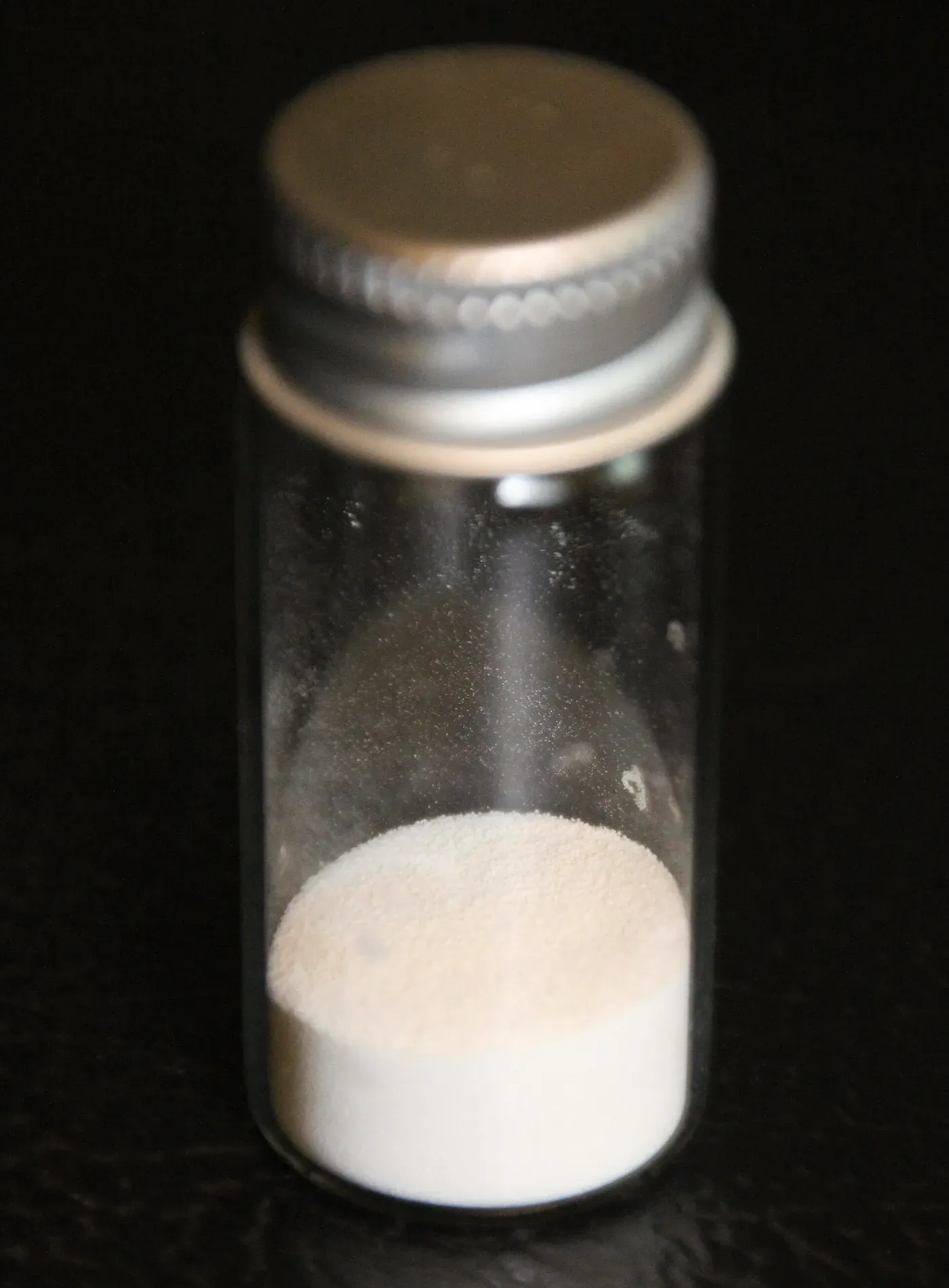
- Plate IIRaw polyvinyl chloride resin, with no plasticizer added: the rigid, unworkable form both Baumann and Klatte abandoned before Semon found a way in.Wikimedia Commons
- Plate IIIPVC sewer pipe being laid: the low-cost, corrosion-proof role that now consumes roughly half of all PVC resin produced.Wikimedia Commons
- Plate IVA vinyl LP. The word became so attached to the format that most people no longer think of it as naming a chlorine-bearing plastic at all.Wikimedia Commons