The Engineering Polymers Era (1961-1979)
Chitosan
Nature's Armor Turned Medical Marvel
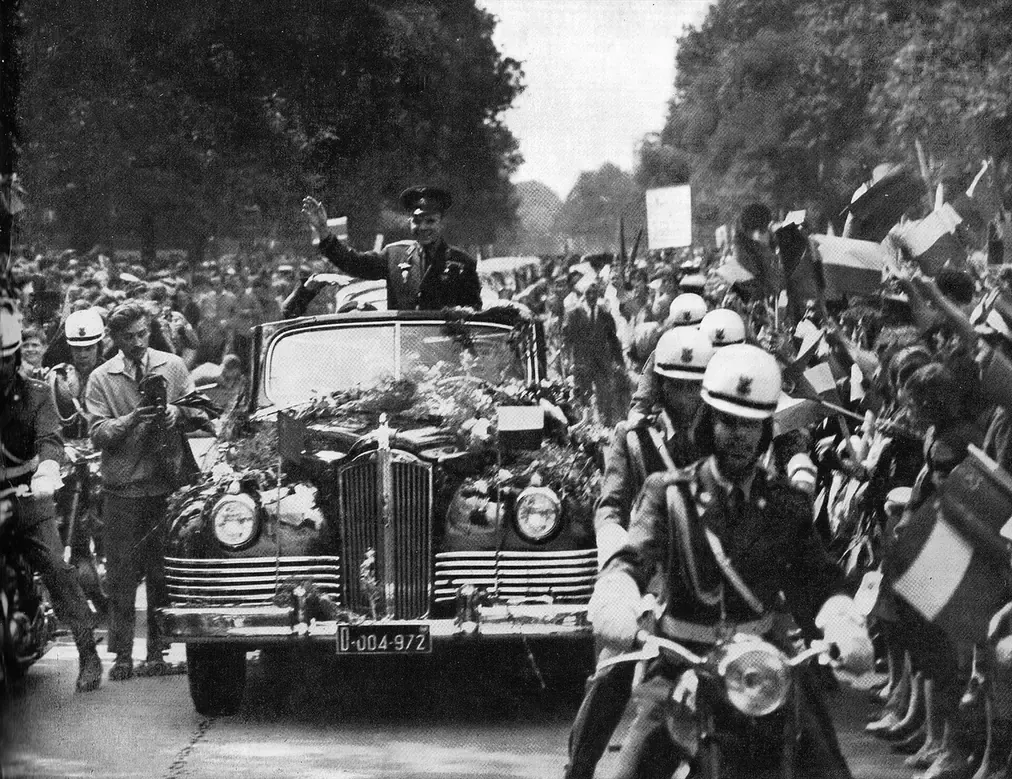
On the 12th of April 1961, Yuri Gagarin became the first human being to leave the Earth’s atmosphere, sealed inside a spacecraft that depended on materials science as much as rocketry: every gasket, coating and insulating layer engineered to keep one fragile human alive in a hostile environment. For the rest of that year he toured the world as the era’s living proof that engineering could now do things nature alone never had, cheered by crowds from Moscow to Warsaw to Havana.
Plate I

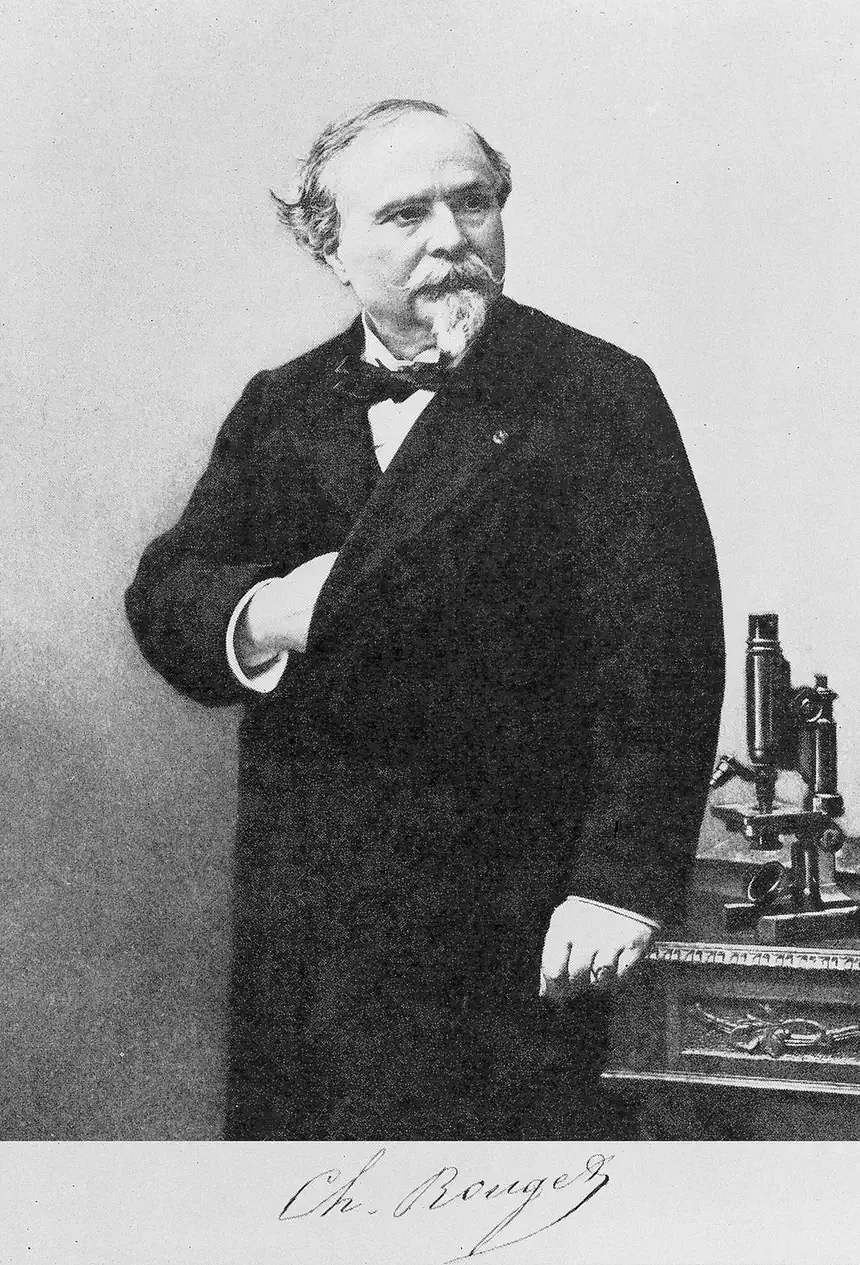
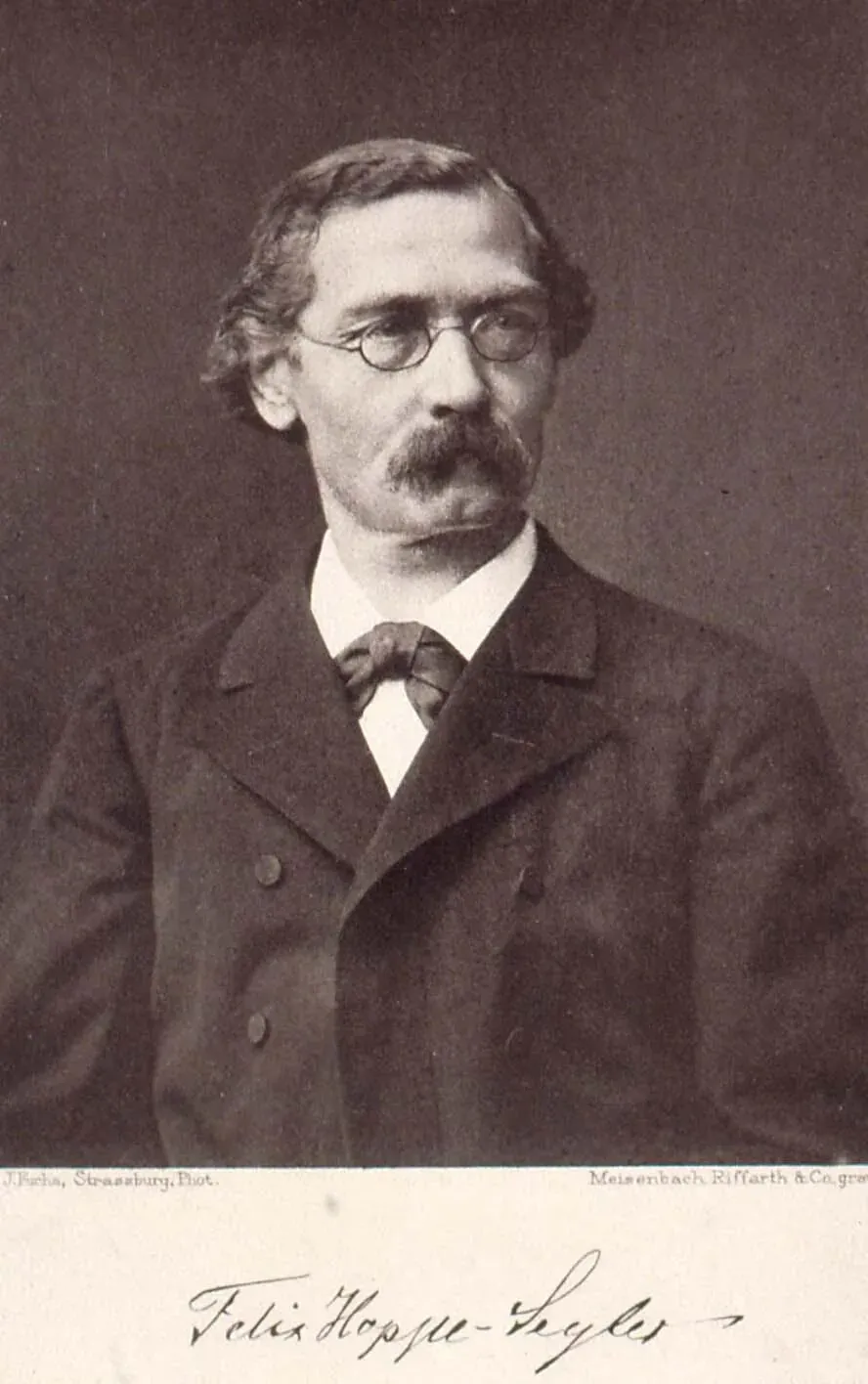
Chitosan’s own story runs almost entirely in the other direction: not a triumph announced in a single year, but a century of quiet, largely ignored chemistry finally catching up with what the 1960s wanted from materials science. In 1859, the French physiologist Charles Rouget found that boiling chitin (the tough polysaccharide that builds crustacean shells, insect cuticles and fungal cell walls) in concentrated potassium hydroxide produced a related substance that, unlike chitin itself, would dissolve in dilute acid. He called it “chitine modifiée” and moved on to other work. It took until 1894 for the German chemist Felix Hoppe-Seyler to give that modified chitin its own name, chitosan, and decades more before anyone treated it as more than a laboratory curiosity. The turn came as the 1960s pushed synthetic and semi-synthetic polymers into a fully engineered discipline: chitosan’s odd combination of properties (biodegradable, biocompatible, and one of the very few naturally occurring polymers that carries a positive charge) finally started to look less like a curiosity and more like an opportunity.
Plates II & III


From Shell Waste to Laboratory Reagent
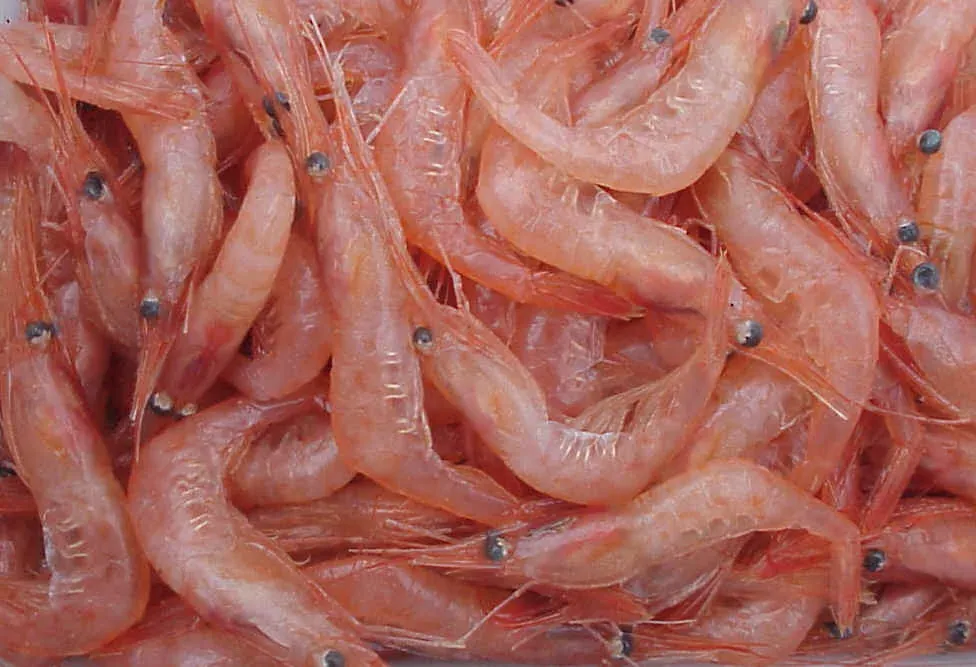
Chitosan is made, not found: it does not occur ready-made in significant quantity in nature, but is produced by stripping most of the acetyl groups off chitin. Chitin itself is usually pulled from crustacean shells, overwhelmingly a waste stream of the seafood industry, tons of crab, shrimp and lobster shell that would otherwise be discarded. The shells are first treated with acid to dissolve away the calcium carbonate that stiffens them, then with base to remove residual protein, leaving purified chitin. That chitin is then deacetylated with concentrated sodium hydroxide, typically 40-50% strength at temperatures between roughly 90°C and 120°C, for as long as it takes to strip most, never quite all, of the acetyl groups from the polymer backbone. The resulting degree of deacetylation, usually somewhere around ninety percent in commercial material, is the single number that governs how soluble and how reactive the finished chitosan will be.
Plate IV

A Chain With a Hook on Every Link
Chitosan’s backbone is a chain of glucosamine rings linked the way cellulose’s glucose rings are, but where cellulose’s rings are chemically inert, chitosan’s carry a free amino group on nearly every unit. That amino group, protonated in mildly acidic conditions, gives chitosan a positive charge that almost no other natural polymer has; most of the biopolymers occurring in nature are neutral or negatively charged. It is this positive charge that lets chitosan bind tightly to the negatively charged surfaces of bacterial cell membranes, which underlies its antimicrobial behaviour, and to the negatively charged mucus and tissue surfaces inside the body, which underlies its use as a bioadhesive.
Physically, chitosan is dense for an organic material and holds its rigidity to temperatures well above anything a sterilizing autoclave or a hot summer day would produce. Chitosan is stable enough that it survives routine medical sterilization without softening. Push it hotter still and, rather than flowing the way a conventional thermoplastic does when it melts, it stays essentially solid until it is finally hot enough to start breaking down outright. Mechanically it varies enormously depending on how it is processed: a cast film can be almost as strong as an engineering plastic at its stiffest and toughest, or noticeably weaker and more extensible at its softest, and how far a given film will stretch before it tears spans nearly as wide a range. Like most polysaccharides it draws moisture readily out of humid air, and it is essentially insoluble in plain water, which is exactly what lets it dissolve selectively in dilute acid instead, the same behaviour Rouget noticed in 1859.
A Blank Canvas for Chemists
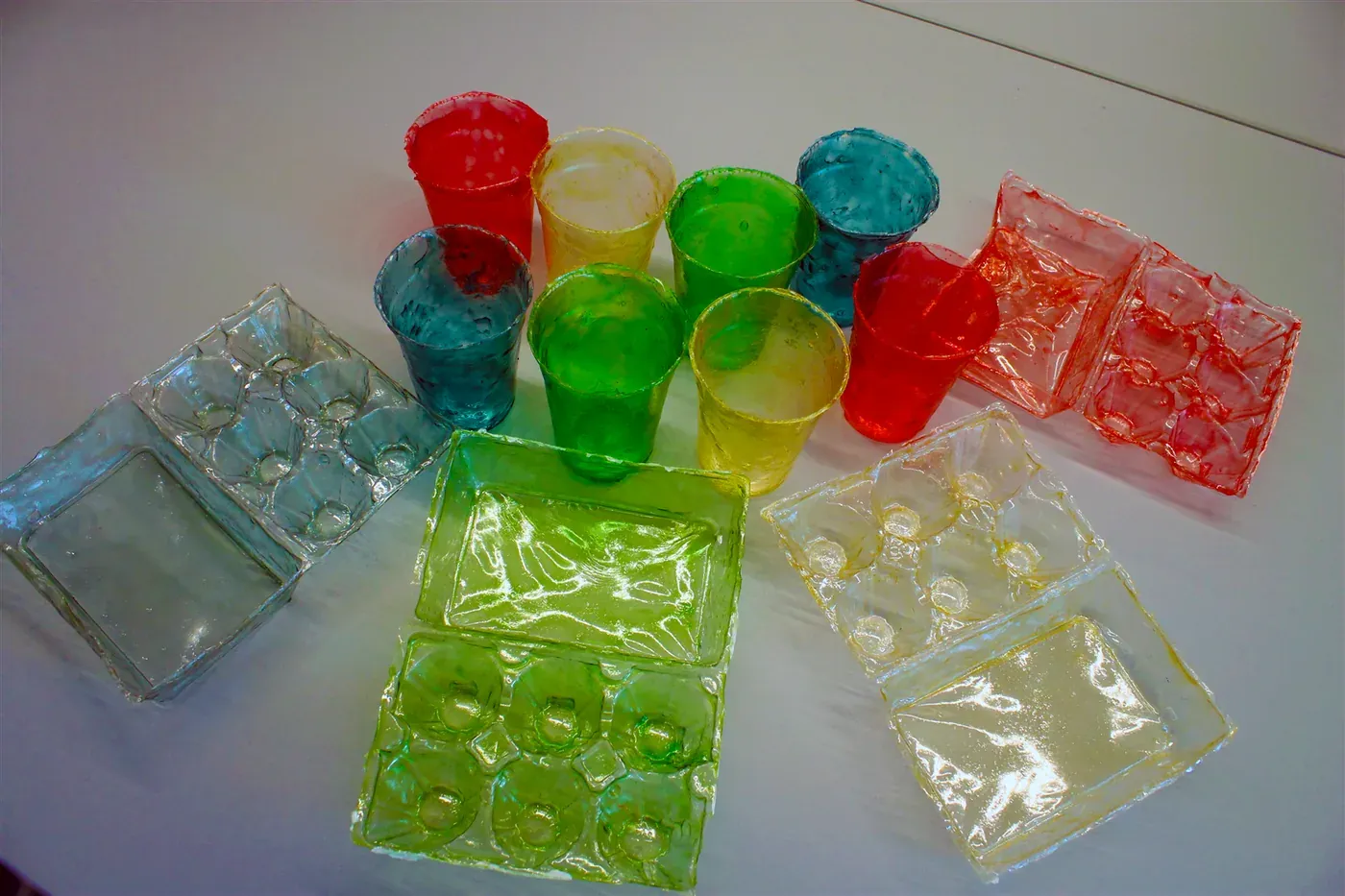
Chitosan’s reactive amino and hydroxyl groups make it an unusually easy polymer to modify further. Quaternizing the amino groups (attaching extra methyl groups to them) produces a version that stays water-soluble and antimicrobial even at neutral pH, useful in food preservation and cosmetics. Reacting both the amino and hydroxyl groups with carboxymethyl groups produces N,O-carboxymethyl chitosan, prized in skincare for how much moisture it holds against the skin. And crosslinking chitosan chains with molecules like glutaraldehyde, or with genipin, a natural crosslinker extracted from gardenia fruit, turns it into a hydrogel that can absorb enormous amounts of water while holding its shape, a route used in both wound dressings and agricultural applications.
Plate V

From Bandages to Farmland
Chitosan’s most visible impact has been in wound care, where it forms the basis of dressings that not only protect a wound but actively help it heal, and where its natural antimicrobial activity has made it valuable in infection-resistant medical devices. In agriculture, spraying plants with chitosan solutions has been shown to trigger stronger natural defences against fungal infection, a discovery that has helped some organic growers cut back on chemical fungicides.
Underneath both applications is the same circular-economy story: a material that begins as seafood-processing waste (shell that would otherwise be dumped or landfilled) ends up as advanced medical devices and agricultural treatments. Recent work on 3D-printed chitosan scaffolds for tissue engineering points toward an even more ambitious version of the same idea: growing replacement tissue on a scaffold built from crab shell.
values with [n] cite the numbered references·estimates are flagged·“not yet available” and “N/A” are honest states, not gaps
fetching the model…
Chitosan repeat unit
- Abbreviation
- —
- Type
- variantpart of the chitin family
- CAS number
- 9012-76-4
- Resin ID code
- none assigned
- Formula
- (C6H11NO4)n[C6H7O2(OH)2(NH2)]nChitosan is chitin with most of its acetyl groups removed; the degree of deacetylation varies by preparation, so real material is a copolymer of the unit shown and the acetylated chitin unit.
- Repeat unit (BigSMILES)
{[][>]O[C@H]1[C@H](O)[C@@H](N)[C@H]([<])O[C@@H]1CO[]}- IUPAC name
- —
- Synonyms
- —
- Also known as
- —
- Chemical family
- polysaccharide
- Backbone class
- heterochain
- Polymerization mechanism
- natural-biosynthesis
- Constitutional monomer
- D-glucosamineN-acetyl-D-glucosamine
- Polymer class
- —
- Year of origin
- 1961
- Era
- The Engineering Polymers Era (1961-1979)
- Key figures
- Charles Rouget · Felix Hoppe-Seyler
- Events referenced
- Yuri Gagarin becomes the first human in space (1961)
- Polymerization type
- not yet available
- Common monomers (feedstocks)
- not yet available
- Catalysts
- sodium hydroxide (deacetylation reagent)
Chitin was first isolated in 1799 by Charles Hatchett; deacetylated chitin was named 'chitosan' in 1894 by Felix Hoppe-Seyler. Commercial production deacetylates chitin using excess sodium hydroxide in water, giving average molecular weights of 3,800–20,000 Da. Renewed research interest emerged in the 1970s driven by shellfish-waste disposal regulations.
- Tacticity
- not yet available
- Crystal structure
- Orthorhombic unit cell (a = 0.895 nm, b = 1.697 nm, c = 1.037 nm), 4 chains per unit cell with 8 associated water molecules; chains adopt a 2-fold helix conformation.
- Typical crystallinity
- 35–50 %[2]chitosan fibers
Molecular weight
- Number average (Mn)
- 33700–99400 g/mol[2]
- Mass average (Mw)
- 20000–375000 g/mol[2]Spans low-Mw (20,000–190,000) and high-Mw (190,000–375,000) commercial grades; a representative Mw of 150,000 is also cited.
- Dispersity (Mw/Mn)
- 3.3–8.1[2]
Mark-Houwink constants
not yet available
Degree of deacetylation (65–95%, commonly ~90% in commercial grades) governs solubility and reactivity.
- Density
- 1.4–1.42 g/cm³[2]20 °C, solid; bulk (powder) density is much lower, 0.4–0.68 g/cm³.
- Melt flow index
- Not applicable
- Refractive index
- 1.52–1.54[2]20 °C
- Transmittance
- not yet available
- Haze
- not yet available
- Gloss
- not yet available
- Water absorption
- 10 %[2]moisture absorption, equilibrium at 23 °C/50% RH (not immersion)
- Dielectric constant
- not yet available
- Dielectric strength
- not yet available
- Electrical conductivity
- not yet available
- Tensile modulus
- 32.6 MPa[2]cast film
- Yield strength
- not yet available
- Tensile strength at break
- 6.7–150.2 MPa[2]Wide range reflects different film-casting/plasticizer conditions; amorphous film, no distinct yield point.
- Elongation at break
- 4.1–117.8 %[2]
- Impact strength (Izod)
- Not applicable
- Impact strength (Charpy)
- Not applicable
- Hardness
- Not applicable
- Flexural modulus
- not yet available
- Poisson's ratio
- not yet available
- Coefficient of friction
- not yet available
- Solvent: water
- Insoluble in pure water[1]
- Solvent: acids
- poor[2]dilute and concentrated; soluble below pH 6 (forms soluble salts with organic acid anions). Acetic acid, formic acid and concentrated mineral acids are listed as good solvents
- Solvent: alcohols
- poor[2]
- Solvent: alkalis
- poor[2]
- Solvent: esters
- poor[2]
- Solvent: halogenated hydrocarbons
- poor[2]
- Solvent: ketones
- poor[2]
- Weathering / UV
- not yet available
- Hydrolysis resistance
- moderate: susceptible to lysozyme and specific glycosidase hydrolysis[2]Enzymes hydrolyzing glucosamine-glucosamine and N-acetylglucosamine-N-acetylglucosamine linkages degrade chitosan; also degraded by lysozyme.
- Flammability (UL94)
- Not applicable
- Limiting oxygen index
- not yet available
- Solubility parameter (δ)
- not yet available
Gas permeability
not yet available
Polymer-solvent interaction parameter (χ)
not yet available
- Processing methods
- solvent casting from acidic solutionfreeze-drying (sponges/scaffolds)ionic/covalent crosslinking
- Drying required
- not yet determined
- Processing temperature
- Not applicable
- Shrinkage rate
- Not applicable
- Wound carehemostatic bandages · hydrogel dressings
- Water treatmentfiltration · heavy-metal removal
- Agriculturebiopesticide · plant growth enhancer
- Pharmaceuticaldrug carrier systems · tissue engineering scaffolds
- Recyclable
- No
- Biodegradable
- Yes
- Degradation pathway
- Enzymatic hydrolysis (chitosanase, lysozyme) of glycosidic linkages; biodegradable.
Commercial production valorizes shellfish-processing waste. Low aquatic toxicity reported: 100% survival in 48 h tests on Daphnia magna, fathead minnow and rainbow trout; rainbow trout LC50 >10,000 mg/l.
- [1]ChitosanWikipediaAccessed 2026-07-14https://en.wikipedia.org/wiki/Chitosan[wiki-chitosan]
- [2]Handbook of PolymersChemTec Publishinghttps://www.worldcat.org/isbn/9781895198928[handbook-wypych-2016]
Illustrations
- Plate IYuri Gagarin touring Warsaw in 1961, the year materials science's postwar boom gave way to a more deliberate, engineering-driven era.Wikimedia Commons
- Plate IICharles Rouget, who first deacetylated chitin into a soluble derivative in 1859 and called it 'chitine modifiée.'Wikimedia Commons
- Plate IIIFelix Hoppe-Seyler, who gave Rouget's modified chitin the name chitosan in 1894.Wikimedia Commons
- Plate IVRaw material rather than raw curiosity: chitosan begins as the shell of a shrimp or crab, most of which the seafood industry would otherwise throw away.Wikimedia Commons
- Plate VCups and moulded trays cast from chitosan: a demonstration of how far the material can be shaped once it has been processed into a workable form.Wikimedia Commons