Decoding Nature's Legacy (1833-1902)
Natural Gums
The First Chapter in Humanity's Polymer Story
Picture yourself in ancient Egypt, around 2500 BCE. The morning sun casts long shadows across the limestone blocks of the rising Great Pyramid of Giza. In a nearby workshop, an artisan mixes precious pigments with a sticky substance harvested from acacia trees. His practiced hands work methodically, creating the vibrant paints that will adorn the pyramid’s inner chambers for millennia to come. As he works, he notices how the tree sap transforms into a perfect binder when mixed with water, though he has no way of knowing he is handling one of nature’s most useful polymers.
Nearby, a scribe prepares his papyrus scrolls, using the same tree extract to bind plant fibers together. In another corner, a physician grinds medicinal herbs with gummy resins, preparing treatments passed down through generations. These ancient Egyptians had mastered the use of natural gums in ways that would influence civilization for thousands of years, without any idea of the chemistry behind it.
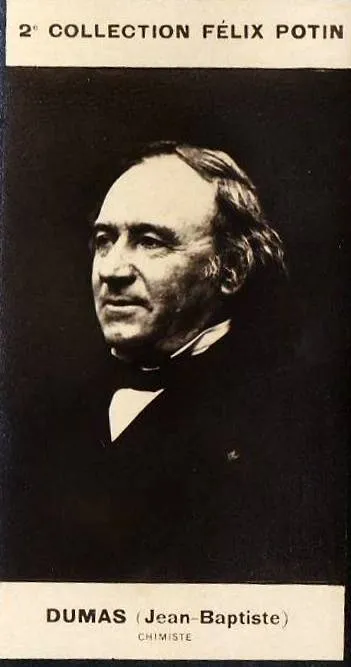
Fast forward to Paris, 1833. The École Centrale des Arts et Manufactures (a school founded four years earlier by a handful of chemists and engineers with the explicit purpose of turning craft into science) was still finding its feet, and one of its founders, Jean-Baptiste Dumas, was that same year publishing the analytical method for which he would become best known: a reliable way to measure the nitrogen locked inside an organic compound. It was exactly the kind of tool the moment needed. For as long as anyone could remember, “gum” had been a catch-all word: whatever sticky exudate a tree produced, sold by weight and judged by feel, with no agreed answer as to what, chemically, it actually was. Dumas and the generation of French chemists working alongside him began turning that new analytical rigor on precisely these overlooked, everyday substances, and the gums came out of it looking nothing like the proteins and resins they were sold beside: carbon, hydrogen and oxygen in the proportions of a sugar, with almost no nitrogen at all. It was a small, unglamorous result, and it was also the first time anyone had a chemical reason to call a gum a distinct kind of substance rather than just tree sap with a use.
Plate I
.jpg)
That is where this chapter of the Atlas begins: not with a single dramatic discovery, but with the moment a handful of Parisian chemists decided that the sticky, unglamorous materials people had used for millennia were worth analyzing on their own terms. What follows is the slow process by which “gum” stopped being one word for many things and became a family of related, distinct polysaccharides.
Molecular Identity and Properties: Nature’s Assembled Sugars
Natural gums are complex polysaccharides, large molecules built from thousands of sugar units linked together in branching, often irregular patterns. Unlike the simple sugar in your morning coffee, these polymers carry an architectural complexity that gives each one its own personality. Their backbones twist and branch, sometimes decorated with short chains of other sugars, creating three-dimensional structures that explain why gums do what they do.
Gum arabic, the most historically significant member of the family, illustrates this well. Its structure resembles a molecular brush: a small protein-rich backbone decorated with countless carbohydrate side chains. That dual nature (part protein, part carbohydrate) lets one end of the molecule associate with water while the other clings to an oil or pigment particle, which is exactly why it made such a good paint binder for an Egyptian artisan and remains a favored emulsifier in food chemistry today.
Almost none of the gums form the kind of ordered, crystalline structure that gives cellulose or starch their rigidity. They stay largely amorphous, and their behavior is dominated less by any fixed architecture than by how much water they are currently holding: dry, a lump of gum is hard and glassy, stable enough to have survived unaltered in Egyptian tombs for thousands of years; hydrated, that same material softens into the flexible gels, thick syrups, or viscous pastes familiar from any kitchen. Chemically, that also means gums are not resistant to water at all (most dissolve in it outright rather than merely absorbing it), while alcohols tend to make them clump and precipitate rather than dissolve cleanly. Where they hold up well is against the nonpolar world: oils, greases, and most hydrocarbon and ketone solvents leave them essentially untouched, which is part of why a gum-bound paint film survives a greasy thumbprint. And like most carbohydrates, gums are readily broken back down by the same kinds of enzymes that build their sugar backbones in the first place. That is the reason they are fully biodegradable, and also the reason a jar of the wrong gum paste left too long in a damp cupboard will not stay useful.
Nature’s Diverse Gum Family: A Global Treasury
The world of natural gums is remarkably diverse, and each one carries its own story of discovery and use. Gum arabic, harvested from Acacia senegal and related acacia trees across the Sahel, has been prized throughout history, so much so that during the Napoleonic Wars, Britain’s naval blockade of France specifically exempted the gum arabic trade, recognizing how many industries quietly depended on it.
Plates II & III
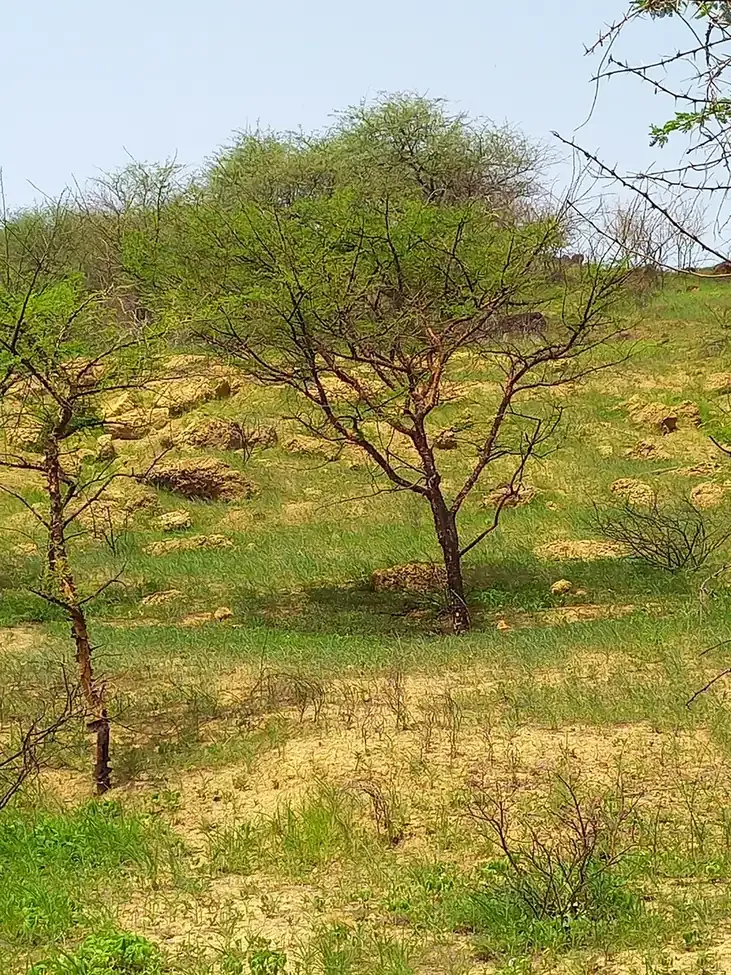

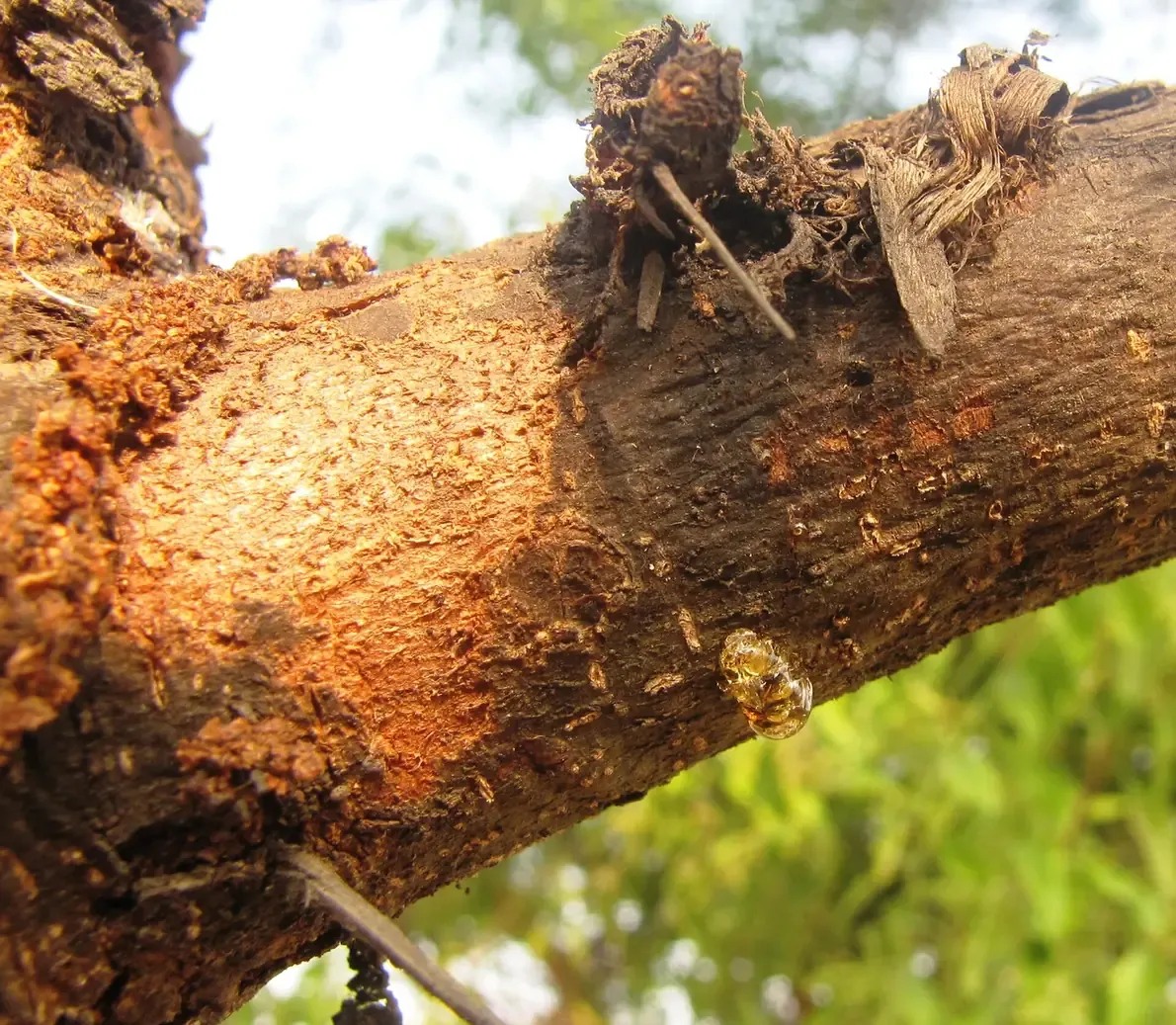

Plate IV

Tragacanth, drawn from the dried sap of thorny Astragalus shrubs across the Middle East, takes its name from the Greek for “goat’s thorn”. That is a nod to the plant’s spiny, goat-beard silhouette rather than to any animal. It contains both a water-soluble fraction and a water-swellable one, giving it exceptional thickening power for its weight. Karaya gum, from India’s Sterculia urens tree, was largely overlooked by ancient civilizations until its partially acetylated structure proved well suited to modern medical uses, particularly ostomy care, where it forms a reliable protective barrier. The Mediterranean’s locust bean gum, drawn from carob trees so uniform in seed size that they became the original standard for the carat, brings its own branching architecture that works in useful synergy with other gums. And guar gum, a relative newcomer from the Indian subcontinent, shows that useful properties are still being found in these ancient materials, its exceptional water-binding capacity making it indispensable across modern industry.
Manufacturing Journey: From Ancient Craft to Modern Science
The story of natural gum production spans the whole of human technological history. Ancient collectors developed careful harvesting techniques, making precise incisions in tree bark during particular seasons and weather, learning through generations of trial and error that timing could mean the difference between a valuable harvest and a wasted one. That inherited knowledge still shapes modern collection.
Contemporary manufacturing has turned that craft into a controlled industrial process: cleaning raw gum of bark and other debris, grinding it to a target particle size, and separating it into fractions of different molecular weight. Spray drying now produces standardized powders with consistent moisture content, and controlled hydrolysis lets manufacturers tune a gum’s molecular structure to a specific job. The underlying activity, though, has not changed since antiquity: harvesting a tree’s own defensive secretion and putting it to work.
The Sticky Science: Why Gums Really Get a Grip
Gum stuck in your hair or on a shirt is the same chemistry the ancient Egyptians relied on for their pigments; it is just showing up somewhere less convenient. Natural gums adhere so well because they can form several kinds of bond with a surface at once: their hydroxyl-rich chains hydrogen-bond readily to anything with its own -OH groups, such as the cellulose in cotton or the keratin in hair; their branching shapes allow countless small points of van der Waals contact; and their long chains physically entangle with fibers and rough surfaces, a grip that strengthens as the gum dries and shrinks around whatever it has wrapped itself in.
That same chemistry explains how to undo it. Oil slips between the gum’s chains and breaks up the van der Waals contacts, which is why it lifts gum out of hair. Cold makes a gum brittle by dropping it below the temperature at which its chains can still slide past each other, which is why freezing a piece of chewing gum lets it snap cleanly off fabric. Commercial gum removers simply combine both approaches: a solvent and a surfactant working on the different bonds at once.
Applications and Impact: Bridging Millennia of Innovation
The journey of natural gums from ancient workshops to modern laboratories shows humanity’s growing command of its materials. Today these polysaccharides serve roles their first users could never have imagined: as controlled-release matrices in pharmaceutical formulations, as emulsifiers and stabilizers behind everything from ice cream to soft drinks, and as sizing and thickening agents in paper and textile printing.
Plate V
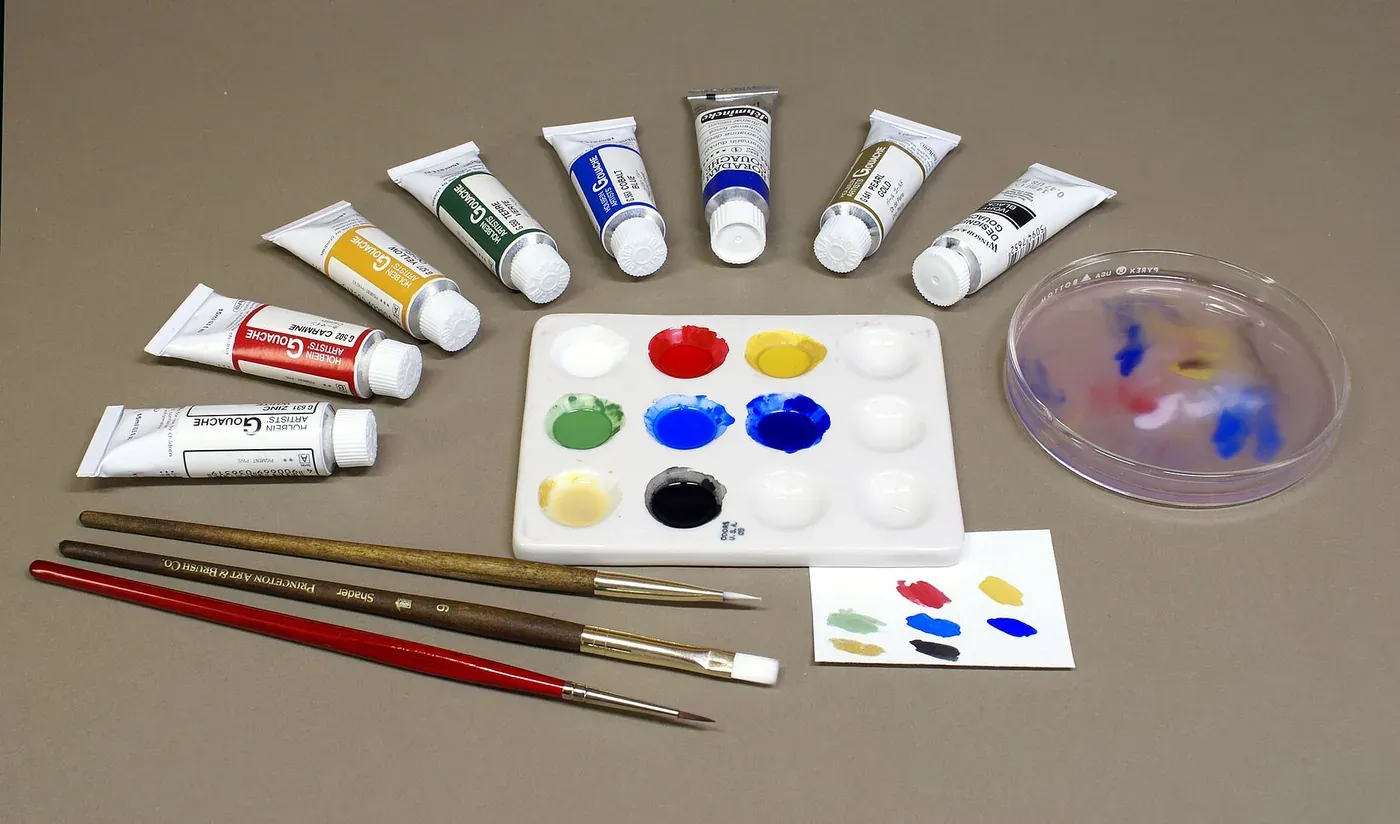

Researchers are also finding new uses for these old materials: gum-based wound dressings that exploit natural biocompatibility and moisture retention, gum scaffolds under investigation for tissue engineering, and gum-derived materials for water treatment and soil remediation. It is a fitting turn for a class of substances that spent most of history known only by feel and folk use.
As the rest of this Atlas will show again and again, understanding a material at the molecular level rarely closes its story; it opens new ones. Natural gums, quietly essential from the pyramids to the modern pharmacy, remain a case in point.
values with [n] cite the numbered references·estimates are flagged·“not yet available” and “N/A” are honest states, not gaps
- Abbreviation
- —
- Type
- polymer family (hub)
- CAS number
- None (heterogeneous class or not assigned)
- Resin ID code
- none assigned
- Formula
- Natural gums are a heterogeneous class of branched polysaccharide/glycoprotein complexes whose exact composition depends on botanical source (e.g. gum arabic, tragacanth, karaya, guar, locust bean gum); there is no single repeat unit for the hub as a whole. Gum arabic, the most historically significant member, is illustrated via its constituent monosaccharides in the monomer[] field below.
- Repeat unit (BigSMILES)
- Natural gums are a heterogeneous class of branched polysaccharide/glycoprotein complexes whose exact composition depends on botanical source (e.g. gum arabic, tragacanth, karaya, guar, locust bean gum); there is no single repeat unit for the hub as a whole. Gum arabic, the most historically significant member, is illustrated via its constituent monosaccharides in the monomer[] field below.
- IUPAC name
- —
- Synonyms
- plant exudate gums; botanical gums; vegetable gums
- Also known as
- plant gumsvegetable gums
- Chemical family
- polysaccharide
- Backbone class
- heterochain
- Polymerization mechanism
- natural-biosynthesis
- Constitutional monomer
- D-galactoseL-arabinoseL-rhamnoseD-glucuronic acid
- Polymer class
- —
- Year of origin
- 1833
- Era
- Decoding Nature's Legacy (1833-1902)
- Key figures
- Jean-Baptiste Dumas
- Events referenced
- Napoleonic Wars naval blockade of France (gum arabic trade exemption)
- Polymerization type
- not yet available
- Common monomers (feedstocks)
- not yet available
- Catalysts
- not yet available
Natural gums are not industrially polymerized; they are biosynthesized in planta and then harvested. For gum arabic, the dominant commercial gum, production involves tapping Senegalia senegal / Vachellia seyal trees (stripping sections of bark to induce gum exudation), hand or mechanical collection of the hardened nodules, sun-drying, and industrial processing (cleaning, grinding, spray-drying) into standardized food/pharma-grade powders. Sudan supplies roughly 70% of global gum arabic exports.
- Tacticity
- not yet available
- Crystal structure
- Structure is very gum-specific. Carrageenan: trigonal unit cell, double-helix chain conformation (kappa/iota forms), several polymorph families (kappa/iota/lambda). Xanthan gum: right-handed, fivefold-helix chain conformation. Gum tragacanth: extended molecules approx. 320–420 nm long, 1.45–1.9 nm wide. Not representative of the class as a whole (e.g. gum arabic).
- Typical crystallinity
- Not applicable
Molecular weight
- Number average (Mn)
- not yet available
- Mass average (Mw)
- 2000000–20000000 g/mol[4]Xanthan gum specifically; other gums in this class differ substantially, e.g. gum tragacanth 180,000–1,600,000 g/mol, carrageenan 20,000–913,000 g/mol.
- Dispersity (Mw/Mn)
- 1.014[4]Xanthan gum specifically; gum tragacanth reported separately at 2.7.
Mark-Houwink constants
not yet available
Highly branched, largely amorphous architecture (no regular crystallizable backbone); behavior in solution is dominated by branching pattern and molecular weight rather than chain packing.
- Density
- 1.3–1.48 g/cm³[4]For carrageenan specifically (20 °C). This is a different gum in this class, not gum arabic. Tertiary sources separately suggest roughly 1.35–1.49 g/cm³ for gum arabic, unconfirmed against a primary source.
- Melt flow index
- Not applicable
- Refractive index
- not yet available
- Transmittance
- not yet available
- Haze
- not yet available
- Gloss
- not yet available
- Water absorption
- 8–15 %[4]Xanthan gum, equilibrium in water at 23 °C. Carrageenan separately reported at 8–10% typical water content (75% reported maximum).
- Dielectric constant
- not yet available
- Dielectric strength
- not yet available
- Electrical conductivity
- not yet available
- Glass transition (Tg)
- -7 °C[4]Carrageenan, potassium salt.
- Melting temperature (Tm)
- 50–70 °C[4]Carrageenan (DSC; a helix-coil/gel-melting transition rather than a classical polymer crystal melt). Other gums in this class (e.g. gum arabic) are amorphous and decompose rather than melting.
- Crystallization (Tc)
- Not applicable
- Heat deflection (HDT)
- Not applicableHDT is a rigid-plastic test property; not meaningful for a water-soluble hydrocolloid powder.
- Decomposition onset
- 252–266.4 °C[4]Xanthan gum (266.4 °C, weight loss exceeding 40%; a smaller earlier dehydration step, ~15% mass loss, occurs near 58 °C) and gum tragacanth (252.3 °C).
- Thermal conductivity
- not yet available
- Tensile modulus
- 309 MPa[4]Carrageenan, cast film (Young's modulus).
- Yield strength
- not yet available
- Tensile strength at break
- 3.52 MPa[4]Carrageenan, cast film.
- Elongation at break
- not yet available
- Impact strength (Izod)
- Not applicable
- Impact strength (Charpy)
- Not applicable
- Hardness
- Not applicable
- Flexural modulus
- not yet available
- Poisson's ratio
- not yet available
- Coefficient of friction
- not yet available
- Solvent: water
- Soluble / not resistantestimate[2]
- Solvent: ethanol
- Poor: incompatible, tends to precipitate/coagulateestimate[2]
- Solvent: acids
- poor[4]gum tragacanth, dilute and concentrated
- Solvent: alcohols
- poor[4]gum tragacanth
- Solvent: alkalis
- poor[4]gum tragacanth
- Solvent: aliphatic hydrocarbons
- good[4]gum tragacanth and carrageenan
- Solvent: aromatic hydrocarbons
- good[4]gum tragacanth and carrageenan
- Solvent: esters
- good[4]gum tragacanth and carrageenan
- Solvent: greases & oils
- good[4]gum tragacanth and carrageenan
- Solvent: halogenated hydrocarbons
- good[4]gum tragacanth and carrageenan
- Solvent: ketones
- good[4]gum tragacanth and carrageenan
- Weathering / UV
- not yet available
- Hydrolysis resistance
- poor: susceptible to enzymatic cleavage[4]Xanthan gum; fungal cellulases catalyze cleavage of the main chain.
- Flammability (UL94)
- Not applicable
- Limiting oxygen index
- not yet available
- Solubility parameter (δ)
- not yet available
Gas permeability
not yet available
Polymer-solvent interaction parameter (χ)
not yet available
- Processing methods
- spray dryinggrinding/millingaqueous solution blending
- Drying required
- not yet determined
- Processing temperature
- not yet available
- Shrinkage rate
- Not applicable
- Foodconfectionery stabilizer/emulsifier · soft drink syrup binder · gomme syrup in beveragesApproved food additive E414.
- Pharmaceutical & cosmetictablet binder · emulsifier · suspending agent
- Printing & graphic artstraditional lithographic plate processing · gum bichromate photographic printing
- Art & textileswatercolor paint binder · textile printing thickener
- Recyclable
- No
- Biodegradable
- Yes
- Degradation pathway
- Biodegrades via microbial/enzymatic hydrolysis of glycosidic linkages.
As a renewable, naturally biosynthesized material, natural gums do not carry the persistent-waste concerns associated with synthetic polymers; sustainability considerations instead center on agricultural/harvesting practices in producing regions.
- LD50 (oral, rat)
- 10200–16400 mg/kg[4]Gum tragacanth (two reported values). Carrageenan (sodium salt) reported separately at 5,650 mg/kg.
- NFPA health
- 1[4]Consistent across the individual gums covered here (xanthan gum, gum tragacanth, carrageenan).
- NFPA flammability
- 1[4]Consistent across the individual gums covered here (xanthan gum, gum tragacanth, carrageenan).
- NFPA reactivity
- 0[4]Consistent across the individual gums covered here (xanthan gum, gum tragacanth, carrageenan).
- Carcinogenic classification
- not listed by ACGIH, NIOSH, NTP[4]Consistent across the individual gums covered here (xanthan gum, gum tragacanth, carrageenan).
- [1]Natural gumWikipediaAccessed 2026-07-14https://en.wikipedia.org/wiki/Natural_gum[wiki-natural-gum]
- [2]Gum arabicWikipediaAccessed 2026-07-14https://en.wikipedia.org/wiki/Gum_arabic[wiki-gum-arabic]
- [3]File:CFP-2 Dumas, Jean-Baptiste (1).jpgWikimedia CommonsFélix Potin trading card portrait, c. 1908, public domain (CC-PD-Mark)https://commons.wikimedia.org/wiki/File:CFP-2_Dumas,_Jean-Baptiste_(1).jpg[commons-dumas-1908]
- [4]Handbook of PolymersChemTec Publishinghttps://www.worldcat.org/isbn/9781895198928[handbook-wypych-2016]
Illustrations
- Plate IJean-Baptiste Dumas. His 1833 nitrogen-analysis method gave chemists the first reliable way to tell a carbohydrate gum from a nitrogen-rich protein by composition alone.Wikimedia Commons
- Plate IIAcacia senegal, the source tree of gum arabic, growing wild in its native Sahel range.Wikimedia Commons
- Plate IIIGum exuding from a wounded branch: the raw material, unchanged from how it was collected in antiquity.Wikimedia Commons
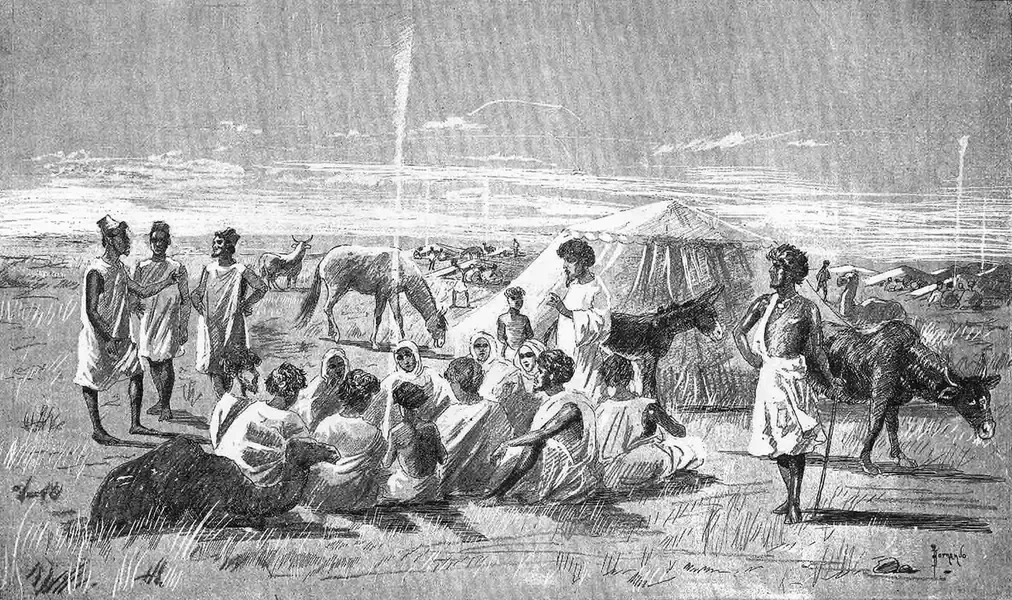
- Plate IVGum traders at the river port of Bakel, Senegal, in an 1890 engraving: the same overland trade network, still running six decades after Dumas first analyzed its product.Wikimedia Commons
- Plate VModern gouache paint, still bound with gum arabic: the same job the material did for an Egyptian artisan four and a half thousand years earlier.Wikimedia Commons