The Engineering Polymers Era (1961-1979)
Polyvinyl Alcohol (PVA)
The Dissolving Wonder
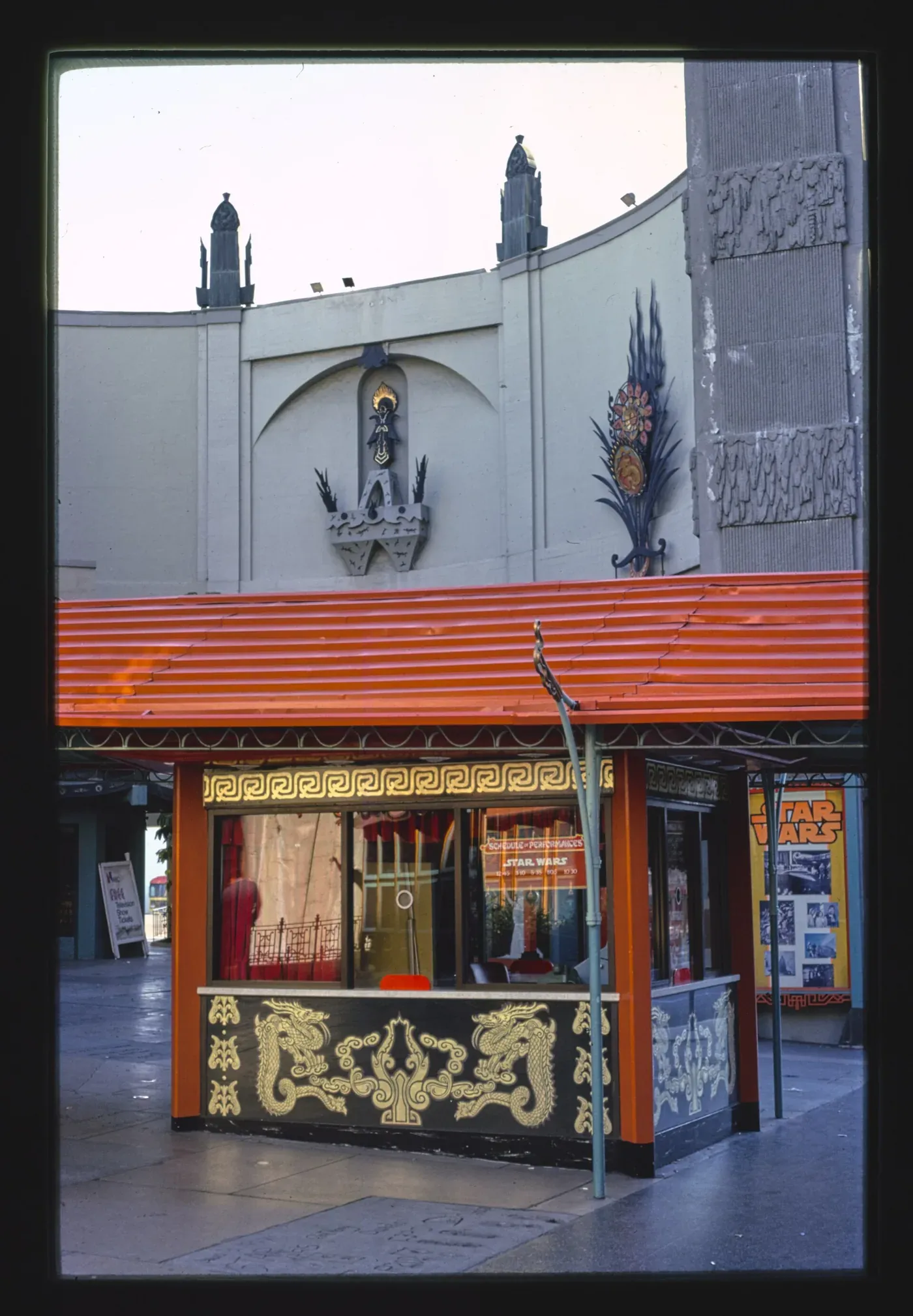
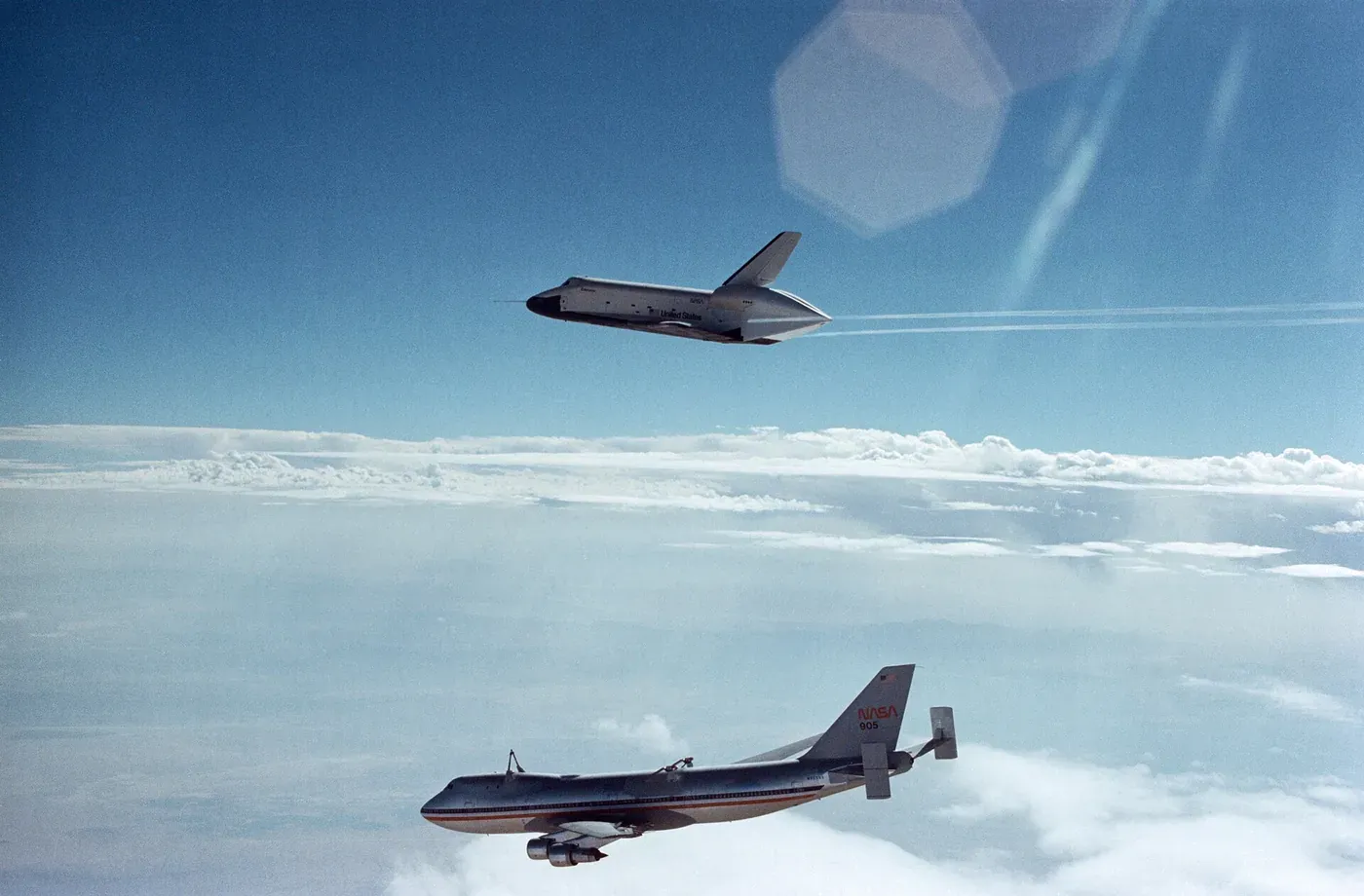
In May 1977, queues wrapped around Grauman’s Chinese Theatre in Hollywood for a film nobody had quite seen the like of before, its ticket booth still marked with a hand-written schedule reading simply “STAR WARS.” That same year, out at Edwards Air Force Base, NASA was testing a very different kind of vehicle: the shuttle orbiter Enterprise, released from the back of a modified 747 to glide, engineless, down to a runway landing. Enterprise would never fly to orbit; it had no engines and no heat shield, because it did not need them yet. It existed to answer one question in isolation, the one nobody could test any other way: could something this size actually glide home and land.
Plates I & II
.jpg)
Polyvinyl alcohol’s own story runs on that same principle, decades earlier and far less famous. You cannot make it directly. Its monomer, vinyl alcohol, is not a stable substance at all: the instant it forms, it rearranges itself into acetaldehyde, a completely different compound. There is no flask in which vinyl alcohol simply sits still long enough to be polymerized. German chemists W. O. Herrmann and W. Haehnel worked around the problem in the 1920s, by polymerizing vinyl acetate first and then hydrolyzing the acetate groups off the finished chain, arriving at polyvinyl alcohol from the opposite direction. This entry’s own year, 1977, is not that chemistry’s birthdate; it belongs, instead, to the American food-safety rules published that year formally recognizing polyvinyl alcohol film as safe for direct contact with food, the quiet regulatory step underneath everything the polymer does in a kitchen or a supermarket today.
The Family Secret: An Indirect Route
Nothing about polyvinyl alcohol’s own chemistry is direct, and that turns out to be the most useful thing about it. Chemists first build polyvinyl acetate (PVAc, the adhesive polymer, itself difficult enough to polymerize cleanly that it took over a decade after its own 1913 patent to become a stable industrial process) and then convert it through base-catalyzed hydrolysis, swapping the bulky acetate group on each repeat unit for a small, water-loving hydroxyl group. How far that swap is carried is itself a dial: partially hydrolyzed grades keep a share of the original acetate groups and dissolve readily even in cold water, which is exactly the behavior a laundry pod needs; fully hydrolyzed grades convert almost every group and need warmer water to let go, trading easy solubility for a stronger, tougher film.
The Molecular Marvel: Understanding PVOH’s Structure
The backbone is the same plain carbon chain found in polyethylene or PVC, but here every other carbon carries a hydroxyl group rather than a chlorine atom or nothing at all. Those hydroxyls are what make the difference: strung along the chain, they hydrogen-bond eagerly with water and with each other, which is why PVA both dissolves in water and, in the dry solid state, forms strong, clear films held together by exactly the same kind of bond. It is a rare case of a plastic that is engineered to eventually stop being one, a solid film that, on contact with water, simply comes apart into individual dissolved chains.
Properties That Define the Material
Fully dry, PVA sits in the same general density range as many engineering plastics, denser than the polyolefins but lighter than PVC, and its crystallinity varies with how completely it has been hydrolyzed: the more uniform the hydroxyl substitution, the more readily the chains line up and pack. It softens at a temperature comfortably above a warm room and, in its fully hydrolyzed grades, does not melt cleanly until well past the boiling point of water, which is why hot-water-soluble grades exist alongside cold-water ones. Its films are notably tough for something this water-sensitive, strong enough to package a dose of laundry detergent or dishwasher gel without splitting in transit, yet built to give way completely the moment enough water reaches them. PVA also resists oils, greases and most organic solvents far better than it resists water, forms clear, optically transparent films, and, unusually for a synthetic polymer, breaks down biologically once in the environment, digested by a range of common microorganisms rather than persisting the way most plastics do.
Applications: From Laundry Pods to Eye Drops
Plate III
.jpg)
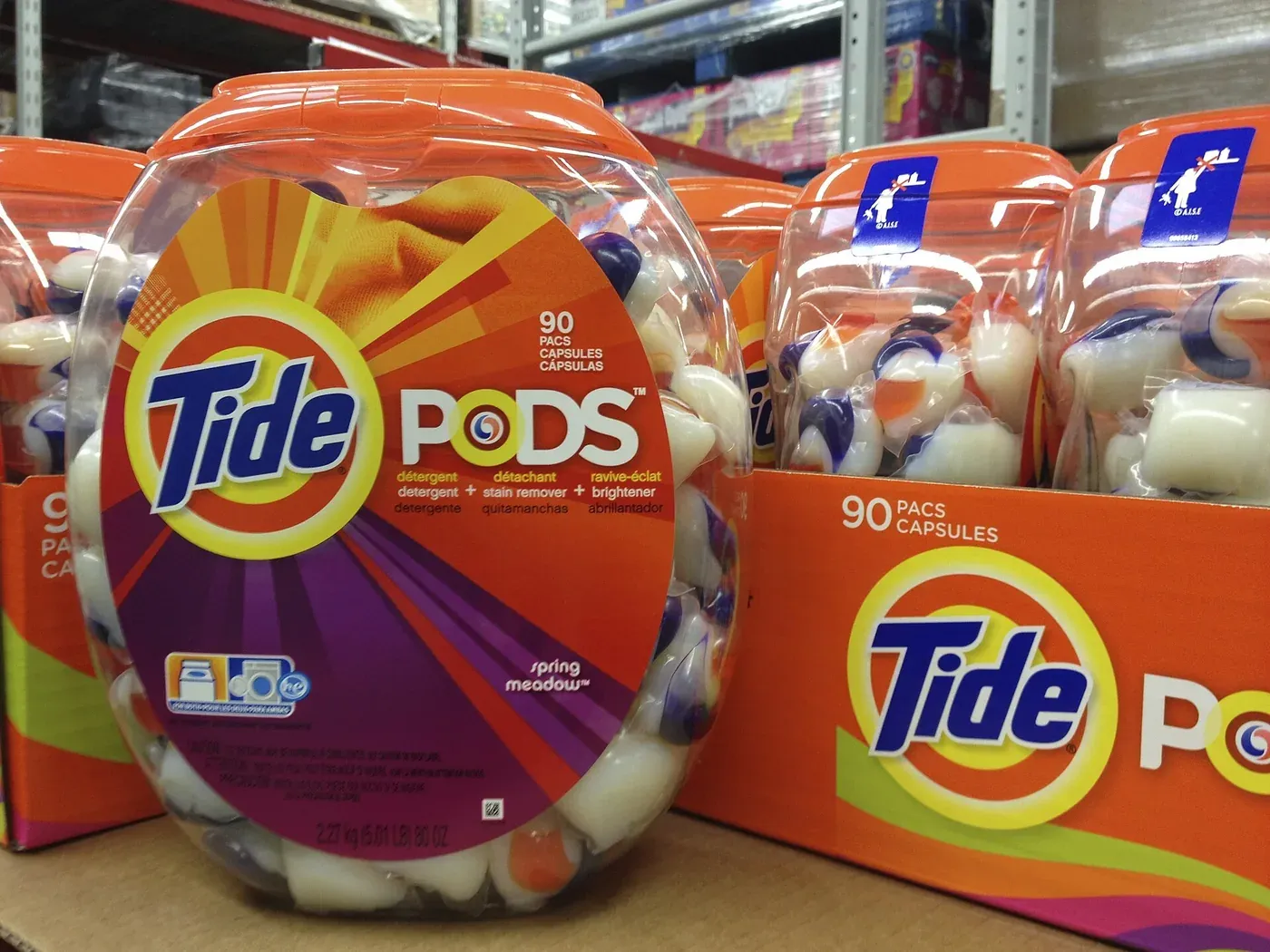
PVA’s best-known role today is the laundry or dishwasher pod, whose thin outer film is designed to hold its shape on the shelf and vanish completely the moment it meets water. Beyond the washing machine, it forms the base of artificial tears, appears in textile warp sizing and papermaking, and serves as a support material in 3D printing: printed alongside a model in a soluble grade, then washed away in water once the print is finished, leaving only the intended object behind.
Plate IV

A Glimpse into the Future
PVA’s water solubility and biodegradability make it a promising material as packaging and single-use plastics face growing scrutiny. Researchers are exploring smart packaging that dissolves on command, drug-delivery systems that release a payload at a chosen site in the body, and temporary structures engineered to disappear without a trace once their job is done.
The next time a laundry pod disappears into the wash, it is worth remembering that the polymer holding it together exists only because two German chemists, a century ago, found a way around a molecule nature refuses to let stand still.
values with [n] cite the numbered references·estimates are flagged·“not yet available” and “N/A” are honest states, not gaps
fetching the model…
Polyvinyl Alcohol repeat unit
- Abbreviation
- PVA
- Type
- polymer family (hub)
- CAS number
- 9002-89-5
- Resin ID code
- none assigned
- Formula
- (C2H4O)n[-CH2-CH(OH)-]nMade by hydrolyzing polyvinyl acetate rather than by polymerizing a vinyl alcohol monomer, which is thermodynamically unstable and tautomerizes to acetaldehyde; the degree of hydrolysis varies by grade, so commercial material retains some acetate units.
- Repeat unit (BigSMILES)
{[][$]CC(O)[$][]}- IUPAC name
- —
- Synonyms
- PVOH
- Also known as
- PVOH
- Chemical family
- vinyl-polymer
- Backbone class
- carbon-chain
- Polymerization mechanism
- free-radical
- Constitutional monomer
- Vinyl acetate (polymerized, then hydrolyzed)
- Polymer class
- thermoplastic
- Year of origin
- 1977
- Era
- The Engineering Polymers Era (1961-1979)
- Key figures
- W. O. Herrmann · W. Haehnel
- Events referenced
- Star Wars in general release, queues outside Grauman's Chinese Theatre (1977) · NASA's Space Shuttle Enterprise approach and landing tests, Edwards Air Force Base (1977)
- Polymerization type
- free-radical polymerization (of vinyl acetate) followed by base-catalyzed transesterification (hydrolysis)
- Common monomers (feedstocks)
- vinyl acetate
- Catalysts
- not yet available
PVA is never made by direct polymerization of its own monomer (vinyl alcohol tautomerizes to acetaldehyde); instead, polyvinyl acetate is polymerized first, then base-catalyzed transesterified with ethanol to give PVA, with the degree of hydrolysis a controllable process variable. Over 1 million metric tonnes consumed worldwide in 2006.
- Tacticity
- Predominantly atactic (commercial, from radical polymerization/hydrolysis of vinyl acetate); stereoregular syndiotactic and isotactic forms have also been synthesized by specialized routes.
- Crystal structure
- Predominantly 1,3-diol linkages with trace 1,2-diol units, the ratio depending on the precursor polyvinyl acetate's polymerization conditions. Crystallizes in a monoclinic lattice (a:b:c ≈ 0.78:0.55:0.25 nm, angles ≈ 91–93°).
- Typical crystallinity
- 45 (30–60) %[2]Atactic (commercial) grade; syndiotactic 25–35%, isotactic 18–24%.
Molecular weight
- Density
- 1.25 (1.19–1.31) g/cm³[2]20 °C
- Melt flow index
- 31–47 g/10min[2]190 °C/21.6 kg
- Refractive index
- 1.5 (1.49–1.51)[2]20 °C
- Transmittance
- not yet available
- Haze
- not yet available
- Gloss
- not yet available
- Water absorption
- 5 %[2]24 h, 23 °C
- Dielectric constant
- 2.6[2]100 Hz/1 MHz; rises with moisture content (up to ~5.9 at higher frequency, per Mark)
- Dielectric strength
- not yet available
- Electrical conductivity
- 0.00000263–0.00000323 S/m[2]Reciprocal of reported volume resistivity, (3.1–3.8)×10⁵ Ω·m
- Glass transition (Tg)
- 34–85 °C[2]Experimental range (calculated: 84 °C)
- Melting temperature (Tm)
- 230 °C[2]Fully hydrolyzed grade; partially hydrolyzed grades 180–190 °C
- Crystallization (Tc)
- not yet available
- Heat deflection (HDT)
- not yet available
- Decomposition onset
- 240 °C[3]
- Thermal conductivity
- 0.2 W/(m·K)[3]Airvol grade
- Tensile modulus
- not yet available
- Yield strength
- not yet available
- Tensile strength at break
- 39 (23–55) MPa[2]Unqualified "tensile strength"; base film/sheet grade (excludes highly oriented drawn-fiber values up to ~1,490 MPa).
- Elongation at break
- 225 %[3]Extruded, 25 °C (pressed samples: 445%)
- Impact strength (Izod)
- not yet available
- Impact strength (Charpy)
- not yet available
- Hardness
- not yet available
- Flexural modulus
- not yet available
- Poisson's ratio
- 0.455–0.485[3]Hydrogel (water-swollen) state, not dry solid.
- Coefficient of friction
- not yet available
- Solvent: water
- Water-soluble[1]
- Solvent: dilute acids
- good[2]
- Solvent: concentrated acids
- poor[2]
- Solvent: alcohols
- poor[2]
- Solvent: alkalis
- good[2]
- Solvent: aromatic hydrocarbons
- poor[2]
- Solvent: esters
- poor[2]
- Solvent: halogenated hydrocarbons
- poor[2]
- Solvent: ketones
- poor[2]
- Weathering / UV
- Excellent stability to sunlight[2]Spectral sensitivity <280 nm
- Hydrolysis resistance
- Not applicableBeing water-soluble, conventional hydrolysis-resistance framing doesn't apply the same way as for water-insoluble plastics.
- Flammability (UL94)
- not yet available
- Limiting oxygen index
- 21.25 (20–22.5) %[2]
- Solubility parameter (δ)
- 25.78 (21.7–25.78) MPa^0.5[3]Handbook of Polymers reports a range of 21.7–25.78 MPa^0.5.
Gas permeability
- O₂
- 6.65 × 10⁻¹⁶ cm³(STP)·cm/(cm²·s·Pa)[2]25 °C
- water vapor
- 5.25 × 10⁻¹³ cm³(STP)·cm/(cm²·s·Pa)[2]25 °C
- CO₂
- 9 × 10⁻¹⁴ cm³(STP)·cm/(cm²·s·Pa)[3]50% RH, 25 °C
- H₂
- 1.605 × 10⁻¹³ cm³(STP)·cm/(cm²·s·Pa)[3]50% RH, 25 °C
Polymer-solvent interaction parameter (χ)
- Processing methods
- solution film casting (water-soluble packaging)fiber spinning3D printing (support material)
- Drying required
- not yet determined
- Processing temperature
- 185.5 (183–188) °C[2]Extrusion
- Shrinkage rate
- not yet available
- Packagingwater-soluble laundry/dishwasher detergent pods
- Textiles & papertextile warp sizing · papermaking
- Medicalcontact lenses · cartilage replacement
- Manufacturing3D printing support material · pharmaceutical tablets
- Recyclable
- No
- Biodegradable
- Yes
- Degradation pathway
- Degradation products are water and CO2; at least 55 known microorganism species degrade PVA (e.g. Acinetobacter, E. coli, Pseudomonas, Saccharomyces, Lipomyces); degradable in activated sludge, soil landfills, and septic systems.
Aquatic toxicity: Daphnia magna LC50 (48 h) 8.3 mg/L; bluegill sunfish LC50 (48 h) 10 mg/L; fathead minnow LC50 (48 h) 40 mg/L.
- LD50 (oral, rat)
- 23854 mg/kg[2]>20,000 mg/kg also reported
- NFPA health
- 0–1[2]HMIS rating, 0–4 scale
- NFPA flammability
- 1[2]HMIS rating, 0–4 scale
- NFPA reactivity
- 0[2]HMIS rating, 0–4 scale
- Carcinogenic classification
- not listed by ACGIH, NIOSH, NTP[2]
Workplace exposure limits: OSHA PEL 5 mg/m³ (respirable), 15 mg/m³ (total).
- [1]Polyvinyl alcoholWikipediaAccessed 2026-07-14https://en.wikipedia.org/wiki/Polyvinyl_alcohol[wiki-pva]
- [2]Handbook of PolymersChemTec Publishinghttps://www.worldcat.org/isbn/9781895198928[handbook-wypych-2016]
- [3]Polymer Data HandbookOxford University Presshttps://search.worldcat.org/search?q=Polymer+Data+Handbook+Mark+1999[handbook-mark-1999]
Illustrations
- Plate IGrauman's Chinese Theatre, 1977, mid-run of Star Wars. This was the year's most visible reminder that an audience will queue for something genuinely new.Wikimedia Commons
- Plate IIThe shuttle Enterprise glides free of its 747 carrier during 1977's Approach and Landing Tests; it was an incomplete vehicle, built to solve one problem before the real one could be attempted.Wikimedia Commons
- Plate IIILaundry detergent pods: PVA's most visible role, dissolving on contact with wash water and releasing the detergent sealed inside.Wikimedia Commons
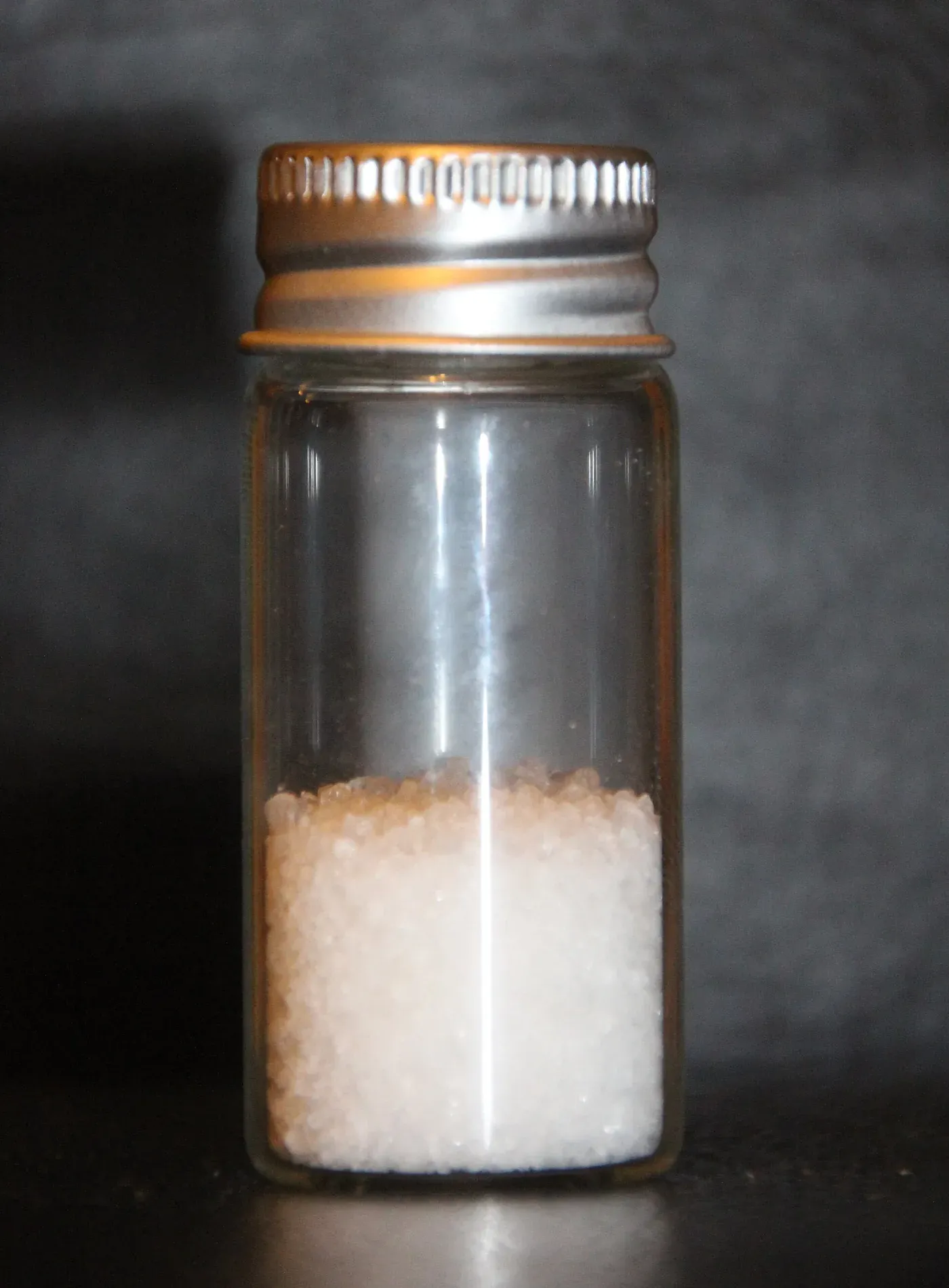
- Plate IVPolyvinyl alcohol resin in its raw, granular form, before it is dissolved and cast into the films used in packaging, textiles and medicine.Wikimedia Commons