The Birth of Synthetic Polymers (1907-1938): The Bakelite Revolution
Polyethylene (PE)
The Accidental Wonder That Changed Our World
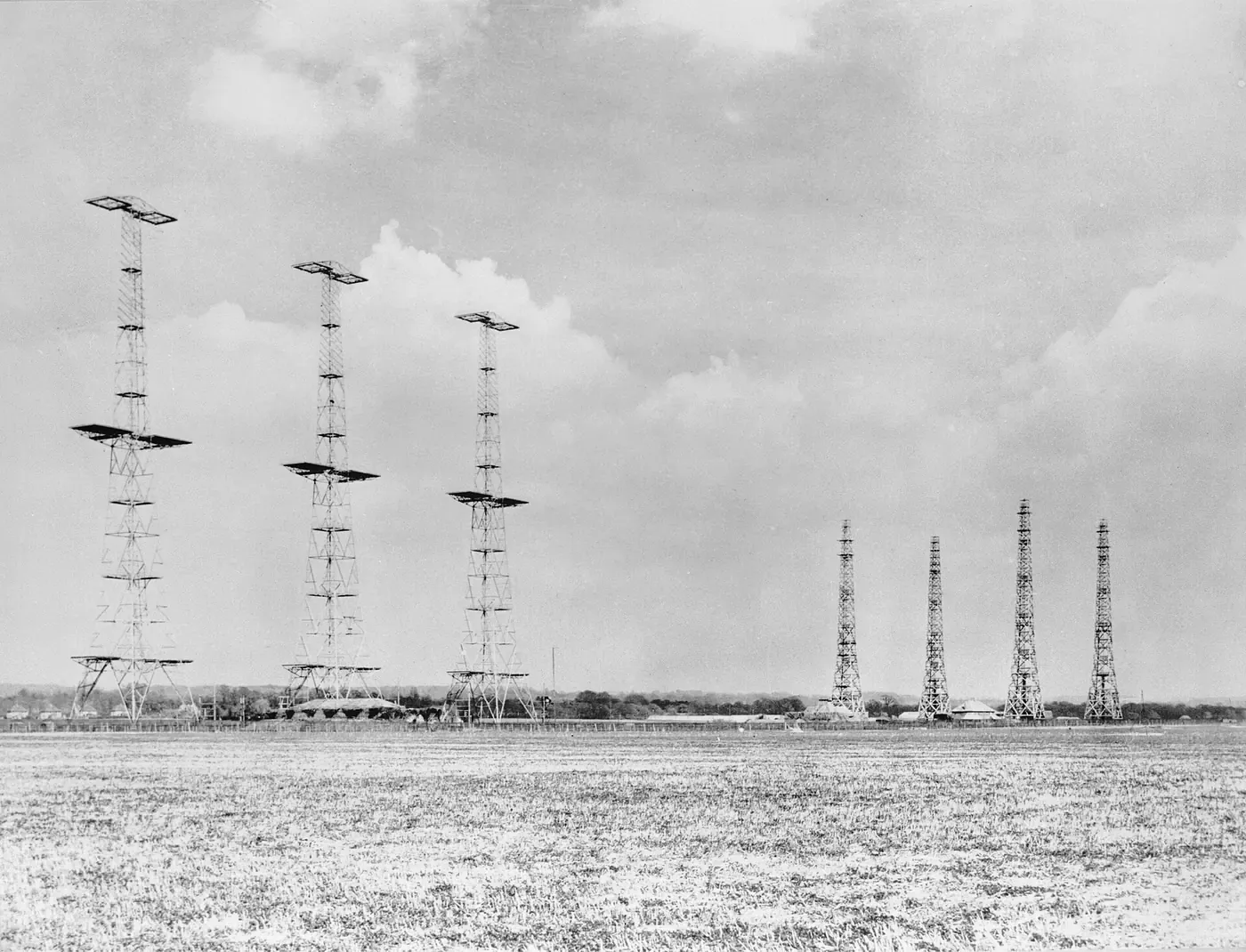
On the morning of 26 February 1935, a converted radio van sat in a field outside Daventry while Robert Watson-Watt’s team tried something nobody had managed before: bouncing a radio beam off a bomber and reading the echo. It worked. Within five years the resulting network, Chain Home, would give Britain the few minutes of warning that decided the Battle of Britain. But a working radar set was only half the problem. Detecting an aircraft at very high frequency was one thing; getting that signal down a cable without losing most of it to the insulation around the wire was another, and in 1935 nobody had an insulator good enough at those frequencies.
Plate I
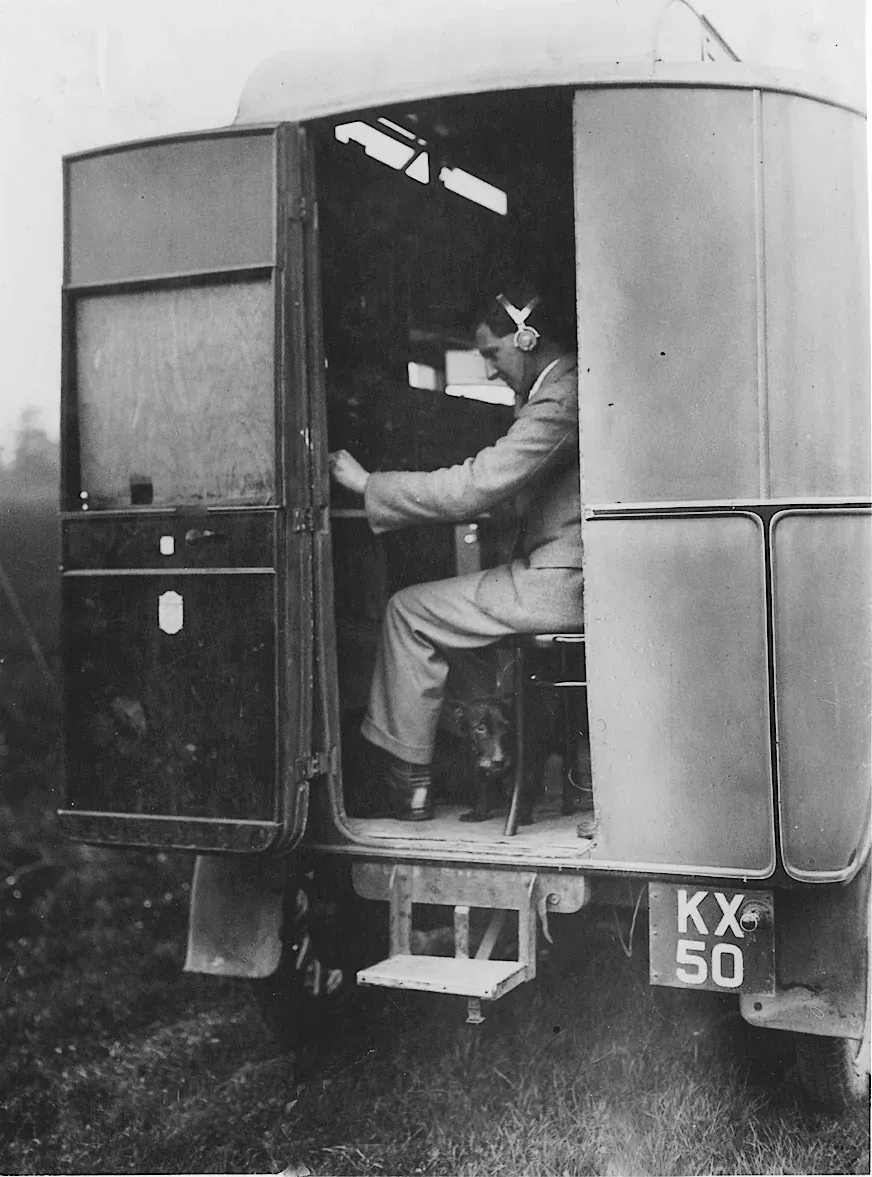

Two years earlier, and entirely by accident, chemists at Imperial Chemical Industries had already made the material that would answer that problem, without having the faintest idea what they had. They just couldn’t make it again.
A Discovery Nobody Could Repeat
On 27 March 1933, ICI chemists Eric Fawcett and Reginald Gibson subjected a mixture of ethylene and benzaldehyde to roughly 1,900 atmospheres and 170°C, looking for new organic reactions under extreme pressure. The pressure gauge dropped, the vessel was opened, and inside was a white, waxy solid nobody had ordered: a polymer of ethylene, with a molecular weight of a few thousand. It was a genuine discovery and a dead end in the same afternoon: when the ICI team tried to repeat the reaction, it almost never worked, and a later attempt ended in a small explosion that persuaded the company’s safety committee to shelve the whole line of work.
What nobody realised for two years was that the first reaction had succeeded because of a fault, not despite one: a leak had let a trace of oxygen into the ethylene feed, and that trace of oxygen was the initiator the polymerization needed. Without it, high-pressure ethylene mostly just sat there. In December 1935, a small ICI team (Michael Perrin, John Paton and Edmond “Jock” Williams, working with equipment engineer Dermot Manning) reinvestigated the old experiments with better apparatus and worked out exactly what had gone right and wrong the first time. Once they controlled the oxygen deliberately instead of relying on a leak to supply it, the reaction became reproducible on demand. Their run that December produced 8.5 grams of polyethylene powder, made to order rather than by chance.
Plate II
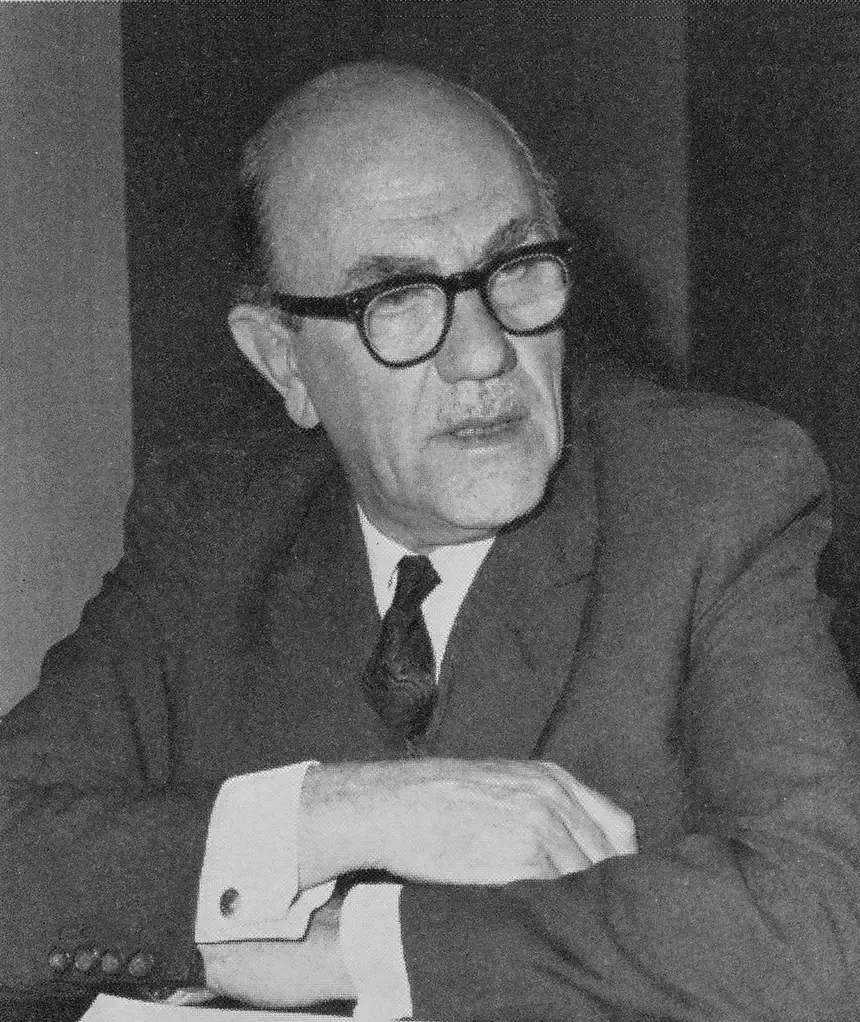

The Weight of a Secret
The first pound of the new material ever made was pressed into a small pillbox and presented, in 1936, to Frank Bebbington, the laboratory assistant who had watched the reaction succeed. ICI filed a British patent on the process in February 1936, in the names of all five people involved, and it was granted the following year. Commercial production began at Northwich in 1939, just in time for the material to vanish from public view entirely. Polyethylene turned out to have almost no dielectric loss at the ultra-high frequencies radar needed, which meant a coaxial cable insulated with it could carry a radar signal with barely any of it wasted as heat. Britain classified the material, suspended its sale, and put the entire output into cable for the Chain Home network and, later, into the compact sets that let radar fly aboard night fighters for the first time. The invisible-warning system demonstrated at Daventry in 1935 went to war carrying its signal through a plastic discovered, by accident, the same year its usefulness would be proven.
Plate III
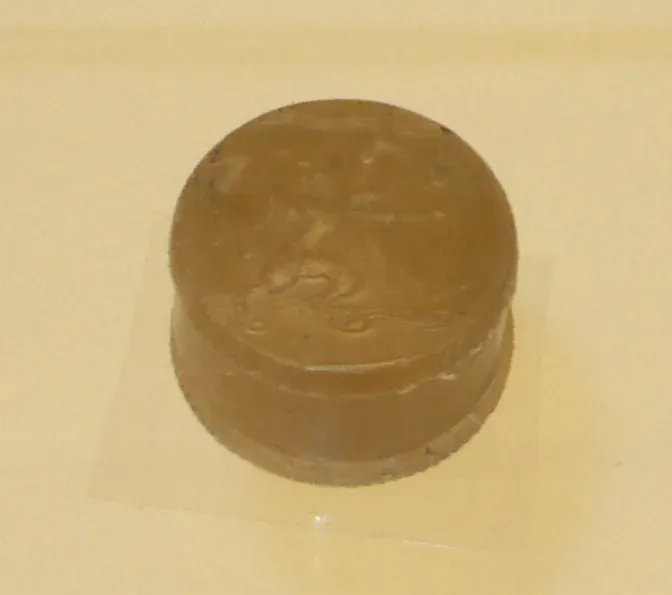

Plate IV

A Simple Chain, Infinitely Various
Strip away everything else and polyethylene is the plainest polymer there is: a chain of carbon atoms, each one carrying two hydrogens, repeating for as long as the reaction is allowed to run. There is no side group to complicate it and, on paper, nothing to distinguish one batch from another. What actually varies, and varies enormously, is how straight that chain manages to stay. Left to its own devices under Fawcett and Perrin’s high-pressure conditions, the growing chain throws off side branches as it goes, some short, some themselves long enough to tangle with neighbouring chains. Those branches are the whole story: they decide how closely the chains can pack, and packing decides almost everything else about the finished material.
One Molecule, Four Materials
Low-density polyethylene, the branch of the family Perrin’s process actually produced, keeps enough of those side branches that its chains can never pack very tightly. The result is soft, clear enough to see through, and pliant. It is the film that becomes sandwich wrap and shopping bags, flexible for exactly the reason it can never be very strong.
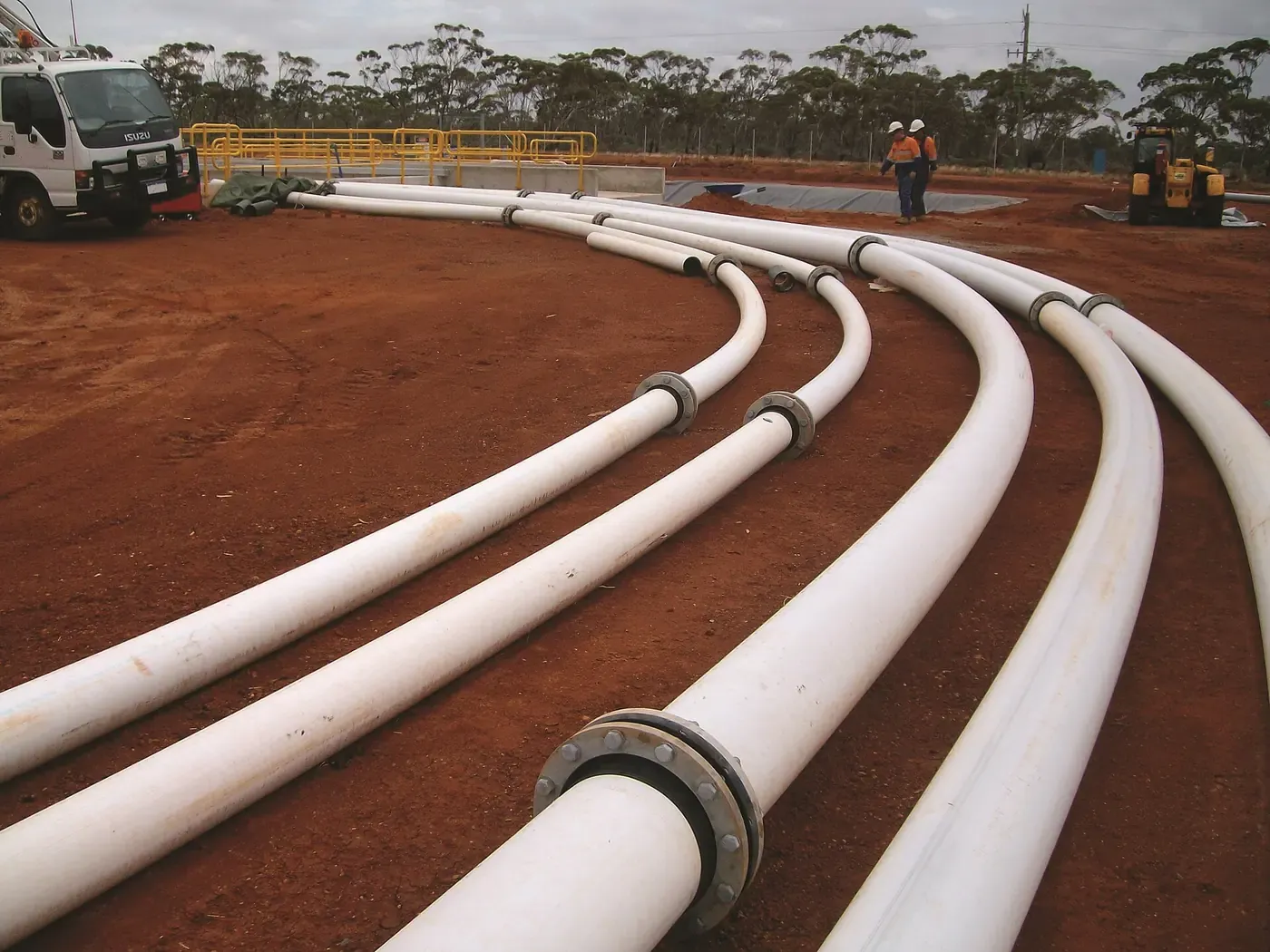
The straighter version came later, and from an entirely different chemistry. In 1953, working at the Max Planck Institute for Coal Research, Karl Ziegler found that a titanium-based catalyst could add ethylene units to a growing chain one at a time, at ordinary pressure, with almost no branching at all. Chains that straight pack together far more densely, and the material that results, high-density polyethylene, is stiffer, stronger and more opaque than its high-pressure cousin: the polymer of milk jugs, detergent bottles and pipe that has to hold its shape under its own weight. Ziegler’s catalyst chemistry, refined alongside Giulio Natta’s work on polypropylene the following year, is its own story and belongs to the account of both men rather than to polyethylene alone.
Linear low-density polyethylene, developed in the 1970s, splits the difference deliberately: a mostly linear backbone with short branches introduced on purpose, giving the toughness of a straighter chain without giving up the flexibility that made LDPE useful for film in the first place. And at the far end of the family sits ultra-high-molecular-weight polyethylene, whose chains are simply far longer than any of the others, long enough that the material resists abrasion and impact well past what the ordinary grades can manage, which is why it ends up in hip and knee implants and in the fibres of some bulletproof vests. All four are, underneath, the same repeating unit; what separates a shopping bag from an artificial hip is entirely a matter of how that chain was persuaded to arrange itself.
From Reactor to Product
LDPE is still made essentially the way Perrin’s team first managed it, just at industrial scale: ethylene compressed to around 3,000 atmospheres and heated to roughly 300°C, conditions violent enough to throw branches onto the growing chain as a side effect of how fast it forms. HDPE and LLDPE run a gentler process, Ziegler’s legacy at work: coordination catalysts that build the chain to order at 10 to 40 atmospheres and far lower temperatures, trading the drama of the high-pressure route for control over the result.
Both families are then shaped by broadly the same handful of techniques. Injection molding heats pellets past their melting point and forces the melt into a mould under high pressure, useful for anything with a defined three-dimensional shape. Blow molding inflates a molten tube of polymer, the parison, inside a mould to make bottles and containers; it is a process that lives or dies on temperature control, since a parison too hot sags before it can be shaped and one too cold tears rather than stretching. Film extrusion pushes the melt through a die and either blows it into a thin bubble or draws it flat, thinning it in the process to the fraction-of-a-millimetre gauge that packaging film needs.
Plate V

Where It Ended Up
The application still tracks the branching. LDPE went into film, flexible packaging and wire insulation. These were the direct heirs of the material Perrin made reproducible. HDPE dominates bottles, pipe and anything that needs to hold its shape under load, from milk jugs to underground water mains. LLDPE took over the heavy-duty end of the film trade, where LDPE’s flexibility was welcome but its strength was not quite enough. And UHMWPE went where wear resistance decides whether a part survives: joint replacements, ski bases, the liners of chutes carrying abrasive material; the same long, tangled chains that resist stretching also resist scraping.
Looking Forward
Ziegler’s coordination chemistry did not stop evolving once HDPE reached the market. Metallocene catalysts, introduced in the 1980s, offered a single well-defined active site in place of the several a classical Ziegler-Natta catalyst provides, and gave producers far finer control over chain length and branch placement. More recent post-metallocene systems can build block structures along a single chain, stitching stiff and flexible segments into one polymer. Alongside that catalyst work, the industry is now under real pressure to close polyethylene’s loop rather than simply landfill it: better sorting, chemical recycling routes that break the polymer back down to monomer, and early bio-based feedstocks are all being tested against a material that, precisely because it is everywhere, cannot simply be replaced.
From an unrepeatable accident in a 1933 pressure vessel to the material carrying nine-tenths of the world’s radar signal five years later, and from there to the plainest plastic bag on a supermarket shelf, polyethylene’s whole history is really one long argument about how straight a carbon chain can be persuaded to grow, and what a difference that makes.
values with [n] cite the numbered references·estimates are flagged·“not yet available” and “N/A” are honest states, not gaps
fetching the model…
Polyethylene repeat unit
- Abbreviation
- PE
- Type
- polymer family (hub)
- CAS number
- 9002-88-4
- Resin ID code
- none assigned
- Formula
- (C2H4)n[-CH2-CH2-]nThe bracketed unit is the unbranched backbone common to every grade; it is the branching architecture (none in HDPE, short-chain in LLDPE, short- and long-chain in LDPE) that actually distinguishes the grades, and that is invisible to this notation. This hub entry covers the whole family; individual grades may get their own variant treatment later.
- Repeat unit (BigSMILES)
{[][$]CC[$][]}- IUPAC name
- Polyethene
- Synonyms
- polyethene; poly(methylene)
- Also known as
- polyetheneLDPEHDPELLDPEUHMWPE
- Chemical family
- polyolefin
- Backbone class
- carbon-chain
- Polymerization mechanism
- free-radicalcoordination
- Constitutional monomer
- Ethylene
- Polymer class
- thermoplastic
- Year of origin
- 1935
- Era
- The Birth of Synthetic Polymers (1907-1938): The Bakelite Revolution
- Key figures
- Eric Fawcett · Reginald Gibson · Michael Perrin · Karl Ziegler
- Events referenced
- Robert Watson-Watt's Daventry Experiment demonstrates radar (26 February 1935) · The Battle of Britain, fought with the aid of the Chain Home radar network (1940)
- Polymerization type
- free-radical (high-pressure) or coordination (Ziegler-Natta/Phillips/metallocene)
- Common monomers (feedstocks)
- ethylene
- Catalysts
- Ziegler-Natta (titanium-based); Phillips catalyst (chromium/silica); metallocene catalysts
Eric Fawcett and Reginald Gibson (ICI) accidentally discovered industrial polyethylene synthesis in 1933; Michael Perrin developed the reproducible high-pressure free-radical process by 1935, and LDPE production began in 1939. Karl Ziegler's 1953 coordination-catalyst system enabled polymerization at much milder temperatures and pressures, producing linear, more crystalline HDPE. High-pressure free-radical synthesis generates both short- and long-chain branching (LDPE); low-pressure coordination catalysis (Ziegler-Natta, Phillips, metallocene) gives linear or controlled-branching grades (HDPE, LLDPE).
- Tacticity
- not yet available
- Crystal structure
- Semi-crystalline; branching architecture (short/long-chain branches in LDPE vs. linear chains in HDPE) controls the degree of chain packing and crystallinity.
- Typical crystallinity
- 35–94 %[3]Generic PE entry; by grade: LDPE 28.8–60%, LLDPE 30–53%, HDPE 60–90%.
Molecular weight
- Number average (Mn)
- 13000–18000 g/mol[3]LDPE grade only; not reported for the generic PE entry
- Mass average (Mw)
- 28000–6300000 g/mol[3]Generic PE entry, spans all grades
- Dispersity (Mw/Mn)
- 1.9–14.1[3]Generic PE entry
| Solvent | T | M range | K | a |
|---|---|---|---|---|
| 1,2,4-trichlorobenzene[4] | 408 K | 6,000–200,000 g/mol | 0.056 mL/g | 0.7 |
| decalin[4] | 408 K | 2,000–100,000 g/mol | 0.062 mL/g | 0.7 |
Grade-dependent: LDPE's branched chains resist packing (flexible, transparent film); HDPE's linear chains pack tightly (stiffer, stronger, translucent/opaque).
- Density
- 0.9–0.98 g/cm³[3]20°C, generic PE entry; by grade: LDPE 0.915–0.929, LLDPE 0.905–0.942, HDPE 0.94–0.965 g/cm³
- Melt flow index
- 3.2–9 g/10min[3]230°C/3.8 kg, generic PE entry
- Refractive index
- 1.4728–1.52[3]exp., 20°C, generic PE entry
- Transmittance
- 90–91 %[3]LDPE film
- Haze
- 2.2–27 %[3]LDPE film
- Gloss
- 33–87 %[3]60°, Gardner (ASTM D523), LDPE film
- Water absorption
- 0.005–0.015 %[3]equilibrium, water immersion, 23°C; consistent across LDPE/LLDPE/HDPE grades
- Dielectric constant
- 2.28–2.32[3]100 Hz-1 MHz, generic PE entry
- Dielectric strength
- 39 kV/mm[3]d=0.6–0.8mm, generic PE entry; grade range 16–45 kV/mm across LDPE-HDPE
- Electrical conductivity
- 1 × 10⁻¹³ S/m[3]reciprocal of reported volume resistivity, 1x10^13 ohm-m (HDPE and LDPE entries agree)
- Glass transition (Tg)
- -133–-20 °C[3]Scatters strongly by grade, method, and which secondary relaxation is assigned as Tg. Wypych: generic PE calc.=-133 to -59°C, exp.=-128 to -20°C; by grade HDPE -133 to -118°C, LDPE -133 to -103°C, LLDPE -110°C. Mark corroborates a low-temperature transition at 140–180 K (-133 to -93°C, HDPE) and 140–170 K (-133 to -103°C, LDPE) by DMA/calorimetry, with a distinct higher relaxation near 243–283 K (-30 to +10°C) sometimes cited in the literature as the true Tg.
- Melting temperature (Tm)
- 99–138 °C[3]DSC, generic PE entry; by grade: LDPE 105–115°C, LLDPE 120–136°C, HDPE 125–135°C
- Crystallization (Tc)
- 96–123 °C[3]Reported as "rapid crystallization temperature"; by grade: LDPE 96–100°C, HDPE 114–120°C, LLDPE 107–123°C
- Heat deflection (HDT)
- 36–65 °C[3]1.8 MPa; by grade: LDPE 36–40°C, LLDPE 38°C, HDPE 44–65°C
- Decomposition onset
- 335 °C[3]Generic PE entry
- Thermal conductivity
- not yet available
- Tensile modulus
- 130–1350 MPa[3]By grade: LDPE 130–348, LLDPE 260–520, HDPE 500–1100 (1120–1350 bimodal)
- Yield strength
- 10.6–20.7 MPa[3]Generic PE entry; by grade: LDPE ~10–14, LLDPE 8–32 (film, MD/TD), HDPE 21–31
- Tensile strength at break
- 48.6 (13–71) MPa[3]Generic PE entry (48.6 MPa); wide range across grades/forms: HDPE 13–51, LDPE 10–32 (extrusion/film), LLDPE 25–71 (film)
- Elongation at break
- 130–1200 %[3]Generic PE entry 180–1000%; grade range 130–1200% across LDPE-HDPE-LLDPE forms
- Impact strength (Izod)
- 20–490 J/m[3]Notched, 23°C; by grade: HDPE 20–220 (490 bimodal), LDPE 420 to no-break, LLDPE 54 to no-break
- Impact strength (Charpy)
- not yet available
- Hardness
- 40–69 Shore D[3]By grade: LDPE 41–50, LLDPE 44–56, HDPE 40–69 (59 bimodal)
- Flexural modulus
- 230–1680 MPa[3]By grade: LDPE 230–495, LLDPE 280–735, HDPE 750–1600 (621–1680 bimodal)
- Poisson's ratio
- 0.46–0.49[3]exp.; generic PE 0.47–0.49, HDPE 0.46
- Coefficient of friction
- 0.6[3]PE-on-itself, dynamic (generic PE/LDPE/LLDPE); HDPE vs chrome steel 0.17, vs aluminum 0.27–0.33 (ASTM D1894)
- Solvent: acids
- very good[3]dilute and concentrated
- Solvent: alcohols
- good[3]
- Solvent: alkalis
- very good[3]
- Solvent: aliphatic hydrocarbons
- poor[3]
- Solvent: aromatic hydrocarbons
- poor[3]
- Solvent: esters
- poor[3]
- Solvent: greases & oils
- good to poor[3]
- Solvent: halogenated hydrocarbons
- poor[3]
- Solvent: ketones
- poor[3]
- Weathering / UV
- Poor unstabilized (unsaturation/carbonyl-initiated photooxidation below 300 nm); good with UV absorber/HALS stabilizer package[3]
- Hydrolysis resistance
- Not applicable
- Flammability (UL94)
- HB[3]unfilled grade; consistent across LDPE/LLDPE/HDPE
- Limiting oxygen index
- 17.4–18.5 %[3]Generic PE entry; grade values reported as <20%
- Solubility parameter (δ)
- 15.76–17.6 MPa^0.5[3]exp., generic PE entry
Gas permeability
not yet available
Polymer-solvent interaction parameter (χ)
- Processing methods
- injection moldingblow moldingfilm extrusionrotational molding
- Drying required
- Yes
- Packaging & filmplastic bags · film wrap (LDPE) · packaging film, cable coverings (LLDPE)
- Containers & pipingmilk jugs, detergent bottles, water pipes (HDPE) · gas pipes, shrink film (MDPE)
- Medical & protectivehip/knee implants · bulletproof vests (UHMWPE)
- Recyclable
- Yes
- Biodegradable
- No
- Degradation pathway
- not yet available
HDPE (RIC 2) and LDPE (RIC 4) are among the more commonly accepted plastics in curbside recycling programs.
- LD50 (oral, rat)
- 4000 mg/kg[3]>2,000 also reported (generic PE entry); by grade: HDPE >7,950, LDPE >5,000
- NFPA health
- 0[3]HMIS rating, 0–4 scale; generic PE/HDPE report 0/1/0, LDPE entry reports 1/0/1
- NFPA flammability
- 1[3]HMIS rating, 0–4 scale; generic PE/HDPE report 0/1/0, LDPE entry reports 1/0/1
- NFPA reactivity
- 0[3]HMIS rating, 0–4 scale; generic PE/HDPE report 0/1/0, LDPE entry reports 1/0/1
- Carcinogenic classification
- not listed by ACGIH, NIOSH, NTP[3]
TLV (ACGIH): 3 mg/m³ respirable, 10 mg/m³ inhalable. OSHA: 5 mg/m³ respirable, 15 mg/m³ total. Reproductive toxicity not expected to occur; skin (rabbit) LD50 non-irritant.
- [1]PolyethyleneWikipediaAccessed 2026-07-14https://en.wikipedia.org/wiki/Polyethylene[wiki-polyethylene]
- [2]Resin Identification Codes (RICs), as Specified by ASTM D7611The ANSI BlogAccessed 2026-07-14; confirms PVC = RIC 3https://blog.ansi.org/ansi/resin-identification-codes-rics-astm-d7611/[ansi-resin-codes]
- [3]Handbook of PolymersChemTec Publishinghttps://www.worldcat.org/isbn/9781895198928[handbook-wypych-2016]
- [4]Polymer Data HandbookOxford University Presshttps://search.worldcat.org/search?q=Polymer+Data+Handbook+Mark+1999[handbook-mark-1999]
Illustrations
- Plate IThe Radio Research Section's van, photographed two years before it carried the receiving equipment for the Daventry Experiment that proved radar could work.Wikimedia Commons
- Plate IIMichael Perrin, photographed decades later as he retired from the chairmanship of the Wellcome Foundation. In 1935 he led the ICI team that turned an unrepeatable accident into a controllable industrial process.Wikimedia Commons
- Plate IIIA pillbox pressed from the first pound of polythene ever produced, and given to Frank Bebbington, the lab assistant who saw the reaction work.Wikimedia Commons
- Plate IVThe Chain Home station at Poling, Sussex, one link in the radar chain that polyethylene-insulated cable helped keep running through the war.Wikimedia Commons
- Plate VHDPE pipe being laid at a modern industrial site, a direct descendant of Ziegler's low-pressure, low-branching chemistry.Wikimedia Commons