The Engineering Polymers Era (1961-1979)
Polysulfone (PSU) & Polyethersulfone (PES)
Medical Guardians
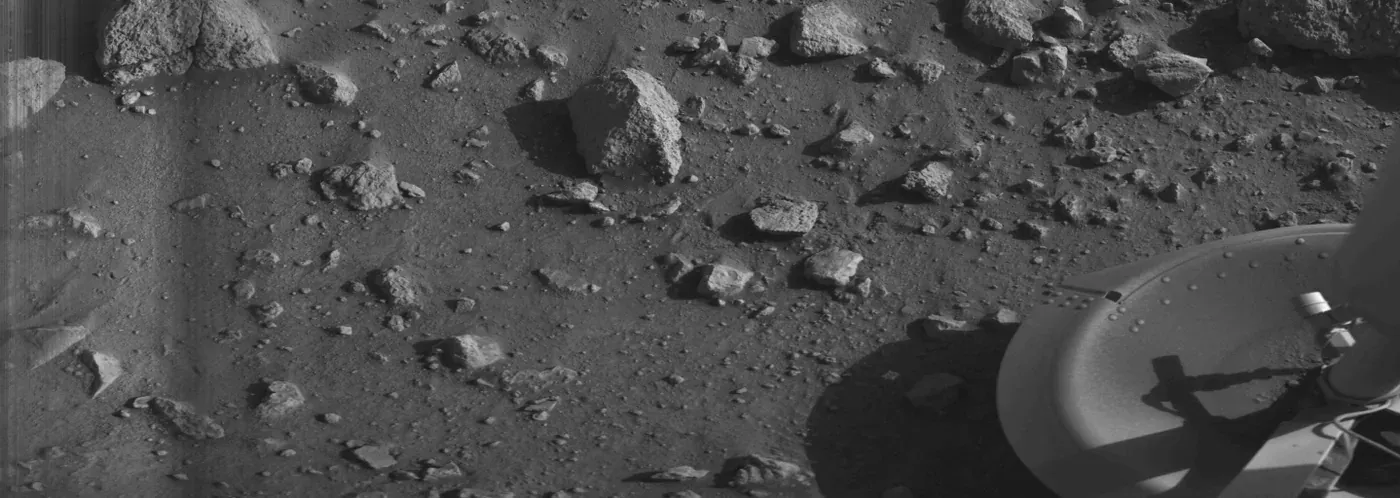
On 20 July 1976, Viking 1 sent back the first clear photograph ever taken from the surface of Mars: a field of ochre rocks and drifted dust, framed by one of the lander’s own footpads. Its onboard biology experiments spent the following weeks running chemistry on Martian soil, searching for any sign that something there was alive. It was, in its way, a life-support question run backwards: not how to keep something alive, but how to tell whether anything already was.
Plate I

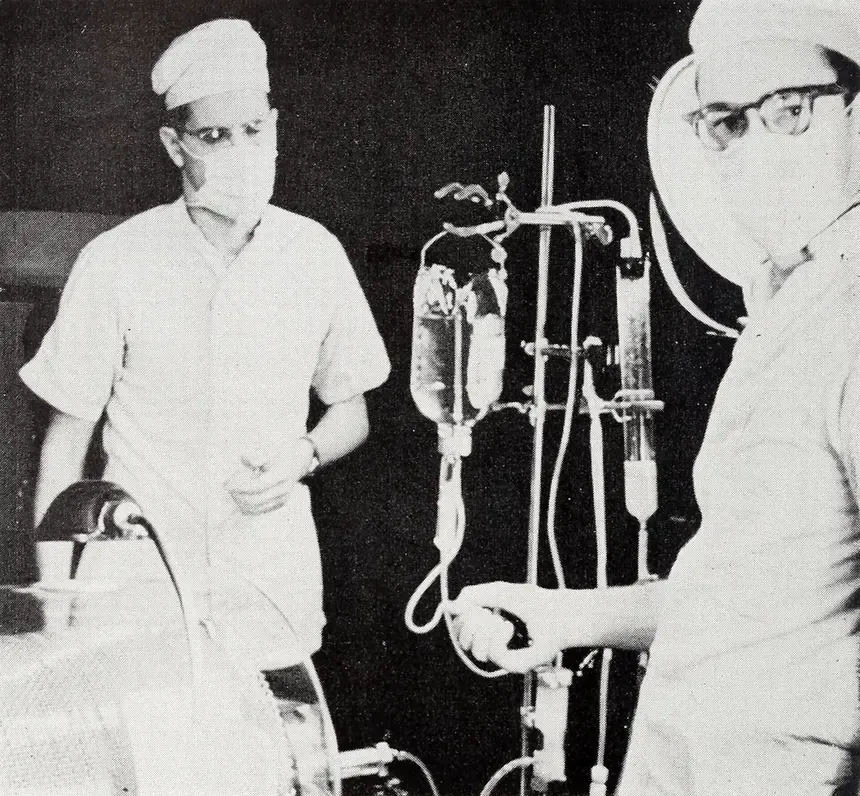
Back on Earth, a much older life-support question was still unsolved. Since the 1940s, patients whose kidneys had failed could be kept alive by an external machine that filtered their blood through a semipermeable membrane, but the membrane itself was the weak link. The earliest artificial kidneys used cellophane, a material built from wood pulp, and cellophane could not survive being sterilized and reused indefinitely; clinics were, in effect, running the treatment on borrowed material.
Plate II
_in_operation.jpg)
The fix had been on the shelf for a decade already, just not in the right shape. Union Carbide had commercialized polysulfone in the mid-1960s as Udel, and ICI followed in 1972 with a close relative, polyethersulfone, sold as Victrex: both aromatic, both built around an unusually tough sulfone linkage, both able to shrug off the steam and chemical exposure of hospital sterilization that had defeated cellophane. What they lacked was a proven way to spin them into the fine hollow fibers a membrane cartridge actually needs. That came in 1976, when Ilan Cabasso, working with E. Klein and J. K. Smith at the Gulf South Research Institute, published the paper that first characterized how to spin polysulfone into hollow fibers strong enough to hold real pressure. That was the technical foundation the modern hollow-fiber dialyzer was built on.
One Family, Two Personalities
Polysulfone and polyethersulfone are close relatives rather than the same material twice. Polysulfone’s chain alternates aromatic rings, ether linkages, and sulfone groups around a bulky bridging unit inherited from bisphenol A; polyethersulfone strips that bridge out entirely, leaving a leaner backbone of nothing but aromatic rings, ether oxygens, and sulfone groups in a row. That difference in the sulfone’s line-up rather than the sulfone itself is what tells the two apart; remove the bulky joint and the chain packs more tightly, which is why polyethersulfone tolerates distinctly more heat before it softens than its bisphenol-A cousin does.
What the Sulfone Group Buys
Both polymers are amorphous through and through, which is why they are transparent rather than milky, clear enough that a nurse or a dialysis technician can watch fluid move through a device made from either one, an easy thing to take for granted until you remember most engineering plastics are opaque. Both take an enormous number of steam-autoclave cycles without losing strength or clouding, resist hydrolysis even in hot water, and hold their shape from a cold morning through a session at the temperature of boiling water without softening, polyethersulfone comfortably outlasting polysulfone at the top of that range. Mechanically they sit closer to a tough engineering resin than to an ordinary commodity plastic, taking a real stretch before they break rather than snapping like glass. Their one real weak spot is solvents: strong acids, alkalis, alcohols and everyday oils barely touch either polymer, but ketones, esters and chlorinated solvents will attack and eventually craze them, a limitation worth knowing before reaching for either material in a chemistry lab rather than a hospital. Both resist ignition reasonably well without additives, though neither is in the top rank of this atlas’s flame-resistant polymers.
Plate III

Beyond the Dialysis Unit
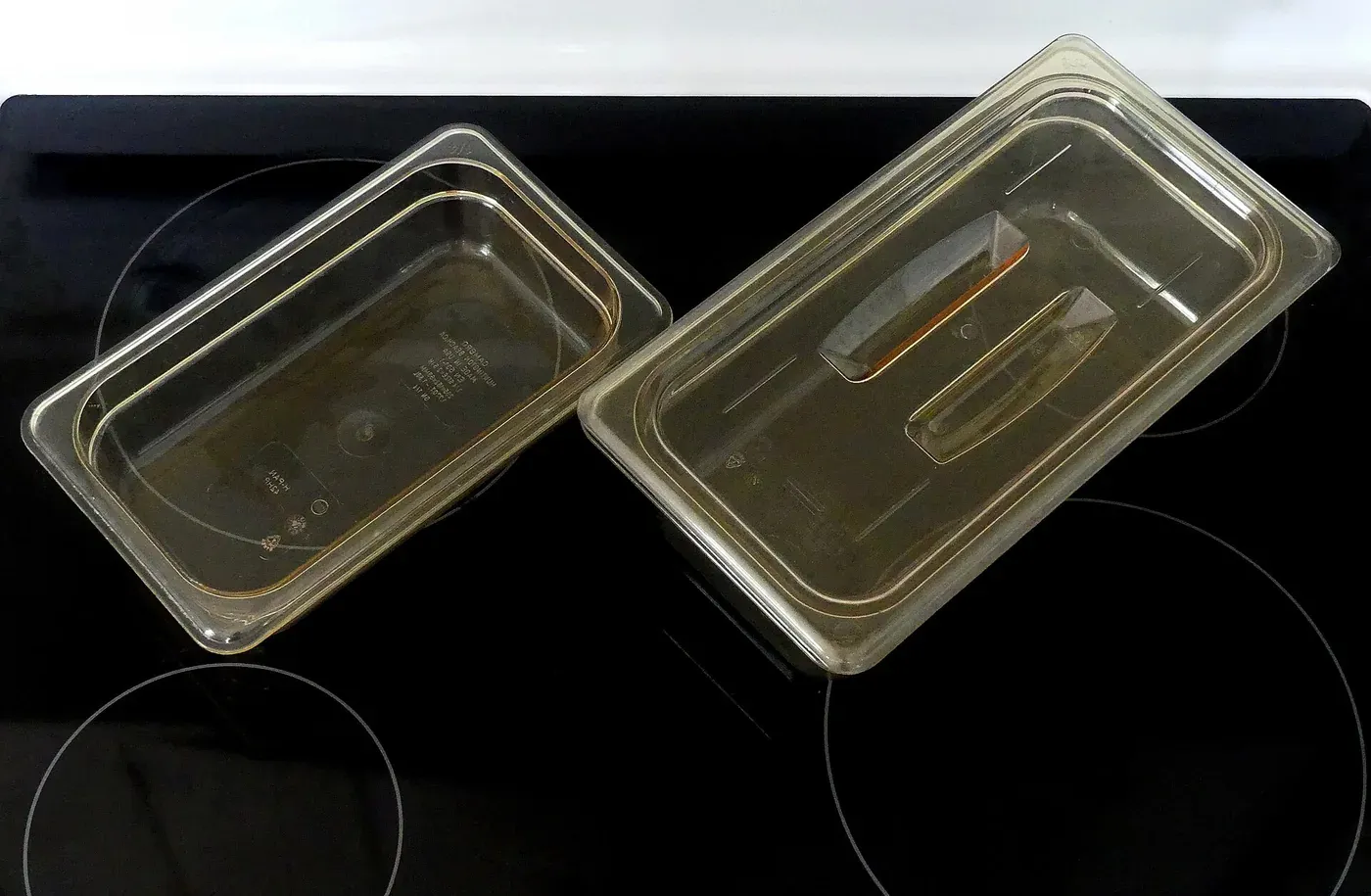
Dialysis remained the signature use, but a material that tolerates heat, pressure and steam this well found work anywhere those three things converge. Surgical instrument trays, autoclavable device housings, and food-service ware rated for both a dishwasher and a microwave all draw on the same chemistry. So do industrial and municipal water-treatment membranes, built on the same hollow-fiber principle Cabasso’s work established, and, in a straight line back to that 1976 paper, the reverse-osmosis and gas-separation membranes that followed once engineers had confirmed a polysulfone fiber could hold real pressure without collapsing.
Plate IV
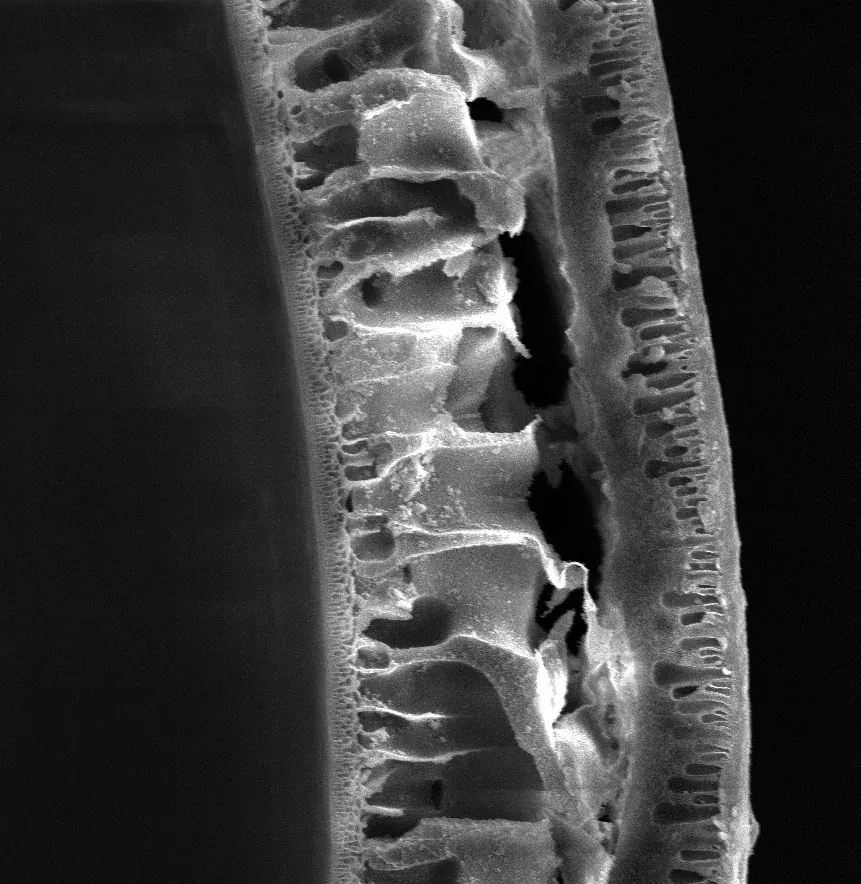

Plate V

Fifty Years On
Polysulfone and polyethersulfone never became household names the way nylon or Teflon did, which is fitting for materials whose entire job is to be trusted and then forgotten about. Every time a dialysis session runs to completion without incident, or a surgical tray comes out of the autoclave exactly as it went in, the quiet chemistry that made cellophane’s replacement possible is doing precisely what it was built to do in 1976.
values with [n] cite the numbered references·estimates are flagged·“not yet available” and “N/A” are honest states, not gaps
fetching the model…
Polysulfone repeat unit
- Abbreviation
- PSU
- Type
- polymer family (hub)
- CAS number
- 25135-51-7
- Resin ID code
- none assigned
- Formula
- (C27H22O4S)n[-O-C6H4-C(CH3)2-C6H4-O-C6H4-SO2-C6H4-]nBisphenol A polysulfone (PSU) is shown. Polyethersulfone (PES) drops the isopropylidene C(CH3)2 bridge entirely, leaving only ether and sulfone links between aromatic rings, which raises its glass transition further.
- Repeat unit (BigSMILES)
{[][>]Oc1ccc(cc1)C(C)(C)c1ccc(cc1)Oc1ccc(cc1)S(=O)(=O)c1ccc(cc1)[<][]}- IUPAC name
- —
- Synonyms
- PES; polyethersulfone
- Also known as
- PESpolyethersulfone
- Chemical family
- polysulfone
- Backbone class
- heterochain
- Polymerization mechanism
- step-growth-condensation
- Constitutional monomer
- Bisphenol A4,4'-Dichlorodiphenyl sulfone
- Polymer class
- thermoplastic
- Year of origin
- 1976
- Era
- The Engineering Polymers Era (1961-1979)
- Key figures
- Ilan Cabasso · Union Carbide · ICI
- Events referenced
- Viking 1 first photograph from the surface of Mars (1976) · Cabasso, Klein and Smith's polysulfone hollow-fiber spinning paper (1976)
- Polymerization type
- step-growth condensation (polycondensation)
- Common monomers (feedstocks)
- bisphenol A, 4,4'-dichlorodiphenyl sulfone
- Catalysts
- not yet available
Developed independently at 3M, Union Carbide, and ICI's Plastics Division in the early 1960s. Original synthesis used Friedel-Crafts methods; current production uses polycondensation reactions instead.
- Tacticity
- not yet available
- Crystal structure
- not yet available
- Typical crystallinity
- 0 %[2]PSU explicitly reported as amorphous, underlying its transparency; PES is likewise amorphous (both handbooks).
Molecular weight
- Number average (Mn)
- 39000–41000 g/mol[2]PSU; PES is lower, 8,600–28,700 g/mol (handbook-wypych-2016)
- Mass average (Mw)
- 20000–96000 g/mol[2]PSU; PES is lower, 10,100–38,800 g/mol (handbook-wypych-2016)
- Dispersity (Mw/Mn)
- 1.6[2]PSU; PES is 1.17–1.55 (handbook-wypych-2016)
Mark-Houwink constants
not yet available
Sulfonyl (aryl-SO2-aryl) linkages give exceptional thermal/oxidative stability and a very wide service temperature window.
- Density
- 1.235 (1.23–1.24) g/cm³[2]PSU (bisphenol A polysulfone), 20 °C; matches 1.24 g/cm³ per handbook-mark-1999. PES (polyethersulfone) is denser, 1.37–1.43 g/cm³ (handbook-wypych-2016).
- Melt flow index
- 3.4–17.5 g/10min[2]PSU, 343 °C/3.8 kg (Mark reports 6.5 g/10 min for PSU without stated conditions). PES is 12–30 g/10 min at 380 °C/2.16 kg (handbook-wypych-2016).
- Refractive index
- 1.633[2]PSU, 20 °C; PES is 1.545–1.65 (handbook-wypych-2016), 1.545 per handbook-mark-1999
- Transmittance
- 85 (84–86) %[2]PSU
- Haze
- 1.5–2.5 %[2]PSU
- Gloss
- not yet available
- Water absorption
- 0.3 %[2]PSU, equilibrium 23 °C/50% RH; 24 h immersion at 23 °C gives 0.22–0.3%. PES equilibrium moisture is higher, 0.8% (24 h immersion: 2.2% per handbook-wypych-2016, or 0.43% per handbook-mark-1999).
- Dielectric constant
- 3.03[2]PSU, 60 Hz (3.02 at 1 MHz). PES is higher, 3.51 at 60 Hz / 3.54 at 1 MHz (handbook-wypych-2016), 3.5 per handbook-mark-1999.
- Dielectric strength
- 17–37 kV/mm[2]PSU, specimen thickness 0.6–0.8 mm; matches 14.6 kV/mm per handbook-mark-1999. PES is 15 kV/mm (handbook-wypych-2016).
- Electrical conductivity
- 3.33 × 10⁻¹⁵ S/m[2]PSU, reciprocal of reported volume resistivity 3×10¹⁴ Ω·m (close to ~2×10⁻¹⁵ S/m computed from handbook-mark-1999's 5×10¹⁶ Ω·cm). PES is less resistive, >1.7×10¹³ Ω·m (<5.9×10⁻¹⁴ S/m, handbook-wypych-2016).
- Glass transition (Tg)
- 187.5 (185–190) °C[2]PSU (bisphenol A polysulfone); matches 185.85 °C by DSC (handbook-mark-1999). PES (polyethersulfone) is substantially higher, 220–246 °C (handbook-wypych-2016), matching 224.85 °C by DSC (handbook-mark-1999).
- Melting temperature (Tm)
- Not applicableBoth PSU and PES are explicitly reported as amorphous (both handbooks), with no true melting point. Wypych's tables do list a 'Melting temperature, DSC' row for each (185 °C for PSU, 220–238 °C for PES), but these coincide almost exactly with each material's own Tg range and are judged to be a mislabeled duplicate of Tg rather than a real crystalline melting transition.
- Crystallization (Tc)
- Not applicable
- Heat deflection (HDT)
- 174.5 (174–175) °C[2]ASTM D648, 1.8 MPaPSU; matches 173.85 °C per handbook-mark-1999. PES (polyethersulfone) is substantially higher, 204–207 °C (handbook-wypych-2016), or 233.85 °C per handbook-mark-1999.
- Decomposition onset
- 550 °C[2]PSU; PES is 400–584 °C (handbook-wypych-2016)
- Thermal conductivity
- 0.26 W/(m·K)[2]PSU; matches handbook-mark-1999. PES is lower, 0.18–0.24 W/(m·K) depending on source (handbook-wypych-2016, handbook-mark-1999).
- Tensile modulus
- 2540 (2480–2600) MPa[2]PSU; matches 2482 MPa per handbook-mark-1999. PES is similar, 2650 MPa (handbook-wypych-2016) or 2413 MPa (handbook-mark-1999).
- Yield strength
- 75 MPa[2]PSU; PES is 90 MPa, conditioned (handbook-wypych-2016)
- Tensile strength at break
- 73.5 (70–77) MPa[2]PSU; matches 69.0 MPa per handbook-mark-1999. PES is higher, 83–95 MPa (handbook-wypych-2016) or 82.8 MPa (handbook-mark-1999).
- Elongation at break
- 50–100 %[2]PSU; Mark reports a much lower maximum extensibility of 3.0% for the neat resin (handbook-mark-1999), a notable discrepancy, possibly a different test or grade. PES is lower, 25–75% (handbook-wypych-2016), or 40–80% per handbook-mark-1999.
- Impact strength (Izod)
- 69 J/m[2]PSU, notched, 23 °C; close to 80.4 J/m per handbook-mark-1999. PES is higher, 85 J/m (handbook-wypych-2016), matching 85.7 J/m (handbook-mark-1999).
- Impact strength (Charpy)
- 5.5–6 kJ/m²[2]PSU, notched, 23 °C; PES is 6.5 kJ/m², conditioned (handbook-wypych-2016)
- Hardness
- 69 Rockwell M[2]PSU; Mark reports Shore D 69 for PSU and Shore D 88 for PES (handbook-mark-1999). PES Rockwell hardness is R127 (handbook-wypych-2016).
- Flexural modulus
- 2690 MPa[2]PSU; matches 2758 MPa per handbook-mark-1999. PES is similar, 2900 MPa (handbook-wypych-2016) or 2552 MPa (handbook-mark-1999).
- Poisson's ratio
- 0.37[2]PSU; PES is 0.41 (handbook-wypych-2016)
- Coefficient of friction
- 0.48[2]PSU, in air; 0.4 in water. PES is 0.15–0.45 in air, 0.3 in water (handbook-wypych-2016).
- Solvent: dilute acids
- excellent[2]PSU; PES dilute acids are 'good', concentrated 'poor' (handbook-wypych-2016)
- Solvent: concentrated acids
- excellent[2]PSU; PES dilute acids are 'good', concentrated 'poor' (handbook-wypych-2016)
- Solvent: alcohols
- excellent[2]PSU; PES is 'good' (handbook-wypych-2016)
- Solvent: alkalis
- good to excellent[2]PSU; PES is 'good' (handbook-wypych-2016)
- Solvent: aliphatic hydrocarbons
- excellent[2]PSU; PES is 'good' (handbook-wypych-2016)
- Solvent: aromatic hydrocarbons
- good to poor[2]PSU; PES is 'good to fair' (handbook-wypych-2016)
- Solvent: esters
- poor[2]PSU and PES agree
- Solvent: greases & oils
- good[2]PES; no data reported for PSU
- Solvent: halogenated hydrocarbons
- poor[2]PSU and PES agree
- Solvent: ketones
- poor[2]PSU and PES agree
- Weathering / UV
- PSU retains 93–100% of tensile strength and impact strength after exposure to 50–100 kGy gamma radiation[2]
- Hydrolysis resistance
- Good hydrolytic resistance and high alkaline stability (both PSU and PES); withstands repeated autoclave/steam sterilization[3]
- Flammability (UL94)
- HB to V-0[2]PSU, unfilled; PES is V-0 to V-1 (handbook-wypych-2016)
- Limiting oxygen index
- 29 (26–32) %[2]PSU, unfilled; PES is higher, 39% (handbook-wypych-2016)
- Solubility parameter (δ)
- 20.26 MPa^0.5[2]PSU; a second reported value is 21.5 MPa^0.5. Matches 20.26 MPa^0.5 per handbook-mark-1999. PES is higher, 21.0–22.9 MPa^0.5 experimental / 23.12–24.4 MPa^0.5 calculated (handbook-wypych-2016).
Gas permeability
- N₂ (PSU)
- 1.79 × 10⁻¹⁴ cm³(STP)·cm/(cm²·s·Pa)[2]25 °C; converted from 155 mm³·m/(m²·MPa·day) (handbook-wypych-2016)
- O₂ (PSU)
- 1.03 × 10⁻¹³ cm³(STP)·cm/(cm²·s·Pa)[2]25 °C; converted from 894 mm³·m/(m²·MPa·day) (handbook-wypych-2016)
- He (PES)
- 7.95 × 10⁻¹³ cm³(STP)·cm/(cm²·s·Pa)[3]50 °C, 10 bar pressure difference; converted from 7.95×10⁻¹⁷ m³(STP)·m/(m²·s·Pa) (handbook-mark-1999)
- CO₂ (PES)
- 3.15 × 10⁻¹³ cm³(STP)·cm/(cm²·s·Pa)[3]50 °C, 10 bar pressure difference; converted from 3.15×10⁻¹⁷ m³(STP)·m/(m²·s·Pa) (handbook-mark-1999)
- O₂ (PES)
- 6 × 10⁻¹⁴ cm³(STP)·cm/(cm²·s·Pa)[3]50 °C, 10 bar pressure difference; converted from 6.0×10⁻¹⁸ m³(STP)·m/(m²·s·Pa) (handbook-mark-1999)
Polymer-solvent interaction parameter (χ)
not yet available
- Medicaldialysis membranes · autoclavable medical devices
- Food servicefood-service containers (-40°C to +190°C)
- Energyfuel-cell proton-exchange membranes
- Electronicselectronic components
- Recyclable
- Yes
- Biodegradable
- No
- Degradation pathway
- not yet available
- LD50 (oral, rat)
- not yet available
- NFPA health
- 1[2]PES (polyethersulfone); HMIS rating, 0–4 scale. No rating reported for PSU.
- NFPA flammability
- 1[2]PES (polyethersulfone); HMIS rating, 0–4 scale. No rating reported for PSU.
- NFPA reactivity
- 0[2]PES (polyethersulfone); HMIS rating, 0–4 scale. No rating reported for PSU.
- Carcinogenic classification
- not listed by ACGIH, NIOSH, NTP[2]reported for both PSU and PES
- [1]PolysulfoneWikipediaAccessed 2026-07-14https://en.wikipedia.org/wiki/Polysulfone[wiki-psu]
- [2]Handbook of PolymersChemTec Publishinghttps://www.worldcat.org/isbn/9781895198928[handbook-wypych-2016]
- [3]Polymer Data HandbookOxford University Presshttps://search.worldcat.org/search?q=Polymer+Data+Handbook+Mark+1999[handbook-mark-1999]
Illustrations
- Plate IThe first clear photograph taken from the surface of Mars, transmitted by Viking 1 on 20 July 1976.Wikimedia Commons
- Plate IIA Kolff-type artificial kidney in operation at a field hospital, 1955, two decades before a membrane material existed that could survive being sterilized and reused indefinitely.Wikimedia Commons
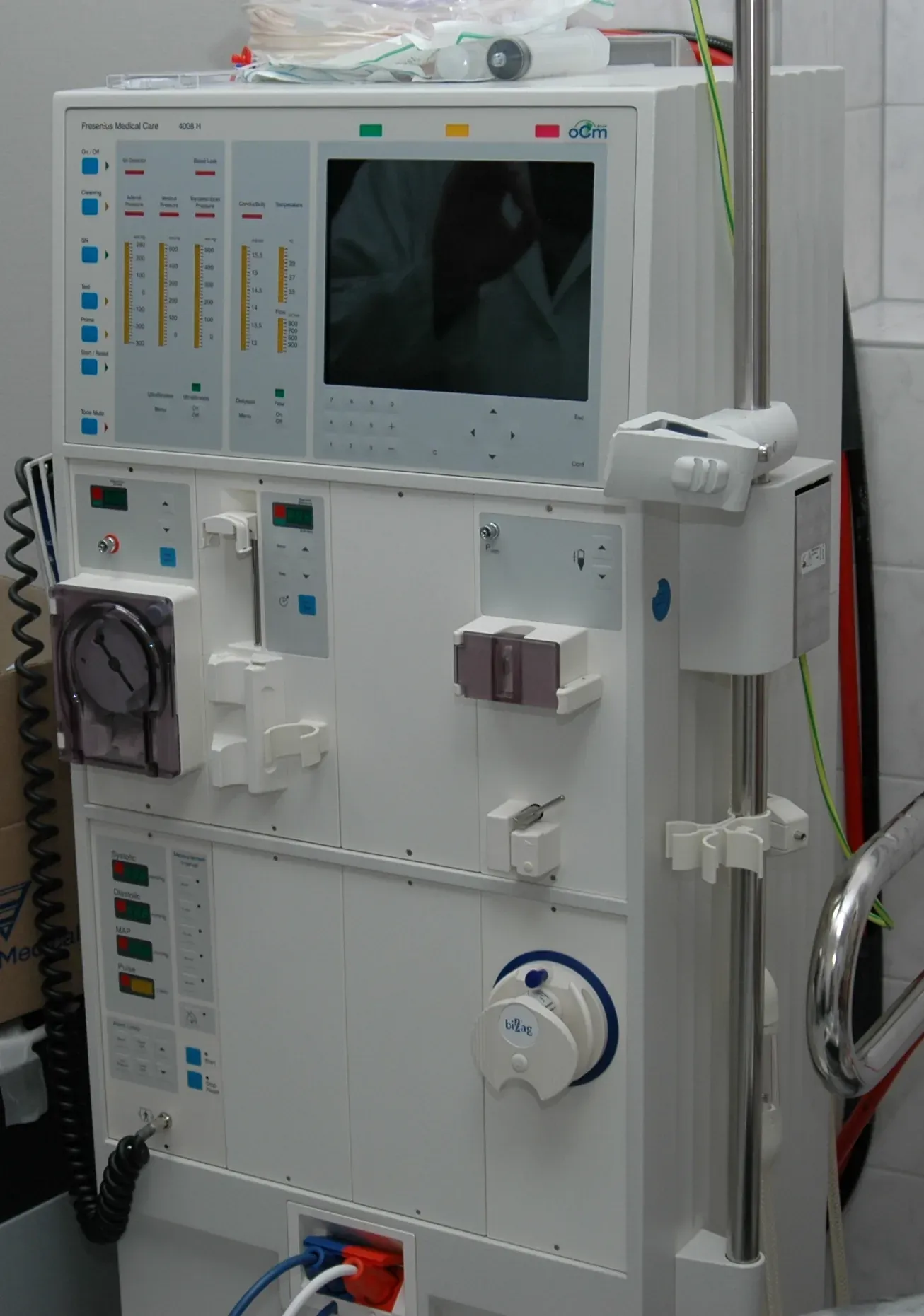
- Plate IIIA modern hemodialysis machine. The membrane cartridge it drives (the part actually touching the patient's blood) is where polysulfone and polyethersulfone do their work.Wikimedia Commons
- Plate IVA polysulfone hollow-fiber membrane wall in cross-section, magnified. The asymmetric skin-over-sponge structure is what Cabasso's 1976 work first showed how to spin reliably.Wikimedia Commons
- Plate VPolysulfone food-service pans, chosen for the same properties that make the polymer useful in a hospital: they go from freezer to steam table or microwave without cracking or clouding.Wikimedia Commons