The Wartime Innovation Period (1939-1945)
The Silicon (Si) Revolution
From Sand to Space Suits
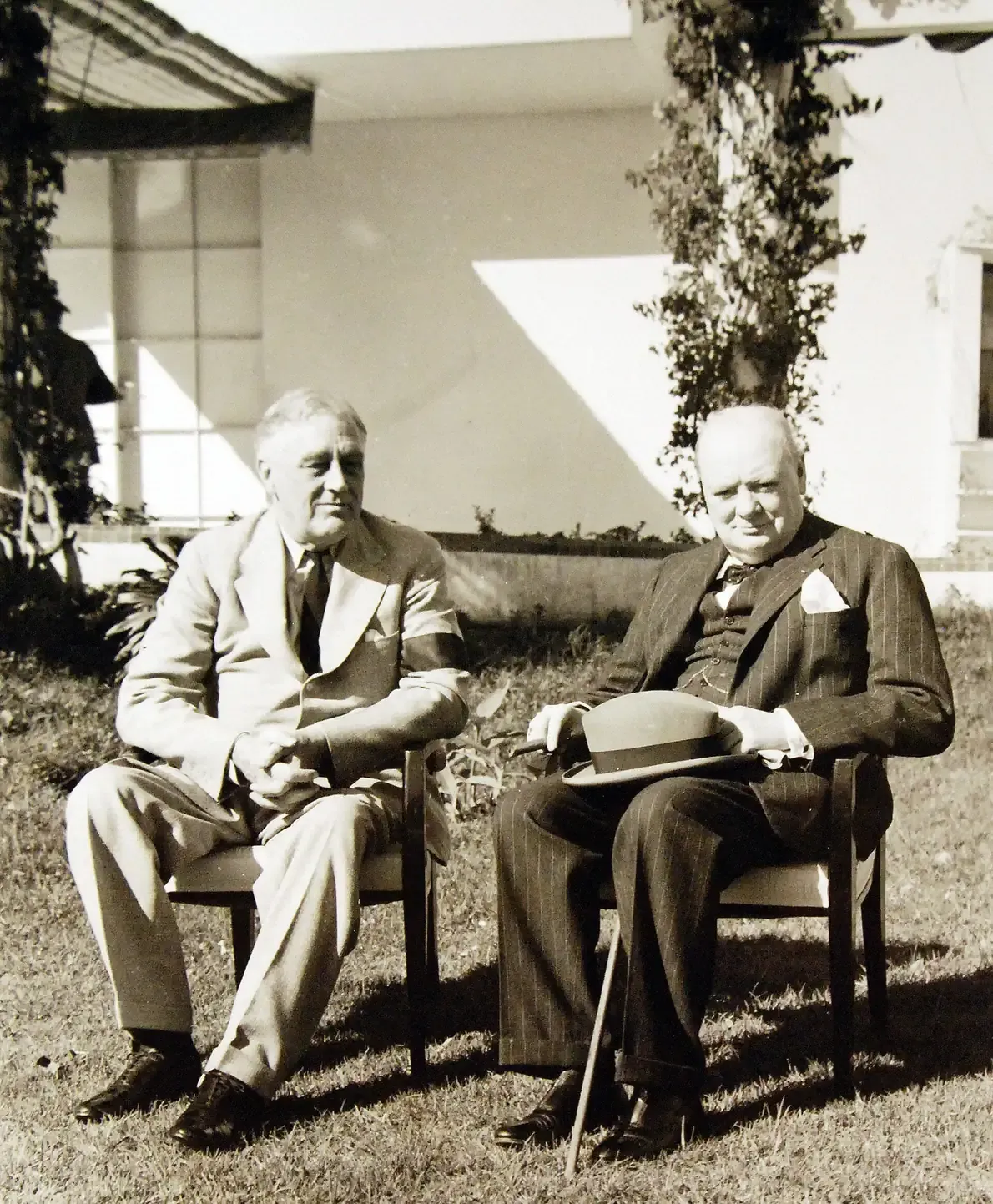
On 21 January 1943, meeting at Casablanca, the Allied chiefs of staff signed a directive committing American and British air forces to a “combined bomber offensive” against Germany: American bombers by day, RAF bombers by night, around the clock. Flying by day over defended territory meant flying high, and B-17s and B-24s began climbing to 25,000 or 30,000 feet to survive the trip: above the worst of the flak, above most of the fighters that could reach them. It also put them somewhere no aircraft engine had been asked to run reliably for eight hours at a stretch: air so thin and so cold that a spark meant to jump cleanly from an ignition harness to a cylinder’s spark plug would instead leak sideways across the insulation, arcing through the near-vacuum around it rather than following the wire. Engines misfired at exactly the altitude that was supposed to keep the crew alive.
Plate I
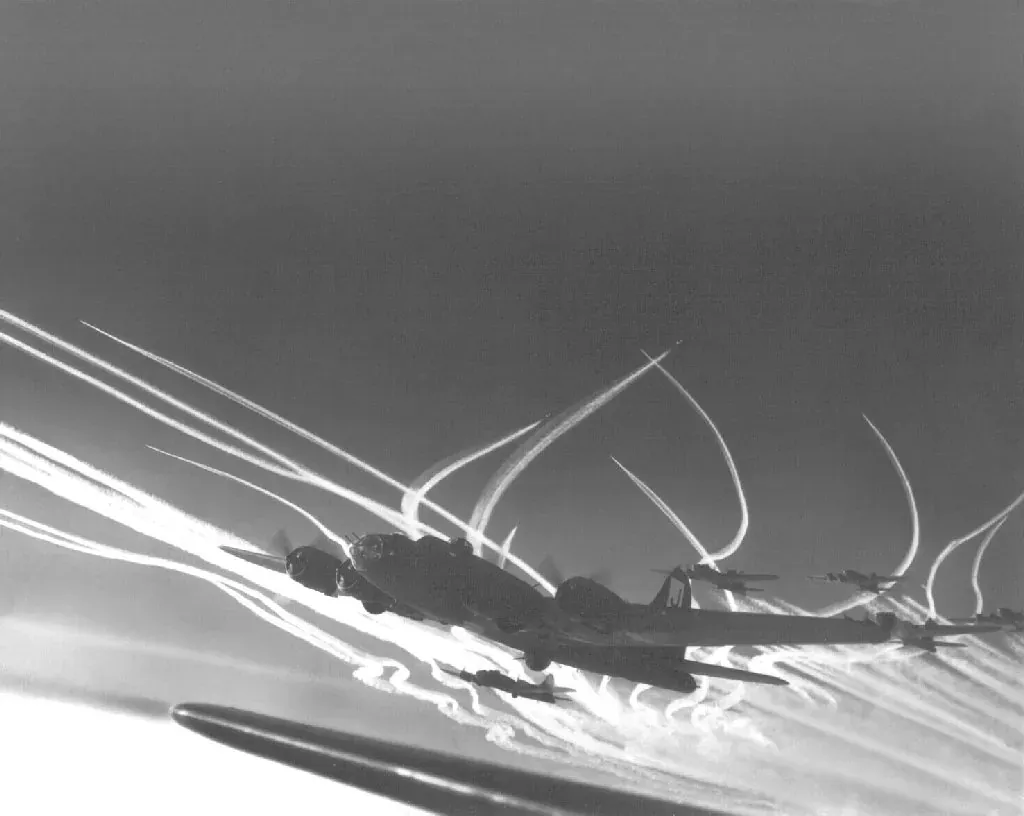

Plate II
.jpg)
The fix, as it turned out, had already been sitting in two laboratories for a few years, discovered by two chemists who had never met and had no way to compare notes. Around 1941, Eugene G. Rochow at General Electric in Schenectady, New York, found that passing methyl chloride gas over a heated silicon-copper mixture produced methylchlorosilanes directly, in one continuous step, without the expensive and flammable chemistry organosilicon compounds had previously required. In Saxony, at the Chemische Fabrik von Heyden, a German chemist named Richard Müller arrived at the same reaction independently (colleagues nicknamed him “Silicon Richard”) on the wrong side of a war that made the two men’s work invisible to each other. What both had found was the direct route to silicone: polymers built on a backbone of alternating silicon and oxygen atoms rather than carbon.
1943 is the year that chemistry became a wartime material. In December, GE committed to building a pilot silicone plant. Separately, Dow Chemical and Corning Glass Works formed a new joint venture that same year (Dow Corning) for the sole purpose of getting silicone out of the laboratory and onto a bomber. Its first product, an ignition-sealing grease packed into the wiring harness of an aircraft engine, stopped the arcing outright: a silicone chain keeps its flexibility in cold that would stiffen an organic rubber, and it does not give stray current the same easy path across its surface that conventional insulation does. Coated in it, an engine’s ignition system could hold together at 35,000 feet through an eight-hour mission. It was the ignition harness, not the airframe, that had been quietly limiting how high and how long a bomber could fly, and a compound that barely existed a year earlier fixed it.
Plate III


A Backbone Unlike Any Other
What makes silicone behave so differently from an ordinary plastic is written into the bond itself. A silicon-oxygen bond is longer than the carbon-carbon bond that anchors most organic polymers, and it rotates almost without resistance, so a siloxane chain has none of the stiffness of a carbon backbone, closer to a length of soft cord than a chain of rigid links. Every silicon atom along that backbone also carries two methyl groups, which cluster around the chain like a loose sheath, keep the individual chains from packing tightly against one another, and turn the whole surface water-repellent. And because the silicon-oxygen bond carries real ionic character alongside its covalent character, it resists the kind of thermal vibration that shakes a purely covalent carbon backbone apart at high temperature, which is most of the reason silicone tolerates heat that chars an organic rubber.
Oils, Rubbers, and Resins
The same backbone, at different chain lengths and different degrees of crosslinking, gives three quite different materials. Short, uncrosslinked chains stay liquid: silicone oils, sold across an enormous range of thicknesses, from something that pours like water to something closer to honey, and used everywhere from cosmetics to the fluid inside a transformer, prized for staying stable from deep cold to the inside of an engine bay. Longer chains, crosslinked into a loose three-dimensional network, make silicone rubber: a material that stretches to many times its own length and returns to its original shape afterward, stays flexible at temperatures that would crack an ordinary elastomer, and still holds up as a gasket or a seal at temperatures that would soften most plastics outright. Push the crosslink density higher still, sometimes with phenyl groups mixed into the backbone for extra rigidity, and the result is silicone resin: hard, chemically resistant coatings and moldings that shrug off decades of outdoor weather with little visible change.
Read against the data for this family, the pattern holds up: cured silicone sits close to the density of water, tolerates a stretch most organic rubbers would fail at, and keeps working at temperatures low enough to embrittle almost anything else, without any single member of the family being outstanding at everything. It resists dilute acids and alkalis, aliphatic solvents and everyday oils comfortably, but ketones and chlorinated solvents attack it more readily than they attack many organic plastics. This is a genuine weakness, not a footnote. And its electrical insulating properties, the reason the whole family exists, hold up across the full range of temperature and frequency an aircraft or a piece of consumer electronics is likely to see.
From the Cockpit to the Kitchen Drawer
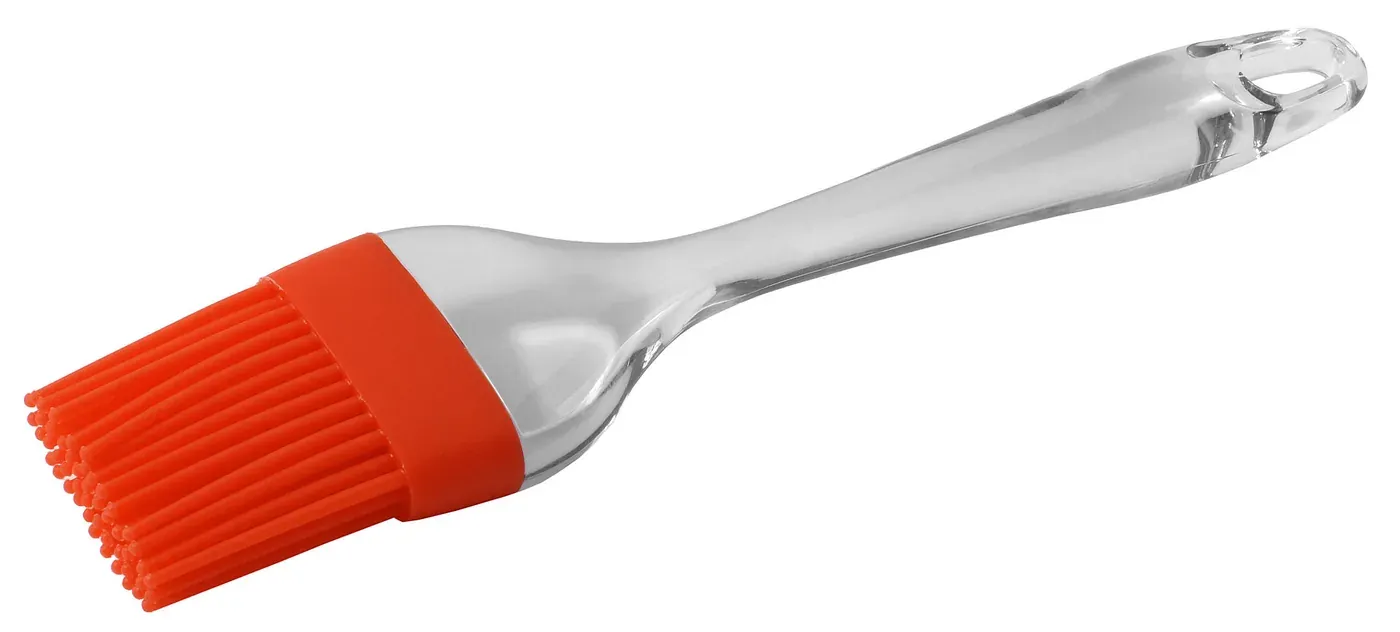
Once the war ended, the properties that had rescued a bomber’s ignition system turned out to be exactly what civilian life wanted too. Heat resistance that shrugged off an engine bay works just as well next to a stovetop; water repellence that protected a wiring harness works just as well shampooed into hair or brushed onto a cake pan. Silicone rubber’s biocompatibility opened the door to medical implants and contact lens materials. Its stability under UV and weathering put it into building sealants and outdoor coatings that are still doing their job decades later.
Plate IV

The clearest single demonstration came a generation later, on the Moon. General Electric supplied the silicone rubber tread for the soles of the Apollo lunar overshoes, flexible enough to survive the savage day-night temperature swing on the lunar surface without cracking; the same chemistry, molded into the fingertips of the mission gloves, gave astronauts enough tactile sensitivity to handle tools and pick up rock samples through a pressurized suit. Neil Armstrong’s boot prints at Tranquility Base, still visible in orbital photographs taken decades later, were pressed by a material whose whole reason for existing traces back to a wartime ignition harness at 30,000 feet.
Today the same chemistry, in its purest and most common form (polydimethylsiloxane, or PDMS) has found a second life far from any engine bay: as the soft, optically clear material microfabrication labs mold into microfluidic chips and “lab-on-a-chip” devices, doing for biology and chemistry research what it once did for a Flying Fortress.
values with [n] cite the numbered references·estimates are flagged·“not yet available” and “N/A” are honest states, not gaps
fetching the model…
The Silicon repeat unit
- Abbreviation
- Si
- Type
- polymer family (hub)
- CAS number
- 63148-62-9
- Resin ID code
- none assigned
- Formula
- (C2H6OSi)n[-Si(CH3)2-O-]nPolydimethylsiloxane, the archetypal silicone. The backbone is silicon and oxygen rather than carbon, which is the whole point of the family.
- Repeat unit (BigSMILES)
{[][>]O[Si](C)(C)[<][]}- IUPAC name
- Poly(dimethylsiloxane)
- Synonyms
- silicone; dimethicone; dimethylpolysiloxane
- Also known as
- PDMSdimethiconesilicone
- Chemical family
- silicone
- Backbone class
- heterochain
- Polymerization mechanism
- ring-opening-polymerization
- Constitutional monomer
- Cyclic siloxanes (e.g. octamethylcyclotetrasiloxane, D4)
- Polymer class
- elastomer
- Year of origin
- 1943
- Era
- The Wartime Innovation Period (1939-1945)
- Key figures
- Eugene G. Rochow · Richard Müller · Dow Corning Corporation
- Events referenced
- Casablanca Conference directive for a combined bomber offensive (21 January 1943) · Founding of Dow Corning and its wartime ignition-sealing compound (1943)
- Polymerization type
- ring-opening polymerization
- Common monomers (feedstocks)
- cyclic siloxanes (e.g. D4, D5)
- Catalysts
- alkali metal oxides (base catalysis)
The 'direct process' for synthesizing organosilicon/siloxane compounds was developed in the 1940s (associated with Eugene Rochow at General Electric and Richard Muller in Germany), founding the modern silicone industry. Commercial PDMS synthesis typically uses ring-opening polymerization of cyclic siloxanes catalyzed by alkali metal oxides.
- Tacticity
- not yet available
- Crystal structure
- Monoclinic (a:b:c = 1.3:0.775:0.83 nm, β ≈ 60°)
- Typical crystallinity
- 24–95 %[2]depends on cooling rate; unfilled PDMS (drops to 0–14% with 10–40% fumed silica)
Molecular weight
- Number average (Mn)
- 300–66000 g/mol[2]commercial products span oligomeric fluids to high-MW gums
- Mass average (Mw)
- 500–423000 g/mol[2]
- Dispersity (Mw/Mn)
- 1.6–3.9[2]
| Solvent | T | M range | K | a |
|---|---|---|---|---|
| butanone (MEK)[3] | 293 K | — | 0.0815 mL/g | 0.5 |
| ethyl phenyl ether[3] | 356 K | — | 0.077 mL/g | 0.5 |
| toluene[3] | 298 K | — | 0.02 mL/g | 0.66 |
| benzene[3] | 293 K | — | 0.012 mL/g | 0.68 |
| bromobenzene[3] | 351.85 K | — | 0.076 mL/g | 0.5 |
| ethyl iodide[3] | 275.25 K | — | 0.07 mL/g | 0.5 |
| bromocyclohexane[3] | 302 K | — | 0.074 mL/g | 0.5 |
Highly flexible Si-O backbone (larger bond angles/lengths than C-C backbones) gives PDMS very low glass transition temperature and a wide viscosity range from pourable liquids (low n) to rubbery gums (high n).
- Density
- 0.97 g/cm³[2]20°C, uncrosslinked fluid/gum (amorphous solid 0.98, crystalline 1.07)
- Melt flow index
- Not applicablePDMS exhibits a glass transition rather than melting, and viscosity (not melt flow index) is the standard processing metric for silicone fluids/gums.
- Refractive index
- 1.375–1.404[2]20°C, exp.
- Transmittance
- not yet available
- Haze
- not yet available
- Gloss
- 47 %[2]60°, Gardner, ASTM D523
- Water absorption
- not yet available
- Dielectric constant
- 2.8[2]100 Hz-1 MHz
- Dielectric strength
- 12–27 kV/mm[2]K20/P50 electrode configuration, 0.6–0.8 mm specimen thickness
- Electrical conductivity
- 2.5 × 10⁻¹⁴ S/m[2]reciprocal of reported volume resistivity (4×10¹³ Ω·m)
- Glass transition (Tg)
- -127–-123 °C[2]unfilled PDMS (-121 to -122°C with 10–40% fumed silica)
- Melting temperature (Tm)
- -55–-35 °C[2]PDMS crystallizes only on cooling well below Tg-relevant service temperatures (typically below about -40°C); this is the DSC melting endotherm of that low-temperature crystalline phase, not a melting point encountered in normal use.
- Crystallization (Tc)
- -65–-56 °C[2]rapid/quench crystallization on cooling; literature values vary widely with thermal history
- Heat deflection (HDT)
- Not applicable
- Decomposition onset
- 343 °C[2]reported as >343°C for silicone oil (unfilled fluid); 235°C reported for a sealant formulation
- Thermal conductivity
- 0.151–0.167 W/(m·K)[2]15–80°C, unfilled fluid/gum
- Tensile modulus
- 0.69–3.45 MPa[2]cured PDMS elastomer, various formulations
- Yield strength
- not yet available
- Tensile strength at break
- 0.5–9.7 MPa[2]cured PDMS elastomer, unfilled to reinforced formulations; elastomer with no distinct yield point
- Elongation at break
- 220–1600 %[2]cured PDMS elastomer
- Impact strength (Izod)
- Not applicable
- Impact strength (Charpy)
- Not applicable
- Hardness
- 15–70 Shore A[2]cured PDMS elastomer, various formulations
- Flexural modulus
- Not applicable
- Poisson's ratio
- 0.5[2]
- Coefficient of friction
- not yet available
- Solvent: acids
- good[2]dilute and concentrated
- Solvent: alcohols
- fair-poor[2]
- Solvent: alkalis
- good[2]
- Solvent: aliphatic hydrocarbons
- good[2]
- Solvent: aromatic hydrocarbons
- good-poor[2]
- Solvent: greases & oils
- good[2]
- Solvent: halogenated hydrocarbons
- poor[2]
- Solvent: ketones
- poor[2]
- Weathering / UV
- Good resistance to UV radiation[3]degradation activated mainly at 300–360 nm; sensitizers include benzophenone, ozone, mechanical stress
- Hydrolysis resistance
- not yet available
- Flammability (UL94)
- not yet available
- Limiting oxygen index
- 26–42 %[2]
- Solubility parameter (δ)
- 14.9–15.6 MPa^0.5[2]
Gas permeability
- O₂
- 4.5 × 10⁻¹¹ cm³(STP)·cm/(cm²·s·Pa)[3]33% silica-filled PDMS membrane, ~25°C
- N₂
- 2.1 × 10⁻¹¹ cm³(STP)·cm/(cm²·s·Pa)[3]33% silica-filled PDMS membrane, ~25°C
- CO₂
- 2.44 × 10⁻¹⁰ cm³(STP)·cm/(cm²·s·Pa)[3]33% silica-filled PDMS membrane, ~25°C
- water vapor
- 2.7 × 10⁻⁹ cm³(STP)·cm/(cm²·s·Pa)[3]33% silica-filled PDMS membrane, ~25°C
Polymer-solvent interaction parameter (χ)
- pentane
- 0.43[3]swelling method, 25°C
- toluene
- 0.465[3]swelling method, 25°C
- nitrobenzene
- 2.2[3]swelling method, 25°C
- ethyl ether
- 0.43[3]swelling method, 25°C
- cyclohexane
- 0.44[3]swelling method, 25°C
- hexane
- 0.4[3]swelling method, 25°C
- carbon tetrachloride
- 0.45[3]swelling method, 25°C
- ethyl iodide
- 0.58[3]swelling method, 25°C
- dioxane
- 0.61[3]swelling method, 25°C
- 2,3-dimethylpentane
- 0.392[3]swelling method, 25°C
- 2,2,4-trimethylpentane
- 0.38[3]swelling method, 25°C
- Processing methods
- ring-opening polymerization + compoundingRTV (room-temperature vulcanizing) curingcondensation/addition curing
- Drying required
- not yet determined
- Processing temperature
- 200–316 °C[2]vulcanization; other cure routes reported separately (moisture cure 0–50°C, extrusion vulcanization 250–500°C, peroxide cure 60–90°C then 130–200°C)
- Shrinkage rate
- not yet available
- Medical & cosmeticbreast implants · contact lens materials · skin moisturizers · hair conditioners
- Construction & industrialsealants and caulks · lubricants · hydraulic fluids · antifoaming agents
- Research & microfabricationsoft lithography stamps · microfluidic devices
- Recyclable
- No
- Biodegradable
- No
- Degradation pathway
- not yet available
- LD50 (oral, rat)
- 4990 mg/kg[2]no mortality observed at highest tested dose (reported as >4990 mg/kg)
- NFPA health
- 1[2]
- NFPA flammability
- 1[2]
- NFPA reactivity
- 0[2]
- Carcinogenic classification
- not listed by ACGIH, NIOSH, NTP[2]
Adverse reproductive effects have occurred in some experimental animal studies; skin (rabbit) LD50 >18,400 mg/kg.
- [1]PolydimethylsiloxaneWikipediaAccessed 2026-07-14https://en.wikipedia.org/wiki/Polydimethylsiloxane[wiki-pdms]
- [2]Handbook of PolymersChemTec Publishinghttps://www.worldcat.org/isbn/9781895198928[handbook-wypych-2016]
- [3]Polymer Data HandbookOxford University Presshttps://search.worldcat.org/search?q=Polymer+Data+Handbook+Mark+1999[handbook-mark-1999]
Illustrations
- Plate IA bomber formation over Europe in September 1943, high enough for the cold, thin air to write itself across the sky as contrails: the same conditions that made ordinary ignition insulation fail.Wikimedia Commons
- Plate IIRoosevelt and Churchill at Casablanca, January 1943, where the directive for a round-the-clock combined bomber offensive was signed.Wikimedia Commons
- Plate IIIEugene G. Rochow, photographed at an American Chemical Society meeting in 1965, more than two decades after his direct-process discovery had already gone into wartime production.Wikimedia Commons
- Plate IVA silicone pastry brush: heat resistance and water repellence developed for a wartime ignition compound, doing the same job at a stovetop.Wikimedia Commons