The Engineering Polymers Era (1961-1979)
Polyether Ether Ketone (PEEK)
A Marvel Soars Above the Rest
Nineteen sixty-five put two men outside their spacecraft. On 18 March, Alexei Leonov became the first person to leave a vehicle in orbit, tethered to Voskhod 2 by a line and nearly unable to get back in when his suit ballooned rigid in the vacuum. Eleven weeks later, on 3 June, Ed White floated free of Gemini 4 for twenty-three minutes, manoeuvring with a hand-held gas gun against the blue curve of the Earth. Both events were possible only because engineers had found materials that could survive a physical environment nothing built for the ground had ever faced: hard vacuum, savage temperature swings, and total isolation from the possibility of a spare part.
Plate I
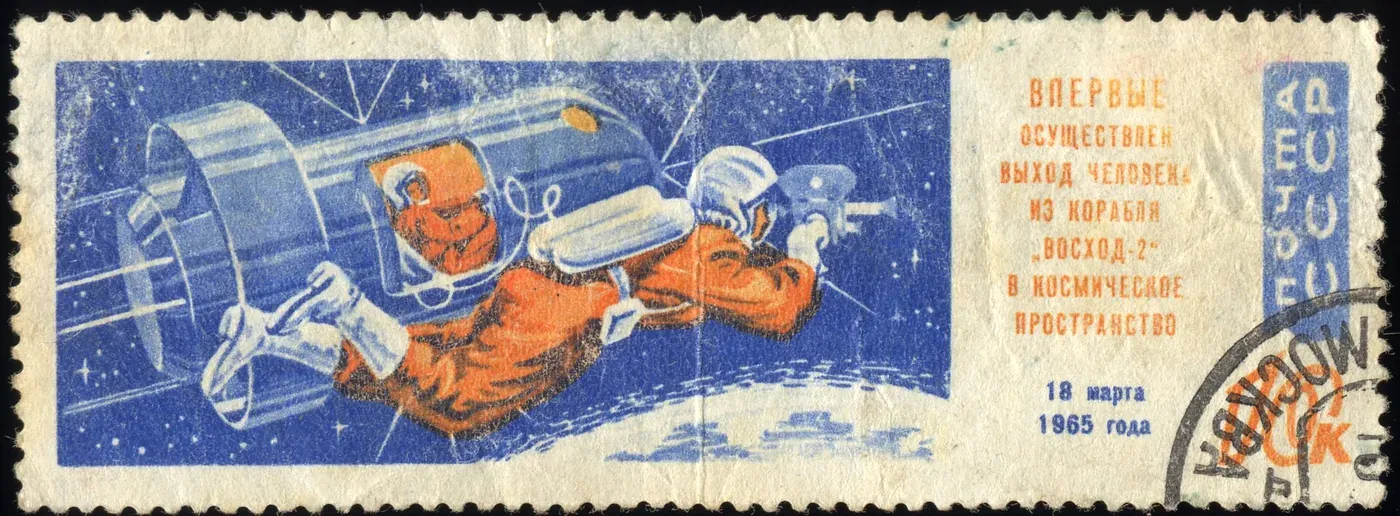

Plate II


PEEK itself was not one of that year’s discoveries; it would not exist for another dozen years. What belongs to 1965 is the demand, and the earliest chemistry that would eventually make it possible. DuPont’s Willard Bonner had already shown, back in 1962, that wholly aromatic polyketones could be built at all, though only as low-molecular-weight curiosities. By the mid-1960s, with aerospace and nuclear programmes both pushing hard for plastics that would not soften, dissolve or ignite under conditions metal itself struggled with, ICI, Phillips Petroleum and Union Carbide were each independently developing their own families of high-temperature aromatic polymers, work that produced polyphenylene sulfide and the polysulfones within the decade. PEEK grew out of that same tradition, at the same company, a little later.
The Chemists Who Actually Made It
It was not until 1977 that two chemists at ICI’s Wilton laboratories in northeast England, John Rose and Philip Staniland, worked out how to join 4,4’-difluorobenzophenone and hydroquinone into a stable, high-molecular-weight aromatic chain. ICI filed the patent in 1978, and the polymer reached the market under the name Victrex PEEK in 1981, first mostly into military and aerospace contracts, precisely the kind of extreme-environment demand that had set the whole research programme in motion in the first place.
An Alternating Chain of Rigid Rings
PEEK’s name describes its own backbone in order: two ether linkages, then a ketone, repeating. Each of those links joins onto a benzene ring, so the chain reads as a long alternation of rigid aromatic rings and short, slightly flexible bridges. The rings give the backbone its stiffness and its resistance to heat (there is very little in the chain that can twist, stretch, or break down easily), while the ether and ketone linkages provide just enough give that the material can still be processed and does not turn brittle the way a fully rigid chain would. Cooled from the melt, sections of that chain fold and pack into crystalline regions that reinforce the surrounding amorphous polymer, and the balance between the two, tunable through processing, is what lets manufacturers dial PEEK toward more strength or more toughness as the application demands.
A Material Built for the Edge Cases
PEEK is lighter than aluminium yet holds its shape and mechanical performance at temperatures that would leave most engineering plastics a puddle, and it keeps working comfortably above the temperature water boils at. It resists nearly everything a chemical plant, an autoclave or a jet engine can throw at it (acids, steam, solvents, repeated sterilisation) better than almost any other melt-processable thermoplastic, which is the real reason it commands the price it does. Mechanically it is stiff and strong without becoming brittle, tough enough to absorb an impact that would crack a more rigid plastic outright. It is not, in absolute terms, quite as heat-resistant as some ceramics or thermosets, but it is one of the very few materials that combines that heat resistance with melt-processability at all, which is what makes it usable at scale rather than merely impressive in a laboratory sample.
From Reaction to Resin
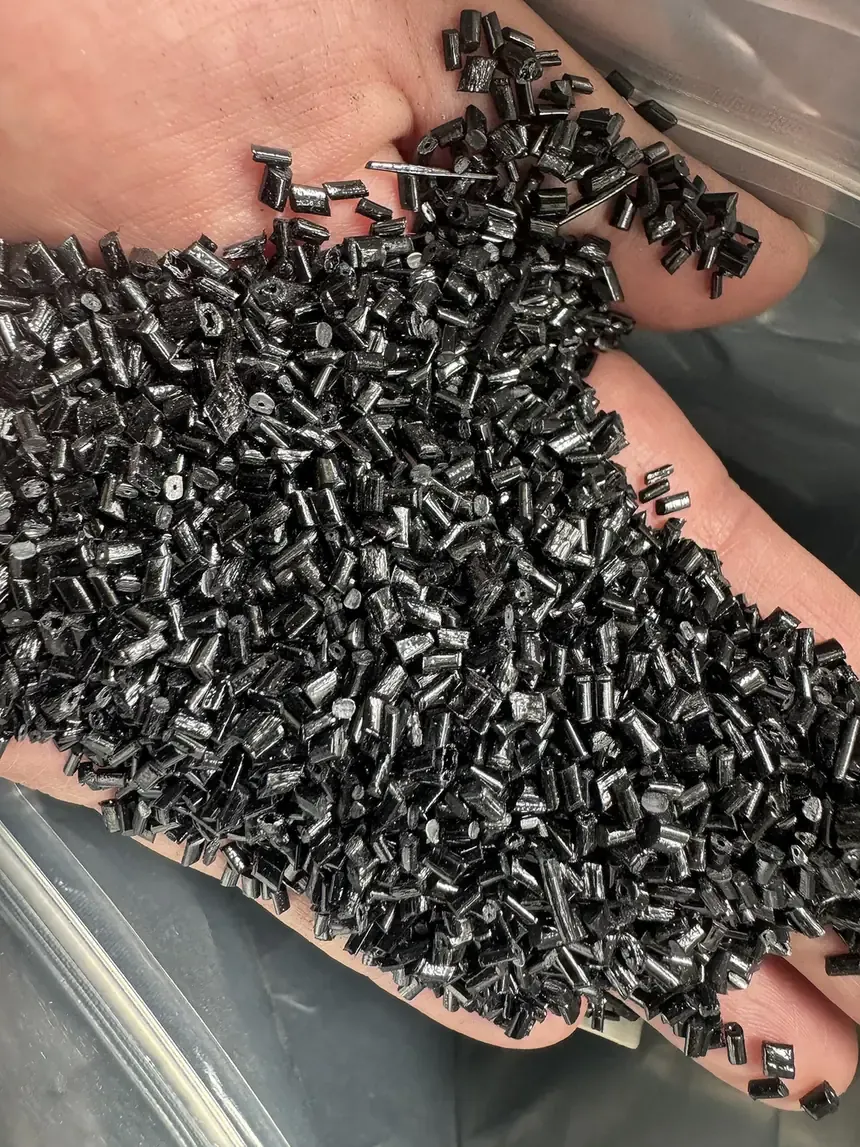
PEEK is made by nucleophilic aromatic substitution, joining 4,4’-difluorobenzophenone to the disodium salt of hydroquinone in a high-boiling aprotic solvent, typically diphenyl sulfone, at temperatures around 300°C. The reaction has to run hot enough, and long enough, to build the molecular weight the finished polymer needs, and the resulting resin is processed by extrusion or injection moulding at temperatures approaching 400°C, conditions that themselves required purpose-built equipment when PEEK first reached industrial users, since nothing already on a factory floor ran that hot as a matter of course.
Plate III

Where It Ended Up
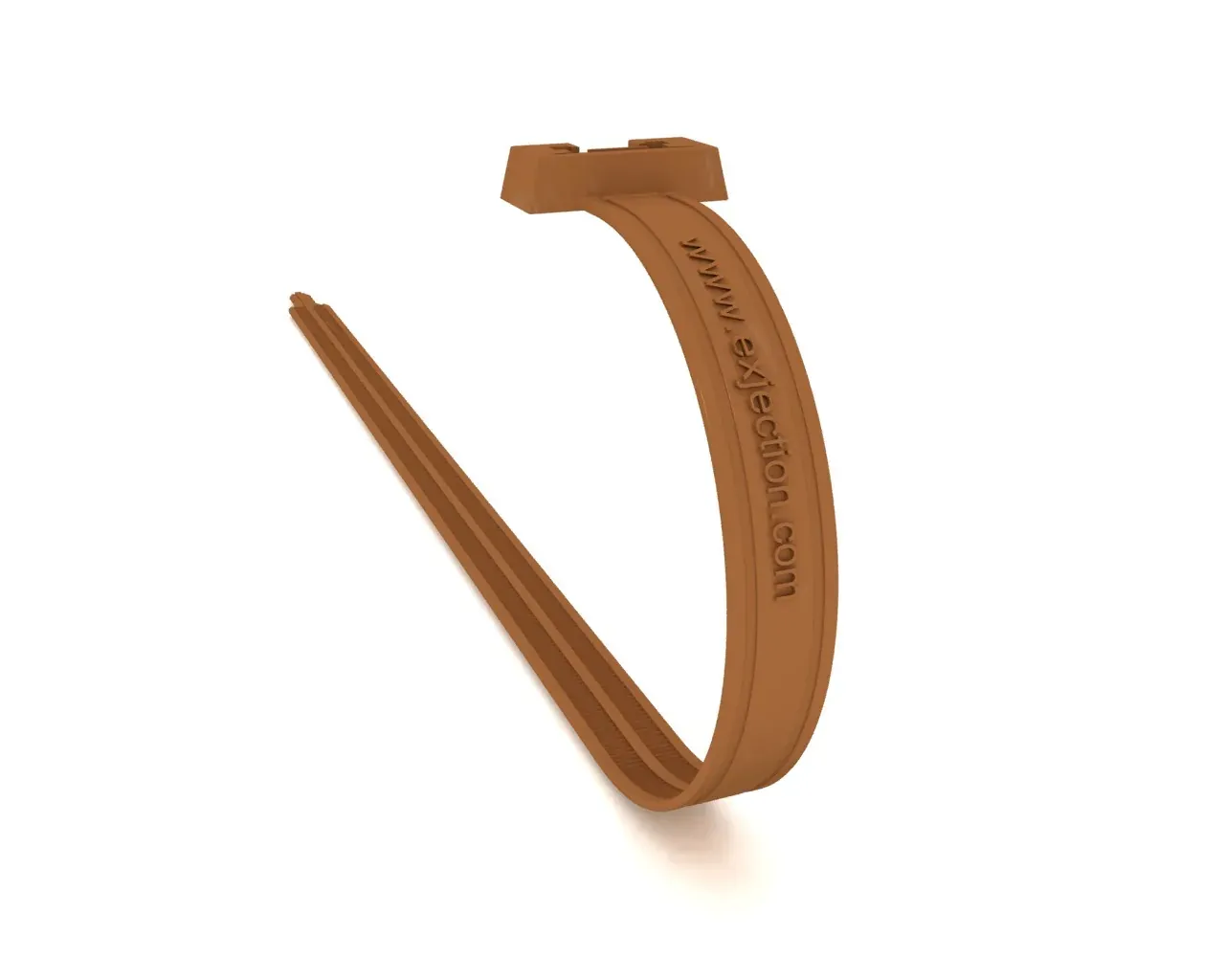
PEEK’s working life reads like a list of places failure is not an option. Aerospace engineers use it to replace metal brackets and structural components, trading a little strength for a great deal of weight. Surgeons use it for spinal cages and other implants, since its stiffness sits closer to bone than metal does and it shows up cleanly on medical scans without the imaging artefacts a metal implant produces. Oil and gas operators specify it for components that have to survive both extreme pressure and an aggressively corrosive downhole environment at the same time. Even outside those specialist worlds, PEEK has found its way into everyday high-performance hardware: cable ties and fasteners rated for conditions that would degrade ordinary nylon.
Plate IV

A Family Still Growing
PEEK is now one of a handful of PAEK-family polymers (its relatives PEK and PEKK vary the same ether-ketone chemistry in different ratios), and additive manufacturing has given the whole family a second life, letting hospitals and aerospace shops print custom PEEK implants and brackets on demand rather than machining them from stock. Sixty years after the demand that eventually produced it first appeared, PEEK is still the material engineers reach for when a part has to survive conditions nothing else will.
values with [n] cite the numbered references·estimates are flagged·“not yet available” and “N/A” are honest states, not gaps
fetching the model…
Polyether Ether Ketone repeat unit
- Abbreviation
- PEEK
- Type
- polymer family (hub)
- CAS number
- 31694-16-3
- Resin ID code
- none assigned
- Formula
- (C19H12O3)n[-O-C6H4-O-C6H4-CO-C6H4-]nThe ether-ether-ketone sequence names the polymer: two ether links then a ketone, repeating.
- Repeat unit (BigSMILES)
{[][>]Oc1ccc(cc1)Oc1ccc(cc1)C(=O)c1ccc(cc1)[<][]}- IUPAC name
- —
- Synonyms
- —
- Also known as
- —
- Chemical family
- polyketone
- Backbone class
- heterochain
- Polymerization mechanism
- step-growth-condensation
- Constitutional monomer
- 4,4'-DifluorobenzophenoneHydroquinone
- Polymer class
- thermoplastic
- Year of origin
- 1965
- Era
- The Engineering Polymers Era (1961-1979)
- Key figures
- John Rose · Philip Staniland
- Events referenced
- Alexei Leonov's first spacewalk from Voskhod 2 (March 1965) · Ed White's first American spacewalk on Gemini 4 (June 1965)
- Polymerization type
- step-growth condensation (nucleophilic aromatic substitution)
- Common monomers (feedstocks)
- 4,4'-difluorobenzophenone, hydroquinone disodium salt
- Catalysts
- not yet available
PEEK polymers were invented in November 1978 and commercialized in the early 1980s by Imperial Chemical Industries (later acquired by Victrex PLC). This is notably later than the 1965 milestone year used for this entry's chronological placement, which may reference earlier related PEK/PAEK aromatic-ketone chemistry rather than PEEK itself. Synthesized via step-growth polymerization of 4,4'-difluorobenzophenone with hydroquinone's disodium salt at ~300°C in aprotic solvents.
- Tacticity
- not yet available
- Crystal structure
- not yet available
- Typical crystallinity
- 32.5 (30–35) %[3]typical; maximum reported 48%. Wypych reports a broader observed range of 16–47% across processing conditions (handbook-wypych-2016).
Molecular weight
- Number average (Mn)
- 6200–15800 g/mol[2]
- Mass average (Mw)
- 14300–100000 g/mol[2]
- Dispersity (Mw/Mn)
- not yet available
Mark-Houwink constants
not yet available
Rigid aromatic backbone with ether/ketone linkages gives PEEK an unusual combination of high-temperature performance and semi-crystalline melt-processability (unlike many high-performance thermosets).
- Density
- 1.3 (1.26–1.4) g/cm³[2]20 °C; amorphous 1.260–1.267 g/cm³, crystalline 1.384–1.401 g/cm³ (handbook-mark-1999)
- Melt flow index
- 3–36 g/10min[2]230 °C/3.8 kg
- Refractive index
- 1.671[3]Wypych reports a broader range, 1.65–1.77, across orientation states
- Transmittance
- not yet available
- Haze
- not yet available
- Gloss
- not yet available
- Water absorption
- 0.5 %[2]equilibrium, 23 °C/50% RH; 24 h immersion at 23 °C gives 0.1–0.5%
- Dielectric constant
- not yet available
- Dielectric strength
- 19 kV/mm[2]specimen thickness 0.6–0.8 mm
- Electrical conductivity
- 1 × 10⁻¹⁴ S/m[2]reciprocal of reported volume resistivity, 1×10¹⁴ Ω·m; Mark reports 4.9×10¹⁴ Ω·m (23 °C)
- Glass transition (Tg)
- 143–158 °C[2]DSC; Mark reports 136.85–151.85 °C depending on method/thermal history (handbook-mark-1999)
- Melting temperature (Tm)
- 343 (334–350) °C[2]DSC; equilibrium (extrapolated) melting point is higher, 383.85–394.85 °C (handbook-mark-1999)
- Crystallization (Tc)
- not yet available
- Heat deflection (HDT)
- 159.85 °C[3]ASTM D648, 1.81 MPaunfilled grade; 30% glass/carbon fiber grades reach 315 °C (handbook-wypych-2016)
- Decomposition onset
- 575 °C[2]
- Thermal conductivity
- 0.25 W/(m·K)[2]ASTM C177matches value independently reported in handbook-mark-1999
- Tensile modulus
- 3560 MPa[3]ASTM D638unfilled grade; Wypych reports a broader range of 3500–4400 MPa (handbook-wypych-2016)
- Yield strength
- 91 MPa[3]ASTM D638
- Tensile strength at break
- 92 MPa[3]23 °C; falls with temperature (50 MPa at 100 °C, 12 MPa at 200 °C, 10 MPa at 300 °C). Wypych reports an unfilled-grade range of 75–100 MPa.
- Elongation at break
- 20–50 %[2]unfilled grade; Mark reports 42% (annealed) to 150% (ASTM D638, as molded/tested) depending on method (handbook-mark-1999)
- Impact strength (Izod)
- 84 J/m[3]ASTM D256, notchedunnotched Izod is no break; Wypych reports a notched range of 77–91 J/m for the unfilled grade
- Impact strength (Charpy)
- 55 kJ/m²[1]Reported as 'notch test impact'.
- Hardness
- 88 Shore D[2]unfilled grade; Rockwell R120 (handbook-wypych-2016) / R126 (handbook-mark-1999) also reported
- Flexural modulus
- 3700 MPa[3]23 °C; drops with temperature (3600 MPa at 100 °C, 500 MPa at 200 °C, 300 MPa at 300 °C). Wypych reports an unfilled-grade range of 3700–4300 MPa.
- Poisson's ratio
- 0.405 (0.4–0.41)[2]
- Coefficient of friction
- 0.22[2]general/unspecified counterface; 0.08–0.09 lubricated, 0.25–0.3 dry conditions
- Solvent: water
- Very low absorption (0.1% over 24 hours)[1]
- Solvent: dilute acids
- good[2]
- Solvent: concentrated acids
- good[2]
- Solvent: alcohols
- very good[2]
- Solvent: alkalis
- very good[2]
- Solvent: aliphatic hydrocarbons
- very good[2]
- Solvent: aromatic hydrocarbons
- very good[2]
- Solvent: esters
- very good[2]
- Solvent: greases & oils
- very good[2]
- Solvent: halogenated hydrocarbons
- very good[2]
- Solvent: ketones
- good[2]
- Weathering / UV
- not yet available
- Hydrolysis resistance
- resistant to hydrolysis and high-temperature steam[3]
- Flammability (UL94)
- V-0 to V-1[2]
- Limiting oxygen index
- 36 (35–37.3) %[2]
- Solubility parameter (δ)
- 22.8 MPa^0.5[2]Mark reports a calculated range of 21.2–22.6 MPa^0.5 (handbook-mark-1999)
Gas permeability
- O₂
- 6.2 × 10⁻¹² cm³(STP)·cm/(cm²·s·Pa)[3]7.8% crystallinity film; converted from 6.2×10⁻¹⁶ m³(STP)·m/(m²·s·Pa)
- CO₂, amorphous
- 6 × 10⁻¹⁴ cm³(STP)·cm/(cm²·s·Pa)[3]converted from 6.0×10⁻¹⁸ m³(STP)·m/(m²·s·Pa)
- CO₂, ₂₆–₃₀% crystalline
- 2.4 × 10⁻¹⁴ cm³(STP)·cm/(cm²·s·Pa)[3]converted from 2.4×10⁻¹⁸ m³(STP)·m/(m²·s·Pa)
Polymer-solvent interaction parameter (χ)
not yet available
- Medicalspinal fusion cages and implants
- Aerospace & automotivestructural and under-hood components
- Industrialultra-high-vacuum equipment · high-performance bearings and pump components · cable insulation
- Recyclable
- Yes
- Biodegradable
- No
- Degradation pathway
- not yet available
- [1]Polyether ether ketoneWikipediaAccessed 2026-07-14https://en.wikipedia.org/wiki/Polyether_ether_ketone[wiki-peek]
- [2]Handbook of PolymersChemTec Publishinghttps://www.worldcat.org/isbn/9781895198928[handbook-wypych-2016]
- [3]Polymer Data HandbookOxford University Presshttps://search.worldcat.org/search?q=Polymer+Data+Handbook+Mark+1999[handbook-mark-1999]
Illustrations
- Plate IA Soviet stamp marking Alexei Leonov's spacewalk from Voskhod 2 in March 1965, the same year the aerospace and nuclear industries' hunger for extreme-environment materials was pushing several major chemical companies toward a new class of aromatic engineering plastics.Wikimedia Commons
- Plate IIEd White during America's first spacewalk, June 1965. The same decade's demand for materials that could take extreme heat and chemical stress without adding weight is what set ICI, Phillips Petroleum and Union Carbide chasing new aromatic polymer chemistry.Wikimedia Commons
- Plate IIIPEEK resin pellets, ready for melt-processing, the raw form of a material whose real story is not a single dramatic discovery but a decade of parallel corporate research into polymers that could survive where ordinary plastics could not.Wikimedia Commons
- Plate IVA cable tie moulded from Victrex PEEK, one of the least glamorous applications of a polymer otherwise associated with jet engines and spinal implants, and a reminder that most of PEEK's working life is spent on jobs nobody notices.Wikimedia Commons