The Post-War Boom (1946-1960)
Polyisobutylene (PIB)
The Invisible Guardian of Modern Glass
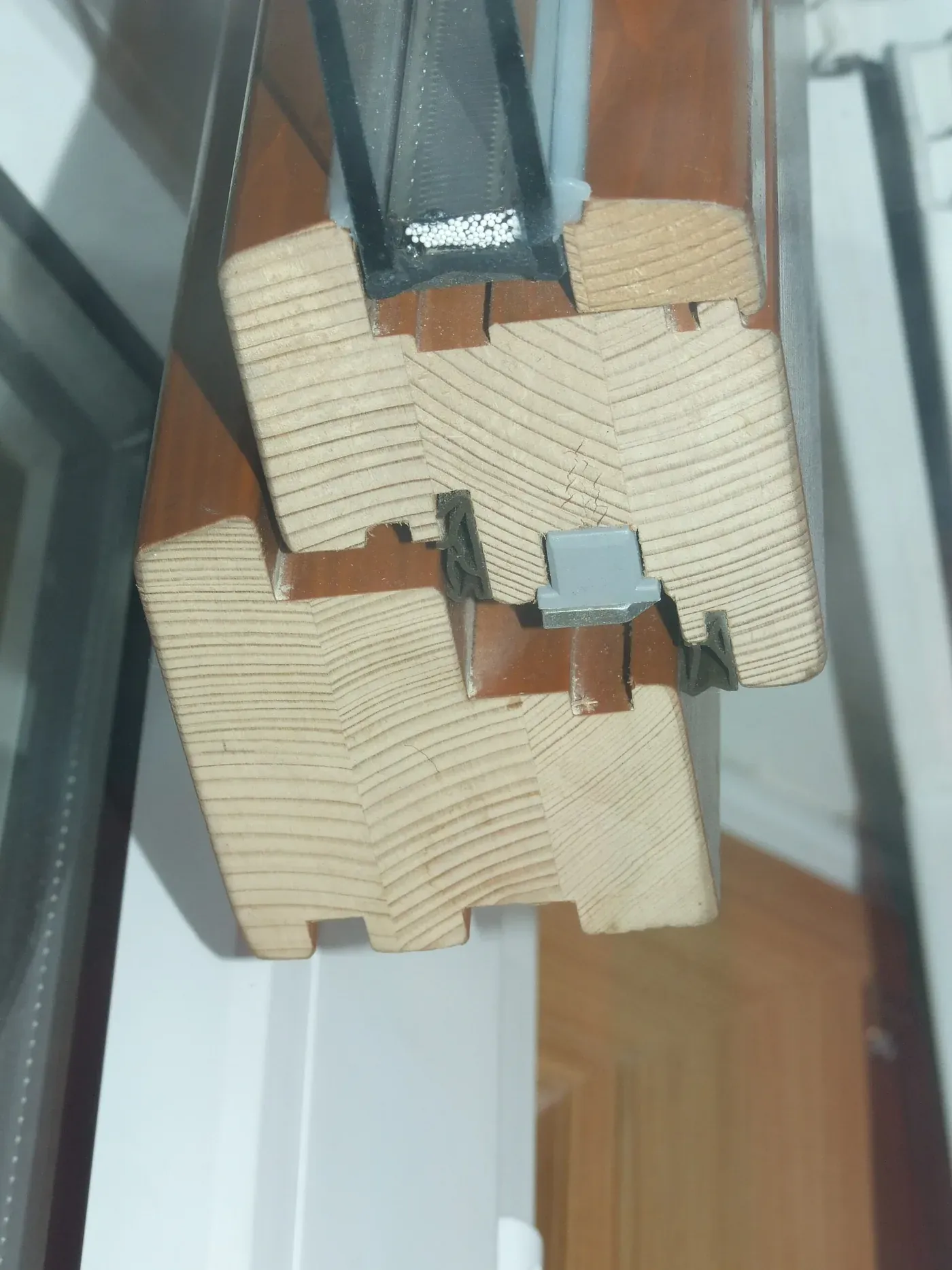
In 1960, the corner of Park Avenue and 47th Street in Manhattan gained a fifty-two-storey tower sheathed almost entirely in glass: the Union Carbide Building, one of dozens of curtain-wall skyscrapers going up that year as American and European cities rebuilt themselves in steel and glazing rather than stone. Every one of those towers depended on a detail nobody was meant to notice. A single sheet of glass loses heat far too fast for an office block; the answer was to seal two panes together with a thin cushion of air between them, and that seal had to survive decades of expansion, contraction and driving rain without ever admitting moisture. By 1960 the material doing that quiet, unglamorous job on an industrial scale was polyisobutylene, and it was already almost thirty years old.
Plate I


A Discovery Waiting for Its Application
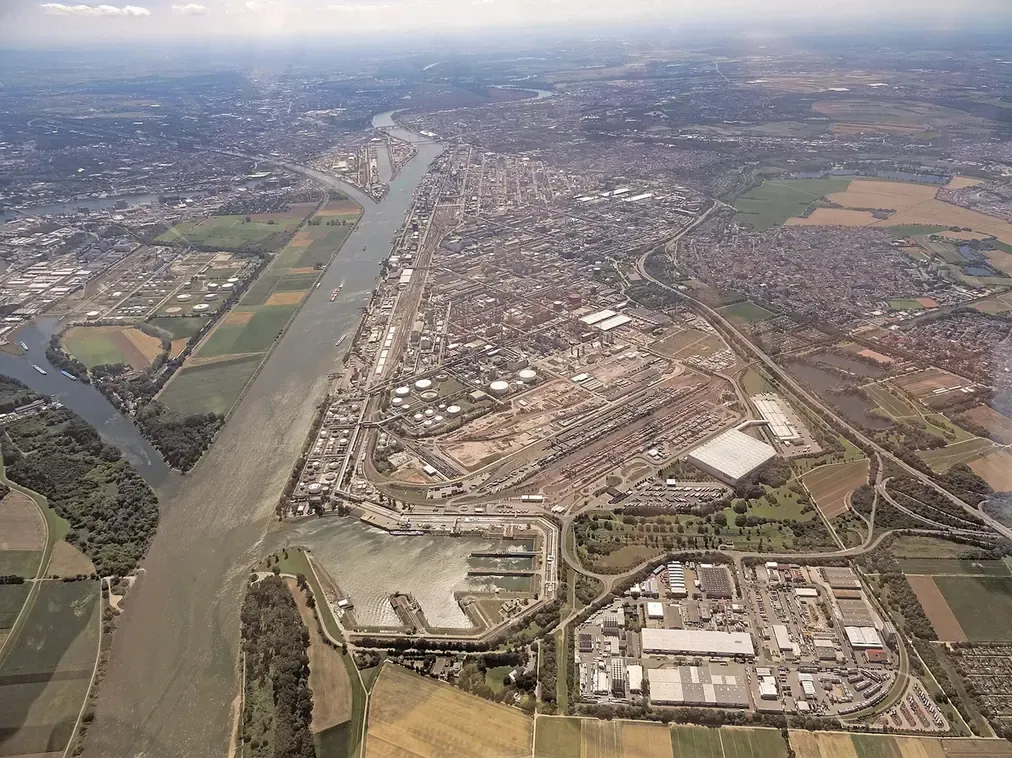
The material itself dated to 1931, when a chemist named Michael Otto, working at BASF’s Ludwigshafen plant, demonstrated that isobutylene (a small, branched relative of the ethylene and propylene already being explored elsewhere in the industry) could be polymerized under the right conditions into a rubbery, permanently soft solid. BASF filed a patent the same year, but turning a laboratory result into an industrial product took the rest of the decade: a purpose-built plant at the company’s Oppau site, from which the eventual trade name Oppanol was drawn, did not begin production until 1938. BASF itself did not survive the next few years intact. It had become part of the wartime conglomerate IG Farben, which the Allies broke apart after 1945; BASF was not re-established as an independent company until January 1952. The Oppanol business that supplied the glazing trade by 1960 belonged to a company barely eight years old under that name, rebuilding an export market from a discovery it had made three decades earlier.
Plate II

Why a Chain of Nothing Much Works So Well
Polyisobutylene’s backbone is chemically almost boring on purpose: a plain carbon chain in which every other carbon carries two methyl groups rather than one. Where polypropylene’s single methyl group leaves room for the chain to fold into an ordered, crystalline arrangement, polyisobutylene’s paired methyl groups crowd the backbone too densely for that to happen under normal conditions. Left alone at room temperature it stays an amorphous, rubbery gum with no sharp melting point at all; only under real cold or mechanical stress will short stretches of chain reluctantly line up into crystals, and even then the effect is temporary rather than the permanent, load-bearing crystallinity that gives HDPE or isotactic polypropylene their rigidity. That same crowding also packs the chain so tightly, atom for atom, that almost nothing (not water vapour, not oxygen, not most solvents) can find a path through it. A material that mostly refuses to organize itself into crystals turns out to be exactly what you want in a seal: flexible enough to move with a window frame through a change of season, and dense enough, at the molecular level, to stop gas and moisture from working their way through.
From Reactor to Window Frame
PIB is made by cationic polymerization, a route almost unique among the common commodity polyolefins, which otherwise rely on free-radical or coordination catalysis. Isobutylene gas is dissolved in a chilled solvent, generally methyl chloride, and polymerized at temperatures as low as minus 90°C using a strong Lewis acid such as aluminum chloride or boron trifluoride as catalyst. That is cold enough that the reaction has to run in refrigerated plant rather than an ordinary reactor. Controlling temperature, catalyst concentration and reaction time lets producers dial in molecular weights across an extraordinary range, from a few hundred grams per mole up into the millions, and that range is what gives the material its split personality: the lowest-molecular-weight grades flow like a thick syrup and go into adhesives and lubricant additives, while the highest-molecular-weight grades behave as a tough, resilient rubber suited to tire liners and heavy sealants.
Where the Invisible Keeper Turns Up
Sealed insulating glass remains PIB’s signature application, extruded as the primary seal in the narrow channel between two panes where it never sees daylight and, done properly, is never noticed at all. High-molecular-weight grades serve a second, equally invisible role as a viscosity-index improver in engine oil, keeping it flowing consistently from a cold start to a hot motorway run. And in one application that is anything but invisible, PIB is the base that gives chewing gum its chew: an inert, non-toxic elastomer that neither dissolves nor reacts with anything in the mouth, exactly the property that makes it useful in insulating glass as well.
Plate III
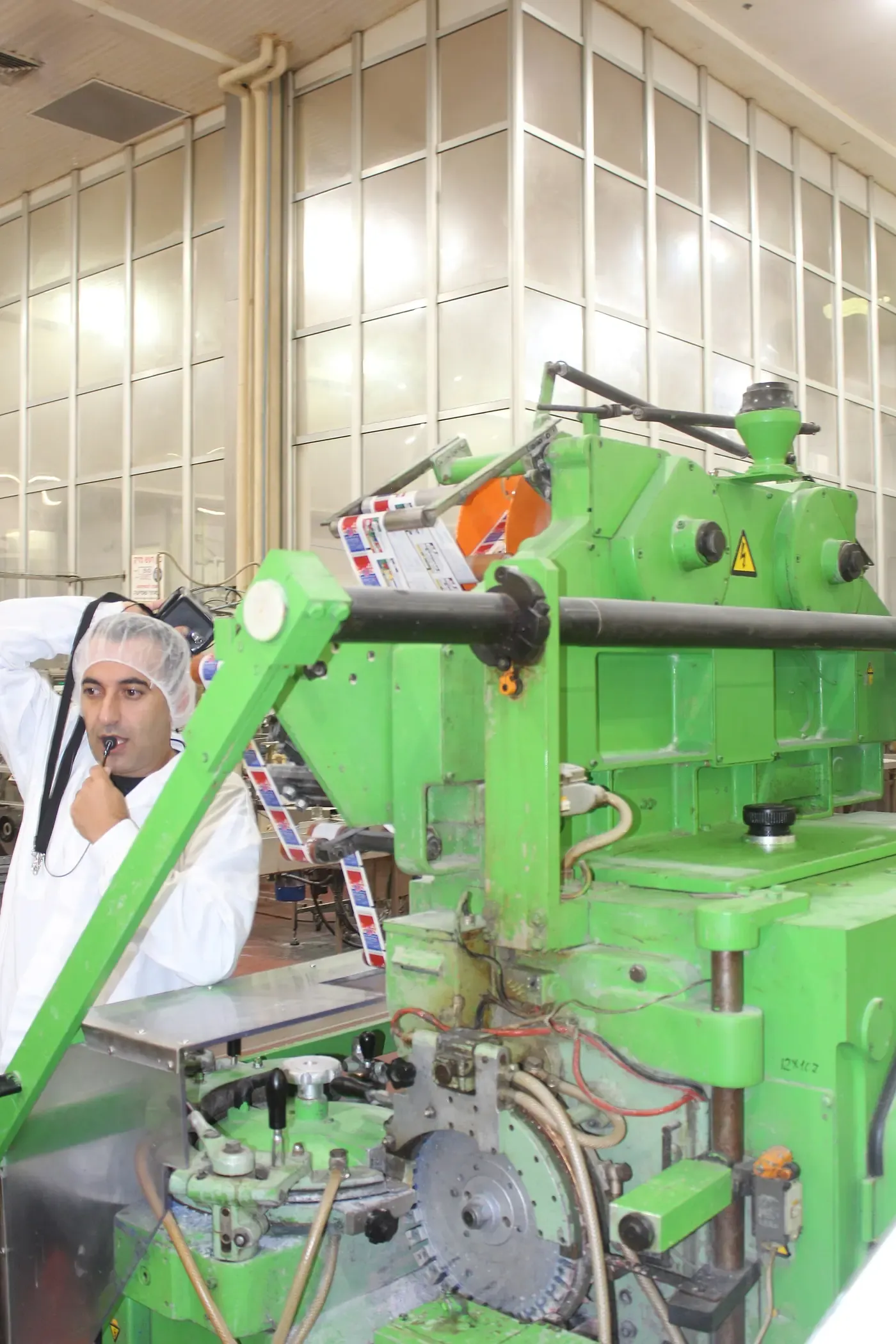

Plate IV

A related but distinct material deserves a mention here without being confused for it: copolymerizing isobutylene with a small fraction of isoprene gives butyl rubber, a tougher, crosslinkable elastomer whose own American origin story, at Standard Oil of New Jersey, belongs to a separate entry in this Atlas rather than to plain polyisobutylene.
Looking to the Future
The properties that made PIB indispensable to postwar glazing (near-total impermeability, chemical inertness, and a rubbery flexibility that never seems to age out) are now being asked to do new work. Researchers are testing it as an encapsulant for solar panels, where the same resistance to moisture that protects a window cavity can protect a photovoltaic cell for decades outdoors, and as a barrier layer in next-generation battery designs. Ninety-odd years after Michael Otto’s original synthesis, the least conspicuous polyolefin is still finding new places to disappear into.
values with [n] cite the numbered references·estimates are flagged·“not yet available” and “N/A” are honest states, not gaps
fetching the model…
Polyisobutylene repeat unit
- Abbreviation
- PIB
- Type
- polymer family (hub)
- CAS number
- 9003-27-4
- Resin ID code
- none assigned
- Formula
- (C4H8)n[-CH2-C(CH3)2-]nThe paired methyl groups on every other backbone carbon crowd the chain too densely to let it crystallize under normal conditions, so PIB stays an amorphous gum at room temperature; it forms only transient crystallites under mechanical stress or well below room temperature (see the thermal block).
- Repeat unit (BigSMILES)
{[][$]CC(C)(C)[$][]}- IUPAC name
- Poly(isobutylene)
- Synonyms
- polyisobutene
- Also known as
- polyisobutene
- Chemical family
- polyolefin
- Backbone class
- carbon-chain
- Polymerization mechanism
- cationic
- Constitutional monomer
- Isobutylene
- Polymer class
- elastomer
- Year of origin
- 1960
- Era
- The Post-War Boom (1946-1960)
- Key figures
- Michael Otto · BASF
- Events referenced
- Completion of the Union Carbide Building (270 Park Avenue), an all-glass curtain-wall skyscraper (1960)
- Polymerization type
- cationic chain-growth
- Common monomers (feedstocks)
- isobutylene
- Catalysts
- strong Bronsted or Lewis acids
Made via cationic polymerization initiated by a strong Bronsted or Lewis acid. Low molecular weight grades (Mn ~500) serve as plasticizers; medium/high molecular weight grades (Mn >= 20,000) go into adhesives. Copolymerization with a small amount of isoprene gives butyl rubber (a distinct, separately-tracked material).
- Tacticity
- not yet available
- Crystal structure
- not yet available
- Typical crystallinity
- not yet available
Molecular weight
- Number average (Mn)
- 180–6000 g/mol[2]oligomer range (Wypych); Mark gives a wider application-dependent range: 500–5,000 (dispersants) up to 5,000–6,000,000 (blends/viscosity modifiers/chewing gum), 100,000–600,000 (elastomer grades)
- Mass average (Mw)
- 900–1100000 g/mol[2]
- Dispersity (Mw/Mn)
- 1.06–2.1[2]Wypych; Mark reports a broader 2.0–4.0
| Solvent | T | M range | K | a |
|---|---|---|---|---|
| cyclohexane[3] | 298 K | — | 0.0135 mL/g | 0.74 |
| benzene[3] | 298 K | — | 0.1 mL/g | 0.504 |
Fully saturated, methyl-substituted backbone gives PIB very low gas permeability and excellent chemical inertness; these are the properties underlying its 'invisible sealant' role in insulating glass.
- Density
- 0.917 (0.788–0.972) g/cm³[3]20°C, amorphous, high-MW PIB (Mark; matches the formula 0.9171-30/Mn extrapolated to high Mn); Wypych reports 0.788–0.921 across the oligomer MW range, 0.972 crystalline; Mark separately reports crystalline density 0.964
- Melt flow index
- 200–300 g/10min[2]230°C/3.8 kg
- Refractive index
- 1.505–1.51[2]20°C, high-MW PIB; oligomers range lower at 1.445–1.508; Mark's high-Mn extrapolated value is 1.5092
- Transmittance
- not yet available
- Haze
- not yet available
- Gloss
- not yet available
- Water absorption
- [3]<200 ppm (<0.02%), pure polymer, 20°C, total immersion; compounding increases uptake
- Dielectric constant
- 2.4[3]1 atm, 20°C, 1 kHz
- Dielectric strength
- 42 kV/mm[2]d=0.6–0.8mm
- Electrical conductivity
- 1 × 10⁻¹² S/m[3]20°C, gum vulcanizate; reported directly as conductivity, not as the reciprocal of resistivity
- Glass transition (Tg)
- -72 (-72–-62) °C[2]exp.; calc.=-71; Mark's DSC measurement gives -71°C and -65°C (202 K, 208 K), consistent
- Melting temperature (Tm)
- 2–44 °C[3]PIB crystallizes below 20°C or under mechanical stress; Mark reports melting points of 275 K and 317 K (~2°C and ~44°C, depending on annealing conditions) for this stress-/cold-crystallized form, with a heat of fusion of 52 cal/g at the melting point. This is not a melt transition of the material in its normal amorphous gum state.
- Crystallization (Tc)
- not yet availablePIB is capable of crystallizing below 20°C or under mechanical stress (see tm), but neither handbook reports a numeric crystallization temperature.
- Heat deflection (HDT)
- Not applicableNo ASTM D648 heat-deflection-under-load result exists for this uncrosslinked gum elastomer; Mark separately reports a low-temperature deflection value of <210 K (<-63°C) tied to its glass transition (202–208 K), a different quantity from heat deflection under load.
- Decomposition onset
- 120 °C[2]>120°C; Mark reports 50% volatile loss in 30 min at 320°C (a different, less conservative degradation metric)
- Thermal conductivity
- 0.13 W/(m·K)[3]20°C, gum vulcanizate; rises to 0.23 with 50 phr carbon black filler; Wypych separately reports 0.19–0.26 for the melt
- Tensile modulus
- Not applicableUncrosslinked PIB gum has no stable equilibrium tensile modulus in the conventional solid sense; Mark's only reported figure (0.5–50 MPa) is explicitly stated to depend on compounding ingredients, i.e. it describes compounded/vulcanized rubber rather than the neat homopolymer.
- Yield strength
- Not applicableElastomeric stress-strain behavior shows no distinct yield point; neither handbook reports one.
- Tensile strength at break
- 1.7–2.5 MPa[2]excludes Mark's much broader compounded-rubber range (0.5–50 MPa), which reflects filled/vulcanized IIR formulations rather than neat PIB
- Elongation at break
- 50–700 %[2]
- Impact strength (Izod)
- Not applicableNotched Izod impact testing requires a rigid molded bar; not meaningful for an uncrosslinked gum elastomer, and neither handbook reports a value.
- Impact strength (Charpy)
- Not applicableNotched Charpy impact testing requires a rigid molded bar; not meaningful for an uncrosslinked gum elastomer, and neither handbook reports a value.
- Hardness
- Not applicableUncrosslinked, unvulcanized PIB gum lacks the stable elastic network a durometer reading needs; Mark's only reported figure (Shore A 5–100) is explicitly compounding-dependent, reflecting finished vulcanized rubber goods rather than the neat homopolymer.
- Flexural modulus
- Not applicableThree-point flexural testing requires a rigid bar specimen; not meaningful for an uncrosslinked gum elastomer, and neither handbook reports a value.
- Poisson's ratio
- 0.49[3]20°C
- Coefficient of friction
- not yet available
- Solvent: acids
- good[2]dilute and concentrated
- Solvent: alcohols
- good[2]
- Solvent: alkalis
- good[2]
- Solvent: aliphatic hydrocarbons
- poor[2]
- Solvent: aromatic hydrocarbons
- poor[2]
- Solvent: esters
- poor[2]
- Solvent: greases & oils
- poor[2]
- Solvent: halogenated hydrocarbons
- poor[2]
- Solvent: ketones
- poor[2]
- Weathering / UV
- Degrades via ozone attack and UV-driven autoxidation (hydroperoxides, chain scission, crosslinking); no stabilizer-based photostability class given[2]
- Hydrolysis resistance
- Not applicableFully saturated hydrocarbon backbone (isobutylene units only); no hydrolyzable linkages.
- Flammability (UL94)
- not yet available
- Limiting oxygen index
- not yet available
- Solubility parameter (δ)
- 16.5–17.1 MPa^0.5[2]Wypych 17.1; Mark 16.5 (20°C)
Gas permeability
not yet available
Polymer-solvent interaction parameter (χ)
- cyclohexane
- 0.44[3]25°C, PIB/IIR chapter
- Processing methods
- cationic solution/slurry polymerization
- Drying required
- not yet determined
- Processing temperature
- Not applicableFabricated by compounding, vulcanization, coating and sheeting rather than thermoplastic melt processing; neither handbook reports a processing temperature range.
- Shrinkage rate
- Not applicableNot injection-molded into rigid parts (fabricated by compounding/coating/sheeting instead), so mold shrinkage is not a meaningful measurement; neither handbook reports a value.
- Consumerchewing gum base
- Constructioninsulating glass sealants
- Adhesiveshigh-MW grades in commercial adhesives
- Industriallow-MW grades as plasticizers · butyl rubber precursor (via isoprene copolymerization)
- Recyclable
- No
- Biodegradable
- No
- Degradation pathway
- not yet available
- LD50 (oral, rat)
- 34600 mg/kg[2]>2,000 also reported (different study/grade)
- NFPA health
- 0–1[2]HMIS rating, 0–4 scale (health reported as a 0–1 range)
- NFPA flammability
- 1[2]HMIS rating, 0–4 scale
- NFPA reactivity
- 0[2]HMIS rating, 0–4 scale
- Carcinogenic classification
- not listed by ACGIH, NIOSH, NTP[2]
TLV (ACGIH): 2 mg/m³ inhalable. Skin (rabbit) LD50: non-irritant. Mutagenic, teratogenic and reproductive toxicity: none reported.
- [1]PolyisobuteneWikipediaAccessed 2026-07-14https://en.wikipedia.org/wiki/Polyisobutylene[wiki-polyisobutylene]
- [2]Handbook of PolymersChemTec Publishinghttps://www.worldcat.org/isbn/9781895198928[handbook-wypych-2016]
- [3]Polymer Data HandbookOxford University Presshttps://search.worldcat.org/search?q=Polymer+Data+Handbook+Mark+1999[handbook-mark-1999]
Illustrations
- Plate IThe Union Carbide Building at 270 Park Avenue, completed in 1960. It was one of the wave of all-glass towers whose sealed double-glazing depended on polyisobutylene.Wikimedia Commons
- Plate IIBASF's Ludwigshafen site on the Rhine, where Michael Otto first polymerized isobutylene in 1931 and where Oppanol production began in 1938.Wikimedia Commons
- Plate IIIChewing gum production: the same chemical inertness that keeps polyisobutylene stable in a window seal for decades makes it equally stable in the mouth.Wikimedia Commons
- Plate IVA window profile in cross-section: the dark strip sealing the gap between the panes is exactly the kind of joint polyisobutylene was built to hold for decades without failing.Wikimedia Commons