The Post-War Boom (1946-1960)
Hydrogels
The Polymers That Learned to Hold Water
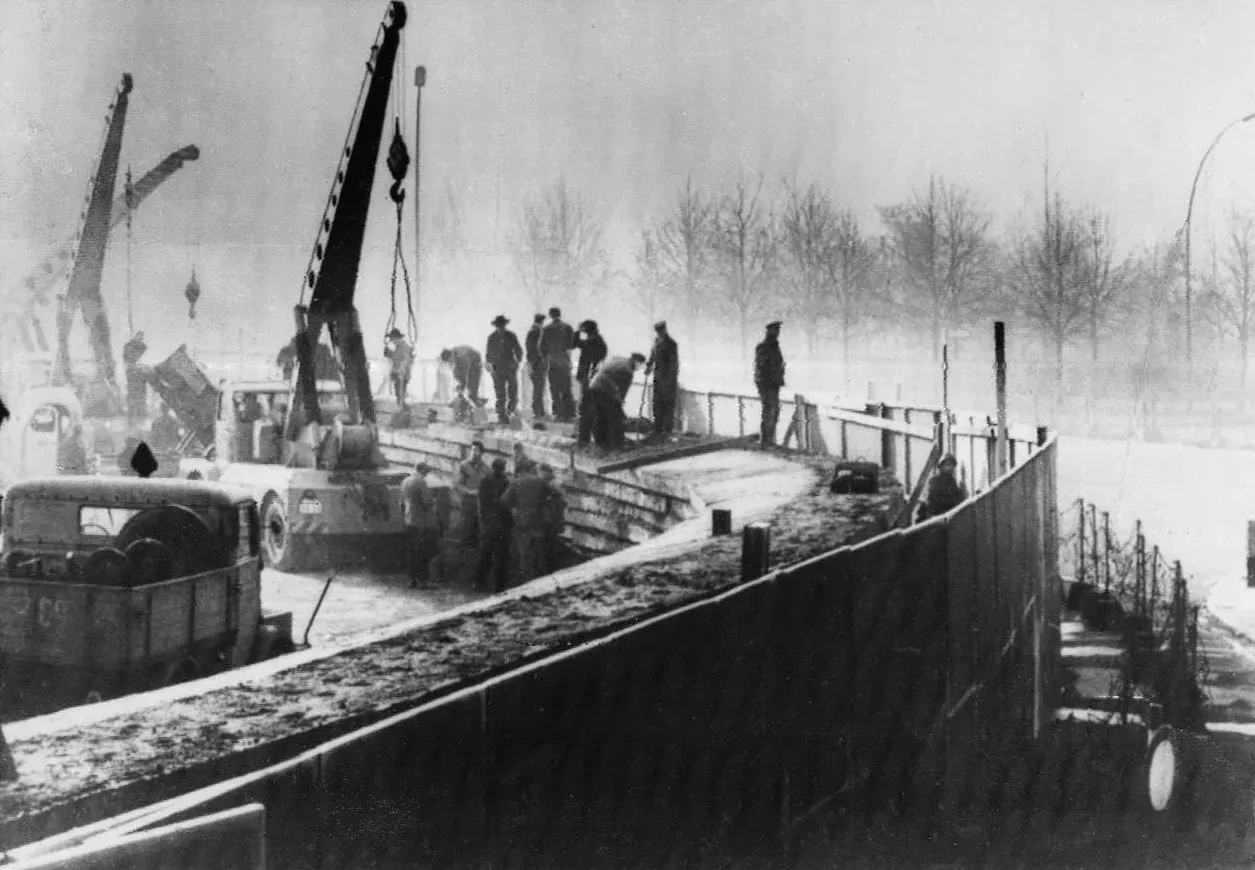
In August 1961, East German work crews began unrolling barbed wire and stacking concrete blocks through the middle of Berlin, and within days a city was cut cleanly in two. It was the year the Cold War stopped being an abstraction and became something you could stand in front of and touch: a hard, impermeable line drawn straight through people’s streets and families.
Plate I

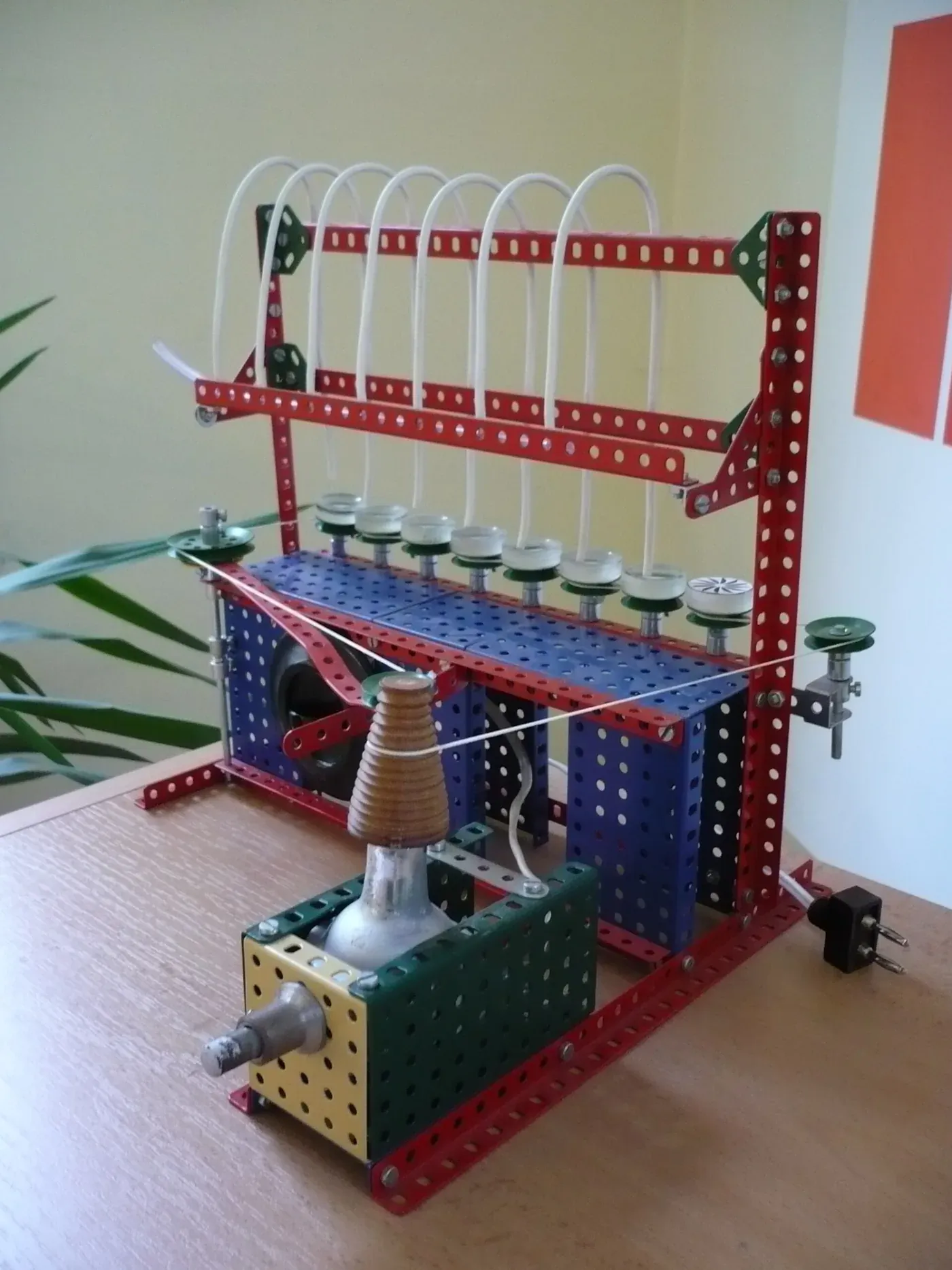
Behind a much older curtain, in Czechoslovakia, a chemist named Otto Wichterle was working on the opposite problem: not how to keep two things apart, but how to make one material behave like two things at once. A year earlier, he and Drahoslav Lím had published a short paper on hydrophilic gels for biological use, but the state research institute saw no funding in it and Wichterle lost his laboratory access. Undeterred, on Christmas Eve of 1961 he sat down at his own kitchen table with his son’s Merkur construction set (the Czech answer to Meccano), a bicycle dynamo, and a doorbell transformer, and built a machine that spun liquid gel into shape as it cured. That night he cast the world’s first four soft contact lenses. Over the following months he and his wife, working at that same kitchen table, cast roughly five and a half thousand more before the state took an interest and gave him his laboratory back.
Plate II


Plate III

A hydrogel is not one polymer but a whole class of them, defined by behaviour rather than chemistry. It is a three-dimensional network of polymer chains, crosslinked just enough that it cannot dissolve, that drinks in water until it swells into a soft, coherent solid, sometimes ninety percent water or more, yet still elastic and self-supporting. In doing so, hydrogels blur a line that had always seemed absolute: the one between the hard, dry world of plastics and the soft, wet world of living tissue.
A Network Built to Drink
The defining feature of any hydrogel is its crosslinked network: water-loving polymer chains tied together at scattered points, the way a fishing net is tied at its knots. Because the chains themselves are hydrophilic, the network eagerly absorbs water; because the crosslinks hold it together, it swells rather than dissolving, trapping that water inside a mesh it can never quite wring out. Too few crosslinks and the network dissolves into slime; too many and it turns stiff and brittle. Somewhere in between, the material lands on something close to the feel of living tissue: soft, wet, yielding, and resilient. Wichterle and Lím’s original hydrogel was built on a monomer called HEMA, but the family has since grown to include natural polymers, fully synthetic ones, and hybrids of the two, all sharing that same basic architecture.
Responsive by Design
Many hydrogels are not passive sponges but active ones, swelling or shrinking in reply to a change in their surroundings: temperature, acidity, light, or the presence of a specific molecule. This connects them directly to the stimulus-responsive polymers covered elsewhere in this Atlas, such as PNIPAM, and it is what turns a hydrogel from a material into something closer to a mechanism: a gel that senses glucose and releases insulin in response, or one that collapses precisely at body temperature to deposit a drug exactly where it has arrived.
From the Eye to the Wound
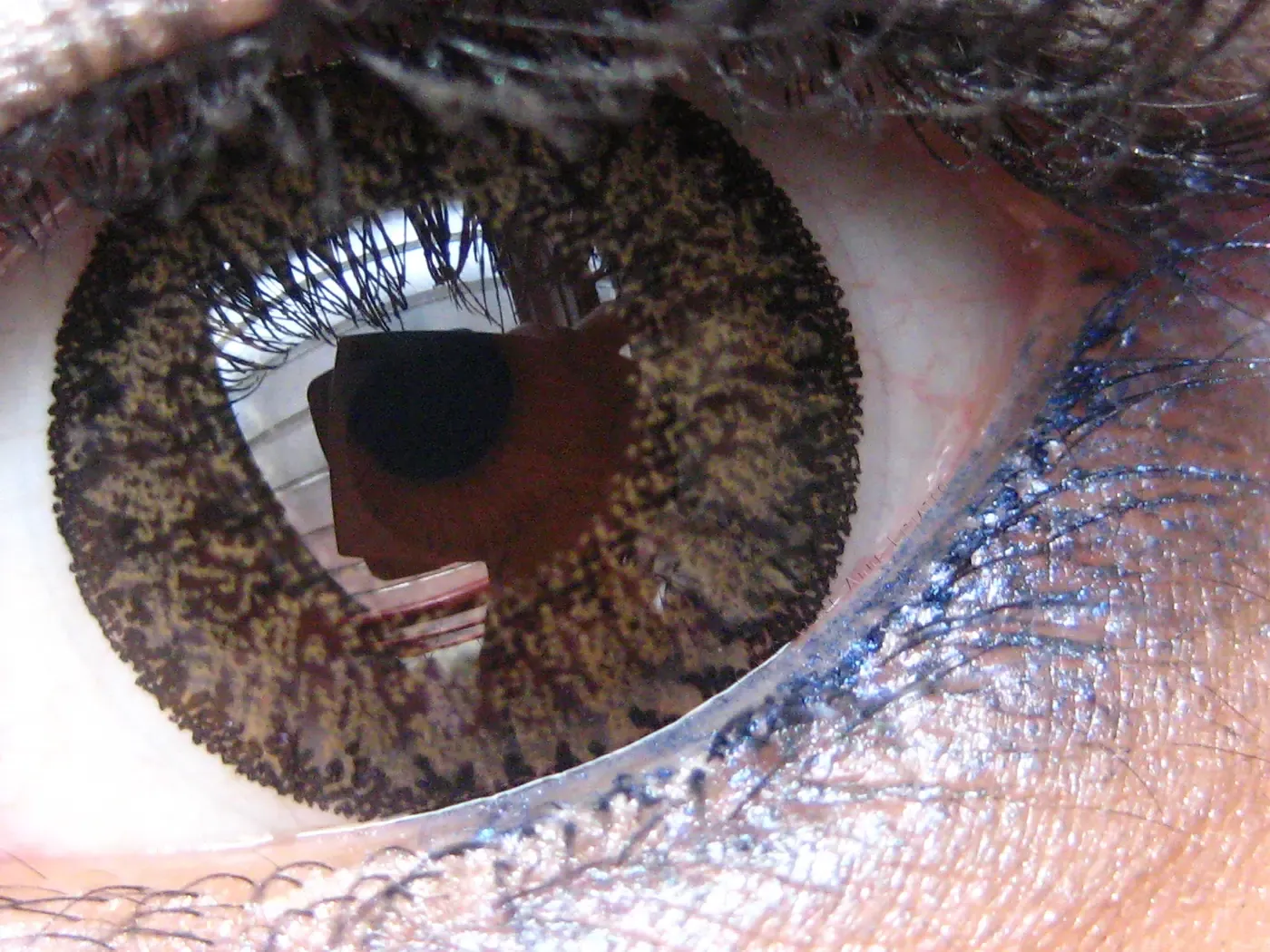
The hydrogel’s first triumph was the soft contact lens. Wichterle’s HEMA gel, comfortable and oxygen-permeable in a way the older rigid lenses never were, reached the market in 1971 and changed vision correction for hundreds of millions of people; it remains one of the most successful biomedical materials ever devised.
Plate IV

From there, hydrogels spread into medicine and daily life. They form the absorbent core of disposable diapers, where superabsorbent networks lock away many times their own weight in liquid. They dress wounds and burns, keeping tissue moist while it heals. They serve as scaffolds for growing cells in tissue engineering, as vehicles for controlled drug delivery, and as the wet, tissue-like substrates underlying much of today’s soft robotics and bioelectronics research. Wherever a material has to be gentle, wet, and compatible with living tissue, a hydrogel is usually the answer.
The Soft Frontier
Hydrogels remain one of the more active frontiers in materials science precisely because they are so unlike ordinary plastics. Researchers are building tough, self-healing gels sturdy enough for load-bearing use, conductive gels that carry electrical signals the way nerves do, and injectable gels that form scaffolds inside the body after the fact. Some of the most ambitious work aims to grow entire tissues, and eventually organs, within hydrogel frameworks.
More than sixty years after a chemist behind the Iron Curtain built a working polymer laboratory out of his son’s toys, the hydrogel remains a bridge between worlds: the synthetic and the biological, the rigid and the soft, the material and the living.
values with [n] cite the numbered references·estimates are flagged·“not yet available” and “N/A” are honest states, not gaps
- Abbreviation
- —
- Type
- polymer family (hub)
- CAS number
- None (heterogeneous class or not assigned)
- Resin ID code
- none assigned
- Formula
- Hydrogels are a broad structural/functional class (a crosslinked hydrophilic polymer network holding at least 10% water or biological fluid), not a single chemistry. Base polymers vary widely (poly-HEMA, PVA, alginate, PNIPAM, etc., several of which have their own entries); crosslinking can be chemical (covalent) or physical (hydrogen bonds, hydrophobic association, chain entanglement).
- Repeat unit (BigSMILES)
- Hydrogels are a broad structural/functional class (a crosslinked hydrophilic polymer network holding at least 10% water or biological fluid), not a single chemistry. Base polymers vary widely (poly-HEMA, PVA, alginate, PNIPAM, etc., several of which have their own entries); crosslinking can be chemical (covalent) or physical (hydrogen bonds, hydrophobic association, chain entanglement).
- IUPAC name
- —
- Synonyms
- —
- Also known as
- —
- Chemical family
- —
- Backbone class
- —
- Polymerization mechanism
- —
- Constitutional monomer
- None (no single constitutional monomer)
- Polymer class
- —
- Year of origin
- 1961
- Era
- The Post-War Boom (1946-1960)
- Key figures
- Otto Wichterle
- Events referenced
- Construction of the Berlin Wall begins (August 1961)
- Polymerization type
- not yet available
- Common monomers (feedstocks)
- not yet available
- Catalysts
- not yet available
Not a single synthesis route. Crosslinking method depends on base polymer: PVA hydrogels typically use freeze-thaw cycles, alginate gels form via ionic crosslinking with divalent cations (e.g. Ca2+), and photopolymerization (UV + photoinitiator) enables precise in-situ gelation for tissue engineering. The term 'hydrogel' dates to 1907, but the modern field began with Otto Wichterle and Drahoslav Lim's 1960 publication on hydrophilic gels, which enabled poly(2-hydroxyethyl methacrylate) (poly-HEMA) soft contact lenses.
- Tacticity
- not yet available
- Crystal structure
- not yet available
- Typical crystallinity
- Not applicable
Molecular weight
- Number average (Mn)
- not yet available
- Mass average (Mw)
- not yet available
- Dispersity (Mw/Mn)
- not yet available
Mark-Houwink constants
not yet available
Two structural categories: chemical hydrogels (covalent crosslinks, permanent network) and physical hydrogels (non-covalent crosslinks such as hydrogen bonds, hydrophobic effects, chain entanglement; often reversible/thermoresponsive).
- Density
- Not applicableDensity is dominated by water content and varies continuously with swelling state; not a fixed material property for the class.
- Melt flow index
- Not applicable
- Refractive index
- Not applicable
- Transmittance
- not yet available
- Haze
- not yet available
- Gloss
- not yet available
- Water absorption
- not yet available
- Dielectric constant
- Not applicable
- Dielectric strength
- not yet available
- Electrical conductivity
- not yet available
- Glass transition (Tg)
- Not applicable
- Melting temperature (Tm)
- Not applicable
- Crystallization (Tc)
- Not applicable
- Heat deflection (HDT)
- Not applicable
- Decomposition onset
- Not applicable
- Thermal conductivity
- Not applicable
- Tensile modulus
- Not applicableMechanical properties are specific to the base polymer/crosslink density, not meaningful for the class as a whole.
- Yield strength
- Not applicable
- Tensile strength at break
- Not applicable
- Elongation at break
- Not applicable
- Impact strength (Izod)
- Not applicable
- Impact strength (Charpy)
- Not applicable
- Hardness
- Not applicable
- Flexural modulus
- Not applicable
- Poisson's ratio
- not yet available
- Coefficient of friction
- not yet available
- Solvent: water
- Defining property: holds at least 10% water/biological fluid by absorbing into the crosslinked network without dissolving[1]
- Weathering / UV
- Not applicable
- Hydrolysis resistance
- Not applicable
- Flammability (UL94)
- Not applicable
- Limiting oxygen index
- not yet available
- Solubility parameter (δ)
- not yet available
Gas permeability
not yet available
Polymer-solvent interaction parameter (χ)
not yet available
- Processing methods
- freeze-thaw crosslinking (PVA)ionic crosslinking (alginate)UV photopolymerization (in-situ tissue engineering gels)
- Drying required
- not yet determined
- Processing temperature
- Not applicable
- Shrinkage rate
- Not applicable
- Ophthalmologysoft contact lenses (poly-HEMA, acrylate-siloxane hydrogels)Oxygen permeability is the key design driver for corneal health.
- Wound caremoisture-retentive wound dressings
- PharmaceuticalpH/temperature/ion-triggered controlled drug release
- Tissue engineeringinjectable cell-encapsulation scaffolds
- Recyclable
- No
- Biodegradable
- not yet determined
- Degradation pathway
- not yet available
Biodegradability depends entirely on the base polymer chemistry, not a single answer for the class.
- LD50 (oral, rat)
- not yet available
- NFPA health
- not yet available
- NFPA flammability
- not yet available
- NFPA reactivity
- not yet available
- Carcinogenic classification
- not yet available
- [1]HydrogelWikipediaAccessed 2026-07-14https://en.wikipedia.org/wiki/Hydrogel[wiki-hydrogel]
Illustrations
- Plate IEast German crews building the Berlin Wall in late 1961: the year's hardest, most literal new boundary.Wikimedia Commons
- Plate IIOtto Wichterle, whose 1960 paper on hydrophilic gels became something he could actually build only after he was pushed out of his own institute.Wikimedia Commons
- Plate IIIA reconstruction of Wichterle's home-built casting apparatus, assembled from the same kind of children's construction kit. The original device is held by Prague's National Technical Museum.Wikimedia Commons
- Plate IVA soft contact lens on the eye today: the direct descendant of Wichterle's kitchen-table gel, now made in both corrective and cosmetic forms.Wikimedia Commons