The Birth of Synthetic Polymers (1907-1938): The Bakelite Revolution
Polybutadiene (BR)
The Synthetic Rubber That Bounced Through History
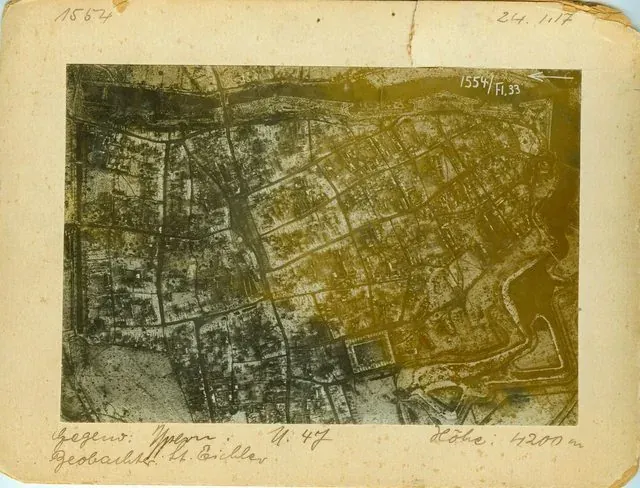
On the morning of 22 April 1915, soldiers dug in near Ypres watched a greenish-yellow cloud roll toward them out of the German lines. That was the first large-scale use of poison gas in the history of warfare. It was the most visible sign of a country that had turned its entire chemical industry over to the war effort, and it was not the only one. The same isolation that produced chlorine at Ypres had, months earlier, produced a much quieter order: find something that behaves like rubber, because Germany is no longer going to be allowed to buy any.
Plates I & II
.jpg)
.jpg)
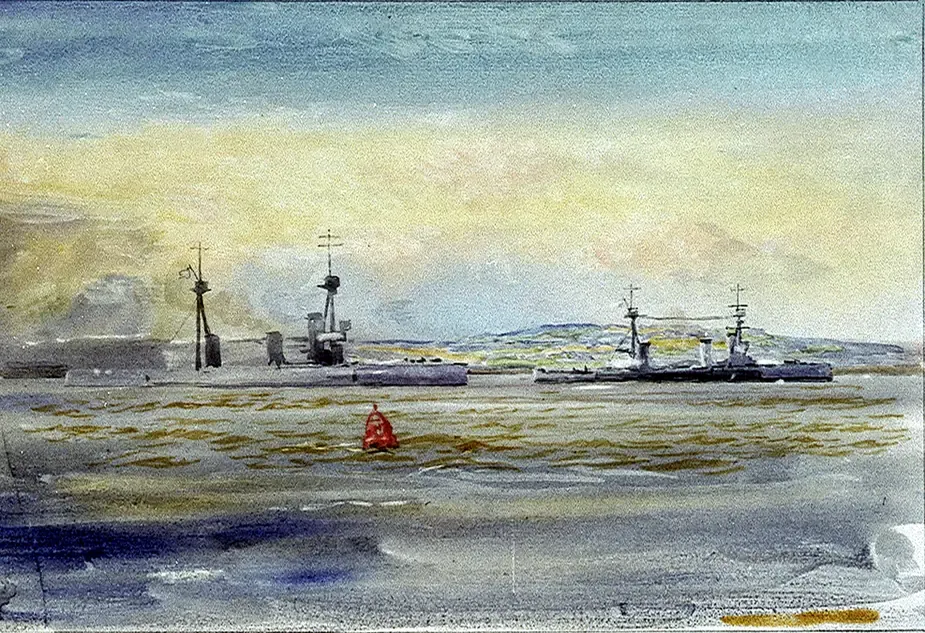
Britain’s Grand Fleet had been enforcing that isolation since the war’s first week, riding at anchor in the natural harbour of Scapa Flow and daring the German navy to break out into the North Sea. It rarely did. The blockade this fleet maintained was aimed at starving Germany of nitrates and food as much as anything else, but it caught rubber in the same net: nearly all of it arrived by ship, tapped from trees in British Malaya and the Dutch East Indies, and a nation that could not get ships through was a nation that could not get rubber.
Plate III

A Wartime Substitute, and a False Start
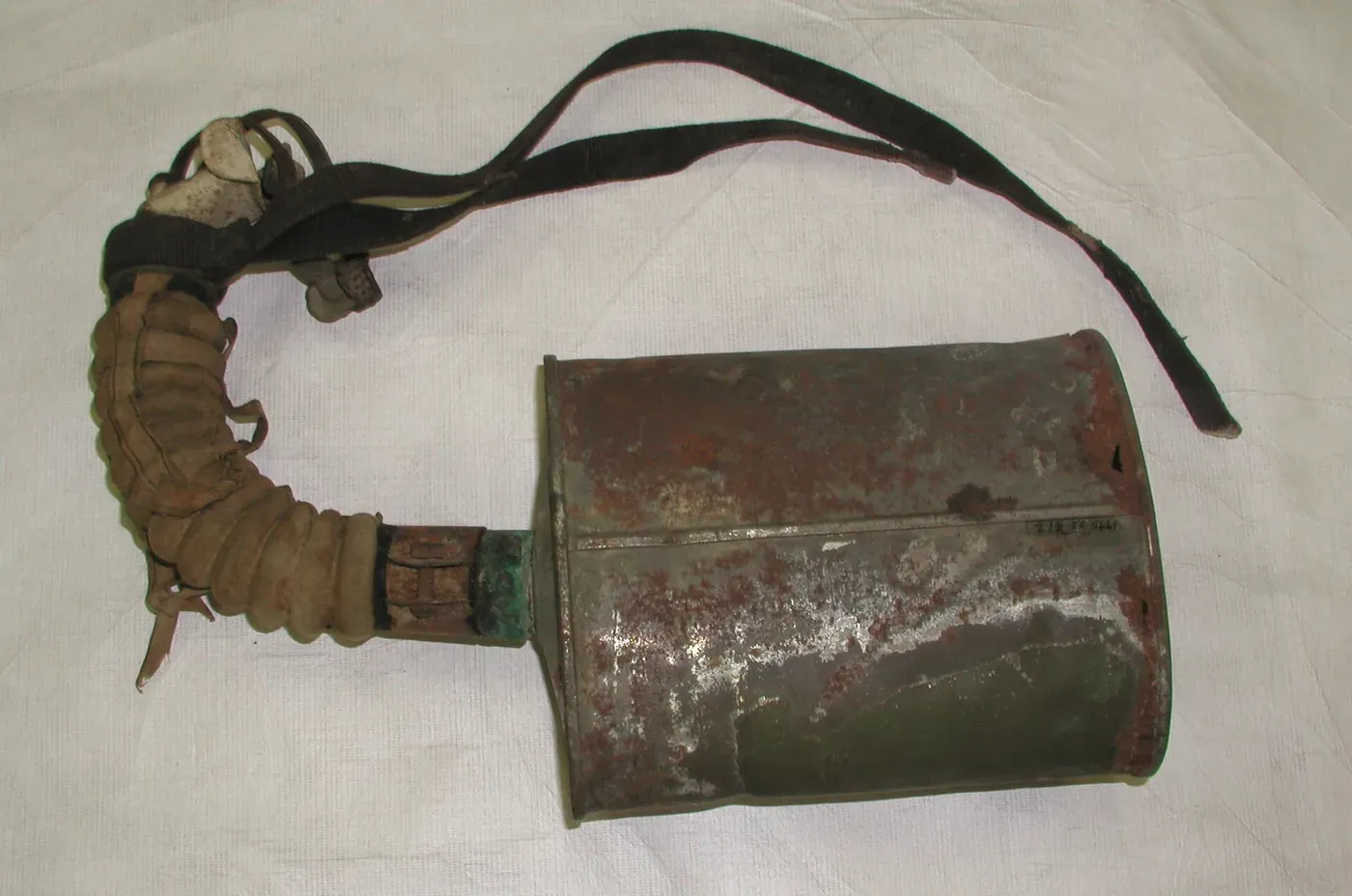
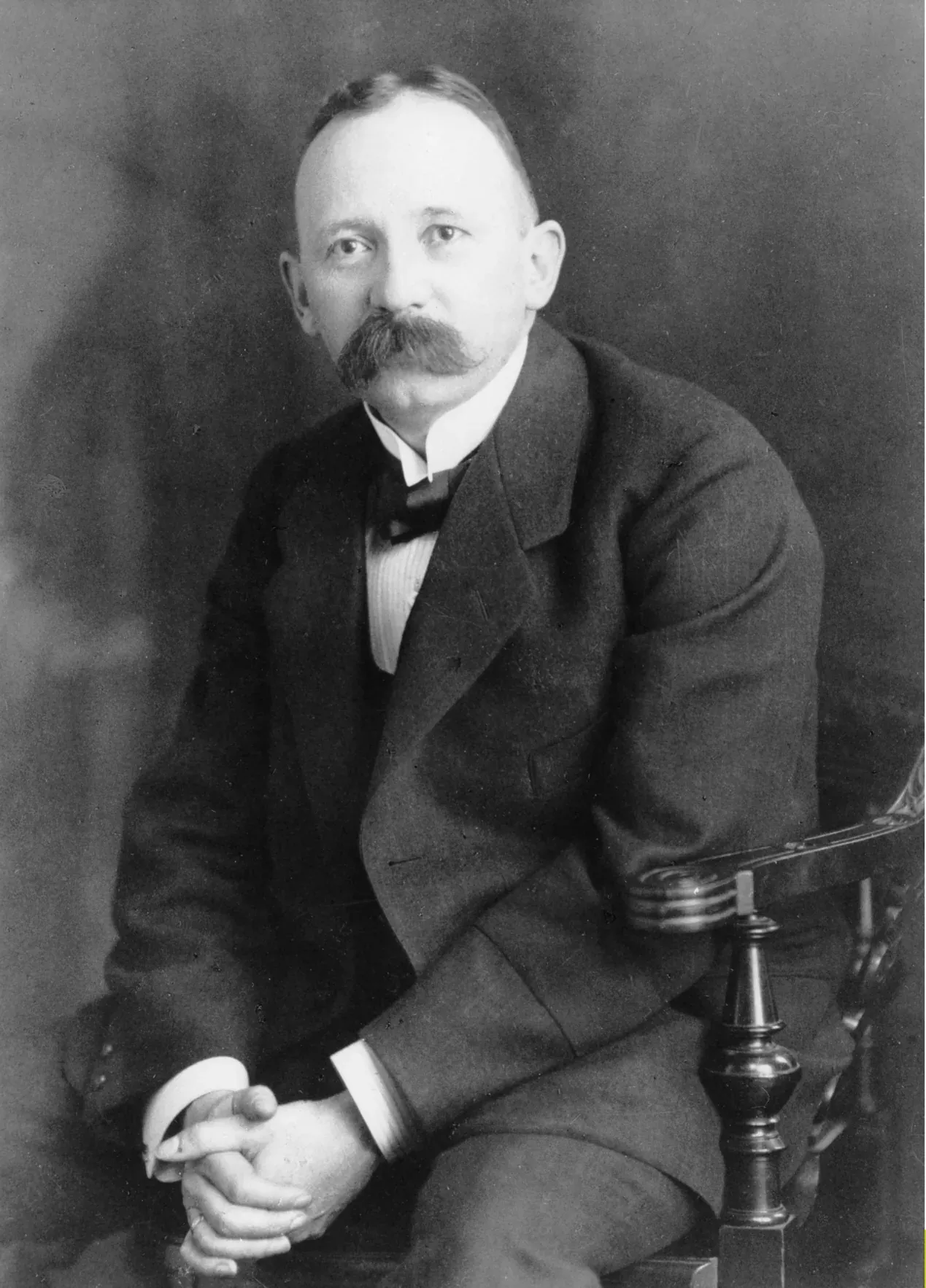
Germany was not starting from nothing. In 1909 the Bayer chemist Fritz Hofmann had filed the world’s first patent for a synthetic rubber, built around the monomer isoprene, the same molecule natural rubber is made of. It worked, in the sense that it produced a rubber-like solid, but it was not durable enough to compete with the real thing, and by 1913 Bayer had quietly let the whole project drop. The war brought it back, and in a different form: Hofmann’s team shifted to a related monomer, dimethylbutadiene, whose polymer they called methyl rubber. It was inferior to natural rubber in almost every way (stiffer, more brittle, and by later account roughly ten times the cost), but stiff and brittle and expensive still beat having none at all. Bayer scaled up production at Leverkusen through 1915 and 1916, and kept German trucks, telephone cable and gas-mask hoses supplied with a domestic substitute until the war ended and the ships could sail again.
Plate IV

The Chemist Who Actually Solved It
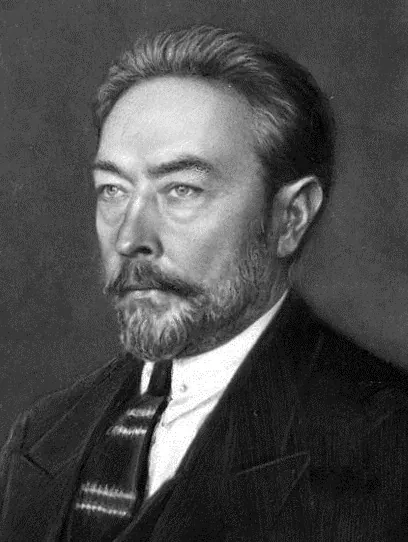
The polymer that carries this page’s name (built from butadiene itself, not one of its cousins) has a different, quieter origin story, and it belongs to Russia rather than Germany. In 1910, with no war yet to answer to, the chemist Sergei Lebedev polymerised butadiene using sodium metal as a catalyst, the first time anyone had done it. It was a laboratory result, not a wartime programme, and it sat largely unexploited for over a decade. Only once the Soviet state went looking for a way to make rubber without spending its scarce hard currency on foreign imports did Lebedev’s chemistry become an industrial answer: he worked out a route from fermented potato ethanol to butadiene, refined the sodium-catalysed polymerisation through the late 1920s, and by the following decade the USSR was running the world’s first dedicated polybutadiene plant, producing at a scale no other country yet matched.
Plate V

German chemists eventually returned to the same chemistry Lebedev had published, and once they did, they gave their version of it a name built the same way it was made: Buna, for butadiene and Natrium, the Latin word for sodium. One of the young chemists who would go on to spend his career in that same Leverkusen laboratory complex was, in April 1915, a twenty-year-old still years from a doctorate. Walter Bock did not join IG Farben’s rubber programme until 1926, and the discovery that made his name was not this polymer but a modified version of it, made by working a third ingredient into the Buna recipe. That is a story that belongs to a later page in this Atlas.
Three Shapes, One Molecule
Every butadiene unit that joins this polymer’s chain leaves behind exactly one double bond in the backbone, and that double bond can sit in three different postures. Where the chain continues on the same side of it, the result is called cis: a kinked, elbow-like link that keeps neighbouring chains from lining up neatly, which is exactly what keeps the material soft and rubbery rather than rigid. Flip to the opposite side of the same bond and you get trans, a straighter link that packs and crystallises far more readily. It is useful where some stiffness is wanted, but no longer much of a rubber. Occasionally a monomer adds through only one of its two double bonds instead of both, leaving the second dangling off the backbone as a small vinyl side branch; tire chemists treat that branch as a dial, since more of it raises the temperature at which the rubber turns glassy and improves the grip a winter tread needs on cold, wet roads. Which posture predominates is no longer left to chance: coordination catalysts built around neodymium, cobalt or nickel can now push the cis content close to its practical ceiling, while lithium-based catalysts deliberately produce a mixed microstructure with properties of its own.
What the Material Actually Does
High-cis polybutadiene is lighter than water and stays genuinely rubbery at temperatures colder than dry ice, which is why it survives conditions that would turn most elastomers to glass. Only a modest fraction of the material ever organises itself into an ordered, crystalline arrangement, and even that fraction only orders under strain or deep cold rather than at everyday temperatures; there is no clean melting point to speak of, only a gradual softening that gives way to scorching and decomposition if the material is pushed hot enough. It can be stretched several times its own length and will spring back close to where it started, and it takes a lot of that stretching to actually break it, though on its own (unfilled and unreinforced) it is not a particularly strong material; almost everything that wears it in service is compounded with fillers first. Chemically it behaves like the hydrocarbon it is: comfortable around alcohols, but degraded or dissolved by acids, alkalis, aromatic solvents and chlorinated ones, which is a large part of why it is never chosen for a job that involves fuel or oil.
Manufacturing Magic
Commercial production today runs almost entirely through solution polymerisation, with the monomer now drawn from petroleum rather than the coal and potato ethanol of the material’s first industrial decades. The catalyst chosen decides the microstructure and, with it, the market: neodymium and cobalt systems are prized for pushing cis content to its highest practical levels, favoured wherever a tire compound needs maximum resilience and wear resistance, while lithium-initiated grades give processors a mixed microstructure they can tune for other jobs, such as toughening a brittle plastic. Despite Goodrich having a workable American process by 1939, the United States’ wartime synthetic-rubber programme spent the war years on general-purpose styrene-butadiene rubber instead, and polybutadiene did not reach large-scale American commercial production until 1960, by which point Goodyear, Goodrich, Shell and Bayer were all running plants of their own.
Applications: From Race Cars to Space Ships
Tires remain polybutadiene’s largest market by far, blended with other rubbers into tread and sidewall compounds for the wear resistance and low rolling resistance that a pure natural-rubber tire cannot match. Blended in smaller amounts into rigid plastics such as polystyrene and ABS, it toughens what would otherwise be a brittle material, and pure, high-cis polybutadiene is still the standard core material inside a golf ball, chosen for the same resilience that makes it bounce back so completely from a compression. Specialised grades go further still: a liquid, hydroxyl-terminated version of the polymer, HTPB, is the rubbery binder that holds the solid propellant together in rocket boosters, a use about as far from a wartime rubber shortage as the material has ever travelled.
Research today runs in something like the opposite direction from where the story started: chemists are working on butadiene made from renewable feedstocks rather than petroleum, an echo, whether they intend it or not, of Lebedev’s own ethanol-based process from a century earlier.
values with [n] cite the numbered references·estimates are flagged·“not yet available” and “N/A” are honest states, not gaps
fetching the model…
Polybutadiene repeat unit
Crystallises readily and is far less rubbery than the cis form.
Addition across one double bond only, leaving the other pendant. Vinyl content is a lever polymer chemists pull deliberately: it raises the glass transition and is what gives high-vinyl grades their grip in tyre treads.
- Abbreviation
- BR
- Type
- polymer family (hub)
- CAS number
- 9003-17-2
- Resin ID code
- none assigned
- Formula
- (C4H6)n[-CH2-CH=CH-CH2-]nThe cis-1,4 unit is shown. Microstructure (cis/trans/vinyl content) varies substantially by catalyst system, so no single stereochemical repeat unit represents all commercial grades.
- Repeat unit (BigSMILES)
{[][$]C/C=C\C[$][]}- IUPAC name
- Poly(buta-1,3-diene)
- Synonyms
- butadiene rubber
- Also known as
- butadiene rubber
- Chemical family
- diene-rubber
- Backbone class
- carbon-chain
- Polymerization mechanism
- coordinationanionic
- Constitutional monomer
- 1,3-Butadiene
- Polymer class
- elastomer
- Year of origin
- 1915
- Era
- The Birth of Synthetic Polymers (1907-1938): The Bakelite Revolution
- Key figures
- Sergei Lebedev
- Polymerization type
- coordination or anionic chain-growth
- Common monomers (feedstocks)
- 1,3-butadiene
- Catalysts
- neodymium catalysts (~98% cis); cobalt catalysts (~96% cis); nickel catalysts (~96% cis); lithium catalysts (mixed cis/trans/vinyl)
Russian chemist Sergei Lebedev first polymerized butadiene in 1910 and developed sodium-catalyzed production in 1928; the USSR built the first commercial plant in 1936 (50,000 t/yr by 1940). Modern coordination catalysts (mid-1950s onward) give precise control over cis/trans/vinyl microstructure, which strongly affects properties. ~2.1 million tonnes produced annually (2000s data).
- Tacticity
- Microstructure-dependent: high-cis grades (neodymium/cobalt/nickel catalysts, ~96–98% cis-1,4) are highly stereoregular; lithium-catalyzed grades are a mixed cis/trans/vinyl microstructure (10–30% cis, 20–60% trans, 10–70% vinyl).
- Crystal structure
- Monoclinic unit cell (cis-1,4 form); a:b:c ≈ 0.853:0.816:1.266 nm, β ≈ 83.3°.
- Typical crystallinity
- 21 (18–24) %[2]cis-1,4 form.
Molecular weight
- Number average (Mn)
- 78500 (5000–152000) g/mol[2]cis-1,4 form.
- Mass average (Mw)
- 436750 (56500–817000) g/mol[2]cis-1,4 form.
- Dispersity (Mw/Mn)
- 2.9 (2–3.8)[2]cis-1,4 form.
| Solvent | T | M range | K | a |
|---|---|---|---|---|
| benzene[3] | 303 K | — | 0.0337 mL/g | 0.715 |
| toluene[3] | 303 K | — | 0.0305 mL/g | 0.725 |
High-cis grades exhibit a low glass transition and strain-induced crystallization similar to natural rubber, giving good strength even without fillers.
- Density
- 0.9025 (0.89–0.915) g/cm³[2]20 °C, cis-1,4 form.
- Melt flow index
- Not applicable
- Refractive index
- 1.5605 (1.516–1.605)[2]exp., 20 °C, cis-1,4 form.
- Transmittance
- not yet available
- Haze
- not yet available
- Gloss
- not yet available
- Water absorption
- not yet available
- Dielectric constant
- 2.3[2]50 Hz, cis-1,4 form.
- Dielectric strength
- not yet available
- Electrical conductivity
- not yet available
- Glass transition (Tg)
- -102 (-106–-99) °C[2]Experimental range for cis-1,4 form; trans-1,4 form has a higher Tg, approximately -72 to -87 °C.
- Melting temperature (Tm)
- 1 °C[2]Low, broad melting endotherm typical of imperfect crystallites in high-cis material; trans-1,4 form (more crystallizable) melts far higher, around 80–145 °C.
- Crystallization (Tc)
- -26 °C[2]Isothermal crystallization temperature, cis-1,4 form.
- Heat deflection (HDT)
- Not applicable
- Decomposition onset
- not yet available
- Thermal conductivity
- 0.22 W/(m·K)[3]Unspecified microstructure, 20 °C.
- Tensile modulus
- not yet available
- Yield strength
- 9.1 (8.9–9.3) MPa[2]Tensile stress at yield, cis-1,4 form.
- Tensile strength at break
- 18.1 (16.2–20) MPa[2]cis-1,4 form (strain-crystallizing gum vulcanizate).
- Elongation at break
- 535 (450–620) %[2]cis-1,4 form.
- Impact strength (Izod)
- not yet available
- Impact strength (Charpy)
- not yet available
- Hardness
- 76 (64–88) Shore A[2]cis-1,4 form.
- Flexural modulus
- not yet available
- Poisson's ratio
- 0.432[2]calculated, cis-1,4 form.
- Coefficient of friction
- not yet available
- Solvent: dilute acids
- not resistant[2]
- Solvent: concentrated acids
- not resistant[2]
- Solvent: alcohols
- resistant[2]
- Solvent: alkalis
- not resistant[2]
- Solvent: aromatic hydrocarbons
- not resistant[2]
- Solvent: esters
- not resistant[2]
- Solvent: halogenated hydrocarbons
- not resistant[2]
- Weathering / UV
- not yet available
- Hydrolysis resistance
- Not applicable
- Flammability (UL94)
- not yet available
- Limiting oxygen index
- not yet available
- Solubility parameter (δ)
- 17.1 (16.2–18) MPa^0.5[2]cis-1,4 form.
Gas permeability
- N₂
- 1.44 × 10⁻¹² cm³(STP)·cm/(cm²·s·Pa)[2]25 °C, cis-1,4 form.
- O₂
- 1.43 × 10⁻¹² cm³(STP)·cm/(cm²·s·Pa)[3]25 °C, cis-1,4 form; converted from m³·m/(m²·s·Pa) × 10⁻¹⁷.
- CO₂
- 1.04 × 10⁻¹¹ cm³(STP)·cm/(cm²·s·Pa)[3]25 °C, cis-1,4 form; converted from m³·m/(m²·s·Pa) × 10⁻¹⁷.
Polymer-solvent interaction parameter (χ)
not yet available
- Processing methods
- compounding + vulcanization (tires/rubber goods)blending as an impact modifier (plastics)
- Drying required
- not yet determined
- Processing temperature
- not yet available
- Shrinkage rate
- not yet available
- Tirestire tread/sidewall compounds~70% of BR production; improves wear resistance and rolling efficiency.
- Plasticsimpact modifier for polystyrene and ABS~25% of production.
- Sporting goodsgolf ball cores~20,000 tonnes/yr; prized for high resilience.
- Industrial & aerospacehoses · railway pads · HTPB solid rocket booster binder
- Recyclable
- No
- Biodegradable
- No
- Degradation pathway
- not yet available
- [1]PolybutadieneWikipediaAccessed 2026-07-14https://en.wikipedia.org/wiki/Polybutadiene[wiki-polybutadiene]
- [2]Handbook of PolymersChemTec Publishinghttps://www.worldcat.org/isbn/9781895198928[handbook-wypych-2016]
- [3]Polymer Data HandbookOxford University Presshttps://search.worldcat.org/search?q=Polymer+Data+Handbook+Mark+1999[handbook-mark-1999]
Illustrations
- Plate IYpres, photographed from a German aircraft during the battle that opened with the war's first large gas attack in April 1915: the same national mobilisation of chemistry that was, that same year, being pointed at rubber.Wikimedia Commons
- Plate IIA German gas mask of the type issued after Ypres: its breathing hose was one more everyday object that depended on rubber Germany could no longer import by sea.Wikimedia Commons
- Plate IIIBattlecruisers of the Grand Fleet at Scapa Flow, painted around 1915: the ships that kept German merchant traffic, and German rubber imports, off the high seas for the length of the war.Wikimedia Commons
- Plate IVFritz Hofmann, photographed around 1909, the year he patented the first synthetic rubber. The isoprene rubber he patented that year was not good enough to last; the wartime substitute his laboratory produced instead was not the polymer this page is about, but it proved the idea could be forced to work under pressure.Wikimedia Commons
- Plate VSergei Lebedev, the chemist who actually first polymerised butadiene, in the 1920s, the decade his 1910 laboratory result became Soviet industrial policy.Wikimedia Commons