Decoding Nature's Legacy (1833-1902)
Alginate
The Gel from the Sea
Along the rugged coastlines of Scotland and Norway, traditional healers had for generations pressed seaweed poultices onto wounds, unknowingly harnessing the gentle, gel-forming power of a marine polymer they had no name for. The sea, it turned out, had been quietly perfecting a material of extraordinary usefulness (one that could hold water, form gels, and soothe injured flesh) long before any chemist thought to ask why.
Plate I
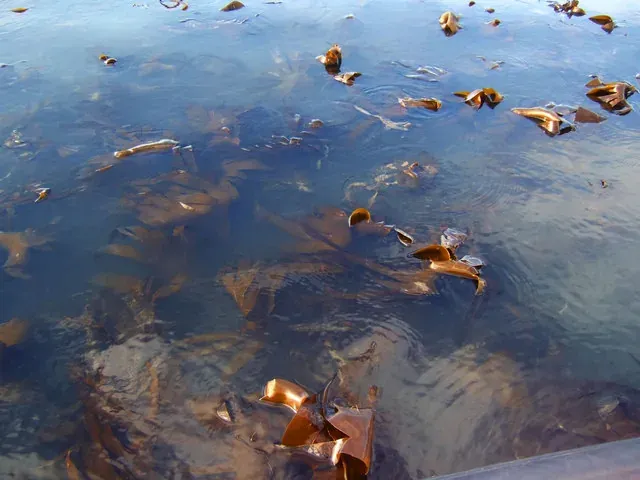

In 1881, the British chemist Edward Charles Cortis Stanford, searching for useful products from the vast kelp forests of the North Atlantic, discovered and patented the extraction of a viscous substance he called algin. By soaking brown seaweed in alkali and precipitating the result with acid, he isolated what we now know as alginic acid. This was the first step in transforming an ancient folk remedy into one of the most versatile biopolymers in modern medicine and food science.
Plate II


Molecular Architecture: The Egg-Box Model
Alginate presents a beautifully orderly structure, built from two types of uronic acid units: β-D-mannuronate (M) and α-L-guluronate (G). These arrange themselves into blocks along the chain, and it is the guluronate blocks that give alginate its most remarkable talent. Dissolved in water, alginate molecules drift freely like loose strings, their carboxylate groups keeping them soluble. Add calcium ions, however, and something extraordinary happens.
The G-blocks of neighboring chains line up to form nanoscale cavities that perfectly cradle calcium ions. This is a phenomenon scientists call the “egg-box model,” first proposed by Grant and colleagues in 1973. Picture rows of egg cartons stacked together, with calcium ions nestled in as the eggs, locking the whole structure into a gel. The binding is exquisitely specific, and the resulting gels can hold an extraordinary amount of water relative to their own weight. By tuning the M/G ratio, chemists can dial alginate from rigid, brittle gels (high-G) to soft, elastic ones (high-M).
Spun into fiber, alginate is a notably strong natural polysaccharide (stiff and tough enough to sit comfortably alongside established technical textile fibers), though, like most such fibers, it does not stretch far before it breaks. It is thoroughly hydrophilic: rather than resisting water, it welcomes it, swelling and eventually dissolving unless it has been locked into a gel network by calcium or another divalent ion first.
Plate III

Manufacturing Journey: From Kelp to Purified Powder
While coastal communities had harvested seaweed for food and medicine for centuries, the first commercial extraction of alginate did not arrive until the early twentieth century, decades after Stanford’s discovery. Modern manufacturing treats brown seaweed with alkaline solutions, then applies acidification and calcium-removal steps to yield pure sodium alginate.
The process demands careful control, because alginate’s usefulness depends entirely on preserving its molecular weight distribution and block structure. These are the very features that govern its gelling behavior. Too harsh a treatment degrades the chains and robs the product of the precise, tunable properties that make it valuable. Producing good alginate is as much about restraint as it is about extraction.
Applications and Impact: From Wound to Dinner Plate
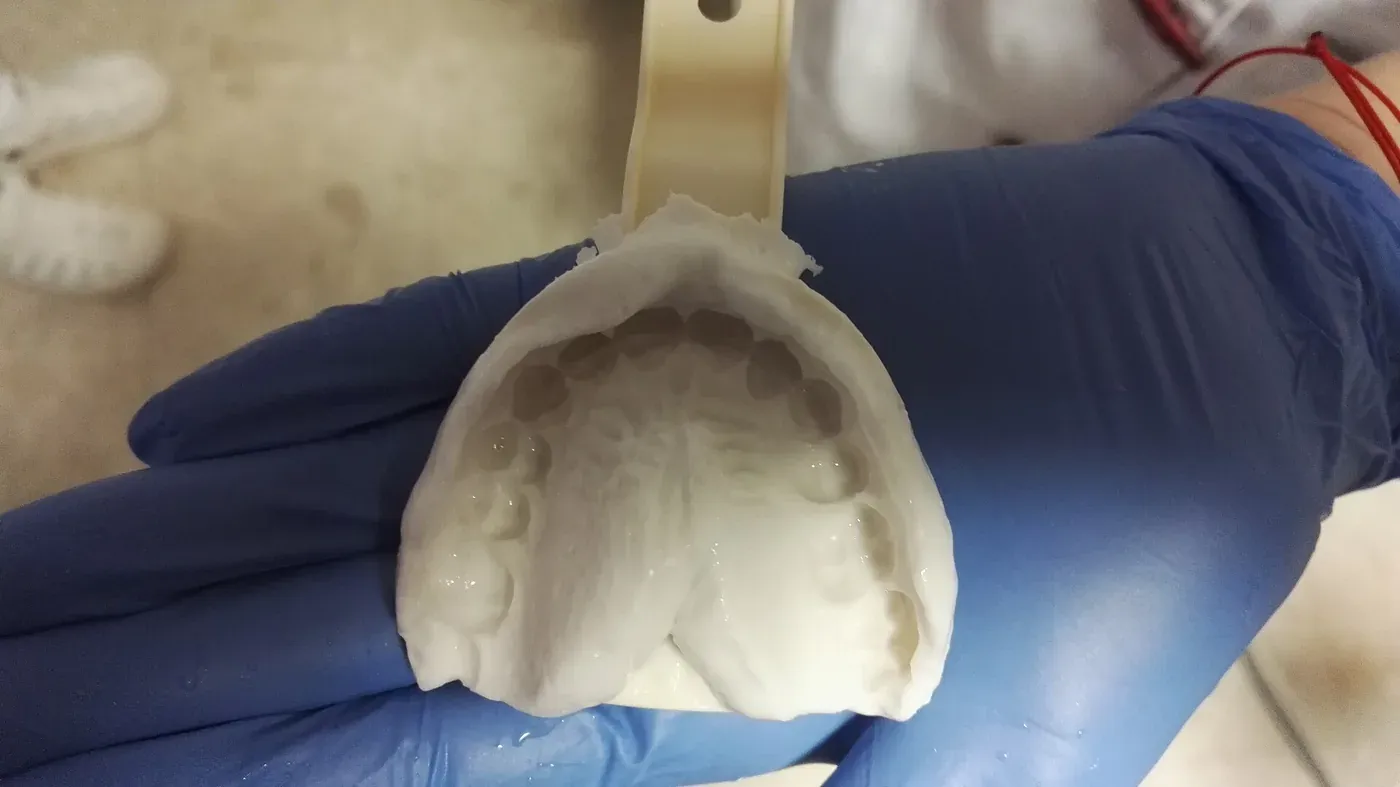
Alginate’s story showcases how traditional knowledge can flower into modern breakthroughs. The seaweed poultices of old have become sophisticated wound dressings that maintain optimal moisture for healing, while alginate’s ability to capture fine detail makes it the material of choice for dental impressions. In the kitchen and the food factory, it serves as a natural thickener and stabilizer, and it is the star of molecular gastronomy’s spherification techniques.
Plate IV
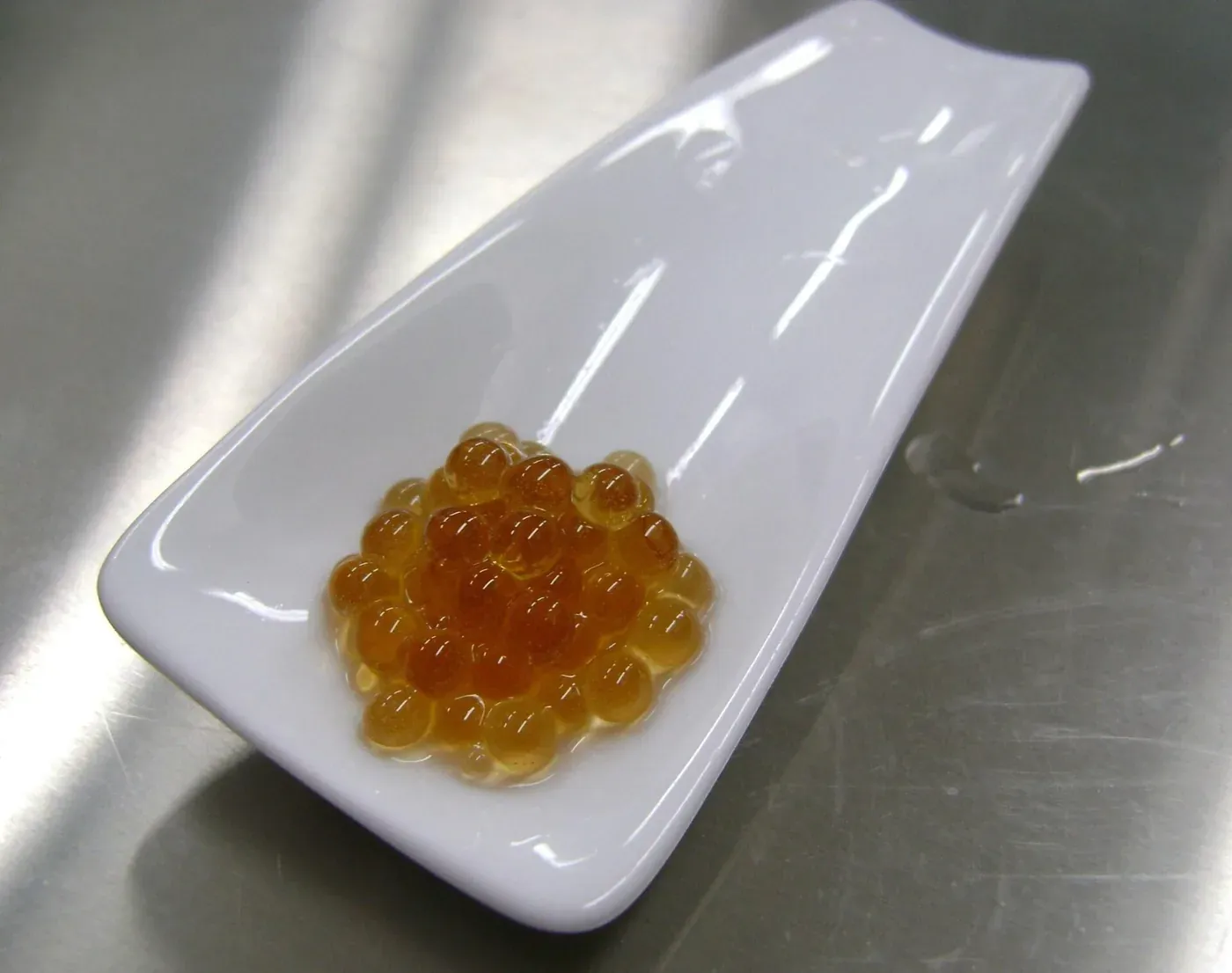

In the laboratory, alginate has become indispensable to tissue engineering, where its gentle, water-rich gels provide scaffolds for growing cells and even printing living tissue. Researchers are now pushing it toward 3D bioprinting of human organs, using the same egg-box chemistry that Stanford first glimpsed to cradle not just calcium, but the building blocks of life itself. The secrets of the sea, first sensed by coastal healers, continue to inspire the frontiers of medicine.
values with [n] cite the numbered references·estimates are flagged·“not yet available” and “N/A” are honest states, not gaps
- Abbreviation
- —
- Type
- polymer family (hub)
- CAS number
- 9005-32-7
- Resin ID code
- none assigned
- Formula
- Linear copolymer of β-D-mannuronic acid (M) and α-L-guluronic acid (G) residues, arranged in homopolymeric M-blocks, homopolymeric G-blocks, and alternating MG sequences whose proportions vary by algal source. Block structure/ratio is not fixed enough for one canonical repeat unit.
- Repeat unit (BigSMILES)
- Linear copolymer of β-D-mannuronic acid (M) and α-L-guluronic acid (G) residues, arranged in homopolymeric M-blocks, homopolymeric G-blocks, and alternating MG sequences whose proportions vary by algal source. Block structure/ratio is not fixed enough for one canonical repeat unit.
- IUPAC name
- —
- Synonyms
- alginic acid (acid form)
- Also known as
- alginic acidalgin
- Chemical family
- polysaccharide
- Backbone class
- heterochain
- Polymerization mechanism
- natural-biosynthesis
- Constitutional monomer
- β-D-Mannuronic acidα-L-Guluronic acid
- Polymer class
- —
- Year of origin
- 1881
- Era
- Decoding Nature's Legacy (1833-1902)
- Key figures
- Edward Charles Cortis Stanford
- Polymerization type
- not yet available
- Common monomers (feedstocks)
- not yet available
- Catalysts
- not yet available
Not industrially polymerized: extracted from brown seaweed (Phaeophyceae), particularly giant kelp (Macrocystis pyrifera), Ascophyllum nodosum, and Laminaria species (some bacteria, e.g. Pseudomonas and Azotobacter, also produce alginates). Edward Charles Cortis Stanford discovered alginate and patented an extraction process in 1881. Modern extraction converts the seaweed's alginic acid/calcium alginate to soluble sodium alginate; newer methods under investigation include microwave-, ultrasound-, and enzyme-assisted extraction.
- Tacticity
- not yet available
- Crystal structure
- Fibril diameter ~6.0 nm; lamellar spacing 3.5–4.2 nm. G:M (guluronic:mannuronic acid) block ratio reported 39:61 for one algal source; this ratio varies significantly by species/tissue and controls gel stiffness.
- Typical crystallinity
- not yet available
Molecular weight
- Number average (Mn)
- not yet available
- Mass average (Mw)
- 80000–240000 g/mol[2]alginic acid
- Dispersity (Mw/Mn)
- not yet available
Mark-Houwink constants
not yet available
Hydrophilic; forms a viscous gum when hydrated and ionically crosslinked hydrogels with divalent cations (notably Ca2+, the 'egg-box' model).
- Density
- 1.79 g/cm³[2]20 °C, alginic acid
- Melt flow index
- Not applicable
- Refractive index
- 1.595–1.69[2]20 °C
- Transmittance
- not yet available
- Haze
- not yet available
- Gloss
- not yet available
- Water absorption
- not yet available
- Dielectric constant
- not yet available
- Dielectric strength
- not yet available
- Electrical conductivity
- not yet available
- Glass transition (Tg)
- not yet available
- Melting temperature (Tm)
- Not applicableAmorphous hydrocolloid; no true melting transition.
- Crystallization (Tc)
- Not applicable
- Heat deflection (HDT)
- Not applicable
- Decomposition onset
- not yet available
- Thermal conductivity
- not yet available
- Tensile modulus
- 3620 MPa[2]fiber form
- Yield strength
- not yet available
- Tensile strength at break
- 200 MPa[2]fiber form
- Elongation at break
- 16 %[2]fiber form
- Impact strength (Izod)
- Not applicable
- Impact strength (Charpy)
- Not applicable
- Hardness
- Not applicable
- Flexural modulus
- not yet available
- Poisson's ratio
- not yet available
- Coefficient of friction
- not yet available
- Solvent: water
- Hydrophilic; forms a viscous gum on hydration[1]
- Weathering / UV
- not yet available
- Hydrolysis resistance
- not yet available
- Flammability (UL94)
- Not applicable
- Limiting oxygen index
- not yet available
- Solubility parameter (δ)
- not yet available
Gas permeability
not yet available
Polymer-solvent interaction parameter (χ)
not yet available
- Processing methods
- ionic gelation (Ca2+ crosslinking)spray dryingextraction/purification
- Drying required
- not yet determined
- Processing temperature
- Not applicable
- Shrinkage rate
- Not applicable
- Foodthickening/gelling agent (E400/E401)
- PharmaceuticalGERD treatment formulations (e.g. Gaviscon)
- Medicalwound dressings · tissue-engineering scaffolds · cell/enzyme bioencapsulation
- Textilesreactive dye printing thickener · waterproofing/fireproofing
- Dentalimpression materials
- Recyclable
- No
- Biodegradable
- Yes
- Degradation pathway
- Enzymatic (alginate lyase) or acid hydrolysis of glycosidic linkages; biodegradable.
Harvested from renewable seaweed/algal biomass.
- LD50 (oral, rat)
- not yet available
- NFPA health
- not yet available
- NFPA flammability
- not yet available
- NFPA reactivity
- not yet available
- Carcinogenic classification
- not listed by ACGIH, NIOSH, NTP[2]
On combustion releases CO2, CO, furfural, phenol and other volatiles.
- [1]Alginic acidWikipediaAccessed 2026-07-14https://en.wikipedia.org/wiki/Alginic_acid[wiki-alginic-acid]
- [2]Handbook of PolymersChemTec Publishinghttps://www.worldcat.org/isbn/9781895198928[handbook-wypych-2016]
Illustrations
- Plate IBrown kelp in the Firth of Forth, Scotland. These are the same waters Edward Stanford drew on when he began looking for a use for seaweed.Wikimedia Commons
- Plate IISeaweed harvesting on a British estuary today. It is a small-scale version of the same raw-material gathering that first fed Stanford's Scottish algin works.Wikimedia Commons
- Plate IIIA dental impression set in alginate. The same calcium-triggered gelling that locks up a kelp cell wall captures the fine detail of a tooth in seconds.Wikimedia Commons
- Plate IVSpherified droplets made using alginate and calcium. This is the egg-box gel, plated as a dessert.Wikimedia Commons