The Specialty Polymers Age (1980-1999)
Polyaniline (PANI)
When Plastic Learned to Conduct Electricity
In May 1997, in a conference room in Manhattan, an IBM computer called Deep Blue won a six-game rematch against Garry Kasparov, the reigning world chess champion. It was the first time a computer had beaten a sitting champion under tournament conditions, and it happened in front of cameras and wire reporters rather than in a journal; the kind of boundary-crossing that usually takes decades got a press conference instead. Machines were supposed to calculate; only people were supposed to play.
Plate I
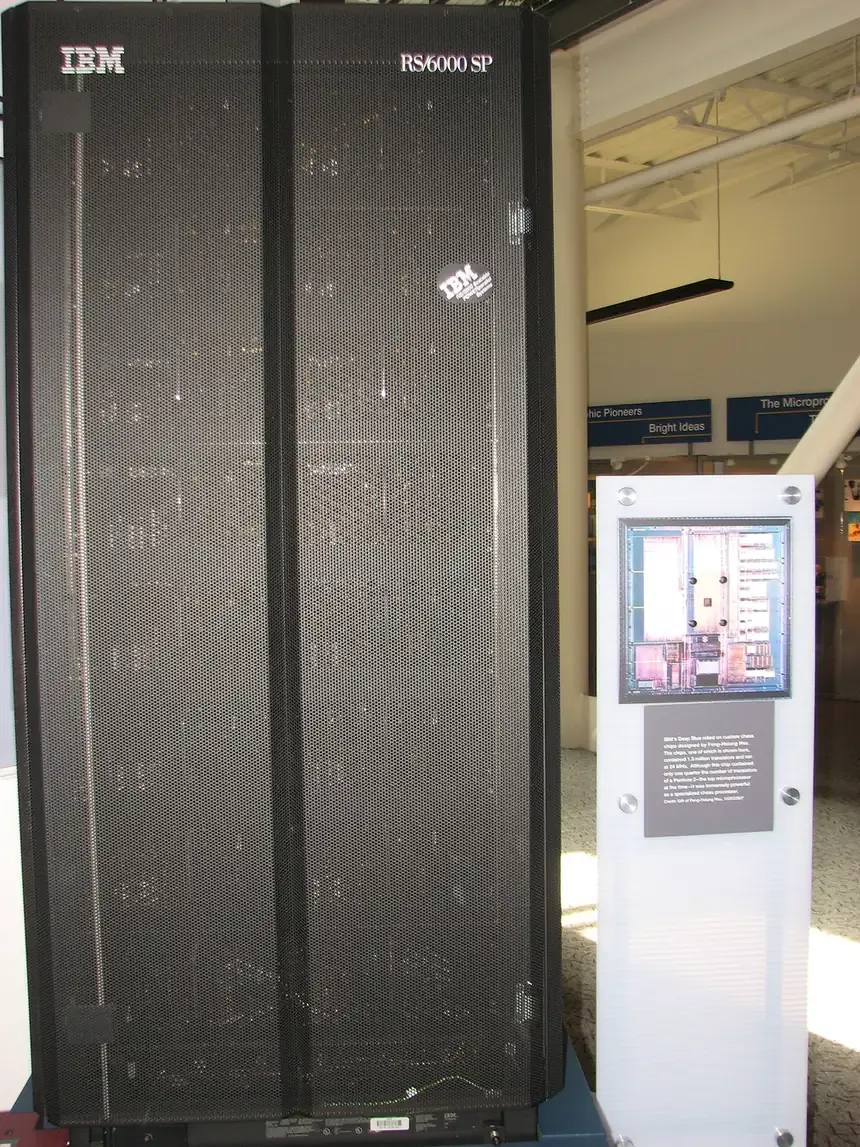
.jpg)
Two months later, on the eighth of July, a much quieter change of category was made official a few hundred miles south, in Philadelphia: a patent was granted for coating steel in a film of polyaniline, a polymer whose whole reputation for over a century had been as an insulating black dye. Like Deep Blue, it had crossed into territory that was supposed to belong to something else: in this case, a plastic doing a metal’s job.
Both were the same kind of news: something finally allowed to do work that had always been filed under a different heading. For polyaniline (plastic that can carry a current the way a length of copper wire does), that particular permission had been about a hundred and sixty years in coming.
The Discovery Story: From a Textile Dye to a Patented Coating
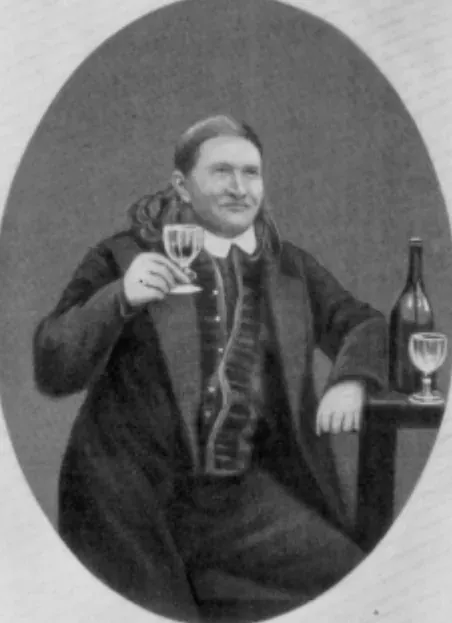
Polyaniline’s own story starts far earlier than 1997, and far duller. In 1834 the German chemist Friedlieb Ferdinand Runge distilled a blue-tinted oil out of coal tar and, because it turned a vivid blue when touched with bleaching powder, named it kyanol, from the Greek for blue. Oxidize that same oil under different conditions and it darkens instead, into an intractable black solid that chemists came to call aniline black. By the 1860s the calico printer John Lightfoot had turned that black precipitate into the first commercially successful process for dyeing cotton with a synthetic dye, and aniline black went on to color a great deal of Victorian and Edwardian cloth. For more than a century, that was all it was allowed to be: a stubborn, insoluble black powder, good for dyeing yarn and nothing else.
Plate II

That changed by way of an accident, a decade before this story’s own anchor year, in a Tokyo laboratory. In 1967 a visiting researcher working under the chemist Hideki Shirakawa misjudged a catalyst concentration by roughly a thousandfold; instead of the usual black powder, the reaction produced a lustrous, silvery film. Shirakawa spent the next ten years working out what he had actually made, eventually collaborating with the American chemists Alan MacDiarmid and Alan Heeger. In 1977 the three of them showed that exposing that film (chemically a cousin of aniline black, called polyacetylene) to iodine vapor raised its conductivity roughly a billionfold, turning an inert plastic into something that carried current almost like a metal. It is the discovery for which the three would share the 2000 Nobel Prize in Chemistry, and it sent chemists back to every intractable dark polymer sitting on a shelf, aniline black included, to ask whether the same trick worked there too. It did.
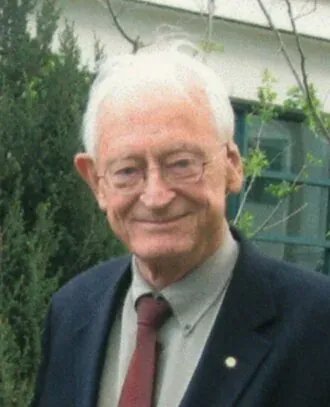
Through the 1980s, MacDiarmid’s own research group at the University of Pennsylvania turned that century-old dye into a genuinely useful conducting material: one whose conductivity could be switched on and off just by changing the acidity it sat in, turning a deep green when it conducted and pale when it did not. That work led directly to the patent already mentioned (filed with a colleague, Naseer Ahmad, and developed under a NASA research contract) for coating steel and other metals in a film of polyaniline to protect them from corrosion. Sprayed onto stainless steel and left in an aerated sulfuric-acid bath, the coated samples were still intact after fifty days; the bare metal was not.
Plate III
What Makes It Different
What makes polyaniline remarkable is that it breaks one of the basic assumptions about plastic: that plastic insulates. Its backbone is a long chain of benzene rings linked through nitrogen atoms, forming a conjugated system (alternating single and double bonds) along which electrons can move relatively freely once the material has been doped. And unlike a metal, whose conductivity is fixed by its composition, polyaniline’s can be dialed up or down after the fact, simply by changing the acid it is exposed to.
Properties and Characteristics
Cured polyaniline is denser than water, and, depending on how deeply it has been doped, it can sit almost anywhere on the spectrum between a good insulator and something that conducts nearly as well as a dilute metal; a single sample can be pushed from one end of that range to the other just by changing the acidity of what it sits in. Structurally it is only partly crystalline, with pockets of neatly ordered chains sitting among otherwise disordered ones, yet a thin cast film is close to fully transparent, and its refractive index is unusually high for an organic material, closer to some mineral glasses than to an ordinary clear plastic.
It is also considerably harder to melt than most plastics its age. Rather than softening the way an ordinary thermoplastic does, the base polymer holds its shape to well beyond the temperature of boiling water, and it does not begin to break down chemically until temperatures far beyond anything a domestic oven reaches. Mechanically it sits in the middle of the pack among general-purpose engineering plastics (stiff enough to hold a load-bearing shape rather than flex like rubber, without being unusually strong or unusually rigid for a plastic), and crosslinking it, where that is done, adds a considerable amount of both.
Chemically it is close to inert: it shrugs off alcohols, aliphatic and aromatic hydrocarbons, esters, ketones and halogenated solvents with barely a visible effect, which is a large part of why a coating or an electrode made from it survives service without dissolving back into whatever it touches. Its one real weakness is sunlight: prolonged exposure bleaches some grades, so commercial coatings are usually formulated with a UV stabilizer to compensate. It is not considered a fire risk, and no major health authority lists it as a carcinogen.
How It Is Made
The most common route to polyaniline is oxidative polymerization: aniline is added to a strongly acidic solution held near freezing, well under 5°C, while an oxidant, usually ammonium persulfate, is added gradually. Over four to twenty-four hours the mixture works through a sequence of colors, from colorless to blue to a deep green, as chains grow and the surrounding acid dopes them into their conducting form. The result is an emerald-green powder that can then be deposited directly onto an electrode by electrochemical polymerization, or formulated into an ink and printed (by screen, inkjet or aerosol jet) onto whatever surface needs a conductive coating.
Turning the Conductivity On
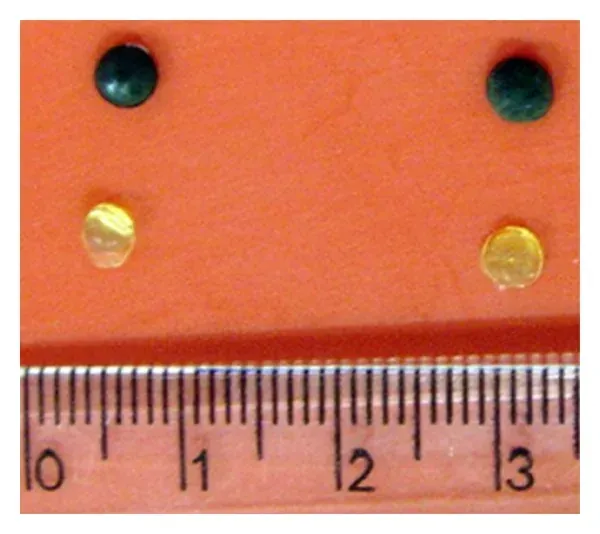
Polyaniline’s conductivity comes down to two related things: its oxidation state, and how it is doped. Fully reduced, it is called leucoemeraldine, pale and insulating. Fully oxidized, it is pernigraniline, blue-violet, and also insulating. Halfway between the two sits emeraldine, and this is the form that matters: on its own, the base form is a deep blue and still an insulator, but treat it with acid and the nitrogen atoms along the backbone pick up protons, converting it into emeraldine salt, green, and now able to carry a current. That protonation creates charge carriers called polarons that hop along the conjugated backbone, from one benzene ring to the next through the nitrogen bridges, roughly the way traffic moves down a road that has suddenly gained extra lanes.
Plate IV

Because that hopping depends on how many protons have been added, conductivity can be tuned continuously by controlling the acid concentration, rather than jumping between two fixed states the way an ordinary switch does. It is also, unusually for a synthetic material, thermally assisted rather than thermally hindered: extra heat gives the hopping charge carriers more energy to jump between sites, so polyaniline’s conductivity tends to rise with temperature over the same range where a metal’s would fall.
Applications
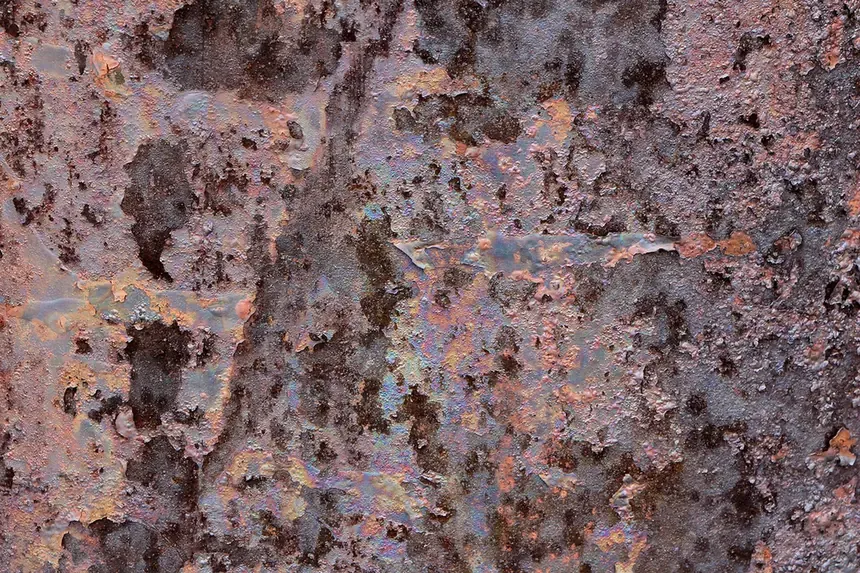
The corrosion-protection idea behind the 1997 patent is still one of polyaniline’s most direct jobs: a thin coating applied to steel, aluminium or other metals slows the electrochemical reactions that cause rust and pitting, extending a component’s working life without adding meaningful weight or bulk.
Plate V

In electronics, polyaniline’s more common role is quieter still. Applied as a finish on circuit boards, it keeps exposed copper from tarnishing between manufacture and soldering, and as an antistatic layer it bleeds away static charge that would otherwise damage sensitive components. This is a use that depends on exactly the kind of tunable, middling conductivity described above: well below a metal’s, but far above an ordinary plastic’s.
It also has a role in energy storage, as an electrode material in batteries, and, heated under controlled conditions, as a precursor for nitrogen-doped carbon materials used in other electrochemical devices. And because it can be printed, by screen, inkjet or aerosol jet, in patterns as fine as the equipment allows, it has become a common material for printed sensors: chemical and biological detectors built by depositing a polyaniline pattern onto a substrate and reading the change in its conductivity when a target molecule binds to it. This is the same coloring, doping and dedoping trick shown above, put to work as a measurement.
Looking Forward
Polyaniline’s future is less about novelty than about scale: getting a material that already works reliably in a lab flask to behave the same way across a production run of circuit boards, batteries or printed sensors. The properties that make it interesting (a conductivity that can be dialed rather than fixed, a chemistry cheap enough to make in bulk, a raw material that industry already produces by the tonne for other purposes) are exactly the properties that matter for scaling up rather than showing off. A hundred and sixty-odd years after Runge first isolated its parent compound, that is still the unglamorous, unfinished part of the story.
values with [n] cite the numbered references·estimates are flagged·“not yet available” and “N/A” are honest states, not gaps
fetching the model…
Polyaniline repeat unit
- Abbreviation
- PANI
- Type
- polymer family (hub)
- CAS number
- None (heterogeneous class or not assigned)
- Resin ID code
- none assigned
- Formula
- (C24H18N4)n[-NH-C6H4-NH-C6H4-N=C6H4=N-C6H4-]nThe emeraldine base is shown: two reduced amine rings and two oxidized quinoid rings per repeat, the half-oxidized state that becomes conducting when protonated. Fully reduced and fully oxidized forms of the same chain exist, and both are insulators.
- Repeat unit (BigSMILES)
{[][>]Nc1ccc(Nc2ccc(N=C3C=CC(=Nc4ccc([<])cc4)C=C3)cc2)cc1[]}- IUPAC name
- —
- Synonyms
- —
- Also known as
- —
- Chemical family
- conducting-polymer
- Backbone class
- heterochain
- Polymerization mechanism
- oxidative-coupling
- Constitutional monomer
- Aniline
- Polymer class
- thermoplastic
- Year of origin
- 1997
- Era
- The Specialty Polymers Age (1980-1999)
- Key figures
- Ferdinand Runge · Alan MacDiarmid · Alan Heeger · Hideki Shirakawa
- Polymerization type
- oxidative coupling polymerization
- Common monomers (feedstocks)
- aniline
- Catalysts
- ammonium persulfate (chemical oxidative route)
First observed in the 19th century (Friedlieb Ferdinand Runge, Carl Fritzsche, John Lightfoot, Henry Letheby); the first definitive report of polyaniline synthesis via electrochemical methods came in 1862. Made via oxidative polymerization of aniline using ammonium persulfate in hydrochloric acid solution, or by direct electrochemical polymerization onto conductive surfaces. Alan MacDiarmid, Alan Heeger, and Hideki Shirakawa shared the 2000 Nobel Prize in Chemistry for the broader discovery/development of conductive polymers.
- Tacticity
- not yet available
- Crystal structure
- Semi-flexible rod polymer; conductivity and color depend on oxidation state (leucoemeraldine, colorless; emeraldine, green salt or blue base form; pernigraniline, blue/violet) and protonation (doping) level. Orthorhombic lattice (emeraldine base form II: a:b:c ≈ 0.765:0.575:1.02 nm).
- Typical crystallinity
- 30–50 %[2]
Molecular weight
- Number average (Mn)
- 25000–127000 g/mol[2]
- Mass average (Mw)
- 5000–440000 g/mol[2]
- Dispersity (Mw/Mn)
- 2.55–3.46[2]
Mark-Houwink constants
not yet available
- Density
- 1.36–1.4 g/cm³[2]20°C, general/commercial PANI; emeraldine base (undoped) is 1.245 g/cm³
- Melt flow index
- Not applicable
- Refractive index
- 1.85[2]20°C
- Transmittance
- 97 %[2]thin PANI film (solar-cell electrode context)
- Haze
- not yet available
- Gloss
- not yet available
- Water absorption
- not yet available
- Dielectric constant
- not yet available
- Dielectric strength
- not yet available
- Electrical conductivity
- 0.000001–40000 S/m[3]Full span from undoped/lightly-doped emeraldine base (~10⁻⁸ S/cm) to CSA (camphorsulfonic acid)-doped emeraldine salt film cast from m-cresol (400 S/cm, room temperature). Conductivity depends strongly on dopant and doping level; other dopants reported: CH3SO3H 350 S/cm, HCl 24 S/cm, I2 11.4 S/cm, H2SO4 6.31 S/cm.
- Glass transition (Tg)
- 100–190 °C[2]form/dopant not specified; DMTA on specific forms reports higher values (leucoemeraldine base fiber 201°C, emeraldine base film 221°C)
- Melting temperature (Tm)
- 385 °C[2]leucoemeraldine base (LEB) film/fiber, DSC
- Crystallization (Tc)
- Not applicable
- Heat deflection (HDT)
- Not applicable
- Decomposition onset
- 400 °C[3]TGA onset, emeraldine base (EB) film cast from NMP, 20°C/min, N2; leucoemeraldine base (LEB) decomposes at a higher onset, ~507°C
- Thermal conductivity
- not yet available
- Tensile modulus
- 1300 MPa[2]PANI base (emeraldine); PANI·HCl (doped) 900 MPa, oriented fibers 1260–1750 MPa
- Yield strength
- 120 MPa[2]form/dopant not specified in source
- Tensile strength at break
- 40–168 MPa[2]non-crosslinked; crosslinked grades reach 60–430 MPa
- Elongation at break
- not yet available
- Impact strength (Izod)
- not yet available
- Impact strength (Charpy)
- not yet available
- Hardness
- not yet available
- Flexural modulus
- not yet available
- Poisson's ratio
- not yet available
- Coefficient of friction
- not yet available
- Solvent: alcohols
- good[2]
- Solvent: aliphatic hydrocarbons
- good[2]
- Solvent: aromatic hydrocarbons
- good[2]
- Solvent: esters
- good[2]
- Solvent: halogenated hydrocarbons
- good[2]
- Solvent: ketones
- good[2]
- Weathering / UV
- UV-sensitive; spectral sensitivity at 290, 325, 350, 400 nm (emeraldine base sensitized at 331 nm); some grades photobleach at 380–400 nm and are stabilized with Tinuvin 213[2]
- Hydrolysis resistance
- not yet available
- Flammability (UL94)
- not yet available
- Limiting oxygen index
- not yet available
- Solubility parameter (δ)
- 22.2 MPa^0.5[2]emeraldine base form; emeraldine salt 23.6, leucoemeraldine base ~23–25
Gas permeability
not yet available
Polymer-solvent interaction parameter (χ)
not yet available
- Processing methods
- chemical oxidative polymerization (bulk powder)electrochemical polymerization (direct film deposition)screen/inkjet/aerosol-jet printing (as conductive ink)
- Drying required
- not yet determined
- Processing temperature
- Not applicable
- Shrinkage rate
- Not applicable
- Electronicsprinted circuit board manufacturing · antistatic/ESD coatings
- Industrialcorrosion protection coatings
- Sensorsprinted sensors (screen, inkjet, aerosol jet)
- Energy & materialsbattery components · precursor for N-doped carbon materials
- Recyclable
- No
- Biodegradable
- No
- Degradation pathway
- not yet available
- [1]PolyanilineWikipediaAccessed 2026-07-14https://en.wikipedia.org/wiki/Polyaniline[wiki-pani]
- [2]Handbook of PolymersChemTec Publishinghttps://www.worldcat.org/isbn/9781895198928[handbook-wypych-2016]
- [3]Polymer Data HandbookOxford University Presshttps://search.worldcat.org/search?q=Polymer+Data+Handbook+Mark+1999[handbook-mark-1999]
Illustrations
- Plate IDeep Blue, the IBM computer that beat world chess champion Garry Kasparov in May 1997: a very public example of a machine crossing into territory everyone had assumed belonged to something else.Wikimedia Commons
- Plate IIFriedlieb Ferdinand Runge, who distilled the parent compound of aniline black from coal tar in 1834 and named it for the color it produced.Wikimedia Commons
- Plate IIIAlan MacDiarmid, whose research group spent the 1980s turning that dye into a genuinely useful conductor, and who patented the corrosion-protection coating described above in 1997, three years before sharing the Nobel Prize for the chemistry behind it.Wikimedia Commons
- Plate IVPolyaniline in its actual doped, conducting color: the dark green discs are coated with it; the pale ones beside them are not.Wikimedia Commons
- Plate VThe kind of decay a polyaniline coating is designed to slow: a protective oxide layer breaking down and the metal beneath rusting through.Wikimedia Commons