The Specialty Polymers Age (1980-1999)
Polyethylene Naphthalate (PEN)
The Barrier Breaker
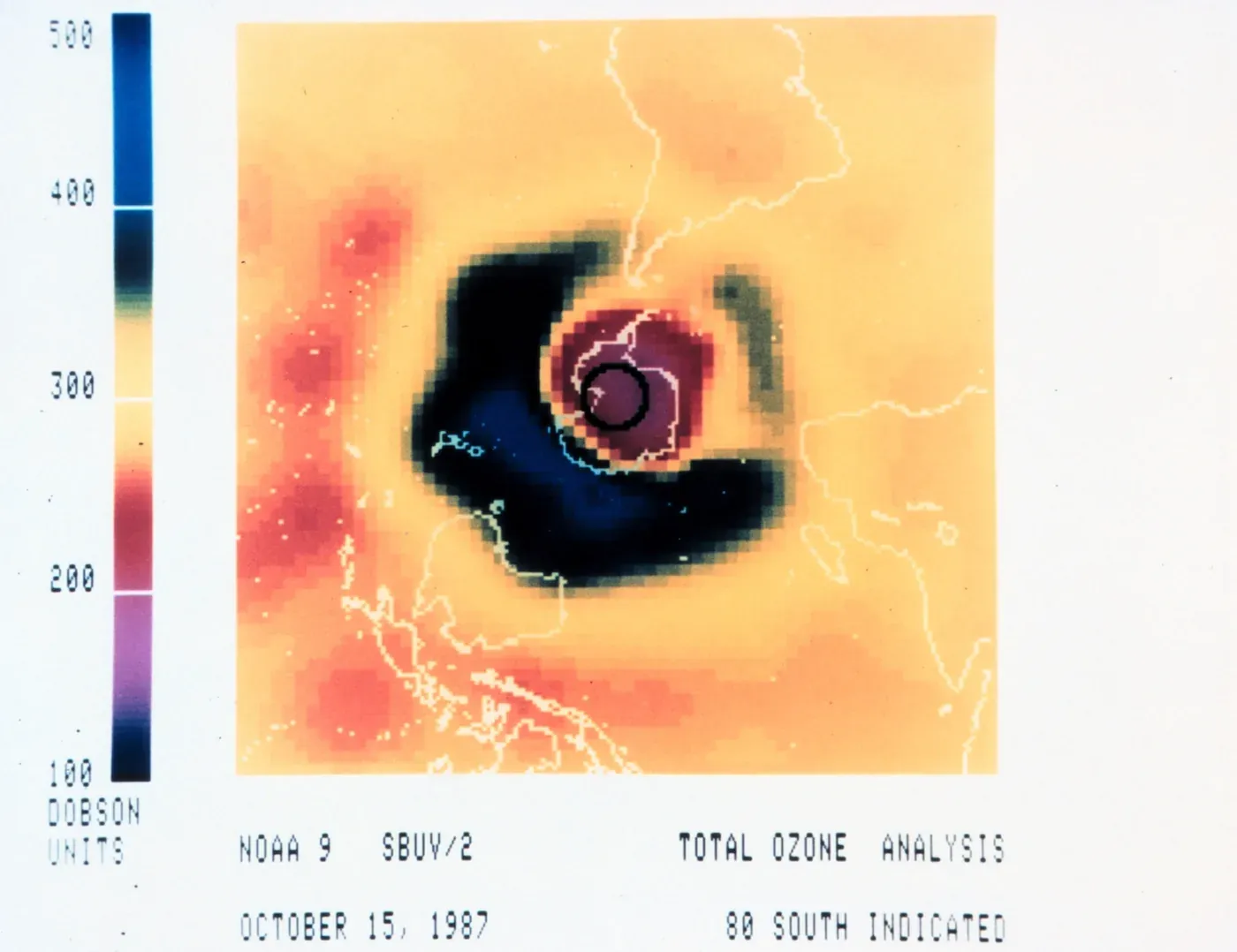
On 15 March 1988, an international panel of more than a hundred scientists, organized by NASA and the World Meteorological Organization, published the findings everyone had been dreading since the Antarctic “ozone hole” was first reported three years earlier: chlorofluorocarbons were destroying the stratospheric ozone layer, measurably and over a much wider area than the Antarctic alone. It was the first time the link between CFCs and ozone loss had been called conclusive rather than merely likely. The planet’s own barrier against ultraviolet radiation, it turned out, could fail, and humanity had been the one taking it apart, one aerosol can and refrigerator at a time.
Plate I

Three months later, on 23 June, a heatwave was baking Washington when NASA climatologist James Hansen told the U.S. Senate that global warming was no longer a projection: it was happening, it was measurable, and it was, with near certainty, caused by human activity. Between the two hearings, 1988 became the year the world’s atmospheric chemistry (the very layers of gas that make the planet livable) stopped being an abstraction and became a subject of Senate testimony.
Plate II

.jpg)
A much smaller barrier problem was being solved that same spring, with no Senate hearing and no headline. On 1 April 1988, the Goodyear Tire and Rubber Company filed a patent on a modified version of a forty-year-old polymer: polyethylene naphthalate, first patented by Imperial Chemical Industries back in 1948 and sold in small volumes by the Japanese fiber maker Teijin since the 1960s under the name Teonex, but never widely used because it refused to crystallize at any temperature an ordinary factory could reach. Goodyear’s fix, blending in a small amount of polyether glycol, let the resin crystallize some thirty-five degrees cooler, low enough for standard molding equipment to handle it. It was the change that finally let PEN be blown into a bottle rather than just spun into a fiber or cast as a film, and it is why a genuine, standalone barrier polymer, one that could keep oxygen out of a bottle of beer far better than any plastic before it, only started to matter in the same year two other kinds of barrier were shown, very publicly, to be failing.
One Ring, Fused to a Second
PEN’s backbone is built from a naphthalate unit (two benzene rings fused edge to edge into one flat, rigid plane) alternating with the same flexible ethylene glycol hinge used in ordinary polyester. That fused double ring is the entire story: it is too large and too rigid to rotate freely the way a single benzene ring can, so a naphthalate chain resists bending in ways an equivalent ester chain cannot, and the flat rings stack against their neighbors more strongly than a single ring does. The result is a polymer that packs more tightly, moves less at a given temperature, and leaves a gas molecule less room to wander through it than almost any other clear, meltable plastic.
A Tighter, Tougher Material
That tight packing is what gives PEN its reputation as a barrier resin: strikingly little oxygen, carbon dioxide, or water vapor gets through a PEN wall compared with the plastics that came before it, which is the entire reason it exists as a beverage-bottle material at all; beer and other oxygen-sensitive drinks spoil in ordinary plastic long before they would in glass, and PEN closes most of that gap. It also holds its shape and stiffness at temperatures that would soften a more ordinary polyester, resists most everyday chemicals (dilute acids, alcohols, alkalis, aromatic solvents, oils and greases all leave it largely unaffected) and tolerates hot, humid conditions and prolonged ultraviolet exposure distinctly better than the plastics it was designed to outperform. Optically it is clear enough for packaging and film use, though its density and stiffness sit a step above the ordinary polyester family, a direct consequence of how much more tightly its chains pack together.
From Naphthalene to Resin, the Slow Way and the Fast Way
PEN is built the same way any polyester is: 2,6-naphthalenedicarboxylic acid, or its dimethyl ester, is reacted with ethylene glycol, and the resulting intermediate is driven by heat and vacuum into a long chain, exactly as terephthalic acid and ethylene glycol are combined to make PET. What made PEN commercially workable was not a change to that chemistry but the discovery, in Goodyear’s 1988 patent, of how to make the resin crystallize at a temperature ordinary molding equipment could actually reach. This was the difference between a laboratory curiosity that could only be cast as a film and a resin a bottler could run on the same production lines built for PET.
Where the Barrier Went to Work
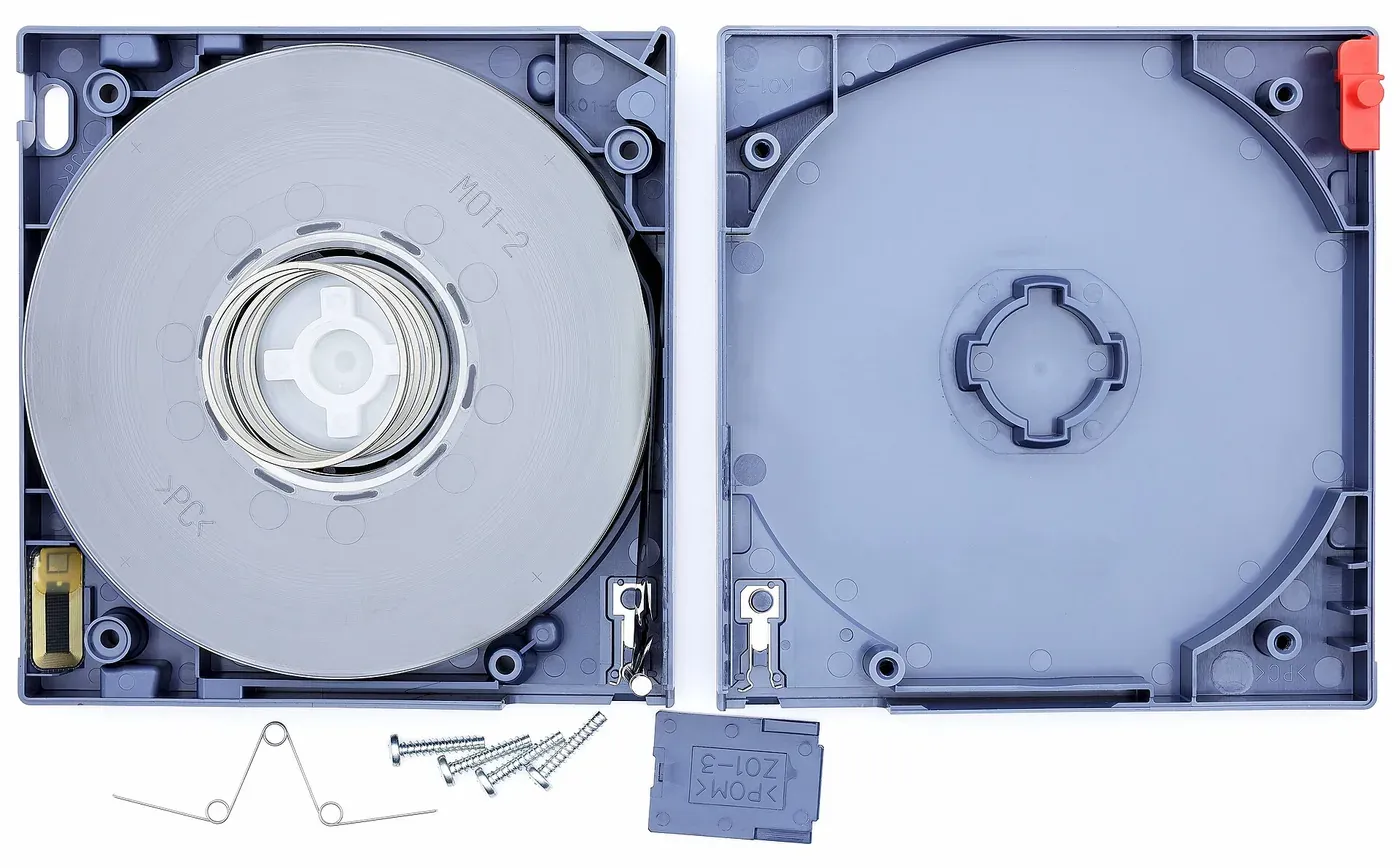
PEN’s clearest commercial niche has been bottling drinks that oxygen ruins: beer above all, where PEN or PEN-blended bottles hold their carbonation and flavor for a life ordinary PET cannot match. Away from beverages, its dimensional stability and heat resistance carried it into industrial fiber and high-performance sailcloth, and into the data-storage industry as the base film for magnetic tape formats such as LTO, where a thin, strong, dimensionally stable substrate matters more than almost anything else in the cartridge.
Plate III

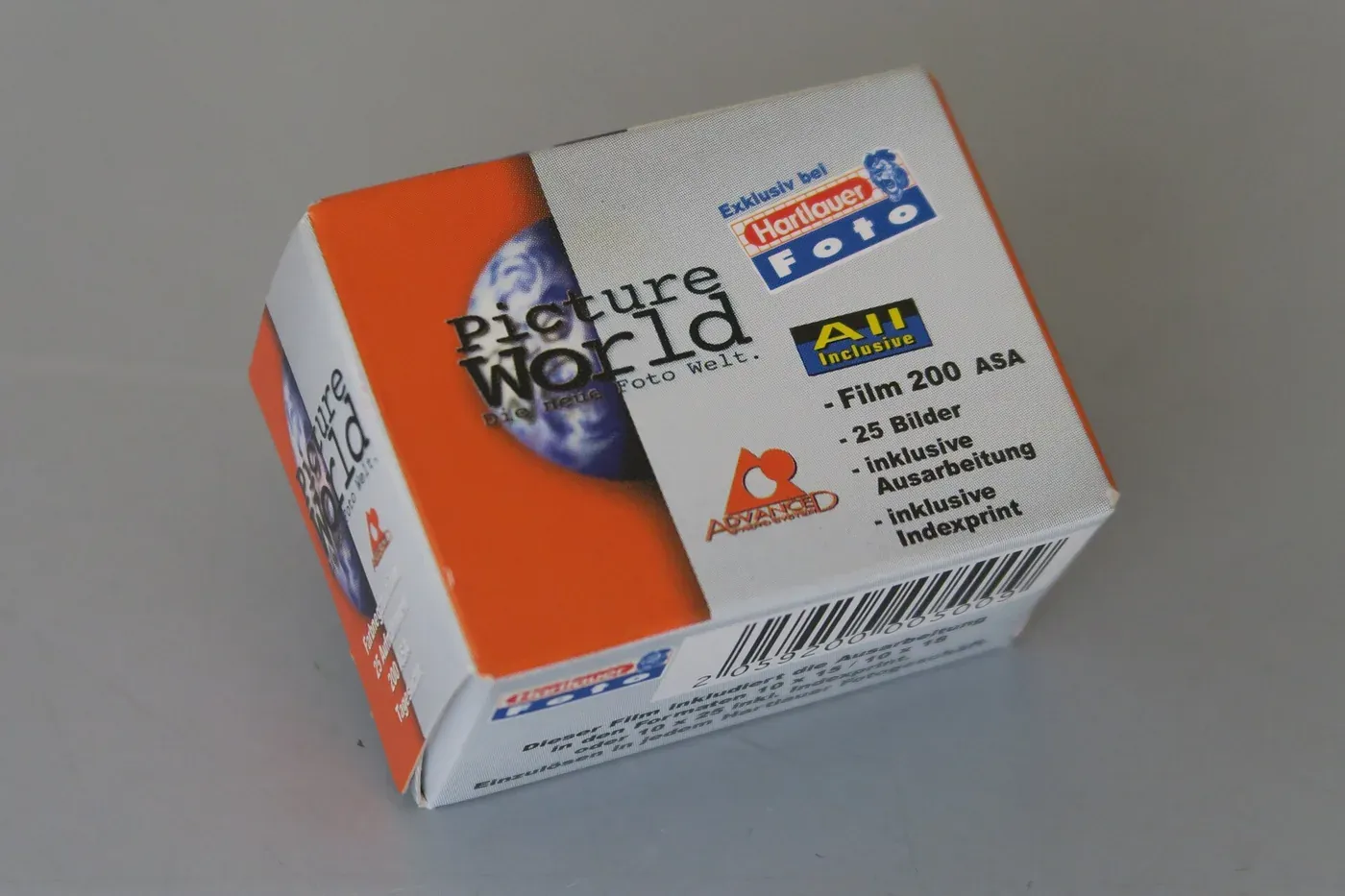
Kodak leaned on the same properties starting in the mid-1980s to develop a thinner, flatter-lying film base for its Advanced Photo System, launched in 1996: PEN’s stiffness let the film lie flatter in a tightly wound cartridge than the older cellulose and PET bases could manage, which mattered for a format built around a smaller negative than 35mm.
Plate IV

More recently, PEN’s combination of heat resistance and dimensional stability has made it a candidate substrate for flexible electronics and OLED displays, and researchers have begun exploring it as a scintillator material for radiation detection. These are new careers for a chain of fused rings that spent its first four decades as little more than a patent nobody could quite put to use.
values with [n] cite the numbered references·estimates are flagged·“not yet available” and “N/A” are honest states, not gaps
fetching the model…
Polyethylene Naphthalate repeat unit
- Abbreviation
- PEN
- Type
- polymer family (hub)
- CAS number
- 24968-11-4
- Resin ID code
- none assigned
- Formula
- (C14H10O4)n[-O-CH2-CH2-O-CO-C10H6-CO-]nThe formula shows the 2,6-naphthalate isomer, the dominant commercial form; other naphthalate isomers (e.g. 1,5-, 2,7-) exist but see little commercial use.
- Repeat unit (BigSMILES)
{[][>]OCCOC(=O)c1ccc2cc(ccc2c1)C(=O)[<][]}- IUPAC name
- Poly(ethylene 2,6-naphthalate)
- Synonyms
- —
- Also known as
- —
- Chemical family
- polyester
- Backbone class
- heterochain
- Polymerization mechanism
- step-growth-condensation
- Constitutional monomer
- Naphthalene-2,6-dicarboxylic acidEthylene glycol
- Polymer class
- thermoplastic
- Year of origin
- 1988
- Era
- The Specialty Polymers Age (1980-1999)
- Key figures
- Imperial Chemical Industries (ICI) · Teijin · Goodyear Tire and Rubber Company
- Events referenced
- International Ozone Trends Panel confirms CFC-driven ozone depletion (15 March 1988) · James Hansen's Senate testimony on global warming (23 June 1988)
- Polymerization type
- step-growth condensation (esterification)
- Common monomers (feedstocks)
- naphthalene-2,6-dicarboxylic acid (or its diester), ethylene glycol
- Catalysts
- not yet available
Made via either an ester or an acid process, named according to whether the starting monomer is a diester or diacid derivative of naphthalene dicarboxylic acid.
- Tacticity
- not yet available
- Crystal structure
- Triclinic, two polymorphs (α: a≈0.651, b≈0.575, c≈1.32 nm; β: a≈0.926, b≈1.559, c≈1.273 nm), 1 chain per unit cell; nearly planar chain conformation.
- Typical crystallinity
- 1–50.6 %[2]Strongly processing-dependent: 1–4.2% as-amorphous, 6.8–49.6% annealed (123–170°C), 31–38% drawn (ratio 3.6–6.1), 50.6% biaxially oriented; up to 62.5–87.2% under high-pressure crystallization.
Molecular weight
- Number average (Mn)
- not yet available
- Mass average (Mw)
- not yet available
- Dispersity (Mw/Mn)
- not yet available
Mark-Houwink constants
not yet available
The bulkier naphthalate ring (vs. PET's terephthalate) restricts chain mobility, improving strength, modulus, chemical/hydrolytic resistance, gas barrier, thermal/thermo-oxidative resistance, and UV-light barrier relative to PET.
- Density
- 1.345 (1.33–1.36) g/cm³[2]At 20°C; amorphous ≈1.325 g/cm³, crystalline ≈1.407 g/cm³. Mark's Polymer Data Handbook measured 1.3471 g/cm³ (autodensimeter).
- Melt flow index
- 2.5 g/10min[2]300°C/3.8 kg
- Refractive index
- 1.575 (1.5–1.65)[2]20°C
- Transmittance
- 84 %[2]
- Haze
- not yet available
- Gloss
- not yet available
- Water absorption
- not yet available
- Dielectric constant
- 3.2[2]
- Dielectric strength
- 160 kV/mm[2]Film, d = 0.6–0.8 mm
- Electrical conductivity
- 1 × 10⁻¹³ S/m[2]Reciprocal of reported volume resistivity (1×10¹³ Ω·m).
- Glass transition (Tg)
- 119.5 (117–122) °C[2]Mark's Polymer Data Handbook reports 117–121°C (DSC), closely matching.
- Melting temperature (Tm)
- 275.5 (261–290) °C[2]DSC. Mark's Polymer Data Handbook reports 265–266°C (DSC).
- Crystallization (Tc)
- 200.35 (197.85–202.85) °C[3]DSC; Wypych's Handbook of Polymers reports a closely matching rapid crystallization temperature of 198–203°C.
- Heat deflection (HDT)
- not yet available
- Decomposition onset
- not yet available
- Thermal conductivity
- not yet available
- Tensile modulus
- 2000 MPa[2]Mark's Polymer Data Handbook reports the same value (2,000 MPa) as Young's modulus.
- Yield strength
- not yet available
- Tensile strength at break
- 64 (60–68) MPa[2]Unqualified 'tensile strength' row, no separate yield value given. Mark's Polymer Data Handbook reports 83 MPa breaking strength for a different (tensile-tested) sample.
- Elongation at break
- 295 (250–340) %[2]Mark's Polymer Data Handbook reports a much lower 48.5% for a different sample/orientation.
- Impact strength (Izod)
- 420 J/m[2]23°C, unnotched (no notched value given).
- Impact strength (Charpy)
- not yet available
- Hardness
- not yet available
- Flexural modulus
- 2500 MPa[2]Mark's Polymer Data Handbook reports the same value (2,500 MPa, 3-point flexure).
- Poisson's ratio
- not yet available
- Coefficient of friction
- 0.27[2]
- Solvent: dilute acids
- good[2]
- Solvent: concentrated acids
- poor[2]
- Solvent: alcohols
- good[2]
- Solvent: alkalis
- good[2]
- Solvent: aromatic hydrocarbons
- good[2]
- Solvent: greases & oils
- good[2]
- Solvent: halogenated hydrocarbons
- poor[2]
- Solvent: ketones
- good[2]
- Weathering / UV
- Improved UV-light barrier resistance vs. PET[1]
- Hydrolysis resistance
- Improved chemical and hydrolytic resistance vs. PET[1]
- Flammability (UL94)
- V-2[2]
- Limiting oxygen index
- not yet available
- Solubility parameter (δ)
- not yet available
Gas permeability
- O₂
- 6 × 10⁻¹⁵ cm³(STP)·cm/(cm²·s·Pa)[2]25°C; converted from reported 0.006 × 10⁻¹² cm³·cm·cm⁻²·s⁻¹·Pa⁻¹.
- CO₂
- 1 × 10⁻¹⁴ cm³(STP)·cm/(cm²·s·Pa)[2]25°C; converted from reported 0.01 × 10⁻¹² cm³·cm·cm⁻²·s⁻¹·Pa⁻¹.
- water vapor
- 4 × 10⁻¹¹ cm³(STP)·cm/(cm²·s·Pa)[2]25°C; converted from reported 40 × 10⁻¹² cm³·cm·cm⁻²·s⁻¹·Pa⁻¹.
Polymer-solvent interaction parameter (χ)
not yet available
- Processing methods
- injection stretch blow molding (bottles)film extrusion/biaxial orientation
- Drying required
- Yes
- Processing temperature
- not yet available
- Shrinkage rate
- 0.8 %[2]
- Packagingoxygen-barrier beverage bottles (particularly beer)
- Industrialhigh-performance sailcloth · high-modulus textile/industrial fibers
- Data & imagingLTO tape cartridge substrates · Advanced Photo System film (discontinued 2011)
- Electronicsflexible integrated circuit substrates · emerging scintillator material
- Recyclable
- Yes
- Biodegradable
- No
- Degradation pathway
- not yet available
- LD50 (oral, rat)
- not yet available
- NFPA health
- not yet available
- NFPA flammability
- not yet available
- NFPA reactivity
- not yet available
- Carcinogenic classification
- not listed by ACGIH, NIOSH, NTP[2]
Mutagenic effect: none. Teratogenic effect: none.
- [1]Polyethylene naphthalateWikipediaAccessed 2026-07-14https://en.wikipedia.org/wiki/Polyethylene_naphthalate[wiki-pen]
- [2]Handbook of PolymersChemTec Publishinghttps://www.worldcat.org/isbn/9781895198928[handbook-wypych-2016]
- [3]Polymer Data HandbookOxford University Presshttps://search.worldcat.org/search?q=Polymer+Data+Handbook+Mark+1999[handbook-mark-1999]
Illustrations
- Plate IA NOAA satellite ozone map from October 1987, of the kind that fed directly into the March 1988 international panel report confirming CFCs were destroying stratospheric ozone.Wikimedia Commons
- Plate IIJames Hansen, the NASA climatologist whose 23 June 1988 Senate testimony brought global warming into mainstream political debate.Wikimedia Commons
- Plate IIIAn opened LTO data-tape cartridge. The tape itself is wound on a thin polyester film base; PEN's stiffness and dimensional stability suit it well to this role.Wikimedia Commons
- Plate IVA boxed roll of Advanced Photo System film. APS film used a PEN base for its thinness and resistance to curling in the format's compact cartridge.Wikimedia Commons