The Specialty Polymers Age (1980-1999)
Polyglycolic Acid (PGA)
Vanishing Suture
At the American College of Surgeons’ Clinical Congress in October 1989, a technique that had been a curiosity a year earlier was formally introduced to the profession, and general surgery has not looked the same since. Laparoscopic surgery (operating through a handful of small punctures with a camera and long, narrow instruments instead of opening the body up) had made its American debut in June 1988, when two surgeons in Marietta, Georgia, removed a gallbladder without a single large incision. By 1990 it was spreading through American hospitals as fast as surgeons could be trained to do it, at weekend courses that had, almost overnight, become impossible to keep up with.
Plate I
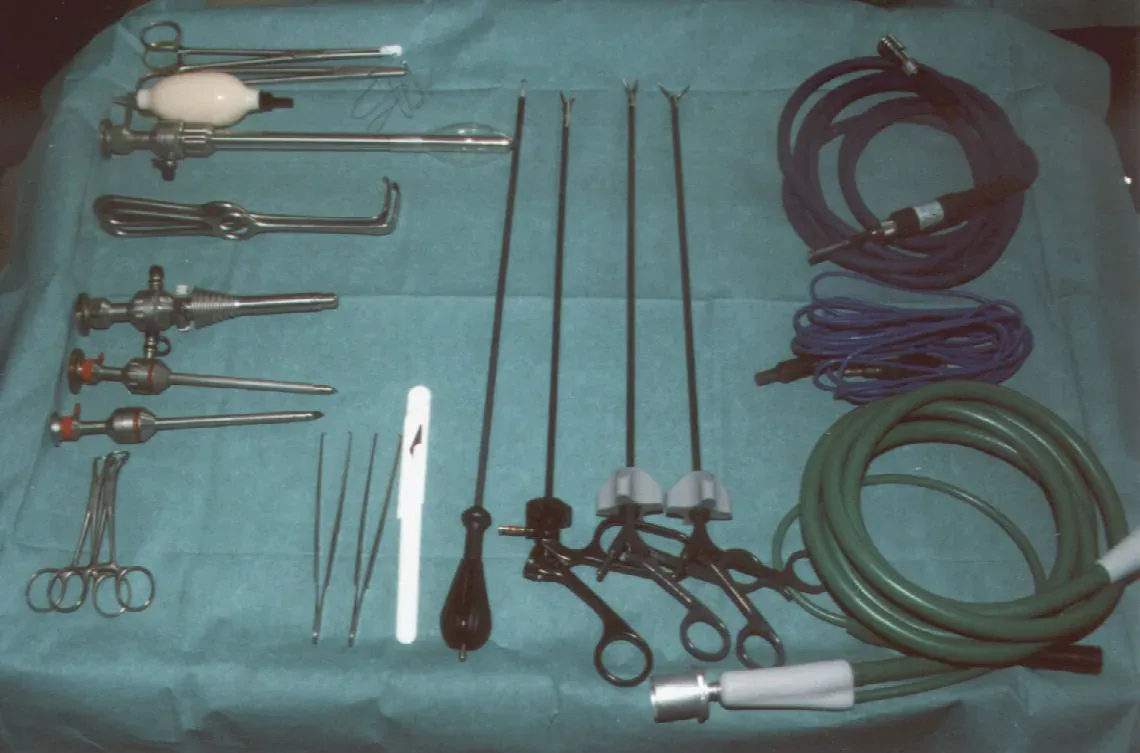

This new way of operating changed what surgeons needed from their materials. A suture tied off deep inside the abdomen through a five-millimetre port cannot be found again and removed the way a skin stitch can; whatever closes the cystic duct or ties off a vessel has to do its job and then get out of the way on its own. That requirement was not new (surgeons had wanted a suture that dissolved on schedule since long before anyone imagined operating through a keyhole), but the laparoscopic revolution made it urgent in a way it had never quite been before, and it happened to land on a material that had already spent two decades proving it could be trusted to do exactly that.
The Suture That Learned to Disappear
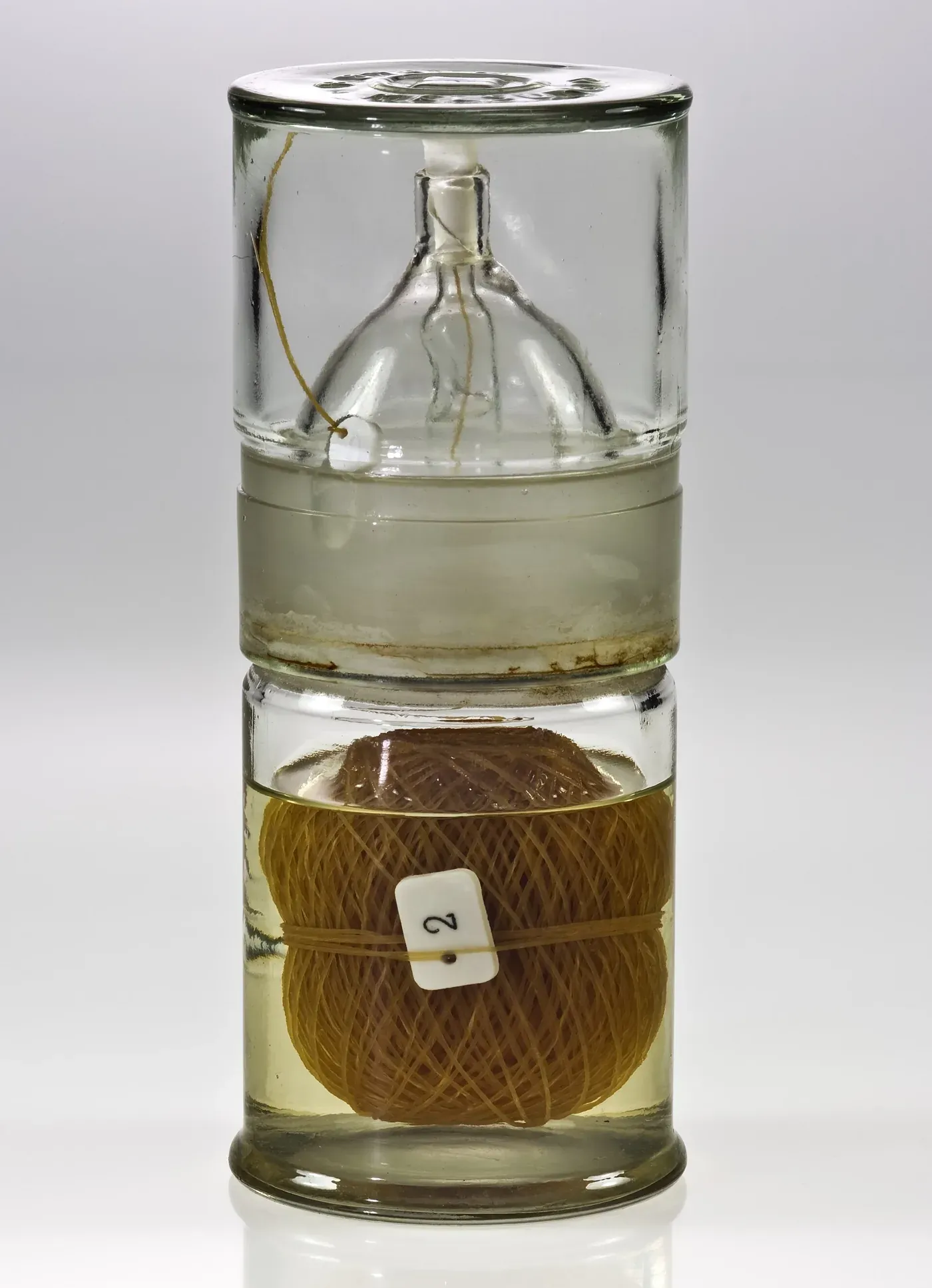
That material was Polyglycolic Acid, and its own story starts two decades earlier, at Davis & Geck (the surgical-suture arm of American Cyanamid), where chemists Edward E. Schmitt and Rocco A. Polistina spent the 1960s working out how to spin glycolic acid into a fibre strong and stable enough to sew with. Their patents, filed through the decade, described the first wholly synthetic absorbable suture: a thread that could be sterilised, handled and tied like silk, then quietly hydrolyse away inside the body over the following months. Davis & Geck brought it to market in 1970 under the name Dexon, and it replaced something surgeons had used for millennia: catgut, a cord traditionally drawn not from cats but from the intestinal lining of sheep and cattle, whose absorption in the body was notoriously unpredictable from one batch to the next.
Plate II

Plates III & IV
.JPG)

The Molecular Magic
PGA’s chain is about as simple as a polyester gets: a two-carbon glycolic acid unit, repeated, with nothing hanging off it to get in the way. That plainness is exactly what makes the chains pack together so tightly and crystallise so readily, which is the root of nearly everything distinctive about how the fibre behaves, and, eventually, of how completely it goes away.
Properties: Built to Hold, Then Let Go
PGA is markedly stiffer than most of the other biodegradable polyesters on this Atlas (closer, mechanically, to a rigid engineering plastic than to a flexible film) and genuinely strong, which is exactly what a suture asks of a material: it has to resist breaking under tension while a wound closes. It tolerates enough heat to be steam-sterilised without difficulty, and fibres spun from it are close to optically clear, useful in a material a surgeon needs to inspect by eye. Its single most telling property, though, is how eagerly it takes up water (dramatically more than PLA, PCL or PHB absorb in the same conditions), and that thirst for water is precisely the mechanism behind its disappearing act: hydrolysis starts in the amorphous regions between the crystallites and works steadily inward, cutting the chains into shorter and shorter fragments until the material has lost its strength long before it has lost its bulk.
That timeline is what makes PGA usable rather than merely biodegradable. It sheds its mechanical strength within the first month or two after implantation (deliberately fast, matched to how quickly a surgical wound gains its own strength back) and is fully resorbed within about half a year, breaking down into glycolic acid that the body processes through its own normal metabolism and clears as carbon dioxide and water. Nothing is left behind to encapsulate, extract, or explain at a follow-up visit.
From Stitches to Scaffolding
Sutures remain PGA’s signature use, but the same property (a strength that holds exactly as long as it needs to and no longer) has carried it into a wider surgical toolkit: absorbable pins, rods, plates and screws for fracture fixation that never need a second operation to remove, mesh and rings for joining sections of bowel, and scaffolds that hold tissue-engineered cells in the right shape just long enough for the body’s own structure to take over. More recently, the same chemistry has found an unexpected home far from the operating room, in oil and gas extraction, where low-molecular-weight PGA components are engineered to dissolve on cue and clear a wellbore without being drilled or fished back out. This is a strange, purely mechanical echo of the same idea that made it useful in a body: build something that does its job, then gets out of the way on its own.
values with [n] cite the numbered references·estimates are flagged·“not yet available” and “N/A” are honest states, not gaps
fetching the model…
Polyglycolic Acid repeat unit
- Abbreviation
- PGA
- Type
- polymer family (hub)
- CAS number
- 26124-68-5
- Resin ID code
- none assigned
- Formula
- (C2H2O2)n[-O-CH2-CO-]nGlycolic acid has no stereocentre, so unlike PLA or PHB there is no isomer to specify; the chain repeat shown is unambiguous.
- Repeat unit (BigSMILES)
{[][>]OCC(=O)[<][]}- IUPAC name
- Polyglycolide
- Synonyms
- polyglycolide
- Also known as
- polyglycolideDexon
- Chemical family
- biodegradable-polyesterpolyester
- Backbone class
- heterochain
- Polymerization mechanism
- ring-opening-polymerization
- Constitutional monomer
- GlycolideGlycolic acid
- Polymer class
- thermoplastic
- Year of origin
- 1990
- Era
- The Specialty Polymers Age (1980-1999)
- Key figures
- Edward E. Schmitt · Rocco A. Polistina · Davis & Geck
- Events referenced
- Rise of laparoscopic ('keyhole') surgery in the United States (1988-1990) · American College of Surgeons Clinical Congress, October 1989
- Polymerization type
- ring-opening polymerization
- Common monomers (feedstocks)
- glycolide
- Catalysts
- stannous octoate; antimony compounds; zinc compounds
PGA has been known since 1954; the first synthetic absorbable suture (Dexon) was developed in 1962. Made via ring-opening polymerization of glycolide, most commonly using FDA-approved stannous octoate catalyst.
- Tacticity
- not yet available
- Crystal structure
- Orthorhombic, a:b:c = 0.522:0.619:0.702 nm, 2 chains per unit cell; planar zig-zag chain conformation.
- Typical crystallinity
- 33–55 %[2]46–52% reported specifically for Dexon suture fiber.
Molecular weight
- Number average (Mn)
- not yet available
- Mass average (Mw)
- 100000–200000 g/mol[2]
- Dispersity (Mw/Mn)
- 1.7–2.3[2]
Mark-Houwink constants
not yet available
Fibers exhibit high strength and modulus relative to other resorbable polyesters, but degrade fully within a predictable few-month window, the basis of its use as a temporary/absorbable material.
- Density
- 1.6 (1.46–1.74) g/cm³[2]20 °C. 1.70 g/cm³ crystalline, 1.5 g/cm³ amorphous.
- Melt flow index
- 14 (6–22) g/10min[2]250 °C / 2.16 kg
- Refractive index
- 1.48 (1.45–1.51)[2]20 °C
- Transmittance
- not yet available
- Haze
- 1 %[2]<1%
- Gloss
- not yet available
- Water absorption
- 28 %[2]equilibrium, immersion in water, 23 °C
- Dielectric constant
- not yet available
- Dielectric strength
- not yet available
- Electrical conductivity
- not yet available
- Tensile modulus
- 6630 (6080–7180) MPa[2]Young's modulus.
- Yield strength
- not yet available
- Tensile strength at break
- 66.5 (61–72) MPa[2]Source reports a single unqualified 'tensile strength', ambiguously yield-or-break; general grade. 1,100 MPa reported for highly oriented fibers.
- Elongation at break
- 12.5 (5–20) %[2]
- Impact strength (Izod)
- not yet available
- Impact strength (Charpy)
- not yet available
- Hardness
- not yet available
- Flexural modulus
- not yet available
- Poisson's ratio
- not yet available
- Coefficient of friction
- not yet available
- Solvent: acids
- poor[2]
- Solvent: alkalis
- poor[2]
- Solvent: esters
- good[2]
- Solvent: halogenated hydrocarbons
- good[2]
- Solvent: ketones
- good[2]
- Weathering / UV
- not yet available
- Hydrolysis resistance
- Fully biodegradable via hydrolysis; completely resorbed by the body in 4–6 months[1]
- Flammability (UL94)
- Not applicable
- Limiting oxygen index
- not yet available
- Solubility parameter (δ)
- not yet available
Gas permeability
not yet available
Polymer-solvent interaction parameter (χ)
not yet available
- Processing methods
- melt spinning (suture fiber)injection molding (implants)
- Drying required
- not yet determined
- Processing temperature
- 240 °C[2]Extrusion / electrospinning.
- Shrinkage rate
- not yet available
- Medicalabsorbable surgical sutures (primary use) · anastomosis rings, pins, rods, plates, screws · tissue engineering scaffolds · controlled drug delivery
- Packaginghigh-molecular-weight food packaging (Kuredux brand)
- Oil and gaslow-molecular-weight degradable frac-plug components
- Recyclable
- No
- Biodegradable
- Yes
- Degradation pathway
- Hydrolysis of ester linkages; fully resorbed in the body within 4–6 months.
- [1]PolyglycolideWikipediaAccessed 2026-07-14https://en.wikipedia.org/wiki/Polyglycolide[wiki-pga]
- [2]Handbook of PolymersChemTec Publishinghttps://www.worldcat.org/isbn/9781895198928[handbook-wypych-2016]
- [3]Polymer Data HandbookOxford University Presshttps://search.worldcat.org/search?q=Polymer+Data+Handbook+Mark+1999[handbook-mark-1999]
Illustrations
- Plate IA laparoscopic instrument tray. The keyhole technique that swept through American surgery around 1990 could reach almost anywhere inside the body, but not back out again to pull a stitch.Wikimedia Commons
- Plate IIA mid-twentieth-century catgut suture dispenser. PGA offered surgeons the same disappearing act, but on a schedule they could actually plan around.Wikimedia Commons
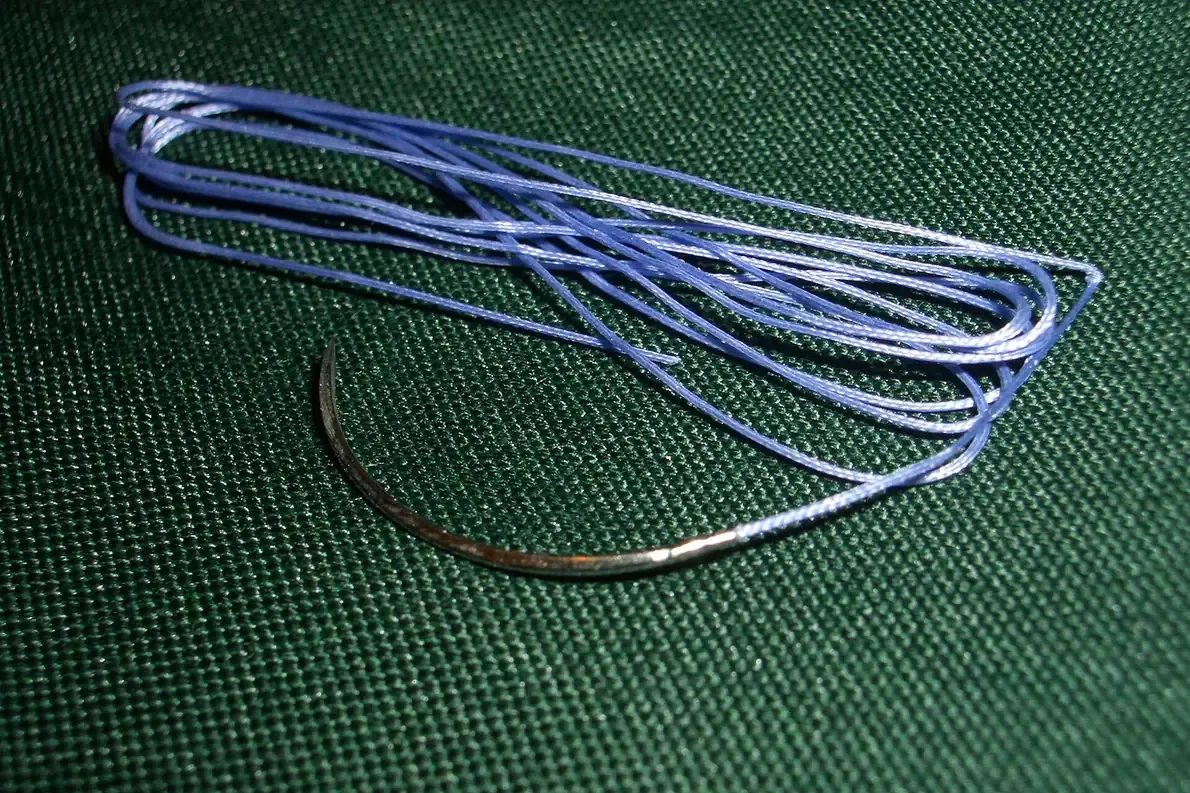
- Plate IIIPolyglycolic acid suture in its original form, the Dexon-type braided thread that replaced catgut from 1970 onward.Wikimedia Commons
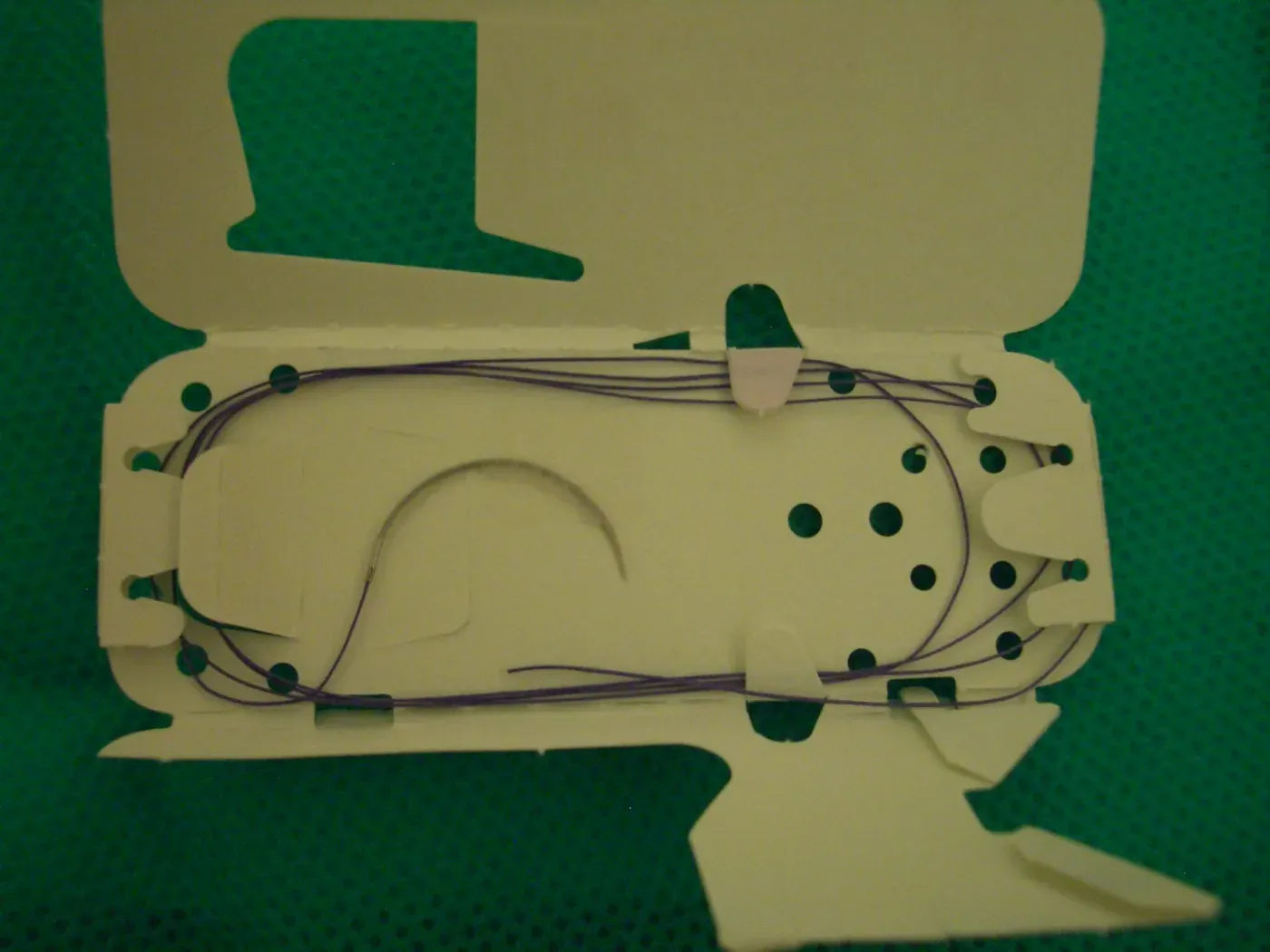
- Plate IVVicryl, a PGA-lactide copolymer developed to handle more softly than pure PGA while keeping the same predictable disappearance.Wikimedia Commons