The Specialty Polymers Age (1980-1999)
Polybutylene Succinate (PBS)
When Soil Became a Polymer's Best Friend
On 1 January 1993, Czechoslovakia stopped existing. The federal parliament had voted the previous November to let the country’s Czech and Slovak halves go their own ways, and at midnight the flags simply changed: one nation that had been joined together for seventy-four years became two, without a shot fired or a border contested, in what the world’s press was already calling the Velvet Divorce.
That same year, in a laboratory in Japan, a different and much smaller act of chemistry was doing the opposite. Chemists at Showa Highpolymer were joining two ordinary, unremarkable molecules (a four-carbon diol and a four-carbon diacid, neither one exotic on its own) into a single new chain, and building, from that union, a semi-commercial plant able to turn out a genuinely biodegradable plastic at real volume for the first time. They called the polymer polybutylene succinate, and sold it under the trade name Bionolle.
An Acid Named for Amber
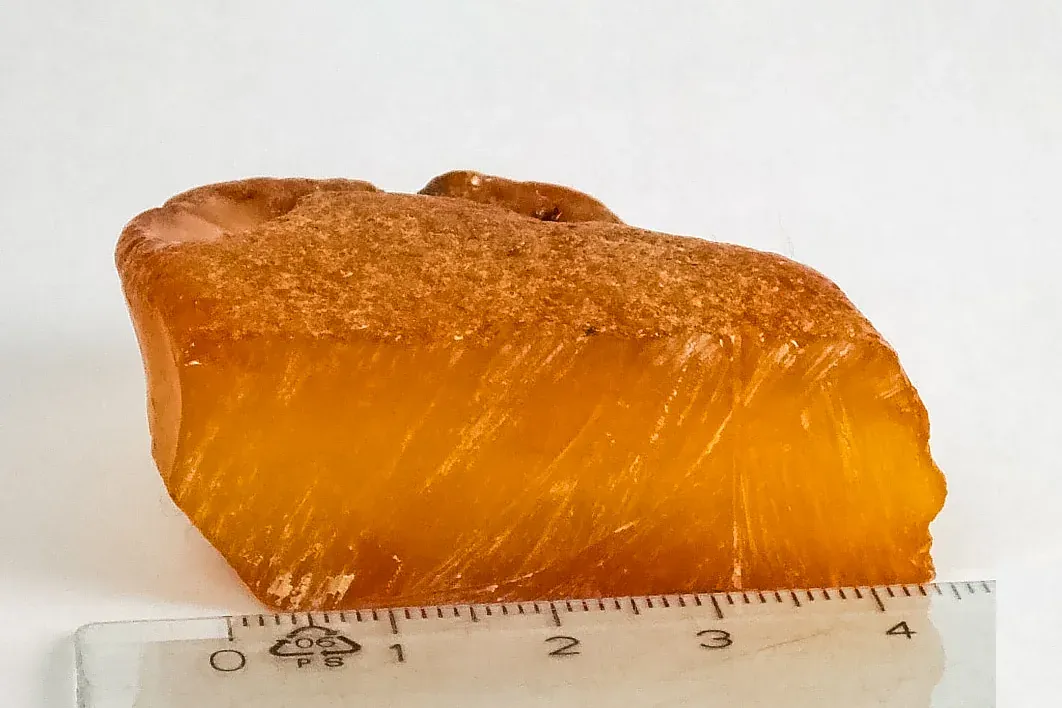
The acid half of that chain has a much older story than 1993. Succinic acid takes its name from succinum, the Latin word for amber, because it was first isolated in 1546 by the German scholar Georgius Agricola, who obtained it by distilling fossilised tree resin. Amber itself contains it naturally, at up to several percent by weight, meaning that every lump of Baltic amber sitting in a jewellery box or a museum case has been quietly manufacturing the same acid this plastic is built from since long before humans existed to name it.
Plate I

Turning succinic acid into a polyester came far sooner than PBS itself. In 1863 the Portuguese chemistry professor Agostinho Vicente Lourenço reacted succinic acid with ethylene glycol and described the reaction in a paper on what he called “polyatomic compounds”, one of the earliest deliberate condensation polymerisations on record, decades before anyone had a word for polymer chemistry at all. The idea resurfaced in the 1930s in Wallace Carothers’ laboratory at DuPont, the same research group whose lactic-acid and lactone work would later seed both PLA and PCL, but succinic-acid polyesters went nowhere commercially for another sixty years. Nobody in 1863 or 1933 had a reason to want a plastic that disappeared.
Showa Highpolymer’s Bet
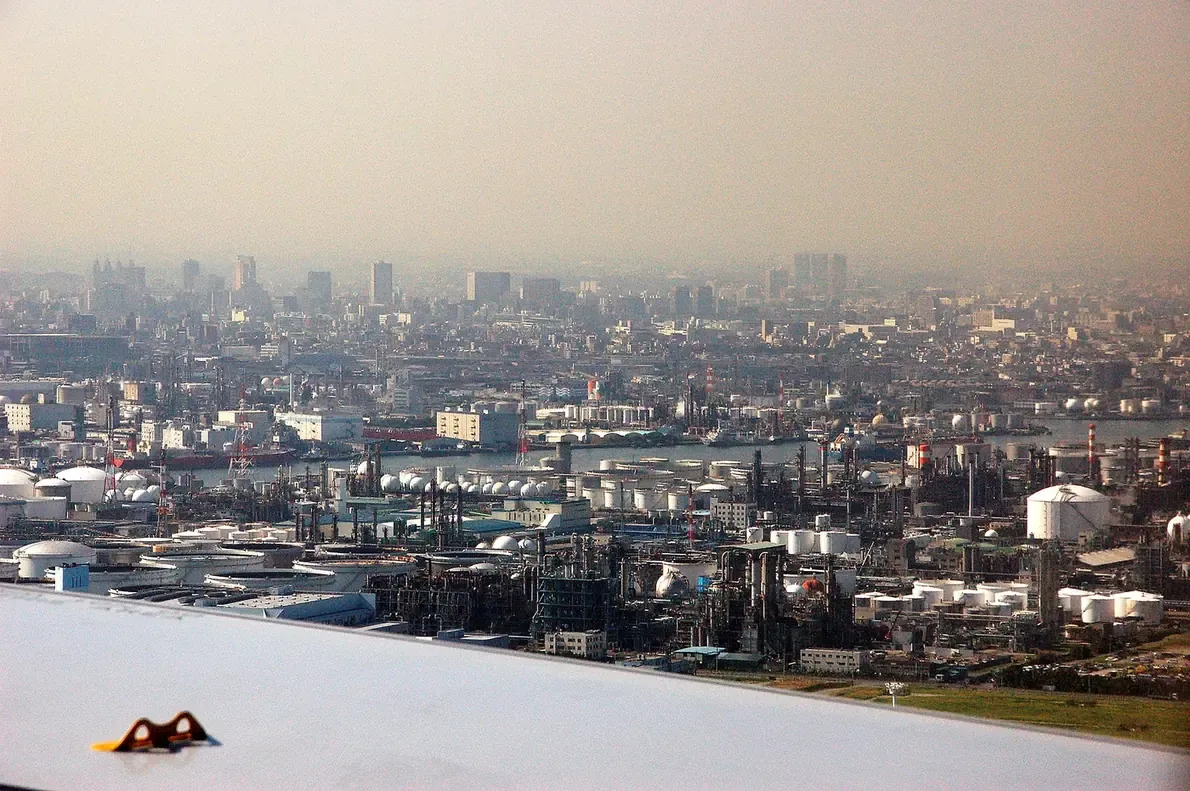
By 1993, the reason had arrived. Landfill capacity was tightening across the industrialised world, and Japanese manufacturers in particular were under real regulatory pressure to find plastics that would not simply persist in the environment. Showa Highpolymer, part of the Showa Denko group, built its Bionolle production around exactly that opportunity: a fully aliphatic polyester, made from monomers cheap and simple enough to manufacture at scale, engineered specifically to be broken down by ordinary soil microorganisms once its working life was over. Showa Denko’s industrial sites sit inside the Keihin Industrial Zone that lines Tokyo Bay around Kawasaki and Yokohama: the same crowded, pipeline-linked corridor of refineries and chemical works that has supplied Japan’s plastics industry for most of a century.
Plate II

The Fully Aliphatic One
Among the biodegradable polyesters in this atlas, PBS is the plain one, and that plainness is deliberate. PLA’s behaviour hinges on the chirality of lactic acid; PGA packs its chain so tightly it becomes almost crystal-clear; PBAT stitches a rigid, PET-derived segment into an otherwise soft chain to get strength a purely aliphatic polymer can’t supply on its own. PBS needs none of that. Its chain alternates a four-carbon diol, 1,4-butanediol, with a four-carbon diacid, succinic acid, and nothing else: no aromatic ring, no stereochemistry to control, no second monomer stitched in for strength. That simplicity is exactly why chemists describe PBS as behaving less like its bio-based siblings and more like an entirely conventional commodity plastic: mechanically, it sits close enough to polypropylene that it can substitute directly for PP in a number of applications, a compliment none of the other polymers on this page’s family tree quite earns.
Plate III

Properties: A Deliberate Resemblance
PBS settles at a density a touch above water, and it melts at a genuinely practical temperature, comfortably above anything the material will meet in ordinary use, yet low enough to process on conventional plastics equipment without the special handling PLA or PGA sometimes demand. That combination of everyday processability and a familiar mechanical feel is the whole point: a converter switching a mulch film or a disposable fork from polypropylene to PBS is not asking their equipment to do anything unusual. Left in the environment, PBS breaks down through ordinary microbial action (a wide range of soil fungi and bacteria attack it, with some strains working noticeably faster than others), and it degrades measurably faster in thin, high-surface-area forms like film or powder than it does as a solid pellet, a reminder that biodegradability is never a single number so much as a race between a material’s shape and whatever is trying to eat it.
The Real Bio-Based Story
The butanediol side of PBS’s chain has traditionally come from petroleum, which limited how “renewable” a bag of Bionolle pellets actually was in 1993. What has changed since is the succinic acid side. Through the late 1990s and 2000s, the U.S. Department of Energy identified succinic acid as one of the most promising platform chemicals a biorefinery could produce by fermenting plant sugars rather than refining oil, and a wave of companies (BioAmber in Canada and France, Myriant in Louisiana, Reverdia in the Netherlands) built plants to do exactly that, using engineered bacteria or yeast instead of a petrochemical process. It did not go smoothly: BioAmber went bankrupt, Reverdia’s operations were absorbed elsewhere, and Myriant’s fermentation plant fell largely idle, a sober reminder that a good fermentation route does not automatically make a good business. But the chemistry survived its investors, and succinic acid remains one of the few building blocks in this atlas that can now be sourced, start to finish, from a fermentation tank rather than a barrel of oil, which means a PBS molecule made today can, in principle, be renewable on both ends of its chain, something PLA, built from only one bio-based monomer, cannot claim.
Applications: Farm Film and Foodservice
PBS’s signature use plays directly to its resemblance to polypropylene: agricultural mulch film that a farmer can till directly into the soil at the end of a growing season instead of peeling up and hauling to a landfill, the way a conventional polyethylene mulch film has to be.
Plate IV
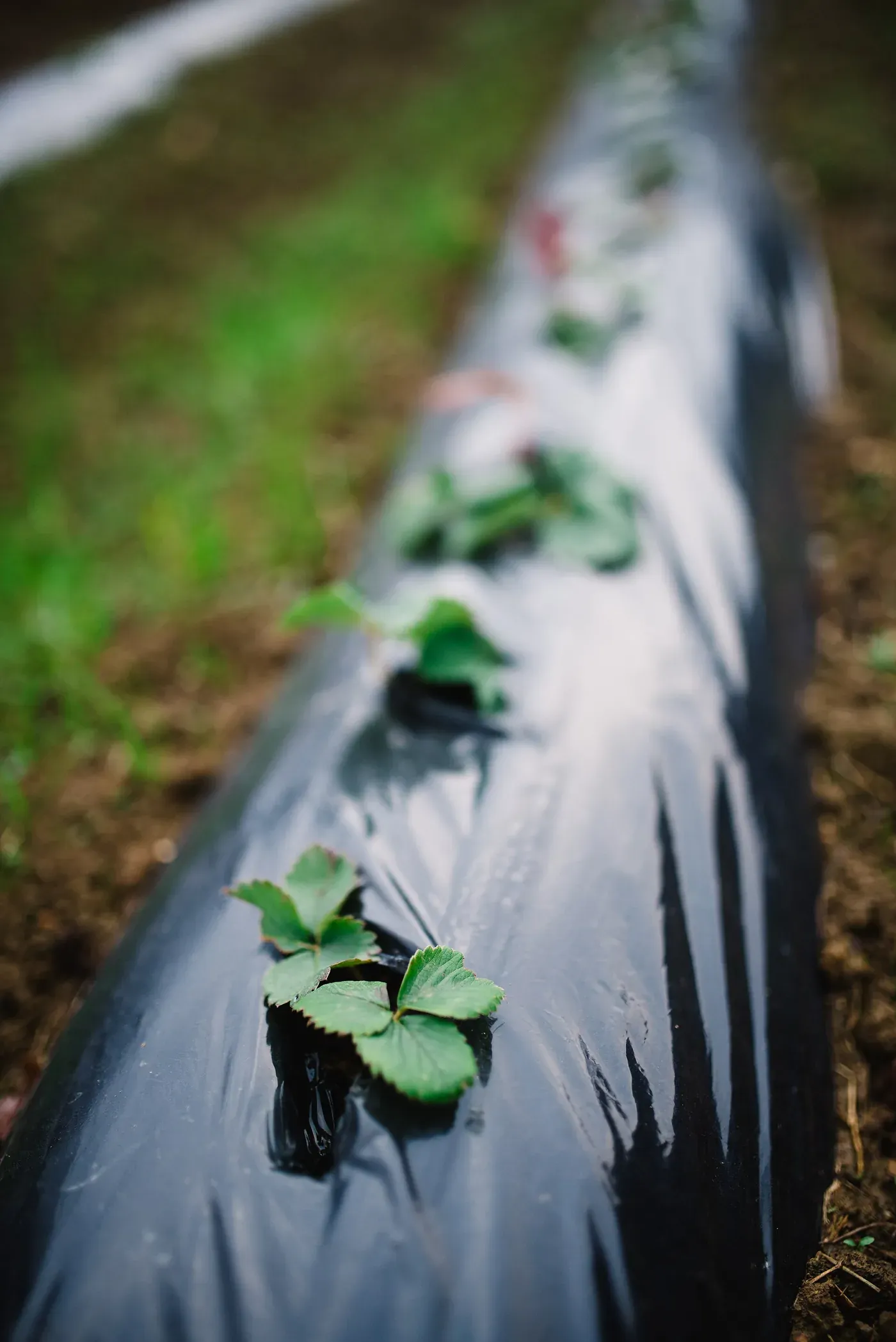

The same combination of ordinary processability and genuine biodegradability has carried it into compostable food packaging, disposable tableware, and fishing lines and nets designed to lose their strength on a predictable schedule rather than persist as abandoned gear for decades.
A Different Kind of Union
Czechoslovakia’s split in January 1993 is remembered as a rare thing in political history: a large, complicated union that came apart peacefully, on schedule, by mutual agreement. Polybutylene succinate’s own story runs in the opposite direction: two plain, unglamorous molecules, one of them named for fossilised tree resin, joined together that same year into something genuinely new. Neither event needed the other to happen. But 1993 turned out to be a year for watching what happens when things that had been separate agree, deliberately, to become one thing or two.
Plate V


values with [n] cite the numbered references·estimates are flagged·“not yet available” and “N/A” are honest states, not gaps
fetching the model…
Polybutylene Succinate repeat unit
- Abbreviation
- PBS
- Type
- polymer family (hub)
- CAS number
- 26247-20-1
- Resin ID code
- none assigned
- Formula
- (C8H12O4)n[-O-(CH2)4-O-CO-(CH2)2-CO-]n
- Repeat unit (BigSMILES)
{[][>]OCCCCOC(=O)CCC(=O)[<][]}- IUPAC name
- —
- Synonyms
- GS Pla (trade name)
- Also known as
- GS Pla
- Chemical family
- biodegradable-polyesterpolyester
- Backbone class
- heterochain
- Polymerization mechanism
- step-growth-condensation
- Constitutional monomer
- Succinic acid1,4-Butanediol
- Polymer class
- thermoplastic
- Year of origin
- 1993
- Era
- The Specialty Polymers Age (1980-1999)
- Key figures
- Agostinho Vicente Lourenço · Showa Highpolymer
- Events referenced
- Dissolution of Czechoslovakia (1 January 1993)
- Polymerization type
- step-growth condensation (direct esterification)
- Common monomers (feedstocks)
- succinic acid, 1,4-butanediol
- Catalysts
- not yet available
First synthesized in 1863 by Portuguese chemistry professor Agostinho Vicente Lourenco; later refined by Wallace Carothers in the 1930s. Renewed interest emerged in the 1990s. Showa High Polymer built initial commercial capacity in 1993; Mitsubishi Chemicals launched the trade name GS Pla in 2003. Current producers, mostly Chinese and South Korean, reach capacities around 20,000 tonnes/year.
- Tacticity
- not yet available
- Crystal structure
- not yet available
- Typical crystallinity
- not yet available
Molecular weight
- Number average (Mn)
- not yet available
- Mass average (Mw)
- not yet available
- Dispersity (Mw/Mn)
- not yet available
Mark-Houwink constants
not yet available
Properties broadly comparable to polypropylene, positioning PBS as a biodegradable drop-in substitute for some PP applications.
- Density
- 1.26 g/cm³[1]
- Melt flow index
- not yet available
- Refractive index
- not yet available
- Transmittance
- not yet available
- Haze
- not yet available
- Gloss
- not yet available
- Water absorption
- not yet available
- Dielectric constant
- not yet available
- Dielectric strength
- not yet available
- Electrical conductivity
- not yet available
- Glass transition (Tg)
- not yet available
- Melting temperature (Tm)
- 115 °C[1]
- Crystallization (Tc)
- not yet available
- Heat deflection (HDT)
- not yet available
- Decomposition onset
- not yet available
- Thermal conductivity
- not yet available
- Tensile modulus
- not yet available
- Yield strength
- not yet available
- Tensile strength at break
- not yet availableQualitatively 'comparable to polypropylene'; no specific number sourced.
- Elongation at break
- not yet available
- Impact strength (Izod)
- not yet available
- Impact strength (Charpy)
- not yet available
- Hardness
- not yet available
- Flexural modulus
- not yet available
- Poisson's ratio
- not yet available
- Coefficient of friction
- not yet available
- Weathering / UV
- not yet available
- Hydrolysis resistance
- Biodegraded by multiple microorganisms (Aspergillus versicolor most effective); degrades better as powder/film than as pellets, in a slow-then-accelerated-then-leveling-off three-phase process[1]
- Flammability (UL94)
- not yet available
- Limiting oxygen index
- not yet available
- Solubility parameter (δ)
- not yet available
Gas permeability
not yet available
Polymer-solvent interaction parameter (χ)
not yet available
- Processing methods
- film blowing/extrusioninjection molding
- Drying required
- not yet determined
- Processing temperature
- not yet available
- Shrinkage rate
- not yet available
- Packagingpackaging films · disposable tableware
- Agricultureagricultural mulching films
- Medicalimplants · drug encapsulation systems
- Recyclable
- No
- Biodegradable
- Yes
- Degradation pathway
- Microbial biodegradation (e.g. Aspergillus versicolor), proceeding through slow, accelerated, then leveling-off phases; more effective in powder/film form than pellets.
- LD50 (oral, rat)
- not yet available
- NFPA health
- not yet available
- NFPA flammability
- not yet available
- NFPA reactivity
- not yet available
- Carcinogenic classification
- not yet available
- [1]Polybutylene succinateWikipediaAccessed 2026-07-14https://en.wikipedia.org/wiki/Polybutylene_succinate[wiki-pbs]
Illustrations
- Plate IRaw Baltic amber. Succinic acid (half of the chain in polybutylene succinate) is named for it, after Georgius Agricola isolated the acid from distilled amber in 1546.Wikimedia Commons
- Plate IIPart of the Keihin Industrial Zone around Kawasaki, Japan. This is the pipeline-linked petrochemical corridor where Showa Denko, parent of Showa Highpolymer, has long operated.Wikimedia Commons
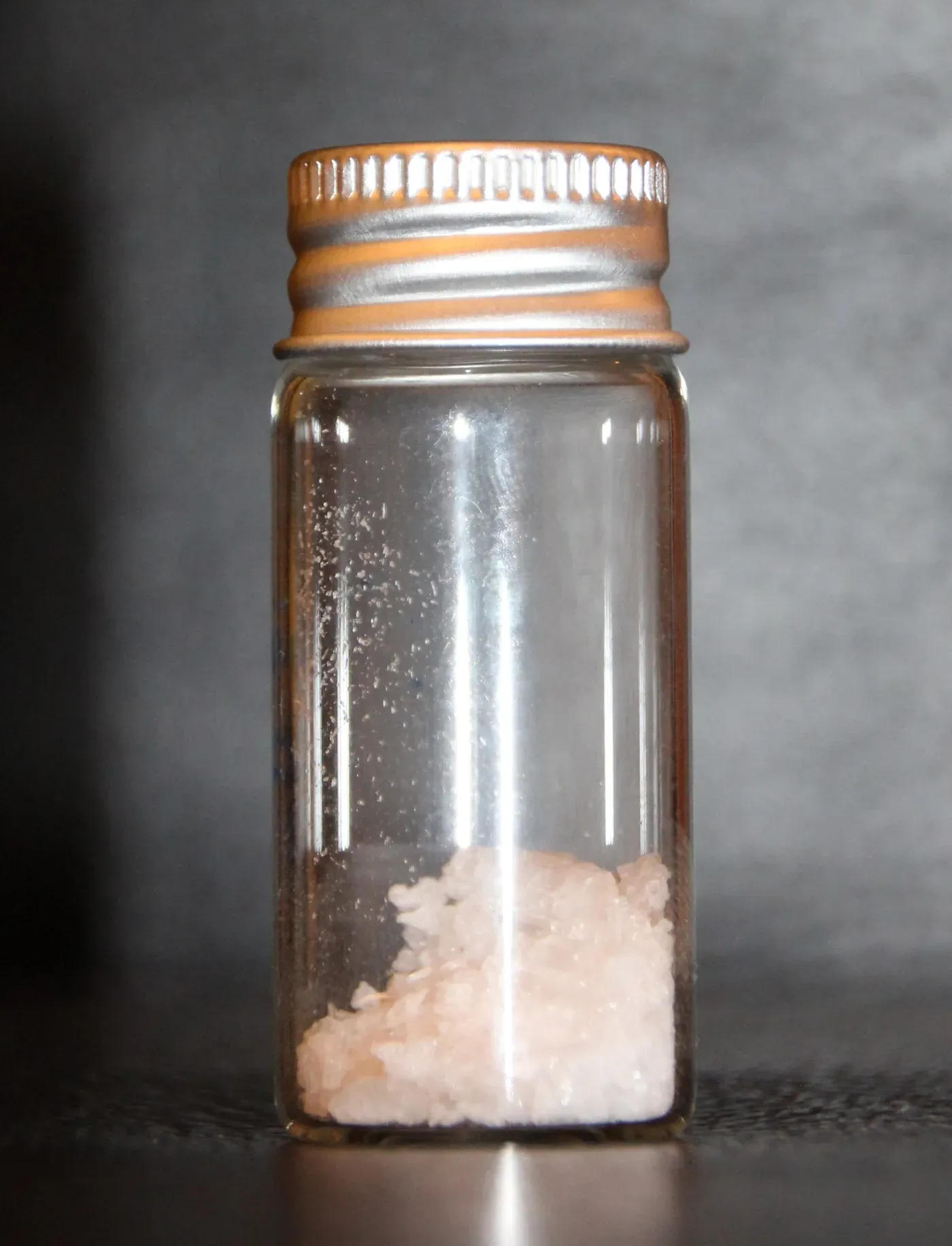
- Plate IIIA laboratory sample of succinic acid, one of the two plain, four-carbon molecules that alternate to build PBS's chain.Wikimedia Commons
- Plate IVStrawberries growing through conventional black plastic mulch film, the kind of petroleum-based sheeting a PBS-based film is designed to replace, tillable into the soil rather than pulled up and landfilled.Wikimedia Commons
- Plate VA 1961 Czechoslovak banknote carrying the adhesive stamp Slovakia used from February 1993 to mark its share of the currency, after the koruna itself split five weeks behind the country it was named for.Wikimedia Commons