The Birth of Synthetic Polymers (1907-1938): The Bakelite Revolution
Polymethyl Methacrylate (PMMA)
The Crystal-Clear Revolution
At noon on 4 March 1933, Franklin D. Roosevelt took the oath of office in front of a crowd that already knew the country’s banks were failing under them. In the week before the ceremony, so many depositors had tried to pull out their savings that state after state had declared its own emergency bank holiday just to stop the runs; by inauguration day, roughly half of America’s banks were already shut, and lines were forming outside the rest.
Plate I
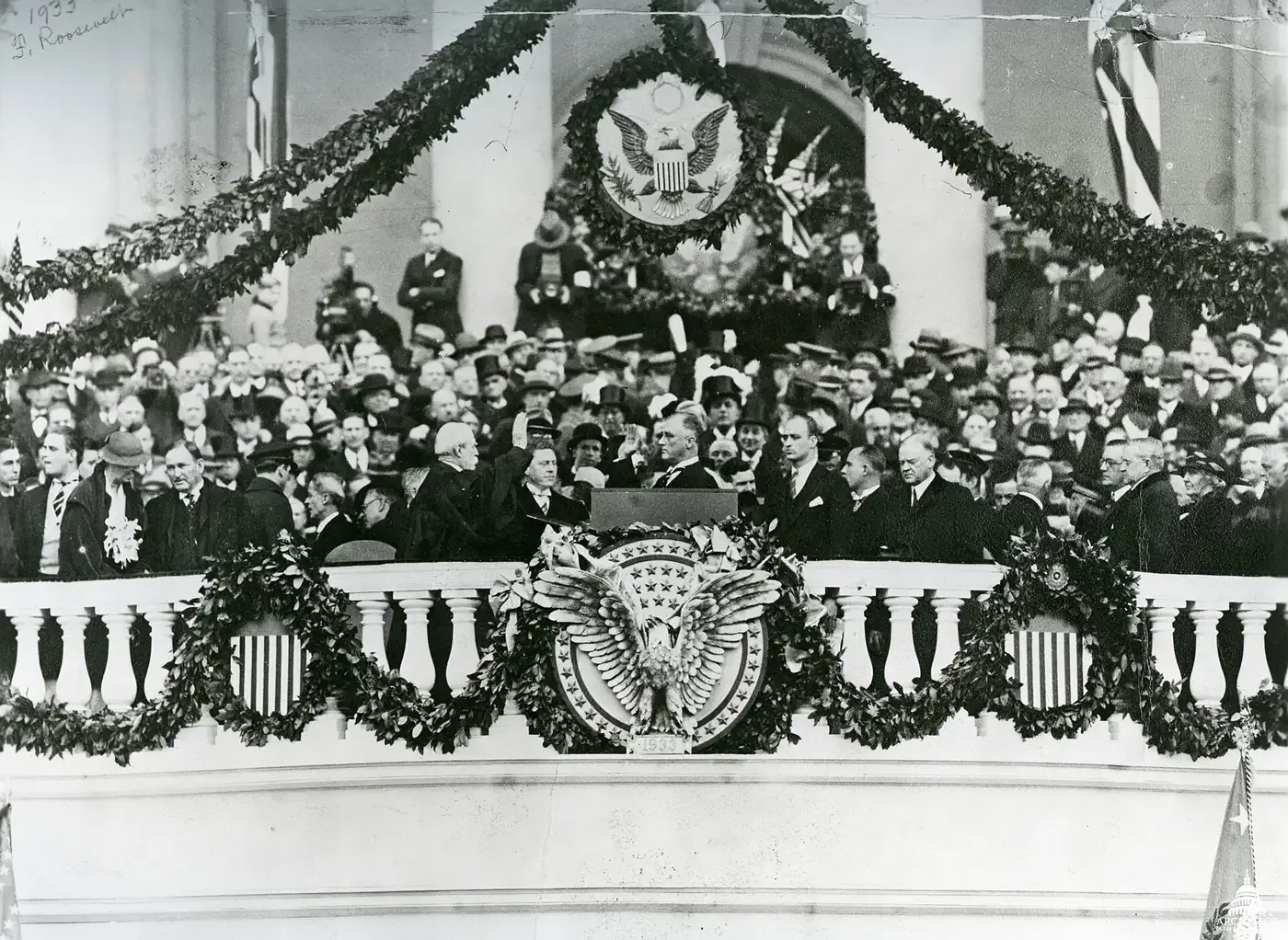

Two days later, Roosevelt closed the rest of them. His first act as president was to declare a nationwide bank holiday, and the emergency session of Congress that followed (the Hundred Days) passed the Emergency Banking Act, the Glass-Steagall Act, and a run of other legislation aimed at putting the public’s trust in paper promises back together before it could do any more damage.
Plate II
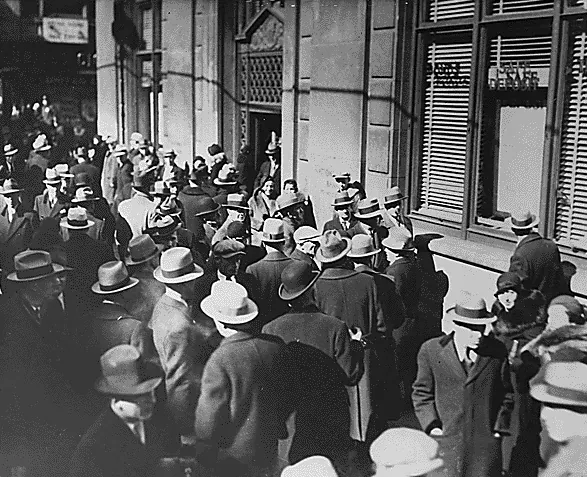

None of that had anything directly to do with the acrylic sheet a German chemist was about to trademark that same year. But 1933 is still a fitting year for a transparent plastic to arrive: while governments on both sides of the Atlantic scrambled to make their financial systems legible again, chemists in Germany and Britain were independently working out how to make a material that really was as transparent as it looked, all the way through.
Otto Röhm (the same chemist whose 1901 doctoral dissertation on acrylic acid polymers eventually gave rise to polyacrylic acid) had been chasing a related but different goal since the 1920s: a safer, shatter-resistant laminated glass for windshields. Trying to bond a layer of polymerized between two glass panes, his team at Röhm & Haas found something more useful than the laminate itself. Cast and polished on its own, the plastic layer was clear enough to replace the glass entirely. Röhm & Haas registered the trademark Plexiglas on 9 August 1933.
Plate III
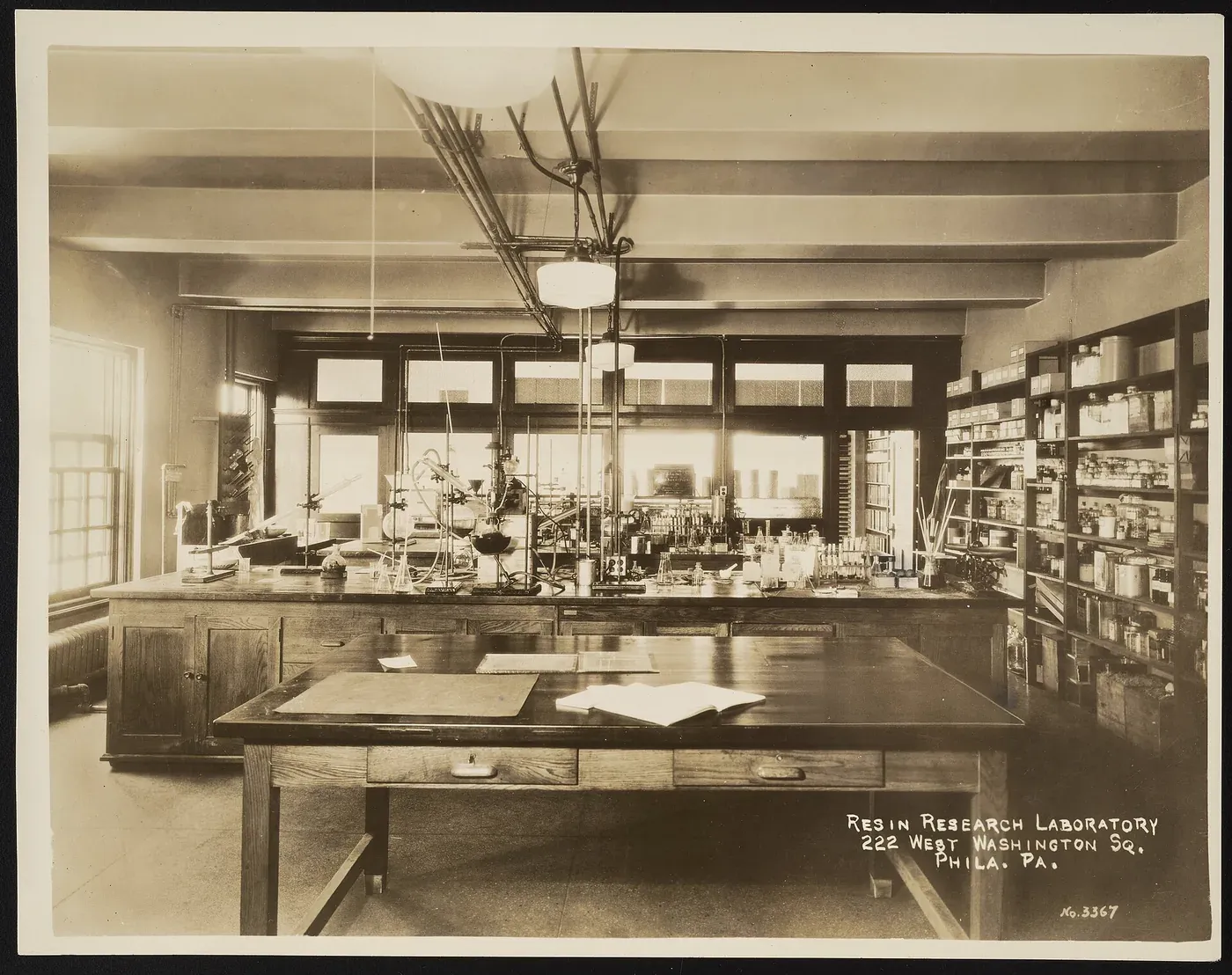

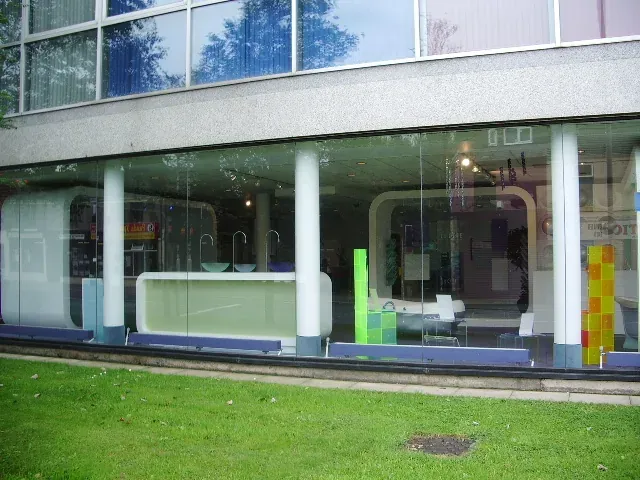
He was not alone, and the page’s own record should say so plainly. At almost the same moment, with no connection to Röhm’s work, two British chemists at Imperial Chemical Industries (John Crawford, in the company’s explosives division at Ardeer, and Rowland Hill, in its dyestuffs division at Blackley) worked out both a cheap industrial route to methyl methacrylate and a way to cast it into clear sheet. The first sheet of what ICI would sell as Perspex came off the line at Ardeer that same year. Two companies, two countries, and effectively the same material, arrived within months of each other, less a single eureka moment than proof that once the underlying chemistry was mature enough, a transparent, mouldable solid was there to be found by whoever went looking.
Plate IV

The Molecular Marvel
PMMA’s structure explains its whole personality. A carbon backbone carries, on every other carbon, both a small methyl group and a bulkier ester group, a side chain that behaves like a bristle sticking out from the chain rather than folding back against it. That bulky, rigid side group is what keeps the polymer amorphous and glass-clear: it disrupts any tendency for the chains to pack into the ordered regions that would scatter light and turn a plastic cloudy. No filler, no additive, does the work of transparency here; it comes directly from a backbone too irregular to crystallize.
Properties: What the Clarity Costs
PMMA is glass-hard at room temperature: stiff, denser than water, and strong enough to serve as a genuinely structural sheet rather than a decorative one. That stiffness comes at the price of ductility: under a sudden load it will crack rather than stretch, which is why impact-modified grades exist for anywhere a sheet might actually get struck. It holds its shape at temperatures well above boiling water and has no true melting point in the ordinary sense; pushed further, it decomposes by unzipping cleanly back toward its own monomer, which is exactly the behavior that makes chemical recycling of PMMA workable in a way it isn’t for most plastics.
Optically, clarity is the whole point of the material: PMMA passes more visible light than ordinary window glass, with almost no haze, and its resistance to sunlight and weathering is among the best of any commodity plastic. This is the reason a cast acrylic sign or aircraft canopy can sit in direct sun for decades without yellowing or clouding. Its weak point is chemistry rather than weather: it tolerates aliphatic solvents reasonably well, but aromatic hydrocarbons, ketones, esters, greases, and many alcohols will craze, soften, or dissolve it outright, so it has to be handled carefully around ordinary shop solvents and cleaners. None of that makes it hazardous in everyday use; by the standard safety scales it is a low-toxicity material with little inherent fire risk.
From Monomer to Sheet
Production starts with methyl methacrylate, made industrially from acetone cyanohydrin, or, on ICI’s original route, directly from acetone, hydrogen cyanide, and methanol. Free-radical polymerization, typically initiated with benzoyl peroxide, builds the chain. Cast sheet is made by pouring the liquid monomer between polished glass plates and letting it polymerize slowly in place, which is still how the highest-optical-quality acrylic sheet is made today; extrusion, injection moulding, and a range of bulk, solution, suspension, and emulsion processes have since been developed for grades that don’t need cast sheet’s exceptional clarity, trading a little optical perfection for speed and cost.
Wartime Service
When the Second World War arrived, PMMA found itself in a crucial military role. Its clarity and resistance to shattering made it the material of choice for aircraft glazing (nose cones, canopies, and gun turrets), anywhere a cracked windscreen could be fatal at altitude. Wartime demand for cast and formed acrylic sheet, at a scale far beyond anything Röhm & Haas or ICI had built for peacetime use, pushed both companies’ manufacturing processes and the range of shapes acrylic could be formed into. These were improvements that carried straight over into civilian use once the war ended.
Applications: Where Glass Would Be Too Heavy or Too Fragile
For aircraft windows, aquarium walls thick enough to hold back tons of water, protective barriers, skylights, signage, point-of-sale displays, and anywhere else a design calls for glass’s clarity without glass’s weight or brittleness, PMMA has usually been the answer since the 1930s. It also does quieter, more exacting work: the light guide plates that spread LED backlighting evenly across a smartphone or television screen are precision-moulded PMMA, chosen for the same optical clarity Röhm and Crawford were chasing in the first place.
Medicine adopted it almost as early. PMMA bone cement anchors joint replacements in place, ultra-pure PMMA lenses restore sight after cataract surgery, and the same polymer, tinted and cast, makes dentures and temporary crowns that pass for the teeth they replace. Few materials invented in the 1930s are still doing quite this much quiet, exacting work nine decades on.
A Second Life
PMMA’s other advantage in an increasingly reused world is that it depolymerizes cleanly. Heated under the right conditions, scrap acrylic can be broken back down into its own methyl methacrylate monomer and repolymerized into resin as good as new. This is a genuine closed loop that most commodity plastics can’t manage. A number of companies now run recovery processes at industrial scale, turning old signage, aircraft canopies, and display cases back into virgin-quality sheet.
A Material Still Finding New Jobs
PMMA’s basic appeal hasn’t changed since 1933: it is still the cheapest way to get glass’s clarity without glass’s weight, brittleness, or difficulty of shaping. What has changed is the precision it is now asked to deliver: from a canopy tough enough to survive a bird strike to a light guide plate patterned at a scale nobody in Röhm’s or Crawford’s laboratories could have measured.
values with [n] cite the numbered references·estimates are flagged·“not yet available” and “N/A” are honest states, not gaps
fetching the model…
Polymethyl Methacrylate repeat unit
- Abbreviation
- PMMA
- Type
- polymer family (hub)
- CAS number
- 9011-14-7
- Resin ID code
- none assigned
- Formula
- (C5H8O2)n[-CH2-C(CH3)(COOCH3)-]n
- Repeat unit (BigSMILES)
{[][$]CC(C)(C(=O)OC)[$][]}- IUPAC name
- Poly(methyl 2-methylpropenoate)
- Synonyms
- acrylic; acrylic glass; Plexiglas; Perspex; Lucite
- Also known as
- PlexiglasPerspexLuciteacrylic glass
- Chemical family
- acrylic
- Backbone class
- carbon-chain
- Polymerization mechanism
- free-radical
- Constitutional monomer
- Methyl methacrylate
- Polymer class
- thermoplastic
- Year of origin
- 1933
- Era
- The Birth of Synthetic Polymers (1907-1938): The Bakelite Revolution
- Key figures
- Otto Röhm · John Crawford · Rowland Hill
- Events referenced
- Franklin D. Roosevelt's first inauguration and the start of the New Deal's Hundred Days (4 March 1933) · Nationwide U.S. bank holiday declared (6 March 1933)
- Polymerization type
- free-radical chain-growth
- Common monomers (feedstocks)
- methyl methacrylate
- Catalysts
- not yet available
Developed in 1928 in several laboratories, including Otto Röhm's; commercialized in 1933 under the trademark Plexiglas by Röhm & Haas, with Perspex and Lucite following shortly after from other manufacturers. Produced via free-radical polymerization: emulsion, solution, or bulk processes. Cast acrylic sheet has better thermal stability, higher solvent-craze resistance, and a wider thermoforming range than extruded sheet.
- Tacticity
- not yet available
- Crystal structure
- Isotactic PMMA crystallizes in an orthorhombic unit cell (a:b:c ≈ 2.10:1.21:1.04 nm, 4 chains per cell); commercial atactic PMMA is amorphous.
- Typical crystallinity
- 0 %[2]Atactic (commercial) PMMA is amorphous; isotactic PMMA can reach ~48% crystallinity.
Molecular weight
- Number average (Mn)
- not yet available
- Mass average (Mw)
- 13000–2200000 g/mol[2]Range across commercial grades
- Dispersity (Mw/Mn)
- not yet available
Mark-Houwink constants
not yet available
Unmodified PMMA is strong but brittle under load; impact modifiers are used to improve toughness in demanding applications.
Atactic/commercial-grade Tg ~105°C; commercial grades formulated across 85–165°C depending on application.
- Density
- 1.185 (1.17–1.2) g/cm³[2]20 °C
- Melt flow index
- 2.2–24 g/10min[2]230 °C/3.8 kg
- Refractive index
- 1.49[3]
- Transmittance
- 92 %[2]
- Haze
- [2]< 1%
- Gloss
- not yet available
- Water absorption
- 0.2 (0.1–0.3) %[2]24 h, 23 °C
- Dielectric constant
- 3.6[2]100 Hz; 2.2–2.6 at 1 MHz
- Dielectric strength
- not yet available
- Electrical conductivity
- 1 × 10⁻¹⁰ S/m[2]Reciprocal of reported volume resistivity, 1×10¹⁰ Ω·m
- Glass transition (Tg)
- 104.5 (104–105) °C[2]Atactic (commercial) grade; wider literature range 105–122°C also reported for atactic samples.
- Melting temperature (Tm)
- Not applicableAmorphous; no true melting point.
- Crystallization (Tc)
- Not applicable
- Heat deflection (HDT)
- 98 (96–100) °C[2]1.8 MPa
- Decomposition onset
- 170 °C[2]
- Thermal conductivity
- not yet available
- Tensile modulus
- 3300 (3200–3400) MPa[2]
- Yield strength
- not yet available
- Tensile strength at break
- 70.5 (63–78) MPa[2]Unqualified "tensile strength"; PMMA is brittle/amorphous with no distinct yield region, so recorded as strength at break.
- Elongation at break
- 4 (2–6) %[2]
- Impact strength (Izod)
- 19 J/m[2]Notched, 23 °C
- Impact strength (Charpy)
- not yet available
- Hardness
- 92 (89–95) Rockwell M[2]
- Flexural modulus
- 3450 (3400–3500) MPa[2]
- Poisson's ratio
- 0.375 (0.35–0.4)[2]
- Coefficient of friction
- not yet available
- Solvent: acids
- non-resistant[2]
- Solvent: alcohols
- non-resistant[2]
- Solvent: aliphatic hydrocarbons
- resistant[2]
- Solvent: aromatic hydrocarbons
- non-resistant[2]
- Solvent: esters
- non-resistant[2]
- Solvent: greases & oils
- non-resistant[2]
- Solvent: halogenated hydrocarbons
- non-resistant[2]
- Solvent: ketones
- non-resistant[2]
- Weathering / UV
- Excellent; among the most weatherable commodity thermoplastics[2]Primary photodegradation sensitivity at 290–320 nm
- Hydrolysis resistance
- not yet available
- Flammability (UL94)
- not yet available
- Limiting oxygen index
- not yet available
- Solubility parameter (δ)
- 21.3 MPa^0.5[2]
Gas permeability
- N₂
- 6.15 × 10⁻¹³ cm³(STP)·cm/(cm²·s·Pa)[2]25 °C
- O₂
- 1.15 × 10⁻¹⁴ cm³(STP)·cm/(cm²·s·Pa)[2]25 °C
- water vapor
- 4.8 × 10⁻¹¹ cm³(STP)·cm/(cm²·s·Pa)[2]25 °C
Polymer-solvent interaction parameter (χ)
not yet available
- Aerospaceaircraft transparencies and canopies
- Optical & medicaloptical lenses · intraocular implants
- Signage & displayssignage · point-of-sale displays
- Consumer & constructionaquariums · protective barriers
- Recyclable
- not yet determined
- Biodegradable
- No
- Degradation pathway
- not yet available
Cradle-to-pellet life-cycle estimates: ~115 MJ/kg non-renewable energy use, ~7 kg CO2/kg resin.
- [1]Poly(methyl methacrylate)WikipediaAccessed 2026-07-14https://en.wikipedia.org/wiki/Poly(methyl_methacrylate)[wiki-pmma]
- [2]Handbook of PolymersChemTec Publishinghttps://www.worldcat.org/isbn/9781895198928[handbook-wypych-2016]
- [3]Polymer Data HandbookOxford University Presshttps://search.worldcat.org/search?q=Polymer+Data+Handbook+Mark+1999[handbook-mark-1999]
Illustrations
- Plate IFranklin D. Roosevelt takes the oath of office on 4 March 1933, opening the Hundred Days of emergency legislation that followed.Wikimedia Commons
- Plate IIDepositors outside a Detroit bank in February 1933, days before Roosevelt's inauguration. This was the banking panic that produced his first act in office.Wikimedia Commons
- Plate IIIRöhm & Haas's Philadelphia resin laboratory, sister operation to the German works where Röhm's team produced Plexiglas in 1933.Wikimedia Commons
- Plate IVA later showroom for ICI's Perspex, the acrylic sheet developed in Britain almost simultaneously with Röhm's Plexiglas.Wikimedia Commons