Decoding Nature's Legacy (1833-1902)
Viscose Rayon
Nature's Makeover Artist
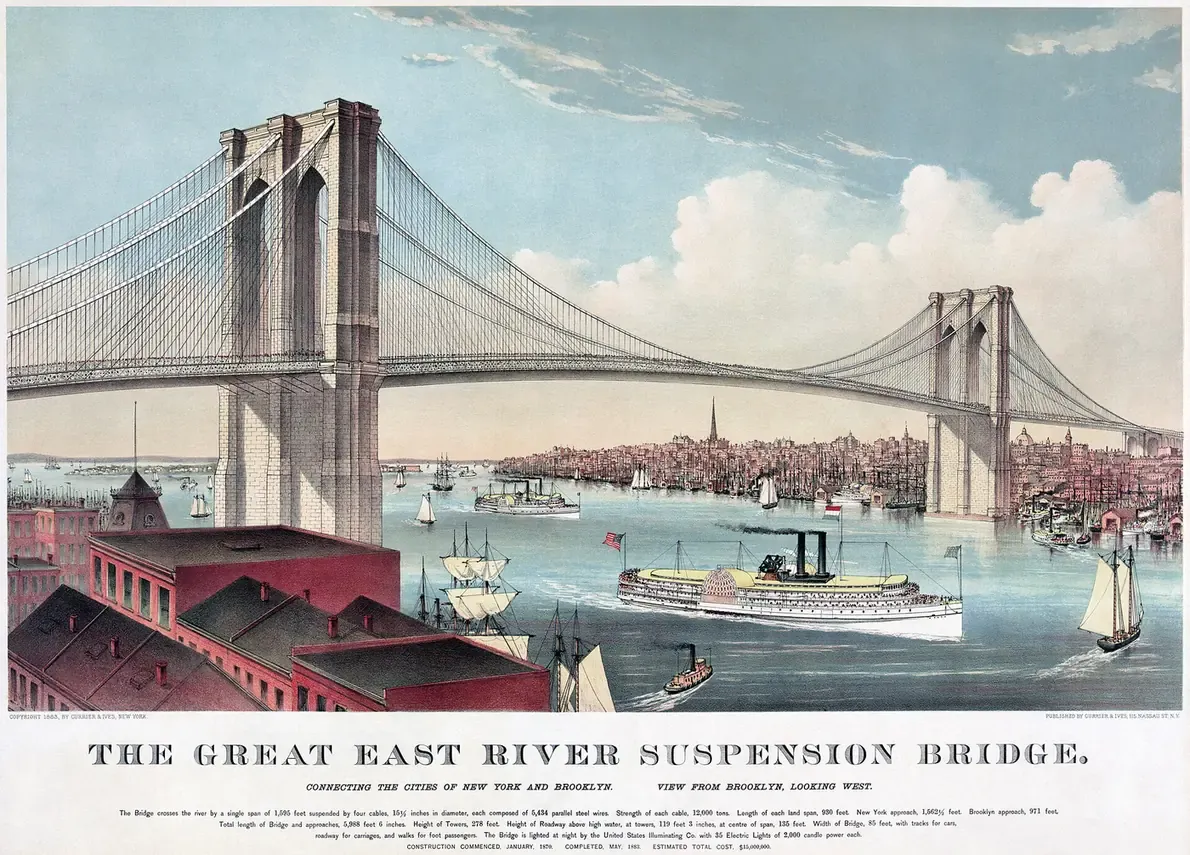
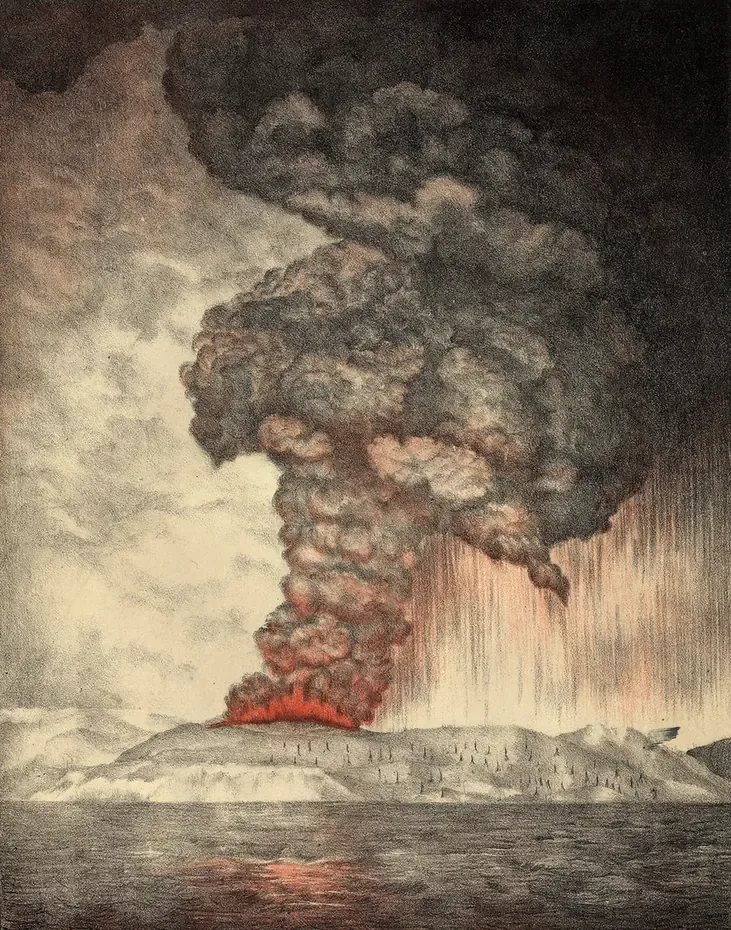
In May of 1883, New York and Brooklyn were finally joined by a bridge whose towers stood taller than anything else on either shore, its roadway hung from cables spun out of thousands of miles of steel wire. It was proof that patient engineering could hang a city’s traffic from thin air. Four months later, on the far side of the world, a volcanic island called Krakatoa tore itself apart with a bang heard three thousand miles away, a reminder that the planet’s own violence still dwarfed anything humanity had built.
Plate I

Between those two extremes, something quieter was happening in laboratories on opposite sides of the English Channel: two men, working on entirely different problems, were each discovering that a solution of dissolved cellulose could be forced through a tiny hole and coaxed into a fine, silk-like thread.
Plate II

Two Men, One Idea, an Ocean Apart
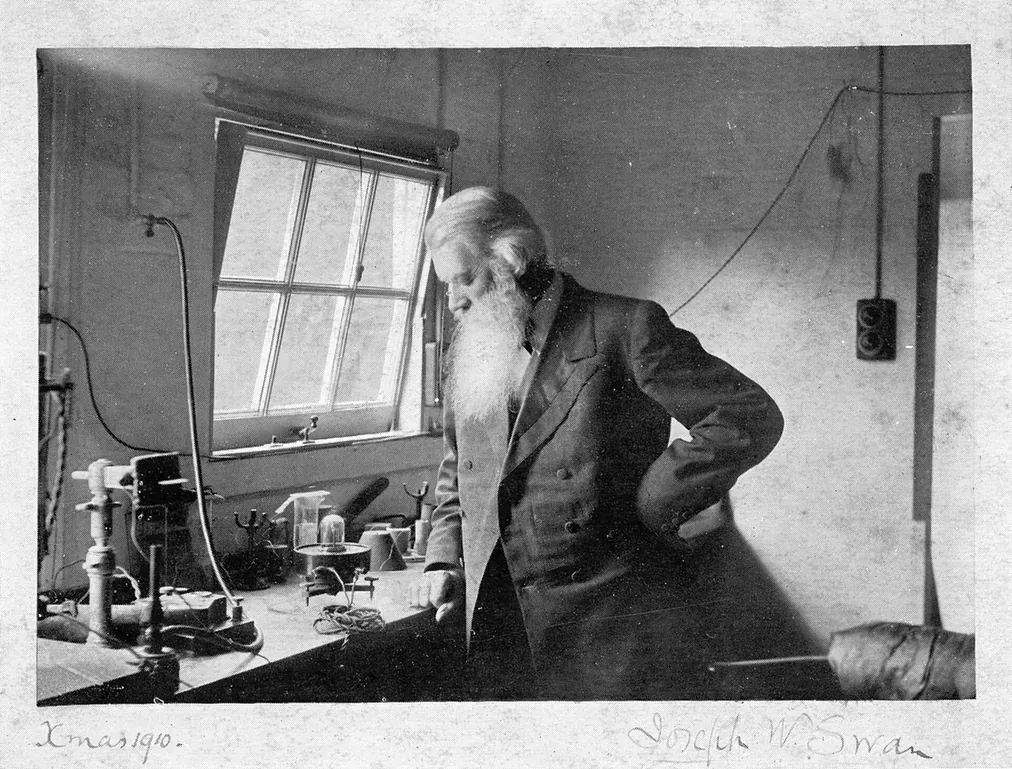
In Newcastle, the physicist Joseph Swan was hunting for a better filament for his incandescent lamp. In 1883 he patented a way to force a solution of nitrocellulose in acetic acid through a grid of fine holes into a coagulating bath, drawing out threads he hoped to carbonize into filaments. The filaments were a disappointment, but his wife Hannah crocheted samples of the leftover fiber into lace, and Swan realized, almost as an aside, that he had made something that behaved remarkably like silk. He never pursued it as a textile; years later he sold the rights to the idea to the Courtaulds textile firm, which would go on to build an entirely different fortune from artificial fiber.
Plate III

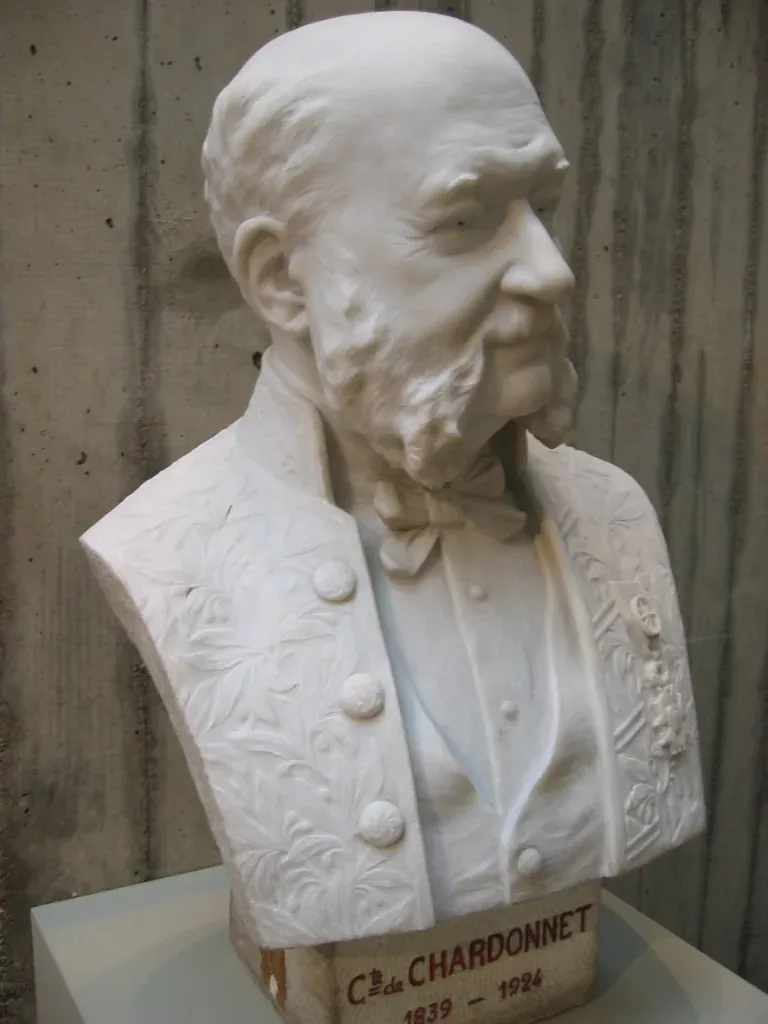
In France, Hilaire de Chardonnet had already had his own encounter with the same idea, quite by accident, five years earlier: cleaning up an overturned bottle of nitrocellulose in his darkroom, he noticed the syrupy residue drawing out into long, fine strands as the solvent evaporated. Unlike Swan, Chardonnet chased the observation deliberately, working out how to dissolve cellulose pulp with nitric and sulfuric acid and draw it into continuous filament. He patented his process the year after this one, in 1884, and would spend the rest of the decade turning it into a real industry: “Chardonnet silk,” first shown to the public at the Paris Exposition of 1889.
Plate IV

Chardonnet silk had one serious problem: it was still, at heart, nitrocellulose, and nitrocellulose burns. Early wearers found that a lit cigarette held too close to a Chardonnet silk gown could set it alight. He solved this by denitrating the finished fiber back down to plain cellulose, which killed the flammability without destroying the thread’s strength. This was a fix that also, without anyone quite intending it, pointed toward the real answer: if what mattered was the fiber’s shape rather than its nitrate groups, cellulose itself, dissolved and regenerated by gentler chemistry, would do the job better.
The Chemistry That Actually Won
That gentler chemistry arrived within a decade. British chemists Charles Cross, Edward Bevan and Clayton Beadle found that treating cellulose with sodium hydroxide and then carbon disulfide produced a soluble, honey-colored intermediate (cellulose xanthate) that could be extruded and regenerated into pure cellulose fiber in an acid bath, with none of nitrocellulose’s fire risk. They patented the process, which they called viscose, in 1892. Other chemists were chasing the same prize by different routes at the same time: in Germany, Max Fremery pursued a route that dissolved cellulose directly in a copper-ammonia solution, while researchers including Emil Bronnert experimented with cellulose acetate as another possible fiber-forming derivative. None of these alternatives displaced viscose; the Cross-Bevan-Beadle process proved the cheapest and most scalable, and it was the one Samuel Courtauld’s company licensed and built its rayon business on from 1905 onward.
Silk for Everyone
What made all this worth pursuing was simple economics. Silk had to be imported, farmed from a fussy insect, and reeled by hand, which kept it a luxury fabric no matter how large the market for luxury grew. A textile that could be spun by machine from wood pulp or cotton waste, dyed and finished to imitate silk’s drape and sheen, opened dressmaking and hosiery to a much wider public than silk ever could. By the interwar years, viscose rayon was standard in everything from stockings to linings to curtains, and during the Second World War it stepped in for silk again, this time in parachute cloth, when the wartime silk trade with Japan collapsed entirely.
Reading the Fiber Honestly
Regenerated cellulose fiber is denser than water and, once drawn and oriented into filament, genuinely stiff and strong along its length, comparable to natural fibers in tensile performance, though it loses a real share of that strength when wet, which is why viscose garments are traditionally handled more gently in the wash than cotton. Structurally it is less crystalline than the wood pulp it started from, a looser internal arrangement that is exactly what gives the fiber its silk-like drape and its unusually high capacity to take up moisture. It is cooler and more absorbent against skin than most synthetic fibers, closer in that respect to natural cotton or linen than to anything petroleum-based. It has no real melting point, decomposing rather than flowing if pushed hard enough, and conducts heat away from the body only weakly. None of that chemistry changed when Cross, Bevan and Beadle replaced Chardonnet’s nitrate ester with a xanthate ester and then stripped it away again during regeneration; the fiber that comes out the far end is, atom for atom, the same cellulose that went in.
Plate V

From Novelty to Everyday Fabric, and Back to Relevance
Rayon spent its first decades as a curiosity chasing silk’s reputation; only in 1924 did the American textile trade formally rename “artificial silk” to rayon, an overdue admission that the fiber had earned a name of its own rather than borrowing someone else’s. It has stayed in that everyday role ever since, engineered into everything from lingerie to tire cord to surgical dressings. Because it starts and ends as cellulose, it also biodegrades the way any plant fiber does, which is why, a century after Cross, Bevan and Beadle first coaxed it out of a vat of alkali and carbon disulfide, rayon and its closed-loop descendants are being looked at again as a plant-based alternative to synthetic fiber. This is the same idea that drew Swan and Chardonnet to it in the first place, now framed as a virtue rather than an economy.
values with [n] cite the numbered references·estimates are flagged·“not yet available” and “N/A” are honest states, not gaps
fetching the model…
Viscose Rayon repeat unit
- Abbreviation
- —
- Type
- polymer family (hub)
- CAS number
- None (heterogeneous class or not assigned)
- Resin ID code
- none assigned
- Formula
- (C6H10O5)n[C6H7O2(OH)3]nRegenerated cellulose spun into fibre; the repeat unit is cellulose's own.
- Repeat unit (BigSMILES)
{[][>]O[C@H]1[C@H](O)[C@@H](O)[C@H]([<])O[C@@H]1CO[]}- IUPAC name
- —
- Synonyms
- viscose; rayon
- Also known as
- viscoserayon
- Chemical family
- cellulosic
- Backbone class
- heterochain
- Polymerization mechanism
- natural-biosynthesis
- Constitutional monomer
- D-glucose (as the cellulose precursor)
- Polymer class
- thermoplastic
- Year of origin
- 1883
- Era
- Decoding Nature's Legacy (1833-1902)
- Key figures
- Hilaire de Chardonnet · Charles Frederick Cross · Edward John Bevan · Clayton Beadle
- Polymerization type
- not yet available
- Common monomers (feedstocks)
- not yet available
- Catalysts
- carbon disulfide (xanthation agent)
The viscose process: wood-pulp cellulose is treated with aqueous sodium hydroxide to form alkali cellulose, reacted with carbon disulfide to form soluble sodium cellulose xanthate, then extruded through spinnerets into an acid bath, which regenerates solid cellulose fiber. Louis Marie Hilaire Bernigaut (de Chardonnet) developed an early nitrocellulose-based rayon in 1884; Charles Frederick Cross and Edward John Bevan patented the viscose process in 1892–1894; commercial viscose rayon production began in the UK (Courtaulds) in 1905.
- Tacticity
- not yet available
- Crystal structure
- Regenerated cellulose forms the cellulose II crystal allomorph, distinct from native cellulose I.
- Typical crystallinity
- 25 %[2]viscose specifically; a broader "regenerated cellulose" figure of 35% is also reported, versus 40–60% typical for native cellulose
Molecular weight
- Number average (Mn)
- not yet available
- Mass average (Mw)
- not yet available
- Dispersity (Mw/Mn)
- not yet available
Mark-Houwink constants
not yet available
Lower elastic recovery and reduced wet strength compared to high-wet-modulus rayon variants.
- Density
- 1.6 (1.583–1.62) g/cm³[3]cellulose II crystal form (the regenerated allomorph)
- Melt flow index
- Not applicable
- Refractive index
- not yet available
- Transmittance
- not yet available
- Haze
- not yet available
- Gloss
- not yet available
- Water absorption
- not yet available
- Dielectric constant
- not yet available
- Dielectric strength
- not yet available
- Electrical conductivity
- not yet available
- Glass transition (Tg)
- not yet available
- Melting temperature (Tm)
- Not applicableAs regenerated cellulose, decomposes rather than melting (see cellulose entry).
- Crystallization (Tc)
- Not applicable
- Heat deflection (HDT)
- Not applicable
- Decomposition onset
- not yet available
- Thermal conductivity
- 0.062 (0.054–0.07) W/(m·K)[3]
- Tensile modulus
- 33000 MPa[3]oriented rayon fiber
- Yield strength
- not yet available
- Tensile strength at break
- 300 (200–400) MPa[3]dry viscose rayon fiber; wet strength 100–200 MPa; highly oriented rayon reaches 610 MPa dry / 520 MPa wet; Wypych Handbook of Polymers separately reports a broader "regenerated cellulose" figure of 69–170 MPa
- Elongation at break
- 17 (8–26) %[3]dry viscose rayon fiber; wet elongation 13–43%; highly oriented rayon ~9% (dry and wet); Wypych Handbook of Polymers separately reports a broader "regenerated cellulose" figure of 22–70%
- Impact strength (Izod)
- Not applicable
- Impact strength (Charpy)
- Not applicable
- Hardness
- Not applicable
- Flexural modulus
- Not applicable
- Poisson's ratio
- not yet available
- Coefficient of friction
- not yet available
- Weathering / UV
- not yet available
- Hydrolysis resistance
- not yet available
- Flammability (UL94)
- Not applicable
- Limiting oxygen index
- not yet available
- Solubility parameter (δ)
- not yet available
Gas permeability
not yet available
Polymer-solvent interaction parameter (χ)
not yet available
- Processing methods
- wet spinning (xanthate solution extruded into acid coagulation bath)
- Drying required
- not yet determined
- Processing temperature
- not yet available
- Shrinkage rate
- not yet available
- Textilesclothing fabric · household textilesSoft, smooth, highly absorbent handfeel.
- Film precursorcellophane sheet production
- Recyclable
- No
- Biodegradable
- Yes
- Degradation pathway
- As regenerated cellulose, biodegrades via the same enzymatic hydrolysis pathway as native cellulose.
The viscose process itself uses carbon disulfide, a hazardous reagent with real environmental/occupational concerns distinct from the fiber's own biodegradability.
- LD50 (oral, rat)
- not yet available
- NFPA health
- not yet available
- NFPA flammability
- not yet available
- NFPA reactivity
- not yet available
- Carcinogenic classification
- not yet available
- [1]ViscoseWikipediaAccessed 2026-07-14https://en.wikipedia.org/wiki/Viscose[wiki-viscose]
- [2]Handbook of PolymersChemTec Publishinghttps://www.worldcat.org/isbn/9781895198928[handbook-wypych-2016]
- [3]Polymer Data HandbookOxford University Presshttps://search.worldcat.org/search?q=Polymer+Data+Handbook+Mark+1999[handbook-mark-1999]
Illustrations
- Plate IThe Brooklyn Bridge, completed in May 1883: an age confident it could reshape steel and stone into whatever it needed.Wikimedia Commons
- Plate IIKrakatoa's 1883 eruption, illustrated a few years later: a reminder of how small even the age's proudest engineering still was.Wikimedia Commons
- Plate IIIJoseph Swan, photographed in his laboratory in 1910. His 1883 patent for extruding nitrocellulose fiber was aimed at lightbulbs, not clothing.Wikimedia Commons
- Plate IVHilaire de Chardonnet, sculpted by his own daughter: the man who turned an accidental thread into a textile industry.Wikimedia Commons
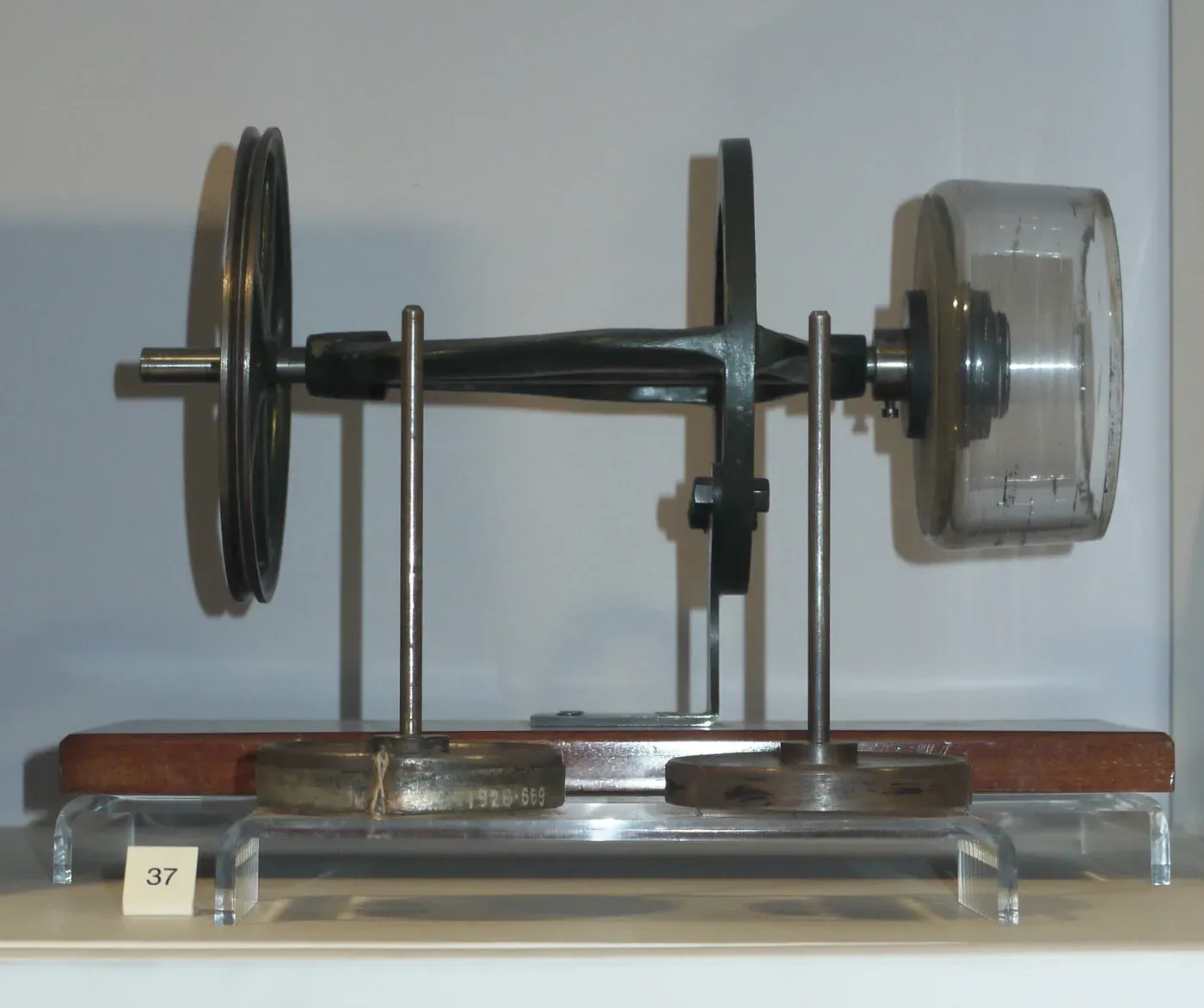
- Plate VAn early viscose spinning bobbin mechanism, preserved at London's Science Museum: the descendant of Swan's and Chardonnet's extrusion experiments, scaled down to a museum case.Wikimedia Commons