The Engineering Polymers Era (1961-1979)
Polyhydroxybutyrate (PHB)
Nature's Plastic Factory
In April 1976 a venture capitalist named Robert Swanson talked his way into a Saturday meeting with a University of California biochemist named Herbert Boyer, and the two of them sketched out a company on the back of the idea that a bacterium could be told, gene by gene, to manufacture something valuable. Genentech was the result, the first company built entirely on the premise that Escherichia coli could be turned into a chemical factory on command. Within two years its bacteria were making somatostatin, then insulin. It was treated, correctly, as a new era: humanity had learned to instruct a microbe.
Plate I
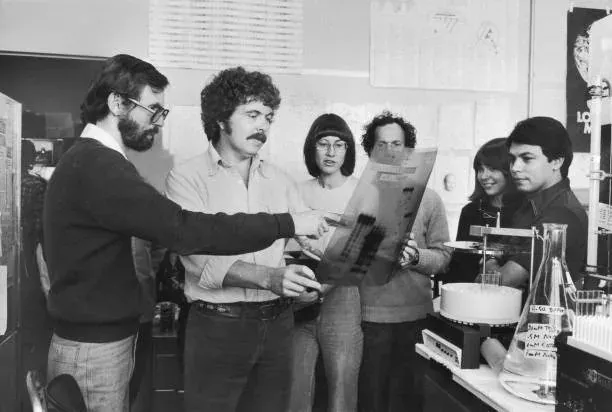

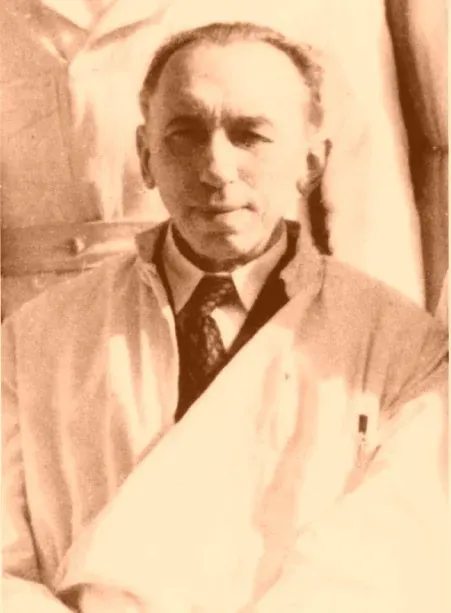
Nobody had to instruct the bacterium this story is actually about. Fifty years before Boyer and Swanson signed their agreement, a French microbiologist named Maurice Lemoigne had already found a soil bacterium, Bacillus megaterium, quietly doing something no one had asked it to do. When Lemoigne broke open its cells in 1926, he found them full of a hard, glassy substance the bacterium had made entirely on its own, not for any human purpose, but for its own. He had found the first bioplastic decades before the word existed, made by an organism that had never needed a patent, a venture capitalist, or a Saturday meeting to figure out how.
Plate II
.jpeg)
That is the real hinge of 1976: it is the year the world decided, with great fanfare, that bacteria could be taught to make useful things; it was the same year it happened to be exactly half a century since a bacterium was found to have already been doing precisely that, unprompted, the whole time. Nobody at Genentech was thinking about plastic. It would be industrial chemists elsewhere (at ICI in Britain, working through the 1980s) who finally asked whether the substance in Lemoigne’s bacteria might be worth harvesting on purpose. This is that substance’s story: not an invention, but a discovery of something that had been running in the background of the microbial world for as long as there have been bacteria to stress out.
A Factory With No Instructions
PHB is not, at bottom, an industrial material at all. It is a bacterium’s pantry. When food is abundant but some other nutrient (nitrogen or phosphorus, usually) runs short, many bacteria respond by converting the excess carbon they cannot otherwise use into granules of PHB and storing them inside the cell, sometimes filling most of their own volume with it. When conditions turn hard again, the same bacterium breaks the granules back down and burns them for energy, the way an animal draws down fat. The polymer a chemist sees as a thermoplastic is, to the organism that made it, simply lunch set aside for a harder day.
Plates III & IV
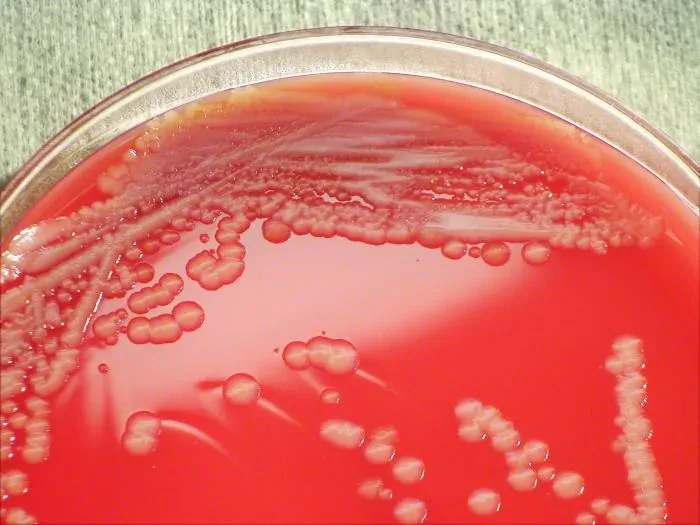

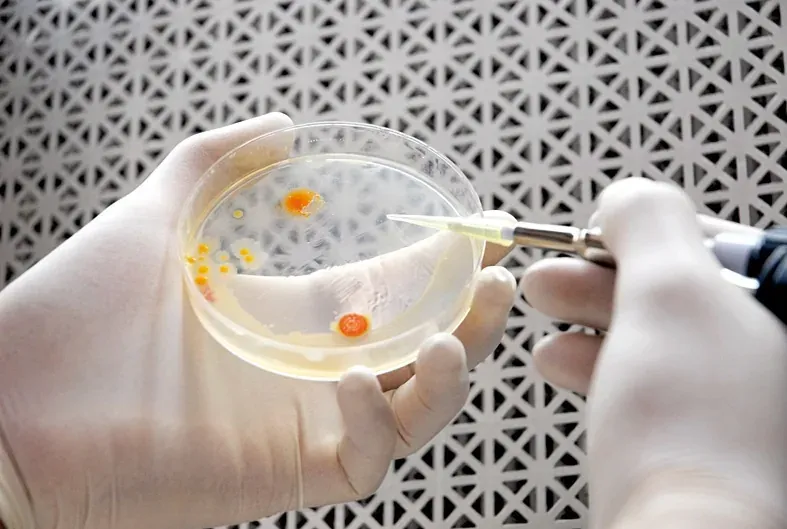

This is why PHB reads differently from almost everything else on this Atlas. It was not synthesised by a chemist trying to solve a problem; it was found, already finished, inside a living cell. Industry’s entire contribution has been figuring out how to grow the bacteria, feed them cheaply, and coax the granules out intact, never how to build the molecule in the first place. Cupriavidus necator (long known as Alcaligenes eutrophus, and to plant physiologists before that as Hydrogenomonas) is now the standard production organism, chosen because it can be persuaded to fill up to four-fifths of its own dry weight with the stuff when starved of nitrogen in the presence of plenty of sugar.
The repeat unit itself is a simple one (a three-carbon backbone carrying a methyl branch and an ester linkage, repeated into a chain), and because bacteria build it with the stereochemical precision that only an enzyme can manage, every unit comes out the same mirror-image form. That regularity is exactly why the polymer packs into tight, orderly crystals so readily, and it is the root of almost everything unusual about how the material behaves.
Properties: A Material Built for Storage, Not for Service
PHB’s crystallinity is the place to start, because it explains the rest. A freshly extracted sample can be anywhere from moderately to highly crystalline, and that crystallinity (not its glass transition, which sits close to where water freezes, well below room temperature) is what makes the bulk material feel stiff and glassy rather than rubbery at everyday temperatures. It is dense in roughly the same range as the plastic in a beverage bottle, genuinely strong for its weight, and about as stiff as a moulding plastic gets before it starts trading flexibility for brittleness entirely, which PHB does: unmodified, it takes very little stretching before it cracks, a trait blenders address by copolymerising in a little hydroxyvalerate to loosen the crystal packing.
It does not soften gently either. PHB holds its shape until deep into the temperature range of a domestic oven, well past the point where most food packaging would already have failed, and it resists ordinary solvents and weathers well under sunlight. The one property that sets it apart from almost every other polymer on this page is its relationship with water: PHB is markedly resistant to plain hydrolysis, the mechanism that eventually undoes PLA, PGA and PCL alike. Left in fresh water with no microbes present, it can sit largely unchanged. It needs specific bacteria and fungi (species of Bacillus, Pseudomonas and Streptomyces among them) to secrete the enzymes that actually break it down, and even then the process favours moderate conditions over the high heat of an industrial composter. In other words: the material that nature makes only breaks back down the way nature intended, on nature’s schedule, not an engineer’s.
From Granule to Product
Extracting PHB is unglamorous: grow the bacteria, starve them of nitrogen until their granules swell, then break the cells open and wash the polymer free of everything that used to be cytoplasm. ICI’s biological products group in Billingham took this from laboratory method to pilot plant through the 1980s, selling the result (often as a copolymer with hydroxyvalerate to soften its brittleness) under the trade name Biopol. It never became cheap. A material that a bacterium can make for the cost of a little sugar and a lot of patience turned out to be expensive once a factory had to grow, feed and harvest billions of those bacteria at industrial scale, and Biopol spent the following decades changing hands between owners who each concluded the economics did not yet work against ordinary petroleum plastics.
What did work was the medical case, because PHB is exactly as biocompatible as its origins suggest: something the body already knows how to encounter and quietly degrade. It has gone into absorbable sutures and into scaffolds meant to hold cells in place just long enough for tissue to regrow around them, applications where the price of the material matters far less than what it will not do: trigger rejection, leave a residue, or need a second surgery to remove. Outside medicine, PHB has found smaller niches: biodegradable packaging that does not depend on an industrial composting facility to disappear, and coatings for seed that break down and release their contents as a crop germinates.
The Wider Family
PHB is the founding member of a larger group of bacterial polyesters, the polyhydroxyalkanoates, and it is rarely used pure today for the same reason Lemoigne’s original samples were so crystalline and brittle: perfection, in a storage granule, is not a virtue in a finished product. Copolymers such as PHBV trade some of that crystallinity for flexibility by mixing in a longer side chain, and modern metabolic engineering has pushed further still, inserting the bacterial synthesis genes into plants and even into photosynthetic cyanobacteria in the hope of growing the polymer directly from sunlight and carbon dioxide rather than from fermented sugar. None of it changes the basic fact this whole story turns on: every one of these routes is industry trying to catch up with a trick bacteria worked out for themselves, for their own reasons, long before anyone was watching.
values with [n] cite the numbered references·estimates are flagged·“not yet available” and “N/A” are honest states, not gaps
fetching the model…
Polyhydroxybutyrate repeat unit
- Abbreviation
- PHB
- Type
- variantpart of the polyhydroxyalkanoates family
- CAS number
- None (heterogeneous class or not assigned)
- Resin ID code
- none assigned
- Formula
- (C4H6O2)n[-O-CH(CH3)-CH2-CO-]nBacterially synthesized PHB is stereochemically pure R, which is why it crystallizes so readily, and why it is stiff and brittle compared with the copolymers.
- Repeat unit (BigSMILES)
{[][>]O[C@@H](C)CC(=O)[<][]}- IUPAC name
- —
- Synonyms
- poly-3-hydroxybutyrate; P3HB; Biopol (trade name)
- Also known as
- P3HBBiopol
- Chemical family
- biodegradable-polyester
- Backbone class
- heterochain
- Polymerization mechanism
- natural-biosynthesis
- Constitutional monomer
- 3-Hydroxybutyrate
- Polymer class
- thermoplastic
- Year of origin
- 1976
- Era
- The Engineering Polymers Era (1961-1979)
- Key figures
- Maurice Lemoigne · ICI
- Events referenced
- Founding of Genentech (April 1976) · ICI's Biopol pilot-scale development (1980s)
- Polymerization type
- not yet available
- Common monomers (feedstocks)
- not yet available
- Catalysts
- not yet available
Discovered by French microbiologist Maurice Lemoigne in 1926; remained largely experimental until ICI's pilot-scale work in the 1980s, commercialized as 'Biopol' but facing market challenges on cost and performance versus conventional plastics. Produced by bacterial fermentation: microorganisms such as Cupriavidus necator synthesize and store PHB intracellularly as a carbon/energy reserve.
- Tacticity
- not yet available
- Crystal structure
- Orthorhombic (space group P2₁2₁2₁), a:b:c = 0.576:1.320:0.596 nm, cell angles 90°.
- Typical crystallinity
- 30–80 %[2]
Molecular weight
- Number average (Mn)
- 22000–768000 g/mol[2]
- Mass average (Mw)
- 200000–3000000 g/mol[2]In microbial cell cytoplasm; 12,000 reported as a general figure across Eubacteria/Archaebacteria/Eukaryotes, and >3,000,000 as ultra-high MW in E. coli.
- Dispersity (Mw/Mn)
- 1.95–3.7[2]
| Solvent | T | M range | K | a |
|---|---|---|---|---|
| chloroform[3] | 303 K | — | 0.0077 mL/g | 0.82 |
| 2,2,2-trifluoroethanol[3] | 303 K | — | 0.0251 mL/g | 0.74 |
| 1,2-dichloroethane[3] | 303 K | — | 0.00918 mL/g | 0.78 |
| 1-chloronaphthalene[3] | 313 K | — | 0.0396 mL/g | 0.62 |
| n-butyl chloride[3] | 286 K | theta solvent | 0.1 mL/g | 0.5 |
Water-insoluble and relatively resistant to hydrolytic degradation, which is unusual for a biodegradable plastic, most of which degrade primarily via hydrolysis rather than needing microbial action.
- Density
- 1.21 (1.17–1.25) g/cm³[2]20 °C. 1.177 g/cm³ amorphous, 1.262 g/cm³ crystalline (also corroborated in a separate source).
- Melt flow index
- not yet available
- Refractive index
- not yet available
- Transmittance
- not yet available
- Haze
- not yet available
- Gloss
- not yet available
- Water absorption
- not yet available
- Dielectric constant
- 3[2]1 MHz; value at 100 Hz not reported.
- Dielectric strength
- not yet available
- Electrical conductivity
- 1 × 10⁻¹⁴ S/m[2]Reciprocal of reported volume resistivity (1×10¹⁴ Ω·m).
- Glass transition (Tg)
- -0.8 (-4–2.4) °C[2]
- Melting temperature (Tm)
- 175.5 (166–185) °C[2]DSC. Equilibrium melting point of an infinite crystal is separately calculated at 197 °C.
- Crystallization (Tc)
- not yet available
- Heat deflection (HDT)
- not yet available
- Decomposition onset
- not yet available
- Thermal conductivity
- not yet available
- Tensile modulus
- 3500 MPa[2]Young's modulus (corroborated at the same value in a separate source). 1,400–2,200 MPa also reported elsewhere as 'tensile modulus'.
- Yield strength
- not yet available
- Tensile strength at break
- 51 (40–62) MPa[2]Source reports unqualified 'tensile strength'; corroborated by a separate 40–60 MPa range for unmodified material.
- Elongation at break
- 31.5 (5–58) %[2]A narrower 6–8% is reported elsewhere for unmodified, untreated film.
- Impact strength (Izod)
- 42.5 (35–50) J/m[3]notched
- Impact strength (Charpy)
- not yet available
- Hardness
- not yet available
- Flexural modulus
- 1500 (1000–2000) MPa[2]A separate source reports 3,500–4,000 MPa for unmodified material.
- Poisson's ratio
- not yet available
- Coefficient of friction
- not yet available
- Solvent: water
- Insoluble[1]
- Solvent: acids
- non-resistant[2]
- Solvent: alcohols
- resistant[2]
- Solvent: esters
- non-resistant[2]
- Solvent: halogenated hydrocarbons
- non-resistant[2]
- Weathering / UV
- Good[3]
- Hydrolysis resistance
- Relatively resistant to hydrolytic degradation (unusual for a biodegradable plastic)[1]
- Flammability (UL94)
- not yet available
- Limiting oxygen index
- not yet available
- Solubility parameter (δ)
- 19.2 MPa^0.5[2]Corroborated at the same value (calculated via Hoy's group contributions) in a separate source.
Gas permeability
not yet available
Polymer-solvent interaction parameter (χ)
- chloroform
- 0.361[3]30 °C, Mn = 127,000
- Processing methods
- injection moldingextrusionfiber spinning
- Drying required
- not yet determined
- Processing temperature
- 160 °C[2]Injection molding.
- Shrinkage rate
- not yet available
- Medicalabsorbable, nontoxic sutures
- Packagingbiodegradable packaging alternatives
- Recyclable
- No
- Biodegradable
- Yes
- Degradation pathway
- Biodegraded by bacterial species including Bacillus, Pseudomonas, and Streptomyces; few degrade it effectively at elevated temperatures.
Oxygen-permeable and biocompatible, but historically hampered commercially by cost and performance versus conventional plastics.
- [1]PolyhydroxybutyrateWikipediaAccessed 2026-07-14https://en.wikipedia.org/wiki/Polyhydroxybutyrate[wiki-phb]
- [2]Handbook of PolymersChemTec Publishinghttps://www.worldcat.org/isbn/9781895198928[handbook-wypych-2016]
- [3]Polymer Data HandbookOxford University Presshttps://search.worldcat.org/search?q=Polymer+Data+Handbook+Mark+1999[handbook-mark-1999]
Illustrations
- Plate IHerbert Boyer (second from left) with colleagues examining an experiment, not long after he and Robert Swanson founded Genentech on the idea of engineering bacteria to order.Wikimedia Commons
- Plate IIMaurice Lemoigne, who in 1926 found *Bacillus megaterium* cells packed with a substance the organism had made for itself: polyhydroxybutyrate.Wikimedia Commons
- Plate III*Bacillus megaterium* growing on blood agar. It is the species in which Lemoigne first found PHB granules.Wikimedia Commons
- Plate IV*Cupriavidus necator* (better known under its older name, *Alcaligenes eutrophus*), the species industry actually uses to grow PHB at scale.Wikimedia Commons