The Smart Materials Era (2000-2015)
Vitrimers
The Wolverine of Polymers
In December 2015, the world’s environment ministers filled a temporary conference village at Le Bourget, on the northern edge of Paris, and signed the Paris Agreement, the first climate accord to bind nearly every country on Earth to the same target. Plastic waste was not the headline of COP21, but it sat underneath a great deal of the argument: an economy of two-hundred-plus nations having promised to burn less, someone was always going to ask what to do instead with the millions of tonnes of thermoset plastic that could not be melted down and could not rot away either.
Plate I
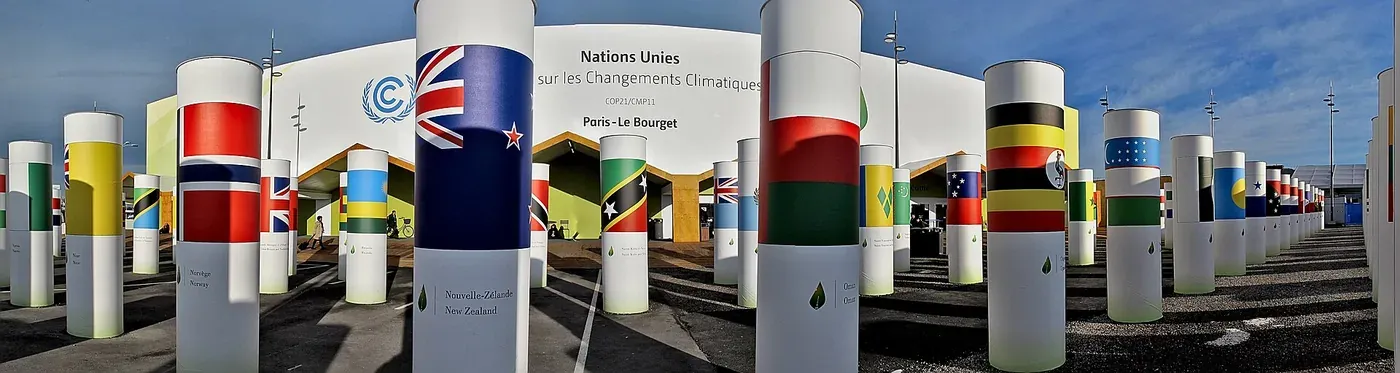

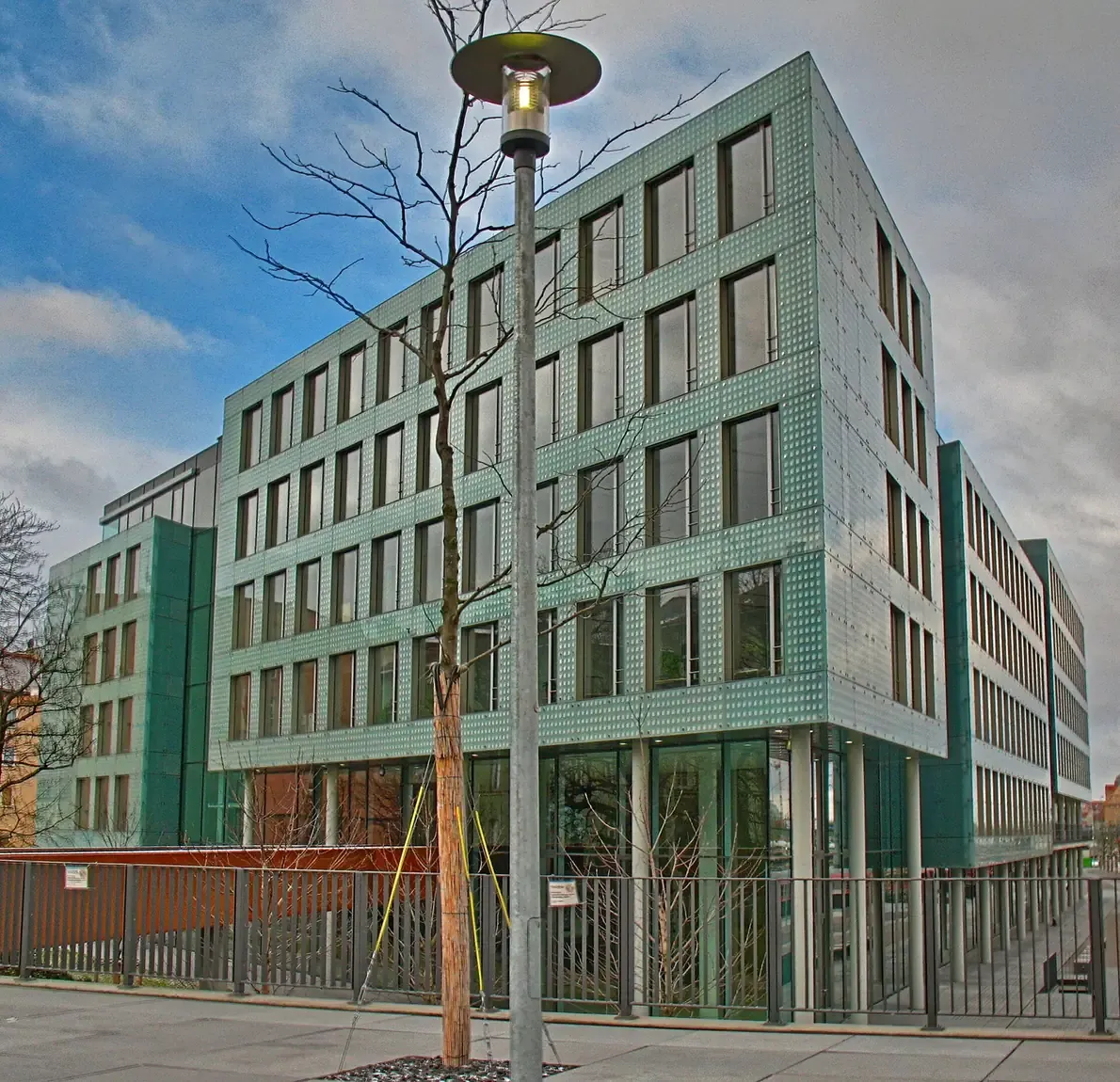
Six months before that summit convened, a much smaller ceremony had already answered part of the question, in the same city. On 11 June 2015 the European Patent Office gave its European Inventor Award, in the research category, to Ludwik Leibler of ESPCI Paris, for a class of plastic he had first published, with his student Damien Montarnal and colleagues, in Science back in 2011, and had spent the years since turning into something industry could actually use. Leibler called the material a vitrimer. By 2015, with a twenty-year-old industrial partnership with the chemicals group Arkema now pointed squarely at it, the idea had gone from a striking laboratory result to something an award jury judged ready to matter.
Plate II

A Third Category Nobody Thought Existed
Plastics had always come in two kinds. Thermoplastics melt when heated and can be reshaped as many times as you like, but their chains are never locked to one another, so they creep and soften even at room temperature. Thermosets are built the opposite way: a dense mesh of permanent covalent crosslinks gives them their strength and their resistance to heat, but that same mesh means they can never be melted, welded or reshaped once cured; heat a thermoset past its limit and it chars rather than flows, which is exactly the problem Baekeland’s Bakelite ran into in 1907 and which the industry had lived with ever since. Leibler’s group asked whether a network could keep the crosslinks, and therefore the strength, while losing the permanence.
Plate III

Their answer was a network that trades partners without ever letting go. Mixed into an epoxy-based crosslinked resin, in small amounts, is a catalyst (commonly a zinc salt) that speeds up a transesterification reaction between the network’s ester bonds and its free hydroxyl groups. At ordinary temperatures that exchange is far too slow to matter, and the network behaves like any other rigid thermoset. Heated, the exchange speeds up, and a new bond can form at one site just as an old one lets go somewhere else, so that at every instant the total number of crosslinks in the network stays the same even as which atom is bonded to which keeps changing. Nothing is ever fully unbonded, so the material never turns to liquid and never depolymerises. It simply gets easier, the hotter it gets, for the whole network to rearrange itself and flow.
Why “Vitrimer”
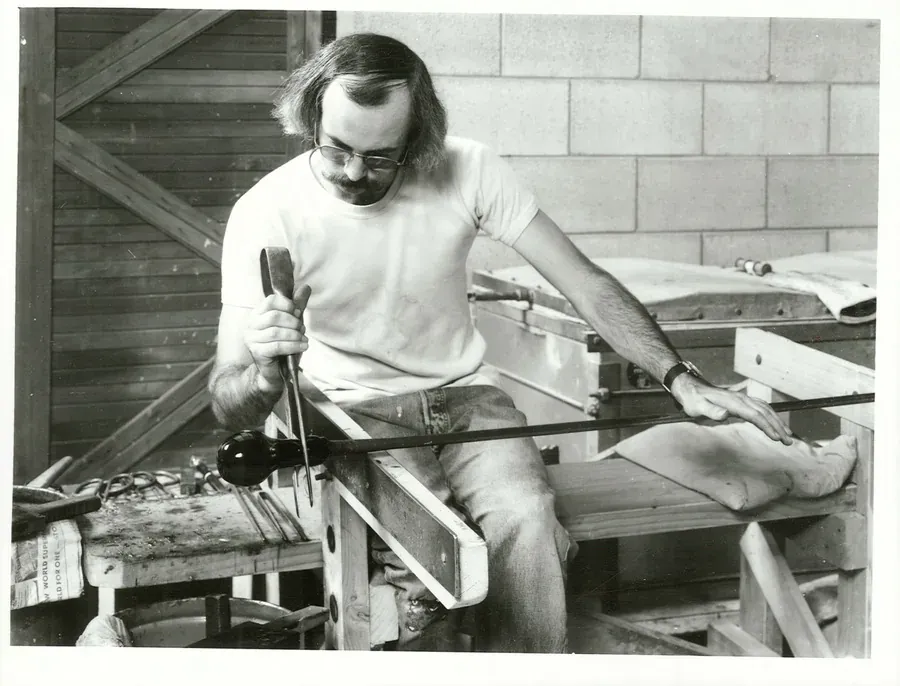
That behaviour is also where the name comes from. A crystalline solid has a sharp melting point: below it, solid; above it, liquid, with almost nothing in between. Silicate glass does not work that way: heat it and its viscosity falls off smoothly and continuously over a wide range, which is exactly what lets a glassblower gather a soft, workable gather on the end of a pipe rather than fighting a material that is either rock-hard or running off the rod. Leibler borrowed the word for that behaviour, vitreous, because his networks do the same thing: below a topology-freezing point the material is a normal rigid solid, and above it the viscosity falls away gradually rather than snapping into a liquid, exactly the smooth transition a glassblower relies on and a conventional thermoset has never offered.
Plate IV

Not the Same Idea as Its Neighbour on This Atlas
It is worth being precise here, because the Atlas carries a second, closely related page that is easy to confuse with this one. Vitrimers are Leibler’s general mechanism: any densely crosslinked network built around a catalysed, associative bond exchange, most often transesterification in an epoxy or polyester system. Recyclable thermosets, the material IBM’s Jeannette Garcia produced the year before this one, is a specific chemistry: a nitrogen-based network whose crosslinks are reversed altogether by acid rather than exchanged by heat, discovered largely by accident rather than designed from a hypothesis about network topology. Both answer the same old complaint about thermosets. They do it by different chemistry, from different starting problems, on opposite sides of the Atlantic.
What the Data Actually Says
Because the vitrimer concept has since been rebuilt on epoxy, polyester, polyurethane and even elastomer backbones, there is no single density, strength or transition temperature that belongs to “a vitrimer” the way there is for a single commercial resin; every number depends on which base network the catalyst was added to, which is why this page carries no property table of its own. What genuinely is common to the class is structural rather than numerical: an amorphous, densely crosslinked network with no measurable crystallinity, a topology-freezing point below which it behaves as an ordinary rigid solid, and a designed, permanent recyclability; unlike a conventional thermoset, a vitrimer can be re-melted, welded to itself, or ground up and reprocessed, over and over, without the network ever losing the crosslinks that give it strength in the first place.
Where the Idea Is Being Put to Work
The most immediate use is also the most literal: fibre-reinforced composites built on a vitrimer matrix can, in principle, be reshaped, repaired or fully reprocessed at end of life instead of being landfilled, which is the single biggest problem with carbon-fibre composite waste today. Arkema’s own early work aimed the chemistry at paints and floor coverings, coatings that need a thermoset’s durability but would benefit from being reworkable rather than a permanent, unrecoverable film. Other groups are exploring vitrimer chemistry as a route to weldable thermoset parts: two separately moulded pieces heated together at the join until the network exchange fuses them into one continuous piece, something no ordinary thermoset can do at all.
The Network That Keeps Its Promise and Changes Its Mind
What COP21 was arguing about in December 2015, at the level of nations and gigatonnes, Leibler’s chemistry had already answered in June, at the level of a single ester bond: that permanence and adaptability are not actually opposites, if the thing doing the adapting never has to fully let go of what it is holding. A vitrimer is not a stronger thermoset and not a better thermoplastic. It is a network that keeps its promise (every crosslink, all the time) while still being willing to change its mind about exactly who is holding whose hand.
values with [n] cite the numbered references·estimates are flagged·“not yet available” and “N/A” are honest states, not gaps
- Abbreviation
- —
- Type
- polymer family (hub)
- CAS number
- None (heterogeneous class or not assigned)
- Resin ID code
- none assigned
- Formula
- A structural/mechanistic class (crosslinked networks with associative dynamic covalent bond exchange) rather than one chemistry: Leibler's original demonstration used a catalyzed epoxy/polyester network, but the vitrimer concept has since been applied to many different base chemistries; closely related to (but a distinct concept from) recyclable-thermosets.
- Repeat unit (BigSMILES)
- A structural/mechanistic class (crosslinked networks with associative dynamic covalent bond exchange) rather than one chemistry: Leibler's original demonstration used a catalyzed epoxy/polyester network, but the vitrimer concept has since been applied to many different base chemistries; closely related to (but a distinct concept from) recyclable-thermosets.
- IUPAC name
- —
- Synonyms
- covalent adaptable network
- Also known as
- covalent adaptable network
- Chemical family
- vitrimer-crosslinked-network
- Backbone class
- heterochain
- Polymerization mechanism
- step-growth-condensation
- Constitutional monomer
- None (no single constitutional monomer)
- Polymer class
- thermoset
- Year of origin
- 2015
- Era
- The Smart Materials Era (2000-2015)
- Key figures
- Ludwik Leibler · Arkema
- Events referenced
- COP21 and the adoption of the Paris Agreement (December 2015) · Leibler receives the European Inventor Award, European Patent Office (11 June 2015)
- Polymerization type
- step-growth condensation (crosslinking cure) plus a catalyzed associative exchange reaction
- Common monomers (feedstocks)
- not yet available
- Catalysts
- transesterification catalysts (Leibler's original epoxy/polyester demonstration)
Ludwik Leibler and coworkers at ESPCI Paris introduced the vitrimer concept in 2011, demonstrating it with a catalyzed epoxy/acid-polyester network. Made like a conventional crosslinked thermoset, but with a catalyst that enables associative bond-exchange reactions (e.g. transesterification) at elevated temperature.
- Tacticity
- not yet available
- Crystal structure
- not yet available
- Typical crystallinity
- 0 %estimate[1]Amorphous crosslinked network.
Molecular weight
- Number average (Mn)
- not yet available
- Mass average (Mw)
- not yet available
- Dispersity (Mw/Mn)
- not yet available
Mark-Houwink constants
not yet available
The defining mechanism: covalent bonds in the network exchange partners (associatively, in that a new bond forms before the old one fully breaks) when heated, letting the network topology rearrange and flow like a viscous liquid while the total number of crosslinks, and thus network integrity, is preserved throughout. This differs from a conventional thermoset (irreversible crosslinks) and from a thermoplastic (no crosslinks at all).
Below the topology-freezing temperature (Tv), the network is locked in place and behaves like a normal solid thermoset; above Tv, bond-exchange reactions become fast enough for the material to be reshaped/reprocessed like a viscous liquid, without ever fully melting or dissolving.
- Density
- Not applicableDepends on base chemistry; not a single value for the class.
- Melt flow index
- Not applicable
- Refractive index
- Not applicable
- Transmittance
- not yet available
- Haze
- not yet available
- Gloss
- not yet available
- Water absorption
- not yet available
- Dielectric constant
- Not applicable
- Dielectric strength
- not yet available
- Electrical conductivity
- Not applicable
- Glass transition (Tg)
- Not applicableVitrimers are characterized by a topology freezing transition (Tv), a distinct concept from a conventional Tg. See structure_morphology.
- Melting temperature (Tm)
- Not applicableCrosslinked network; does not melt in the conventional sense even above Tv (viscosity decreases gradually rather than a sharp melt transition).
- Crystallization (Tc)
- Not applicable
- Heat deflection (HDT)
- not yet available
- Decomposition onset
- not yet available
- Thermal conductivity
- not yet available
- Tensile modulus
- not yet available
- Yield strength
- not yet available
- Tensile strength at break
- not yet available
- Elongation at break
- not yet available
- Impact strength (Izod)
- not yet available
- Impact strength (Charpy)
- not yet available
- Hardness
- not yet available
- Flexural modulus
- not yet available
- Poisson's ratio
- not yet available
- Coefficient of friction
- not yet available
- Weathering / UV
- not yet available
- Hydrolysis resistance
- not yet available
- Flammability (UL94)
- not yet available
- Limiting oxygen index
- not yet available
- Solubility parameter (δ)
- not yet available
Gas permeability
not yet available
Polymer-solvent interaction parameter (χ)
not yet available
- Processing methods
- initial crosslinking curehot reprocessing/reshaping above Tv (welding, remolding, self-healing)
- Drying required
- not yet determined
- Processing temperature
- not yet available
- Shrinkage rate
- not yet available
- Compositesrecyclable fiber-reinforced composites
- General materialsself-healing/reprocessable thermoset replacements
- Recyclable
- Yes
- Biodegradable
- No
- Degradation pathway
- Not biodegraded, but reprocessable/reshapable at elevated temperature via bond exchange, giving thermoset-like materials a genuine reuse pathway instead of landfill/incineration.
- LD50 (oral, rat)
- not yet available
- NFPA health
- not yet available
- NFPA flammability
- not yet available
- NFPA reactivity
- not yet available
- Carcinogenic classification
- not yet available
- [1]Vitrimers: dynamic covalent networks (Ludwik Leibler, 2011)Web search summary (ScienceDirect, PMC, Covalent adaptable network Wikipedia)Accessed 2026-07-14https://en.wikipedia.org/wiki/Covalent_adaptable_network[search-vitrimer]
Illustrations
- Plate IThe COP21 venue at Le Bourget, December 2015, where nearly two hundred countries adopted the Paris Agreement.Wikimedia Commons
- Plate IIThe European Patent Office, Munich, whose annually awarded European Inventor Award went to Leibler for vitrimers in June 2015. The ceremony itself was held in Paris that year.Wikimedia Commons
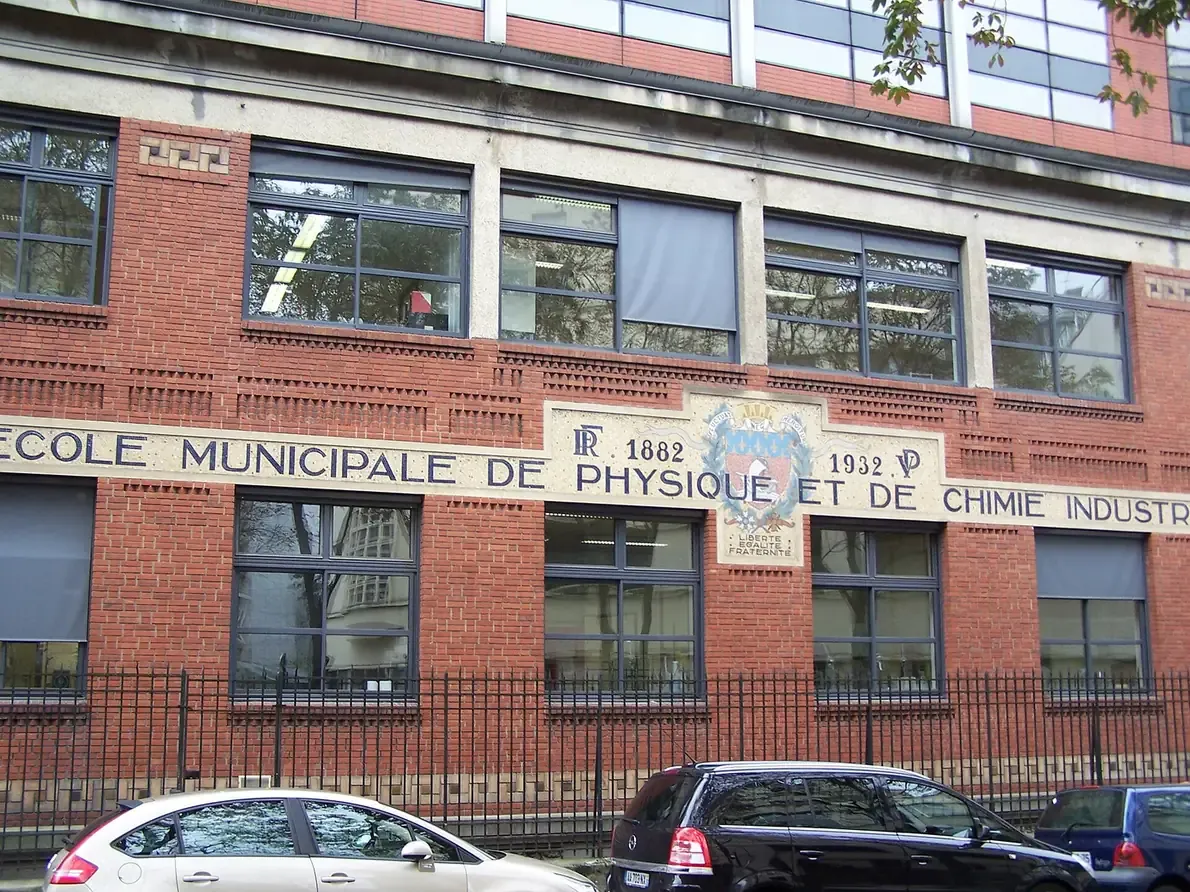
- Plate IIIESPCI Paris, the school where Leibler directed the Soft Matter and Chemistry laboratory from 2001 to 2017, and where the vitrimer concept was developed.Wikimedia Commons
- Plate IVA glassblower working molten glass: the gradual, no-fixed-melting-point softening that gave vitrimers their name.Wikimedia Commons