The Post-War Boom (1946-1960)
Acrylonitrile Butadiene Styrene (ABS)
The Plastic That Built Our World
On 26 November 1948, a department store in Boston put a strange new camera on sale: point it at something, press the shutter, and a finished photograph slid out sixty seconds later. Jordan Marsh had fifty-seven of Edwin Land’s Polaroid Land Cameras in stock, and every one of them, along with all the film that came with it, sold before the day was out. It was wartime optics (Land had spent the war designing polarizing filters and gunsights for the military) turned, almost overnight, into a civilian product nobody had known to want.
Plate I


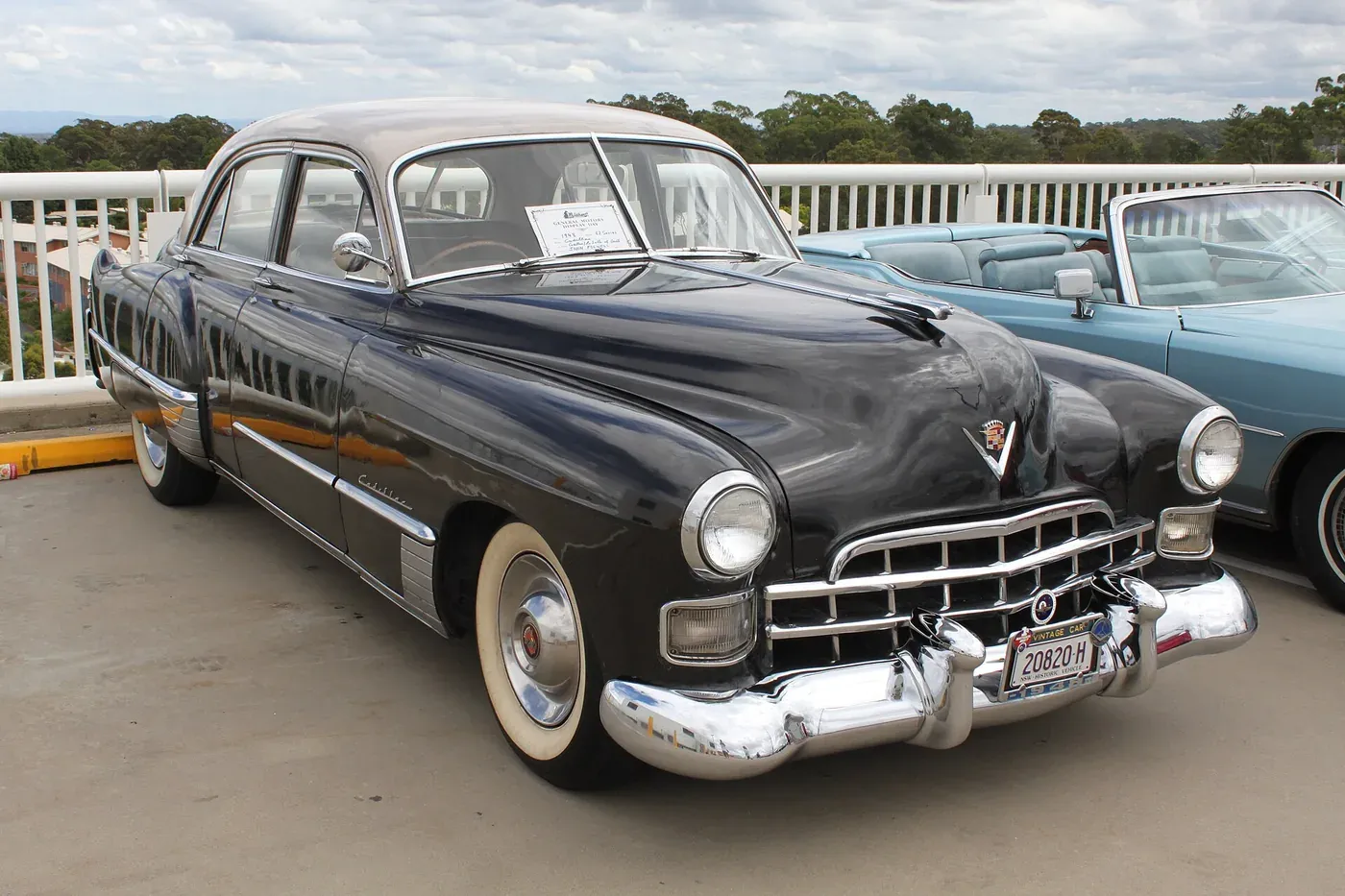
The same year, and the same pattern, played out in rubber chemistry. The United States Rubber Company had spent the war years running government-contracted plants that turned out Buna-N, a synthetic, oil-resistant rubber the country had needed for gaskets and fuel lines once the Pacific supply of natural rubber vanished. In October 1946 a US Rubber chemist named Lawrence E. Daly filed a patent for something built out of that same peacetime surplus: a family of moldable blends made by mixing Buna-N rubber with the rigid styrene-acrylonitrile resin already covered elsewhere in this Atlas. Depending on the ratio, Daly’s patent described materials running from a soft, leather-like sheeting to something the filing called “hard, tough, and horny”. The patent proposed them, among other things, for automobile fenders and golf ball covers. It was granted on 6 April 1948.
Plate II
.jpg)
That 1948 patent is where the name traces to, but it is not yet the plastic people mean today when they say ABS. Daly’s material was a simple physical blend of two separately made polymers stirred together. It took the Borg-Warner Corporation another six years to work out a genuinely different process (grafting styrene and acrylonitrile directly onto polybutadiene rubber particles rather than just mixing powders) and to bring it to market in 1954 under the trade name Cycolac. That graft process, not the 1948 blend, is what gives modern ABS its distinctive two-phase structure and its reputation for toughness.
Two Phases, One Plastic
Where SAN is a single kind of chain repeating at random, ABS is not one material but two, forced to share space. Microscopic droplets of rubbery polybutadiene, typically a few tenths of a micrometre to a couple of micrometres across, sit dispersed through a continuous, rigid matrix of styrene-acrylonitrile resin, and in the better grades, chains of that same SAN chemistry are chemically grafted onto the surface of each rubber droplet, gluing the soft phase to the hard one instead of leaving it to simply float there. The two phases behave completely differently with temperature: the rubber stays soft and flexible even well below freezing, while the surrounding SAN matrix only turns rigid and glassy near the temperature of a hot drink. It is this permanent mismatch, held together by the graft, that gives ABS its trademark: something that resists a sudden blow well enough to stop a crack before it can travel, while still holding a crisp, dimensionally stable shape everywhere the impact didn’t land.
What the Structure Costs and Buys
That rubber phase is not free. ABS gives up some of the stiffness of the SAN it is built from, and it gives up SAN’s transparency entirely: light scatters at every rubber droplet, so ABS parts are essentially never made clear; they are pigmented and finished instead, which is exactly why the material became known for a smooth, slightly glossy surface rather than a see-through one. In exchange, ABS resists a knock that would crack polystyrene or plain SAN outright, and it stretches noticeably before it finally breaks rather than snapping the instant it is overloaded. It holds its shape at temperatures that would visibly sag a plain polystyrene part, and it survives water and salt solutions without much trouble. Sunlight is the one clear weakness: unprotected ABS yellows and grows brittle under prolonged ultraviolet exposure, which is why outdoor parts are routinely painted, plated, or blended with a stabilizer, and why an old appliance or car-trim piece left in the sun for years so often turns the same dull cream colour. Strong solvents are the other soft spot: ketones and chlorinated solvents will soften or dissolve it, even though the mild acids, dilute alkalis, and mineral oil it meets in ordinary use give it little trouble.
From Latex to Pellet
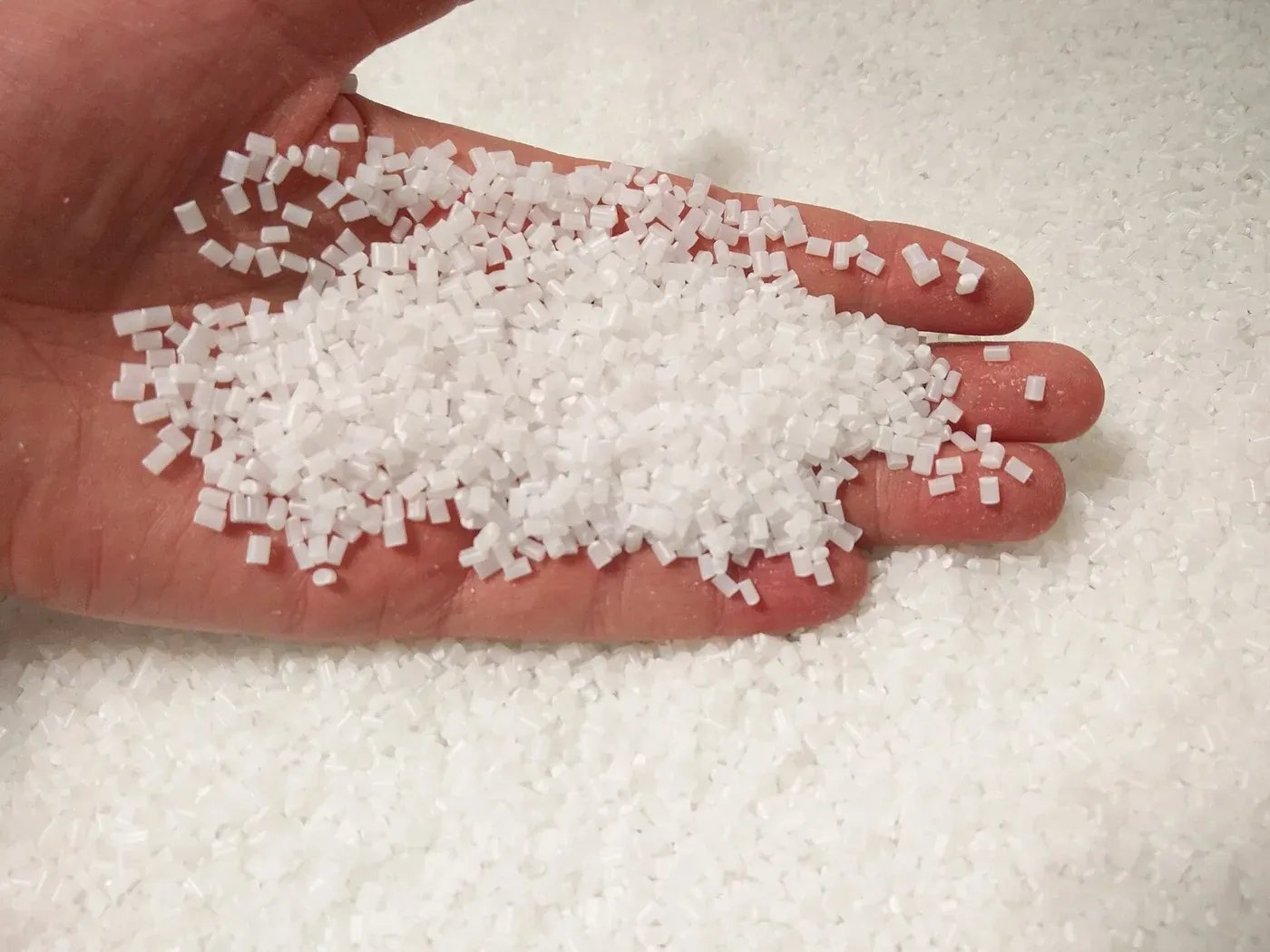
Modern ABS is usually made by emulsion polymerization: polybutadiene latex particles are grown first, then styrene and acrylonitrile are polymerized in their presence so that the new chains graft onto the rubber surface as they form. The resulting milky latex is coagulated, washed, and dried into pellets, sometimes blended afterward with extra SAN matrix resin to hit a particular grade’s stiffness and gloss. Continuous bulk and suspension processes have since joined emulsion polymerization as alternatives, each trading off differently between product consistency and throughput. Whichever route makes it, the pellet form is what leaves the factory; injection molding and extrusion turn it into finished parts, and in recent decades ABS filament has become one of the standard feedstocks for desktop 3D printing as well.
Plate III

The Plastic Nobody Notices
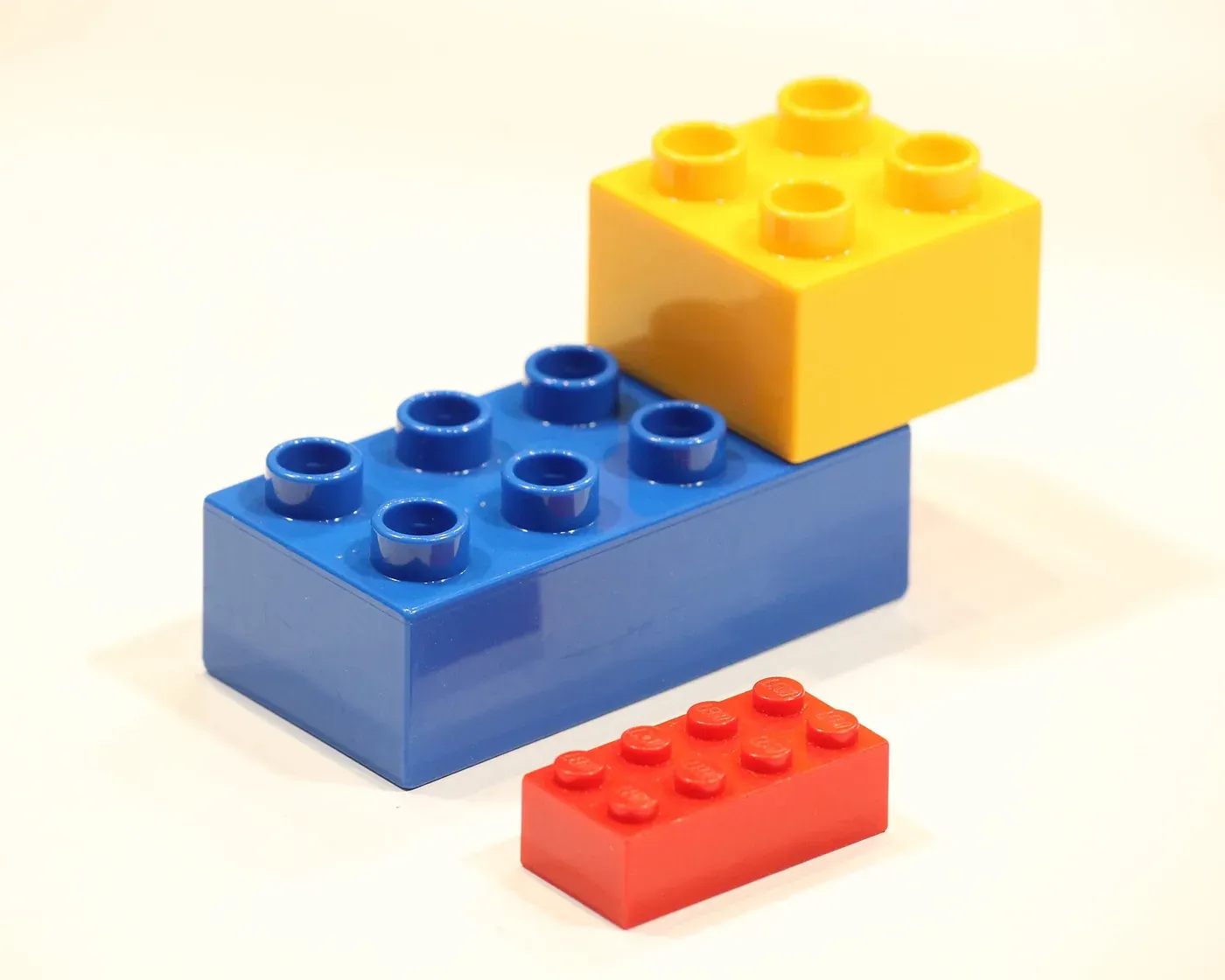
ABS’s toughness and moldability have made it the default choice for objects that need to survive being dropped, sat on, or stepped on. Since 1963 it has been the material LEGO bricks are molded from, prized for holding a precise clutch fit through years of handling. It fills out automotive interiors and exterior trim, gets extruded into the black drain-waste-vent pipe hidden inside almost every building with plumbing, and forms the housing around computer peripherals and countless other electronics that need to look good, resist a knock, and hold their shape for years. Very little of that is showy. Most people who own something made of ABS could not name it, which is more or less the highest compliment a structural plastic can receive.
Plate IV

A Blend That Outlived Its Patent
The 1948 patent that named this family of materials described a crude physical mixture; the plastic that actually built the postwar consumer world came from the graft-copolymer process Borg-Warner worked out six years later. Between those two dates sits the real story: a wartime rubber, developed for reasons that had nothing to do with toys or dashboards, finding a second life once the war that created it was over. This was the same pattern Polaroid’s camera followed, in a different aisle of the same department store of postwar American manufacturing.
values with [n] cite the numbered references·estimates are flagged·“not yet available” and “N/A” are honest states, not gaps
fetching the model…
Acrylonitrile Butadiene Styrene repeat unit
- Abbreviation
- ABS
- Type
- polymer family (hub)
- CAS number
- 9003-56-9
- Resin ID code
- none assigned
- Formula
- (C4H6)x·(C8H8)y·(C3H3N)z[-CH2-CH=CH-CH2-]x[-CH2-CH(C6H5)-]y[-CH2-CH(CN)-]zThe three units shown are not simply strung along one chain: ABS is a two-phase material, with rubbery polybutadiene particles grafted into and dispersed through a rigid styrene-acrylonitrile matrix. That morphology, not the sequence, is what makes it tough.
- Repeat unit (BigSMILES)
{[][$]C/C=C\C[$],[$]CC(c1ccccc1)[$],[$]CC(C#N)[$][]}- IUPAC name
- —
- Synonyms
- —
- Also known as
- —
- Chemical family
- styrenicdiene-rubberacrylic
- Backbone class
- carbon-chain
- Polymerization mechanism
- free-radical
- Constitutional monomer
- Acrylonitrile1,3-ButadieneStyrene
- Polymer class
- thermoplastic
- Year of origin
- 1948
- Era
- The Post-War Boom (1946-1960)
- Key figures
- Lawrence E. Daly
- Polymerization type
- free-radical graft copolymerization
- Common monomers (feedstocks)
- acrylonitrile, 1,3-butadiene, styrene
- Catalysts
- not yet available
Patented in 1948; introduced to commercial markets by Borg-Warner Corporation in 1954. Made by grafting/blending a SAN-forming mixture of styrene and acrylonitrile with polybutadiene rubber particles, giving a rubber-toughened matrix. Monomers derive from petroleum and natural gas feedstocks; production uses roughly 95.34 MJ/kg of resin.
- Tacticity
- not yet available
- Crystal structure
- not yet available
- Typical crystallinity
- 0 %estimate[1]Amorphous SAN matrix with dispersed rubber phase.
Molecular weight
- Number average (Mn)
- 30000–200000 g/mol[2]
- Mass average (Mw)
- 81000–308000 g/mol[2]
- Dispersity (Mw/Mn)
- 2.72–2.88[2]
Mark-Houwink constants
not yet available
Rubber particle content and SAN-matrix ratio tune the toughness/stiffness trade-off; this is the toughened successor to plain SAN.
- Density
- 1.06 (1.03–1.09) g/cm³[2]General-purpose (unfilled) grade at 20 °C.
- Melt flow index
- 1.5–34 g/10min[2]230 °C/3.8 kg; wide range reflects grade-to-grade variation across cited studies.
- Refractive index
- 1.54[2]20 °C.
- Transmittance
- 85 (80–90) %[2]
- Haze
- 2.7 (0.4–5) %[2]
- Gloss
- 90 (85–95) %[2]ASTM D52360° geometry, glossy grade (matte finish reads 1.8–6.6%).
- Water absorption
- 0.865 (0.7–1.03) %[2]Equilibrium, immersed in water at 23 °C.
- Dielectric constant
- 2.85 (2.8–2.9)[2]100 Hz to 1 MHz.
- Dielectric strength
- 39 (37–41) kV/mm[2]K20/P50, 0.6–0.8 mm specimen thickness.
- Electrical conductivity
- 1 × 10⁻¹³ S/m[2]Reciprocal of reported volume resistivity (1×10¹³ Ω·m), unfilled grade.
- Glass transition (Tg)
- 104.5 (102–107) °C[2]SAN-matrix (hard-phase) transition, DSC. The dispersed butadiene rubber phase has a separate transition near -58 °C.
- Melting temperature (Tm)
- Not applicableAmorphous; no true melting point.
- Crystallization (Tc)
- Not applicable
- Heat deflection (HDT)
- 88 (67–109) °C[2]1.8 MPa.
- Decomposition onset
- 396 (385–407) °C[2]
- Thermal conductivity
- not yet available
- Tensile modulus
- 2300 (1900–2700) MPa[2]
- Yield strength
- 46.5 (35–58) MPa[2]
- Tensile strength at break
- 45 (25–65) MPa[2]Unqualified 'tensile strength' in source, reported alongside a distinct tensile-stress-at-yield figure.
- Elongation at break
- 14 (8–20) %[2]
- Impact strength (Izod)
- 30–450 J/m[2]Notched, 23 °C; wide range reflects rubber-content variation across ABS grades.
- Impact strength (Charpy)
- 22.5 (5–40) kJ/m²[2]Notched, 23 °C.
- Hardness
- not yet available
- Flexural modulus
- 2225 (2150–2300) MPa[2]
- Poisson's ratio
- not yet available
- Coefficient of friction
- 0.245 (0.21–0.28)[2]ASTM D1894Chrome steel counterface.
- Solvent: dilute acids
- good resistance[2]
- Solvent: concentrated acids
- no resistance[2]
- Solvent: alcohols
- limited resistance; insoluble[2]
- Solvent: alkalis
- good resistance to dilute[2]
- Solvent: aliphatic hydrocarbons
- limited resistance; insoluble[2]
- Solvent: aromatic hydrocarbons
- no resistance[2]
- Solvent: esters
- no resistance[2]
- Solvent: greases & oils
- limited resistance; insoluble to mineral oil[2]
- Solvent: halogenated hydrocarbons
- no resistance; soluble in dichloromethane[2]
- Solvent: ketones
- no resistance; soluble in acetone, methyl ethyl ketone[2]
- Weathering / UV
- Degrades under UV exposure[1]
- Hydrolysis resistance
- Resistant to water and salt solutions[2]
- Flammability (UL94)
- HB[2]
- Limiting oxygen index
- 19.3 (18.1–20.5) %[2]
- Solubility parameter (δ)
- not yet available
Gas permeability
not yet available
Polymer-solvent interaction parameter (χ)
not yet available
- Processing methods
- injection moldingextrusionFDM 3D printing
- Drying required
- Yes
- ToysLEGO bricksPrimary LEGO material since 1963.
- Automotiveinterior/exterior trim components
- Constructiondrain-waste-vent (DWV) piping
- Consumer & electronicsmusical instruments · computer peripherals · 3D printer filament
- Recyclable
- Yes
- Biodegradable
- No
- Degradation pathway
- not yet available
Degrades under UV exposure and high temperatures, potentially releasing carcinogenic monomers above 400°C. This is a real end-of-life/fire-safety consideration.
- LD50 (oral, rat)
- 5000 mg/kg[2]Reported as >5,000 mg/kg (practically nontoxic).
- NFPA health
- 1[2]
- NFPA flammability
- 1[2]
- NFPA reactivity
- 0[2]
- Carcinogenic classification
- not listed by ACGIH, NIOSH, NTP[2]
Occupational exposure limits (MAK/TRK) for residual monomers: styrene 86 mg/m³, acrylonitrile 7 mg/m³, 1,3-butadiene 11 mg/m³.
- [1]Acrylonitrile butadiene styreneWikipediaAccessed 2026-07-14https://en.wikipedia.org/wiki/Acrylonitrile_butadiene_styrene[wiki-abs]
- [2]Handbook of PolymersChemTec Publishinghttps://www.worldcat.org/isbn/9781895198928[handbook-wypych-2016]
Illustrations
- Plate IThe Polaroid Land Camera Model 95, which sold out within hours of going on sale on 26 November 1948.Wikimedia Commons
- Plate IIA 1948 Cadillac, the kind of consumer-facing peacetime product American manufacturing was turning back toward that same year.Wikimedia Commons
- Plate IIIABS resin as it leaves the factory: pellets ready for injection molding or extrusion, not yet colored or shaped.Wikimedia Commons
- Plate IVInterlocking bricks of the kind ABS has been molded into since 1963, chosen for a clutch fit that survives years of assembly and disassembly.Wikimedia Commons