The Engineering Polymers Era (1961-1979)
Thermoplastic Polyurethane (TPU)
The Chameleon Polymer
On 3 December 1967, a surgical team led by Christiaan Barnard at Groote Schuur Hospital in Cape Town removed the failing heart of a 54-year-old grocer named Louis Washkansky and replaced it with one taken, minutes earlier, from a young woman killed in a road accident. Washkansky lived eighteen days before an infection killed him, but the operation itself worked, and it made Barnard famous overnight: proof that a body’s own failing parts could be physically replaced with living tissue from another.
Plate I


A much smaller, much less publicized kind of substitution was reaching its peak in the same years, in fashion rather than surgery. Through the mid-to-late 1960s, the “wet look” swept through mini-skirts, raincoats, and knee-high boots, a shine that had previously meant real patent leather, now achieved with a synthetic coating that could be produced by the mile. B.F. Goodrich’s polyurethane coating resin, sold under the trade name Estane, rode that craze into some of its biggest sales yet, doing for cheap glossy fabric what nobody expected a plastic to do: behave enough like the material it replaced that most people wearing it never thought about the substitution at all.
Plate II


That is, in miniature, the whole idea behind thermoplastic polyurethane: not to replace tissue the way Barnard’s transplant did, but to behave so convincingly like leather, rubber, or coated cloth that the plastic underneath disappears from notice. The material behind that particular illusion did not begin in 1967, though; it began two decades earlier, in Ohio, with one chemist’s decision to give a rigid, crosslinked plastic family a way to melt.
An Elastomer That Melts
Charles S. Schollenberger joined B.F. Goodrich’s research staff in 1947, hired by Waldo Semon, the Goodrich chemist who had turned brittle, near-useless PVC into a flexible, commercially vital plastic two decades earlier by working out how to plasticize it. Schollenberger helped open Goodrich’s new Brecksville, Ohio research center in 1948, and it was there that he worked out a polyurethane chemistry with a genuinely new trick: a polymer built from alternating rigid and flexible segments that could still be melted, shaped, and cooled solid again and again, unlike the crosslinked foams and coatings Otto Bayer’s original 1937 diisocyanate chemistry had produced. He filed the patent that would become the foundation of the field in December 1955; it was granted in January 1959, and Goodrich had already begun selling the resin under the name Estane in 1958. Its first market was industrial fabric coating, a workmanlike beginning for a material that would spend the following decade riding fashion trends nobody in a research lab could have predicted.
One Chain, Two Personalities
What Schollenberger actually built was a chain with two chemically distinct jobs assigned to two different stretches of it. Short, rigid segments (built from a diisocyanate and a short-chain diol) link up with their neighbors on other chains through hydrogen bonding, clustering into small, hard domains that act like a physical scaffold. Long, flexible segments (a polyester or polyether chain running between one rigid block and the next) fill the space around that scaffold and give the material its stretch. Nothing is chemically crosslinked, so heat enough of it and the hard domains loosen their grip on each other and the whole thing flows like any other thermoplastic; let it cool, and the hard domains reassemble and lock the structure back into an elastomer. That reversible, physical crosslinking (rather than the permanent chemical crosslinking of an ordinary rubber or a thermoset polyurethane foam) is the entire reason TPU can be melted, molded, and remelted while still behaving, at room temperature, like rubber.
A Wide, Tunable Range
Because the ratio of hard to soft segment is a formulation choice rather than a fixed recipe, TPU covers an unusually wide span of the same basic chemistry. At the soft end it is genuinely rubbery (stretching to several times its original length and springing back rather than tearing), while at the hard end it approaches a tough, semi-rigid engineering plastic, and commercial grades are sold across essentially that entire hardness range rather than at one fixed point. It resists oils, greases, and aliphatic solvents well, which is why it turns up in gaskets and automotive parts that live in an engine bay, but aromatic solvents, esters, and ketones attack it more readily. It is also, distinctively among elastomers, genuinely resistant to abrasion and puncture, which is why a TPU part tends to outlast a rubber one doing the same job under repeated wear.
Two Families, One Idea
Commercial TPU splits into two chemical families defined by what makes up the soft segment. Polyester-based TPU, chemically closer to Schollenberger’s original chemistry, holds up better against oils and fuels, which suits it to automotive and industrial seals. Polyether-based TPU trades some of that oil resistance for much better resistance to hydrolysis and microbial attack, along with better flexibility in the cold, which is why it dominates in medical tubing, outdoor gear, and anything that will spend its life wet.
From Prepolymer to Pellet
TPU is built in two stages rather than one. First, the long-chain polyol is reacted with a diisocyanate to form a soft-segment prepolymer; then a short-chain diol is added as a chain extender, reacting with the remaining isocyanate groups to build the hard segments directly onto that prepolymer backbone. Careful control of stoichiometry between the three ingredients is what fixes the hard:soft ratio, and with it, where the finished resin will sit on the spectrum from rubbery to rigid. Modern production runs this continuously through a twin-screw extruder, with the resin pelletized at the far end for later injection molding, extrusion, or, increasingly, 3D-printing filament.
From Go-Go Boots to Everything Else
TPU’s applications today read like an inventory of anywhere a part needs to flex without failing: the soft-touch overmolded grips on power tools and consumer electronics, phone cases built to absorb a drop that would crack a rigid plastic shell, medical tubing and catheters that have to bend through the body without kinking, automotive instrument panels and caster wheels, and (because it can be melted and extruded through a 3D printer’s nozzle just as easily as it can be injection molded) one of the standard flexible filaments in desktop 3D printing.
Plate III
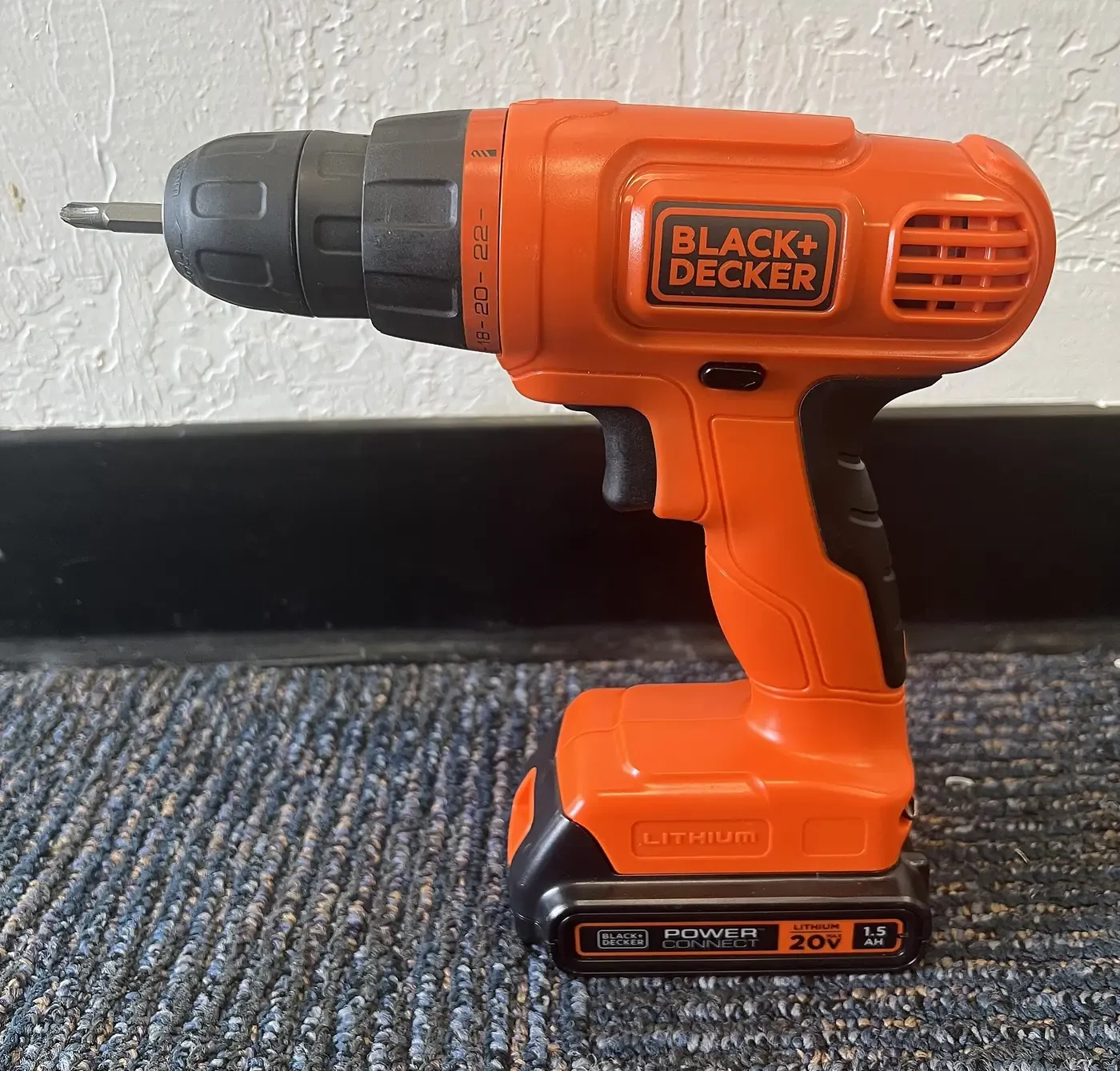

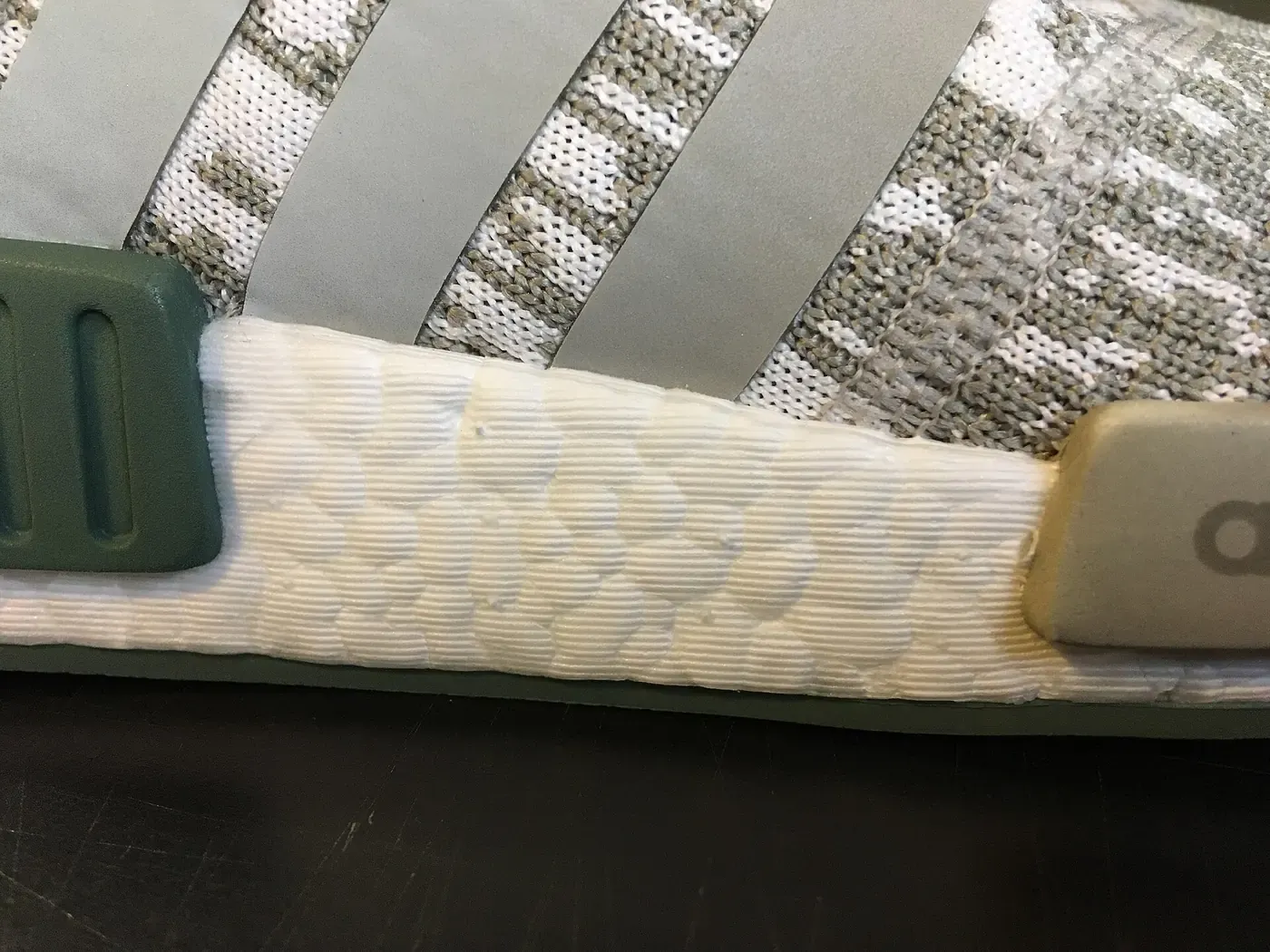
Plate IV

values with [n] cite the numbered references·estimates are flagged·“not yet available” and “N/A” are honest states, not gaps
fetching the model…
Thermoplastic Polyurethane repeat unit
- Abbreviation
- TPU
- Type
- variantpart of the polyurethane family
- CAS number
- None (heterogeneous class or not assigned)
- Resin ID code
- none assigned
- Formula
- (C19H20N2O4)x·(C4H8O)y[-O-(CH2)4-O-CO-NH-C6H4-CH2-C6H4-NH-CO-]x[-O-(CH2)4-]yTwo blocks doing two jobs: the rigid diisocyanate-diol hard segment shown here crystallizes into physical crosslinks, while the flexible polyether soft segment supplies the elasticity. The soft segment may equally be a polyester, and the block lengths are the main formulation lever.
- Repeat unit (BigSMILES)
{[][>]OCCCCOC(=O)Nc1ccc(cc1)Cc1ccc(cc1)NC(=O)[<],[>]OCCCC[<][]}- IUPAC name
- —
- Synonyms
- —
- Also known as
- —
- Chemical family
- polyurethanethermoplastic-elastomer
- Backbone class
- heterochain
- Polymerization mechanism
- step-growth-condensation
- Constitutional monomer
- Diisocyanate (e.g. MDI)Polyester or polyether polyol (soft segment)Short-chain diol (chain extender)
- Polymer class
- elastomer
- Year of origin
- 1967
- Era
- The Engineering Polymers Era (1961-1979)
- Key figures
- Charles S. Schollenberger
- Events referenced
- Christiaan Barnard performs the first human heart transplant (1967)
- Polymerization type
- step-growth polyaddition (segmented block copolymer)
- Common monomers (feedstocks)
- diisocyanates, polyester polyols (adipic-acid-ester-based soft segments), polyether polyols (tetrahydrofuran-based soft segments)
- Catalysts
- not yet available
Formed from two reaction types combined in one system: diisocyanate + short-chain diol (forming rigid 'hard segments') and diisocyanate + long-chain diol (forming flexible 'soft segments'), which microphase-separate to give TPU its combination of elastomeric behavior and thermoplastic (melt-)processability, unlike the thermoset polyurethane it succeeds.
- Tacticity
- not yet available
- Crystal structure
- not yet available
- Typical crystallinity
- 2.7–18.3 %[2]Hard segments can crystallize/order while soft segments remain amorphous (a microphase-separated morphology); source labels this range specifically "(TPU)", and reports a more crystalline "(TSPU)" variant separately at 45.7–47.8%
Molecular weight
- Number average (Mn)
- 83000–163000 g/mol[2]
- Mass average (Mw)
- 120000 g/mol[2]
- Dispersity (Mw/Mn)
- 1.2–3.7[2]
Mark-Houwink constants
not yet available
Hard/soft segment ratio and chemistry (polyester vs polyether soft segment) tune hardness, oil resistance, and hydrolysis resistance.
Hard and soft segments have distinct glass transitions, unlike a homogeneous single-Tg polymer.
- Density
- 1.02–1.12 g/cm³[2]20 °C
- Melt flow index
- not yet available
- Refractive index
- not yet available
- Transmittance
- not yet available
- Haze
- not yet available
- Gloss
- not yet available
- Water absorption
- not yet available
- Dielectric constant
- 3.7[2]60 Hz-1 MHz
- Dielectric strength
- 15 kV/mm[2]d = 0.6–0.8 mm, K20/P50 test
- Electrical conductivity
- 1.45 × 10⁻¹⁰ S/m[3]reciprocal of reported volume resistivity, 6.9×10⁹ Ω·m (converted from 6.9×10¹¹ Ω·cm), oxyester-polyol/MDI/1,4-butanediol elastomer system
- Glass transition (Tg)
- -66–-44 °C[2]soft-segment Tg; distinct hard-segment Tg also exists but no single number sourced
- Melting temperature (Tm)
- 170–220 °C[2]DSC, hard-segment melting
- Crystallization (Tc)
- not yet available
- Heat deflection (HDT)
- not yet available
- Decomposition onset
- not yet available
- Thermal conductivity
- not yet available
- Tensile modulus
- 120–330 MPa[2]
- Yield strength
- 39–54.2 MPa[2]tensile stress at yield; the handbook does report a distinct yield value for TPU, so this is recorded rather than left not applicable
- Tensile strength at break
- 17–66 MPa[2]
- Elongation at break
- 300–1500 %[2]
- Impact strength (Izod)
- not yet available
- Impact strength (Charpy)
- not yet available
- Hardness
- 62–98 Shore A[2]harder grades reported separately as Shore D 28–73
- Flexural modulus
- 17–1990 MPa[2]
- Poisson's ratio
- not yet available
- Coefficient of friction
- not yet available
- Solvent: alcohols
- good[2]
- Solvent: aliphatic hydrocarbons
- good[2]
- Solvent: aromatic hydrocarbons
- poor[2]
- Solvent: esters
- poor[2]
- Solvent: greases & oils
- good[2]
- Solvent: ketones
- poor[2]
- Weathering / UV
- not yet available
- Hydrolysis resistance
- not yet availablePolyester-soft-segment TPU is known to be more hydrolysis-prone than polyether-soft-segment TPU; this is a real, widely-cited distinction, but not independently confirmed with a source.
- Flammability (UL94)
- not yet available
- Limiting oxygen index
- not yet available
- Solubility parameter (δ)
- 23 MPa^0.5[3]polyether (PPG) soft-segment/MDI/1,4-butanediol systems, consistent across polyol Mw 1,000–3,000
Gas permeability
- N₂
- 1.05 × 10⁻¹³ cm³(STP)·cm/(cm²·s·Pa)[2]25 °C; converted from 1.4×10⁻¹⁰ cm³·cm/(cm²·s·cmHg)
- O₂
- 5.25 × 10⁻¹³ cm³(STP)·cm/(cm²·s·Pa)[2]25 °C; converted from 7.0×10⁻¹⁰ cm³·cm/(cm²·s·cmHg)
Polymer-solvent interaction parameter (χ)
- chloroform
- 0.228[3]polyurethane elastomer, specific system not stated by source
- benzene
- 0.333[3]polyurethane elastomer, specific system not stated by source
- methyl ethyl ketone (MEK)
- 0.417[3]polyurethane elastomer, specific system not stated by source
- dibutyl ether
- 0.521[3]polyurethane elastomer, specific system not stated by source
- acetonitrile
- 0.606[3]polyurethane elastomer, specific system not stated by source
- cyclohexane
- 0.66[3]polyurethane elastomer, specific system not stated by source
- Consumer electronicsmobile phone cases · flexible device casings
- Automotiveinstrument panels · caster wheels · drive belts
- Medicalmedical tubing · devices
- Footwear & sporting goodsfootwear components · power tools · sporting goods
- Recyclable
- Yes
- Biodegradable
- No
- Degradation pathway
- not yet available
Bio-based TPU variants exist (e.g. some Elastollan N grades).
- LD50 (oral, rat)
- not yet available
- NFPA health
- not yet available
- NFPA flammability
- not yet available
- NFPA reactivity
- not yet available
- Carcinogenic classification
- not yet available
- [1]Thermoplastic polyurethaneWikipediaAccessed 2026-07-14https://en.wikipedia.org/wiki/Thermoplastic_polyurethane[wiki-tpu]
- [2]Handbook of PolymersChemTec Publishinghttps://www.worldcat.org/isbn/9781895198928[handbook-wypych-2016]
- [3]Polymer Data HandbookOxford University Presshttps://search.worldcat.org/search?q=Polymer+Data+Handbook+Mark+1999[handbook-mark-1999]
Illustrations
- Plate IChristiaan Barnard in 1968, the year after he performed the first human-to-human heart transplant in Cape Town.Wikimedia Commons
- Plate IIA girl photographed in 1968 wearing go-go boots, the kind of glossy, synthetic-coated footwear that rode the 'wet look' fashion craze, and with it, sales of polyurethane coating resins like Estane.Wikimedia Commons
- Plate IIIA cordless drill with a soft-touch overmolded grip, the kind of comfort-and-durability detail that TPU's combination of flexibility and abrasion resistance was built for.Wikimedia Commons
- Plate IVAdidas's Boost midsole, made from expanded thermoplastic polyurethane beads fused together: a foam form of the same hard-segment/soft-segment chemistry Schollenberger patented, developed with BASF and brought to market in 2013.Wikimedia Commons