The Post-War Boom (1946-1960)
Polycarbonate (PC)
The Transparent!
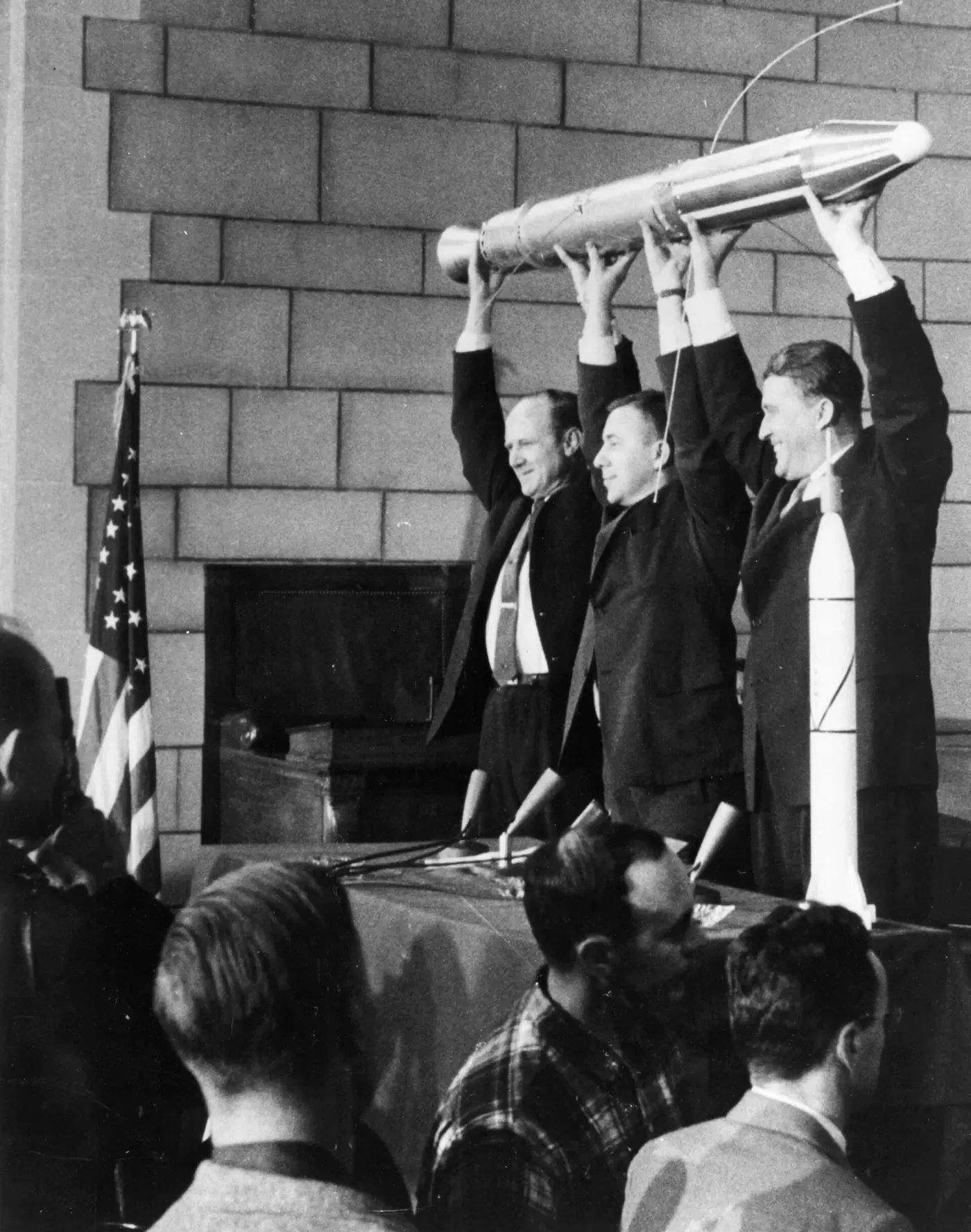
On the last day of January 1958, three men stood on a stage in Washington and held a slim, finned model over their heads for the cameras: William Pickering of the Jet Propulsion Laboratory, James Van Allen of the University of Iowa, and Wernher von Braun, whose rocket had put America’s first satellite into orbit a few hours earlier. Explorer 1 had gone up in direct answer to the Soviet Union’s Sputnik, and by October the same anxious momentum had a permanent home, when Congress folded the country’s scattered rocketry programs into a new civilian agency: NASA.
Plate I

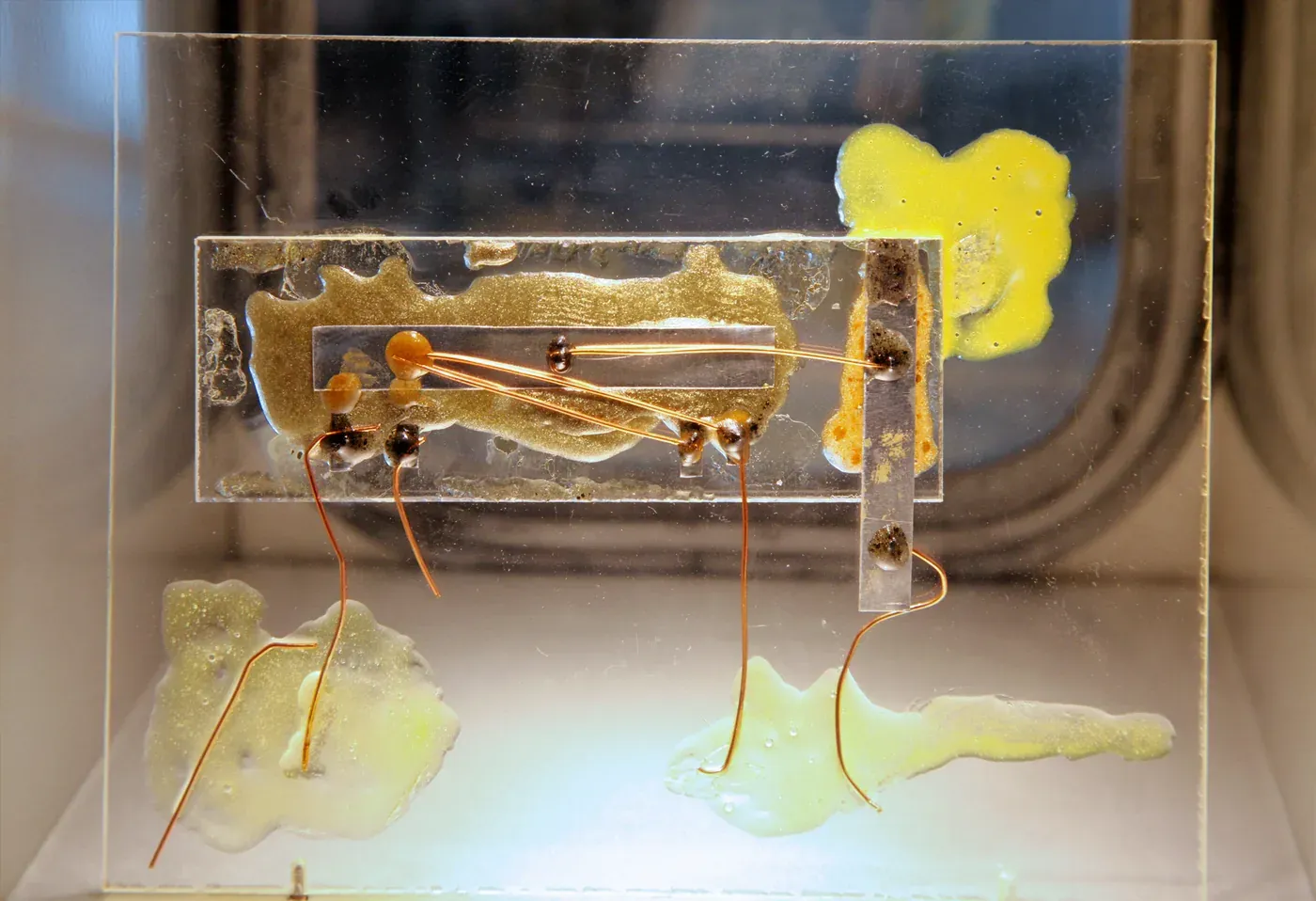
Eight months later and thirteen hundred miles south, in a Texas Instruments lab in Dallas, a much quieter demonstration pointed at the same future from the opposite direction. On 12 September, Jack Kilby showed his managers a sliver of germanium the size of a matchstick with a transistor, a capacitor, and the equivalent of three resistors etched into the one piece of material. This was the first integrated circuit, and the beginning of putting a whole electronic system where only a single component used to be. 1958 was, on both fronts, a year about miniaturizing and consolidating: getting more capability into a smaller, more tightly integrated space than anyone had managed before.
Plate II

Materials science had already run its own version of that race five years earlier, without either competitor knowing the other had entered. In 1953, Hermann Schnell at Bayer’s laboratory in Uerdingen, Germany, reacted phosgene with bisphenol A and got a tough, glass-clear resin. Working entirely independently at General Electric in Pittsfield, Massachusetts, Daniel Fox was investigating new wire-insulation materials that same year when he was left with a hardened, transparent substance in a beaker that he could not break no matter how he tried. Both men had made polycarbonate. Neither knew of the other’s work until both companies filed for the same U.S. patent in 1955, and when the priority dates were compared, Schnell’s invention turned out to predate Fox’s by about a single week. Bayer took the patent, brought its version to market under the name Makrolon in 1958, and General Electric, having built a business around the material regardless, would not launch its own Lexan commercially until 1960.
An Unpackable Chain
Polycarbonate’s backbone alternates a bisphenol A unit (two phenyl rings joined through a bulky, four-armed carbon center) with a carbonate ester linkage. That bisphenol unit is the whole story: its shape is too irregular and too bulky for neighboring chains to line up into any kind of ordered, crystalline arrangement, no matter how the material is cooled. Left with no way to crystallize, polycarbonate solidifies as a fully amorphous glass, and a material with no crystallites to scatter light is a material that stays transparent. The same bulky backbone that refuses to organize into a crystal also has enough local freedom to flex and absorb energy when the material is struck, which is the second half of the story: an amorphous plastic that is also unusually good at surviving an impact without shattering.
Clear, Tough, and Chemically Particular
Polycarbonate’s optical clarity is close to that of the best glass, and unlike glass it does not shatter into edged fragments under a sharp blow; it deforms and absorbs the impact instead, which is the entire reason it displaced glass and acrylic in situations where breakage matters. It stays dimensionally stable and rigid from well below freezing to well past the temperature of boiling water, and because it never crystallizes, that stiffness holds evenly across the whole range rather than shifting at a melting point. Chemically, though, it is far more particular than its toughness would suggest: it tolerates dilute acids, alcohols, and aliphatic solvents reasonably well, but aromatic hydrocarbons, esters, ketones, and chlorinated solvents attack it readily, sometimes inducing stress cracking in a part that is under load at the time it meets one. Prolonged sunlight is also unkind to it: outdoor exposure gradually yellows the resin and clouds its clarity, which is why architectural and automotive glazing grades carry a UV-stabilizing coating the base resin does not have on its own. And while a molded polycarbonate part will burn if it must, it does not do so eagerly; most grades resist sustaining a flame once the ignition source is removed.
From Bisphenol A to Resin
Commercial polycarbonate is still made essentially the way Schnell and Fox made it: bisphenol A and phosgene, reacted at the interface between a water phase and an organic solvent, with sodium hydroxide neutralizing the hydrochloric acid the reaction throws off as it builds each carbonate linkage. The resin that results is washed, precipitated, and dried before it ever reaches a molder, and, because a carbonate linkage is exactly the kind of bond water will attack given the chance, it has to be dried thoroughly again before processing, or residual moisture will hydrolyze the chain apart in the heat of the mold and leave a part that is visibly degraded straight out of the tool.
Where Toughness Mattered Most
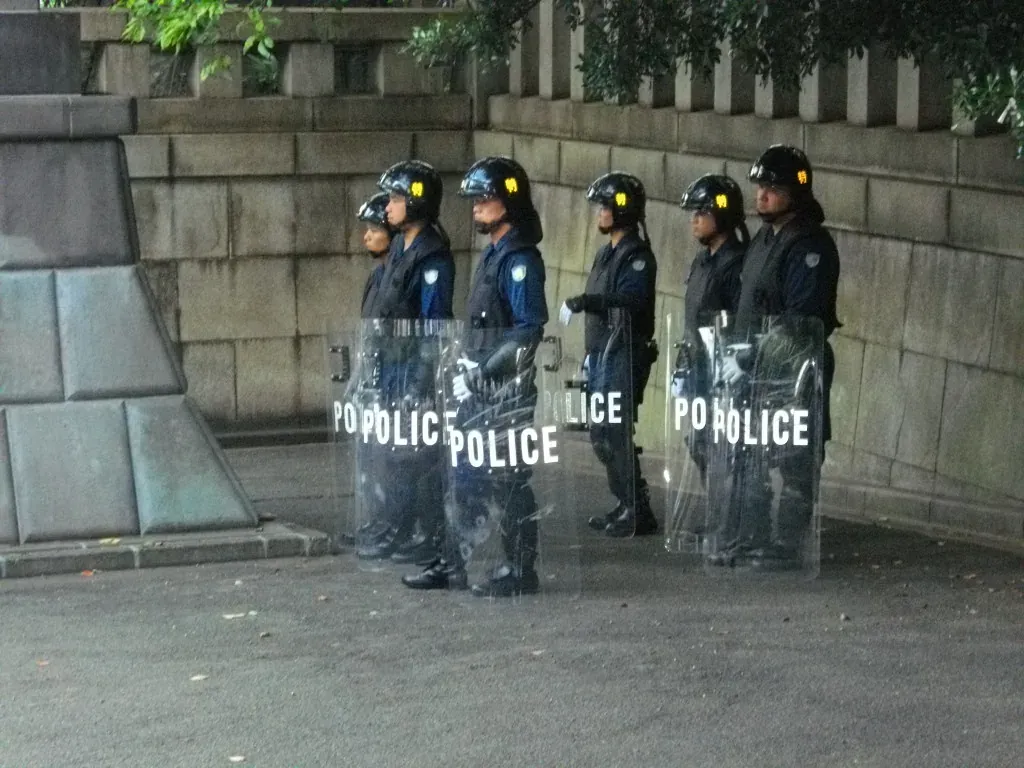
Polycarbonate’s first markets leaned on exactly the property Fox stumbled into: electrical parts and protective equipment that needed to survive an impact no ordinary plastic would. Riot shields adopted it through the 1970s and had made it the standard by the 1990s, retiring the older wood-and-metal shields it replaced.
Plate III

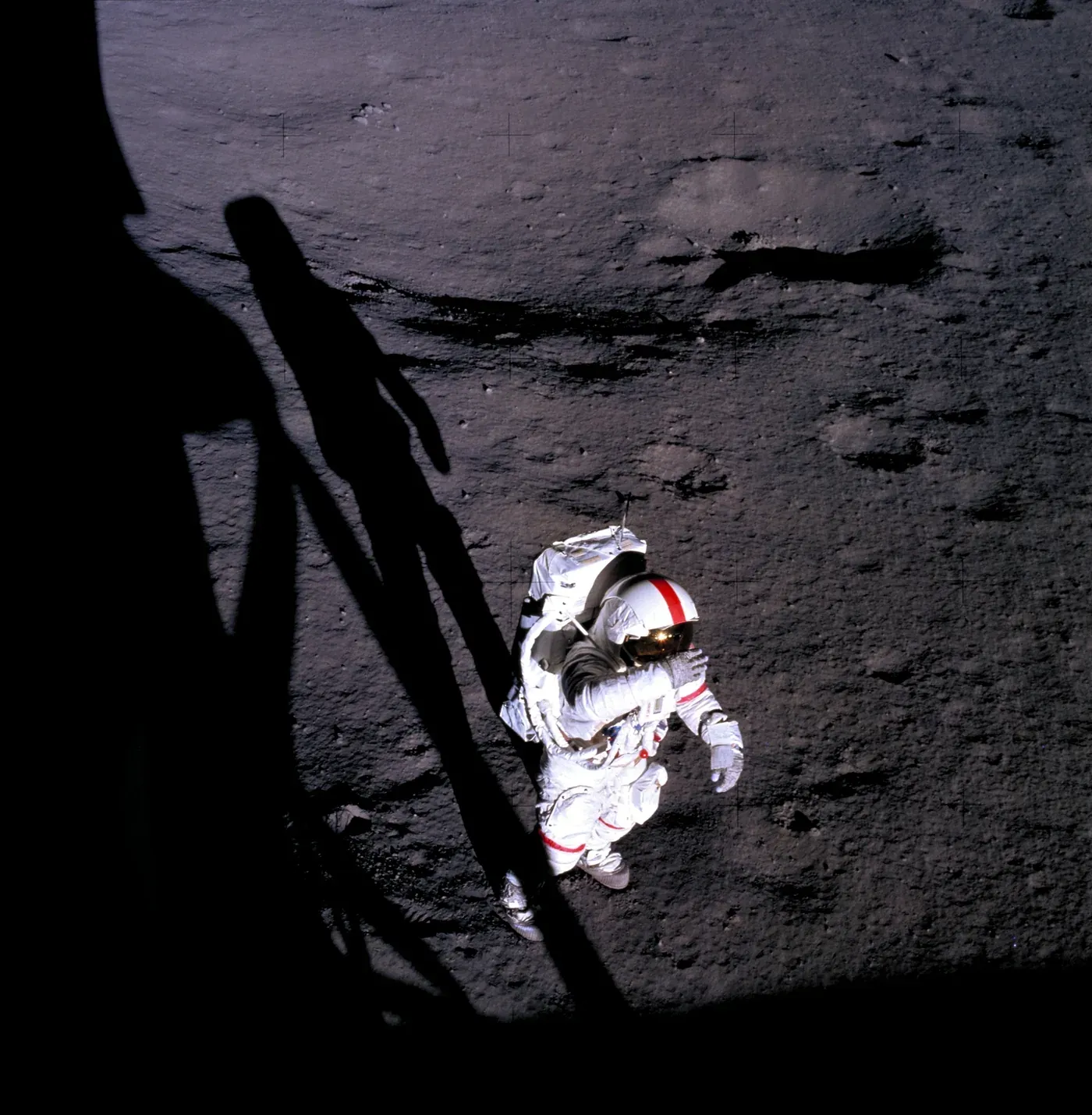
NASA reached for the same toughness a decade after Explorer 1: the outer visor of the Apollo lunar helmet was a polycarbonate shell, coated with a thin layer of gold on the sun visor to cut glare, chosen because it could survive a micrometeoroid impact that would crack glass outright.
Plate IV

From there polycarbonate settled into eyeglass lenses, automotive headlamp lenses and aircraft canopies, and (because it can be injection molded to a precision no other clear plastic of the era could match) the compact disc and, later, the DVD and Blu-ray disc, where the same molecular rigidity that makes it tough also lets a mold reproduce a data track with almost no distortion. The resin is sold today in dozens of tailored grades (impact-modified blends for structural parts, flame-retardant formulations for electronics enclosures, medical grades cleared for implant and sterilization use, ultraviolet-stabilized sheet for glazing), a spread of variants that all still trace back to the same carbonate chemistry Schnell and Fox each stumbled onto in 1953.
One caveat has followed the material more recently: bisphenol A, the building block at the center of every polycarbonate chain, has drawn sustained regulatory and consumer scrutiny over its use in food-contact products, and a share of the market has shifted toward BPA-free alternatives as a result. This is a debate that has nothing to do with the finished polymer’s toughness or clarity, and everything to do with what it is built from.
values with [n] cite the numbered references·estimates are flagged·“not yet available” and “N/A” are honest states, not gaps
fetching the model…
Polycarbonate repeat unit
- Abbreviation
- PC
- Type
- polymer family (hub)
- CAS number
- None (heterogeneous class or not assigned)
- Resin ID code
- 7
- Formula
- (C16H14O3)n[-O-C6H4-C(CH3)2-C6H4-O-CO-]nThe bisphenol A polycarbonate shown is the dominant commercial form; aliphatic and other bisphenol polycarbonates exist but are niche.
- Repeat unit (BigSMILES)
{[][>]Oc1ccc(cc1)C(C)(C)c1ccc(cc1)OC(=O)[<][]}- IUPAC name
- —
- Synonyms
- Makrolon; Lexan
- Also known as
- MakrolonLexan
- Chemical family
- polycarbonate
- Backbone class
- heterochain
- Polymerization mechanism
- step-growth-condensation
- Constitutional monomer
- Bisphenol APhosgene
- Polymer class
- thermoplastic
- Year of origin
- 1958
- Era
- The Post-War Boom (1946-1960)
- Key figures
- Hermann Schnell · Daniel Fox
- Events referenced
- Launch of Explorer 1 and founding of NASA (1958) · Jack Kilby demonstrates the first integrated circuit at Texas Instruments (12 September 1958)
- Polymerization type
- step-growth condensation
- Common monomers (feedstocks)
- bisphenol A, phosgene
- Catalysts
- not yet available
First discovered in 1898 by Alfred Einhorn but abandoned for 30 years. Hermann Schnell (Bayer, Uerdingen) patented the first linear polycarbonate in 1953; Daniel Fox (General Electric) independently synthesized a branched variant around the same time. Bayer commercialized Makrolon in 1958; GE launched Lexan in 1960. ~1 billion kg produced annually via the phosgene route.
- Tacticity
- not yet available
- Crystal structure
- not yet available
- Typical crystallinity
- 0 %[3]Typically amorphous (rigid backbone) in commercial resin, underlying its transparency; crystallinity of 20–42% has been reported under special processing (e.g. solvent-induced or long-term annealing).
Molecular weight
- Number average (Mn)
- 29400 (17500–41300) g/mol[3]
- Mass average (Mw)
- 37500 (19000–56000) g/mol[3]
- Dispersity (Mw/Mn)
- 2.25 (1.3–3.2)[3]
Mark-Houwink constants
not yet available
Bulky bisphenol A units and carbonate linkages give PC an unusual combination of high stiffness, high impact toughness, and optical clarity.
- Density
- 1.205 (1.19–1.22) g/cm³[3]At 20°C. Mark's Polymer Data Handbook reports 1.2 g/cm³ (ASTM D792).
- Melt flow index
- 43 (6–80) g/10min[3]300°C/1.2 kg
- Refractive index
- 1.5865 (1.586–1.587)[3]20°C, exp.
- Transmittance
- 86.5 (82–91) %[3]
- Haze
- 1.9 (0.8–3) %[3]
- Gloss
- not yet available
- Water absorption
- 0.26 (0.12–0.4) %[3]Equilibrium, immersion in water at 23°C; equilibrium at 23°C/50% RH: 0.09–0.3%.
- Dielectric constant
- 2.9[3]1 MHz
- Dielectric strength
- 41 (15–67) kV/mm[3]Film, d = 0.6–0.8 mm
- Electrical conductivity
- 1 × 10⁻¹⁵–1 × 10⁻¹² S/m[3]Reciprocal of reported volume resistivity range (1×10¹²–1×10¹⁵ Ω·m).
- Glass transition (Tg)
- 145.5 (137–154) °C[3]exp.
- Melting temperature (Tm)
- 261 (255–267) °C[3]DSC, measured on crystallized/annealed PC; commercial resin is normally amorphous with no distinct melting point.
- Crystallization (Tc)
- Not applicable
- Heat deflection (HDT)
- 137.5 (119–156) °C[3]1.8 MPa
- Decomposition onset
- 420 °C[3]
- Thermal conductivity
- 0.192 W/(m·K)[4]
- Tensile modulus
- 2650 (2200–3100) MPa[3]Reported 'Young's modulus' 2,390–2,600 MPa also given; Mark's Polymer Data Handbook reports 2,380 MPa (ASTM D638).
- Yield strength
- 65.5 (57–74) MPa[3]Tensile stress at yield.
- Tensile strength at break
- 71.5 (55–88) MPa[3]Unqualified 'tensile strength' row, distinct from reported yield stress (57–74 MPa). Mark's Polymer Data Handbook reports 65.5 MPa 'at ultimate'.
- Elongation at break
- 103 (66–140) %[3]
- Impact strength (Izod)
- 12–736 J/m[3]23°C, notched; wide range reflects grade-dependent variability. Mark's Polymer Data Handbook separately reports 850 J/m (Izod, notched) for standard PC.
- Impact strength (Charpy)
- 45.5 (11–80) kJ/m²[3]23°C, notched
- Hardness
- 89 Rockwell L[3]
- Flexural modulus
- 2410 (2220–2600) MPa[3]
- Poisson's ratio
- 0.4105 (0.401–0.42)[3]exp.
- Coefficient of friction
- 0.21[3]Chrome steel counterface, ASTM D1894.
- Solvent: dilute acids
- good[3]
- Solvent: concentrated acids
- poor[3]
- Solvent: alcohols
- good[3]
- Solvent: alkalis
- good to poor[3]
- Solvent: aliphatic hydrocarbons
- good[3]
- Solvent: aromatic hydrocarbons
- poor[3]
- Solvent: esters
- poor[3]
- Solvent: greases & oils
- good to poor[3]
- Solvent: halogenated hydrocarbons
- poor[3]
- Solvent: ketones
- poor[3]
- Weathering / UV
- Outdoor/UV exposure degrades optical clarity and induces yellowing: light transmittance drops from 85% (initial) to 82% and haze rises from 3% to 19% after 3 years outdoor exposure.[4]
- Hydrolysis resistance
- not yet availableCarbonate linkages are hydrolyzable (a known processing concern requiring pre-drying), but no specific rate data sourced.
- Flammability (UL94)
- HB to V-2[3]Unfilled resin, grade/thickness dependent; V-0 achievable with some flame-retardant grades.
- Limiting oxygen index
- 27.5 (25–30) %[3]Flame-retardant grades reach 30–43%.
- Solubility parameter (δ)
- 22.2 MPa^0.5[3]
Gas permeability
- O₂
- 1.05 × 10⁻¹³ cm³(STP)·cm/(cm²·s·Pa)[4]25°C; converted from reported 1.05 × 10⁻¹⁷ m³·m·m⁻²·s⁻¹·Pa⁻¹.
- CO₂
- 6 × 10⁻¹³ cm³(STP)·cm/(cm²·s·Pa)[4]25°C; converted from reported 6.0 × 10⁻¹⁷ m³·m·m⁻²·s⁻¹·Pa⁻¹.
- N₂
- 2.25 × 10⁻¹⁴ cm³(STP)·cm/(cm²·s·Pa)[4]25°C; converted from reported 0.225 × 10⁻¹⁷ m³·m·m⁻²·s⁻¹·Pa⁻¹.
- He
- 7.5 × 10⁻¹³ cm³(STP)·cm/(cm²·s·Pa)[4]25°C; converted from reported 7.5 × 10⁻¹⁷ m³·m·m⁻²·s⁻¹·Pa⁻¹.
- H₂
- 9 × 10⁻¹³ cm³(STP)·cm/(cm²·s·Pa)[4]25°C; converted from reported 9.0 × 10⁻¹⁷ m³·m·m⁻²·s⁻¹·Pa⁻¹.
- Ar
- 6 × 10⁻¹⁴ cm³(STP)·cm/(cm²·s·Pa)[4]25°C; converted from reported 0.6 × 10⁻¹⁷ m³·m·m⁻²·s⁻¹·Pa⁻¹.
Polymer-solvent interaction parameter (χ)
not yet available
- Opticaleyeglass lenses
- Safety & securitybullet-resistant barriers · security glazing
- Data storageCDs, DVDs, Blu-ray discs
- Packagingfood and beverage containers
- Automotive & aerospaceheadlamp lenses · aircraft cockpit canopies
- Recyclable
- Yes
- Biodegradable
- No
- Degradation pathway
- not yet available
Resin identification code 7 ('Other'). Bisphenol A content has drawn regulatory/consumer scrutiny in food-contact applications.
- [1]PolycarbonateWikipediaAccessed 2026-07-14https://en.wikipedia.org/wiki/Polycarbonate[wiki-polycarbonate]
- [2]Resin Identification Codes (RICs), as Specified by ASTM D7611The ANSI BlogAccessed 2026-07-14; confirms PVC = RIC 3https://blog.ansi.org/ansi/resin-identification-codes-rics-astm-d7611/[ansi-resin-codes]
- [3]Handbook of PolymersChemTec Publishinghttps://www.worldcat.org/isbn/9781895198928[handbook-wypych-2016]
- [4]Polymer Data HandbookOxford University Presshttps://search.worldcat.org/search?q=Polymer+Data+Handbook+Mark+1999[handbook-mark-1999]
Illustrations
- Plate IWilliam Pickering, James Van Allen, and Wernher von Braun hold up a model of Explorer 1 at the press conference announcing its launch, 31 January 1958.Wikimedia Commons
- Plate IIA working replica of Jack Kilby's first integrated circuit, reproducing the germanium chip he demonstrated at Texas Instruments on 12 September 1958; the original is preserved at the Smithsonian.Wikimedia Commons
- Plate IIIRiot police with transparent polycarbonate shields. By the 1990s the material had become the standard, replacing the wood and metal shields used before it.Wikimedia Commons
- Plate IVAn Apollo 14 astronaut on the Moon, February 1971, wearing the gold-coated polycarbonate visor built to shield against glare and micrometeoroid impact.Wikimedia Commons