The Post-War Boom (1946-1960)
Configuration vs. Conformation
Architecture of Molecules
On 17 June 1950, in a hospital in Evergreen Park, Illinois, the surgeon Richard Lawler and two colleagues lifted a kidney from a patient who had just died and set it into the body of a 44-year-old woman dying of polycystic kidney disease. The operation, the first kidney transplant in medical history, took forty-five minutes, and it worked, more or less, for the reason transplants still work today: a kidney’s precise, individual shape mattered far less than getting its connections right. Move an organ to an unfamiliar place, plumbed into unfamiliar vessels, and if the connections are sound, it still functions.
Chemists were arriving at a version of the same insight that same year, about molecules rather than organs. A molecule’s identity (what it fundamentally is) depends on which atoms are bonded to which, in what order. Its behaviour in practice depends on something else again: the three-dimensional shape those bonds happen to be holding at any given moment. Telling the two apart, and knowing which one a chemist is actually free to change, took the better part of three decades to work out, and the story runs straight through a laboratory raided by the Gestapo.
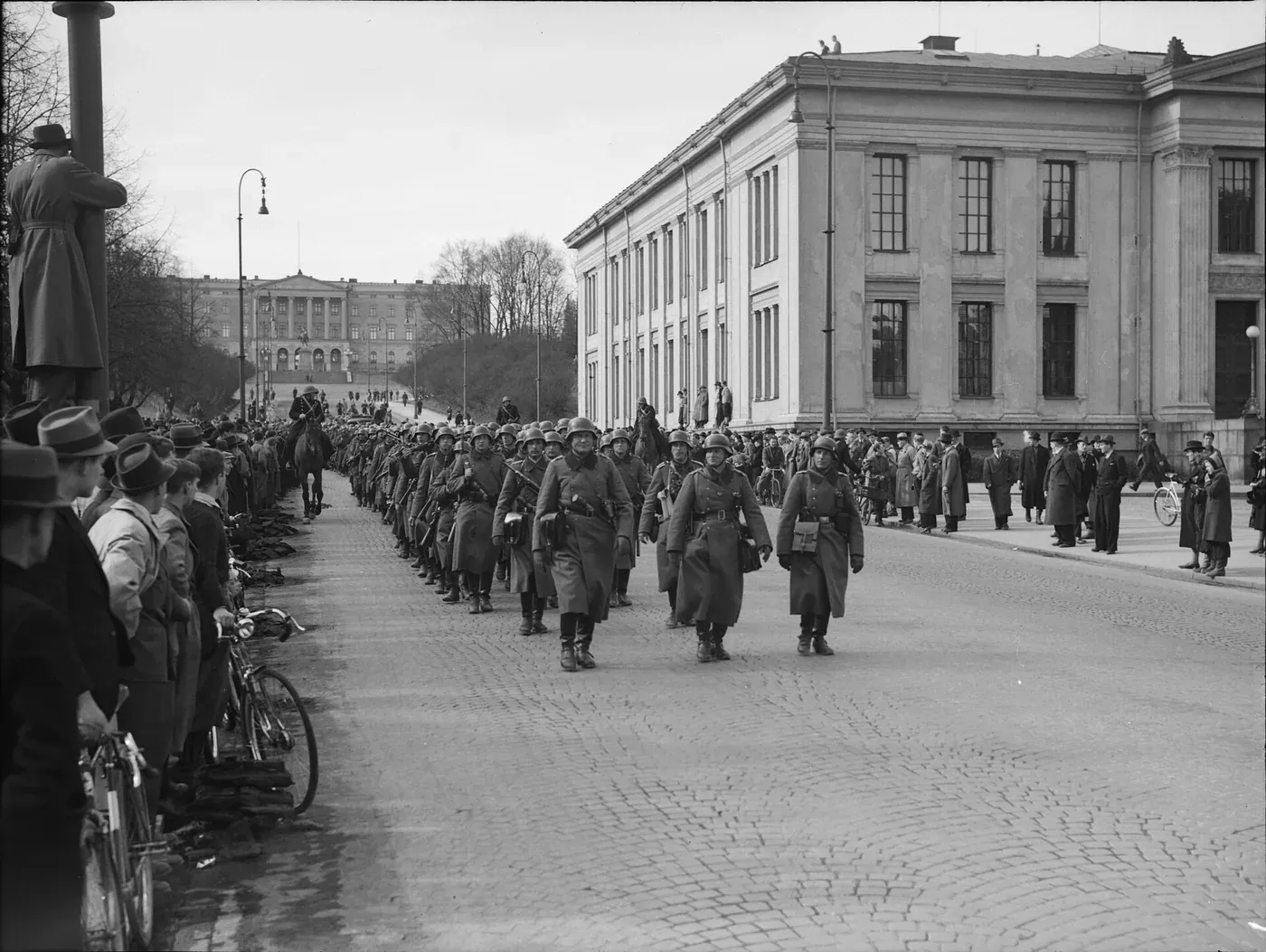
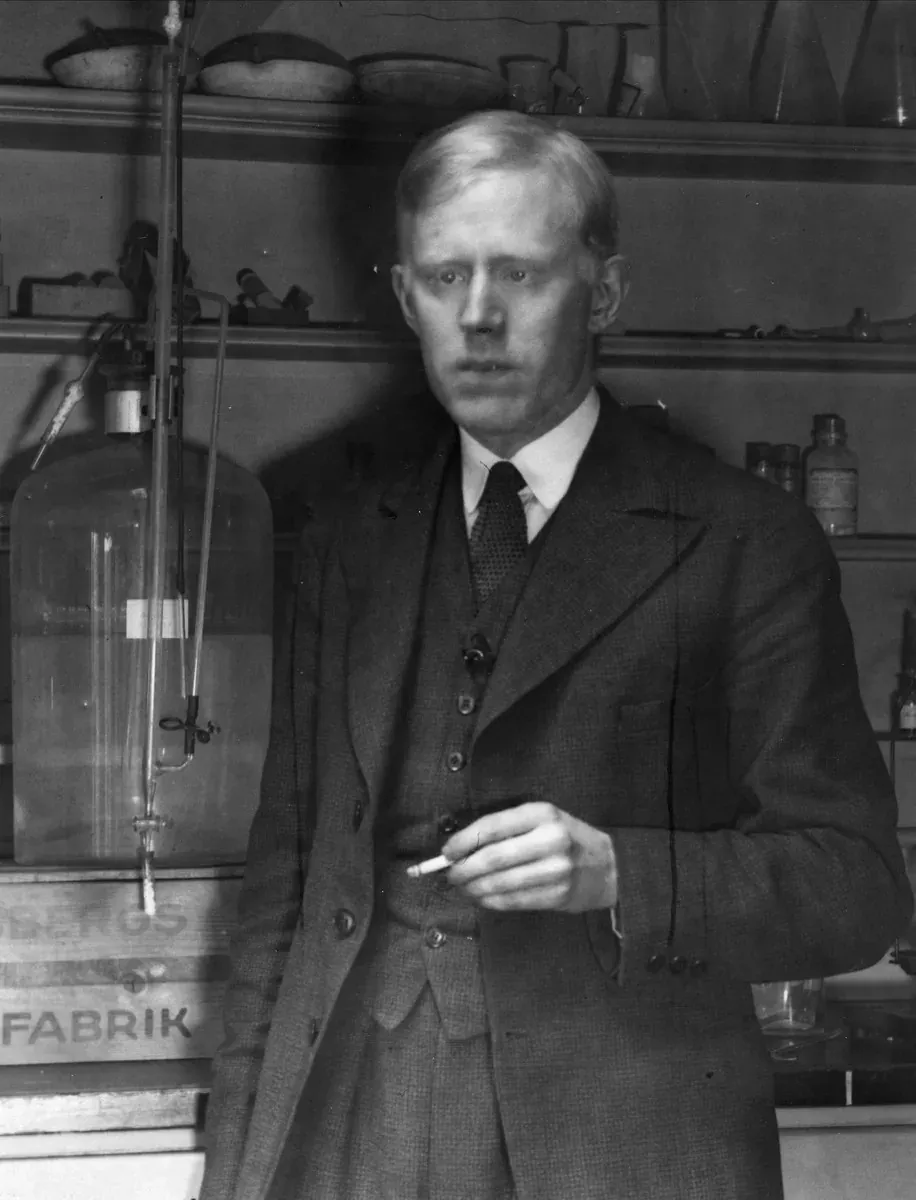
Odd Hassel, a physical chemist at the University of Oslo, had spent the 1930s building a case (using electric dipole measurements and a technique new to Norway called electron diffraction) that a molecule like cyclohexane could exist in two genuinely different three-dimensional shapes, a puckered “chair” and a less stable “boat,” without any bond being broken or reformed to get from one to the other. He had a short paper on the subject ready for a Norwegian journal in October 1943, the same month Norwegian collaborators arrested him, along with much of the University of Oslo’s staff, and handed him to the German occupation authorities. Hassel spent over a year in detention camps before his release in November 1944.
Plate I

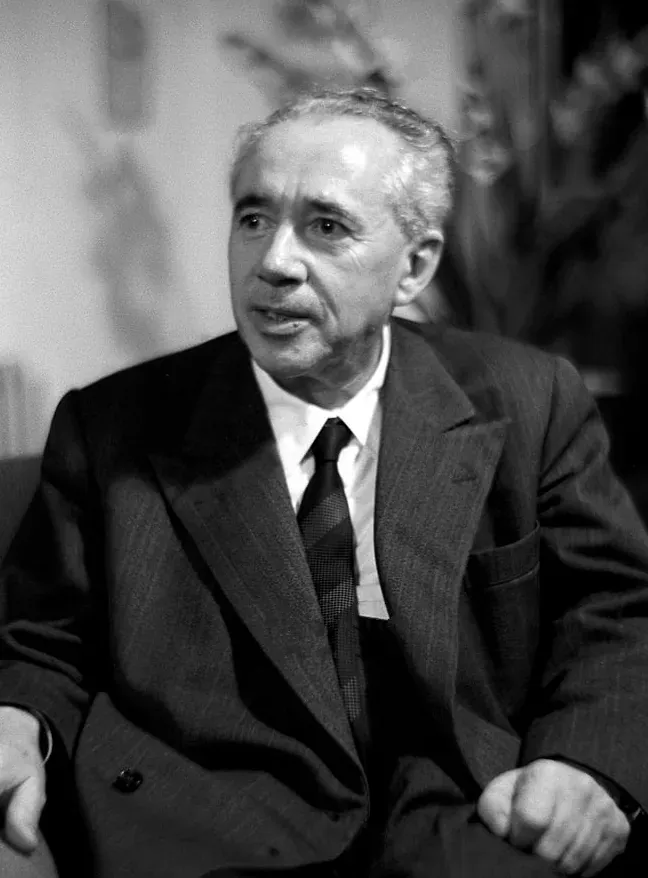
He went back to the same problem. By 1949, his improved electron-diffraction studies had settled the case: cyclohexane really does have two distinct, physically real shapes, interconverting freely at room temperature, with measurably different bond angles between them. In Britain, the organic chemist Derek Barton read Hassel’s results and saw what they were good for. In a four-page paper in the Swiss journal Experientia in 1950, titled simply “The Conformation of the Steroid Nucleus,” Barton showed that a molecule’s preferred three-dimensional shape could be used to predict and explain its chemical reactivity, not just describe it after the fact. The paper founded the discipline now called conformational analysis, and in 1969 Hassel and Barton shared the Nobel Prize in Chemistry for it: the physicist who had measured the shapes, and the chemist who worked out what the shapes were for.
Plates II & III



A Welded Joint and a Hinge
The clearest way to keep the two ideas apart is mechanical rather than choreographic. A configuration is like a welded joint: it holds a fixed geometry, and the only way to change it is to break something and rejoin it differently. A conformation is like a hinge: the joint itself never changes, but the parts either side of it can swing freely into any number of positions without anything being broken at all.
Configuration covers cis/trans isomerism around a carbon-carbon double bond: a double bond cannot rotate, so whichever side a substituent sits on when the molecule forms is the side it stays on, permanently, unless a chemical reaction remakes that bond. It also covers tacticity, the placement of substituent groups along a polymer backbone, fixed the moment each unit is added to the growing chain. Conformation, by contrast, covers the free rotation around an ordinary single bond: a trans arrangement, with two groups as far apart as possible, and a gauche arrangement, offset by roughly sixty degrees, are not two different molecules; they are the same molecule caught in two different, freely interconverting poses.
Two Rubbers, One Difference
Natural rubber (polyisoprene) shows why the distinction matters in practice. Nature builds it almost entirely in the cis-1,4 configuration, which puts a slight kink at every double bond and lets the chains coil loosely rather than pack together; this is precisely the geometry that allows a stretched chain to spring back rather than stay stretched. Along the single bonds between those kinks, the chain is free to shift between trans and gauche conformations, and that ordinary rotational freedom is what gives the coiled chain its flexibility.
Polybutadiene, rubber’s close synthetic relative, can be built in either the cis-1,4 or the trans-1,4 configuration, and the choice is not cosmetic: cis-rich polybutadiene, like natural rubber, stays loose and elastic, useful in exactly the tyre applications rubber is used for; trans-rich polybutadiene packs its chains more tightly and behaves like a stiffer, more crystalline plastic. Both polymers add a further layer of configurational detail in their tacticity (isotactic, syndiotactic or atactic, depending on how consistently their substituents sit on one side of the chain or alternate), and isotactic sequences pack into crystalline regions far more readily than atactic ones do.
A few years after Hassel and Barton’s paper, German chemist Karl Ziegler discovered, in 1953, a class of catalysts that could control exactly this kind of configuration as a polymer chain was built, rather than leaving it to chance. Working with Ziegler’s catalysts, the Italian chemist Giulio Natta showed in 1954 that they could produce polypropylene with almost all of its backbone in a single, isotactic configuration, regular enough to crystallise, strong enough to compete with far more expensive materials. Ziegler and Natta shared the 1963 Nobel Prize in Chemistry for it; the discovery answered a question the rubber industry had been asking since the war, of why synthetic polymers so rarely matched natural rubber’s properties until their configuration, and not merely which atoms they were built from, could be controlled on purpose.
Plate IV

Why the Distinction Matters at All
Temperature makes the difference between configuration and conformation easy to see in practice. Above its glass transition temperature, a polyisoprene chain’s backbone conformations flip between trans and gauche readily: the energy needed to swing from one to the other is small enough that ordinary thermal motion supplies it continuously at room temperature, which is exactly why the material stays soft and rubbery. Its cis/trans configuration, by contrast, does not budge with temperature at all; only a chemical reaction (ozone attack, vulcanisation, degradation) can change it. That asymmetry is the whole point: conformation is what a polymer does at any given moment, and configuration is what a polymer chain was built as, permanently, the day it was polymerised.
Modern analytical chemistry can separate the two cleanly. Solid- and solution-state ¹³C NMR spectroscopy resolves distinct signals for cis and trans configuration, and for isotactic, syndiotactic and atactic tacticity, because each arrangement puts a carbon atom in a subtly different chemical environment. Variable-temperature NMR goes further and follows the actual trans-gauche interconversion as a sample is heated or cooled. X-ray diffraction reads off configuration reliably in crystalline regions but says little about a chain’s constantly shifting conformation in the amorphous parts of the same material; Raman and infrared spectroscopy fill that gap, since particular vibrational bands are sensitive to which conformation a bond currently holds. Molecular dynamics simulation adds a further, computational view of which conformations a real chain actually visits, and how often.
Controlling the cis/trans ratio in polybutadiene is still exactly how a tyre manufacturer chooses between a bouncier or a stiffer compound. That ratio is the same configurational lever Ziegler and Natta first showed how to pull on purpose, working on top of the same conformational freedom Hassel and Barton first learned to measure.
Configuration and conformation are both descriptions of a molecule's 3-D arrangement, but they differ in a critical way: configuration is fixed by the connectivity of chemical bonds and can only be changed by breaking and reforming bonds (e.g. cis/trans isomerism, or the tacticity of a polymer backbone), while conformation is a transient 3-D shape reached by rotation around single bonds without breaking any bonds (e.g. a cyclohexane ring flipping between chair and boat forms). Odd Hassel confirmed the existence of cyclohexane's chair and boat conformers using electron diffraction in 1943; Derek Barton showed in 1950 that organic and steroid molecules could be assigned a preferred conformation based on Hassel's physical data, founding the field of conformational analysis. The two shared the 1969 Nobel Prize in Chemistry for this work. For polymer science specifically, the configuration/conformation distinction underpins tacticity (a configurational property, fixed at the moment of polymerization, as in Ziegler-Natta stereoregular polypropylene and polyethylene) versus chain conformation (a dynamic property governing solution behavior, crystallization, and rubber elasticity).
No governing equations recorded. This concept is treated qualitatively.
- Year of origin
- 1950
- Era
- The Post-War Boom (1946-1960)
- Key figures
- Odd Hassel · Derek Barton · Karl Ziegler · Giulio Natta
- Events referenced
- First kidney transplant, performed by Richard Lawler in Evergreen Park, Illinois (17 June 1950) · German invasion and occupation of Norway begins (9 April 1940)
- [1]Odd Hassel, Derek Barton, and the 1969 Nobel Prize in Chemistry (conformational analysis)Web search summary (Britannica, Nobel Prize archive, University of Glasgow)Accessed 2026-07-14https://www.nobelprize.org/prizes/chemistry/1969/summary/[search-conformational-analysis]
Illustrations
- Plate IGerman troops marching through Oslo, 9 April 1940 (the invasion that put Norway under an occupation which would intern Odd Hassel three and a half years later, mid-experiment).Wikimedia Commons
- Plate IIOdd Hassel in his Oslo laboratory, around 1935, over a decade before his electron-diffraction data would let a chemist half a continent away predict how a molecule reacts from its shape alone.Wikimedia Commons
- Plate IIIDerek Barton, whose four-page 1950 paper turned Hassel's physical measurements into the working method chemists still call conformational analysis.Wikimedia Commons
- Plate IVGiulio Natta, who in 1954 showed that Ziegler's catalysts could fix a polypropylene chain's configuration deliberately, producing a crystalline, stereoregular plastic instead of a random one.Wikimedia Commons