Decoding Nature's Legacy (1833-1902)
Natural Rubber (NR)
The Resilient Material That Shaped Modern Society
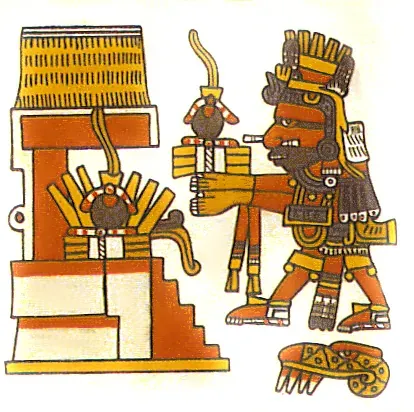
Long before anyone owned a microscope, the peoples of the Gulf Coast of what is now Mexico were already living with a material science of their own. They tapped the milky latex of Castilla elastica, a tree native to the region, and worked out that mixing it with the juice of a local morning-glory vine set it into something bouncier and more durable than the raw sap alone: an early act of rubber chemistry, performed a full three thousand years before anyone had a word for polymers. They shaped the cured latex into solid balls for a ritual ballgame played across the region for millennia, and called the material olli. The connection ran deep enough that the Aztecs named the earlier civilization to their south Ōlmēcatl (the rubber people), the name modern archaeology still uses for the Olmec. Ballcourts built for that game still stand today from Veracruz to Chichén Itzá.
Plate I

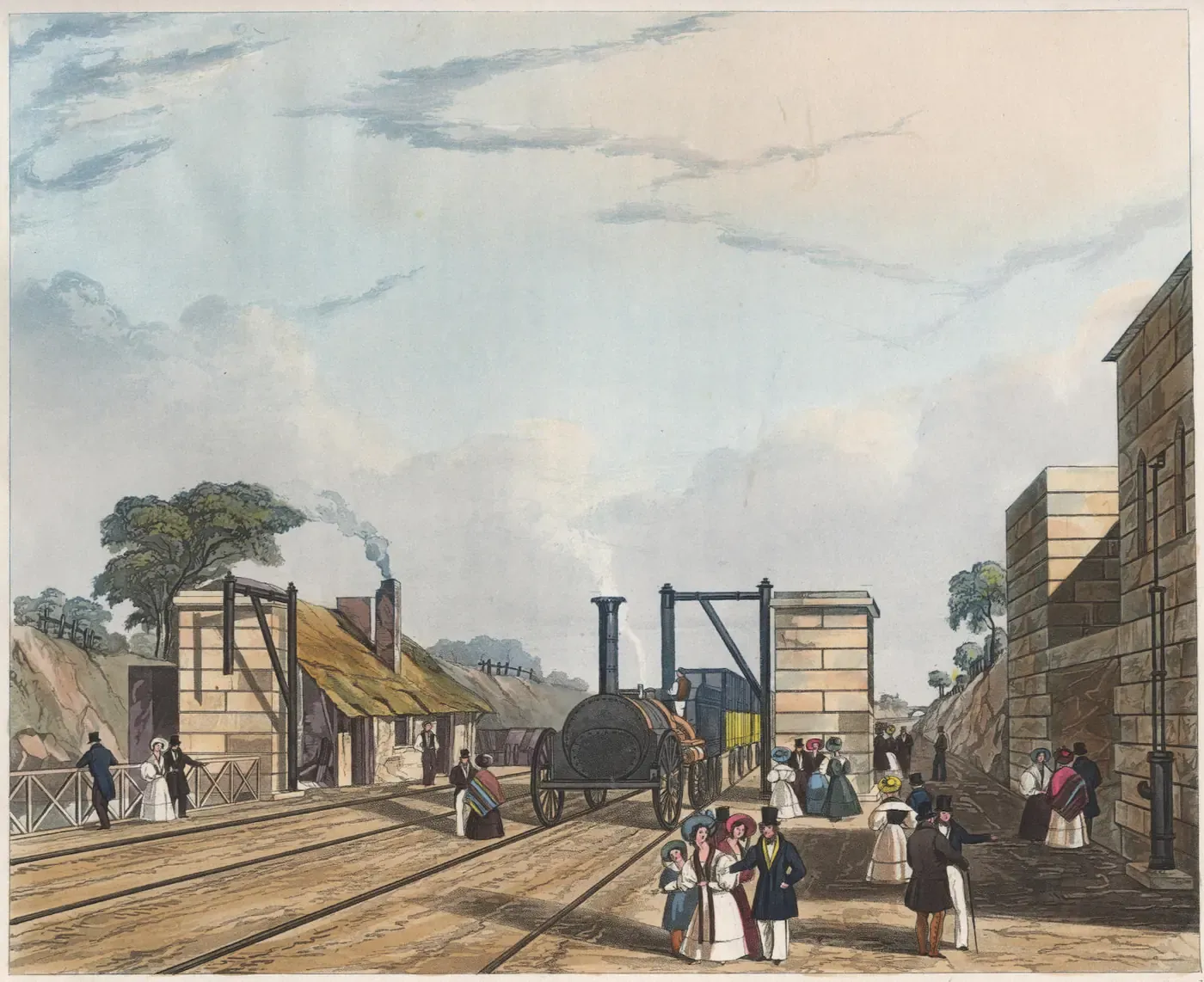
By 1836 the world had a very different relationship with new territory. Parliament had just approved a wave of thirty-five new railway lines across Britain that year alone, reaching nearly a thousand miles further into the country’s interior at a cost approaching eighteen million pounds. This was proof, if anyone still needed it, that a nation could now be re-drawn by iron rail rather than by river or road.
Plate II

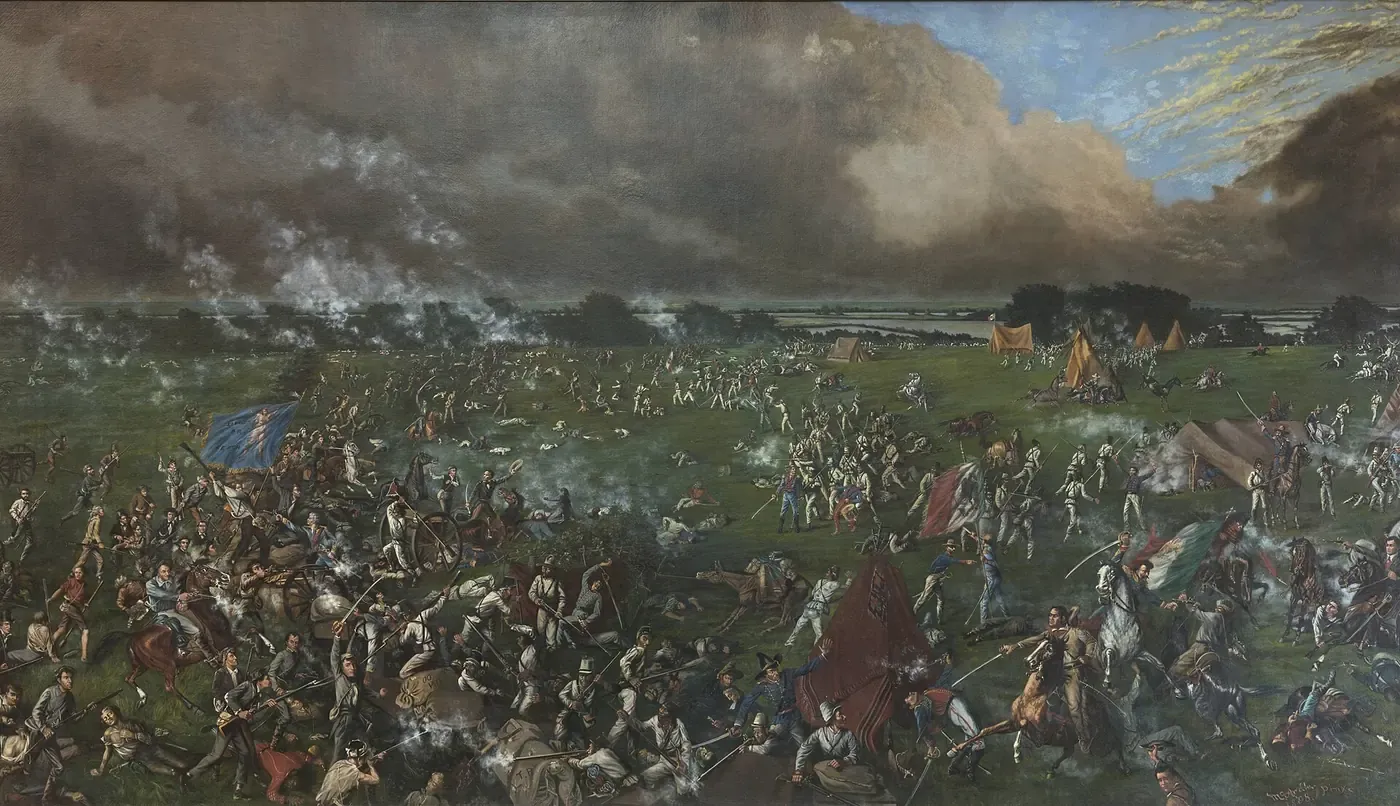
Two frontiers were being redrawn by hand that same year. In Texas, settlers declared independence from Mexico in March, held the Alamo for thirteen days and lost it, and then broke Santa Anna’s army in eighteen minutes at San Jacinto in April: a republic born inside a single season. On the far side of the Atlantic, thousands of Boer families were driving their ox-wagons out of the Cape Colony into the interior of southern Africa, a migration already a year old and nowhere near finished. Neither had anything to do with rubber. Both were evidence of a world in 1836 that no longer felt bound by the borders, or the materials, it had inherited.
Plate III
.jpg)
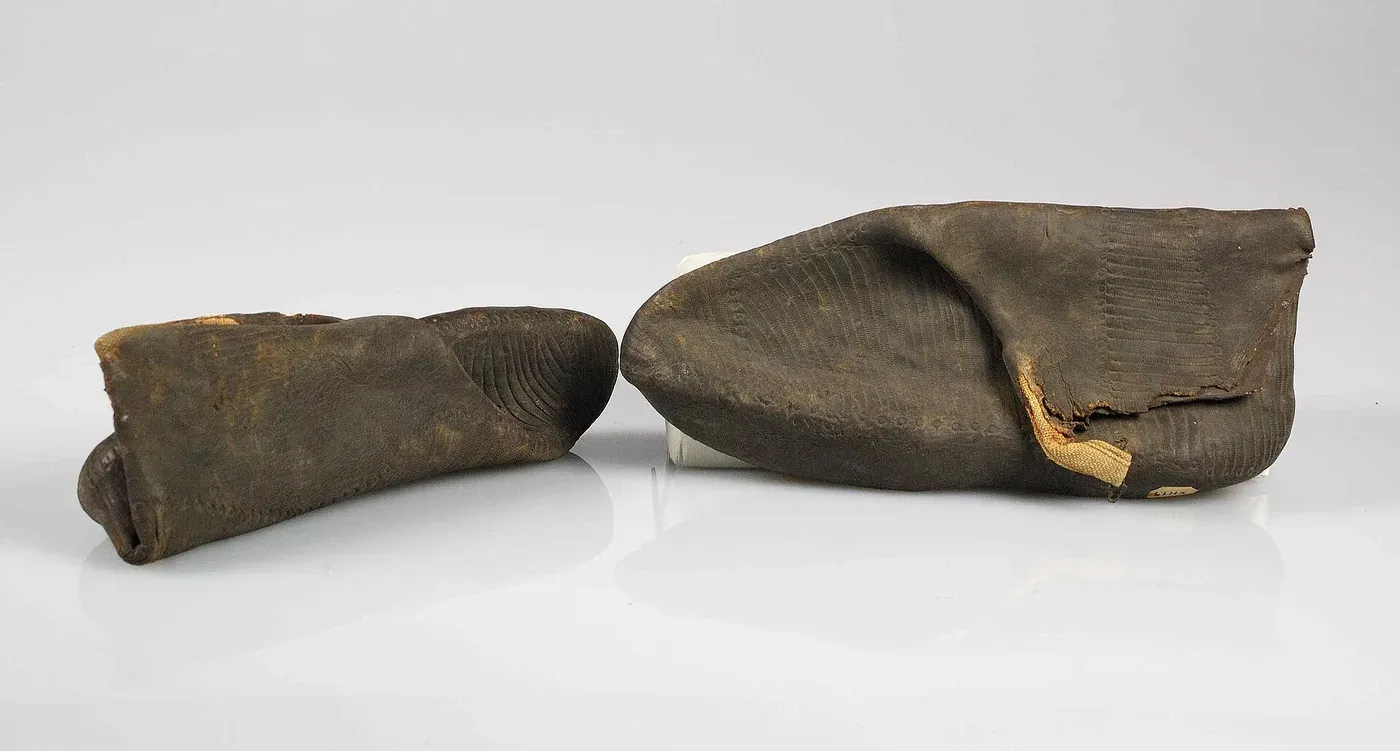
Rubber itself was having a much worse year. American and British manufacturers had spent the early 1830s chasing an “India-rubber fever,” coating shoes, coats and life preservers in the stuff and selling it as fast as it could be cut and glued. Nobody had yet solved the material’s basic contradiction: it turned to sticky, foul-smelling paste in summer heat and cracked like old cheese in winter cold. By the end of 1836 the fever had broken. Rubber-goods companies that had raised millions in stock were collapsing one after another, their unsold inventory rotting in warehouses. Among the men who had staked everything on making the stuff work regardless was a failed Philadelphia hardware merchant named Charles Goodyear, who had begun experimenting with raw rubber two years earlier (reportedly starting his very first trials while sitting in a debtors’ prison cell) and who, watching the industry he had bet his family’s last cent on come apart around him, only dug in harder. What he was chasing, and how he stumbled into it, is a story that belongs to the next few years, not this one.
Plate IV

Nature’s Molecular Springs
Rubbers, or elastomers, are polymers that stretch under load and spring back when it’s released. That is a behaviour that has nothing to do with the individual atoms involved and everything to do with how the chains are put together. A heap of long, loosely tangled strings, each one free to wriggle and rotate around its backbone bonds, is close enough: that freedom is the whole trick. Pull on the tangle and the chains reluctantly straighten out; let go, and they scramble back toward the disordered, high-entropy jumble they preferred in the first place. It’s a thermodynamic reflex, not a memory.
Natural rubber’s own chains are built almost entirely in the cis geometry around each double bond, which keeps every segment kinked rather than straight and stops the chains from packing into a tidy, rigid stack the way straighter-chain polymers do. That single geometric detail (one bond in five pointing the “wrong” way) is the difference between an elastic material and a rigid one built from the same atoms; the trans version of the same repeat unit exists in nature too, as the hard, barely elastic resin called gutta-percha. Below its glass transition, natural rubber loses this freedom entirely: the chains lock in place and the material turns glassy and brittle, which is exactly the failure mode the India-rubber fever ran into every winter.
What the Material Actually Does
Natural rubber’s chains carry an enormous spread of molecular weights even within a single batch of latex (some short, some extraordinarily long), and it is this combination of high average chain length and near-total cis configuration that gives raw latex its particular blend of softness and resilience straight out of the tree, well before any processing is done to it. Stretch it far enough and something unexpected happens: instead of simply thinning and failing the way an amorphous plastic would, the chains momentarily line up into small crystalline regions, reinforcing the material exactly where it is under the most strain. It is one of the reasons a natural rubber band resists a tear that has already started, where many synthetic elastomers will run straight through.
Chemically, the material is close to inert in the way that matters for its oldest jobs: with no ester, amide or other hydrolysable linkage in the backbone, there is nothing in it for water to attack, and it survives ordinary aqueous exposure indefinitely. Left exposed to the world rather than a specific solvent, though, it is not indestructible: certain soil bacteria and fungi have evolved enzymes capable of breaking down the isoprene backbone, one of the few natural mechanisms that can, given enough time, return it to the earth. That capacity for slow biological decay, still not enough to count as compostable, sits alongside a very different modern problem: the plantations that supply it now cover ground that was recently forest, closely enough tied to deforestation that the material now falls under the European Union’s rules on deforestation-free imports.
The Manufacturing Journey: From Tree to Technology
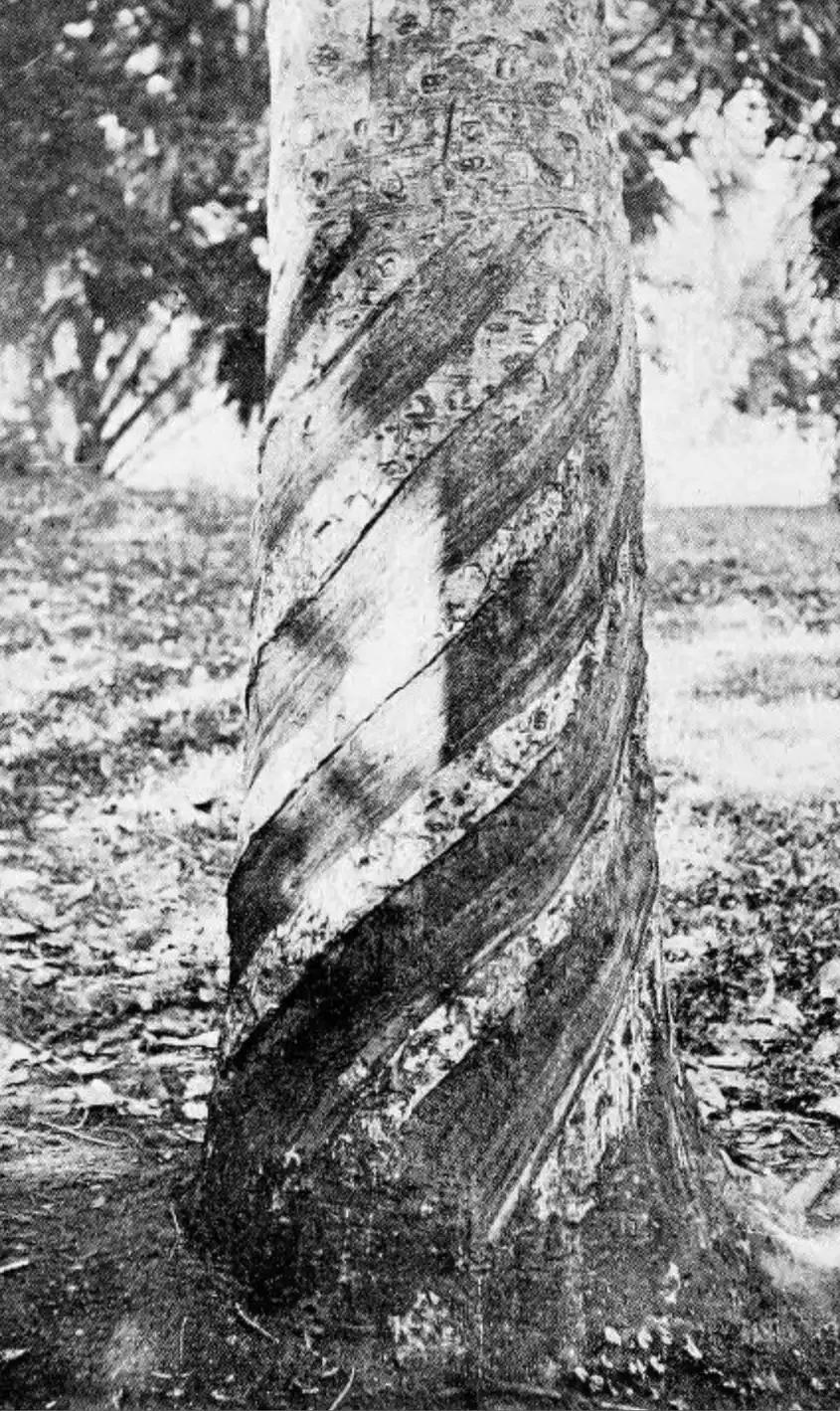
Harvesting has barely changed in principle since long before 1836. At dawn, a tapper draws a thin diagonal cut into the bark of Hevea brasiliensis (the Amazonian tree that, unlike the Mesoamerican Castilla, is now the source of essentially all commercial natural rubber), and the milky latex bleeds slowly into a waiting cup. Cut too deep and the tree is damaged; too shallow and the yield disappoints. A skilled tapper works several hundred trees before the morning is out.
Plate V

Fresh latex is only around a third rubber hydrocarbon by weight, the rest an aqueous serum carrying the particles in suspension. Those particles stay separate because each one carries a negative surface charge, held there by a thin membrane of proteins and lipids; disturb that charge (with bacteria, heat, or time), and the particles clump and coagulate on their own. Ammonia, added within hours of tapping, both kills the bacteria that would otherwise sour the batch and helps hold the colloid stable long enough to reach a processing plant, where it is concentrated by creaming or centrifugation and coagulated deliberately into the sheet, crumb or block forms the rubber trade actually ships.
Applications: A Material That Changed Everything
The ballgame gave way to waterproof cloth, which gave way (however imperfectly, in 1836) to coats, boots and machine belting. Vulcanization, still a few years off, would fix the seasonal failures that were sinking the rubber trade this particular year; what it could never fix was rubber’s dependence on a tree that only grows well in a narrow equatorial band, which is why the search for other sources never really stopped. The Russian dandelion, Taraxacum kok-saghyz, produces usable rubber in its roots at a concentration that varies enormously with variety and growing conditions (anywhere from a few percent of dry root weight to nearly a third in the best breeding lines) and is now grown experimentally as a temperate-climate alternative to the tropical tree. Separately, metabolic engineers have coaxed bacteria and yeast into fermenting plant sugars directly into isoprene, the same monomer natural rubber is built from, which can then be polymerized industrially without a tree ever entering the process; a Goodyear-DuPont collaboration ran exactly this route through pilot-scale tire production. None of it has replaced the tree. Today’s aircraft tyres, surgical gloves and engine mounts still lean on natural rubber precisely because nothing synthetic quite matches its combination of resilience, tack and fatigue resistance: a two-hundred-million-year-old plant trick that industrial chemistry has admired far more easily than it has reproduced.
values with [n] cite the numbered references·estimates are flagged·“not yet available” and “N/A” are honest states, not gaps
fetching the model…
Natural Rubber repeat unit
Same repeat unit, opposite geometry about the double bond: gutta-percha, the hard resin once used for golf ball covers and undersea cable insulation.
- Abbreviation
- NR
- Type
- polymer family (hub)
- CAS number
- 9006-04-6
- Resin ID code
- none assigned
- Formula
- (C5H8)n[-CH2-C(CH3)=CH-CH2-]nThe cis-1,4 configuration is shown; the trans-1,4 isomer of the same repeat unit is gutta-percha, a hard resin rather than an elastomer.
- Repeat unit (BigSMILES)
{[][$]C/C(C)=C\C[$][]}- IUPAC name
- cis-1,4-polyisoprene
- Synonyms
- India rubber; caoutchouc
- Also known as
- India rubbercaoutchouc
- Chemical family
- natural-rubberdiene-rubber
- Backbone class
- carbon-chain
- Polymerization mechanism
- natural-biosynthesis
- Constitutional monomer
- Isoprene
- Polymer class
- elastomer
- Year of origin
- 1836
- Era
- Decoding Nature's Legacy (1833-1902)
- Key figures
- —
- Events referenced
- Railway Acts of 1836 (35 new British lines authorised) · Texas Revolution: Alamo and Battle of San Jacinto (1836) · Great Trek of the Boers from Cape Colony (1835-1840s) · Collapse of the 1830s India-rubber fever
- Polymerization type
- not yet available
- Common monomers (feedstocks)
- not yet available
- Catalysts
- not yet available
Not industrially polymerized: biosynthesized as latex in Hevea brasiliensis (Para rubber tree) and harvested by tapping (bark incisions collected in cups). A skilled tapper processes several hundred trees daily; collected latex is coagulated (acid or ammoniation, developed c. 1920, to preserve colloidal state) into cup lump, tree lace, or technically-specified block rubber grades (SVR/TSR).
- Tacticity
- cis-1,4 (near-exclusively), which gives natural rubber its elastomeric behavior; the synthetic all-cis analogue is polyisoprene (IR).
- Crystal structure
- not yet available
- Typical crystallinity
- not yet availableAmorphous at rest; undergoes strain-induced crystallization on stretching (well documented qualitatively, no single % sourced).
Molecular weight
- Number average (Mn)
- not yet available
- Mass average (Mw)
- 640000 (40000–1240000) g/mol[3]Value specifically labeled 'natural rubber' in the source table; contrasted there with 1,500,000–2,500,000 g/mol for synthetic polyisoprene.
- Dispersity (Mw/Mn)
- not yet available
| Solvent | T | M range | K | a |
|---|---|---|---|---|
| benzene[4] | 303 K | 80–280 kg/mol | 0.0185 mL/g | 0.74 |
| cyclohexane[4] | 300 K | — | 0.03 mL/g | 0.7 |
| 4-methyl-2-pentanone[4] | 308 K | 50–1,000 kg/mol | 0.0607 mL/g | 0.57 |
| 2-pentanone[4] | 288 K | 80–280 kg/mol | 0.119 mL/g | 0.5 |
| toluene[4] | 298 K | 70–1,000 kg/mol | 0.0502 mL/g | 0.667 |
Highly flexible cis-configured chains give natural rubber its characteristic elasticity and large stretch ratio.
Elasticity drops sharply when cooled below the glass transition temperature.
- Density
- not yet available
- Melt flow index
- Not applicable
- Refractive index
- not yet available
- Transmittance
- not yet available
- Haze
- not yet available
- Gloss
- not yet available
- Water absorption
- not yet available
- Dielectric constant
- not yet available
- Dielectric strength
- not yet available
- Electrical conductivity
- not yet available
- Glass transition (Tg)
- -75 °C[3]Value specifically labeled 'natural rubber'; the same table separately reports -70 to -72 °C for synthetic polyisoprene.
- Melting temperature (Tm)
- not yet available
- Crystallization (Tc)
- not yet available
- Heat deflection (HDT)
- Not applicable
- Decomposition onset
- not yet available
- Thermal conductivity
- not yet available
- Tensile modulus
- not yet available
- Yield strength
- not yet available
- Tensile strength at break
- not yet available
- Elongation at break
- not yet availableQualitatively described as very high with strong resilience; no single sourced number.
- Impact strength (Izod)
- not yet available
- Impact strength (Charpy)
- not yet available
- Hardness
- not yet available
- Flexural modulus
- not yet available
- Poisson's ratio
- not yet available
- Coefficient of friction
- not yet available
- Weathering / UV
- not yet available
- Hydrolysis resistance
- Not applicable
- Flammability (UL94)
- not yet available
- Limiting oxygen index
- not yet available
- Solubility parameter (δ)
- 16.71 (16.33–17.09) MPa^0.5[4]Natural rubber (Hevea), observed, 25 °C; five literature values.
Gas permeability
not yet available
Polymer-solvent interaction parameter (χ)
not yet available
- Processing methods
- latex dippingcoagulation/millingvulcanization (see vulcanized-natural-rubber)
- Drying required
- not yet determined
- Processing temperature
- not yet available
- Shrinkage rate
- not yet available
- Tires & automotivetire treads · conveyor belts · hoses · gaskets · anti-vibration mounts
- Medical & PPEsurgical gloves · diving gear
- Consumer productsballoons · rubber bands · erasers · footwear
- Industrialpump housings · power-transmission belting · tank linings · electrical insulation
- Recyclable
- Yes
- Biodegradable
- No
- Degradation pathway
- Susceptible to microbial degradation by Streptomyces, Pseudomonas, and Nocardia species but does not readily degrade under standard composting conditions.
Natural rubber cultivation is linked to deforestation and is covered by the EU's 2023 Deforestation-free Products Regulation.
- LD50 (oral, rat)
- not yet available
- NFPA health
- not yet available
- NFPA flammability
- not yet available
- NFPA reactivity
- not yet available
- Carcinogenic classification
- not yet available
- [1]Natural rubberWikipediaAccessed 2026-07-14https://en.wikipedia.org/wiki/Natural_rubber[wiki-natural-rubber]
- [2]Natural rubber, CAS 9006-04-6ChemsrcAccessed 2026-07-14; CAS cross-referenced against Alfa Chemistry, ChemicalBook, and BOC Sciences supplier catalogshttps://www.chemsrc.com/en/cas/9006-04-6_666799.html[chemsrc-natural-rubber]
- [3]Handbook of PolymersChemTec Publishinghttps://www.worldcat.org/isbn/9781895198928[handbook-wypych-2016]
- [4]Polymer Data HandbookOxford University Presshttps://search.worldcat.org/search?q=Polymer+Data+Handbook+Mark+1999[handbook-mark-1999]
Illustrations
- Plate IA rubber ball offered to Xiuhtecuhtli, Lord of Fire, in the Codex Borgia: rubber as a ritual material centuries before it was ever a chemical one.Wikimedia Commons
- Plate IIThe Liverpool and Manchester Railway, the model every one of 1836's thirty-five new lines was chasing: proof that steam and iron could out-run anything the natural world offered.Wikimedia Commons
- Plate IIIThe Battle of San Jacinto, fought in eighteen minutes in April 1836: one of two new frontiers, an ocean apart, being claimed by force that same year.Wikimedia Commons
- Plate IVRubber overshoes from the 1830s, the exact decade of the India-rubber fever: waterproof in the showroom, and prone to arriving home as a puddle.Wikimedia Commons
- Plate VSpiral tapping of a Hevea trunk, photographed around 1911: the same basic cut, refined but not reinvented, that every tapper before and since has made.Wikimedia Commons