Decoding Nature's Legacy (1833-1902)
Keratin
The Protein That Armors Life
Long before the dawn of history, early humans learned to craft tools and vessels from animal horns, hooves, and claws, working intuitively with keratin, the tough structural protein that nature deploys everywhere it needs armor, from the softest feather to the hardest horn. In hair and wool, in beaks and scales, in fingernails and talons, this single family of proteins shapes an astonishing range of the living world’s protective gear.
By 1882 the material already had a name (the German physician Johann Franz Simon had coined “keratin” back in 1840, in his handbook of medical chemistry), but a name is not a structure, and nobody yet had one. That September, Thomas Edison switched on the Pearl Street Station in Lower Manhattan, the world’s first commercial power plant, and lit a few square miles of the city electrically for the first time. It is worth noticing what the rest of the material world still looked like at that moment: combs and buttons of horn and tortoiseshell, corset stays and umbrella ribs of whalebone, knife handles of hoof and antler. Electricity was new. The protein people had been shaping by hand into almost everything hard and protective, from a bird’s quill to a rhinoceros’s horn, was not, and it would be another half-century before anyone worked out what, structurally, made it behave the way it does.
Plate I
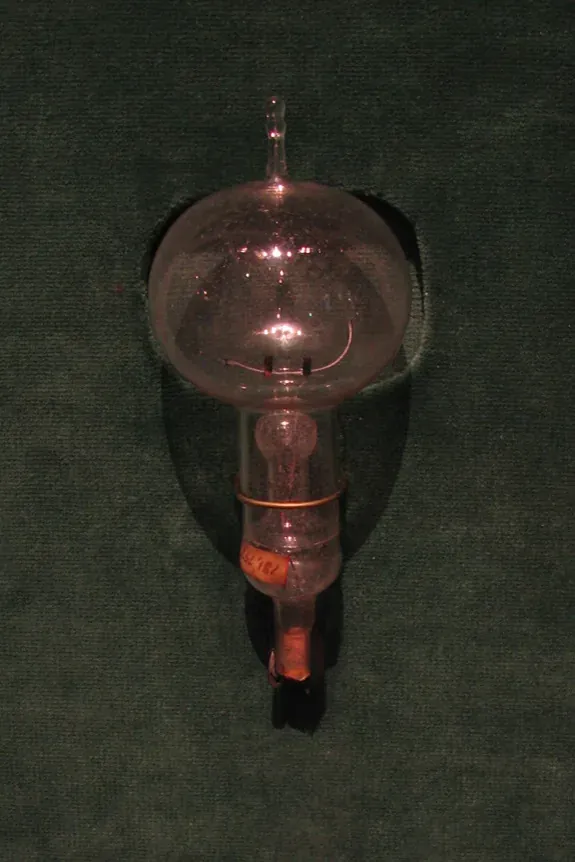

Molecular Architecture: Ropes and Sheets of Protein
Keratin is built from precise amino acid sequences that fold into one of two motifs (α-helices or β-sheets), which twist and stack together like microscopic ropes and plywood, producing fibers that combine real strength with real flexibility. How strong or how flexible depends enormously on which keratin and which tissue: the same family of proteins gives a soft, pliable strand of hair and a nail or hoof hard enough to bear an animal’s full weight, the difference coming mostly from how many sulfur-based crosslinks tie neighboring chains together.
Plate II
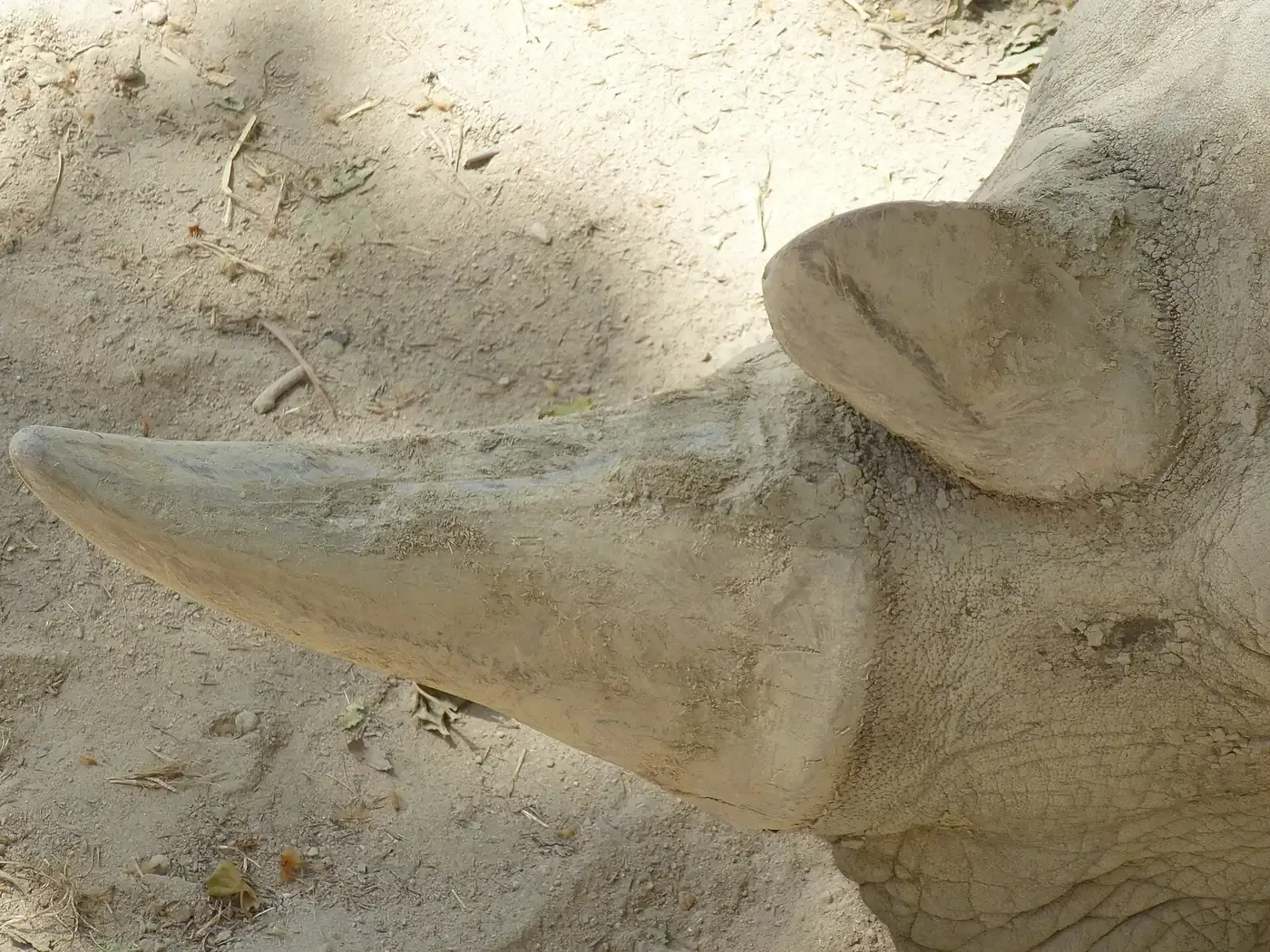

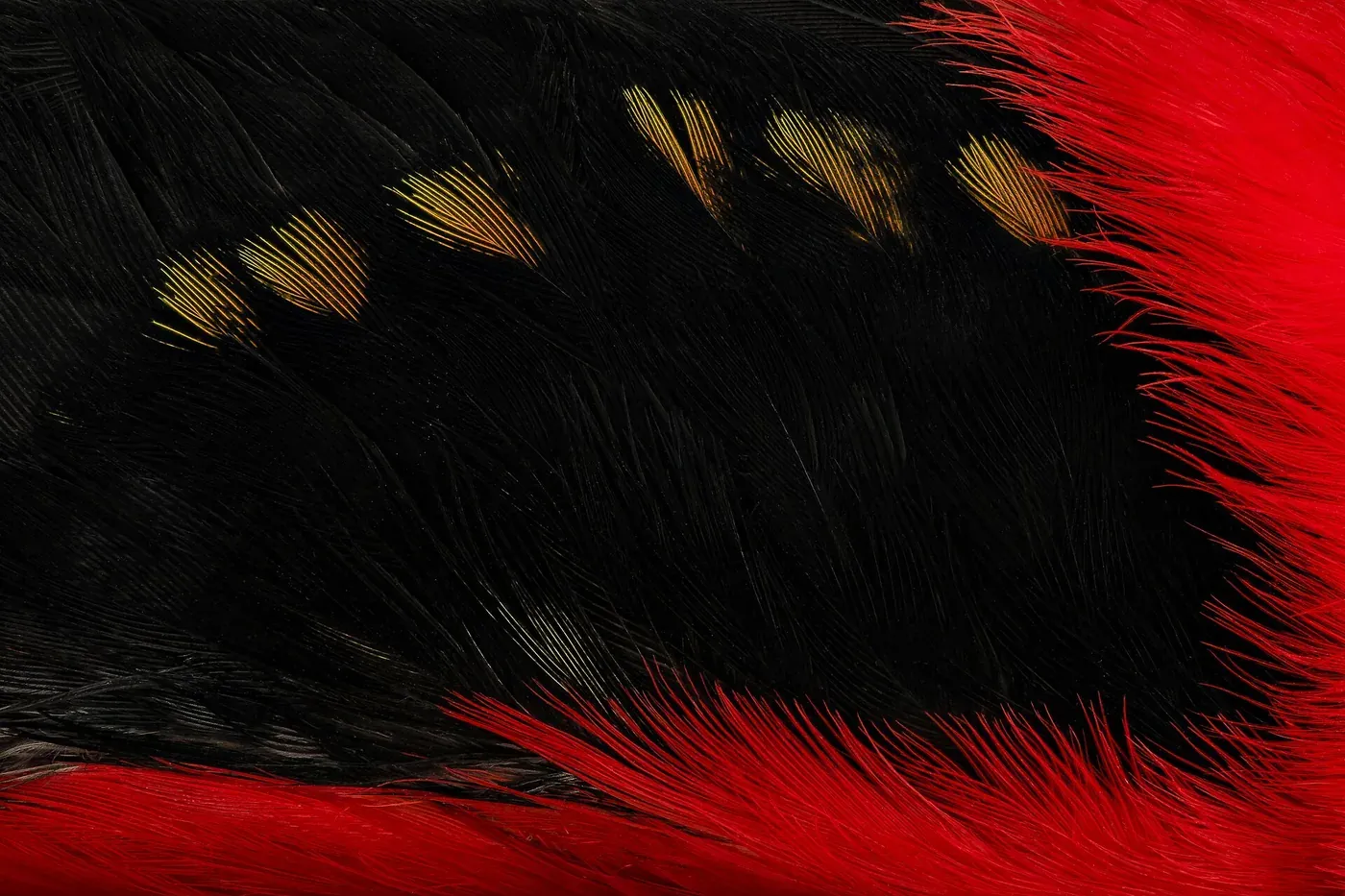
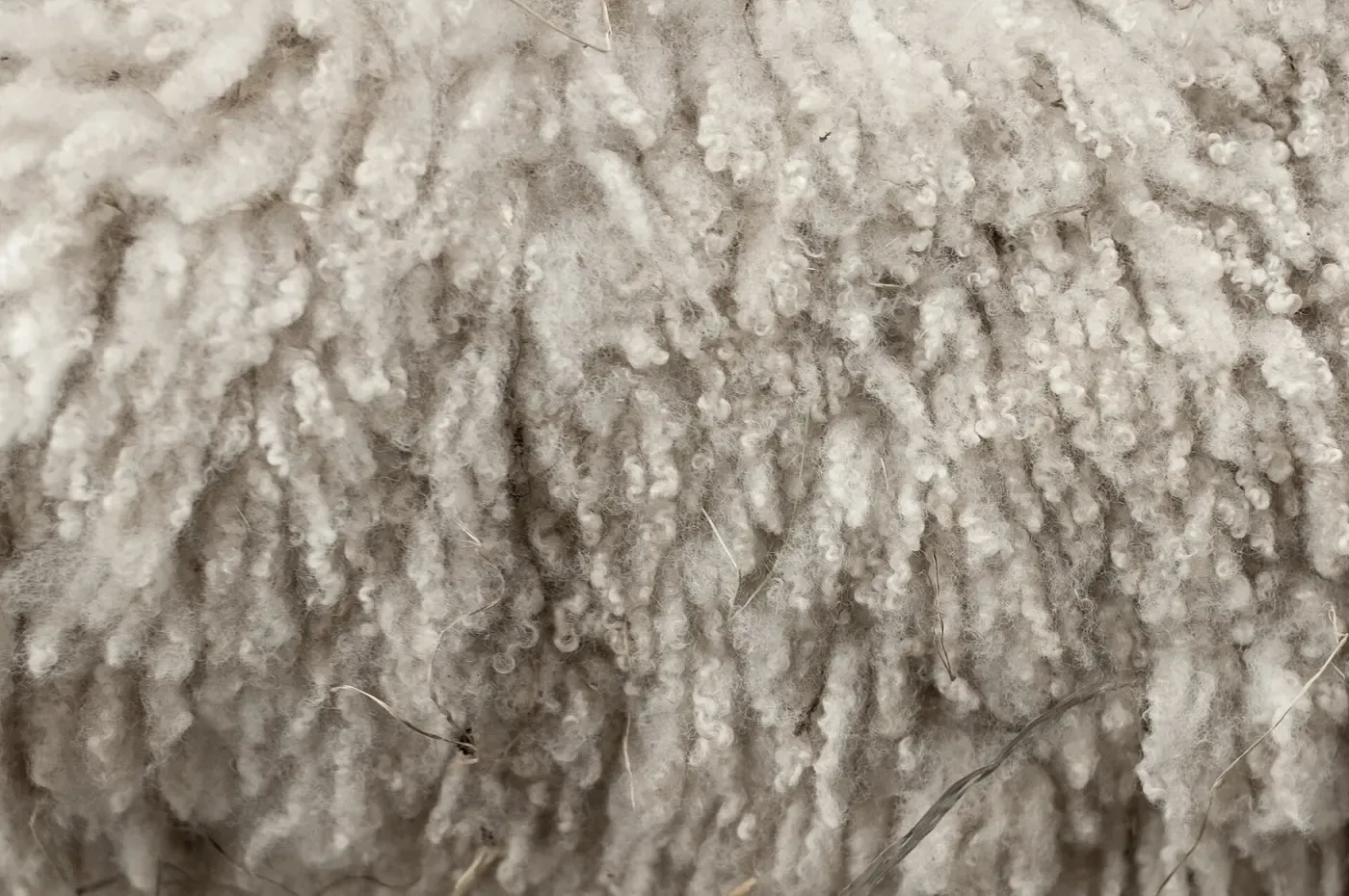
The α-keratin found in hair and wool performs a remarkable trick: when stretched while wet, its α-helices can partially unwind into β-sheets, a transition first revealed by William Astbury’s X-ray photographs of stretched and unstretched wool fibers in the early 1930s. That structural shift lets wet hair stretch noticeably farther than dry hair without snapping; your hair is quite literally changing its molecular structure every time you style it damp. The β-keratin of bird beaks and reptile scales, meanwhile, assembles into tough, pleated sheets, nature’s own fiber-reinforced composite of strong crystalline regions and flexible amorphous ones.
Plates III & IV
.jpg)

The Living Factory: Keratin Biosynthesis
Inside your skin cells runs a microscopic assembly line that never stops. In keratinocytes, the specialized cells responsible for keratin production, genes are transcribed into messenger RNA that travels to the ribosomes, where amino acids are strung together into a protein chain. But these keratin proteins do not simply drift away once made.
Instead, they immediately seek partners, pairing into dimers that align head-to-tail into protofilaments, which bundle further into intermediate filaments, all while still inside the cell, and all before the cell itself has died and flattened into the tough, inert material we actually see as hair, horn, or scale.
Applications: From Ancient Tools to Modern Medicine
Keratin’s journey from prehistoric tools to modern biomaterials showcases its enduring versatility. The same biocompatibility that made it suitable for traditional horn cups and combs now makes it useful in wound-healing matrices, medical implants, and eco-friendly plastics, turning an old material into a new one, again.
Those chicken feathers from your last cookout might end up in your next phone case. Modern green-chemistry methods, refined since around 2019, can dissolve waste keratin by breaking its disulfide bonds (unzipping a molecular zipper), then coax it to reassemble into new forms by carefully controlling pH and temperature. The key insight was learning to control the ratio of α-helices to β-sheets in the reformed material: more α-helices for a flexible wound-dressing film, more β-sheets for a rigid bone-tissue scaffold. It amounts to a tunable dial for material properties, built entirely from feathers and hair.
values with [n] cite the numbered references·estimates are flagged·“not yet available” and “N/A” are honest states, not gaps
- Abbreviation
- —
- Type
- polymer family (hub)
- CAS number
- None (heterogeneous class or not assigned)
- Resin ID code
- none assigned
- Formula
- A family of fibrous structural proteins (sequence-defined amino-acid heteropolymers); no single repeat unit. Alpha-keratin (all vertebrates: hair, nails, horns, hooves) and beta-keratin (sauropsids: reptiles/birds) are structurally distinct sub-families.
- Repeat unit (BigSMILES)
- A family of fibrous structural proteins (sequence-defined amino-acid heteropolymers); no single repeat unit. Alpha-keratin (all vertebrates: hair, nails, horns, hooves) and beta-keratin (sauropsids: reptiles/birds) are structurally distinct sub-families.
- IUPAC name
- —
- Synonyms
- scleroprotein (family term)
- Also known as
- —
- Chemical family
- protein
- Backbone class
- heterochain
- Polymerization mechanism
- natural-biosynthesis
- Constitutional monomer
- L-α-amino acids (cysteine-rich)
- Polymer class
- —
- Year of origin
- 1882
- Era
- Decoding Nature's Legacy (1833-1902)
- Key figures
- Johann Franz Simon · William Astbury
- Events referenced
- Pearl Street Station opens, 1882 (first commercial electrical power plant)
- Polymerization type
- not yet available
- Common monomers (feedstocks)
- not yet available
- Catalysts
- not yet available
Biologically synthesized via ribosomal translation, then self-assembled through dimerization -> tetramers -> octamers -> unit-length filaments that anneal into extended intermediate filaments, stabilized by extensive cysteine disulfide crosslinking (human hair keratin is ~14% cysteine by composition). The human genome encodes 54 functional keratin genes (chromosomes 12 and 17).
- Tacticity
- not yet available
- Crystal structure
- Alpha-keratin: alpha-helically coiled strands twisted into superhelical ropes. Beta-keratin (reptiles/birds only): beta-pleated sheets stabilized by disulfide bridges.
- Typical crystallinity
- not yet available
Molecular weight
- Number average (Mn)
- not yet available
- Mass average (Mw)
- not yet available
- Dispersity (Mw/Mn)
- not yet available
Mark-Houwink constants
not yet available
Flexibility is tunable via disulfide crosslink density: hair keratin has fewer interchain disulfide bonds (flexible), while nail/hoof keratin has more (harder, more rigid).
- Density
- not yet availableVaries between alpha- and beta-keratin structures/tissue types.
- Melt flow index
- Not applicable
- Refractive index
- not yet available
- Transmittance
- not yet available
- Haze
- not yet available
- Gloss
- not yet available
- Water absorption
- not yet available
- Dielectric constant
- not yet available
- Dielectric strength
- not yet available
- Electrical conductivity
- not yet available
- Glass transition (Tg)
- not yet available
- Melting temperature (Tm)
- Not applicable
- Crystallization (Tc)
- Not applicable
- Heat deflection (HDT)
- Not applicable
- Decomposition onset
- not yet available
- Thermal conductivity
- not yet available
- Tensile modulus
- not yet available
- Yield strength
- not yet available
- Tensile strength at break
- not yet available
- Elongation at break
- not yet available
- Impact strength (Izod)
- Not applicable
- Impact strength (Charpy)
- Not applicable
- Hardness
- not yet availableVaries hugely between soft hair keratin and rigid hoof/nail keratin. No single value applies.
- Flexural modulus
- not yet available
- Poisson's ratio
- not yet available
- Coefficient of friction
- not yet available
- Solvent: water_and_organic_solvents
- Extremely insoluble except in dissociating/reducing agents[1]
- Weathering / UV
- not yet available
- Hydrolysis resistance
- not yet available
- Flammability (UL94)
- Not applicable
- Limiting oxygen index
- not yet available
- Solubility parameter (δ)
- not yet available
Gas permeability
not yet available
Polymer-solvent interaction parameter (χ)
not yet available
- Processing methods
- not yet available
- Drying required
- not yet determined
- Processing temperature
- Not applicable
- Shrinkage rate
- Not applicable
- Textileswool
- Biomaterialshair/nail-derived biomaterials for tissue engineering and cosmetic treatments
- Diagnosticskeratin subtype expression profiling for epithelial cancer diagnosis
- Recyclable
- No
- Biodegradable
- Yes
- Degradation pathway
- Slow enzymatic (keratinase) hydrolysis; highly crosslinked keratin is notably resistant to ordinary proteolysis compared to other proteins.
- LD50 (oral, rat)
- not yet available
- NFPA health
- not yet available
- NFPA flammability
- not yet available
- NFPA reactivity
- not yet available
- Carcinogenic classification
- not yet available
- [1]KeratinWikipediaAccessed 2026-07-14https://en.wikipedia.org/wiki/Keratin[wiki-keratin]
Illustrations
- Plate IAn original Edison carbon-filament bulb. By the time Edison's Pearl Street Station switched electric light on in 1882, keratin (named, but still structurally a mystery) was still doing the job synthetic plastics would later take over.Wikimedia Commons
- Plate IIA rhinoceros's horns: pure keratin, with no bony core at all, packed and compressed into one of the hardest structures any mammal grows.Wikimedia Commons
- Plate IIIBeta-keratin, magnified: the interlocking barbs of a scarlet tanager's feather.Wikimedia Commons
- Plate IVAlpha-keratin, magnified: raw sheep's wool, its coiled fibers built from the same helical protein as human hair.Wikimedia Commons