The Engineering Polymers Era (1961-1979)
Polybutylene Terephthalate (PBT)
The Electric Insulator
For eight months of 1968, Czechoslovakia ran an experiment in how much a rigid system could be allowed to bend. Alexander Dubček, installed as First Secretary in January, spent the spring loosening censorship, rehabilitating political prisoners, and promising what he called “socialism with a human face”, reform from inside the structure, not a break from it. On the night of 20 August, the answer came back: two thousand Warsaw Pact tanks and two hundred thousand troops crossed the border and occupied the country in a matter of days. The structure, it turned out, had less give in it than Dubček had hoped.
Plate I


Two months later, in Mexico City, a much smaller question of “how much can be pushed further” produced a very different answer. The 1968 Olympics were run at altitude, on the first synthetic all-weather track any Games had used, and the thin air and the new surface combined to shatter records across the sprints and the jumps. On 18 October, Bob Beamon took off in the long jump and landed 8.90 metres away, 55 centimetres beyond the existing world record, a margin so large that the measuring equipment at trackside couldn’t reach it and had to be fetched by hand. The record stood for almost twenty-three years.
Plate II


Neither event has anything directly to do with plastics, but 1968 was, in both cases, a year spent testing how far a known, proven structure could be pushed before it stopped behaving the way everyone expected. Chemists at the Celanese Corporation were quietly running a molecular version of the same experiment. Polyethylene terephthalate, PET, had been a proven fiber and film polymer for two decades by then, but it made a poor injection-molding resin: left to cool in a mold, it crystallized so slowly and reluctantly that parts came out warped, weak, or barely solid at all. Celanese’s chemists asked what would happen if they replaced PET’s short, two-carbon ethylene glycol with 1,4-butanediol, a diol with two extra carbons of length. Unlike Czechoslovakia’s experiment, this one didn’t get crushed by adding too much give; it worked better than the original. The longer, more flexible unit let the chain fold on itself and crystallize far faster than PET ever had, and polybutylene terephthalate went from laboratory curiosity to a workable injection-molding resin because of it.
Two Extra Carbons
The chemistry of PBT is almost identical to PET’s: the same terephthalic acid unit, rigid and flat, alternating along the chain with a flexible diol segment. The only real difference is the length of that flexible piece: four carbons instead of two. That small addition changes how quickly the chain can arrange itself into an ordered, crystalline structure once it starts cooling in a mold. PET needs a hot mold and a long cycle to crystallize at all, which suits it to blown bottles and film but frustrates anyone trying to mold a part in a few seconds. PBT crystallizes readily at ordinary mold temperatures, fast enough to suit the high-volume injection-molding cycles that electrical and automotive manufacturers were already running for other materials. Celanese introduced the first PBT resin for injection molding, a glass-reinforced grade sold as Celanex, in 1969; General Electric followed in 1972 with its own line, sold as Valox, aimed squarely at the same electrical and electronic connector market.
A Rigid, Well-Insulated Solid
PBT crystallizes to a genuinely useful degree straight out of the mold, without the extra heat treatment PET often needs, which is why it holds dimensions so reliably once it cools. It stays rigid and dimensionally stable well past the temperature of boiling water, absorbs very little moisture even after prolonged immersion, and its electrical properties (resistance to current flow, resistance to voltage breakdown) are strong enough that it remains one of the standard resins for anything that has to keep electricity where it belongs. Mechanically it strikes a genuinely useful balance: stiff enough to hold a connector’s shape under repeated insertion and removal, yet able to absorb an impact and flex before it cracks, rather than shattering the way a more brittle engineering plastic would. Chemically, it tolerates dilute acids, alcohols, and everyday oils and greases comfortably, and it holds up well through years of outdoor UV exposure with only minor discoloration, but concentrated acids, strong alkalis, and prolonged exposure to hot water attack the ester linkages directly, which is why a PBT part is not the one to specify for a dishwasher or a caustic wash-down line.
From Reaction Flask to Resin Pellet
PBT is built the same way PET is: either by transesterifying dimethyl terephthalate with 1,4-butanediol, or by esterifying terephthalic acid with the same diol directly, then driving the polycondensation forward under heat and vacuum with a titanium or tin catalyst, distilling off the excess butanediol as the chain lengthens. The resin that results is dried carefully before use (like most polyesters, PBT will hydrolyze in its own melt if processed wet) and is then injection-molded, extruded, or blow-molded into its final shape.
Where the Extra Speed Went
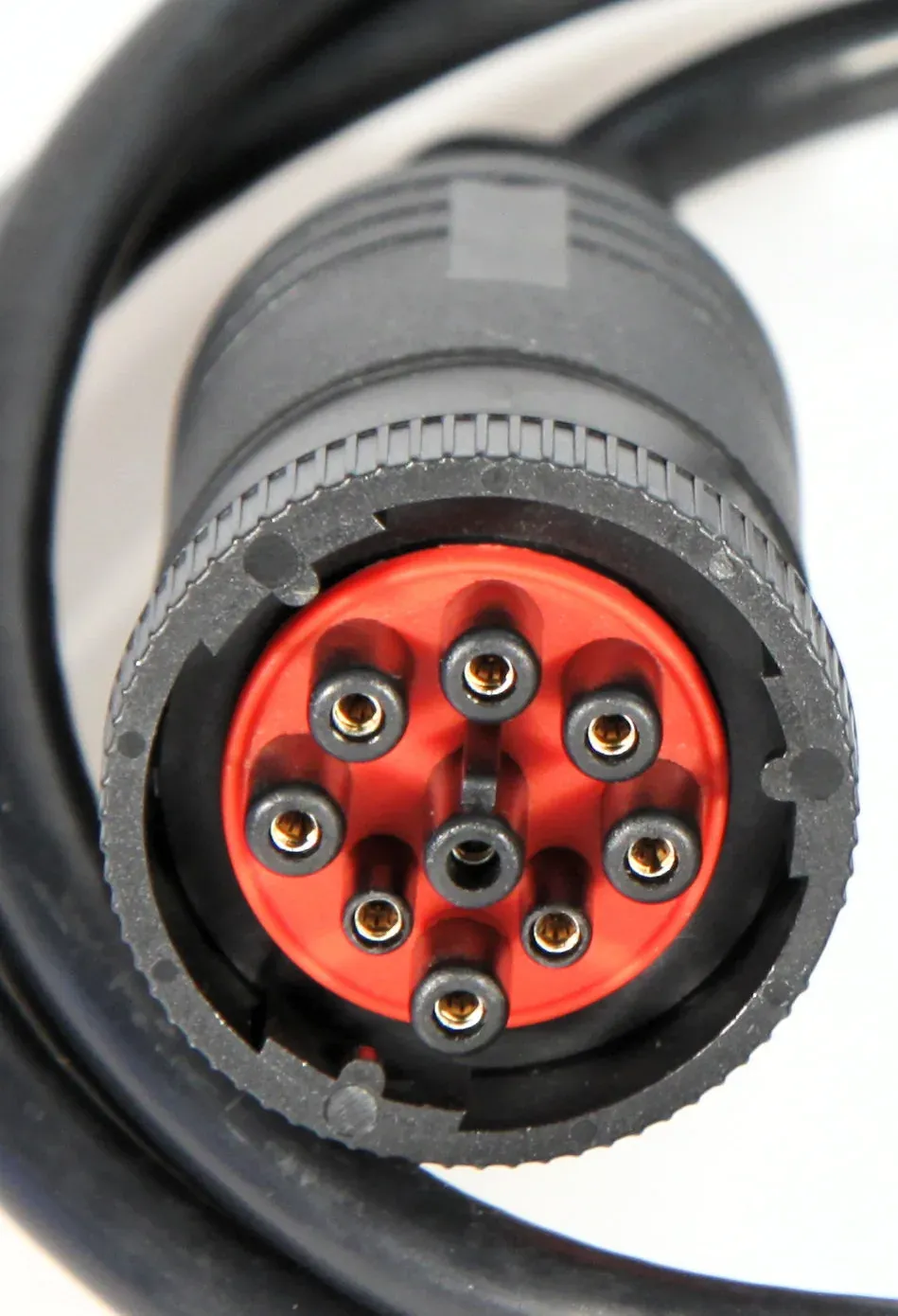
PBT’s first market was exactly the one it was built for: electrical connectors, switches, terminal blocks, and the insulating housings around anything that carries current, where its combination of fast molding, dimensional stability, and electrical resistance let manufacturers turn out complex, tightly toleranced parts at high volume. Automotive electronics followed close behind, and PBT is still the resin behind a great many sensor housings, ignition components, and the connectors that link a modern car’s wiring harness together. Away from wiring altogether, PBT fiber shows up in keyboard keycaps prized for resisting the shine that builds up on cheaper plastic over years of typing, and in toothbrush bristles and false eyelashes, applications with nothing to do with electricity at all but that depend on the same crystallinity that gives the material its stiffness and wear resistance.
Plates III & IV

.jpg)

One further application deserves its own mention: General Electric later blended PBT with polycarbonate to create Xenoy, a material that combined PBT’s toughness and chemical resistance with polycarbonate’s impact strength even in cold weather. The result was flexible enough to survive a low-speed impact and spring back into shape, which is exactly why the 1984 Ford Taurus and Mercury Sable used it for a genuinely new kind of part: an all-plastic bumper system, front and rear, on volume-production cars.
values with [n] cite the numbered references·estimates are flagged·“not yet available” and “N/A” are honest states, not gaps
fetching the model…
Polybutylene Terephthalate repeat unit
- Abbreviation
- PBT
- Type
- polymer family (hub)
- CAS number
- 24968-12-5
- Resin ID code
- none assigned
- Formula
- (C12H12O4)n[-O-(CH2)4-O-CO-C6H4-CO-]n
- Repeat unit (BigSMILES)
{[][>]OCCCCOC(=O)c1ccc(cc1)C(=O)[<][]}- IUPAC name
- —
- Synonyms
- Novaduran; Celanex; Crastin; Ultradur
- Also known as
- NovaduranCelanexUltradur
- Chemical family
- polyester
- Backbone class
- heterochain
- Polymerization mechanism
- step-growth-condensation
- Constitutional monomer
- 1,4-ButanediolTerephthalic acid
- Polymer class
- thermoplastic
- Year of origin
- 1968
- Era
- The Engineering Polymers Era (1961-1979)
- Key figures
- Celanese Corporation · General Electric
- Events referenced
- Prague Spring and the Warsaw Pact invasion of Czechoslovakia (1968) · Bob Beamon's long jump world record at the 1968 Mexico City Olympics
- Polymerization type
- step-growth condensation
- Common monomers (feedstocks)
- 1,4-butanediol, terephthalic acid
- Catalysts
- not yet available
Developed by Imperial Chemical Industries (ICI); shares terephthalic acid chemistry with PET but uses a 4-carbon diol rather than ethylene glycol. Compared to PET, PBT crystallizes faster, has slightly lower strength/rigidity, but superior impact resistance.
- Tacticity
- not yet available
- Crystal structure
- Triclinic, two allomorphs (α: a≈0.486, b≈0.596, c≈1.165 nm; β: a≈0.472, b≈0.579, c≈1.300 nm), 1 chain per unit cell; nearly planar chain conformation.
- Typical crystallinity
- 35.25 (27.8–42.7) %[2]
Molecular weight
- Number average (Mn)
- 19850 (5600–34100) g/mol[2]
- Mass average (Mw)
- 75500 (26000–125000) g/mol[2]Mark's Polymer Data Handbook reports a narrower 30,000–80,000 g/mol range by light scattering.
- Dispersity (Mw/Mn)
- 2.59 (2–3.18)[2]
| Solvent | T | M range | K | a |
|---|---|---|---|---|
| unspecified (solution viscometry)[3] | 303 K | — | 0.0117 mL/g | 0.87 |
Faster crystallization rate than PET makes PBT better suited to short injection-molding cycle times.
- Density
- 1.29 (1.24–1.34) g/cm³[2]At 20°C, unfilled resin. Mark's Polymer Data Handbook reports measured densities of 1.33–1.34 g/cm³.
- Melt flow index
- 34 (18–50) g/10min[2]250°C/2.16 kg
- Refractive index
- not yet available
- Transmittance
- not yet available
- Haze
- not yet available
- Gloss
- not yet available
- Water absorption
- 0.3 (0.1–0.5) %[2]Equilibrium, immersion in water at 23°C; equilibrium at 23°C/50% RH: 0.2–0.25%.
- Dielectric constant
- 3.25 (3.2–3.3)[2]1 MHz
- Dielectric strength
- 77.5 (15–140) kV/mm[2]Film, d = 0.6–0.8 mm. Mark's Polymer Data Handbook reports 15.8 kV/mm (ASTM D149).
- Electrical conductivity
- 2.5 × 10⁻¹⁵–1 × 10⁻¹³ S/m[2]Reciprocal of reported volume resistivity range (~1×10¹³–4×10¹⁴ Ω·m).
- Glass transition (Tg)
- 46 (31–60) °C[2]DSC value 46°C; wider reported range 31–60°C. Mark's Polymer Data Handbook reports 30–60°C (ASTM D3418).
- Melting temperature (Tm)
- 215.15 (208.3–222) °C[2]Mark's Polymer Data Handbook reports 222–232°C (ASTM D3418).
- Crystallization (Tc)
- not yet available
- Heat deflection (HDT)
- 57.5 (50–65) °C[2]1.8 MPa, unfilled resin; at 0.45 MPa: 130–165°C. Replaces an earlier unsourced figure that conflated the two test loads.
- Decomposition onset
- 288 °C[2]
- Thermal conductivity
- not yet available
- Tensile modulus
- 2300 (2000–2600) MPa[2]Mark's Polymer Data Handbook reports 2,600 MPa (ASTM D638).
- Yield strength
- 53 (47–59) MPa[2]Tensile stress at yield.
- Tensile strength at break
- 53.5 (50–57) MPa[2]Unqualified 'tensile strength' row, distinct from reported yield stress (47–59 MPa). Mark reports 55 MPa breaking strength.
- Elongation at break
- 167.5 (35–300) %[2]
- Impact strength (Izod)
- 53 J/m[2]23°C, notched. Mark's Polymer Data Handbook reports the same value (ASTM D256-86).
- Impact strength (Charpy)
- 6.5 (4–9) kJ/m²[2]23°C, notched
- Hardness
- 72 Rockwell M[2]
- Flexural modulus
- 2200 (2000–2400) MPa[2]Mark's Polymer Data Handbook reports 2,300 MPa (3-point flexure, ASTM D790).
- Poisson's ratio
- not yet available
- Coefficient of friction
- 0.45 (0.3–0.6)[2]
- Solvent: dilute acids
- good[2]
- Solvent: concentrated acids
- poor[2]
- Solvent: alcohols
- good[2]
- Solvent: alkalis
- poor[2]
- Solvent: aliphatic hydrocarbons
- good[2]
- Solvent: aromatic hydrocarbons
- good[2]
- Solvent: esters
- good to fair[2]
- Solvent: greases & oils
- very good[2]
- Solvent: halogenated hydrocarbons
- poor[2]
- Solvent: ketones
- poor[2]
- Weathering / UV
- Good outdoor weathering resistance: 3-year exposure in Central Europe caused only slight color change; 90% tensile strength retained after 3,600 h in Xenotest accelerated weathering.[2]
- Hydrolysis resistance
- Sensitive to hot water above 60°C[1]
- Flammability (UL94)
- HB[2]Unfilled resin; V-0 achievable with flame-retardant grades.
- Limiting oxygen index
- 22.1 (22–22.2) %[2]
- Solubility parameter (δ)
- not yet available
Gas permeability
not yet available
Polymer-solvent interaction parameter (χ)
not yet available
- Electrical & electronicselectrical connector/housing insulation
- Automotiveplug connectors
- Consumer goodsshowerheads · irons · keyboard keycaps · toothbrush fibers · false eyelashes
- Recyclable
- Yes
- Biodegradable
- No
- Degradation pathway
- not yet available
- LD50 (oral, rat)
- not yet available
- NFPA health
- 1[2]HMIS rating, 0–4 scale
- NFPA flammability
- 1[2]HMIS rating, 0–4 scale
- NFPA reactivity
- 0[2]HMIS rating, 0–4 scale
- Carcinogenic classification
- not listed by ACGIH, NIOSH, NTP[2]
TLV (ACGIH): 3 mg/m³ (respirable), 10 mg/m³ (total). OSHA exposure limit: 5 mg/m³ (respirable), 15 mg/m³ (total).
- [1]Polybutylene terephthalateWikipediaAccessed 2026-07-14https://en.wikipedia.org/wiki/Polybutylene_terephthalate[wiki-pbt]
- [2]Handbook of PolymersChemTec Publishinghttps://www.worldcat.org/isbn/9781895198928[handbook-wypych-2016]
- [3]Polymer Data HandbookOxford University Presshttps://search.worldcat.org/search?q=Polymer+Data+Handbook+Mark+1999[handbook-mark-1999]
Illustrations
- Plate IPrague, August 1968: a burning tank during the Warsaw Pact invasion that ended the Prague Spring reforms within days of the Soviet response.Wikimedia Commons
- Plate IIBob Beamon in flight at the 1968 Mexico City Olympics, seconds before landing a world record that would stand until 1991.Wikimedia Commons
- Plate IIIPBT keycaps on a mechanical keyboard, valued for keeping their matte finish and printed legends far longer than cheaper keycap plastics.Wikimedia Commons
- Plate IVA heavy-duty vehicle wiring connector, the class of rigid, weatherproof, precisely molded part that engineering polyesters like PBT were built to fill.Wikimedia Commons