The Engineering Polymers Era (1961-1979)
Aramid Fibers (Kevlar)
Bulletproof
In 1971, DuPont finally brought to market the fiber its research labs had been chasing for seven years: a lightweight substitute for the steel cord woven into a car tire. The timing was almost perfect and almost useless in the same breath. That same year, General Motors’ chairman, James Roche, told the trade press flatly that Detroit had no plans to put radial tires on its new cars any time soon, and when American manufacturers did convert to radials over the next few years, they built them, overwhelmingly, around steel belts, not the new aramid fiber DuPont had spent a decade developing to replace it. The market the fiber was invented for never really opened.
What opened instead, that January, was something nobody in DuPont’s fiber labs had been working toward: the federal government set up a Law Enforcement Standards Laboratory to write the country’s first standards for police protective equipment, answering a decade of rising officer deaths and a war that had just taught an entire generation of American soldiers what heavy body armor felt like to wear every day.
Plate I
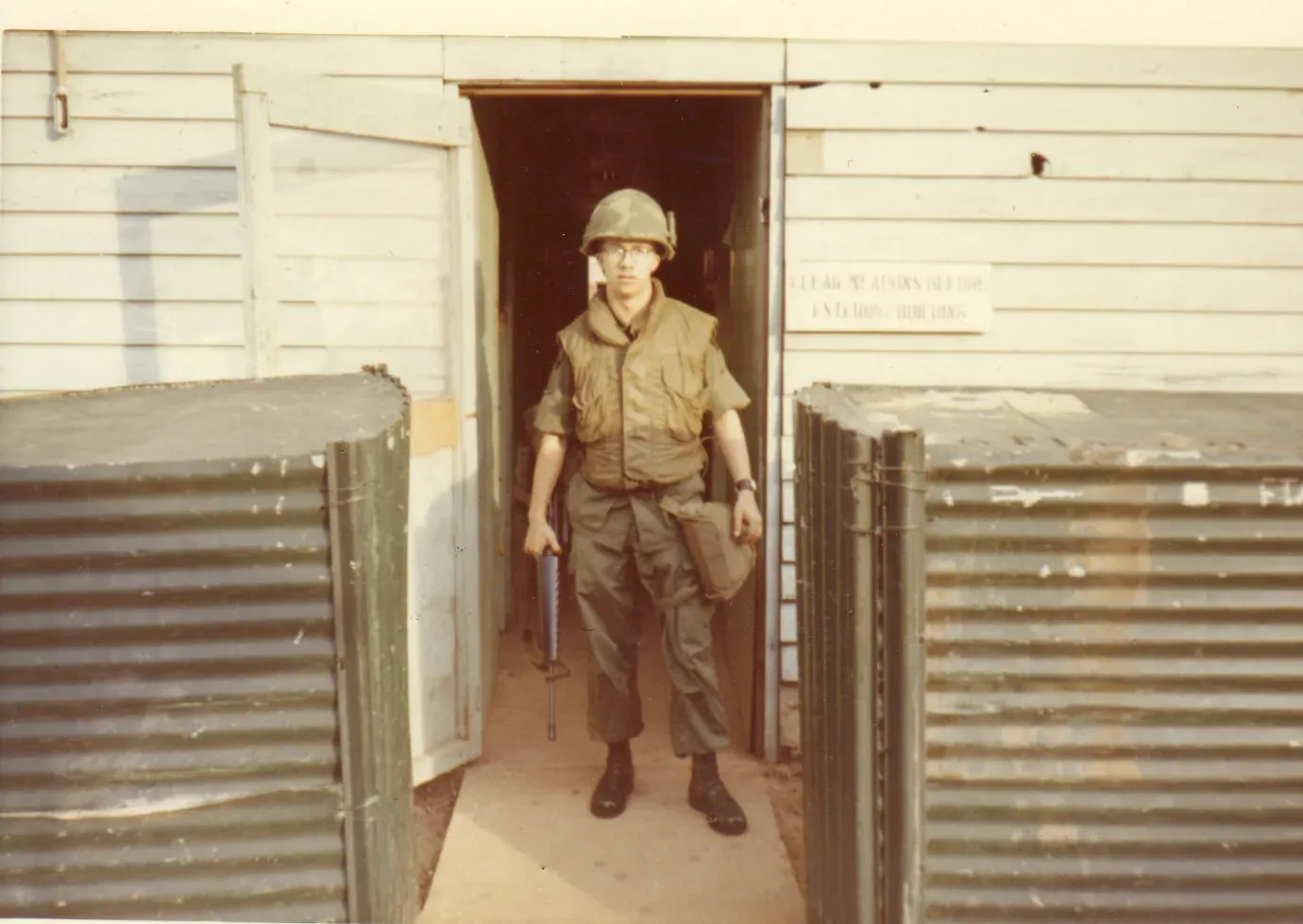

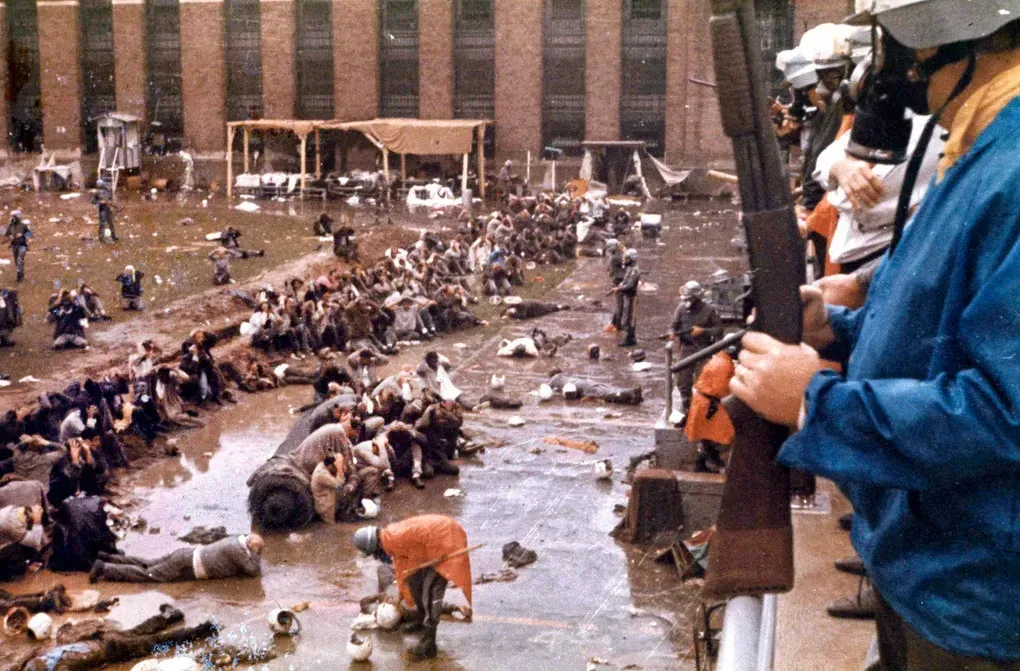
An Army researcher at the Land Warfare Laboratory in Aberdeen, Maryland, Nicholas Montanarelli, had already heard about a strange new DuPont fiber (stronger than steel, lighter than nylon) and passed the tip along to Lester Shubin, the new Laboratory’s technology assessment chief. Shubin asked DuPont for a sample. That September, while his request was still working its way through the company, New York state troopers stormed Attica Correctional Facility to end a four-day prison uprising, and forty-three men (guards and prisoners alike) were dead by the time it was over. It was the deadliest single day for American law enforcement and corrections staff in a generation, and it made the case for soft body armor without anyone having to argue it.
Plate II

None of that explains where the fiber actually came from. For that, the story goes back seven years, to a DuPont chemist this account has not mentioned yet, working on a problem that had nothing to do with soldiers or police.
The Chemist Who Wouldn’t Throw It Out
Stephanie Kwolek had joined DuPont in 1946 as a stopgap (a chemistry graduate planning to save money for medical school) and stayed on instead, pulled into the company’s polymer research at its Buffalo plant and then, from 1950, at its Pioneering Research Laboratory in Wilmington, Delaware. By 1964 she had eighteen years there. That year, anticipating a gasoline shortage, DuPont’s fiber division asked her group to find something light enough and strong enough to replace the steel cord belted into a tire, and Kwolek was set to exploring a class of aromatic polyamides nobody had ever spun into a useful fiber: built from rigid, ring-shaped monomers instead of the flexible ones behind ordinary nylon.
In 1965, one of the intermediate polymers she made behaved strangely. A polymer solution concentrated enough to spin is normally thick and glassy-clear; this one was thin, watery and cloudy, opalescent like buttermilk. Every instinct in a fiber lab reads that as a failed batch: undissolved polymer, or water where there shouldn’t be any. Kwolek filtered it and re-ran the viscosity measurements to be certain it wasn’t simply degraded, and it wasn’t. She wanted it spun anyway. The technician who ran the spinneret, Charles Smullen, was reluctant: a cloudy solution was exactly the kind of thing that clogged a spinneret’s tiny holes and cost a day’s production. She persuaded him to try a small batch regardless.
Plate III

The fiber that came off the spinneret did not behave like anything DuPont had made before. Nylon and polyester fibers stretch a long way before they break; this one barely stretched at all, and instead of yielding limply the way a tired fiber does, it resisted almost to the point of failure; it was stiffer and stronger than any organic fiber the lab had tested. What Kwolek had actually produced, though she did not have the vocabulary for it that afternoon, was a liquid-crystalline polymer solution: the rigid, rod-shaped chains of poly-para-phenylene terephthalamide were lining up with each other in the liquid itself, before the fiber was even spun, so that spinning did not have to fight to orient them the way it does with an ordinary flexible-chain polymer. That alignment carried straight through into the solid fiber, and it is the reason for nearly everything Kevlar can do.
Plate IV

A Rigid, Rod-Shaped Polymer
The finished polymer’s backbone alternates two aromatic building blocks (a para-phenylenediamine ring and a terephthaloyl ring) joined by the same kind of amide bond nylon uses, but with rigid benzene rings standing in for nylon’s flexible methylene chain. That single substitution changes everything downstream. A nylon chain can coil; this one cannot, because there is no bond in its backbone free to rotate without dragging a whole ring around with it, so the molecule holds itself out essentially straight, like a rod. Once aligned, neighboring rods lock together through hydrogen bonds between their amide groups, forming sheets that stack the way pages sit in a book. It is that stacked, hydrogen-bonded, fully extended arrangement, not any single exceptionally strong bond, that gives the fiber its strength: a load applied to one chain is shared, through those hydrogen bonds, across millions of neighboring chains running the same direction.
Straight, Stiff, and Strong
None of the fiber’s behavior is surprising once that structure is understood. It is lighter than it looks: denser than water, but a fraction of the weight of the steel cord it was invented to displace, which is the whole reason tire engineers and, later, armor designers cared about it at all. Stretch it and it resists almost immediately; unlike nylon, which yields and elongates a long way before it snaps, aramid fiber barely gives before it breaks, trading ductility for stiffness and, weight for weight, a tensile strength well beyond ordinary steel wire. Heat does not soften it the way it would an ordinary thermoplastic fiber: there is no melting point to reach, only a decomposition temperature far above where nylon or polyester would already have failed, and it resists catching fire in the first place rather than feeding a flame once lit. Its most surprising weakness is sunlight: sustained ultraviolet exposure measurably weakens the fiber, which is why aramid rope, cable and armor are almost always jacketed rather than left bare. And it draws in more moisture from humid air than most synthetic fibers do, a trait manufacturers plan around rather than eliminate. Against organic solvents, oils, and dilute acids it is close to inert; only strong, concentrated acids attack it seriously.
From Laboratory to Production Line
By the time DuPont was ready to sell the fiber in 1971, it had a name (Kevlar) and a manufacturing process built around the very trick Kwolek had stumbled onto. Para-phenylenediamine and terephthaloyl chloride react in a polar solvent such as N-methylpyrrolidone, kept cold, typically between about -10°C and 4°C, to control a fast and strongly exothermic condensation. The resulting polymer is dissolved to a concentration high enough that its rigid chains spontaneously form the same liquid-crystalline phase Kwolek had first seen in 1965, and that solution is forced through a spinneret, across a short air gap, and into a coagulation bath. This is a process called dry-jet wet spinning, which lets the already-aligned chains lock in place as the fiber solidifies rather than being scrambled the way an ordinary wet-spun fiber’s molecules are. The word “aramid,” covering this whole family of fiber, was coined the following year, in 1972, and became an official U.S. Federal Trade Commission fiber category in 1974.
Everywhere Except the Tire
Plate V
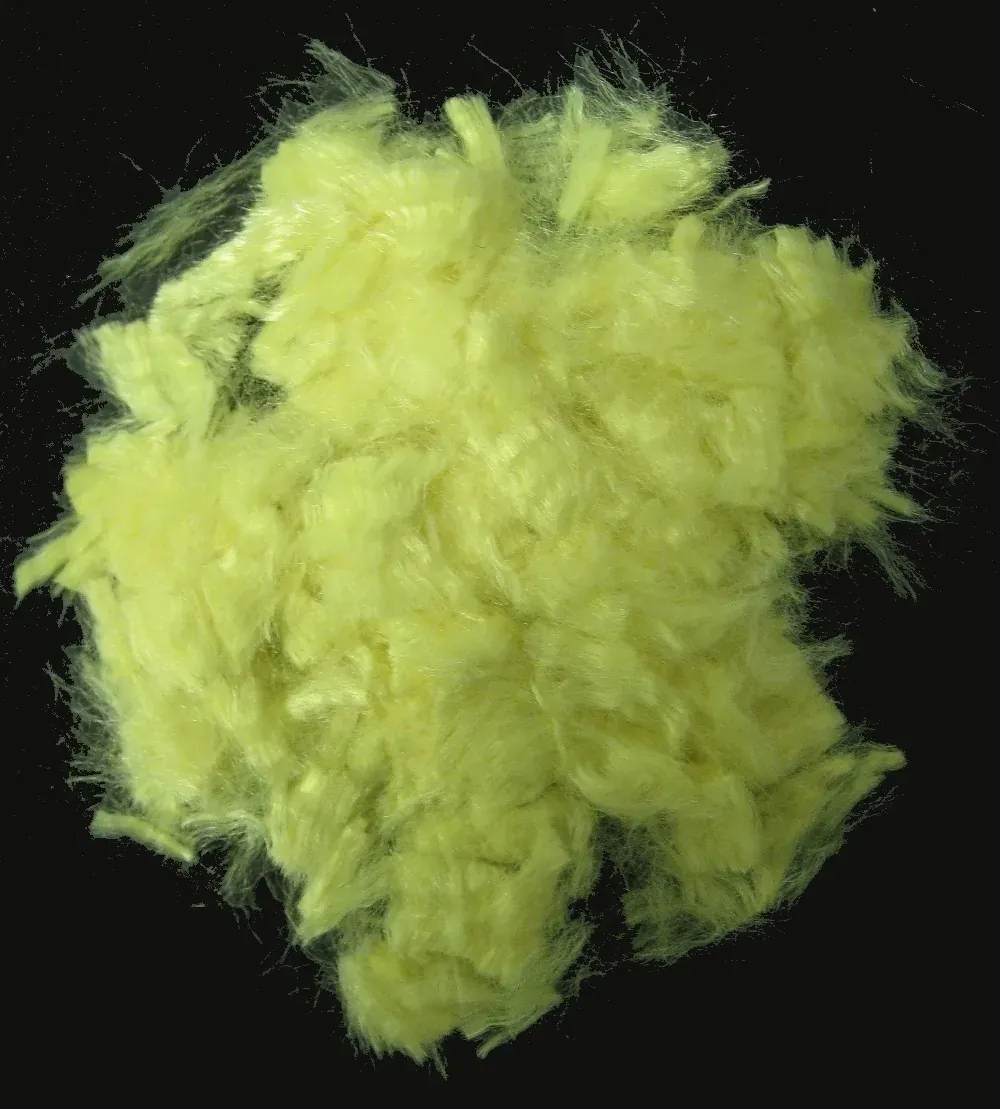

Aramid fiber’s first honest commercial home was industrial rather than heroic: reinforcement in tires, conveyor belts and hoses, and the ropes and cables used in marine and offshore work, all trading on the same strength-for-weight advantage that first drew DuPont’s tire engineers to it. Body armor followed once Shubin’s federal program had tested it, and it is the application people actually associate with the name today: police vests, and later military and vehicle armor, built from many layers of woven aramid fabric that spreads an impact’s energy across the whole weave instead of letting one thread absorb it alone. It also became a straightforward replacement for asbestos in brake linings and clutch facings once asbestos was regulated out of the market, and it turns up throughout aerospace and composite structures wherever a strong, light reinforcing fiber is worth its cost.
The fiber the tire industry never really wanted turned out to be worth far more than the tire cord it was built to be. Kwolek’s name is on the original patent, filed in June 1966, but she had signed her rights over to DuPont as a condition of employment and never drew a royalty from what it became. Asked about it later, she was characteristically unromantic: the discovery, in her telling, was mostly a refusal to throw away a result that looked wrong, and the nerve to ask someone else to trust her enough to spin it.
values with [n] cite the numbered references·estimates are flagged·“not yet available” and “N/A” are honest states, not gaps
fetching the model…
Aramid Fibers repeat unit
- Abbreviation
- Kevlar
- Type
- polymer family (hub)
- CAS number
- None (heterogeneous class or not assigned)
- Resin ID code
- none assigned
- Formula
- (C14H10N2O2)n[-NH-C6H4-NH-CO-C6H4-CO-]nThe para-aramid shown is Kevlar. Meta-aramids such as Nomex use the same chemistry with meta-substituted rings, which kinks the chain and gives flame resistance rather than tensile strength.
- Repeat unit (BigSMILES)
{[][>]Nc1ccc(cc1)NC(=O)c1ccc(cc1)C(=O)[<][]}- IUPAC name
- —
- Synonyms
- aramid; para-aramid
- Also known as
- KevlarTwaronaramid
- Chemical family
- polyamide
- Backbone class
- heterochain
- Polymerization mechanism
- step-growth-condensation
- Constitutional monomer
- p-PhenylenediamineTerephthaloyl chloride
- Polymer class
- thermoplastic
- Year of origin
- 1971
- Era
- The Engineering Polymers Era (1961-1979)
- Key figures
- Stephanie Kwolek · Charles Smullen
- Events referenced
- Attica prison uprising and its suppression (September 1971) · U.S. Law Enforcement Standards Laboratory established (January 1971) · Vietnam War: American soldiers issued nylon-and-fiberglass flak jackets
- Polymerization type
- step-growth condensation (solution polycondensation, liquid-crystalline spinning dope)
- Common monomers (feedstocks)
- p-phenylenediamine, terephthaloyl chloride
- Catalysts
- not yet available
Stephanie Kwolek developed the first para-aramid fiber at DuPont, commercialized as Kevlar in 1973; the term 'aramid' was introduced in 1972 and formally recognized as a generic fiber category by the US Federal Trade Commission in 1974. Akzo introduced the competing fiber Twaron in 1978. World para-aramid production was estimated at 41,000 tonnes/year in 2002, growing 5–10% annually.
- Tacticity
- not yet available
- Crystal structure
- Para-aramid: linear, rod-like chains (amide linkages at para/1,4 ring positions) pack into a highly extended, hydrogen-bonded crystalline structure, giving exceptional axial strength and stiffness. Meta-aramid (1,3 linkages) is less linear and used more for heat/flame resistance than pure tensile strength. PPTA unit cell: monoclinic (pseudo-orthorhombic), a:b:c = 0.78:0.519:1.29 nm, 2 chains/cell (Wypych, Mark).
- Typical crystallinity
- 72.2–91 %[2]PPTA, highly oriented/crystalline via liquid-crystalline spinning
Molecular weight
- Number average (Mn)
- 10300–19800 g/mol[2]PPTA
- Mass average (Mw)
- 31400–48350 g/mol[2]PPTA
- Dispersity (Mw/Mn)
- 2.4–5.3[2]PPTA
Mark-Houwink constants
not yet available
- Density
- 1.44–1.48 g/cm³[2]PPTA (Kevlar); as-spun 1.44–1.47, up to 1.48 fully crystalline
- Melt flow index
- Not applicable
- Refractive index
- 1.61–2.12[2]highly birefringent fiber: n⊥≈2.05–2.12 (perpendicular to fiber axis), n∥≈1.59–1.65 (parallel), PPTA
- Transmittance
- not yet available
- Haze
- not yet available
- Gloss
- not yet available
- Water absorption
- 3.5–7 %[2]PPTA yarn, as shipped; 3.5–4.5% regained from dried state
- Dielectric constant
- not yet available
- Dielectric strength
- not yet available
- Electrical conductivity
- not yet available
- Glass transition (Tg)
- 425 °C[2]PPTA; Wypych and Mark agree exactly (425 °C / 698 K)
- Melting temperature (Tm)
- Not applicablePPTA's melting point lies beyond its decomposition temperature (Mark's dedicated Kevlar chapter); Wypych's entry additionally reports a DSC endotherm at 551–554 °C.
- Crystallization (Tc)
- Not applicable
- Heat deflection (HDT)
- Not applicable
- Decomposition onset
- 427–482 °C[2]PPTA, in air; Wypych and Mark agree closely (427–482 °C / 700–755 K)
- Thermal conductivity
- 5.03 W/(m·K)[2]PPTA, temperature-dependent (decays from this value over ~7–290 K); Mark reports higher figures via phonon propagation (10 W/(m·K)) and axial conductivity 20–30 W/(m·K) at 125–250 K, measurement-method dependent
- Tensile modulus
- 70500–138000 MPa[2]PPTA yarns; specific grades (Mark): Kevlar 29 83,000 MPa, Kevlar 49 124,000 MPa, Kevlar 149 161,000 MPa; fully crystalline theoretical maximum 200,000 MPa
- Yield strength
- Not applicableHigh-performance fiber; behavior is dominated by tensile strength at break rather than a distinct yield point.
- Tensile strength at break
- 2920–3600 MPa[2]PPTA yarns; Mark reports 2,000–3,000 MPa for LC-solution-spun fiber and grade-specific fracture stress of 1,700–2,500 MPa (Kevlar 149/29/49)
- Elongation at break
- 2.4–3.6 %[2]PPTA; grade-dependent, from Kevlar 149 (highest modulus) as low as 1.0% to Kevlar 29 up to 4.0% (Mark)
- Impact strength (Izod)
- not yet available
- Impact strength (Charpy)
- not yet available
- Hardness
- Not applicable
- Flexural modulus
- not yet available
- Poisson's ratio
- 0.63[2]PPTA (Wypych); Mark reports a lower value, 0.36, for Kevlar fiber
- Coefficient of friction
- not yet available
- Solvent: dilute acids
- good[2]PPTA
- Solvent: concentrated acids
- poor[2]PPTA
- Solvent: alcohols
- resistant[2]PPTA
- Solvent: alkalis
- good to fair[2]PPTA; not clearly split into dilute/concentrated in source
- Solvent: aliphatic hydrocarbons
- resistant[2]PPTA
- Solvent: aromatic hydrocarbons
- resistant[2]PPTA
- Solvent: esters
- resistant[2]PPTA
- Weathering / UV
- 50% tensile strength loss after 900 h Fadeometer (accelerated UV) exposure; most photosensitive in the 300–450 nm range[2]PPTA
- Hydrolysis resistance
- not yet available
- Flammability (UL94)
- self-extinguishing; inherently flame-resistant[3]PPTA; no specific UL94 class found in either handbook
- Limiting oxygen index
- 28–29 %[2]PPTA
- Solubility parameter (δ)
- not yet available
Gas permeability
not yet available
Polymer-solvent interaction parameter (χ)
not yet available
- Processing methods
- dry-jet wet spinning (liquid-crystalline solution spinning)
- Drying required
- not yet determined
- Processing temperature
- Not applicable
- Shrinkage rate
- 0.1 %[2]PPTA, reported as less than 0.1%
- Protectionbody armor · protective apparel
- Compositescomposite reinforcement
- Industrialmarine cordage/ropes · cables · tire reinforcement · brake-lining asbestos replacement
- Recyclable
- No
- Biodegradable
- No
- Degradation pathway
- not yet available
- LD50 (oral, rat)
- 7500 mg/kg[2]PPTA
- NFPA health
- 0[2]PPTA
- NFPA flammability
- 1[2]PPTA
- NFPA reactivity
- 0[2]PPTA
- Carcinogenic classification
- not listed by ACGIH, NIOSH, NTP[2]PPTA
No known mutagenic effect; animal testing showed effects on embryo-fetal development at levels below those causing maternal toxicity. Not a skin irritant (rabbit).
- [1]AramidWikipediaAccessed 2026-07-14https://en.wikipedia.org/wiki/Aramid[wiki-aramid]
- [2]Handbook of PolymersChemTec Publishinghttps://www.worldcat.org/isbn/9781895198928[handbook-wypych-2016]
- [3]Polymer Data HandbookOxford University Presshttps://search.worldcat.org/search?q=Polymer+Data+Handbook+Mark+1999[handbook-mark-1999]
Illustrations
- Plate IA nylon-and-fiberglass flak jacket, standard body armor for American soldiers in Vietnam in 1971. It was heavy and hot, and exactly the kind of protection an Army researcher was about to describe to a federal body-armor program.Wikimedia Commons
- Plate IINew York state police retake Attica Correctional Facility in September 1971. That was the same year a federal researcher first requested a sample of DuPont's new fiber to test in a soft vest.Wikimedia Commons
- Plate IIIStephanie Kwolek, photographed in 1986, the year before she retired from DuPont after four decades in its fiber research laboratories.Wikimedia Commons
- Plate IVOne of the DuPont research campuses in Wilmington, Delaware, where Kwolek's Pioneering Research Laboratory group worked through the 1960s.Wikimedia Commons
- Plate VAramid staple fiber in its natural golden-yellow color, with no dye involved. It is the same fiber that ends up woven into a vest or braided into a marine rope.Wikimedia Commons