The Birth of Synthetic Polymers (1907-1938): The Bakelite Revolution
Polyisoprene (IR)
Nature's Bouncing Wonder
In June 1916, the Russian army under General Aleksei Brusilov broke through the Austro-Hungarian lines in Galicia in the single largest offensive Imperial Russia would launch in the entire war, and it was a victory bought at a cost, in men and materiel, that the empire’s strained economy could barely sustain. Russia had no rubber-producing colony of its own, and the same isolation the war had forced on its economy generally was squeezing its rubber supply in particular: imports that once came easily through the Baltic now had to fight past a war zone to arrive at all.
Plate I
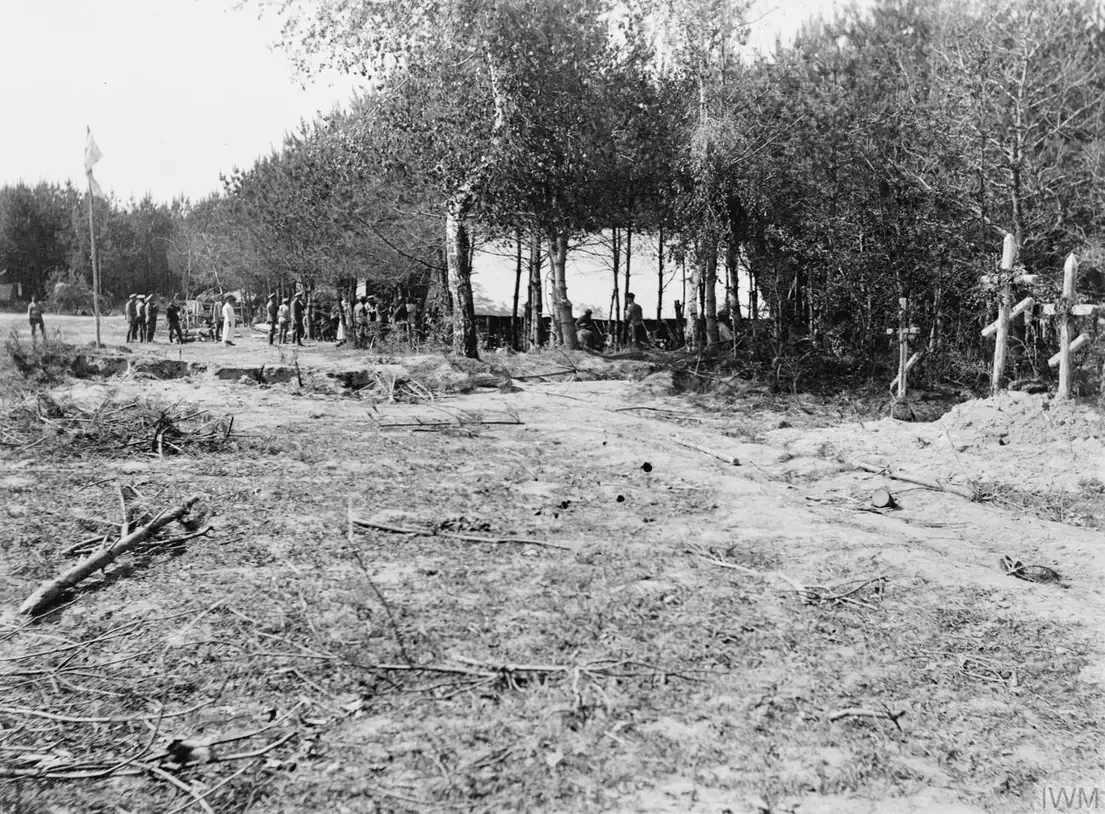

In Petrograd that same year, a chemist at Bogatyr (Russia’s largest rubber manufacturer) was working on exactly that problem, and from an unusually direct angle: rather than looking for any elastic substitute, Ivan Ostromislensky set out to make the very molecule natural rubber is built from. The year before, he had synthesised isoprene by heating turpentine until it broke apart, then polymerised it using light. In November 1916 he filed a Petrograd patent for curing the resulting rubber with peroxides instead of sulfur, explicitly noting that the method worked on synthetic rubbers as well as natural ones. It was, on paper, a remarkable idea: the same monomer nature uses, made in a laboratory instead of a tree.
A Molecule Without Its Architecture
It did not actually work the way that description suggests, and the reason why is the real subject of this page. Polymerising isoprene without any control over how each molecule attaches to the next produces a scrambled chain: a disordered mix of orientations with no consistent pattern from one link to the next. Natural rubber’s own chains are almost entirely uniform, built by an enzyme that adds every unit the same way; Ostromislensky’s rubber, and every other synthetic isoprene rubber made before the middle of the twentieth century, was a structural mess by comparison. It was built from the same monomer as the natural material and shared almost none of its performance. Matching the molecule, it turned out, had been the easy part.
Plates II & III


The Mid-Century Fix
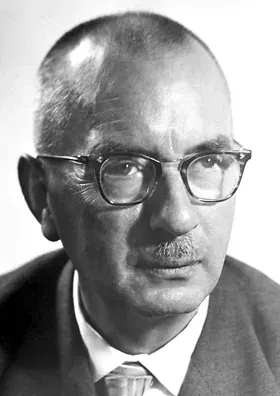
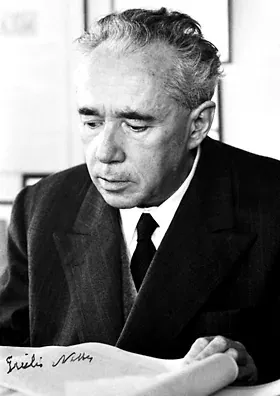
What finally closed the gap was not a better isoprene, but a better catalyst. Karl Ziegler’s 1953 discovery that certain metal-organic compounds could control the way a growing polymer chain picks up each new monomer, extended the following year by Giulio Natta into a chemistry capable of building consistently ordered, stereoregular chains, gave chemists for the first time a way to force isoprene to add the way the rubber tree’s own enzyme does. It took most of a decade to turn that insight into a commercial product: Shell Chemical announced the first stereoregular synthetic polyisoprene in 1960, using a lithium-based catalyst that reached the same geometric configuration on nine molecules in ten, but the result was not quite crystalline enough to fully replace natural rubber. Goodyear closed the remaining gap in 1962, using a Ziegler-Natta coordination catalyst to push that figure high enough that the synthetic and the natural material became, for practical purposes, chemically indistinguishable. Ziegler and Natta shared the 1963 Nobel Prize in Chemistry for the chemistry that made both achievements possible. That work had nothing to do with rubber when it began.
What the Material Actually Does
Synthetic cis-polyisoprene floats, just as the natural material does, and it stays flexible at temperatures far below anything most climates ever produce. Stretched, its chains organise themselves into small crystalline regions in the same way natural rubber’s do, which is why a good synthetic-IR compound reinforces itself under load rather than simply thinning toward failure; left unstretched, only a modest share of the material holds any such order at all. It can be drawn out several times its resting length and returns to something close to its original shape afterward, and it takes real force to tear it. Chemically, though, it offers little resistance to the things a hydrocarbon rubber is always weak against: oils, greases, aromatic and chlorinated solvents all degrade or dissolve it, while alkalis and ketones are tolerated only moderately well.
Plate IV

Manufacturing Magic
Two catalyst families divide commercial production today, and they do not give quite the same material. Anionic polymerisation with n-butyllithium, the route Shell commercialised first, runs at ordinary pressures in a hydrocarbon solvent and yields the lower end of the practical cis range. Coordination catalysts built on titanium or vanadium halides, the Ziegler-Natta route Goodyear brought to market, push cis content higher still and give the closest synthetic match to the natural polymer’s own microstructure. Both processes start from isoprene refined from petroleum rather than turpentine, polymerise it in solution under carefully controlled temperature, and finish by stripping the solvent and coagulating the rubber into the bale or crumb form the industry ships.
Natural vs. Synthetic: A Tale of Two Isoprenes
Even a nearly perfect stereochemical match leaves the two materials rather different in practice. Natural rubber arrives from the tree carrying proteins, fatty acids and other non-rubber components that act as processing aids in their own right and are difficult to fully reproduce; synthetic polyisoprene arrives instead with a purity and batch-to-batch consistency the tree cannot offer, along with the ability to be tuned during production for a specific job. That trade-off decides where each one is chosen. Tires still lean on natural rubber for the heat-resistance advantage its non-rubber components provide, while medicine leans the other way: synthetic polyisoprene carries none of the proteins responsible for latex allergy, which is why it is the material behind a large share of the surgical gloves and condoms sold specifically as latex-free.
Looking Forward
Researchers are now working on bio-based routes to isoprene itself, engineering yeast and bacteria to ferment plant sugars directly into the monomer rather than refining it from petroleum. This is a return, in spirit, to the plant-derived turpentine Ostromislensky started from in 1915, this time with the stereochemical control his generation of chemists did not yet have.
values with [n] cite the numbered references·estimates are flagged·“not yet available” and “N/A” are honest states, not gaps
fetching the model…
Polyisoprene repeat unit
The trans-1,4 chain packs into a crystalline solid instead of an elastomer; this is the configuration of gutta-percha and balata.
- Abbreviation
- IR
- Type
- polymer family (hub)
- CAS number
- 9003-31-0
- Resin ID code
- none assigned
- Formula
- (C5H8)n[-CH2-C(CH3)=CH-CH2-]nThe cis-1,4 unit is shown, chemically the same repeat unit as natural rubber, but manufactured. cis-content varies by catalyst (90–92% via anionic Li-initiation vs. ~98.5% via Ziegler-Natta), which is why the synthetic route is treated as its own entry.
- Repeat unit (BigSMILES)
{[][$]C/C(C)=C\C[$][]}- IUPAC name
- —
- Synonyms
- synthetic natural rubber; IR rubber
- Also known as
- synthetic polyisoprene
- Chemical family
- diene-rubber
- Backbone class
- carbon-chain
- Polymerization mechanism
- coordinationanionic
- Constitutional monomer
- Isoprene
- Polymer class
- elastomer
- Year of origin
- 1916
- Era
- The Birth of Synthetic Polymers (1907-1938): The Bakelite Revolution
- Key figures
- Ivan Ostromislensky · Karl Ziegler · Giulio Natta
- Polymerization type
- coordination or anionic chain-growth
- Common monomers (feedstocks)
- isoprene
- Catalysts
- n-butyllithium (anionic, ~90-92% cis); Ziegler-Natta TiCl4/Al or VCl3/Al (coordination, up to ~98.5% cis)
Shell Chemical began the first commercially viable stereoregular cis-polyisoprene production in 1960 using alkyllithium catalysts (90–92% cis, insufficiently crystalline for some uses); Goodyear achieved 98.5% cis polyisoprene in 1962 using a Ziegler-Natta catalyst, reaching commercial viability as a true natural-rubber substitute. ~16 million tonnes produced globally in 2020 (figure covers isoprene rubber broadly).
- Tacticity
- cis-1,4 (90–98.5% depending on catalyst system), closely mimicking natural rubber's stereochemistry.
- Crystal structure
- Orthorhombic unit cell; a:b:c ≈ 1.241:0.881:0.843 nm, β ≈ 94.6°, 4 chains per unit cell.
- Typical crystallinity
- 30 %[2]
Molecular weight
- Number average (Mn)
- not yet available
- Mass average (Mw)
- 2000000 (1500000–2500000) g/mol[2]Synthetic cis-polyisoprene (IR); Wypych separately reports 40,000–1,240,000 g/mol for natural rubber.
- Dispersity (Mw/Mn)
- 1.03 (1.02–1.04)[2]
| Solvent | T | M range | K | a |
|---|---|---|---|---|
| hexane[3] | 293 K | 50–800 kg/mol | 0.0684 mL/g | 0.58 |
| toluene[3] | 303 K | 200–1,000 kg/mol | 0.00851 mL/g | 0.77 |
Higher-cis grades better replicate natural rubber's strain-induced crystallization and elasticity.
- Density
- 0.918 (0.906–0.93) g/cm³[2]20 °C, unvulcanized cis-1,4-polyisoprene (IR).
- Melt flow index
- Not applicable
- Refractive index
- 1.5196 (1.5191–1.52)[2]20 °C.
- Transmittance
- not yet available
- Haze
- not yet available
- Gloss
- not yet available
- Water absorption
- not yet available
- Dielectric constant
- 2.41 (2.37–2.45)[2]1 kHz, unvulcanized; also reported as 2.6 at 1 MHz.
- Dielectric strength
- 17 kV/mm[2]d = 0.6–0.8 mm, unvulcanized; vulcanized grade tests to 50 kV/mm.
- Electrical conductivity
- 1 × 10⁻¹³ S/m[2]Reciprocal of reported volume resistivity (1×10¹³ Ω·m).
- Glass transition (Tg)
- -71 (-72–-70) °C[2]Synthetic cis-polyisoprene; natural rubber reported separately at -75 °C.
- Melting temperature (Tm)
- 32.75 (30–35.5) °C[2]DSC.
- Crystallization (Tc)
- -25 °C[2]Temperature of most rapid crystallization.
- Heat deflection (HDT)
- Not applicable
- Decomposition onset
- not yet available
- Thermal conductivity
- 0.13 W/(m·K)[3]Unvulcanized.
- Tensile modulus
- 1.3 (1–2) MPa[3]Initial slope of stress-strain curve (Young's modulus), pure-gum vulcanizate, 60 s loading.
- Yield strength
- 21.6 MPa[2]Tensile stress at yield, vulcanized.
- Tensile strength at break
- 28 MPa[2]Vulcanized, unfilled gum stock.
- Elongation at break
- 450 (100–800) %[2]
- Impact strength (Izod)
- not yet available
- Impact strength (Charpy)
- not yet available
- Hardness
- 65 (30–100) Shore A[2]Vulcanized; unvulcanized gum ranges 30–90 Shore A. A vulcanized Shore D range of 30–45 is also reported.
- Flexural modulus
- not yet available
- Poisson's ratio
- 0.4999[3]Calculated from bulk/Young's moduli, pure-gum vulcanizate.
- Coefficient of friction
- not yet available
- Solvent: dilute acids
- poor[2]
- Solvent: concentrated acids
- poor[2]
- Solvent: alkalis
- fair[2]
- Solvent: aliphatic hydrocarbons
- poor[2]
- Solvent: aromatic hydrocarbons
- poor[2]
- Solvent: esters
- poor[2]
- Solvent: greases & oils
- poor[2]
- Solvent: halogenated hydrocarbons
- poor[2]
- Solvent: ketones
- fair[2]
- Weathering / UV
- not yet available
- Hydrolysis resistance
- Not applicable
- Flammability (UL94)
- not yet available
- Limiting oxygen index
- not yet available
- Solubility parameter (δ)
- 17.7 (17–18.4) MPa^0.5[2]
Gas permeability
- O₂
- 1.76 × 10⁻¹² cm³(STP)·cm/(cm²·s·Pa)[2]25 °C.
Polymer-solvent interaction parameter (χ)
- Processing methods
- compounding + vulcanization
- Drying required
- not yet determined
- Processing temperature
- not yet available
- Shrinkage rate
- not yet available
- Tires & automotivetires · belting · hoses
- Medical & consumerlatex products · footwear · condoms
- Recyclable
- No
- Biodegradable
- No
- Degradation pathway
- not yet available
Marketed partly as a consistent, allergen-controlled alternative to natural rubber latex.
- LD50 (oral, rat)
- not yet available
- NFPA health
- not yet available
- NFPA flammability
- not yet available
- NFPA reactivity
- not yet available
- Carcinogenic classification
- not listed by ACGIH, NIOSH, NTP[2]
- [1]PolyisopreneWikipediaAccessed 2026-07-14https://en.wikipedia.org/wiki/Polyisoprene[wiki-polyisoprene]
- [2]Handbook of PolymersChemTec Publishinghttps://www.worldcat.org/isbn/9781895198928[handbook-wypych-2016]
- [3]Polymer Data HandbookOxford University Presshttps://search.worldcat.org/search?q=Polymer+Data+Handbook+Mark+1999[handbook-mark-1999]
Illustrations
- Plate IA Red Cross camp on the Eastern Front during the Brusilov Offensive, summer 1916. The same war's blockade of Russian trade was pushing the country's own chemists toward a rubber substitute.Wikimedia Commons
- Plate IIKarl Ziegler, whose coordination catalysts, discovered in 1953, gave chemists a way to control how a growing polymer chain adds each new monomer.Wikimedia Commons
- Plate IIIGiulio Natta, who extended Ziegler's chemistry to stereoregular polymers the following year. This was the work that eventually made a true synthetic match for natural rubber possible.Wikimedia Commons
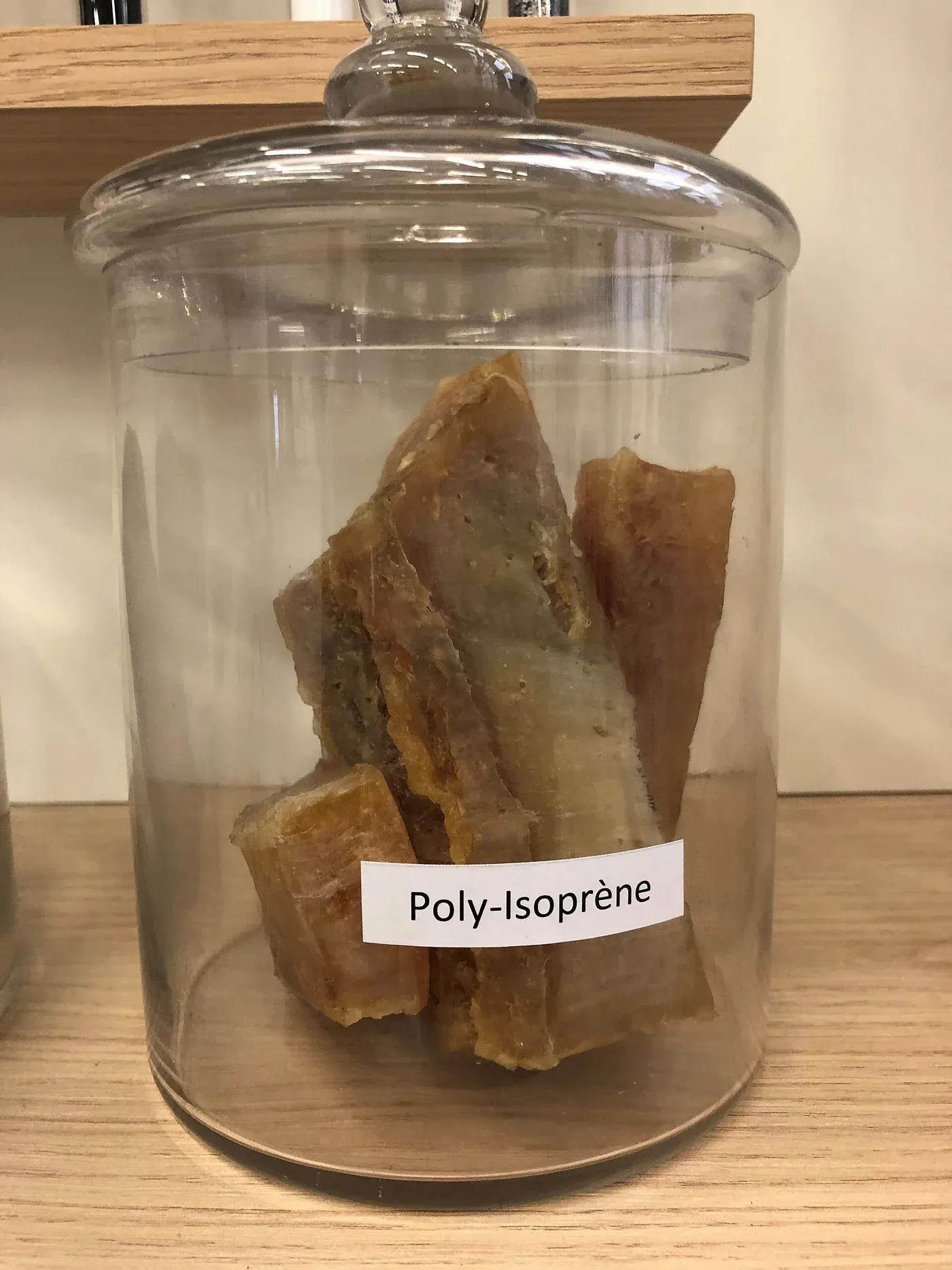
- Plate IVRaw synthetic polyisoprene, as it comes out of the reactor before compounding. It is built from chemically the same monomer as natural rubber, arranged by a catalyst rather than a tree.Wikimedia Commons