The Specialty Polymers Age (1980-1999)
Polyketones (PEKK & PAEK)
Super-Polymers
On 19 October 1987, the Dow Jones Industrial Average fell twenty-three percent in a single session (still the worst one-day percentage loss Wall Street has ever recorded), and a decade of confident bets on rising prices unwound in a single afternoon. It was a bad year to be trusting a long, slow position to eventually pay off.
Two chemists were not paying attention to any of that. Each was sitting on a bet that had already run far longer than a decade, in a field where patience of exactly that kind was the whole business model. That July, at Shell’s research laboratories, a chemist named Eit Drent filed a patent that changed a reaction from a laboratory footnote into an industrial process almost overnight. Two thousand miles away and twenty-eight years into a much slower story, DuPont was finally bringing a chemistry first patented in 1959 within sight of an actual product. Both men were working with the same handful of atoms (a carbon, an oxygen, double-bonded), and both were about to prove, in their own way, that the word “polyketone” was going to need more than one meaning.
One Word, Two Molecules
A polyketone, strictly, is any polymer whose backbone regularly incorporates a carbonyl group: a carbon double-bonded to an oxygen, repeated along the chain rather than tucked away as a side group. That definition is broad enough to cover two families of plastic that share almost nothing else. One is built entirely from simple, flexible aliphatic building blocks: carbon monoxide alternating with an ordinary olefin like ethylene, nothing aromatic anywhere in sight. The other is built almost entirely from rigid aromatic rings, joined by ether oxygens and ketone bridges in careful alternation: the polyaryletherketone family, of which this entry’s own subject, polyetherketoneketone, is a member. Chemists have used “polyketone” for both for the better part of a century, which is a genuine, ordinary case of one name covering two different materials, not a labeling mistake invented for this atlas.
DuPont’s Long, Quiet Bet
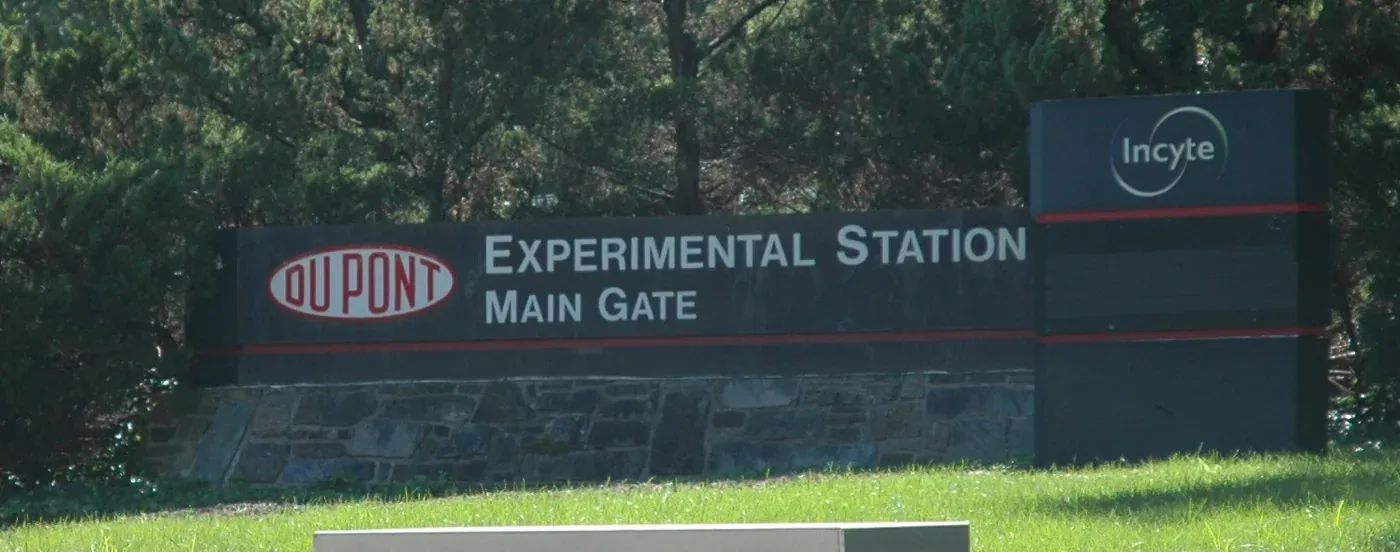
The aromatic branch started earliest and moved slowest. On 27 October 1959, DuPont chemist Willard Hallam Bonner Jr. filed a patent (granted in 1962 as “Aromatic polyketones and preparation thereof”) describing a way to build carbonyl groups directly into an all-aromatic backbone, a chain of benzene rings joined end to end by ketone bridges. It was chemistry with no obvious product behind it yet: a rigid, high-melting resin nobody could process affordably with the tools of 1962. DuPont kept the idea alive through the following decades, adding ether linkages to loosen the backbone just enough to make it melt-processable, and by the tail end of the 1980s the resulting resin, polyetherketoneketone, was close enough to market to sell as an engineering plastic in its own right.
Plate I

Shell’s Different Bet: Alternating, Not Aromatic
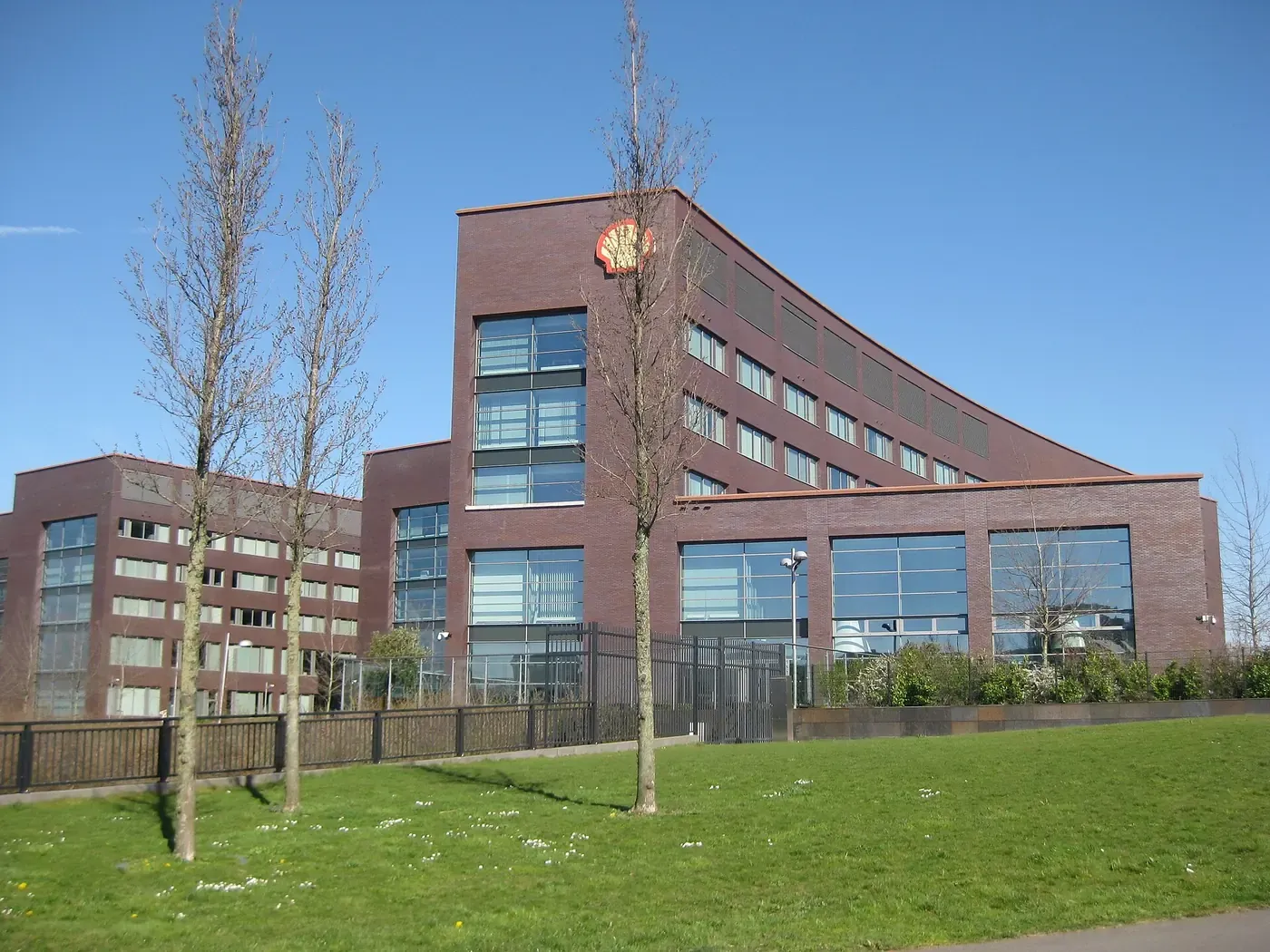
The aliphatic branch has an equally long pedigree and a much stranger middle chapter. Walter Reppe had shown carbon monoxide could be coaxed into a polymer chain as early as 1940, and DuPont’s own Merlin Brubaker patented ethylene-carbon monoxide copolymers in 1950, publishing the underlying chemistry two years later as “a new class of polyketones.” For three decades after that, the reaction stayed a curiosity: the catalysts available were slow, expensive, or both, and nobody could make the copolymer fast enough to be worth making. Eit Drent, working at Shell, spent the 1980s solving that problem rather than the chemistry itself. His breakthrough was not a new kind of catalyst so much as a smarter supporting cast for the palladium at its centre: swapping the ammonium salt conventionally paired with it for a related phosphonium salt, and adding a small amount of an oxidant or a simple ether, ester, or ketone as a fourth ingredient. The patent he filed on 1 July 1987 reported the result: a reaction that had barely run at all under the old recipe was now producing several thousand grams of polymer for every gram of palladium catalyst, every hour. A perfectly alternating chain of ethylene and carbon monoxide units (one that had existed on paper since Reppe’s day) had finally become something a chemical plant could actually afford to make.
Plate II

What Became of Each Bet
The two chemistries went on to very different fates. Shell built on Drent’s catalyst through the early 1990s and, in 1996, opened the world’s first aliphatic-polyketone plant at Carrington in the United Kingdom, selling the terpolymer of carbon monoxide, ethylene, and a little propylene under the trade name Carilon. It never found the market Shell had hoped for and the plant closed in 2000, though the chemistry did not die with it: Shell released its patents, and the South Korean firm Hyosung used them to bring a version of the same aliphatic polyketone back to market in 2015. DuPont’s aromatic branch had a steadier career: polyetherketoneketone reached the market at the end of the 1980s, was refined through the 2000s by Oxford Performance Materials, and moved into full industrial-scale production in 2011 after Arkema took up the chemistry, under the trade name Kepstan. It is that steadier, aromatic branch (polyetherketoneketone and its wider polyaryletherketone family) that carries the name and the recorded data on this page.
The Molecular Architecture
Strip PEKK down to its backbone and the pattern repeats with almost mechanical regularity: a benzene ring, an ether oxygen, another benzene ring, then a ketone bridge, sometimes two ketone bridges in a row, which is exactly where the second “K” in the name comes from. Every one of those links is rigid; there is no long, floppy hydrocarbon stretch anywhere in the chain for heat to soften. What keeps the material processable at all is the ether oxygen: a single, flexible hinge dropped in among all that rigidity, just often enough to let the chain fold, crystallize to a controllable degree, and eventually melt rather than simply char.
PEKK Against Its Relatives
Within the polyaryletherketone family, the ratio of ether to ketone links is what tells one member from another, and PEKK sits at the ketone-heavy end. Its two adjacent ketone bridges, drawn from a mix of terephthaloyl and isophthaloyl building blocks, give processors an unusual dial to turn: change that mixture’s ratio and the melting point and crystallization speed shift with it, in a way the more rigidly fixed backbone of PEEK (its older, more famous relative, and the subject of its own entry in this atlas) cannot match. That tunability is a large part of why PEKK, rather than PEEK, has become the polyaryletherketone of choice for 3D printing: a resin that can be persuaded to crystallize slowly is a resin that will not warp itself apart as a printed layer cools.
What the Rings and Ketones Buy
PEKK settles at a density comfortably between water and the light metals it is often chosen to replace, and almost everything else about it reads as a deliberate trade against that low weight. It holds its shape at temperatures far above the point where an ordinary engineering plastic would soften, and its glass transition sits high enough that the material stays properly rigid well past the boiling point of water. It is a genuinely tough resin rather than merely a heat-resistant one: a molded part takes a real, if modest, amount of deformation before it fails outright, and it shrugs off a direct blow far better than a brittle thermoset ever could. Its chemical resistance is close to total: acids, alkalis, alcohols, hydrocarbons, esters, and ketones all leave it essentially unmarked, a rare combination in any plastic and rarer still in one this easy to mold. It resists ignition well enough to self-extinguish once a flame is removed, and its natural resistance to wear and to sliding friction is good enough that engineers reach for it in bearings and seals without adding a separate lubricant. The one demand it makes in return is heat: nothing in this chemistry melts or moulds at temperatures an ordinary plastics shop would recognize, which is precisely the cost of building a chain almost entirely out of rings.
Applications: Where the Bet Paid Off
PEKK’s combination of heat resistance, chemical stubbornness, and genuine melt-processability has carried it into places where a metal part is being deliberately swapped out rather than merely avoided: jet-engine components, spinal and dental implants sterilized and re-sterilized without degrading, and downhole tooling in oil and gas wells where both pressure and temperature are far past what an ordinary plastic could survive. Its newest and fastest-growing role, though, is as feedstock for additive manufacturing: printed rather than molded, one layer at a time, into parts too complex or too small a production run to justify a metal tool. Components made this way already fly in orbit: PEKK parts manufactured through additive processes have been supplied for Boeing’s CST-100 Starliner spacecraft, a direct descendant of the same tunable crystallization Bonner’s rigid aromatic backbone made possible, and Drent’s catalyst work never touched at all.
Plate III
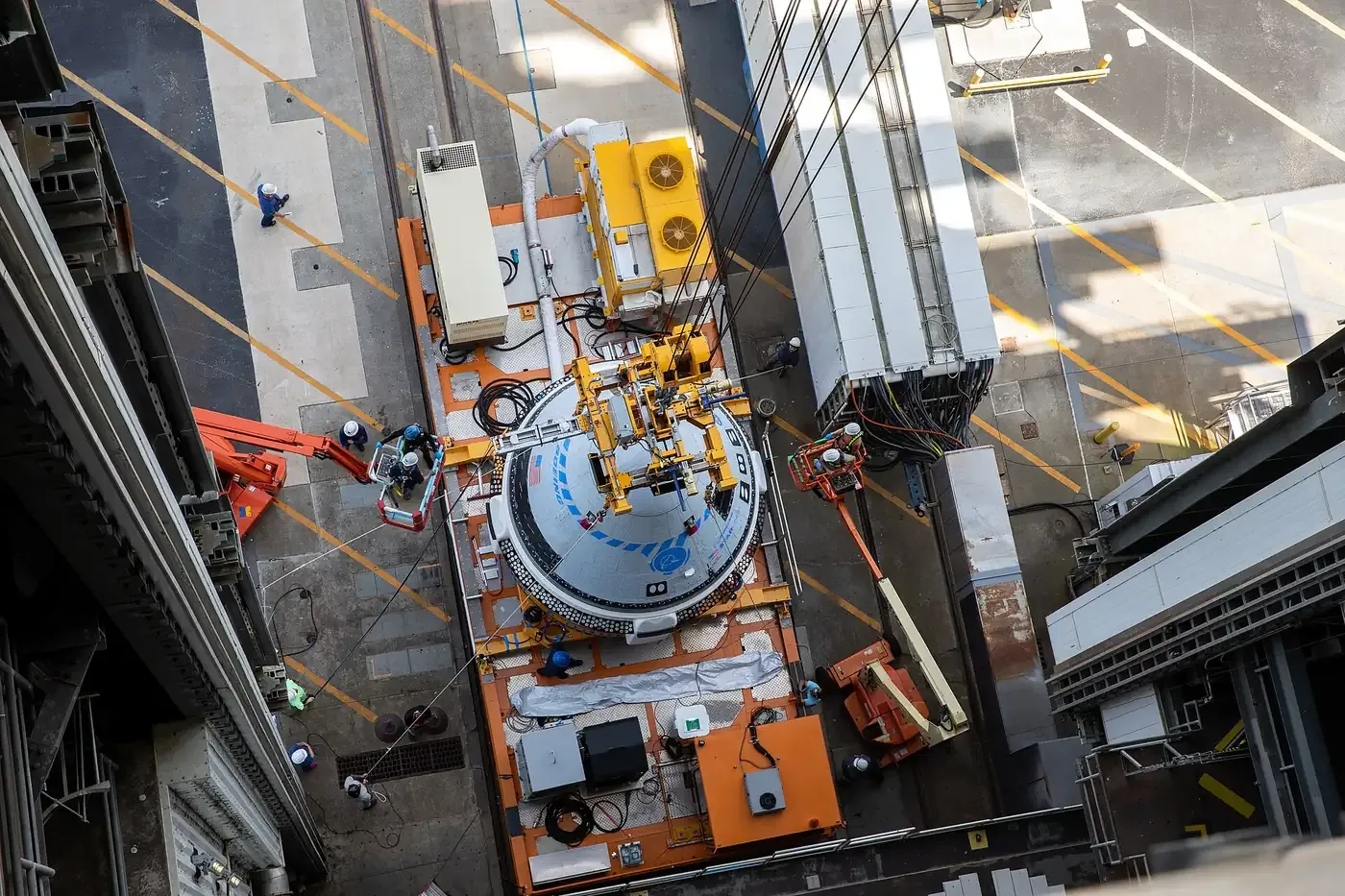

Plate IV
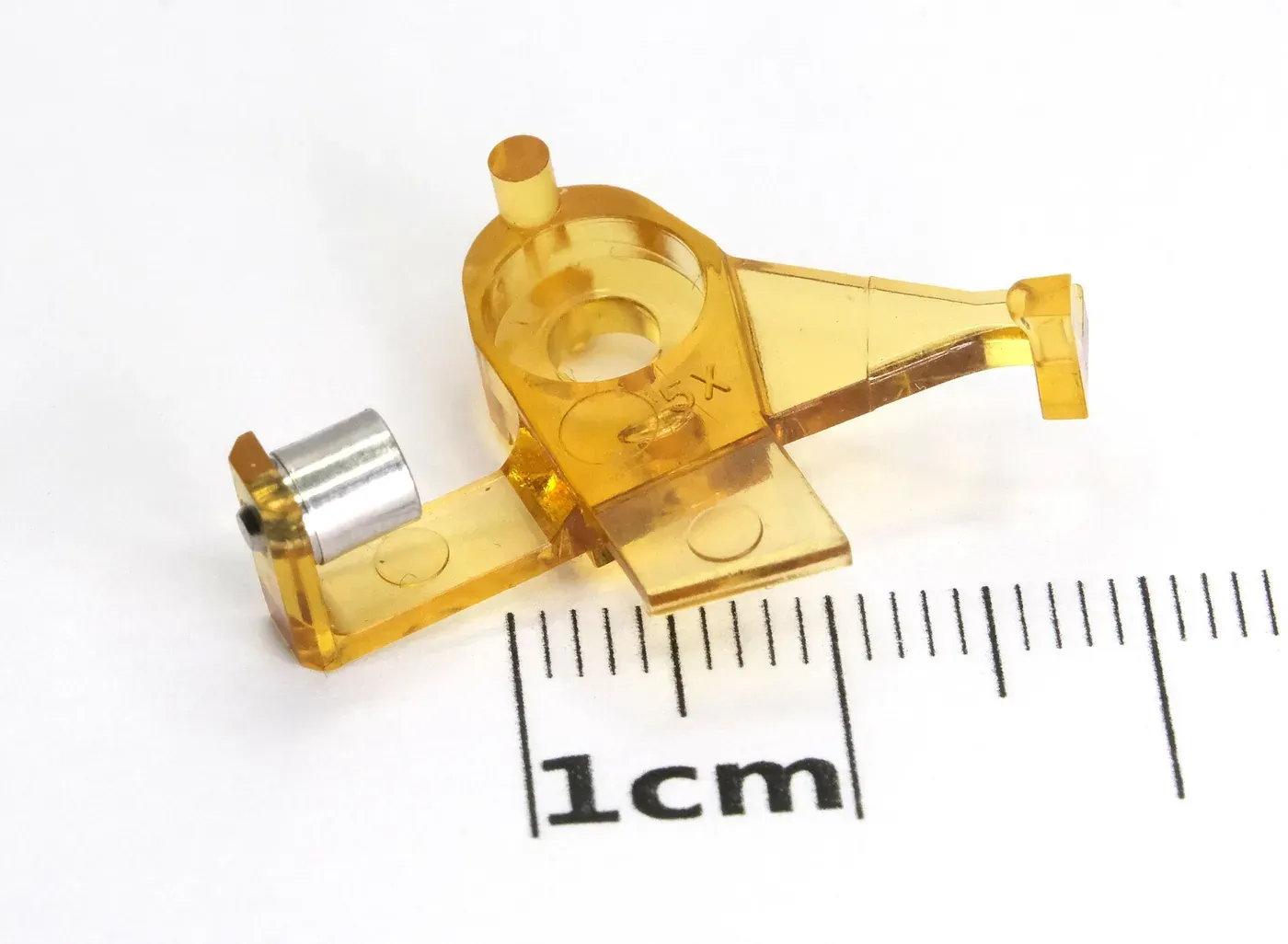

Plate V

.jpg)
A Year of Two Bets, One Word
Wall Street’s 1987 was a lesson in how fast confidence built over years can evaporate in an afternoon. The two polyketone stories that same year ran the opposite direction: decades of patient, largely unrewarded research, in two unrelated laboratories, both quietly clearing the last obstacle between an interesting reaction and a real material within months of each other. One bet has since come and gone and come back again under someone else’s name. The other is still flying, literally, on the outside of a spacecraft.
values with [n] cite the numbered references·estimates are flagged·“not yet available” and “N/A” are honest states, not gaps
- Abbreviation
- PEKKPAEK
- Type
- polymer family (hub)
- CAS number
- 29658-26-2
- Resin ID code
- none assigned
- Formula
- PEKK (polyetherketoneketone) is one member of the broader, aromatic polyaryletherketone (PAEK) family, which also includes PEEK (already covered in its own hub entry) and PEK; this entry focuses on PEKK as the PAEK-family representative not otherwise covered. "Polyketone" is also used, unrelatedly, for the aliphatic carbon monoxide/olefin copolymers (e.g. Shell's Carilon) discussed in this entry's history; the two chemistries share a name but no repeat unit.
- Repeat unit (BigSMILES)
- PEKK (polyetherketoneketone) is one member of the broader, aromatic polyaryletherketone (PAEK) family, which also includes PEEK (already covered in its own hub entry) and PEK; this entry focuses on PEKK as the PAEK-family representative not otherwise covered. "Polyketone" is also used, unrelatedly, for the aliphatic carbon monoxide/olefin copolymers (e.g. Shell's Carilon) discussed in this entry's history; the two chemistries share a name but no repeat unit.
- IUPAC name
- —
- Synonyms
- polyaryletherketone; PAEK
- Also known as
- PAEK
- Chemical family
- polyketone
- Backbone class
- heterochain
- Polymerization mechanism
- step-growth-condensation
- Constitutional monomer
- Aromatic diacid chloride / diaryl ether monomers (formulation-dependent)
- Polymer class
- thermoplastic
- Year of origin
- 1987
- Era
- The Specialty Polymers Age (1980-1999)
- Key figures
- Eit Drent · Willard Hallam Bonner Jr.
- Events referenced
- Black Monday stock market crash (19 October 1987)
- Polymerization type
- step-growth condensation
- Common monomers (feedstocks)
- not yet available
- Catalysts
- not yet available
PEKK is a semi-crystalline thermoplastic in the polyaryletherketone (PAEK) family, offering high heat, chemical, and mechanical load resistance. Increasingly manufactured via additive manufacturing (3D printing) for aerospace and medical parts, e.g. Hexcel supplies PEKK components for Boeing's CST-100 Starliner spacecraft via this route.
- Tacticity
- not yet available
- Crystal structure
- not yet available
- Typical crystallinity
- 0–35 %[2]PEKK; varies with processing/cooling rate. PEKK is notable among PAEK-family polymers for its tunable crystallinity. Maximum crystallinity is reached by processing at 340–350 °C with <3 °C/min cooling rate.
Molecular weight
- Number average (Mn)
- not yet available
- Mass average (Mw)
- not yet available
- Dispersity (Mw/Mn)
- not yet available
Mark-Houwink constants
not yet available
Aromatic ketone/ether backbone gives PAEK-family polymers an unusual combination of high-temperature performance and (unlike many other high-performance polymers) genuine melt-processability.
- Density
- 1.295 (1.28–1.31) g/cm³[2]PEKK, 20 °C, unfilled grade
- Melt flow index
- 25–120 g/10min[2]PEKK, 380 °C/8.4 kg
- Refractive index
- not yet available
- Transmittance
- not yet available
- Haze
- not yet available
- Gloss
- not yet available
- Water absorption
- 0.2–0.3 %[2]PEKK, 24 h immersion at 23 °C
- Dielectric constant
- 3.3–3.6[2]PEKK, 1000 Hz; value at 1 MHz not clearly extracted from source
- Dielectric strength
- 24 kV/mm[2]PEKK, specimen thickness 0.6–0.8 mm
- Electrical conductivity
- 1 × 10⁻¹⁴ S/m[2]PEKK, reciprocal of reported volume resistivity, 1×10¹⁴ Ω·m
- Glass transition (Tg)
- 162 (154–171) °C[2]PEKK
- Melting temperature (Tm)
- 304–391 °C[2]PEKK, DSC; the wide range reflects PEKK's tunable terephthaloyl/isophthaloyl (T/I) isomer ratio, which shifts melting point substantially
- Crystallization (Tc)
- 240–270 °C[2]PEKK, rapid/cold crystallization temperature; crystallization half-time 7–9 min
- Heat deflection (HDT)
- 141–175 °C[2]1.8 MPaPEKK, unfilled; 20–40% glass fiber grades exceed 299–316 °C
- Decomposition onset
- not yet available
- Thermal conductivity
- 0.25 W/(m·K)[2]PEKK, melt state; no solid-state value reported
- Tensile modulus
- 3450–4400 MPa[2]PEKK, unfilled grade
- Yield strength
- not yet available
- Tensile strength at break
- 90–110 MPa[2]PEKK, unfilled grade; source reports an unqualified 'tensile strength' (ambiguous whether yield or break: elongation at break is only about 12%, suggesting limited post-yield deformation)
- Elongation at break
- 12 %[2]PEKK, unfilled grade; 20–40% glass fiber grades are 1.9–2.5%
- Impact strength (Izod)
- 43–69 J/m[2]PEKK, notched, 23 °C, unfilled; unnotched (20–40% glass fiber grades only) is 480–900 J/m
- Impact strength (Charpy)
- not yet available
- Hardness
- 88 Rockwell M[2]PEKK
- Flexural modulus
- 3380–4600 MPa[2]PEKK, unfilled grade
- Poisson's ratio
- 0.4[2]PEKK
- Coefficient of friction
- 0.175 (0.17–0.18)[2]PEKK, dynamic; static is higher, 0.26–0.28
- Solvent: dilute acids
- very good[2]PEKK
- Solvent: concentrated acids
- very good[2]PEKK
- Solvent: alcohols
- very good[2]PEKK
- Solvent: alkalis
- very good[2]PEKK
- Solvent: aliphatic hydrocarbons
- very good[2]PEKK
- Solvent: aromatic hydrocarbons
- very good[2]PEKK
- Solvent: esters
- very good[2]PEKK
- Solvent: greases & oils
- good[2]PEKK
- Solvent: ketones
- very good[2]PEKK
- Weathering / UV
- not yet available
- Hydrolysis resistance
- not yet available
- Flammability (UL94)
- V-0[2]PEKK, unfilled; also V-0 for 20–40% glass fiber grades
- Limiting oxygen index
- 40 %[2]PEKK
- Solubility parameter (δ)
- not yet available
Gas permeability
not yet available
Polymer-solvent interaction parameter (χ)
not yet available
- Aerospacespacecraft components (e.g. CST-100 Starliner, via additive manufacturing)
- Medical & dentalbiomedical 3D-printed implants
- Manufacturingmetal-replacement 3D-printed structural parts
- Recyclable
- Yes
- Biodegradable
- No
- Degradation pathway
- not yet available
- LD50 (oral, rat)
- not yet available
- NFPA health
- not yet available
- NFPA flammability
- not yet available
- NFPA reactivity
- not yet available
- Carcinogenic classification
- not yet available
- [1]PolyetherketoneketoneWikipediaAccessed 2026-07-14https://en.wikipedia.org/wiki/Polyetherketoneketone[wiki-pekk]
- [2]Handbook of PolymersChemTec Publishinghttps://www.worldcat.org/isbn/9781895198928[handbook-wypych-2016]
Illustrations
- Plate IThe entrance to DuPont's Experimental Station in Wilmington, Delaware, the city Willard Bonner gave as his address when his 1959 patent first put a ketone-linked aromatic backbone on paper.Wikimedia Commons
- Plate IIShell's technology centre in Amsterdam, present-day home of the chemical research that grew out of Eit Drent's 1987 catalyst work on aliphatic polyketones.Wikimedia Commons
- Plate IIIBoeing's CST-100 Starliner spacecraft being moved onto its launch vehicle in 2022. It is one of the vehicles PEKK components, made by additive manufacturing, fly aboard.Wikimedia Commons
- Plate IVA PEKK part made for a hard-disk-drive assembly, shown against a centimetre scale. The part shows the natural amber colour and fine, stable moulding detail typical of the resin.Wikimedia Commons
- Plate VConnecticut's governor visiting Oxford Performance Materials in 2014. Oxford Performance Materials was the firm that spent the 2000s refining DuPont's aromatic polyketone chemistry toward the market.Wikimedia Commons