The Post-War Boom (1946-1960)
Epoxy Resin
The Molecular Glue
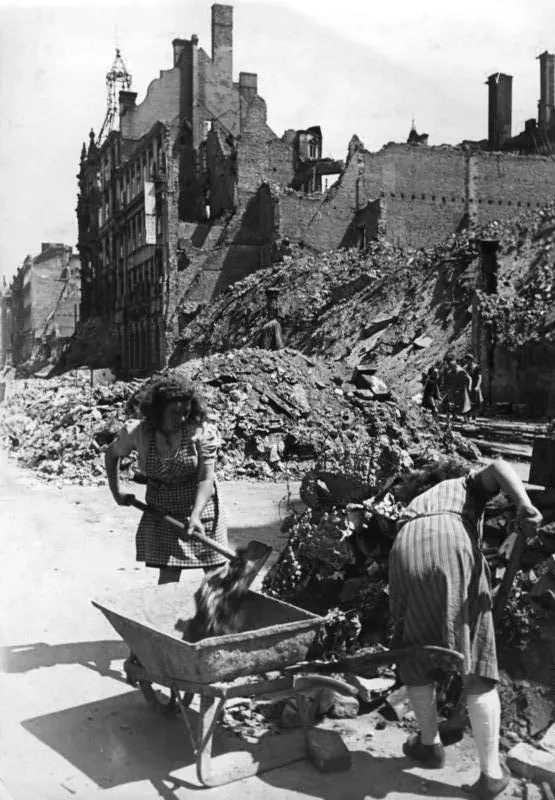
In the summer of 1946, Berlin was still mostly rubble, and much of the work of clearing it fell to the city’s own women, the Trümmerfrauen, passing broken brick and masonry hand to hand into carts because there was little machinery left to do it for them. The same scene, with local variations, was playing out from London to Warsaw to Tokyo. Steel and cement were still rationed or simply unavailable in the quantities reconstruction needed, and across Europe the practical question of 1946 was not how to build something new so much as how to mend what still stood: patch a wall, splice a girder, hold a repaired structure together without the rivets or the mortar to do it the old way.
Plate I

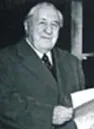
An answer to that problem had already been sitting, quietly patented, on two continents. In neutral Switzerland, Pierre Castan had spent the years since 1936 at the dental firm De Trey Frères, trying to make a better material for false teeth: one that would set hard without shrinking or releasing bubbles as it cured. Reacting epichlorohydrin with bisphenol A gave him exactly that low-shrinkage resin, patented in Switzerland in 1938 and again, in an improved form, in 1943. It never made much of a denture. What it did do, almost as an aside, was bond metal to metal with startling strength. In the United States, unaware of Castan’s work, Sylvan Greenlee at the Devoe & Raynolds Company had been developing close to the same chemistry for protective coatings, and patented his own bisphenol A-epichlorohydrin resin in 1946. Two chemists, an ocean and a war apart, had converged on the same molecule for entirely different reasons.
It was Ciba, the Swiss chemical firm that acquired Castan’s patents in 1943, that turned the discovery into a product a rebuilding world could actually buy: in 1946 it brought the resin to market under the name Araldite, sold first as a structural adhesive for metal. A material developed to hold a denture together without shrinking turned out to be exactly what a continent full of cracked concrete and damaged steelwork needed.
Plate II

The Epoxide Ring and the Hardener
The chemistry both men had found centers on the epoxide group: a strained three-membered ring of two carbons and an oxygen atom, primed to spring open the moment it meets the right partner. Left alone, the base resin (the diglycidyl ether of bisphenol A, or DGEBA, that both Castan’s and Greenlee’s routes converge on) is a stable liquid or low-melting solid with an epoxide ring at each end. Mix it with a hardener, typically an amine, and each hardener molecule reacts with several epoxide rings at once, stitching individual resin molecules into a single covalently bonded network. There is no repeat unit in the finished material, in the same way there is none in any thermoset network: what began as two separate liquids becomes, once cured, effectively one molecule.
Which hardener does the stitching changes the outcome considerably. Aliphatic amines react fast, even at room temperature, which is why a two-part epoxy from a hardware-store tube sets within minutes. Aromatic amines need heat to get going but build a denser, tougher network once cured. Anhydride hardeners cure slowest of all and most predictably, which is exactly the behavior wanted in an electrical potting compound, where a stray bubble can ruin an insulator.
What Curing Actually Buys You
Cured epoxy sits a little denser than water and, unlike most plastics, has no real melting point to speak of: heat it and it holds its shape until the network itself starts to break down, with the temperature that happens at tunable across a wide range purely by choice of hardener and cure schedule. It is stiff (stiff enough to be genuinely useful as a structural material rather than merely a coating), but that stiffness comes at the cost of ductility: cured epoxy takes very little stretching before it cracks, closer to glass than to rubber in that respect, which is why a cured casting shatters rather than dents when it finally fails. Chemically, it is difficult to attack: dilute acids, alkalis, alcohols, and most hydrocarbons do it little harm, and it holds up as an electrical insulator across a wide range of frequencies. Its one clear weakness is ketone solvents, which soften and swell it far more readily than almost anything else it encounters.
From a Rebuilt Continent to a Circuit Board
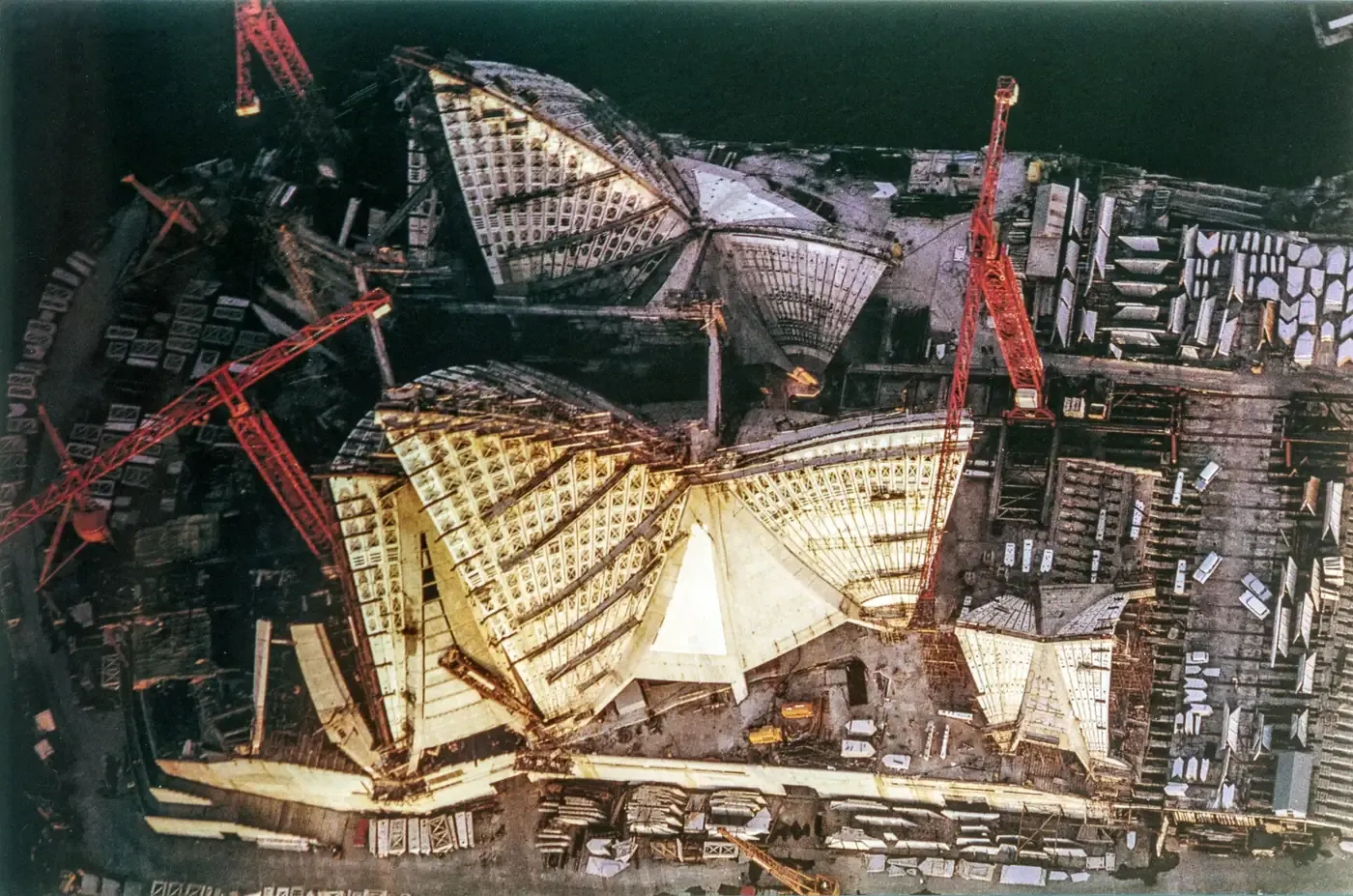
The Sydney Opera House gave epoxy one of its most visible early proving grounds: the building’s precast concrete shell segments, too large and too precisely curved to cast as single pieces, were bonded together with Araldite during construction in the 1960s. The building was reportedly the first project of its scale anywhere to glue, rather than bolt or pour, its primary structure together.
Plate III
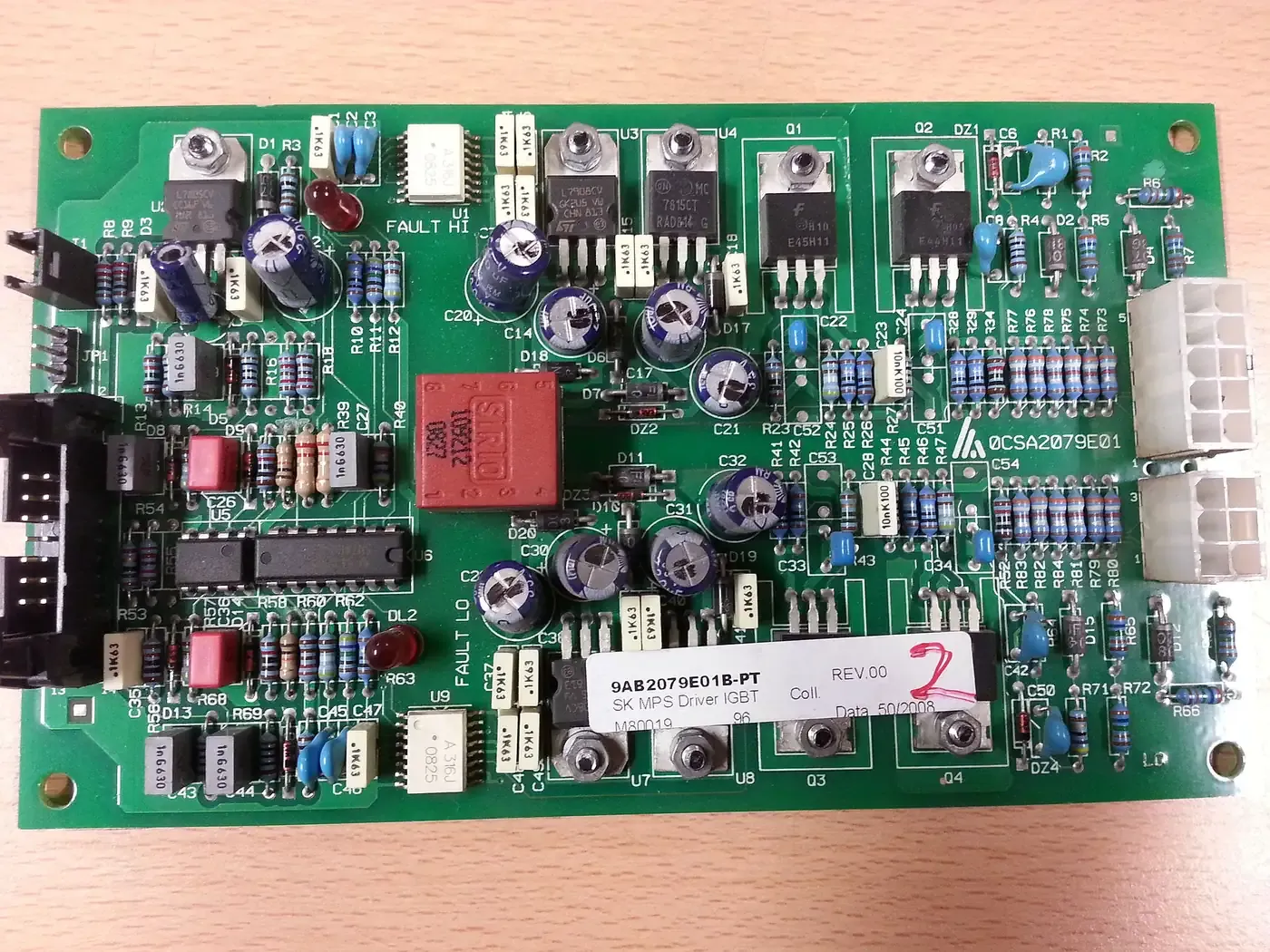
From there, epoxy quietly became one of the load-bearing materials of the modern economy without most people noticing it at all. Bonded to carbon or glass fiber, it is the matrix inside composite aircraft fuselage panels and wind turbine blades, carrying structural loads that used to be a metal part’s job. Cast as a solid, it potts and encapsulates electronic components against moisture and vibration. And impregnated into woven glass cloth, it is the resin in ordinary FR-4 circuit board substrate, the green, rigid backbone underneath the components of nearly every piece of electronics made since the material’s postwar debut.
Plate IV

The molecule that Castan was chasing for a denture and Greenlee was chasing for a coating turned out to have neither application as its real calling. What it was actually good at was holding things together (steel to steel, fiber to matrix, component to board) at exactly the moment a rebuilding world needed precisely that.
values with [n] cite the numbered references·estimates are flagged·“not yet available” and “N/A” are honest states, not gaps
fetching the model…
Epoxy Resin repeat unit
- Abbreviation
- —
- Type
- polymer family (hub)
- CAS number
- None (heterogeneous class or not assigned)
- Resin ID code
- none assigned
- Formula
- (C18H20O3)n[-O-C6H4-C(CH3)2-C6H4-O-CH2-CH(OH)-CH2-]nThe linear bisphenol A resin is shown. In use it is a thermoset: the terminal epoxide rings are opened by a hardener that ties the chains into a network, so the cured material has no repeating unit at all.
- Repeat unit (BigSMILES)
{[][>]Oc1ccc(cc1)C(C)(C)c1ccc(cc1)OCC(O)C[<][]}- IUPAC name
- —
- Synonyms
- —
- Also known as
- —
- Chemical family
- epoxy
- Backbone class
- heterochain
- Polymerization mechanism
- step-growth-condensation
- Constitutional monomer
- Bisphenol A diglycidyl ether (DGEBA)Epichlorohydrin
- Polymer class
- thermoset
- Year of origin
- 1946
- Era
- The Post-War Boom (1946-1960)
- Key figures
- Pierre Castan · Sylvan Greenlee
- Events referenced
- Postwar rubble-clearance and reconstruction across bombed European cities (1946) · Ciba brings Castan's resin to market as Araldite (1946)
- Polymerization type
- step-growth condensation, then crosslinking cure
- Common monomers (feedstocks)
- bisphenol A, epichlorohydrin
- Catalysts
- polyfunctional amines; anhydrides; phenols; thiols; isocyanates (all as curing agents)
The most common industrial epoxy prepolymer, bisphenol A diglycidyl ether (BADGE/DGEBA), is made by reacting epichlorohydrin with bisphenol A. Pierre Castan is credited with discovering bisphenol-A-based epoxy resins in 1943 (building on Paul Schlack's 1934 work); Sylvan Greenlee patented a related formulation in 1946. Curing proceeds via exothermic crosslinking; hardener reactivity order (fastest to slowest) is thiols > aliphatic amines > cycloaliphatic amines > aromatic amines > anhydrides > phenols. Global epoxy resin market was valued at ~$8 billion in 2016.
- Tacticity
- not yet available
- Crystal structure
- not yet available
- Typical crystallinity
- 0 %estimate[1]Amorphous crosslinked thermoset network once cured.
Molecular weight
- Number average (Mn)
- not yet available
- Mass average (Mw)
- not yet available
- Dispersity (Mw/Mn)
- not yet available
Mark-Houwink constants
not yet available
Crosslink density (set by curing agent choice/stoichiometry) tunes the cured resin's rigidity, chemical resistance, and Tg.
- Density
- 1.2–1.3 g/cm³[3]unfilled cured resin
- Melt flow index
- Not applicable
- Refractive index
- 1.51–1.58[2]20 °C
- Transmittance
- not yet available
- Haze
- not yet available
- Gloss
- not yet available
- Water absorption
- 0.04–4 %[2]equilibrium immersion, 23 °C, uncured/thermoplastic-stage resin as tabulated; cured adhesive formulations reported separately at 2–5%
- Dielectric constant
- 3.6[2]1 MHz, unfilled; 3.5–5.0 at 100 Hz
- Dielectric strength
- 15 kV/mm[2]d = 0.6–0.8 mm, K20/P50 test, unfilled
- Electrical conductivity
- 1 × 10⁻¹⁴ S/m[2]reciprocal of reported volume resistivity, 1×10¹⁴ Ω·m, unfilled
- Glass transition (Tg)
- 54.5–62 °C[2]commercial cured bisphenol-A/amine systems; uncured/thermoplastic-stage resin reported at 37–127 °C, high-performance cured adhesive systems at 130–246 °C, in the same source
- Melting temperature (Tm)
- 90–245 °C[2]uncured (pre-hardener) resin melting range, DSC; once cured with a hardener, the crosslinked network no longer melts
- Crystallization (Tc)
- Not applicable
- Heat deflection (HDT)
- 46–187 °C[2]1.8 MPa; Mark reports a similarly wide 47–287 °C for unfilled casting resins under 1.82 MPa flexural load, reflecting hardener/cure-schedule dependence
- Decomposition onset
- not yet available
- Thermal conductivity
- 0.19 (0.19–0.34) W/(m·K)[3]unfilled casting grade, 293 K; rises to 0.34 by 500 K
- Tensile modulus
- 3000–5000 MPa[3]unfilled cured resin; unfilled casting resin reported separately at 2,400 MPa
- Yield strength
- 36.6–117.7 MPa[2]tensile stress at yield, thermoplastic-stage grade as tabulated by source
- Tensile strength at break
- 28–90 MPa[3]unfilled casting resin; unfilled stress-at-break reported separately at 30–90 MPa; Wypych's broader thermoplastic-stage range is 27–200 MPa
- Elongation at break
- 1–6 %[3]unfilled cured resin: 1–2%; unfilled casting resins: 3–6%
- Impact strength (Izod)
- 10–50 J/m[3]notched, unfilled
- Impact strength (Charpy)
- not yet available
- Hardness
- 62–95 Shore D[2]
- Flexural modulus
- 2550–15500 MPa[2]
- Poisson's ratio
- 0.42[2]
- Coefficient of friction
- 0.5–0.6[2]
- Solvent: acids (dilute/concentrated)
- fair-excellent[2]
- Solvent: alcohols
- excellent-good[2]
- Solvent: alkalis
- excellent[2]
- Solvent: aliphatic hydrocarbons
- excellent-good[2]
- Solvent: aromatic hydrocarbons
- excellent[2]
- Solvent: esters
- good[2]
- Solvent: greases & oils
- good[2]
- Solvent: halogenated hydrocarbons
- excellent[2]
- Solvent: ketones
- poor[2]
- Weathering / UV
- not yet available
- Hydrolysis resistance
- not yet available
- Flammability (UL94)
- not yet available
- Limiting oxygen index
- 18.3–23 %[2]reported 18.3–19% and 23% across cited studies
- Solubility parameter (δ)
- 22–27.1 MPa^0.5[2]Hildebrand parameter; Mark reports a single value of 22.3 MPa^0.5 for an Epikote 1001 system
Gas permeability
not yet available
Polymer-solvent interaction parameter (χ)
not yet available
- Processing methods
- two-part mixing + cure (adhesives/coatings)resin infusion/lamination (composites)casting
- Drying required
- not yet determined
- Adhesivesstructural adhesives and bonding agents
- Coatingsprotective coatings · paints
- Compositesfiber-reinforced composites (aerospace, marine)
- Electronicsencapsulation/potting compounds
- Recyclable
- No
- Biodegradable
- No
- Degradation pathway
- not yet available
As a thermoset, conventional epoxy cannot be melt-reprocessed; vitrimer-type reversible-crosslink epoxies (a later development) are one route to recyclability.
- LD50 (oral, rat)
- 2000–5800 mg/kg[2]reported as >2,000 to 5,800 mg/kg
- NFPA health
- 2[2]HMIS rating, 0–4 scale
- NFPA flammability
- 1[2]HMIS rating, 0–4 scale
- NFPA reactivity
- 0[2]HMIS rating, 0–4 scale
- Carcinogenic classification
- not listed by ACGIH, NIOSH, NTP[2]
Skin (rabbit) LD50 >2,150 mg/kg. Some epoxy/hardener systems are skin sensitizers.
- [1]EpoxyWikipediaAccessed 2026-07-14https://en.wikipedia.org/wiki/Epoxy[wiki-epoxy]
- [2]Handbook of PolymersChemTec Publishinghttps://www.worldcat.org/isbn/9781895198928[handbook-wypych-2016]
- [3]Polymer Data HandbookOxford University Presshttps://search.worldcat.org/search?q=Polymer+Data+Handbook+Mark+1999[handbook-mark-1999]
Illustrations
- Plate IBerlin's Trümmerfrauen clearing rubble, July 1946. Reconstruction, not new construction, was the material problem of the year.Wikimedia Commons
- Plate IIPierre Castan, whose search for a better denture material at a Swiss dental firm produced, instead, the resin Ciba would sell as Araldite.Wikimedia Commons
- Plate IIIThe Sydney Opera House shells under construction, 1965: precast concrete segments bonded with an Araldite epoxy adhesive rather than mechanical fasteners.Wikimedia Commons
- Plate IVAn epoxy-glass laminate circuit board (FR-4), the rigid, insulating substrate epoxy resin has provided the electronics industry since the 1950s.Wikimedia Commons