Decoding Nature's Legacy (1833-1902)
Lignin
Wood's Secret Glue
In the dense forests of ancient Europe, craftsmen had long wondered what gave trees their remarkable strength. They observed how fallen logs gradually decomposed, some parts quickly returning to the soil while others stubbornly persisted for years. The Romans even noticed that certain woods resisted decay better than others, unknowingly observing variations in a mysterious material that would remain nameless for millennia. That material was lignin, the tough glue that holds the plant world upright.
By 1875, chemists already had a rough name for that glue: the Swiss botanist Augustin Pyramus de Candolle had coined “lignine,” from the Latin lignum for wood, back in 1813, for whatever it was that remained once the more recognizable parts of a plant were accounted for. But naming a residue is not the same as knowing what it is built from, and the year’s real advance came from an unlikely direction: the hunt for vanilla. Natural vanilla was rare and expensive, extracted drop by drop from an orchid pod grown almost nowhere outside Mexico, and European chemists had spent the early 1870s chasing a cheaper source. In 1874 the chemists Ferdinand Tiemann and Wilhelm Haarmann had synthesized vanillin starting from coniferin, a compound found in the sap of conifer trees. The following year, 1875, Tiemann returned to that same starting material with his colleague Bernhard Mendelsohn and worked out its structure in detail: coniferin was a glycoside of coniferyl alcohol, one of the three simple aromatic alcohols that plants use to build lignin itself. It was the first time anyone had a clear molecular picture of one of lignin’s actual building blocks, arrived at while chasing a flavor rather than a fiber.
Plate I
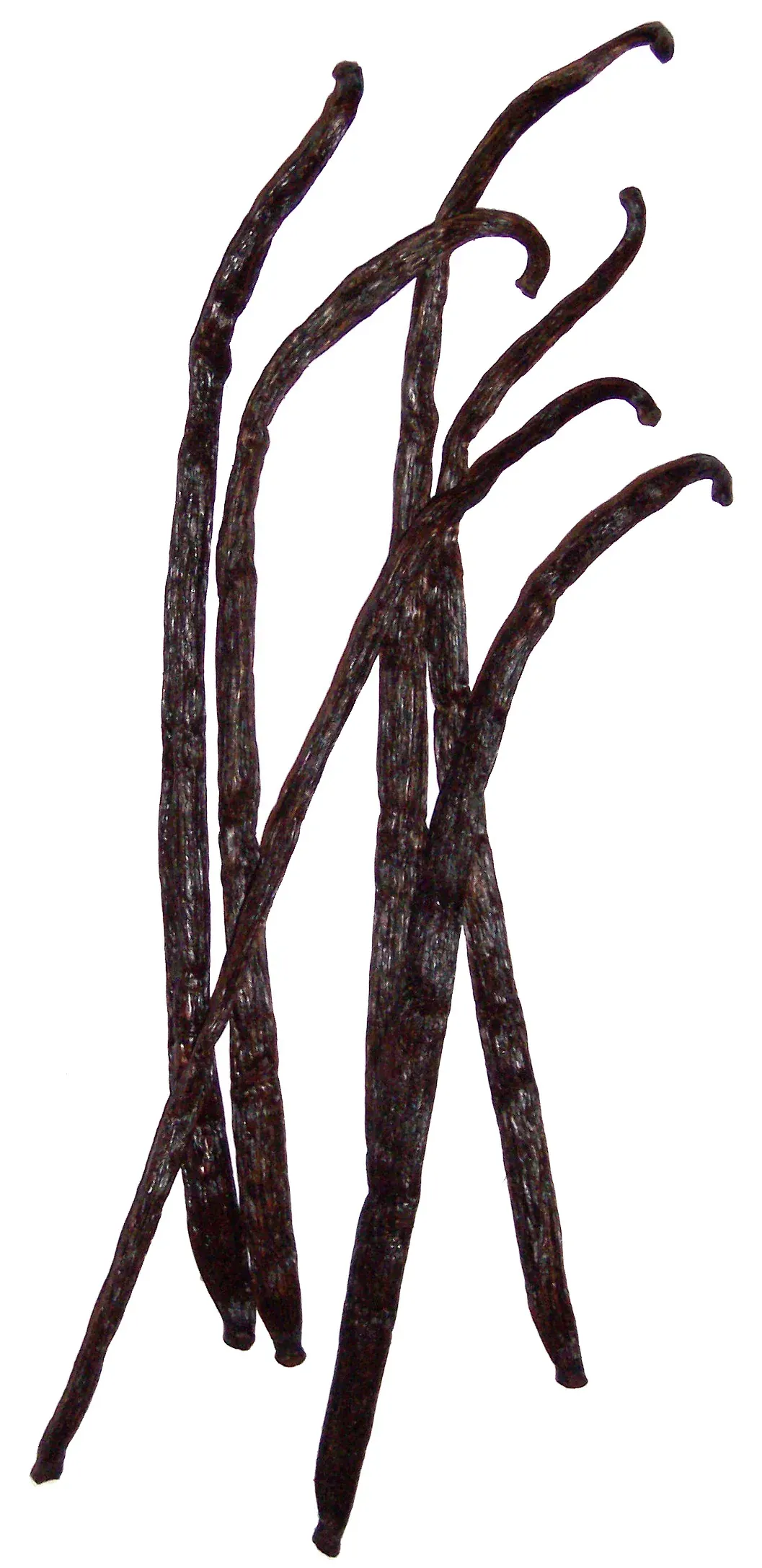

It would be decades before anyone assembled those building blocks into a full picture of lignin’s structure, but 1875 marks the moment the raw materials of that picture first came into focus.
Molecular Architecture: Nature’s Carbon-Fiber Matrix
Lignin’s molecular architecture reveals nature’s engineering brilliance. Unlike the regular, repeating chains of most polymers, lignin is a complex, three-dimensional network of phenylpropane units cross-linked in irregular but purposeful ways. Think of it as nature’s carbon-fiber composite: where cellulose forms the straight, rigid fibers of wood (analogous to the glass fibers in fiberglass), lignin is the tough, space-filling matrix that binds everything together, like the resin that surrounds those fibers.
Plate II
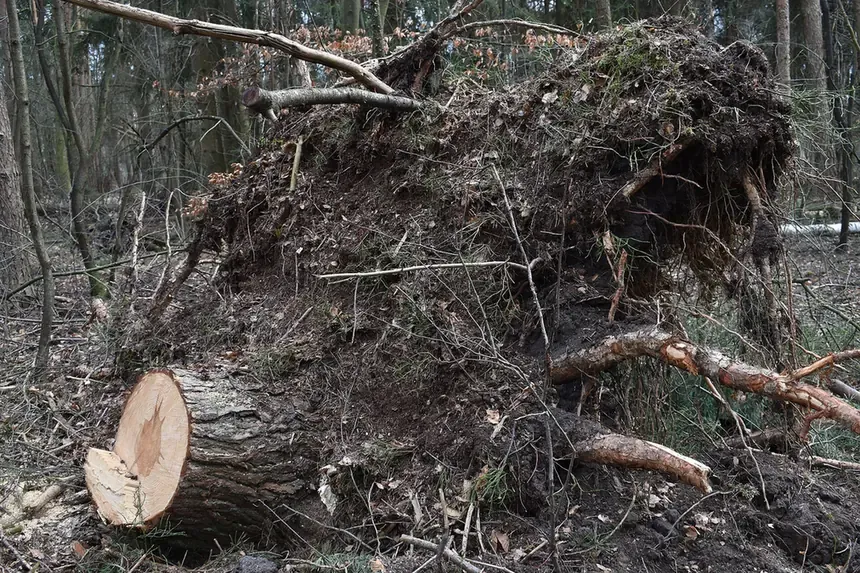

Its biosynthesis begins with three simple alcohols (the monolignols p-coumaryl, coniferyl, and sinapyl alcohol, the very molecules Tiemann’s 1875 work first characterized), which the plant oxidizes into free radicals that couple together in seemingly random yet chemically constrained patterns, forming a mix of β-O-4, β-5, and β-β linkages. Softwoods and hardwoods, built from different ratios of these three monolignols, take on distinct characters as a result.
Because that network is a rigid, irregular, covalently locked structure rather than a chain, lignin behaves less like a conventional plastic than like a set adhesive: it has no melting point to speak of, charring and decomposing under heat rather than softening and flowing, and it resists both acid- and base-catalyzed hydrolysis far better than cellulose does. That last property is exactly what makes it such a stubborn problem for papermakers, and exactly why removing it from wood pulp takes strong alkali and real heat, not a gentle wash.
Manufacturing Journey: From Unwanted Byproduct to Resource
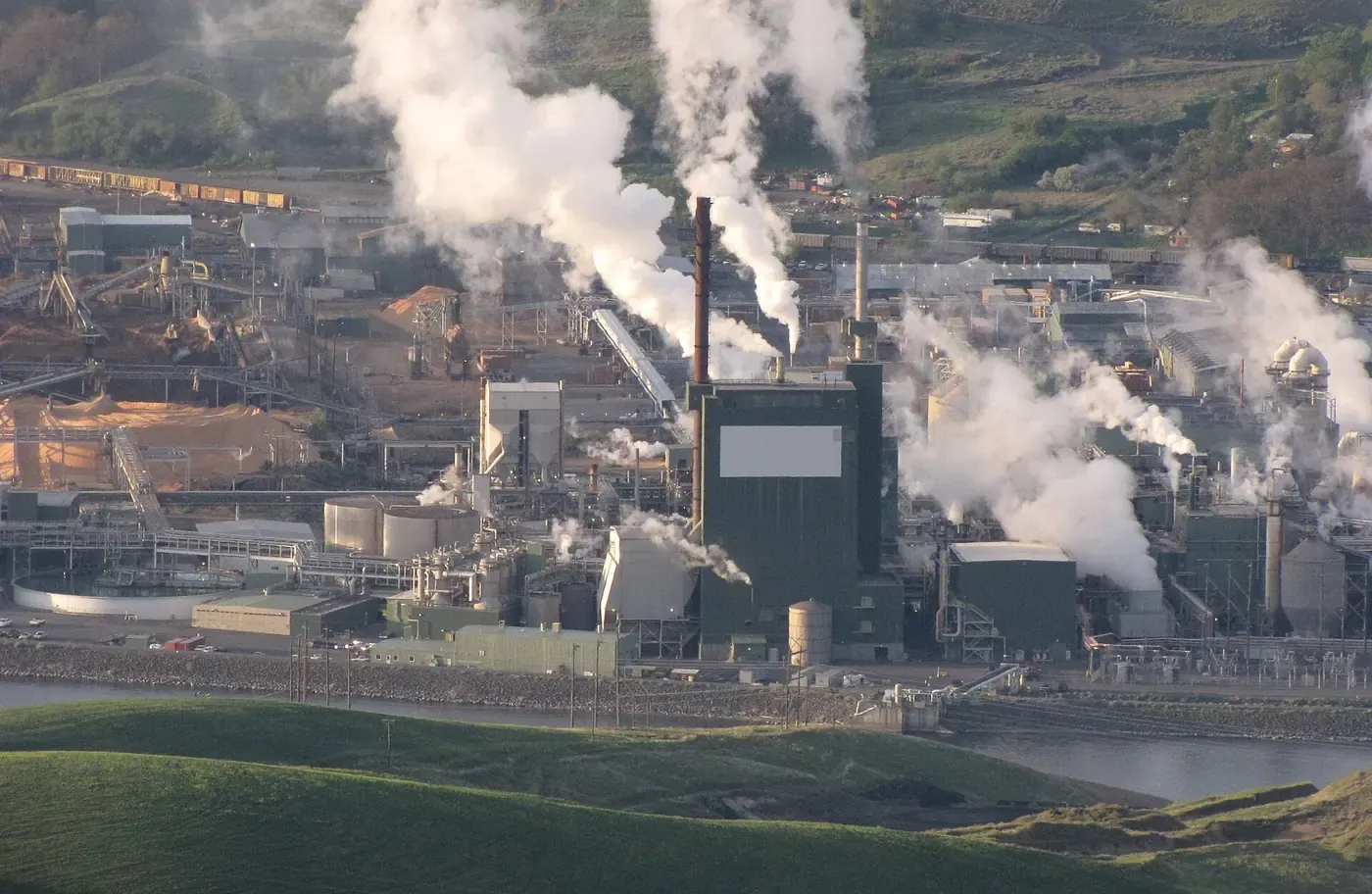
For most of its industrial history, lignin was the villain of the paper mill, the brown material that had to be stripped away to make white paper. Traditional papermaking, dating back to ancient China, dealt with lignin only as an obstacle. The modern kraft process, developed in 1879 by Carl F. Dahl, finally provided an efficient way to separate lignin from cellulose, but even then the extracted lignin was simply burned as fuel, an afterthought to the valuable pulp.
Plate III
.jpg)
That attitude is changing. Chemists now recognize the lignin stream as a vast, renewable, and underused resource (the third most abundant terrestrial polymer, after cellulose and chitin) and have developed gentler extraction methods aimed at preserving rather than destroying its complex structure, so that it might be transformed into something more valuable than smoke.
Applications and Impact: Redemption of a Waste Material
Lignin’s journey from waste to resource mirrors the broader rise of sustainable chemistry. Today it finds use as a renewable precursor for carbon fiber, as a natural adhesive, and as a source of antioxidants explored in cosmetics and nutraceuticals, a long way from the vanillin chemistry that first cracked open its structure. Its central role in plant biomass also makes it a key target for biofuel research, where breaking down the lignin barrier is essential to unlocking the sugars within.
Plate IV
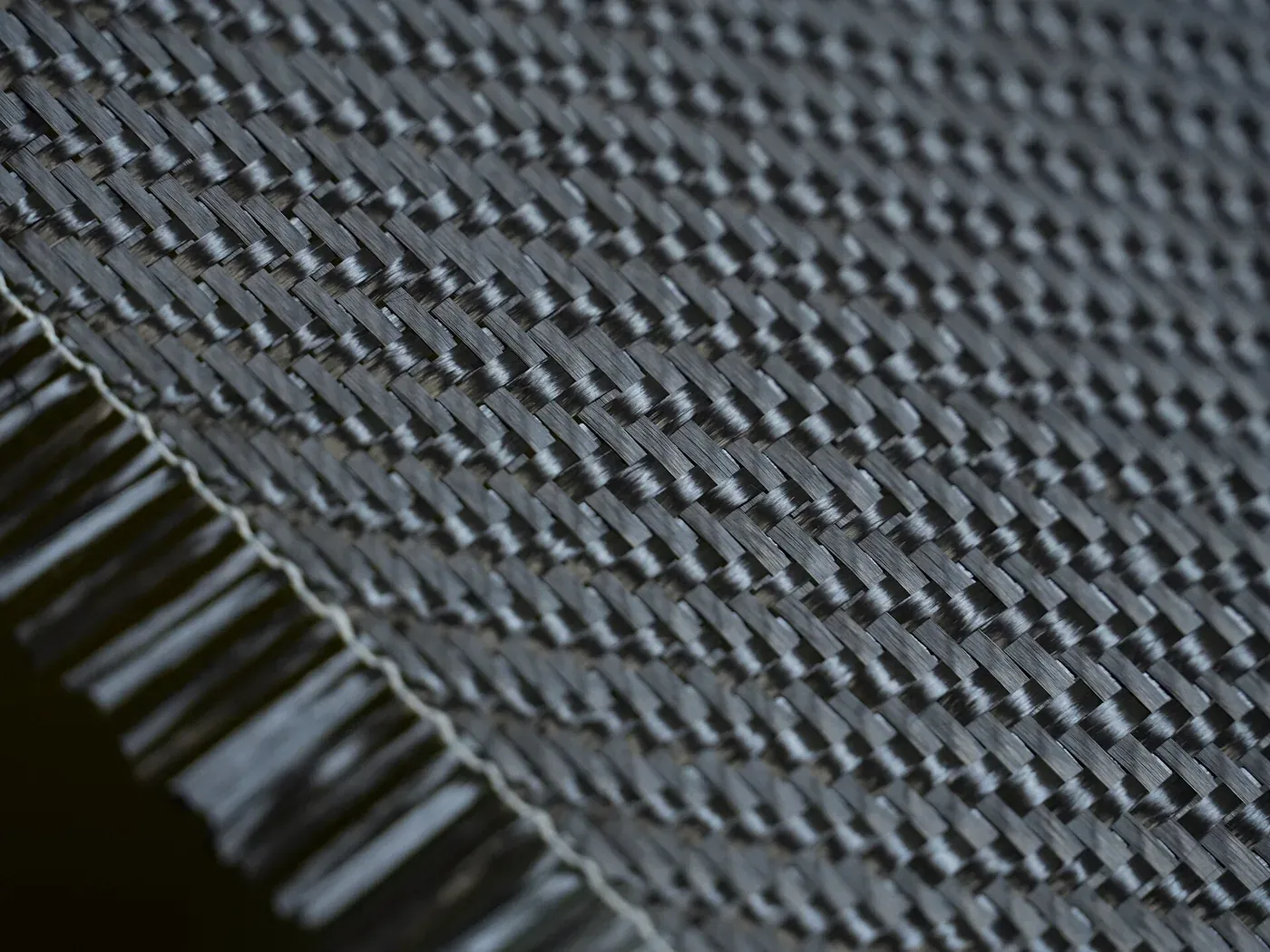

Looking ahead, this ancient molecule keeps surprising us. Lignin-based materials may find a role in sustainable energy storage, serving as carbon precursors for the electrodes of greener batteries. The tangled matrix that our ancestors watched persist in rotting logs (the stuff that quite literally holds up every tree) is being reimagined as a cornerstone of a bio-based economy.
values with [n] cite the numbered references·estimates are flagged·“not yet available” and “N/A” are honest states, not gaps
- Abbreviation
- —
- Type
- polymer family (hub)
- CAS number
- None (heterogeneous class or not assigned)
- Resin ID code
- none assigned
- Formula
- Lignin is an irregular, highly cross-linked aromatic network built from three phenylpropanoid monomers (coniferyl, sinapyl, and p-coumaryl alcohol) in ratios that vary by plant species and tissue; there is no single repeat unit, only a family of monomers and an irregular crosslinking pattern.
- Repeat unit (BigSMILES)
- Lignin is an irregular, highly cross-linked aromatic network built from three phenylpropanoid monomers (coniferyl, sinapyl, and p-coumaryl alcohol) in ratios that vary by plant species and tissue; there is no single repeat unit, only a family of monomers and an irregular crosslinking pattern.
- IUPAC name
- —
- Synonyms
- —
- Also known as
- —
- Chemical family
- polysaccharide
- Backbone class
- heterochain
- Polymerization mechanism
- natural-biosynthesis
- Constitutional monomer
- Coniferyl alcoholSinapyl alcoholp-Coumaryl alcohol
- Polymer class
- thermoset
- Year of origin
- 1875
- Era
- Decoding Nature's Legacy (1833-1902)
- Key figures
- Ferdinand Tiemann · Augustin Pyramus de Candolle
- Polymerization type
- not yet available
- Common monomers (feedstocks)
- not yet available
- Catalysts
- not yet available
Not industrially polymerized: biosynthesized in plant cell walls and obtained as a byproduct of kraft and sulfite chemical pulping (delignification) in the paper industry. The Swiss botanist A. P. de Candolle first described lignin in 1813, naming it from the Latin 'lignum' (wood); it is the third most abundant natural polymer after cellulose and chitin.
- Tacticity
- not yet available
- Crystal structure
- not yet available
- Typical crystallinity
- 0 %estimate[1]Irregular, cross-linked, amorphous network, essentially non-crystalline.
Molecular weight
- Number average (Mn)
- not yet available
- Mass average (Mw)
- not yet available
- Dispersity (Mw/Mn)
- not yet available
Mark-Houwink constants
not yet available
Hydrophobic, rigid aromatic network resistant to both acid- and base-catalyzed hydrolysis.
- Density
- not yet available
- Melt flow index
- Not applicable
- Refractive index
- not yet available
- Transmittance
- not yet available
- Haze
- not yet available
- Gloss
- not yet available
- Water absorption
- not yet available
- Dielectric constant
- not yet available
- Dielectric strength
- not yet available
- Electrical conductivity
- not yet available
- Glass transition (Tg)
- not yet available
- Melting temperature (Tm)
- Not applicableCross-linked aromatic network; does not melt.
- Crystallization (Tc)
- Not applicable
- Heat deflection (HDT)
- Not applicable
- Decomposition onset
- not yet available
- Thermal conductivity
- not yet available
- Tensile modulus
- not yet available
- Yield strength
- not yet available
- Tensile strength at break
- not yet available
- Elongation at break
- not yet available
- Impact strength (Izod)
- Not applicable
- Impact strength (Charpy)
- Not applicable
- Hardness
- not yet available
- Flexural modulus
- not yet available
- Poisson's ratio
- not yet available
- Coefficient of friction
- not yet available
- Weathering / UV
- not yet available
- Hydrolysis resistance
- Highly resistant: immune to both acid- and base-catalyzed hydrolysis[1]
- Flammability (UL94)
- not yet available
- Limiting oxygen index
- not yet available
- Solubility parameter (δ)
- not yet available
Gas permeability
not yet available
Polymer-solvent interaction parameter (χ)
not yet available
- Processing methods
- kraft/sulfite pulping byproduct recoverylignosulfonate derivatization
- Drying required
- not yet determined
- Processing temperature
- Not applicable
- Shrinkage rate
- Not applicable
- Biofuelscellulosic ethanol co-feedstock
- Specialty chemicalsaromatic compound feedstock · vanillin production
- Construction & industriallignosulfonate concrete dispersants · dust suppression binders
- Biomaterialsbiodegradable plastic blends with cellulose
- Recyclable
- No
- Biodegradable
- Yes
- Degradation pathway
- Resistant to hydrolysis but degraded slowly by specialized microorganisms/fungi (e.g. white-rot fungi) via oxidative enzymatic pathways.
A major renewable byproduct stream of the pulp and paper industry, increasingly explored as a feedstock for biofuels and aromatic chemicals.
- LD50 (oral, rat)
- not yet available
- NFPA health
- not yet available
- NFPA flammability
- not yet available
- NFPA reactivity
- not yet available
- Carcinogenic classification
- not yet available
- [1]LigninWikipediaAccessed 2026-07-14https://en.wikipedia.org/wiki/Lignin[wiki-lignin]
Illustrations
- Plate ICured vanilla pods. The search for a cheaper substitute for their flavor led Ferdinand Tiemann, in 1874 and 1875, straight to coniferyl alcohol, one of lignin's own building blocks.Wikimedia Commons
- Plate IIA storm-felled pine. The tree came down when its roots gave way; the wood itself, bound by lignin, held its shape through the fall.Wikimedia Commons
- Plate IIIA modern kraft pulp mill. The chemistry inside is still doing what Dahl's 1879 process first did: dissolving lignin out of the wood to free the cellulose fiber underneath.Wikimedia Commons
- Plate IVWoven carbon fiber. Most carbon fiber today is spun from petroleum-derived precursors, but lignin (already rich in the aromatic carbon rings carbon fiber is made of) is a leading renewable candidate to replace them.Wikimedia Commons