The Wartime Innovation Period (1939-1945)
Unsaturated Polyester (UP)
a Fiberglass Revolution
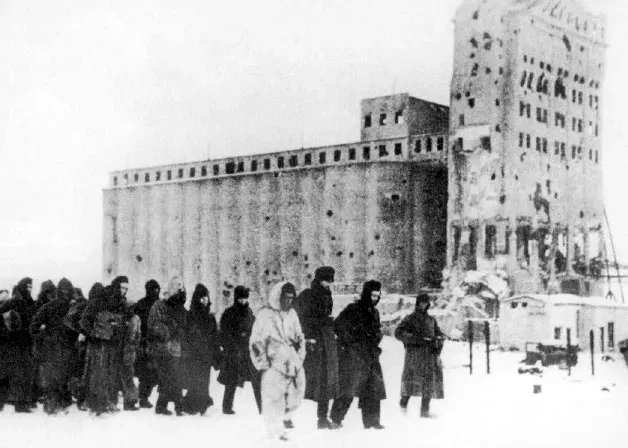
On 2 February 1943, the last German soldiers holding out in the ruins of Stalingrad surrendered. Ninety-one thousand men went into Soviet captivity, and the Wehrmacht lost, for the first time, an entire field army. This was a defeat from which the German war effort on the Eastern Front never recovered. Four thousand kilometres west, a second reversal was building more slowly through the same winter and into the spring: the Battle of the Atlantic, the years-long fight to keep supply convoys running between North America and Britain against German U-boat wolfpacks. By May 1943 (a month the Allies would call “Black May”), new tactics and new technology were sinking U-boats faster than German shipyards could launch them, and Admiral Dönitz pulled his boats out of the North Atlantic. Both fronts had turned in the Allies’ favor within the same few months.
Plate I

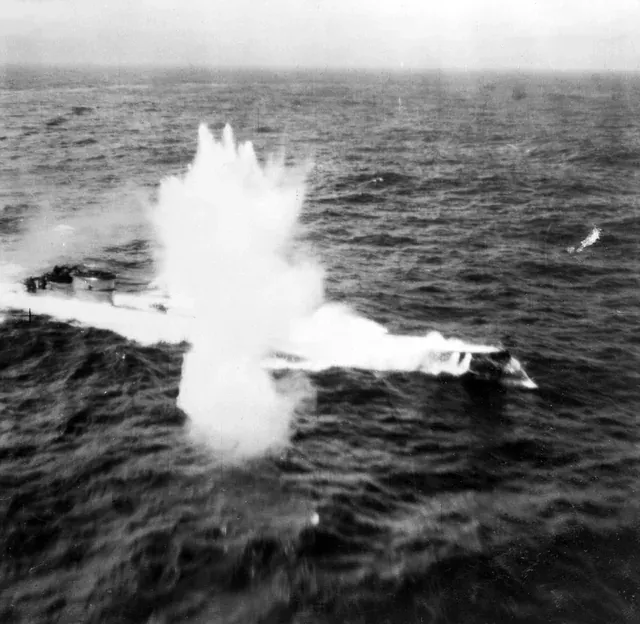
What turned the Atlantic was largely radar: sets small enough to fly in an aircraft or ride on a corvette, able to find a surfaced U-boat in the dark or through fog from miles away. That technology came with a problem of its own: an antenna needs a housing, and the housing has to be transparent to the same radio waves it protects the antenna from. Metal, the obvious shipbuilder’s and aircraft-maker’s material, was exactly the wrong choice: it blocks radio waves outright. What the war needed was a shell that was structural, weatherproof, and effectively invisible to radar, and in 1943 the American Cyanamid Company supplied it: a resin line called Laminac, an unsaturated polyester that could be cured at room temperature with nothing more than a peroxide hardener, instead of the heat and pressure earlier resins had demanded. Combined with the glass fiber that Owens-Corning had commercialized a few years before, it could be laid up by hand into radomes, boat hulls and aircraft parts wherever it was needed, without a single hot press in sight.
Plate II

The chemistry itself was not new in 1943: the chemist Carlton Ellis had filed a patent in 1936 showing that a maleic-anhydride polyester dissolved in a vinyl monomer could be cured to a solid with nothing more than a peroxide catalyst, and a Toledo boatbuilder named Ray Greene had already laid one up over a wooden mold with Owens-Corning cloth to build an experimental daysailer in 1942. What Laminac changed was practicality: a resin any competent shop could mix, catalyze and cure without an autoclave was a resin the wartime economy could actually use at scale, and it is that combination (accessible cure chemistry plus cheap, strong glass reinforcement) that the rest of this material’s history is built on.
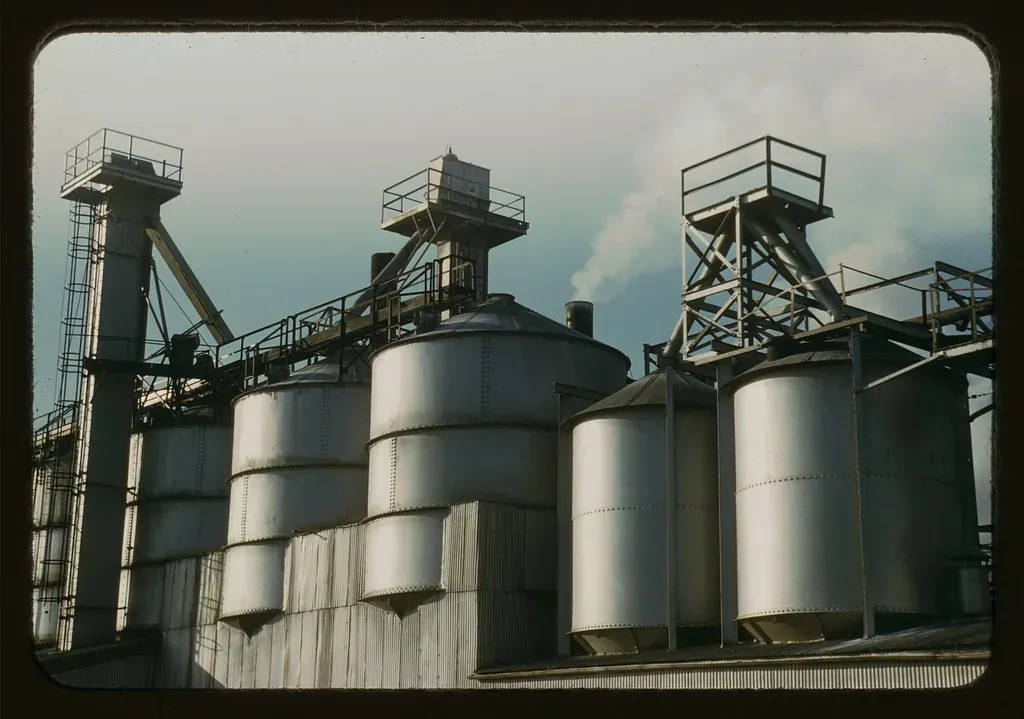
Plate III

The Chemistry Behind the Revolution
Unsaturated polyester’s molecular architecture sets it apart from a true condensation polyester like PET. Some of the links in its backbone come from an ordinary saturated diacid, but others come from maleic or fumaric acid, which leaves a carbon-carbon double bond sitting in the chain rather than consuming it. Those double bonds are the “unsaturated” sites the name refers to, and on their own they do nothing special: the resin as shipped is a viscous liquid, a prepolymer dissolved in a reactive diluent, usually styrene. Add a peroxide initiator and those double bonds, on the backbone and on the dissolved styrene alike, begin linking to each other in a free-radical chain reaction, stitching what were separate polyester chains into a single crosslinked network. The liquid does not evaporate to a solid, the way a lacquer would; it reacts to one, all at once, throughout its volume.
Properties That Changed an Industry
Cast UP resin sits a little heavier than water, comparable to a soft engineering plastic, and once cured it does not have a melting point to speak of; it holds its shape well above the temperature of boiling water and, pushed hard enough, chars and decomposes rather than flows. On its own the cured resin is fairly stiff and only moderately strong, and it takes very little stretching before it cracks; that brittleness is exactly why it is almost never used unreinforced; laminated with glass fiber, the same resin system reaches strengths that compete with the light alloys it was invented to replace, while staying markedly lighter. It resists dilute acids and alcohols well, but has little tolerance for hydrocarbon solvents, greases or chlorinated fluids, which rules it out for fuel tanks and similar contact unless specially formulated. It also weathers outdoor exposure respectably for a plastic, which is one reason a fiberglass boat hull or roofing panel can sit outside for decades with only a chalky surface to show for it.
From Liquid to Solid: Manufacturing and Application
Making the base resin is itself a two-stage process: an unsaturated dibasic acid (typically maleic anhydride) is condensed with a glycol under an inert atmosphere to build the polyester backbone, and that resin is then dissolved in styrene monomer to give the pourable liquid sold in drums. Curing is where the transformation happens: an initiator, usually an organic peroxide, and often a promoter such as cobalt naphthenate to get it working at room temperature, sets off the free-radical crosslinking that turns the liquid into a rigid network throughout its whole volume, not merely at a surface.
Plate IV


How that liquid actually becomes a finished part has grown into a family of techniques, each suited to a different scale and shape. Hand lay-up (rolling catalyzed resin by hand into glass mat draped over a mold) is the oldest method and the one Ray Greene himself used, still the right choice for one-off hulls and custom architectural pieces. Spray-up, which chops fiber and sprays it together with resin straight onto a mold, took over where speed mattered more than finesse: swimming pools, truck panels, large simple shapes. Resin transfer molding injects resin into dry reinforcement clamped between two mold halves, giving two finished surfaces and the dimensional accuracy automotive parts need. Vacuum infusion draws resin through dry reinforcement using nothing but a sealed bag and a vacuum pump, producing the low-void, high-strength laminates that modern wind turbine blades depend on. And for continuous shapes, pultrusion pulls fiber through a resin bath and then a heated die to cure endless lengths of beam or rod, while filament winding wraps resin-impregnated fiber around a rotating mandrel to build pressure vessels, pipelines and rocket motor casings.
Applications That Changed the World
The range is enormous for a single resin family: fiberglass boat hulls and car body panels, bathtubs and shower units, cultured marble countertops, corrugated roofing panels, and (perhaps the application with the most riding on it now) the blades of wind turbines, where a lightweight, fatigue-resistant composite has to flex through tens of millions of load cycles over a working life measured in decades. Little of that was visible in 1943; what was visible was that a resin anyone could mix and cure without a furnace, laid over glass cloth anyone could buy by the roll, had turned “reinforced plastic” from a laboratory curiosity into a wartime production material almost overnight.
values with [n] cite the numbered references·estimates are flagged·“not yet available” and “N/A” are honest states, not gaps
fetching the model…
Unsaturated Polyester repeat unit
- Abbreviation
- UP
- Type
- polymer family (hub)
- CAS number
- None (heterogeneous class or not assigned)
- Resin ID code
- none assigned
- Formula
- (C7H8O4)n[-O-CH(CH3)-CH2-O-CO-CH=CH-CO-]nThe linear prepolymer is shown. Its point is the carbon-carbon double bond in every repeat: dissolved styrene adds across those bonds during cure and staples the chains into a network.
- Repeat unit (BigSMILES)
{[][>]OC(C)COC(=O)/C=C\C(=O)[<][]}- IUPAC name
- —
- Synonyms
- UPR
- Also known as
- —
- Chemical family
- polyester
- Backbone class
- heterochain
- Polymerization mechanism
- step-growth-condensationfree-radical
- Constitutional monomer
- Maleic acid / fumaric acidStyrene (crosslinking agent)
- Polymer class
- thermoset
- Year of origin
- 1943
- Era
- The Wartime Innovation Period (1939-1945)
- Key figures
- Carlton Ellis · Ray Greene · American Cyanamid
- Events referenced
- Surrender of German forces at the Battle of Stalingrad (2 February 1943) · The Battle of the Atlantic and 'Black May' 1943
- Polymerization type
- step-growth condensation (polyesterification), then free-radical crosslinking
- Common monomers (feedstocks)
- maleic acid/anhydride, fumaric acid, propylene glycol or other diols, styrene
- Catalysts
- methyl ethyl ketone peroxide; benzoyl peroxide
Polyester research at DuPont began in 1926 under Wallace Carothers; the unsaturated-polyester approach was patented in Britain in 1928 by General Electric. Two-stage process: (1) polycondensation of a diol with an unsaturated dicarboxylic acid to form the base unsaturated polyester, then (2) free-radical crosslinking with a vinyl monomer (typically styrene) initiated by an organic peroxide, producing a 3-D crosslinked thermoset network.
- Tacticity
- not yet available
- Crystal structure
- not yet available
- Typical crystallinity
- 0 %[3]Amorphous crosslinked thermoset network once cured; Mark's Polymer Data Handbook classifies UP as a thermoset polymer system (mixture of unsaturated polyester prepolymer with a vinyl monomer).
Molecular weight
- Number average (Mn)
- not yet available
- Mass average (Mw)
- not yet available
- Dispersity (Mw/Mn)
- not yet available
Mark-Houwink constants
not yet available
- Density
- 1.11 (1.1–1.12) g/cm³[2]At 20°C, cured base resin. Mark's Polymer Data Handbook reports a broader specific-gravity range for cast forms (rigid 1.04–1.46, flexible 1.01–1.20).
- Melt flow index
- Not applicable
- Refractive index
- not yet available
- Transmittance
- not yet available
- Haze
- not yet available
- Gloss
- not yet available
- Water absorption
- 0.2 %[2]Equilibrium, immersion in water at 23°C. Mark's Polymer Data Handbook reports 0.15–0.6% for cast rigid forms (24 h, 1/8 in. sample).
- Dielectric constant
- 2.9 (2.8–3)[3]1 MHz, cast (unfilled) resin; molded compounds 3.2–4.5, glass-fiber-reinforced ≈5.
- Dielectric strength
- not yet available
- Electrical conductivity
- 1 × 10⁻¹² S/m[3]Reciprocal of reported volume resistivity (1×10¹⁴ Ω·cm = 1×10¹² Ω·m).
- Glass transition (Tg)
- 109.5 (94–125) °C[2]After cure; uncured prepolymer Tg ≈ -61°C.
- Melting temperature (Tm)
- Not applicableCrosslinked thermoset; does not melt.
- Crystallization (Tc)
- Not applicable
- Heat deflection (HDT)
- 131.85 (56.85–206.85) °C[3]1.82 MPa, cast rigid (unfilled) grade; glass-fiber-reinforced grades reach 157–287°C.
- Decomposition onset
- not yet available
- Thermal conductivity
- 0.17 W/(m·K)[2]Base/cast resin. Glass-fiber-reinforced grades reported far higher (2.6–8.4 W/(m·K)) per Mark's Polymer Data Handbook, reflecting filler content.
- Tensile modulus
- 3550 (3200–3900) MPa[2]Cast base resin. Mark's Polymer Data Handbook reports a broader cast-rigid range (2,100–4,400 MPa) and much higher glass-fiber-reinforced values (5,500–31,000 MPa).
- Yield strength
- not yet available
- Tensile strength at break
- 53.5 (22–85) MPa[2]Cast base resin. Mark's Polymer Data Handbook reports 4.1–90 MPa for cast rigid and up to 340 MPa for glass-fiber-reinforced (woven cloth) grades.
- Elongation at break
- 3.1 (1.2–5) %[2]Cast base resin. Mark's Polymer Data Handbook reports <2.6% for cast rigid and 40–310% for cast flexible grades.
- Impact strength (Izod)
- 16 (11–21) J/m[3]Cast, rigid (unfilled); cast, flexible >370 J/m; glass-fiber-reinforced 80–1,600 J/m.
- Impact strength (Charpy)
- not yet available
- Hardness
- 55 (35–75) Barcol[3]Cast, rigid (unfilled); cast, flexible Shore D84-94; glass-fiber-reinforced Barcol 40–80.
- Flexural modulus
- 4050 (3500–4600) MPa[2]Cast base resin. Mark's Polymer Data Handbook reports 3,400–4,200 MPa for cast rigid (296 K) and 7,000–21,000+ MPa for glass-fiber-reinforced grades.
- Poisson's ratio
- not yet available
- Coefficient of friction
- not yet available
- Solvent: acids
- good[2]
- Solvent: alcohols
- good[2]
- Solvent: alkalis
- good (dilute only)[2]
- Solvent: aliphatic hydrocarbons
- poor[2]
- Solvent: aromatic hydrocarbons
- poor[2]
- Solvent: greases & oils
- poor[2]
- Solvent: halogenated hydrocarbons
- poor[2]
- Weathering / UV
- Good weathering resistance (general property of unsaturated polyester thermoset systems).[3]
- Hydrolysis resistance
- not yet available
- Flammability (UL94)
- Not applicable
- Limiting oxygen index
- not yet available
- Solubility parameter (δ)
- not yet available
Gas permeability
not yet available
Polymer-solvent interaction parameter (χ)
not yet available
- Processing methods
- hand lay-up / spray-up (with glass fiber reinforcement)resin transfer moldingsheet molding compound (SMC)
- Drying required
- not yet determined
- Processing temperature
- 23–197 °C[3]Glass-fiber-reinforced compression/injection/transfer molding compounds (SMC/BMC/prepreg); wide range reflects different molding forms and process types. Hand lay-up/cast UP without heated molding is typically cured near room temperature with a peroxide catalyst. Replaces an earlier not-applicable judgement: heated molding is a real process for glass-fiber-reinforced UP compounds.
- Shrinkage rate
- 0.4 (0.1–0.7) %[3]Unfilled resin, linear mold shrinkage. Glass-fiber-reinforced 0.02–1.2%; SMC as low as 0.002%.
- Marine & automotivefiberglass-reinforced boat hulls · car body panels
- Constructionbathtubs and shower units · cultured marble
- Industrialcasting resins · sheet molding compounds · non-metallic auto-body fillers
- Recyclable
- No
- Biodegradable
- No
- Degradation pathway
- not yet available
As a thermoset composite (typically glass-fiber reinforced), end-of-life disposal is difficult; mechanical grinding for use as filler is the main reuse route rather than true recycling.
- LD50 (oral, rat)
- not yet available
- NFPA health
- not yet available
- NFPA flammability
- not yet available
- NFPA reactivity
- not yet available
- Carcinogenic classification
- not yet available
- [1]Unsaturated polyesterWikipediaAccessed 2026-07-14https://en.wikipedia.org/wiki/Unsaturated_polyester[wiki-unsaturated-polyester]
- [2]Handbook of PolymersChemTec Publishinghttps://www.worldcat.org/isbn/9781895198928[handbook-wypych-2016]
- [3]Polymer Data HandbookOxford University Presshttps://search.worldcat.org/search?q=Polymer+Data+Handbook+Mark+1999[handbook-mark-1999]
Illustrations
- Plate IGerman prisoners marched through Stalingrad after the February 1943 surrender. Stalingrad was one of the two fronts on which the war's balance visibly shifted that year.Wikimedia Commons
- Plate IIA U-boat under attack from an RAF Coastal Command aircraft, 24 June 1943: the kind of aircraft-borne radar sortie that closed the mid-Atlantic gap, and the kind of housing problem that unsaturated polyester and glass fiber were pressed into service to solve.Wikimedia Commons
- Plate IIIThe batch house at an Owens-Corning Fiberglas plant in Toledo, Ohio, February 1942, storing the raw materials melted down into the glass fiber that unsaturated polyester resin would soon be paired with.Wikimedia Commons
- Plate IVA fiberglass and a timber-built Folkboat, same hull design, side by side: the direct comparison unsaturated polyester eventually made possible for an entire category of small craft.Wikimedia Commons