The Birth of Synthetic Polymers (1907-1938): The Bakelite Revolution
Alkyd Resins
The Polymer That Painted the Twentieth Century
How Alcohol Married Acid and Gave the World a Better Coat of Paint
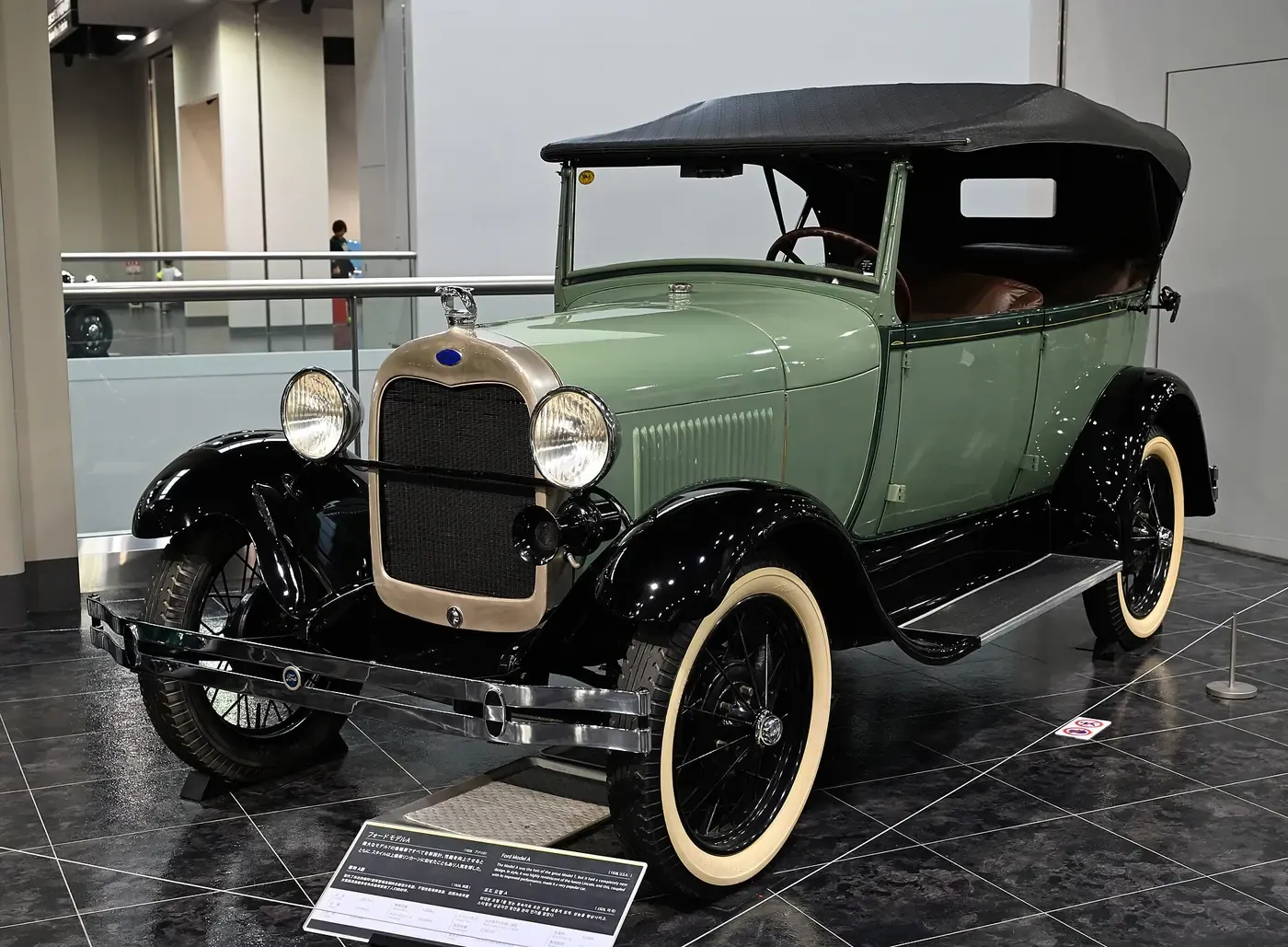
Nineteen twenty-seven was a year for large, fast, shining new things. In May, Charles Lindbergh flew the Spirit of St. Louis from New York to Paris alone, and came home to a ticker-tape parade that made him the most photographed man on earth. In December, Ford unveiled the Model A, the car that finally replaced the Model T, and, for the first time in Ford’s history, buyers could order it in colors other than black. Underneath both machines sat the same old problem: nothing yet existed that could finish a manufactured surface fast, hard and bright, and then simply stay that way.
Plate I

.jpg)
General Electric knew the problem from the inside. That same year the company put its “Monitor-Top” refrigerator on the market (the first mass-produced electric refrigerator most American households could actually afford), and its steel cabinet needed a finish that could survive a kitchen: heat from the compressor, splashes, scrubbing, years of daylight. The oil-and-natural-resin varnishes of the day dried slowly, yellowed, and cracked within a couple of seasons outdoors. GE’s own research chemist, Roy H. Kienle, had been trying to fix exactly that failure since the early 1920s, working from a resin the company already made for a completely different reason: an insulating varnish called Glyptal, built from glycerol and phthalic anhydride, that GE brushed onto motor windings and electrical apparatus because it held up where natural shellac could not.
Plate II
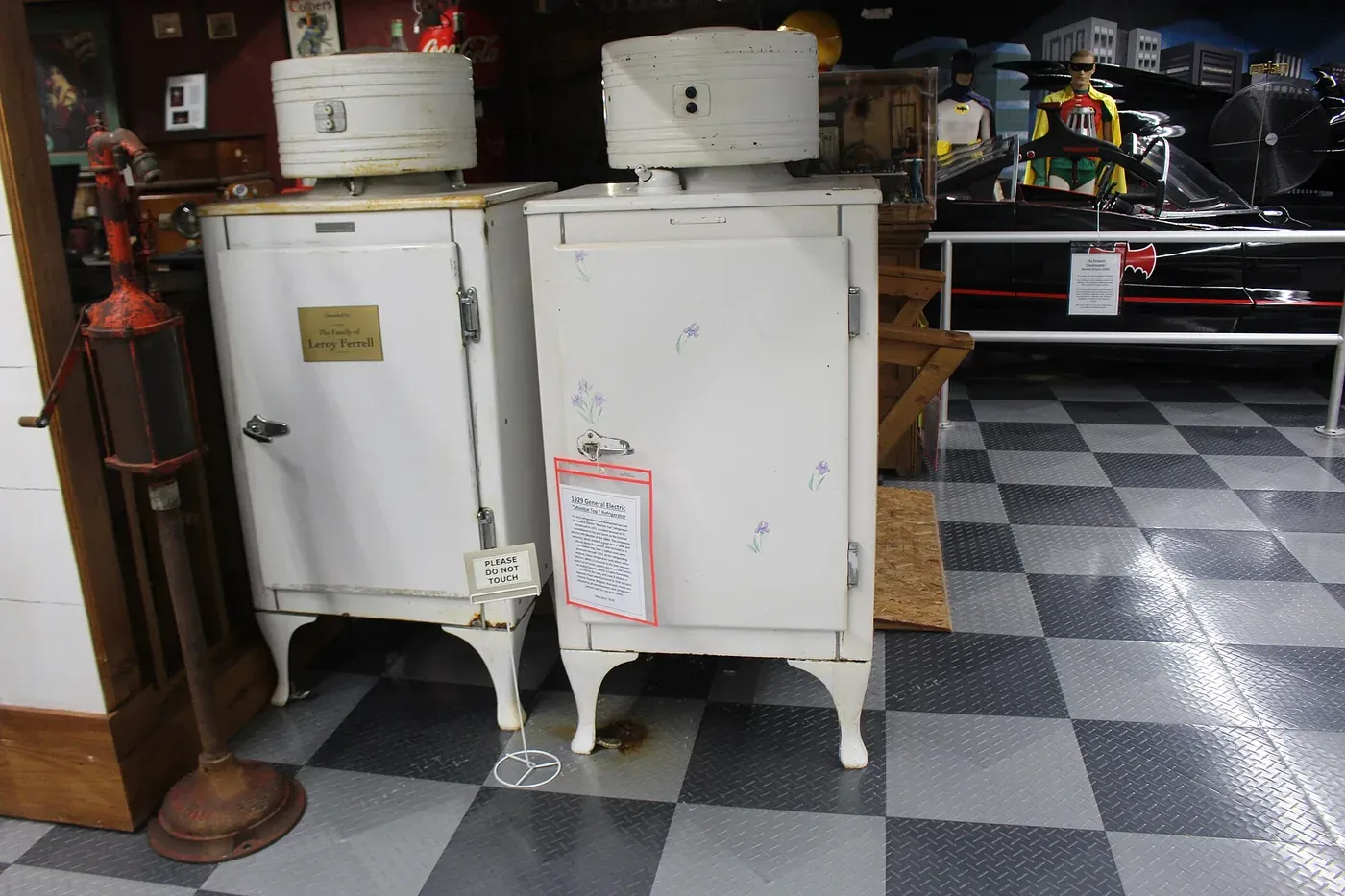

Glyptal on its own was a dead end for that job: cured hard, it was brittle and impossible to apply as a brush-on coating outside a factory setting. Kienle’s fix, for which he filed a patent application on 29 January 1927, was to cut the glycerol-phthalate resin with drying oils pressed from linseed and similar seeds. The oils dangled reactive, unsaturated fatty chains off the rigid polyester backbone, and those chains would go on to do their own work once the paint was on the wall. He fused two words to name the result: alcohol and acid gave alkyd.
Molecular Architecture: A Polyester With an Oily Secret
At its core, an alkyd is a polyester: a chain built from a polyhydric alcohol such as glycerol reacting with a polybasic acid such as phthalic anhydride. On its own, this backbone would be hard and unyielding. The genius of the alkyd lies in what hangs off it: long, unsaturated fatty acid chains derived from natural drying oils, dangling from the polyester spine like fringe from a scarf.
These fatty tails carry carbon-carbon double bonds that are eager to react with oxygen. When a coat of alkyd paint is exposed to air, those double bonds slowly crosslink, stitching the liquid film into a tough, solid network in a process called autoxidative curing. It is a quietly elegant chemistry: the paint doesn’t merely dry by evaporation, it actively knits itself together by breathing in the atmosphere. Kienle classified his resins by how much oil they carried: long, medium, and short oil alkyds. The scheme is still used today.
Manufacturing Journey: From Glyptal to Global Standard
The alkyd story began with General Electric’s Glyptal resins, stiff polyesters first developed as electrical insulation. Kienle’s oil modification transformed these laboratory curiosities into practical coatings, and full-scale commercial production followed in the early 1930s, once GE had scaled the process beyond the laboratory. The manufacturing process, often called the monoglyceride process, begins by reacting a vegetable oil with a polyol, then adding the polybasic acid to build the final resin. This is a two-stage sequence that remains the industry standard.
Plate III
_-_DPLA_-_302d85746114021bae65854c05490944.jpg)
The economics were irresistible. Alkyds were inexpensive, made from abundant natural oils and simple acids, and they dramatically outperformed the traditional oil-and-natural-resin varnishes that came before. By the early 1950s, alkyds had become the predominant resins of the entire coatings industry, painting homes, cars, machinery, and furniture across the industrialized world.
Properties: Why a Housepainter Could Trust It
An alkyd film sits just a little denser than water, and a well-formulated one cures to a glass transition close to room temperature, which is why cheap enamel can feel faintly soft on a hot day and brittle on a cold one, and why formulators tune the oil length to push that point where they need it. It has no true melting point: because the fatty chains crosslink as they cure, there is a network to decompose rather than a chain to melt, and a fully cured film holds together well past the temperature of boiling water before it starts to break down chemically.
Mechanically it asks to be flexible rather than strong. The cured film will stretch a considerable way before it tears (enough to follow a wooden door as it swells and shrinks through the seasons) while still being hard enough underneath to resist an everyday scuff. It takes up a modest amount of moisture over time but does not blister on a properly primed surface, and it can be finished to a genuine gloss, the glassy shine that made “enamel” mean something specific to a 1930s homeowner. It shrugs off alcohols and everyday solvents comfortably, tolerates oils and greases reasonably well, but has little resistance to strong acids or alkalis: the ester linkages in its backbone hydrolyze under alkaline conditions, which is one reason alkyd paint has never been the right choice on fresh concrete or masonry. Its other known weakness is the sun: years of ultraviolet exposure slowly oxidize the surface and chalk it to a fine powder, the same aging that leaves an old painted fence looking dusty and pale. As shipped, the solvent carrying it is only modestly flammable and the cured film itself is close to non-toxic to live with, though those same evaporating solvents are exactly what later drew regulators’ attention.
Applications and Impact: The Gloss on Everything
For most of the twentieth century, if something was painted, there was a good chance it was painted with an alkyd. These resins became the backbone of decorative and protective coatings: the glossy enamel on a front door, the tough coat on industrial machinery and metal railings, and, from the 1930s on, the baked enamel finish that several American automakers sprayed onto car bodies as an alternative to nitrocellulose lacquer. Their combination of good adhesion, flexibility, gloss, and low cost made them the default choice for both household and industrial paints.
Plate IV

Alkyds brought reliable, fast-drying, hard-wearing color to a world eager for it. They enabled the ready-mixed paints that let ordinary people redecorate their own homes, and they protected the steel and wood of a rapidly industrializing century against rust and rot. Few polymers have touched so many surfaces of daily life while asking for so little recognition.
Down, But Not Out
The alkyd’s long reign faced a serious challenge in the latter twentieth century, as environmental regulations targeted the volatile organic solvents that traditional alkyd paints released into the air. For a time, it seemed the old workhorse might be legislated into retirement. But alkyds have proven remarkably resilient. Chemists have reinvented them as water-based alkyd emulsions and high-solids formulations that slash solvent emissions while preserving the properties that made them beloved.
From a 1927 laboratory in Schenectady to the paint aisle of every hardware store, the alkyd resin has coated, colored, and protected the modern world with quiet dependability. It is the polymer behind the gloss on countless everyday things. It is a marriage of alcohol and acid that, nearly a century on, still refuses to fade.
values with [n] cite the numbered references·estimates are flagged·“not yet available” and “N/A” are honest states, not gaps
- Abbreviation
- —
- Type
- polymer family (hub)
- CAS number
- None (heterogeneous class or not assigned)
- Resin ID code
- none assigned
- Formula
- Fatty-acid-modified polyester. Its composition (polyol + dibasic acid/anhydride + oil type and loading) varies by formulation, so no single repeat unit represents the class.
- Repeat unit (BigSMILES)
- Fatty-acid-modified polyester. Its composition (polyol + dibasic acid/anhydride + oil type and loading) varies by formulation, so no single repeat unit represents the class.
- IUPAC name
- —
- Synonyms
- Glyptal (original trade name)
- Also known as
- Glyptal
- Chemical family
- polyester
- Backbone class
- heterochain
- Polymerization mechanism
- step-growth-condensation
- Constitutional monomer
- Glycerol (or other polyol)Phthalic anhydride (or other dibasic acid)
- Polymer class
- thermoset
- Year of origin
- 1927
- Era
- The Birth of Synthetic Polymers (1907-1938): The Bakelite Revolution
- Key figures
- Roy H. Kienle · General Electric
- Events referenced
- Charles Lindbergh's solo transatlantic flight (May 1927) · Ford introduces the Model A, its first car offered in colors other than black (December 1927) · General Electric introduces the 'Monitor-Top' refrigerator (1927)
- Polymerization type
- step-growth condensation (polyesterification)
- Common monomers (feedstocks)
- glycerol, pentaerythritol, phthalic anhydride, unsaturated fatty acid / triglyceride oil
- Catalysts
- not yet available
Two main industrial routes: the fatty-acid process (acid anhydride + polyol + unsaturated fatty acid combined directly, giving controlled composition) and the alcoholysis/monoglyceride process (raw vegetable oil transesterified with polyol, more economical). The original alkyds (glycerol/phthalic-acid compounds marketed as 'Glyptal') served as lighter-colored substitutes for darker copal resins in varnishes. ~200,000 tonnes produced annually.
- Tacticity
- not yet available
- Crystal structure
- not yet available
- Typical crystallinity
- 0 %[3]Amorphous crosslinked network once cured (oxidative drying of the unsaturated oil component); Mark's Polymer Data Handbook classifies alkyd resins as thermoset polyesters modified with monobasic fatty acids.
Molecular weight
- Number average (Mn)
- 2350 (2300–2400) g/mol[2]Conventional (non-hyperbranched) resin; hyperbranched variants reported 2,550–6,611 g/mol.
- Mass average (Mw)
- 27100 (23900–30300) g/mol[2]Conventional (non-hyperbranched) resin; hyperbranched variants reported 8,125–19,537 g/mol.
- Dispersity (Mw/Mn)
- 10[2]>10 (reported as a lower bound), conventional resin; hyperbranched variants reported 1.94–2.58 or 2.16–295 depending on formulation.
Mark-Houwink constants
not yet available
Oil length (fatty-acid content) tunes flexibility vs. hardness of the cured film.
- Density
- 1.175 (1.1–1.25) g/cm³[2]At 20°C, resin/coating grade. Mark's Polymer Data Handbook reports 1.2 g/cm³ for a coating grade specifically; mineral- or glass-fiber-filled molding compounds (a different product form) run much higher, 1.6–2.3 g/cm³.
- Melt flow index
- Not applicable
- Refractive index
- 1.48 (1.467–1.493)[2]20°C
- Transmittance
- not yet available
- Haze
- not yet available
- Gloss
- 90 (85–95) %[2]60° Gardner gloss (ASTM D523), coating; specific formulations measured 85.2–90.9%.
- Water absorption
- 2 %[3]Coating grade. Mineral-filled/glass-fiber-reinforced molding compounds (a different product form) report 0.03–0.5% (1/8 in. specimen, 24 h).
- Dielectric constant
- 4.25 (3.5–5)[2]Mark's Polymer Data Handbook reports 4 for a coating grade specifically (1 MHz).
- Dielectric strength
- not yet available
- Electrical conductivity
- not yet available
- Glass transition (Tg)
- 9 (8–10) °C[2]Typical cured film; uncrosslinked ≈2°C; naturally aged 25 years 20–40°C (further crosslinking/oxidation).
- Melting temperature (Tm)
- Not applicableCures to a crosslinked network; does not melt.
- Crystallization (Tc)
- Not applicable
- Heat deflection (HDT)
- Not applicable
- Decomposition onset
- 200 (150–250) °C[2]Onset of peroxide decomposition; oxidative decomposition follows at 250–400°C, volatilization above 400°C.
- Thermal conductivity
- Not applicable
- Tensile modulus
- not yet available
- Yield strength
- not yet available
- Tensile strength at break
- 35 MPa[3]Coating (cured film) grade. Mineral/glass-fiber-filled molding compounds (a different product form) report 20–66 MPa.
- Elongation at break
- 65 %[3]Coating (cured film) grade.
- Impact strength (Izod)
- Not applicable
- Impact strength (Charpy)
- Not applicable
- Hardness
- 80 Shore D[3]Coating grade. Wypych's Handbook of Polymers separately reports pencil hardness 2B-H.
- Flexural modulus
- Not applicable
- Poisson's ratio
- not yet available
- Coefficient of friction
- not yet available
- Solvent: dilute acids
- poor[2]
- Solvent: alcohols
- very good[2]
- Solvent: alkalis
- poor to good[2]
- Solvent: aliphatic hydrocarbons
- good[2]
- Solvent: aromatic hydrocarbons
- good[2]
- Solvent: esters
- good to fair[2]
- Solvent: greases & oils
- good to fair[2]
- Solvent: halogenated hydrocarbons
- fair to poor[2]
- Weathering / UV
- Susceptible to UV-driven chalking and oxidation of unsaturated double bonds; activation wavelength ≈330 nm.[2]
- Hydrolysis resistance
- Ester linkages are hydrolyzable under alkaline conditions.[3]
- Flammability (UL94)
- Not applicable
- Limiting oxygen index
- not yet available
- Solubility parameter (δ)
- 21.22 (21.2–21.24) MPa^0.5[3]Total Hansen solubility parameter (δt); long-oil formulation 21.20 MPa^0.5, short-oil formulation 21.24 MPa^0.5.
Gas permeability
not yet available
Polymer-solvent interaction parameter (χ)
not yet available
- Processing methods
- solvent-borne coating application + oxidative air-dry cure
- Drying required
- not yet determined
- Processing temperature
- Not applicable
- Shrinkage rate
- Not applicable
- Coatingsoil-based paints and varnishesThe dominant resin in oil-based coatings for most of the 20th century.
- Industrialsand-based molds for metal casting
- Recyclable
- No
- Biodegradable
- No
- Degradation pathway
- not yet available
Solvent-borne alkyd coatings are a VOC source, driving a long-term industry shift toward waterborne/latex paint alternatives.
- [1]AlkydWikipediaAccessed 2026-07-14https://en.wikipedia.org/wiki/Alkyd[wiki-alkyd]
- [2]Handbook of PolymersChemTec Publishinghttps://www.worldcat.org/isbn/9781895198928[handbook-wypych-2016]
- [3]Polymer Data HandbookOxford University Presshttps://search.worldcat.org/search?q=Polymer+Data+Handbook+Mark+1999[handbook-mark-1999]
Illustrations
- Plate ILindbergh in front of the Spirit of St. Louis, May 1927. He was the year's most photographed symbol of a country building bigger, faster things than its finishing technology could keep up with.Wikimedia Commons
- Plate IIA General Electric Monitor-Top refrigerator of the model introduced in 1927. Its enameled steel cabinet needed exactly the fast, durable finish Kienle was working on down the hall.Wikimedia Commons
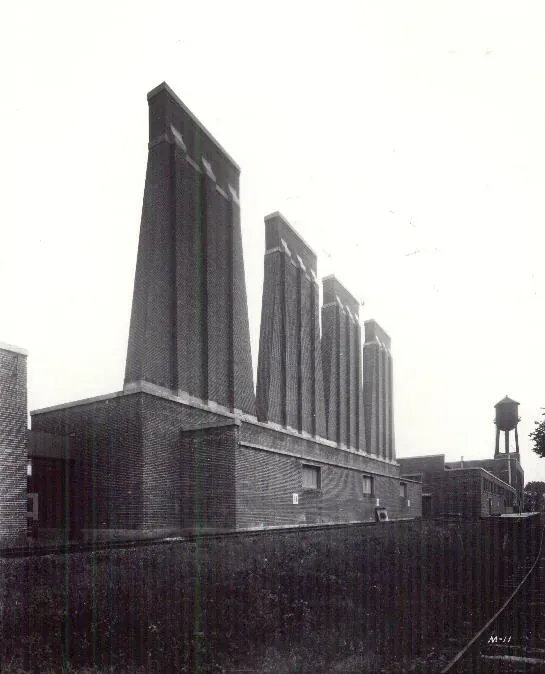
- Plate IIIThe Mountain Paint and Varnish Company, Toledo, Ohio, around 1925. It was the kind of works, dependent on cooked natural oils and resins, that alkyd chemistry would spend the next generation displacing.Wikimedia Commons
- Plate IVA Ford Model A, the car that in December 1927 gave Ford buyers a choice of colors for the first time in nearly two decades. Alkyd enamels went on to satisfy that appetite for color on manufactured goods for the rest of the century.Wikimedia Commons