Decoding Nature's Legacy (1833-1902)
Chitin
The Forgotten Champion of Natural Polymers
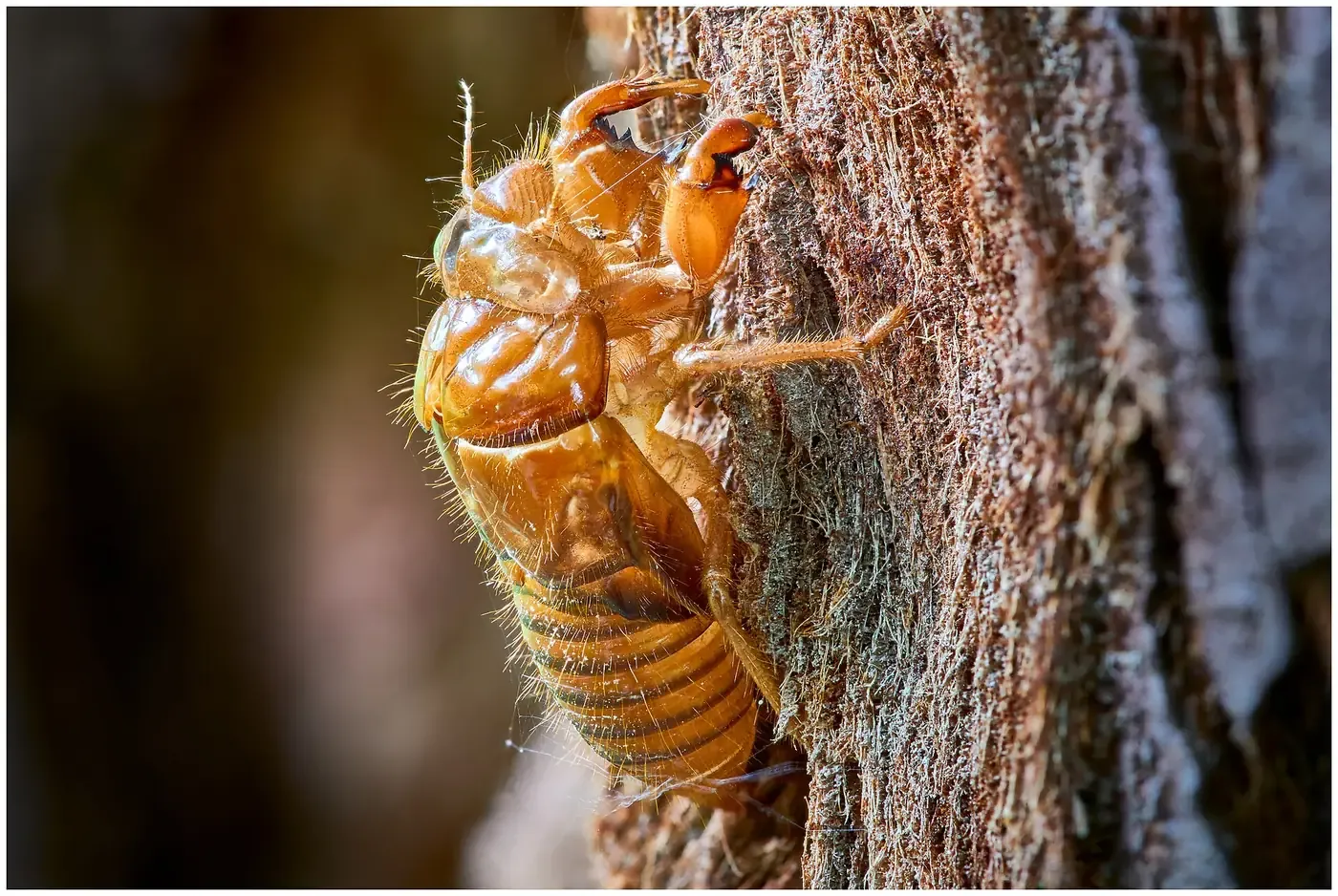
In the warm glow of a cave fire some hundred thousand years ago, our ancestors noticed something strange about the shed shells of beetles they had gathered. Unlike wood, which quickly burned to ash, these translucent shields seemed nearly indestructible, holding their shape even as flames licked their surface. They were witnessing the extraordinary resilience of chitin, the tough, lightweight polymer that armors the entire arthropod world and quietly ranks as the second most abundant natural polymer on the planet, after cellulose.
Plate I
_(51014966282).jpg)
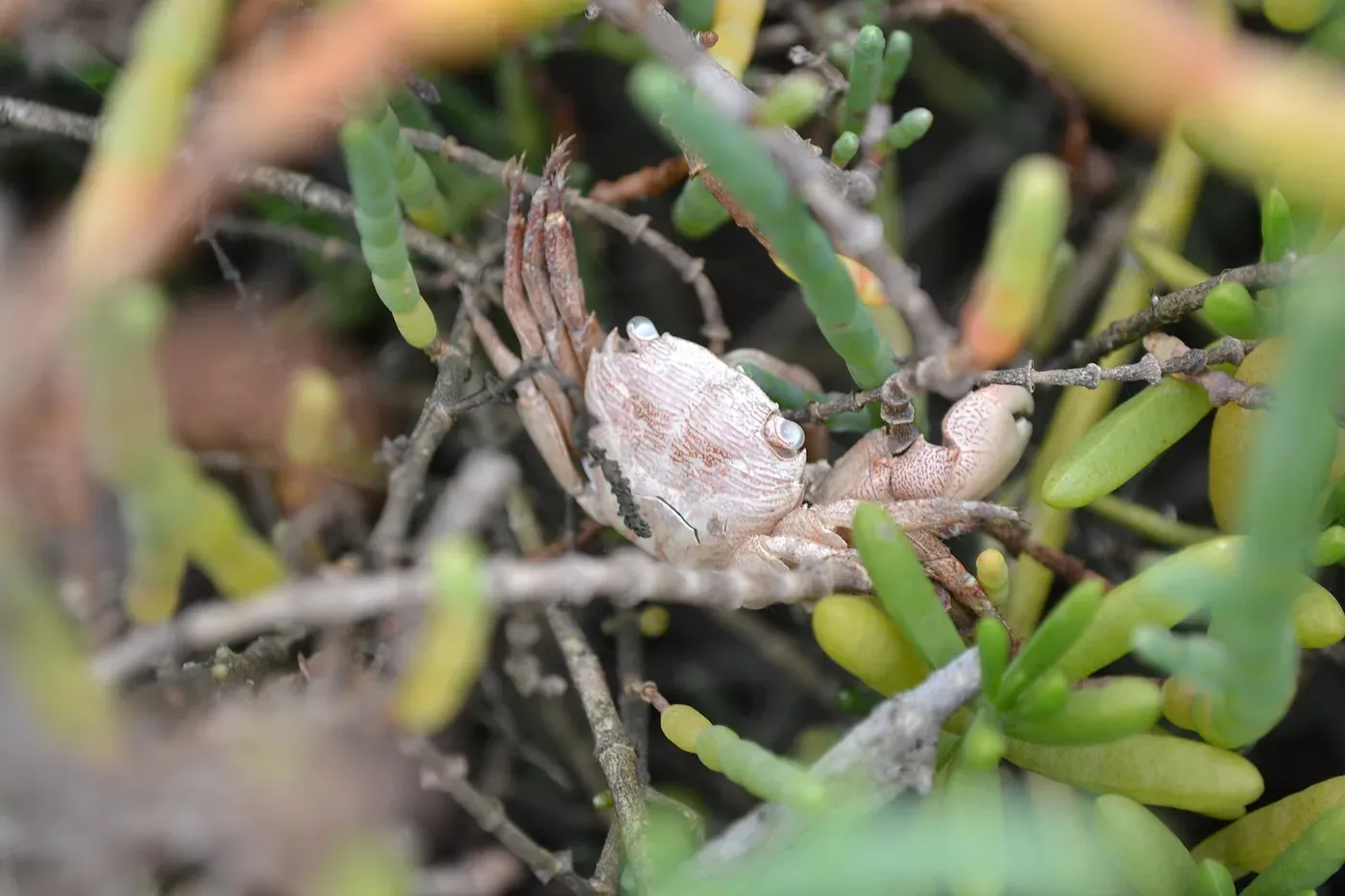
The chemistry took much longer to catch up than the observation. In 1876 the Strasbourg researcher Georg Ledderhose, working in Felix Hoppe-Seyler’s laboratory, boiled crustacean chitin in strong acid and isolated a nitrogen-containing sugar from the wreckage; two years later he showed that chitin also gave up acetic acid on hydrolysis, meaning the sugar had to carry an acetyl group of its own. It fell to the chemist Ferdinand Tiemann, in 1884, to give that sugar the name that stuck: glucosamine. Naming it did more than tidy up the literature; it gave chemists their first real handle on what chitin was actually built from, arriving amid the broader wave of organic chemistry that was busy sorting out cellulose, starch, and lignin in the very same decades.
Plate II
.jpg)
Molecular Identity: Cellulose’s Tougher Cousin
Chitin reveals nature’s mastery of carbohydrate chemistry. Its structure closely mirrors that of cellulose, but with one crucial substitution: an acetamido group replaces a hydroxyl group on each sugar unit. This seemingly small change yields a material of real toughness and an excellent strength-to-weight ratio, able to build complex hierarchical structures held together by extensive hydrogen bonding. Those are properties good enough that it resists ordinary biodegradation far better than most natural polymers, breaking down only slowly, and mainly at the hands of specialized chitin-digesting microbes rather than everyday decay.
In arthropod exoskeletons, chitin nanofibers arrange into a twisted “plywood” pattern called a Bouligand structure, distributing impact across many layers at once. This design has inspired new body armor and sports equipment. Two distinct crystalline forms occur in nature: alpha-chitin, with its chains packed tightly in opposite directions, dominates crustacean shells and insect cuticle, while beta-chitin, with chains all running the same way, shows up in squid pens and some diatoms.
Nature’s Construction Site: Chitin Biosynthesis
Chitin biosynthesis is a molecular construction site of enviable precision. It begins with glucose, which undergoes a relay of enzymatic transformations: to fructose-6-phosphate, then glucosamine-6-phosphate, and finally UDP-N-acetylglucosamine, the activated building block of chitin, the very compound Ledderhose and Tiemann were chasing without knowing its full biological journey. From there, specialized enzymes called chitin synthases extrude these blocks into long chains while simultaneously arranging them into crystalline fibrils.
These nanoscale fibers then self-assemble into larger structures, guided by hydrogen bonding and hydrophobic interactions. This is a feat of rapid, self-directed manufacturing efficient enough that a single crab can rebuild its entire shell within weeks of losing it.
From Sea to Science: Modern Chitin Processing
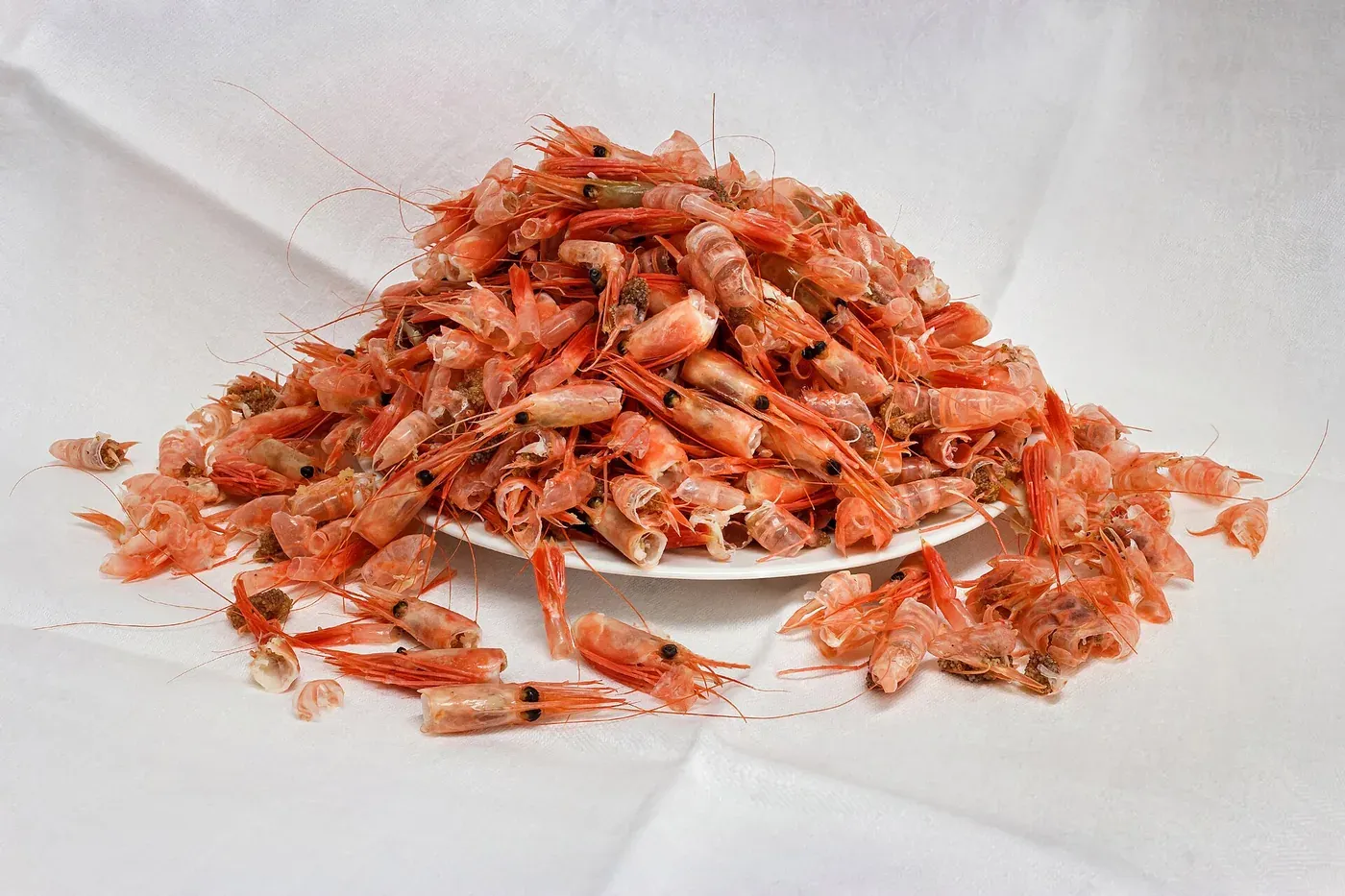
Marine crustaceans alone discard an enormous tonnage of chitin every year in shells left over from seafood processing, most of it historically treated as waste. Processing begins with demineralization (dissolving away calcium carbonate with mild acid) followed by deproteinization with alkaline solutions to reveal the chitin framework beneath. The late 2010s brought greener methods using ionic liquids and deep eutectic solvents that dissolve chitin without harsh chemicals.
Plate III

Chitin’s chemical versatility is its superpower. Partially deacetylating it yields chitosan, a more soluble and reactive variant whose degree of deacetylation becomes a tunable dial for material properties, unlocking uses from water purification to drug delivery. The newest frontier is nanochitin: broken down by high-pressure homogenization or TEMPO-mediated oxidation into nanofibers and nanocrystals, chitin is opening the door to super-strong biodegradable plastics, active wound dressings, and even artificial spider silk.
Plate IV
_wings_open.jpg)
values with [n] cite the numbered references·estimates are flagged·“not yet available” and “N/A” are honest states, not gaps
fetching the model…
Chitin repeat unit
- Abbreviation
- —
- Type
- polymer family (hub)
- CAS number
- None (heterogeneous class or not assigned)
- Resin ID code
- none assigned
- Formula
- (C8H13NO5)n[C6H7O2(OH)2(NHCOCH3)]nThe N-acetylglucosamine unit is shown in condensed form (ring core plus two hydroxyls and one acetamido group, replacing one hydroxyl of the parent glucose/cellulose unit). Two crystalline polymorphs exist (alpha, beta) and native chitin is often partially deacetylated in vivo; the fully acetylated repeat is shown.
- Repeat unit (BigSMILES)
{[][>]O[C@H]1[C@H](O)[C@@H](NC(C)=O)[C@@H](O[C@@H]1CO)[<][]}- IUPAC name
- —
- Synonyms
- —
- Also known as
- —
- Chemical family
- polysaccharide
- Backbone class
- heterochain
- Polymerization mechanism
- natural-biosynthesis
- Constitutional monomer
- N-acetylglucosamine
- Polymer class
- —
- Year of origin
- 1884
- Era
- Decoding Nature's Legacy (1833-1902)
- Key figures
- Georg Ledderhose · Ferdinand Tiemann
- Polymerization type
- not yet available
- Common monomers (feedstocks)
- not yet available
- Catalysts
- not yet available
Not industrially polymerized: biosynthesized as the main structural component of crustacean/insect exoskeletons and fungal cell walls, and commercially extracted from crab, shrimp, and other shellfish processing byproducts. Deacetylation of chitin under alkaline conditions yields chitosan (see chitosan entry, Era 2).
- Tacticity
- not yet available
- Crystal structure
- Crystalline nanofibrils; hydrogen-bonded chain packing makes chitin very difficult to dissolve in water. Two polymorphs are distinguished: alpha-chitin (antiparallel chain packing, orthorhombic unit cell) is the dominant, most crystalline form (crustacean shells, insect cuticle); beta-chitin (parallel chain packing, monoclinic unit cell) occurs in squid pens and some diatoms.
- Typical crystallinity
- not yet availableForms crystalline nanofibrils/whiskers; no single sourced percentage.
Molecular weight
- Number average (Mn)
- not yet available
- Mass average (Mw)
- 100000–500000 g/mol[2]Commercial chitin (not distinguished as Mn or Mw in source); native, unprocessed chitin is reported considerably higher, >1e6 g/mol.
- Dispersity (Mw/Mn)
- not yet available
Mark-Houwink constants
not yet available
In composite with calcium carbonate (as in crustacean shells), forms much harder/stiffer structures than pure chitin.
- Density
- not yet available
- Melt flow index
- Not applicable
- Refractive index
- not yet available
- Transmittance
- not yet available
- Haze
- not yet available
- Gloss
- not yet available
- Water absorption
- not yet available
- Dielectric constant
- not yet available
- Dielectric strength
- not yet available
- Electrical conductivity
- not yet available
- Glass transition (Tg)
- not yet available
- Melting temperature (Tm)
- not yet available
- Crystallization (Tc)
- Not applicable
- Heat deflection (HDT)
- Not applicable
- Decomposition onset
- not yet available
- Thermal conductivity
- not yet available
- Tensile modulus
- not yet available
- Yield strength
- not yet available
- Tensile strength at break
- not yet available
- Elongation at break
- not yet available
- Impact strength (Izod)
- not yet available
- Impact strength (Charpy)
- not yet available
- Hardness
- not yet available
- Flexural modulus
- not yet available
- Poisson's ratio
- not yet available
- Coefficient of friction
- not yet available
- Solvent: water
- Very difficult to dissolve (extensive intermolecular hydrogen bonding)[1]
- Weathering / UV
- not yet available
- Hydrolysis resistance
- good: biodegrades very slowly under normal conditions[2]Susceptible mainly to chitinolytic bacteria/enzymes (chitinase, chitobiase); pH 4.0–7.0 is the most active range for these enzymes.
- Flammability (UL94)
- Not applicable
- Limiting oxygen index
- not yet available
- Solubility parameter (δ)
- not yet available
Gas permeability
not yet available
Polymer-solvent interaction parameter (χ)
not yet available
- Processing methods
- extraction (demineralization/deproteinization of shells)deacetylation (to chitosan)
- Drying required
- not yet determined
- Processing temperature
- Not applicable
- Shrinkage rate
- Not applicable
- Biomedicalwound healing · drug delivery · tissue engineering scaffolds
- Agricultureplant disease control · soil conditioning
- Water treatmentflocculation/heavy-metal chelation (via chitosan derivative)
- Recyclable
- No
- Biodegradable
- Yes
- Degradation pathway
- Enzymatic (chitinase) hydrolysis of the β-1,4-glycosidic bond; biodegradable.
The second most abundant natural polymer on Earth after cellulose; commercial extraction valorizes seafood-processing waste.
- LD50 (oral, rat)
- 16000 mg/kg[2]Reported as LD50 16 g/kg body weight; exact species/route not stated in source.
- NFPA health
- not yet available
- NFPA flammability
- not yet available
- NFPA reactivity
- not yet available
- Carcinogenic classification
- not yet available
- [1]ChitinWikipediaAccessed 2026-07-14https://en.wikipedia.org/wiki/Chitin[wiki-chitin]
- [2]Polymer Data HandbookOxford University Presshttps://search.worldcat.org/search?q=Polymer+Data+Handbook+Mark+1999[handbook-mark-1999]
Illustrations
- Plate IA cicada's shed exoskeleton, left intact on a tree trunk: pure chitin, holding its exact shape long after the living insect inside it has gone.Wikimedia Commons
- Plate IIA fiddler crab. Its entire shell (legs, claws, carapace) is chitin reinforced with minerals, the same molecule Ledderhose broke apart in the laboratory in 1876.Wikimedia Commons
- Plate IIIShrimp shells left over from cooking: exactly the seafood-processing byproduct that modern chitin extraction now treats as a resource rather than waste.Wikimedia Commons
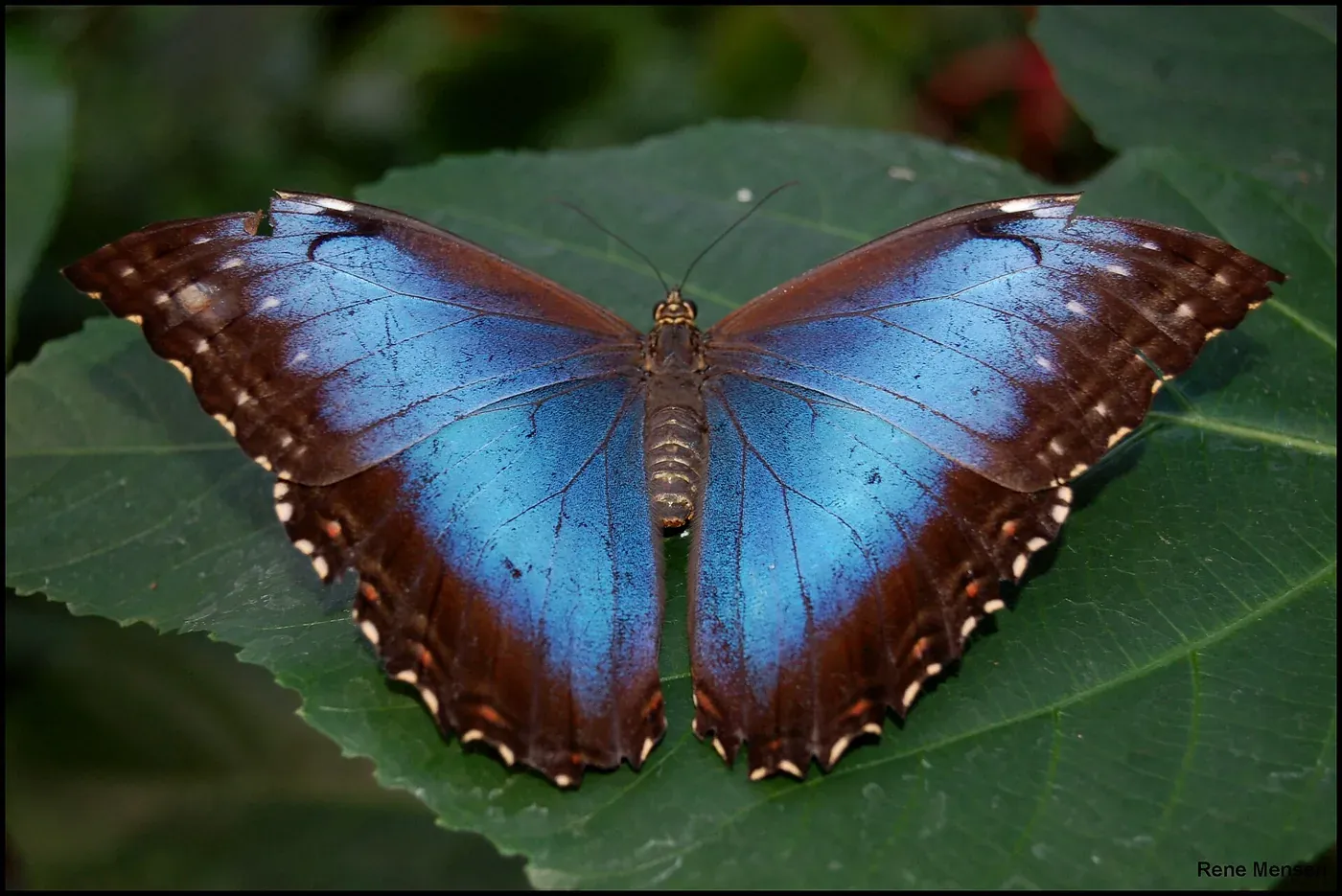
- Plate IVA blue morpho's wings. The blue is not a pigment at all; it comes from chitin nanostructures on the wing scales that bend and scatter light.Wikimedia Commons