The Smart Materials Era (2000-2015)
Cyclic Olefin Copolymer (COC)
The Ultimate Transparent
On 25 November 2002, in the East Room of the White House, President George W. Bush signed the Homeland Security Act, folding twenty-two federal agencies into a single new department built in direct response to the September 11 attacks and the anthrax letters that had followed them. Both crises had exposed the same practical gap: America did not have a fast, cheap, portable way to detect a biological or chemical threat outside a fully equipped laboratory. That gap was a materials problem as much as a policy one, and 2002 was also the year a landmark review paper made the case, backed by several years of laboratory results, that ordinary moulded polymers were finally good enough to build that portable laboratory out of (with one relatively obscure plastic, cyclic olefin copolymer, named as the most promising of all of them).
Plate I


Two Companies, One Catalyst
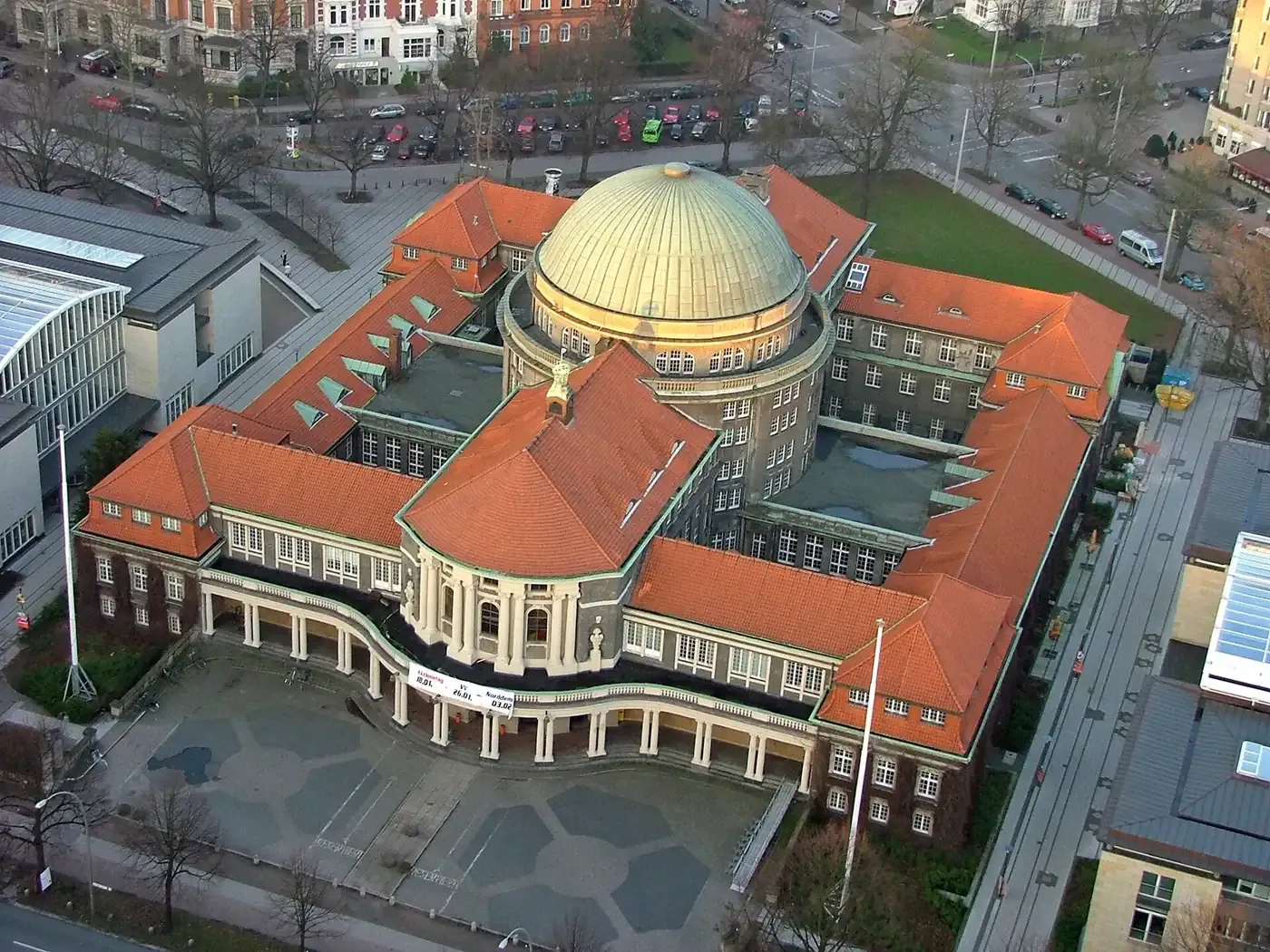
The chemistry behind COC is older than its commercial debut. In 1980, chemist Walter Kaminsky, working at the University of Hamburg, discovered that a zirconium metallocene activated with methylaluminoxane made an extraordinarily active catalyst for olefin polymerization, one precise enough to control not just how a chain grew, but what it was willing to incorporate.
Plate II

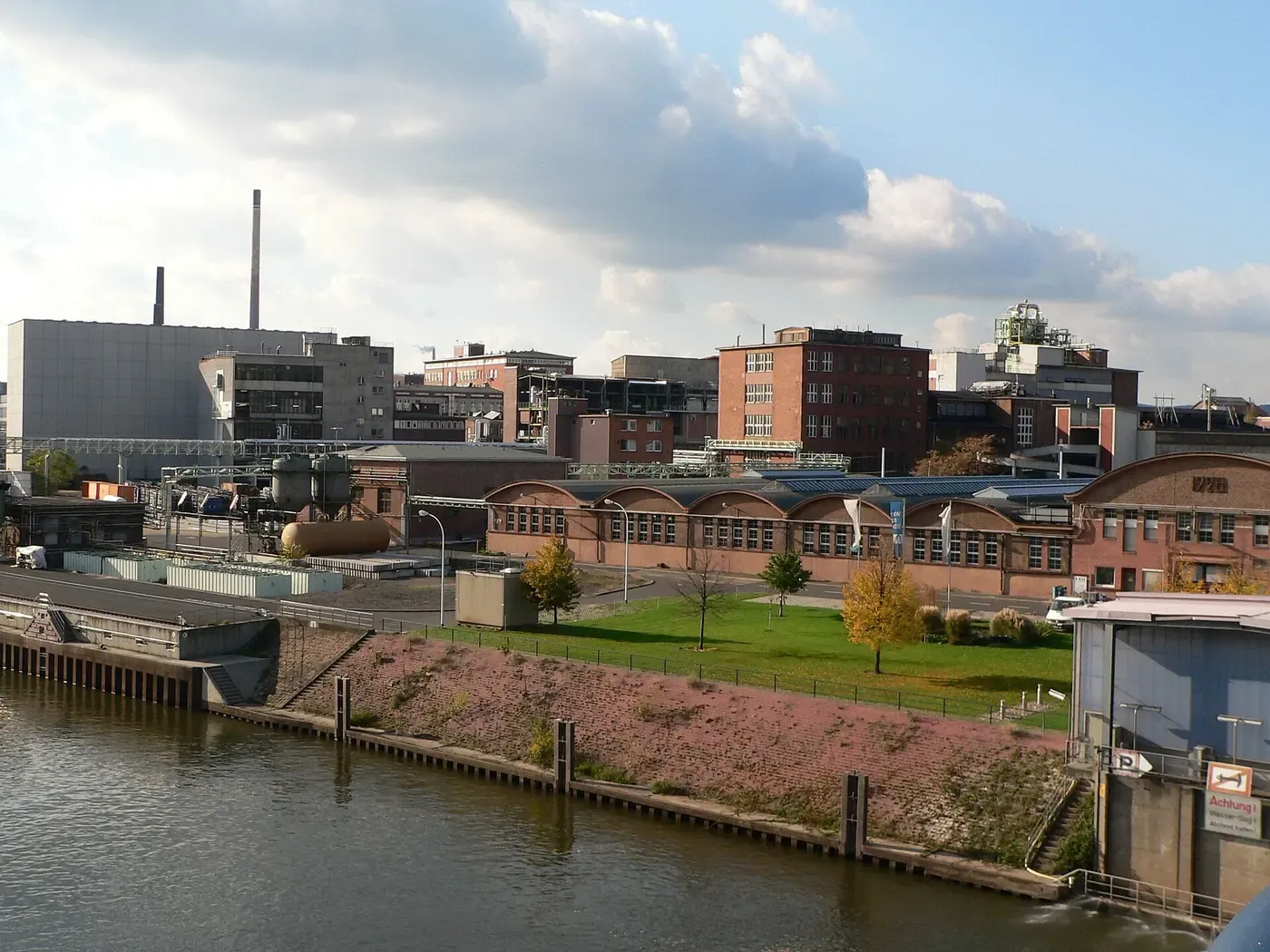
By the late 1980s, researchers at the German chemical firm Hoechst AG had used that same catalyst chemistry to do something ordinary Ziegler-Natta catalysts could not: copolymerize ethylene with norbornene, a small, rigid, bicyclic hydrocarbon, without breaking the ring open. The result was a fully amorphous polyolefin, transparent as window glass. Hoechst’s plastics subsidiary, Ticona, brought it to market under the name TOPAS in 1996; Mitsui Chemicals in Japan developed a parallel version, APEL, built on a different bicyclic comonomer. By 2000 Ticona had a dedicated full-scale COC plant running at Oberhausen, Germany, just as ownership of the business passed to the American firm Celanese; the corporate scaffolding was in place exactly when the applications that would make the material famous started to arrive.
Plate III

Why a Ring Stops a Chain
Ordinary polyethylene and polypropylene owe their strength to crystallinity: long stretches of chain packing neatly together into ordered regions. COC is built to prevent exactly that. Every norbornene unit is a rigid, bulky ring wedged directly into the backbone, and rings that shape simply cannot fold and pack the way a plain -CH2-CH2- chain can. The polymer is left permanently amorphous: no crystallites, no haze from crystalline boundaries scattering light, nothing to interrupt a beam passing straight through it. The proportion of norbornene in the chain becomes a dial rather than a fixed property: a little of it gives a material that behaves much like a refined polyethylene, glass transition hovering near room temperature; a lot of it jams the chain so thoroughly that the glass transition climbs past the boiling point of water. One comonomer ratio, decided at the reactor, is what separates a flexible film grade from a rigid, heat-resistant one.
Properties Worth the Name “Molecular Glass”
COC’s signature property is optical: its clarity is close enough to borosilicate glass that the two are difficult to tell apart by eye, and unlike PMMA or polycarbonate it holds that clarity without measurable birefringence, so it does not subtly split or distort light passing through a moulded lens. It also does something glass itself cannot: shrug off water almost entirely, taking up a small fraction of what PMMA absorbs, which matters enormously in a diagnostic device where even trace moisture can throw off a result. It resists acids, alkalis and alcohols well, and forms a better barrier to water vapour than PVC, the material it has been steadily displacing in pharmaceutical blister packaging, though, being a plain hydrocarbon, it has no answer for aliphatic or aromatic solvents, which attack it readily. Its one real weakness is sunlight: unstabilized COC degrades under UV exposure and needs an antioxidant package for any outdoor use. Where COC earns its keep is precisely the space between PMMA and glass: the optical performance of the latter, in the mouldable, shatter-resistant, mass-producible form of the former.
Plate IV
.jpg)
The Year of the Lab on a Chip
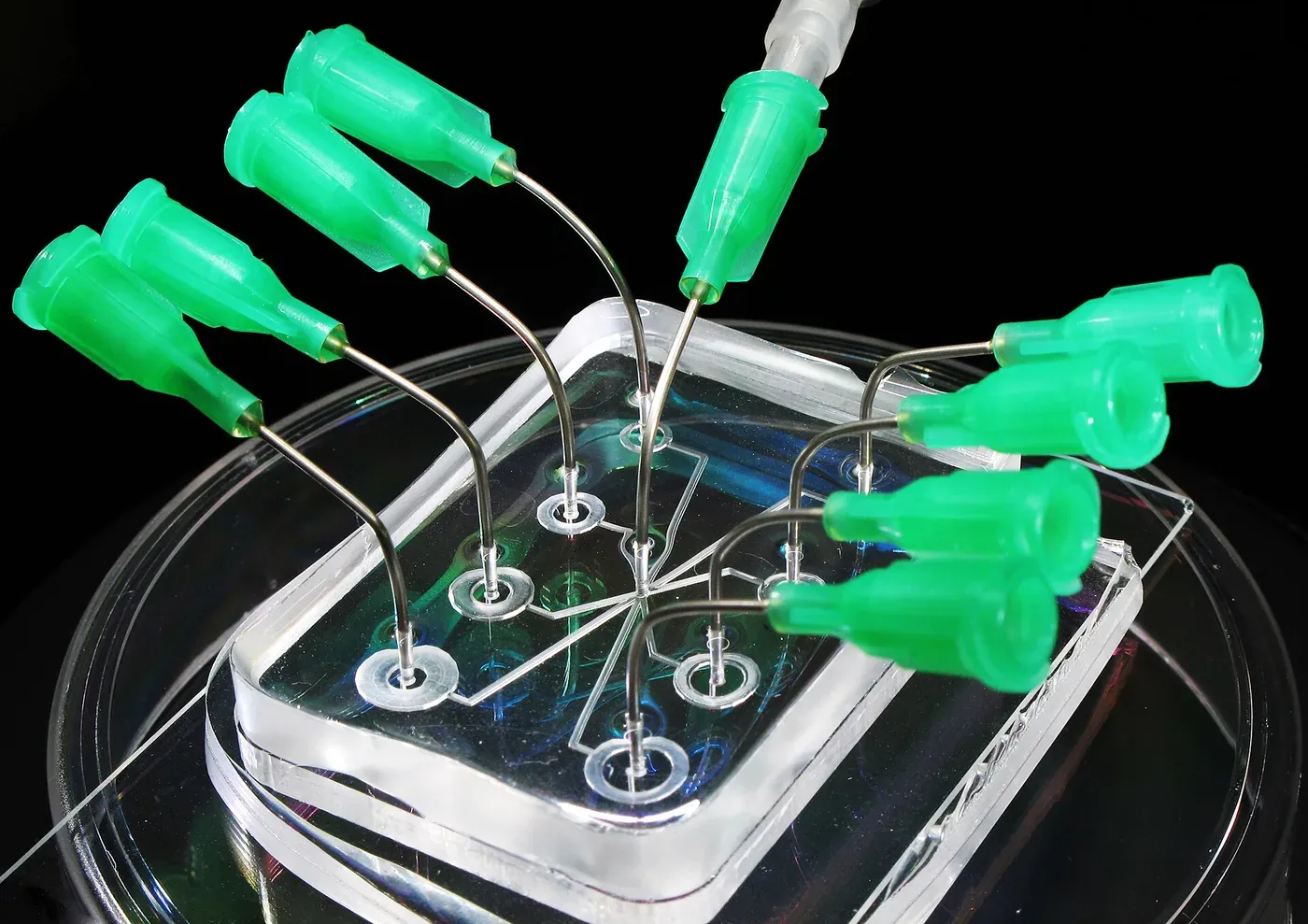
Polymer microfluidics had been a research curiosity through the 1990s, mostly built from glass or silicon by methods borrowed from semiconductor fabrication, precise, but slow and expensive to mass-produce. In 2002, chemists Holger Becker and Laurie Locascio published a widely cited review making the case that injection-moulded polymers could replace glass and silicon in these devices without giving up the performance that mattered, and named COC among the strongest candidates precisely because of its clarity, rigidity and resistance to the acids, bases and biological reagents a diagnostic assay runs on. That argument landed at exactly the moment the biodefense and public-health establishment, reorganizing itself into the new Department of Homeland Security, was looking for cheaper and faster ways to test for pathogens outside a central laboratory. COC did not solve that problem by itself, but it became one of the standard materials chemists reached for while trying to.
Beyond the Laboratory
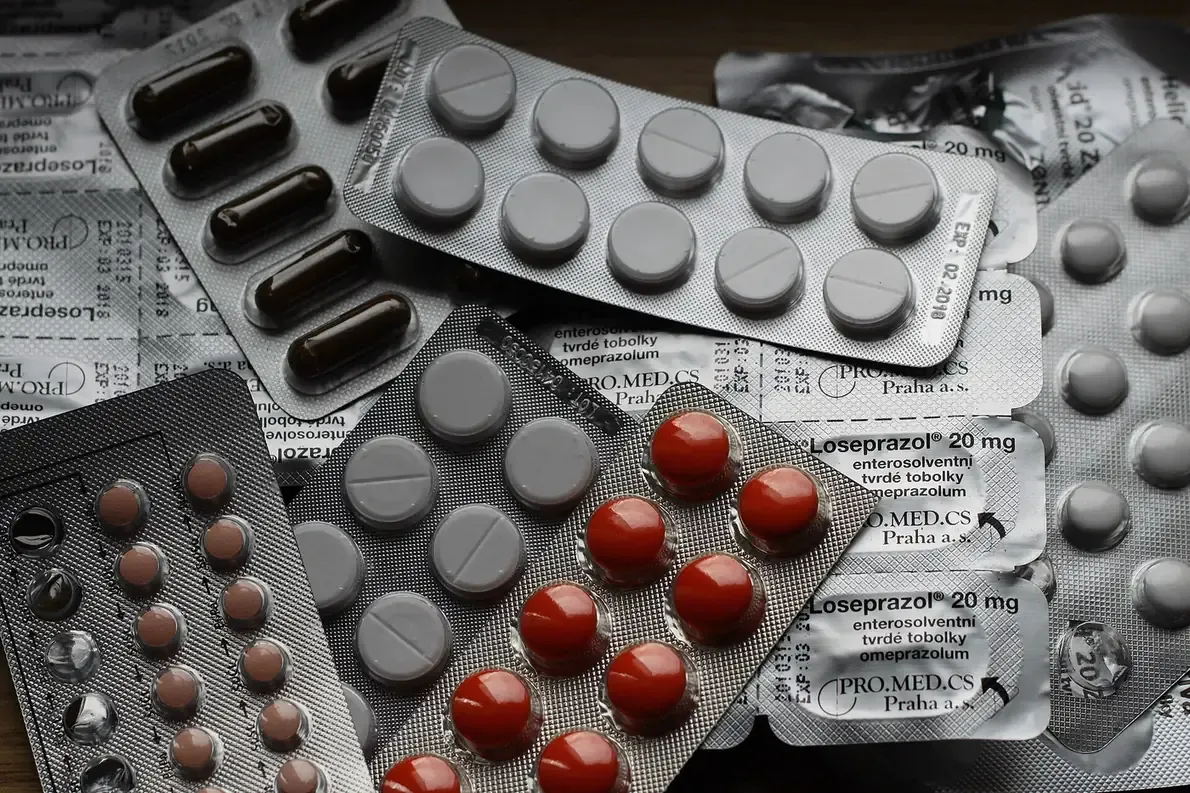
COC’s advantages translated directly into pharmaceutical packaging, where its moisture barrier and clarity made it an increasingly common alternative to PVC in blister packs, protecting moisture-sensitive tablets without the plasticizer-related environmental concerns PVC film carries. The same properties pushed it into prefilled syringes and vials, where a wall that neither leaches nor delaminates the way glass sometimes does over years of storage matters as much as clarity does. And its optical performance, combined with its light weight next to glass, carried it into smartphone camera lenses, LED packaging and touchscreens, places where a small, precisely moulded, perfectly transparent part had to be made by the million.
Plate V

Making It
COC is produced by metallocene-catalyzed copolymerization of ethylene with a bicyclic comonomer (norbornene for TOPAS, tetracyclododecene for APEL) at moderate temperatures and pressures, with a methylaluminoxane cocatalyst controlling exactly how each ring is inserted into the growing chain. Because the finished polymer is amorphous rather than semi-crystalline, it processes on entirely conventional thermoplastic equipment: injection moulding for precision parts like microfluidic chips and lenses, extrusion and film casting for packaging web. The comonomer ratio, fixed at the reactor, is the one variable that has to be decided before any of that processing begins.
Looking to the Future
COC’s story since 2002 has mostly been one of quietly expanding into places glass used to be unquestioned: more of the pharmaceutical packaging market, more prefilled drug delivery devices, more of the optical hardware inside consumer electronics. Researchers are also testing it in more specialized photonic and sensing applications, where its combination of optical clarity and dimensional stability is hard for other thermoplastics to match. None of it depends on a new discovery, only on designers continuing to find places where the improbable combination of glass-like optics and plastic-like manufacturing turns out to be worth paying for.
values with [n] cite the numbered references·estimates are flagged·“not yet available” and “N/A” are honest states, not gaps
fetching the model…
Cyclic Olefin Copolymer repeat unit
- Abbreviation
- COC
- Type
- polymer family (hub)
- CAS number
- 26007-43-2
- Resin ID code
- none assigned
- Formula
- (C2H4)x·(C7H10)y[-CH2-CH2-]x[-C7H10-]yThe norbornene-derived unit has no honest linear notation: metallocene catalysis adds across its ring double bond without opening the ring, so the bicyclic bridge (bicyclo[2.2.1]heptane) is carried bodily into the backbone, fused to it at two adjacent carbons. 'C7H10' stands in for that whole bridged, two-ring structure: the bracket notation cannot show its fused 3D geometry or which two ring carbons actually continue the chain. The bulky ring is what stops the chain crystallizing, leaving a glassy, glass-clear material; raising its proportion raises the glass transition.
- Repeat unit (BigSMILES)
{[][$]CC[$],[$]C1C2CCC(C2)C1[$][]}- IUPAC name
- —
- Synonyms
- cyclo olefin copolymer; ethylene-norbornene copolymer
- Also known as
- TOPASAPEL
- Chemical family
- polyolefin
- Backbone class
- carbon-chain
- Polymerization mechanism
- coordination
- Constitutional monomer
- EthyleneNorbornene
- Polymer class
- thermoplastic
- Year of origin
- 2002
- Era
- The Smart Materials Era (2000-2015)
- Key figures
- Walter Kaminsky · Hoechst AG · Mitsui Chemicals
- Events referenced
- Signing of the Homeland Security Act, creating the U.S. Department of Homeland Security (25 November 2002) · Publication of Becker and Locascio's review "Polymer microfluidic devices" (2002)
- Polymerization type
- coordination chain copolymerization
- Common monomers (feedstocks)
- ethylene, norbornene or tetracyclododecene
- Catalysts
- metallocene catalysts
Made via chain copolymerization of cyclic monomers (norbornene or tetracyclododecene) with ethylene. Commercial variants include TOPAS and APEL.
- Tacticity
- not yet available
- Crystal structure
- not yet available
- Typical crystallinity
- 0 %[2]Amorphous, which underlies its exceptional transparency.
Molecular weight
- Number average (Mn)
- 51000–173000 g/mol[2]
- Mass average (Mw)
- 41000–188000 g/mol[2]note: the stated Mw range partly falls below the Mn range, as printed in the source
- Dispersity (Mw/Mn)
- 1.5–4.1[2]
Mark-Houwink constants
not yet available
Bulky cyclic olefin units in the backbone restrict chain mobility, raising Tg far above room temperature while remaining fully amorphous. This is the combination that gives COC both rigidity and optical clarity.
- Density
- 1–1.08 g/cm³[2]20°C
- Melt flow index
- 2–36 g/10min[2]260°C/2.16 kg; a single source reports up to 48 g/10min
- Refractive index
- 1.51–1.54[2]20°C; Topas grade 1.53
- Transmittance
- 90–92 %[2]Topas grade 91.4%
- Haze
- 0.5–4 %[2]
- Gloss
- 100 %[2]>100 (exceeds standard scale ceiling), 60°, Gardner (ASTM D523)
- Water absorption
- [2]<0.01%, equilibrium, 23°C
- Dielectric constant
- 2.2[2]100 Hz-1 MHz, Topas grade; relative permittivity separately reported as 2.35 at 1–10 Hz and 2.3 at 1 GHz
- Dielectric strength
- not yet available
- Electrical conductivity
- 1 × 10⁻¹⁴ S/m[2]reciprocal of reported volume resistivity, 1x10^14 ohm-m
- Glass transition (Tg)
- 62–177 °C[2]varies strongly with norbornene content and catalyst: 114–122°C (metallocene catalyst), 96–125°C (depending on annealing). Note: an earlier tertiary source claimed Tg exceeds 200°C; the handbook's own range tops out at 177°C.
- Melting temperature (Tm)
- Not applicableAmorphous; no true melting point.
- Crystallization (Tc)
- Not applicable
- Heat deflection (HDT)
- 60–151 °C[2]1.8 MPa; base grades 60–125°C, Topas grades 68–151°C
- Decomposition onset
- 407–440 °C[2]
- Thermal conductivity
- not yet available
- Tensile modulus
- 1260–3200 MPa[2]
- Yield strength
- 37–60 MPa[2]
- Tensile strength at break
- 22–72 MPa[2]Topas grade 46–63 MPa
- Elongation at break
- 1.1–100 %[2]
- Impact strength (Izod)
- 25–45 J/m[2]notched, 23°C
- Impact strength (Charpy)
- 1.6–2.6 kJ/m²[2]notched, 23°C; Topas grade 1.8–2.6
- Hardness
- 130–184 MPa[2]ball indentation hardness, 358 N/30 s (ISO 2039-1)
- Flexural modulus
- 2400–3200 MPa[2]
- Poisson's ratio
- not yet available
- Coefficient of friction
- not yet available
- Solvent: water_vapor
- Excellent moisture barrier, low absorption[1]
- Solvent: acids
- resistant[2]dilute and concentrated
- Solvent: alcohols
- resistant[2]
- Solvent: alkalis
- resistant[2]
- Solvent: aliphatic hydrocarbons
- non-resistant[2]
- Solvent: aromatic hydrocarbons
- non-resistant[2]
- Solvent: esters
- resistant[2]
- Solvent: greases & oils
- non-resistant[2]
- Solvent: halogenated hydrocarbons
- non-resistant[2]
- Solvent: ketones
- resistant (short chain)[2]
- Weathering / UV
- Photooxidizes under UV (280–380 nm; peak activation 267 nm) forming chromophores/hydroperoxides/carboxylic acids; requires antioxidant stabilization (e.g. Irganox 1010). High UV transmittance (optically) is a separate property from UV degradation resistance.[2]
- Hydrolysis resistance
- Not applicableEthylene-norbornene copolymer; backbone is a fully saturated hydrocarbon (C-C, C-H only) with no ester, amide, or other hydrolyzable linkage.
- Flammability (UL94)
- HB[2]
- Limiting oxygen index
- not yet available
- Solubility parameter (δ)
- not yet available
Gas permeability
- O₂
- 1.97 × 10⁻¹⁴–4.63 × 10⁻¹⁴ cm³(STP)·cm/(cm²·s·Pa)[2]25°C; converted from 1.7–4 cm³(STP)·cm/(m²·day·bar)
Polymer-solvent interaction parameter (χ)
not yet available
- Pharmaceutical packagingblister packaging (high purity, sterilization-compatible)
- Microfluidicsmicron-scale molded lab-on-chip devices
- Opticallenses · touch screens · camera components · films
- Recyclable
- Yes
- Biodegradable
- No
- Degradation pathway
- not yet available
- LD50 (oral, rat)
- 3250 mg/kg[2]
- NFPA health
- 1[2]HMIS rating, 0–4 scale
- NFPA flammability
- 1[2]HMIS rating, 0–4 scale
- NFPA reactivity
- 0[2]HMIS rating, 0–4 scale
- Carcinogenic classification
- not yet available
TLV (ACGIH): 10 mg/m³ total, 3 mg/m³ respirable fraction. OSHA: 5 mg/m³ respirable dust, 15 mg/m³ total dust.
- [1]Cyclic olefin copolymerWikipediaAccessed 2026-07-14https://en.wikipedia.org/wiki/Cyclic_olefin_copolymer[wiki-coc]
- [2]Handbook of PolymersChemTec Publishinghttps://www.worldcat.org/isbn/9781895198928[handbook-wypych-2016]
Illustrations
- Plate IPresident Bush signs the Homeland Security Act, 25 November 2002: legislation born from a security crisis that also exposed the need for fast, portable diagnostic technology.Wikimedia Commons
- Plate IIThe University of Hamburg, where Walter Kaminsky discovered the metallocene catalyst chemistry behind COC in 1980.Wikimedia Commons
- Plate IIIPart of the Höchst industrial park near Frankfurt, the home site of Hoechst AG, whose researchers used Kaminsky's catalyst to build the first COC in the late 1980s.Wikimedia Commons
- Plate IVA microfluidic 'lab on a chip' device, the kind of miniaturized diagnostic platform that COC's clarity, rigidity and chemical inertness were well suited to build.Wikimedia Commons
- Plate VBlister packaging, one of the everyday places COC's moisture barrier and clarity have been steadily displacing older film materials.Wikimedia Commons