The Specialty Polymers Age (1980-1999)
Thermoplastic Elastomers (TPEs)
When Rubber Learned to Recycle
At midnight on 1 January 1983, engineers at research sites across the United States flipped a switch, all at once, on a network that had spent fourteen years growing by improvisation. Every machine still connected to the ARPANET had to abandon its old, network-specific way of talking to its neighbours and adopt a single shared protocol, TCP/IP, capable of carrying data across completely different kinds of network without anyone at the centre controlling how. Systems that had been built independently, by different institutions, for different purposes, over more than a decade, were being asked to behave as one coherent whole for the first time. Historians now mark that one flag day as the moment the modern internet actually began.
Plate I


A much older kind of unification problem was also, by the early 1980s, finally coming together in materials science: a family of chemistries invented independently, in different companies, over more than two decades, that were only now being recognised as one coherent class rather than a scattering of unrelated products. Chemists called it, collectively, the thermoplastic elastomer.
Why This Was Supposed to Be Impossible
In 1839, Charles Goodyear discovered that heating natural rubber with sulfur locked its long, loosely tangled molecules into a permanent three-dimensional web: a chemical crosslink joining one chain to the next, the reaction that gave rubber the ability to stretch to several times its length and spring back rather than simply flowing away like a thick liquid. That permanence was the whole point. It was also, for more than a century afterward, treated as an unavoidable cost: once vulcanized, a rubber part could never be melted down and used again. Scorch a tyre or a hose past its working life and there was nothing to do with it but grind it up or burn it, because the crosslinks holding it together did not care whether the rest of the world had moved on.
Plate II

_crop.png)
A Trick Discovered Six Times
The way around it turned out not to require a new kind of rubber at all, just a different kind of crosslink, one built from physics rather than chemistry. Chemists at half a dozen companies worked this out independently across roughly twenty-five years, each starting from a different raw material and none of them, at first, using the word that would later group their work together. Charles Schollenberger, at B.F. Goodrich, patented a melt-processable segmented polyurethane in the 1950s, sold from 1959 as Estane. Shell Chemical’s polymer group (including Norman Legge, who went on to help write the field’s first comprehensive reference book) commercialised styrene-butadiene-styrene block copolymers as Kraton in the mid-1960s, refined a few years later into the more weather-stable SEBS. DuPont introduced a copolyester version, Hytrel, in 1972. Uniroyal and then Monsanto worked out how to disperse finely ground, chemically crosslinked rubber particles inside a continuous thermoplastic matrix rather than build a block copolymer at all, reaching a fully cured version of that idea, sold as Santoprene, by 1981. Atochem, around the same time, built a version with nylon-like rigid segments instead of styrene or urethane ones. By the early 1980s, this scattering of separately invented chemistries had grown into something that looked, for the first time, like a genuine, recognisable family, six different routes to the same underlying trick, finally visible together as one idea rather than six unrelated ones.
One Idea, Two Recipes
Strip away the chemistry and every member of that family solves the crosslink problem one of two ways. The first, and by far the more common, builds the hard and soft segments into a single molecule: a chain grown or assembled so that one stretch of it wants to clump together with matching stretches on neighbouring chains (forming small, hard domains, glassy or crystalline) while a second, longer stretch stays soft and rubbery in between. At room temperature those hard domains act exactly like Goodyear’s sulfur crosslinks, pinning the rubbery network in place; heat the material past the domains’ own softening point and the anchors let go, so the whole thing flows and can be shaped like any ordinary plastic. SEBS and thermoplastic polyurethane, each already covered in its own entry in this atlas, both work this way. The second recipe skips the single-molecule chemistry altogether: grind vulcanized rubber into a fine dispersed phase, blend it thoroughly into a continuous, meltable plastic like polypropylene, and let the plastic matrix itself do the job a hard block would otherwise do, carrying the rubber’s stretch around inside a shape that can still be melted at the seams. Thermoplastic vulcanizates and simpler polyolefin-rubber blends both take this second route.
What Physical Crosslinks Buy
Because “thermoplastic elastomer” describes a structural trick rather than one chemistry, there is no single density, stiffness, or working temperature that applies across the whole class; a soft, oily TPO compound and a rigid, engineering-grade copolyester elastomer share the same underlying idea and almost nothing else about how they feel in the hand. What does hold across the family is the trade the trick makes possible: material that behaves, at room temperature, like a genuine rubber (soft, stretchy, and quick to spring back to its original shape) while still flowing into a mould and re-melting afterward the way an ordinary thermoplastic does, something no vulcanized rubber can ever be persuaded to do. Formulators lean on that range constantly, blending in oil, filler, or more hard segment to slide a given TPE anywhere from something as yielding as a rubber band to something firm enough to substitute for a semi-rigid engineering plastic, all from what is, underneath, the same basic architecture.
Where the Idea Went
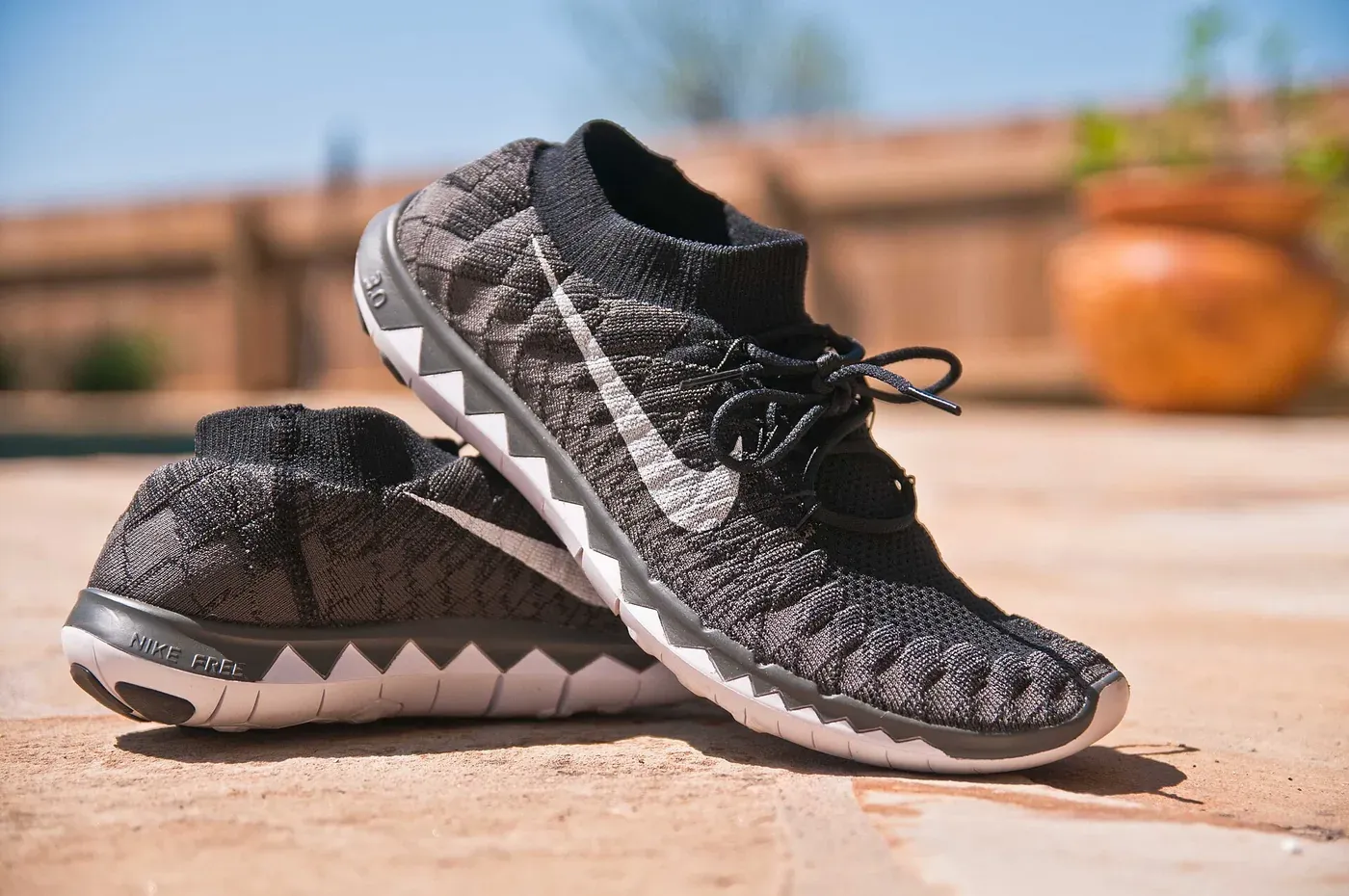
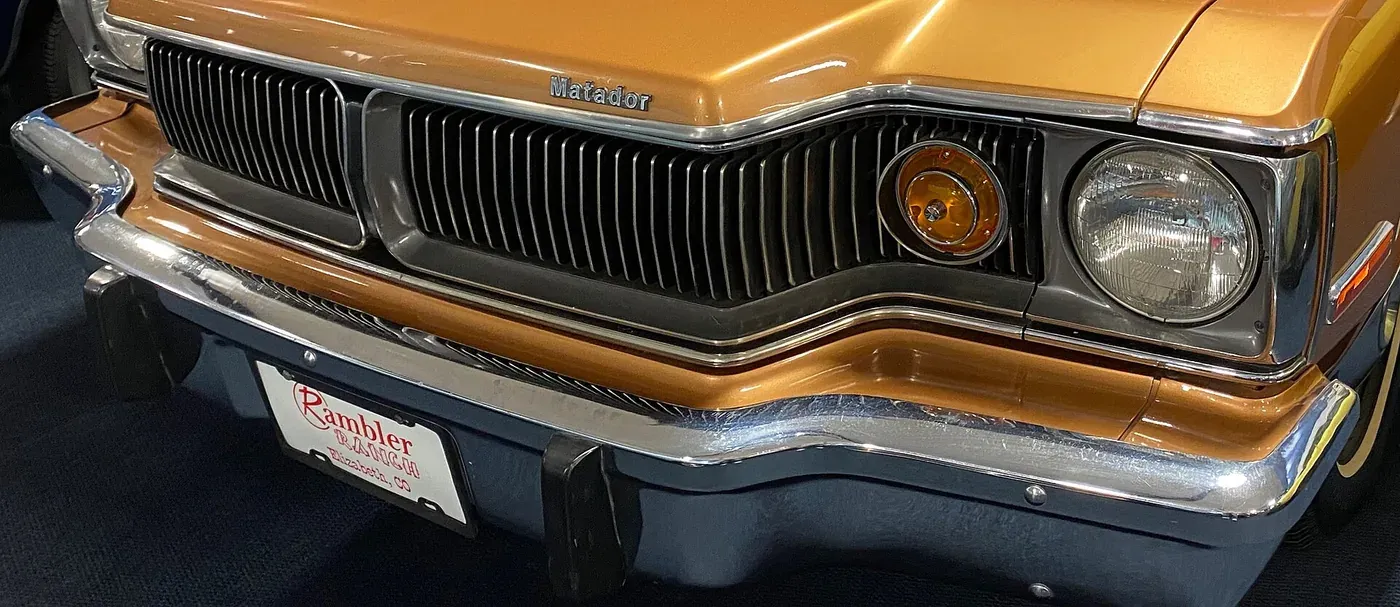
That range is exactly why TPEs ended up everywhere a designer wants rubber’s feel without rubber’s dead end. Automotive seals, grips, and boots use them because a scrapped car’s TPE parts can be reclaimed rather than only shredded. Medical tubing and seals use them because a compound can be melted, moulded, and sterilised without the crosslinking step a true rubber would need. And a very large amount of ordinary footwear owes its cushioning to one TPE family or another, precisely because a shoe sole has to be soft enough to compress underfoot, resilient enough to spring back a hundred thousand times over its life, and cheap enough to injection-mould by the millions. These are the same three demands, in miniature, that started this whole family of chemistries in the first place.
Plate III
.jpg)
Plate IV
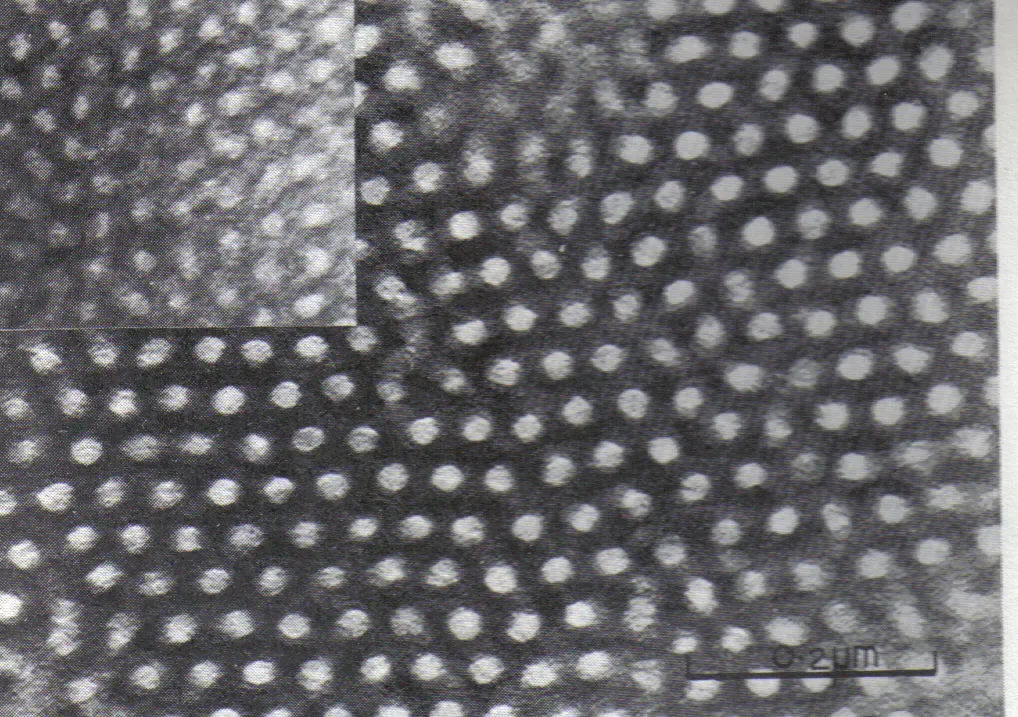

Plate V

A Different Kind of Flag Day
Nobody flipped a single switch for thermoplastic elastomers the way the ARPANET’s operators did for TCP/IP on that January morning. The unification happened slowly, chemistry by chemistry, company by company, over a quarter of a century, until one day there were enough of them, doing the same underlying trick in different ways, that the industry needed one name to talk about all of them at once. Both stories end up in the same place, though: a scattering of separately built things, finally speaking one language.
values with [n] cite the numbered references·estimates are flagged·“not yet available” and “N/A” are honest states, not gaps
- Abbreviation
- TPEs
- Type
- polymer family (hub)
- CAS number
- None (heterogeneous class or not assigned)
- Resin ID code
- none assigned
- Formula
- TPEs are a structural class (phase-separated hard/soft block copolymers or polymer blends combining rubber-like elasticity with thermoplastic melt-processability) rather than one chemistry: member families include SBS/SEBS, TPU, TPO, TPV, and copolyester/copolyamide TPEs, several of which have their own entries.
- Repeat unit (BigSMILES)
- TPEs are a structural class (phase-separated hard/soft block copolymers or polymer blends combining rubber-like elasticity with thermoplastic melt-processability) rather than one chemistry: member families include SBS/SEBS, TPU, TPO, TPV, and copolyester/copolyamide TPEs, several of which have their own entries.
- IUPAC name
- —
- Synonyms
- thermoplastic rubber
- Also known as
- —
- Chemical family
- thermoplastic-elastomer
- Backbone class
- —
- Polymerization mechanism
- —
- Constitutional monomer
- None (no single constitutional monomer)
- Polymer class
- elastomer
- Year of origin
- 1983
- Era
- The Specialty Polymers Age (1980-1999)
- Key figures
- Norman R. Legge
- Events referenced
- ARPANET TCP/IP flag day (1 January 1983)
- Polymerization type
- not yet available
- Common monomers (feedstocks)
- not yet available
- Catalysts
- not yet available
Not a single synthesis route: TPEs are unified by structure (microphase-separated hard/soft domains, or a rubber phase dispersed in a thermoplastic matrix) rather than chemistry. Major families: styrenic block copolymers (SBS/SEBS), thermoplastic polyurethanes (TPU), thermoplastic polyolefins (TPO, rubber-PP blends), thermoplastic vulcanizates (TPV, dynamically crosslinked rubber-PP blends), and copolyester/copolyamide TPEs (e.g. PEBA).
- Tacticity
- not yet available
- Crystal structure
- not yet available
- Typical crystallinity
- Not applicable
Molecular weight
- Number average (Mn)
- not yet available
- Mass average (Mw)
- not yet available
- Dispersity (Mw/Mn)
- not yet available
Mark-Houwink constants
not yet available
Common structural principle: glassy or semi-crystalline 'hard' domains act as physical (reversible, meltable) crosslinks holding together rubbery 'soft' domains; unlike a chemically crosslinked thermoset rubber, a TPE can be re-melted and reprocessed.
- Density
- Not applicableVaries by family/hardness grade; not a single value for the class.
- Melt flow index
- Not applicable
- Refractive index
- Not applicable
- Transmittance
- not yet available
- Haze
- not yet available
- Gloss
- not yet available
- Water absorption
- not yet available
- Dielectric constant
- Not applicable
- Dielectric strength
- not yet available
- Electrical conductivity
- not yet available
- Glass transition (Tg)
- Not applicable
- Melting temperature (Tm)
- Not applicable
- Crystallization (Tc)
- Not applicable
- Heat deflection (HDT)
- Not applicable
- Decomposition onset
- Not applicable
- Thermal conductivity
- Not applicable
- Tensile modulus
- Not applicable
- Yield strength
- Not applicable
- Tensile strength at break
- Not applicable
- Elongation at break
- Not applicable
- Impact strength (Izod)
- Not applicable
- Impact strength (Charpy)
- Not applicable
- Hardness
- Not applicable
- Flexural modulus
- Not applicable
- Poisson's ratio
- not yet available
- Coefficient of friction
- not yet available
- Weathering / UV
- Not applicable
- Hydrolysis resistance
- Not applicable
- Flammability (UL94)
- Not applicable
- Limiting oxygen index
- not yet available
- Solubility parameter (δ)
- not yet available
Gas permeability
not yet available
Polymer-solvent interaction parameter (χ)
not yet available
- Processing methods
- injection moldingextrusionovermolding
- Drying required
- not yet determined
- Processing temperature
- Not applicable
- Shrinkage rate
- Not applicable
- Automotiveseals · grips · boots and bellows
- Consumersoft-touch handles · footwear components
- Medicaltubing · seals
- Recyclable
- Yes
- Biodegradable
- not yet determined
- Degradation pathway
- not yet available
The defining environmental advantage over thermoset (chemically crosslinked) rubber: TPEs can be re-melted and reprocessed rather than only ground down as filler, hence the title 'When Rubber Learned to Recycle'.
- LD50 (oral, rat)
- not yet available
- NFPA health
- not yet available
- NFPA flammability
- not yet available
- NFPA reactivity
- not yet available
- Carcinogenic classification
- not yet available
- [1]Thermoplastic elastomerWikipediaAccessed 2026-07-14https://en.wikipedia.org/wiki/Thermoplastic_elastomer[wiki-tpe]
Illustrations
- Plate IAn original Interface Message Processor, the routing hardware behind the earliest ARPANET nodes. By 1 January 1983, every host still on the network had to speak through machines like this one in a single shared protocol, TCP/IP.Wikimedia Commons
- Plate IICharles Goodyear, whose 1839 discovery of vulcanization gave rubber its stretch and recovery by locking its chains into a permanent chemical network: the very permanence a later generation of chemists had to find a way around.Wikimedia Commons
- Plate IIIA pair of running shoes. Cushioned midsoles and outsoles like these are among the most common everyday homes for thermoplastic elastomer compounds, soft enough to spring back underfoot, meltable enough to injection-mould by the million.Wikimedia Commons
- Plate IVA transmission electron micrograph of styrene-butadiene-styrene block copolymer (Kraton), one member of the thermoplastic elastomer family. The pale dots are hard polystyrene domains dispersed through a soft polybutadiene matrix: the physical microstructure, not any chemical crosslink, that holds the material together at room temperature.Wikimedia Commons
- Plate VThe front bumper fascia of a 1974 AMC Matador, moulded from Shell's Kraton SBS block copolymer, one member of the thermoplastic elastomer family. It was one of the earliest large-scale automotive uses of the idea in place of chrome-plated steel.Wikimedia Commons